
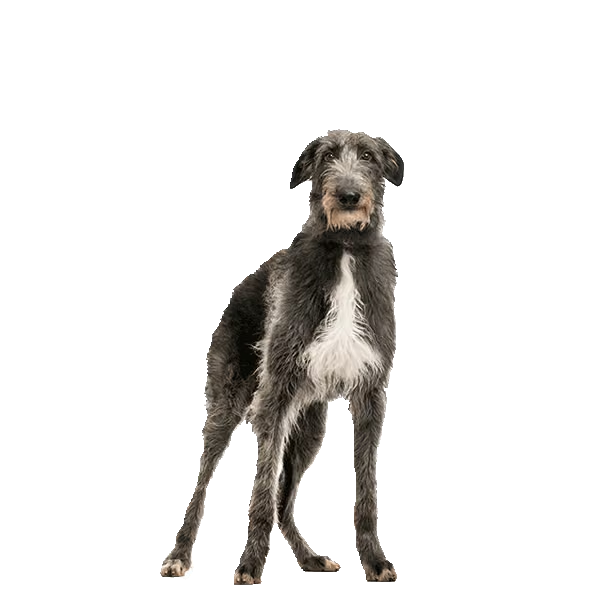
Scottish Deerhound
The Scottish Deerhound is a gentle, regal sighthound known for its great size, flowing coat, and quiet, affectionate devotion.
- Size
- Giant
- Lifespan
- 8–11 years
- Origin
- Scotland
- Temperament
- Gentle
- Standard colors
- Black, Grey and Blue and 2 more
Characteristics
Coat and grooming
How the Scottish Deerhound coat is built, and what that means when you groom it.
- Coat layers
- Single coat
- Coat texture
- Wire
- Coat length
- Medium
- Shedding
- Low shedding
Grooming guidance
Caution: A Scottish Deerhound coat should be hand-stripped rather than clipped.
A wire coat is meant to be pulled out at the root once the hair is ready to release. Clippers cut it off part way instead, leaving the soft undercoat behind. The result is a coat that grows back limp and faded, and the weatherproof texture only returns after the hair is stripped out again.
Scottish Deerhound colors and patterns
What each club's breed standard says about every Scottish Deerhound color and pattern. Point at a ruling to see the club's own wording.
Breed standards describe the Scottish Deerhound in Black, Grey, Blue, Red and Yellow. Standard patterns: Solid, Brindle and Reverse brindle.
| Color or pattern | FCI | AKC | UKC | KC | KUSA |
|---|---|---|---|---|---|
| Black | Not recognised | Standard (“Black”) | Not recognised | Standard (“Black & Grey”) | Not recognised |
| Grey | Standard (“darker and lighter greys”) | Standard (“Gray”) | Standard (“darker and lighter greys”) | Standard (“darker and lighter greys”) | Standard (“darker and lighter greys”) |
| Blue | Standard (“Dark blue-grey”) | Standard (“Blue Gray”) | Standard (“Dark blue-grey”) | Standard (“Dark blue-grey”) | Standard (“Dark blue-grey”) |
| Red | Standard (“sandy-red or red fawns”) | Standard (“sandy red or red fawn”) | Standard (“sandy-red or red fawns”) | Standard (“sandy-red or red fawns”) | Standard (“sandy-red or red fawns”) |
| Yellow | Standard (“yellows”) | Standard (“Yellow”) | Standard (“yellows”) | Standard (“yellows”) | Standard (“yellows”) |
| White | Not recognised | Not recognised (“White is condemned by all authorities”) | Not recognised | Not recognised | Not recognised |
| Patterns | |||||
| Solid | Standard (“it is a self-coloured dog”) | Standard (“the Deerhound is a self-colored dog”) | Standard (“it is a self-coloured dog”) | Standard (“it is a self-coloured dog”) | Standard (“it is a self-coloured dog”) |
| Brindle | Standard (“brindles”) | Standard (“Brindle”) | Standard (“brindles”) | Standard (“brindles”) | Standard (“brindles”) |
| Reverse brindle | Standard (“brindles”) | Standard (“Brindle”) | Standard (“brindles”) | Standard (“brindles”) | Standard (“brindles”) |

%22%3E%3Cg%20fill%3D%22%231C1C1C%22%3E%3Cpath%20d%3D%22M-3.7%20-4L-4.5%200.5L-5.6%205L-5.7%209.5L-6.7%2014L-8.2%2018.5L-8.6%2023L-9.1%2027.5L-10.7%2032L-10.5%2036.5L-10.7%2041L-11%2045.5L-11%2050L-11.4%2054.5L-11.4%2059L-12.6%2063.5L-13.3%2068L-11.5%2068L-10.1%2063.5L-9.9%2059L-9.2%2054.5L-9%2050L-9.6%2045.5L-9%2041L-8.8%2036.5L-9.1%2032L-6.9%2027.5L-7%2023L-6.2%2018.5L-4.6%2014L-3.1%209.5L-3%205L-3.3%200.5L-1.3%20-4ZM1.6%20-4L0.1%200.5L0.6%205L-1.5%209.5L-2.6%2014L-4%2018.5L-4.3%2023L-5.6%2027.5L-4.7%2032L-4.2%2036.5L-4.7%2041L-4.9%2045.5L-5%2050L-6.1%2054.5L-6.5%2059L-7.8%2063.5L-8.5%2068L-6.9%2068L-5.7%2063.5L-4.8%2059L-3.3%2054.5L-2.1%2050L-2.9%2045.5L-3.1%2041L-3.1%2036.5L-2.3%2032L-2.5%2027.5L-1.6%2023L-1.9%2018.5L-0.6%2014L1%209.5L1.7%205L2.6%200.5L3%20-4ZM7.6%20-4L6.6%200.5L5.6%205L5.2%209.5L3.7%2014L3.4%2018.5L3.5%2023L2.5%2027.5L3%2032L3%2036.5L1.9%2041L2.7%2045.5L1.8%2050L0.3%2054.5L-1.7%2059L-1%2063.5L-3.7%2068L-1.6%2068L0.3%2063.5L0.8%2059L2.7%2054.5L3.2%2050L4.2%2045.5L4.2%2041L4.4%2036.5L4.7%2032L3.8%2027.5L4.8%2023L5.3%2018.5L4.9%2014L6.6%209.5L7.9%205L7.6%200.5L9.7%20-4ZM11.3%20-4L10.8%200.5L11.7%205L11.3%209.5L11.2%2014L10.3%2018.5L10%2023L10.6%2027.5L9.2%2032L8.2%2036.5L7.6%2041L6%2045.5L4.7%2050L5.1%2054.5L3.6%2059L3.8%2063.5L3.7%2068L6.2%2068L5.8%2063.5L5.6%2059L7.4%2054.5L7.3%2050L8.3%2045.5L10%2041L11.1%2036.5L10.8%2032L12.8%2027.5L12.6%2023L13.1%2018.5L12.7%2014L13%209.5L13.6%205L13%200.5L12.9%20-4ZM19.6%20-4L19.4%200.5L18.1%205L18.4%209.5L17.8%2014L16.7%2018.5L15%2023L13.8%2027.5L13.2%2032L13.3%2036.5L11.7%2041L10.9%2045.5L11.9%2050L12.2%2054.5L12.5%2059L11.6%2063.5L11%2068L12.8%2068L13.4%2063.5L14.2%2059L14.8%2054.5L13.3%2050L13.7%2045.5L14.5%2041L14.8%2036.5L14.8%2032L16%2027.5L16.6%2023L18.5%2018.5L19.2%2014L19.3%209.5L20.7%205L21.3%200.5L22.1%20-4ZM23.6%20-4L24.4%200.5L23.9%205L22.2%209.5L21.1%2014L20.3%2018.5L19.2%2023L17.6%2027.5L17.9%2032L18.3%2036.5L17.7%2041L18.3%2045.5L17.9%2050L17.9%2054.5L16.4%2059L15.3%2063.5L14.5%2068L16.5%2068L18.3%2063.5L19.5%2059L19.5%2054.5L20%2050L19.9%2045.5L19.8%2041L19.6%2036.5L21.1%2032L19.9%2027.5L20.6%2023L21.8%2018.5L22.9%2014L24.2%209.5L25.5%205L26.4%200.5L26.7%20-4Z%22%2F%3E%3Cpath%20d%3D%22M28%20-4L27.5%200.5L26.9%205L28.2%209.5L27.2%2014L26.3%2018.5L26.3%2023L25.6%2027.5L25.5%2032L23.2%2036.5L22.1%2041L22.2%2045.5L20.1%2050L20.8%2054.5L19.2%2059L20.6%2063.5L20.3%2068L21.2%2068L22.7%2063.5L22%2059L22.4%2054.5L22.7%2050L23.4%2045.5L25.1%2041L25.7%2036.5L26.9%2032L27.8%2027.5L28.9%2023L29.1%2018.5L28.5%2014L29.9%209.5L29.8%205L29.3%200.5L30.5%20-4ZM36.6%20-4L35.8%20-1.1L35.9%201.7L35.2%204.6L34.6%207.5L33.8%2010.3L32.3%2013.2L33%2016.1L31.7%2018.9L32.1%2018.9L33.8%2016.1L35.3%2013.2L35%2010.3L36.6%207.5L36.6%204.6L37%201.7L37.9%20-1.1L36.8%20-4ZM32.2%2025.4L30.7%2030.7L29.8%2036.1L29.6%2041.4L28.4%2046.7L28.6%2052L28.3%2057.4L29.5%2062.7L28.3%2068L29.2%2068L30.3%2062.7L30.8%2057.4L29.9%2052L30.1%2046.7L30.7%2041.4L31.5%2036.1L32.3%2030.7L32.8%2025.4ZM39%20-4L39.4%200.5L39.3%205L39.2%209.5L40.1%2014L38.4%2018.5L38.6%2023L37.8%2027.5L35.7%2032L35.6%2036.5L34.1%2041L33.6%2045.5L32.8%2050L31.9%2054.5L32.5%2059L32.7%2063.5L32.1%2068L34.9%2068L34.1%2063.5L34.7%2059L35%2054.5L34.9%2050L35%2045.5L37%2041L38.1%2036.5L38.7%2032L39.8%2027.5L39.6%2023L40.8%2018.5L41.2%2014L41.7%209.5L42.1%205L40.6%200.5L42.3%20-4ZM45.7%20-4L43.6%200.1L42.2%204.1L42.7%208.2L40.7%2012.3L41%2016.4L39.5%2020.4L39.9%2024.5L41.2%2028.6L42.1%2028.6L42.7%2024.5L42.5%2020.4L42.8%2016.4L42.6%2012.3L43.4%208.2L45.5%204.1L45.2%200.1L45.8%20-4ZM41.4%2033.9L39%2038.1L39.6%2042.4L37.5%2046.7L37.2%2050.9L36.1%2055.2L35.8%2059.5L35.7%2063.7L36.6%2068L37.1%2068L37.8%2063.7L38.1%2059.5L38.4%2055.2L39%2050.9L39.2%2046.7L40.8%2042.4L41.7%2038.1L42.1%2033.9ZM48.6%20-4L48.4%200.5L48.1%205L47.5%209.5L48%2014L47.5%2018.5L47%2023L47.1%2027.5L47%2032L46.1%2036.5L44.4%2041L43.8%2045.5L42.8%2050L41.1%2054.5L41.2%2059L41.1%2063.5L40.5%2068L41.5%2068L42.4%2063.5L42.8%2059L42.7%2054.5L45%2050L46.3%2045.5L46.2%2041L47.4%2036.5L49%2032L49.8%2027.5L48.9%2023L48.7%2018.5L49.6%2014L49.6%209.5L50%205L49.9%200.5L49.8%20-4ZM57.8%20-4L56.6%200.5L56.8%205.1L55%209.6L53.2%2014.1L52.3%2018.6L51.2%2023.2L51.5%2027.7L52.6%2032.2L53%2032.2L53.7%2027.7L54.3%2023.2L54.7%2018.6L55.7%2014.1L56.4%209.6L58.1%205.1L58.9%200.5L58.7%20-4ZM53.1%2035.2L52.1%2039.3L51.5%2043.4L52%2047.5L51.3%2051.6L50.8%2055.7L50%2059.8L48.8%2063.9L49.2%2068L49.6%2068L50.6%2063.9L51.8%2059.8L52.8%2055.7L53.4%2051.6L53.2%2047.5L53.7%2043.4L54.3%2039.3L53.1%2035.2Z%22%2F%3E%3Cpath%20d%3D%22M61.6%20-4L61.1%200.5L60.4%205L59.9%209.5L58.6%2014L58.3%2018.5L56.8%2023L55.6%2027.5L55.6%2032L54%2036.5L54.7%2041L54.9%2045.5L54.2%2050L54.7%2054.5L54%2059L52.9%2063.5L52.2%2068L55.2%2068L54.9%2063.5L56.9%2059L56.8%2054.5L56.5%2050L56.9%2045.5L57.6%2041L56.9%2036.5L57.3%2032L57.3%2027.5L58.9%2023L59.8%2018.5L60.3%2014L62.3%209.5L62.7%205L63.8%200.5L63.9%20-4ZM67.3%20-4L66.1%201.5L66.8%207L66.3%2012.5L64.8%2018L64%2023.5L62.7%2029L62.2%2034.4L61.4%2039.9L61.8%2039.9L63.8%2034.4L64.9%2029L66.7%2023.5L67.2%2018L67.6%2012.5L68.6%207L68%201.5L67.4%20-4ZM60.6%2044.4L59%2047.3L57.4%2050.3L57.4%2053.2L58%2056.2L57.2%2059.1L57.5%2062.1L57.8%2065L58.1%2068L58.3%2068L59.6%2065L58.8%2062.1L59.5%2059.1L59.8%2056.2L60.2%2053.2L60.3%2050.3L61.6%2047.3L61.2%2044.4Z%22%2F%3E%3C%2Fg%3E%3C%2Fg%3E%3Cuse%20href%3D%22%23s%22%20fill%3D%22none%22%20stroke%3D%22%233B2A20%22%20stroke-opacity%3D%220.6%22%20stroke-width%3D%221%22%20stroke-linejoin%3D%22round%22%2F%3E%3Cellipse%20cx%3D%223.2%22%20cy%3D%2221.7%22%20rx%3D%221.3%22%20ry%3D%221.2%22%20fill%3D%22%231C1C1C%22%2F%3E%3Ccircle%20cx%3D%2210.8%22%20cy%3D%2219.3%22%20r%3D%221.1%22%20fill%3D%22%231C1C1C%22%2F%3E%3C%2Fsvg%3E)
%22%3E%3Crect%20x%3D%220%22%20y%3D%220%22%20width%3D%2264%22%20height%3D%2264%22%20fill%3D%22%231C1C1C%22%2F%3E%3Cg%20fill%3D%22%23D9C3A0%22%3E%3Cpath%20d%3D%22M-3.5%20-4L-5.3%200.5L-5.4%205L-7.4%209.5L-8.2%2014L-8.2%2018.5L-8.6%2023L-9.2%2027.5L-8.4%2032L-8.7%2036.5L-8.3%2041L-9.6%2045.5L-10.2%2050L-10.4%2054.5L-12.6%2059L-13.2%2063.5L-14.8%2068L-13.3%2068L-12.2%2063.5L-11.7%2059L-9.2%2054.5L-9%2050L-8.1%2045.5L-7.6%2041L-8%2036.5L-7.4%2032L-8.6%2027.5L-7.3%2023L-6.9%2018.5L-6.8%2014L-6.1%209.5L-3.9%205L-3.8%200.5L-1.9%20-4ZM2.9%20-4L1.1%20-0.7L0.7%202.5L0%205.8L-0.3%209.1L-0.8%2012.4L-1.6%2015.6L-1.6%2018.9L-0.9%2022.2L-0.7%2022.2L-0.6%2018.9L-0.4%2015.6L0.2%2012.4L0.3%209.1L0.8%205.8L1.6%202.5L2.1%20-0.7L3.2%20-4ZM-2%2025.6L-3.4%2030.9L-3%2036.2L-2.9%2041.5L-3.8%2046.8L-5.3%2052.1L-5.8%2057.4L-7.5%2062.7L-8.1%2068L-8%2068L-6.4%2062.7L-4.8%2057.4L-4.4%2052.1L-2.4%2046.8L-1.3%2041.5L-1.3%2036.2L-2%2030.9L-2.2%2025.6ZM5.6%20-4L4.9%201.6L4.1%207.2L5%2012.8L3.9%2018.4L2.6%2024L1.2%2029.6L-0.9%2035.1L-0.8%2040.7L-0.1%2040.7L0.5%2035.1L2.3%2029.6L3.9%2024L5.1%2018.4L6.2%2012.8L6%207.2L5.6%201.6L6.2%20-4ZM1.8%2045.7L0.8%2048.5L0.6%2051.3L0.9%2054.1L0.1%2056.9L-1.2%2059.7L-1.5%2062.4L-1.7%2065.2L-2.9%2068L-2.5%2068L-0.9%2065.2L0%2062.4L0.2%2059.7L0.6%2056.9L1.6%2054.1L1.3%2051.3L1.8%2048.5L1.8%2045.7ZM9%20-4L7.6%201L7.1%206L6.9%2011L7.7%2016L6.7%2021L6.9%2026L6.3%2031L5.2%2036L5.4%2036L8.7%2031L8.5%2026L8.9%2021L9%2016L8.1%2011L8%206L9.2%201L9.5%20-4ZM2.8%2039.3L2%2042.9L1.7%2046.5L1%2050L2.2%2053.6L1.7%2057.2L2.3%2060.8L0.5%2064.4L1.9%2068L2.3%2068L2.5%2064.4L3%2060.8L2.8%2057.2L3.3%2053.6L2.8%2050L3.7%2046.5L3.2%2042.9L2.7%2039.3ZM17.8%20-4L16%20-1.4L16.1%201.2L16.3%203.8L15.7%206.4L16.3%209L14.8%2011.6L14.2%2014.2L14.4%2016.7L14.8%2016.7L15.5%2014.2L16.4%2011.6L16.7%209L16.4%206.4L16.9%203.8L17.4%201.2L17.2%20-1.4L18%20-4ZM12%2021.8L11.4%2027.6L10.7%2033.4L11%2039.1L10.9%2044.9L10.8%2050.7L10.4%2056.5L8.2%2062.2L7.1%2068L7.3%2068L9.1%2062.2L11.3%2056.5L12.7%2050.7L12.3%2044.9L12.5%2039.1L12.3%2033.4L12.5%2027.6L12%2021.8ZM19.6%20-4L18.6%200.1L18.3%204.3L18.5%208.4L18%2012.6L18.9%2016.7L17.8%2020.8L18%2025L17.9%2029.1L17.9%2029.1L19%2025L19%2020.8L20.2%2016.7L20%2012.6L19.5%208.4L20.2%204.3L19.5%200.1L19.9%20-4ZM14.1%2035.3L13.3%2039.4L13.2%2043.5L12.2%2047.5L11.6%2051.6L12.4%2055.7L12.2%2059.8L11.4%2063.9L11.9%2068L12.1%2068L13.3%2063.9L14.5%2059.8L13.4%2055.7L13.3%2051.6L13%2047.5L13.8%2043.5L14.6%2039.4L14.1%2035.3Z%22%2F%3E%3Cpath%20d%3D%22M23%20-4L24.5%200.5L23.9%205L23.2%209.5L23.4%2014L23.2%2018.5L23.8%2023L22.4%2027.5L21.3%2032L19.2%2036.5L19.5%2041L17.4%2045.5L17.9%2050L17.6%2054.5L17.3%2059L17.2%2063.5L16.7%2068L17.8%2068L18%2063.5L18.6%2059L18.8%2054.5L18.5%2050L19.1%2045.5L20.6%2041L21%2036.5L22.8%2032L23.1%2027.5L24.7%2023L24.4%2018.5L24.3%2014L24.6%209.5L24.5%205L25.5%200.5L24.9%20-4ZM29.3%20-4L29.2%200.5L28.4%205L28%209.5L26.6%2014L25%2018.5L25.1%2023L23.9%2027.5L23.4%2032L22.7%2036.5L22.4%2041L23.8%2045.5L23.4%2050L22.3%2054.5L22.2%2059L21.7%2063.5L20.1%2068L21.3%2068L23%2063.5L23.6%2059L23.9%2054.5L24.8%2050L24.3%2045.5L24.1%2041L24.5%2036.5L24.3%2032L25%2027.5L25.7%2023L26.6%2018.5L28.2%2014L30%209.5L29.6%205L30.8%200.5L30.8%20-4ZM35%20-4L34.2%200.5L32.7%205L32.6%209.5L31.8%2014L31.8%2018.5L31.3%2023L29.9%2027.5L31%2032L30.1%2036.5L30.7%2041L29.2%2045.5L29.4%2050L27.7%2054.5L26.9%2059L24.7%2063.5L24.5%2068L25.2%2068L26.6%2063.5L28%2059L28.9%2054.5L30.1%2050L30.8%2045.5L31.9%2041L31.5%2036.5L32.5%2032L31.6%2027.5L32.7%2023L32.4%2018.5L32.4%2014L33.9%209.5L33.8%205L35.8%200.5L36%20-4ZM40%20-4L39.1%200.5L38.4%205L36.2%209.5L35.7%2014L34.7%2018.5L34.1%2023L33.8%2027.5L33.6%2032L34%2036.5L34.4%2041L33.8%2045.5L32.9%2050L31.9%2054.5L31.9%2059L30.8%2063.5L29.2%2068L30.5%2068L32.2%2063.5L33.2%2059L33.7%2054.5L34.5%2050L35%2045.5L35.3%2041L35.6%2036.5L35.6%2032L35%2027.5L35.2%2023L36.2%2018.5L36.6%2014L38.2%209.5L39.3%205L40.7%200.5L41.8%20-4ZM44.8%20-4L44.7%200.5L44.1%205L43.7%209.5L41.6%2014L41.4%2018.5L39.1%2023L39.8%2027.5L38.4%2032L37.8%2036.5L37.7%2041L38.1%2045.5L37.3%2050L37.7%2054.5L37.2%2059L37.2%2063.5L36.5%2068L37.1%2068L38.4%2063.5L39%2059L38.2%2054.5L39%2050L38.5%2045.5L39.1%2041L39.4%2036.5L40.6%2032L40.6%2027.5L41.3%2023L43%2018.5L43.3%2014L44.9%209.5L44.8%205L46.4%200.5L46.6%20-4ZM48.8%20-4L48.9%200.5L48.5%205L48%209.5L47.9%2014L47.3%2018.5L46.7%2023L45.8%2027.5L43.6%2032L43.1%2036.5L41.7%2041L41.4%2045.5L40.8%2050L41.1%2054.5L40.6%2059L40.7%2063.5L41.1%2068L43%2068L42.1%2063.5L42.2%2059L42.8%2054.5L42.3%2050L42.5%2045.5L43.3%2041L44.4%2036.5L45.4%2032L47.1%2027.5L47.6%2023L48.7%2018.5L49.3%2014L49%209.5L49.9%205L50%200.5L49.5%20-4Z%22%2F%3E%3Cpath%20d%3D%22M51%20-4L51.2%200.5L50.7%205L50.6%209.5L51.6%2014L50.7%2018.5L49.9%2023L49.3%2027.5L47.4%2032L46.8%2036.5L46.1%2041L45.3%2045.5L44.8%2050L44.6%2054.5L44%2059L44.8%2063.5L44.4%2068L45.6%2068L46.5%2063.5L45.3%2059L45.4%2054.5L45.8%2050L46.6%2045.5L46.9%2041L48%2036.5L48.9%2032L50.5%2027.5L50.8%2023L51.4%2018.5L52.9%2014L52.4%209.5L52.8%205L51.9%200.5L52.4%20-4ZM60.5%20-4L58.8%20-0.6L58.7%202.8L57.3%206.3L56.5%209.7L55%2013.1L55.4%2016.5L53.9%2019.9L54.6%2023.3L54.9%2023.3L55.5%2019.9L56.3%2016.5L56.5%2013.1L57.3%209.7L57.5%206.3L59.1%202.8L60.3%20-0.6L60.9%20-4ZM54.6%2028.7L54.1%2033.6L54%2038.5L53.9%2043.4L52.3%2048.3L52.3%2053.3L50.9%2058.2L49.6%2063.1L49.3%2068L49.8%2068L50.6%2063.1L51.9%2058.2L53.4%2053.3L53.9%2048.3L55.7%2043.4L55.2%2038.5L56.2%2033.6L54.7%2028.7ZM64.2%20-4L63.8%200.5L62.1%205L60.6%209.5L60.1%2014L59.6%2018.5L58.6%2023L57.7%2027.5L57.2%2032L56.8%2036.5L57.4%2041L57.3%2045.5L57.8%2050L56.6%2054.5L55.7%2059L54.9%2063.5L53.3%2068L54.3%2068L56.7%2063.5L57.3%2059L58.2%2054.5L59.2%2050L58.4%2045.5L58%2041L58.4%2036.5L59.3%2032L59.4%2027.5L59.9%2023L60.5%2018.5L60.4%2014L62.3%209.5L63.5%205L65.4%200.5L65.6%20-4ZM65.5%20-4L65.6%200.5L65.1%205L65.1%209.5L65%2014L65.4%2018.5L64.5%2023L64.2%2027.5L63.2%2032L62.1%2036.5L60.8%2041L60%2045.5L58.2%2050L58%2054.5L58%2059L57.9%2063.5L58.5%2068L59.8%2068L58.6%2063.5L58.8%2059L59.4%2054.5L59.8%2050L61.1%2045.5L62.6%2041L63.5%2036.5L63.9%2032L65.6%2027.5L65.2%2023L66.5%2018.5L66.2%2014L66.6%209.5L66%205L66.3%200.5L66.1%20-4Z%22%2F%3E%3C%2Fg%3E%3C%2Fg%3E%3Cuse%20href%3D%22%23s%22%20fill%3D%22none%22%20stroke%3D%22%233B2A20%22%20stroke-opacity%3D%220.6%22%20stroke-width%3D%221%22%20stroke-linejoin%3D%22round%22%2F%3E%3Cellipse%20cx%3D%223.2%22%20cy%3D%2221.7%22%20rx%3D%221.3%22%20ry%3D%221.2%22%20fill%3D%22%231C1C1C%22%2F%3E%3Ccircle%20cx%3D%2210.8%22%20cy%3D%2219.3%22%20r%3D%221.1%22%20fill%3D%22%231C1C1C%22%2F%3E%3C%2Fsvg%3E)
| Color or pattern | FCI | AKC | UKC | KC | KUSA |
|---|---|---|---|---|---|
| Brown | No ruling | Standard (“generally dark brown, brown or hazel”) | No ruling | No ruling | No ruling |
| Dark brown | Standard (“Generally dark brown or hazel”) | Standard (“generally dark brown, brown or hazel”) | Standard (“dark brown or hazel”) | Standard (“Generally dark brown or hazel”) | Standard (“Generally dark brown or hazel”) |
| Hazel | Standard (“Generally dark brown or hazel”) | Standard (“generally dark brown, brown or hazel”) | Standard (“dark brown or hazel”) | Standard (“Generally dark brown or hazel”) | Standard (“Generally dark brown or hazel”) |
| Light brown | Fault (“Light eyes undesirable”) | No ruling | Fault (“Very light-colored eyes”) | Fault (“Light eyes undesirable”) | Fault (“Light eyes undesirable”) |
What the rulings mean
- Standard
- Described by the club's breed standard.
- Fault
- Named by the club's breed standard as a fault: the animal can be shown but is penalised.
- Not recognised
- The club does not accept this colour or pattern for the breed.
Color changes
How a Scottish Deerhound's colors can change over its life.
Blackchanges toRust
Coat · With body condition · can change back
Blackchanges toGrey
Coat · Progressive
Blackchanges toBrown
Coat · In the sun · can change back
Blackchanges toSnow nose
Nose · With the season · can change back
Blackchanges toPink
Nose · With the season · can change back
%22%3E%3Crect%20x%3D%2217%22%20y%3D%2210%22%20width%3D%2230%22%20height%3D%2242%22%20fill%3D%22url(%23g)%22%2F%3E%3C%2Fg%3E%3Cuse%20href%3D%22%23s%22%20fill%3D%22none%22%20stroke%3D%22%233B2A20%22%20stroke-opacity%3D%220.6%22%20stroke-width%3D%221%22%20stroke-linejoin%3D%22round%22%2F%3E%3Cpath%20d%3D%22M12.5%2037Q13%2032%2018.5%2032Q23.5%2032.5%2023.5%2036.5Q20.5%2035.5%2018.8%2037Q17.4%2038.6%2018%2041.5Q13.6%2040.4%2012.5%2037Z%22%20fill%3D%22%231C1C1C%22%20fill-opacity%3D%220.8%22%20stroke%3D%22%23F5F5F0%22%20stroke-opacity%3D%220.4%22%20stroke-width%3D%220.9%22%2F%3E%3Cpath%20d%3D%22M51.5%2037Q51%2032%2045.5%2032Q40.5%2032.5%2040.5%2036.5Q43.5%2035.5%2045.2%2037Q46.6%2038.6%2046%2041.5Q50.4%2040.4%2051.5%2037Z%22%20fill%3D%22%231C1C1C%22%20fill-opacity%3D%220.8%22%20stroke%3D%22%23F5F5F0%22%20stroke-opacity%3D%220.4%22%20stroke-width%3D%220.9%22%2F%3E%3Cpath%20d%3D%22M32%2040V50%22%20fill%3D%22none%22%20stroke%3D%22%231C1C1C%22%20stroke-width%3D%221.3%22%20stroke-opacity%3D%220.5%22%20stroke-linecap%3D%22round%22%20stroke-linejoin%3D%22round%22%2F%3E%3Cellipse%20cx%3D%2232%22%20cy%3D%2221%22%20rx%3D%2212%22%20ry%3D%223.5%22%20fill%3D%22%23F5F5F0%22%20fill-opacity%3D%220.18%22%2F%3E%3C%2Fsvg%3E)
Sources
Each ruling comes from the club's published breed standard or color list.
Meet some of our Scottish Deerhound
A few of the Scottish Deerhound profiles members have added to United Pet Club.
![Roebrick Laddie [The Viscountess Malden's], a Male Scottish Deerhound registered with United Pet Club](https://media.unitedpetclub.com/m/Q3ucXbKQP6/roebrick-laddie-the-viscountess-malden-s-scottish-deerhound_orig.avif "Roebrick Laddie [The Viscountess Malden's] — Scottish Deerhound")
![Blair Athol [Mrs. W.C. Grew], a Male Scottish Deerhound registered with United Pet Club](https://media.unitedpetclub.com/m/MVw0DLDI3x/blair-athol-mrs-w-c-grew-scottish-deerhound_orig.avif "Blair Athol [Mrs. W.C. Grew] — Scottish Deerhound")
![Selwood Callack [Mr Robert Hood-Wright's], a Female Scottish Deerhound registered with United Pet Club](https://media.unitedpetclub.com/m/S8UggtJ9HA/selwood-callack-mr-robert-hood-wright-s-scottish-deerhound_orig.avif "Selwood Callack [Mr Robert Hood-Wright's] — Scottish Deerhound")


![Selwood Dhouran [R. Hood Wright's], a Male Scottish Deerhound registered with United Pet Club](https://media.unitedpetclub.com/m/0wUkRcyYGS/selwood-dhouran-r-hood-wright-s-scottish-deerhound_orig.avif "Selwood Dhouran [R. Hood Wright's] — Scottish Deerhound")
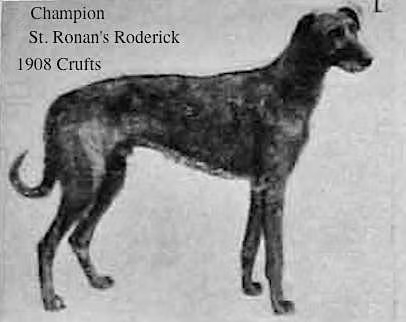
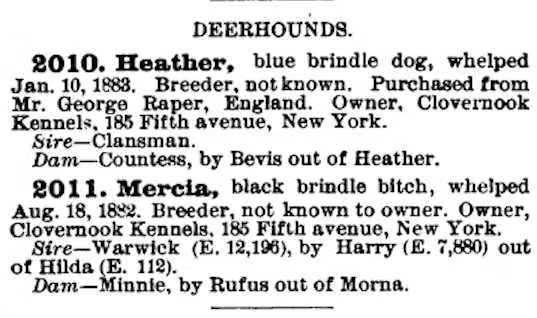

![Oscar (c.1890s) [W.W. Thompson, Esquire], a Male Scottish Deerhound registered with United Pet Club](https://media.unitedpetclub.com/m/G1IXVbgmFF/oscar-c-1890s-w-w-thompson-esquire-scottish-deerhound_orig.avif "Oscar (c.1890s) [W.W. Thompson, Esquire] — Scottish Deerhound")
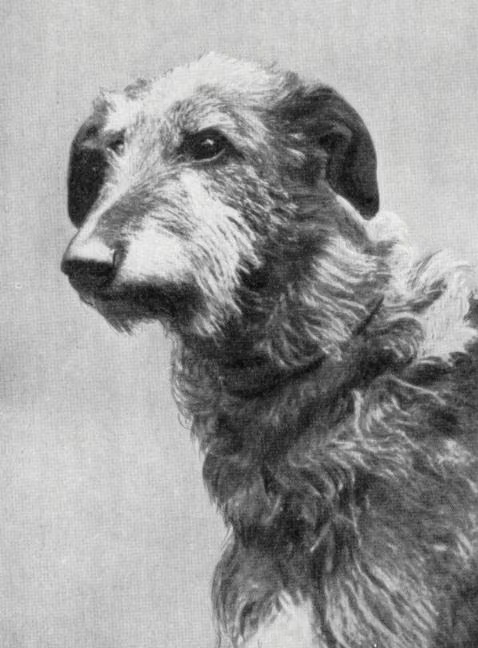

About the Scottish Deerhound
The Scottish Deerhound is a giant sighthound from Scotland, bred to course red deer, calm and affectionate at home, and best suited to secure yards with exercise timed around Australia's heat.
The Scottish Deerhound is one of the tallest dog breeds in the world, a sighthound built in the Scottish Highlands to run down red deer across open moorland. Dogs typically stand 76 to 81 centimetres at the shoulder and weigh 38 to 50 kilograms, putting the breed squarely in the giant category. For all that size, a Deerhound moves with the light, springy stride you'd expect from a coursing hound built for speed rather than bulk.
The coat is harsh and wiry, usually 7 to 10 centimetres long, in shades of grey, brindle, and fawn. Picture a larger, rough-coated Greyhound and you're close to the mark. Temperament-wise, the Deerhound is gentle and dignified rather than boisterous. It's affectionate with its own family, settled and quiet around the house, and reserved without being standoffish toward people it doesn't know.
This is a breed that runs on two settings. Give an adult Deerhound a proper gallop in a secure paddock or fenced area each day, ideally before the heat sets in during summer, and it will happily spend the rest of the day flaked out near its owner. The hunting instinct that made it useful on the moors hasn't gone anywhere, so cats, rabbits, and other small animals on the move can set off a chase.
| Attribute | Detail |
|---|---|
| Origin | Scotland |
| Size | Giant (38 to 50 kg) |
| Lifespan | 8 to 11 years |
| Group / role | Sighthound, deer coursing |
| Good with | Families, older kids, calm households with a secure yard |
Who it suits
A Deerhound suits an owner who can offer daily off-lead or long-line exercise in a securely fenced space, plus room indoors for a big dog to stretch out flat. It's generally quiet and easy to live with at home but doesn't cope well with being left alone for long stretches and needs company. Anyone with very small pets at home should factor in the breed's strong prey drive before bringing one home.
History and origin
The Scottish Deerhound developed in the Highlands as a coursing hound for red deer, was tied to Highland clan nobility for centuries, and was pulled back from the brink of extinction in the 1800s.
Big, rough-coated coursing hounds have been part of life in the British Isles for centuries. In the Scottish Highlands, these dogs were shaped for one job: hunting red deer, the largest land mammal native to the region, across rugged, open country where speed and stamina counted for more than a good nose.
The breed became bound up with the Highland clan system and Scottish nobility. Tradition held that only those of high rank could own a Deerhound, and the dogs were prized gifts passed between aristocratic families. That exclusivity kept numbers low and tied the breed's future directly to the fortunes of the households that kept them.
When the clan system broke down after the 1700s, and hunting and land use shifted with it, the population fell away sharply. By the early 1800s the Deerhound was close to vanishing altogether. Credit for rebuilding the breed generally goes to brothers Archibald and Duncan McNeill, who worked from the 1820s to restore both type and numbers.
The breed found its way into formal dog shows later in the 19th century, and breed standards followed as kennel clubs organised worldwide, the same lineage of organisation that Dogs Australia continues today for breeders and owners here. The Scottish Deerhound has stayed relatively rare ever since, kept mainly by enthusiasts who value its working history as a coursing hound and its calm nature as a companion.
Appearance and breed standard
The Scottish Deerhound looks like an oversized, rough-coated Greyhound, standing up to 81 centimetres tall with a harsh wiry coat in grey, brindle, or fawn.
The Scottish Deerhound carries the deep chest, tucked-up loin, and arched back typical of a coursing hound, all set on a tall, lean frame. The head is long with a tapering muzzle, and the small ears fold back against the neck at rest, lifting part-way when something catches the dog's attention. The whole shape says speed, but with enough substance behind it to hold a full-grown deer.
| Trait | Standard |
|---|---|
| Height | Males 76 to 81 cm; females 71 cm and up |
| Weight | Males 38 to 50 kg; females 34 to 43 kg |
| Coat | Harsh, wiry, 7 to 10 cm; softer hair on head, chest, belly |
| Colours | Dark blue-grey, grey, brindle, yellow, sandy red, fawn |
| Eyes | Dark, usually brown or hazel, with a gentle expression |
Coat and colours
The outer coat feels crisp under the hand and stands up well to weather, with a light beard and eyebrows that give the face its look. Dark blue-grey tends to be the most sought-after shade, though grey, brindle, fawn, and sandy red are all correct. A small patch of white on the chest and toes is accepted under most standards, but large white markings aren't wanted. The coat doesn't need clipping and holds its rough texture through regular hand grooming, which matters in a climate where a dog needs a coat that copes with both weather and heat.
Temperament and personality
Scottish Deerhounds are gentle, calm, and affectionate at home, polite but reserved with strangers, and easygoing overall, though the urge to chase small, fast animals never really switches off.
The Scottish Deerhound has a quiet, dignified way about it. Around the house it's settled and undemanding, happy to rest near its family for most of the day. The breed forms close bonds with its people and is gentle and patient, which makes it a solid match for households with older kids who know how to behave around a very large dog.
With people it doesn't know, the Deerhound is usually polite and a bit reserved rather than wary. It makes a poor guard dog, since aggression toward people just isn't part of its makeup. It generally gets on well with other dogs, especially ones it's grown up with.
The one thing to watch is prey drive. Bred to chase, a Deerhound is wired to run down anything fast-moving, and a cat or small dog outdoors can trigger the chase instinct in an instant. Getting a puppy used to household pets early helps, but a securely fenced yard and a long line in open spaces are sensible precautions regardless. Deerhounds don't do well left alone for long periods and can become unsettled without company.
| Trait | Rating |
|---|---|
| Affection | 5 |
| Energy | 3 |
| Trainability | 3 |
| Vocalness | 2 |
| Shedding | 3 |
Care and grooming
Scottish Deerhounds need a daily gallop in a secure space, regular hand grooming of the wiry coat, and enough room indoors for a giant breed to stretch out.
Grooming
- Brush the coat once or twice a week to clear out dead hair and stop mats forming.
- Hand-strip or pluck out dead coat a few times a year to keep the wiry texture; skip the clippers, as clipping softens the coat.
- Check the beard and wipe it down after meals, since food and water collect there.
- Trim nails every few weeks and check ears and teeth on the same round.
Exercise
- Give the dog at least one chance a day to run flat out in a securely fenced area, timed for the cooler part of the day once summer heat sets in.
- Add a long daily walk on lead for steady, everyday exercise and a change of scenery.
- Use a long line in open, unfenced spaces, given the breed's strong prey drive.
- Go easy on hard, repetitive exercise in growing puppies to protect developing joints.
Environment
The Deerhound settles into home life easily and is generally a quiet housemate, but it needs floor space to stretch out fully and a well-padded bed to cushion its big frame and guard against pressure sores. The coat handles a mild winter reasonably well, but through an Australian summer the dog needs shade, fresh water, and exercise scheduled around the heat rather than through the middle of the day. It shouldn't live outdoors away from the family. A house with a decent-sized, securely fenced backyard is the ideal setup.
Nutrition and feeding
Scottish Deerhounds need a complete diet split into two daily meals, careful portioning through a long growth period, and steps taken to cut the risk of bloat.
A Scottish Deerhound does best on a complete, balanced diet formulated for large and giant breeds. Because the dog is naturally tall and lean, the target is a fit body condition where you can feel the last ribs easily and see a waist from above. Overfeeding piles on weight that puts strain on a giant dog's heart and joints. Puppies keep growing for a long stretch, often well past their first birthday, and do better on a large-breed growth formula that supports steady development rather than a rapid growth spurt.
| Life stage | Amount per day | Meals |
|---|---|---|
| Puppy (2 to 6 months) | Per large-breed puppy formula, split across meals | 3 to 4 |
| Adolescent (6 to 18 months) | Per large-breed formula | 2 to 3 |
| Adult (18 months and up) | Approx. 500 to 700 g, depending on food and activity | 2 |
| Senior | Adult amount, scaled back for lower activity | 2 |
Treats and supplements
Keep treats to roughly 10 percent of daily calories at most, and factor them into the overall ration rather than treating them as extra. Fresh water should be available at all times, especially after exercise and during hot weather. Most Deerhounds on a complete commercial diet don't need extra supplements; run any joint or other supplement past a vet first, particularly for growing puppies, where over-supplementing can cause real harm.
Health and common conditions
Scottish Deerhounds live around 8 to 11 years and are prone to giant-breed issues including bloat, heart disease, bone cancer, and joint problems, so preventive care counts.
For a giant breed, the Scottish Deerhound holds up reasonably well, but its size brings a shorter average lifespan of about 8 to 11 years and a set of health issues common to large, deep-chested dogs. Responsible breeders screen breeding stock for heart and bone conditions, and owners can make a real difference through diet, sensible exercise, and getting to the vet promptly when something seems off.
| Condition | Signs | Note |
|---|---|---|
| Gastric dilatation-volvulus (bloat) | Swollen abdomen, retching, restlessness, distress | Life-threatening emergency; get to a vet immediately |
| Dilated cardiomyopathy | Tiredness, cough, fainting, weakness | Heart muscle disease seen in the breed |
| Osteosarcoma (bone cancer) | Limping, swelling on a limb, pain | More common in giant breeds |
| Hypothyroidism | Weight gain, lethargy, coat changes | Managed with daily medication |
| Joint problems | Stiffness, limping, reluctance to get up | Affects hips and elbows in large dogs |
Preventive care
- Keep core vaccinations and parasite control current.
- Maintain a lean body condition to take pressure off the heart and joints.
- Feed measured meals and hold off on activity around eating to lower bloat risk.
- Book regular vet checks, including heart screening where advised.
- Get any new lameness or swelling looked at promptly, don't wait it out.
Training and socialisation
Scottish Deerhounds are smart but independent; they do best with patient, reward-based training and early socialisation, while recall around prey stays a lifelong challenge.
The Scottish Deerhound is a clever dog, but it carries the independent streak typical of sighthounds. It was bred to work well out from its handler and make its own calls mid-chase, so it doesn't have the eager-to-please instinct you'd find in some working breeds. Training goes best when sessions are short, calm, and consistent. Harsh corrections knock the confidence out of this sensitive breed and tend to set training back rather than move it forward. Recall is the toughest thing to get solid, because a Deerhound chasing something on the move may tune out commands entirely; that's why secure fencing and a long line stay part of the picture for the dog's whole life.
Basics
- Start socialisation early, introducing the puppy to people, places, sounds, and other animals.
- Teach a solid name response and a sit using small food rewards.
- Build loose-lead walking before the puppy reaches full size and strength.
- Practise recall inside a fenced area first, rewarding generously every time the dog comes back.
- Introduce a calm settle and crate routine so the dog learns to rest quietly indoors.
Breeding
Scottish Deerhound breeding calls for mature, health-screened parents; a litter is usually moderate to large after a pregnancy of about nine weeks, with pups maturing slowly.
Breeding Scottish Deerhounds is best left to experienced breeders who screen for the heart and bone conditions known in the breed. Dogs need to be physically and mentally mature before breeding, which for a giant breed means holding off well past the first season or two. Health-tested parents, careful pairing, and a genuine commitment to support puppy buyers for the dog's whole life are what mark out a responsible breeder.
The female carries for roughly 63 days, about nine weeks. Litters tend to run moderate to large. Given the dam's size, whelping needs space, close supervision, and a vet on call, since giant breeds can hit complications during delivery. Puppies grow slowly and don't reach full adult size and substance until well past a year old, so feeding and exercise need managing carefully to protect developing bones and joints. Early socialisation in the breeder's home sets up the calm adult temperament the breed is known for.
| Metric | Value |
|---|---|
| Sexual maturity | Around 18 months or later for breeding |
| Gestation | Approx. 63 days (about 9 weeks) |
| Average litter size | Commonly 6 to 8 puppies |
| Weaning age | About 6 to 8 weeks |
| Full maturity | Past 18 months; substance fills out later |
Getting your Scottish Deerhound registered, chip and all
A free lifetime United Pet Club record for your Scottish Deerhound, with the microchip registered at no charge and nothing falling due each year.
How to register a Scottish Deerhound in Australia
Rangers and shelters can only call the number the scan hands them. Give your Scottish Deerhound a free United Pet Club profile and that number is yours: dog registration takes a few minutes, costs nothing for his lifetime, and works with or without a chip in place.
The vet does the implant and not one thing more; the register entry is yours. Register the microchip free on the lifetime plan: every brand an Aussie vet reaches for qualifies, moving house costs nothing to record, and the number stays searchable round the clock. Create your free account and sort the lot in one go.
How do I register my Scottish Deerhound in Australia?
Sign up free with United Pet Club, add his name, breed, and a photo, and you're done. The lifetime plan keeps the profile live at no cost, and the chip number can go in whenever the vet's done his bit.
How do I register my Scottish Deerhound's microchip?
Add the 15-digit number to your free account with your address and mobile. Registration and every update after it are free, and chips from any manufacturer an Australian vet implants are accepted.
Does my Scottish Deerhound have to be microchipped in Australia?
In most states and territories, yes, chipping is required and the register entry comes with it. The state register and your United Pet Club record do different jobs: one satisfies the council, the other keeps a current phone number one scan away, free.
What does it cost to register a Scottish Deerhound?
Nothing with United Pet Club. Profile, chip registration, and unlimited updates are covered for his whole life, no annual fee in sight.
Frequently asked questions
Common questions about the Scottish Deerhound cover size, temperament, care needs, lifespan, suitability, and where to find one.
How big do Scottish Deerhounds get?
It's a giant breed. Males typically stand 76 to 81 cm at the shoulder and weigh 38 to 50 kg; females are a bit smaller. It's one of the tallest dog breeds around.
Are Scottish Deerhounds good with families?
Yes, in the right home. They're gentle, calm, and affectionate, and they get along well with older kids. Given their size and prey drive, households with very young children or small pets need to supervise closely.
Are Scottish Deerhounds high maintenance?
Care is moderate rather than heavy. The wiry coat needs a weekly brush and the odd hand-strip, and the dog needs a daily run in a secure space. The main things to sort out are enough room for a giant dog and managing exercise to protect growing joints.
How long do Scottish Deerhounds live?
About 8 to 11 years, which is typical for a giant breed. Good diet, a lean body condition, and regular vet care all help support a healthy lifespan.
Do Scottish Deerhounds suit apartment living?
They can adapt to a smaller home since they're quiet and restful indoors, but they still need daily access to a secure space where they can properly stretch their legs. A house with a decent fenced backyard suits them best.
Are Scottish Deerhounds rare in Australia?
Yes, they're an uncommon breed here, kept mainly by enthusiasts. Finding a puppy usually means getting in touch with a registered breeder through Dogs Australia and going on a waiting list rather than buying on the spot.
Can you let a Scottish Deerhound off lead?
Only in a securely fenced area. The breed's strong prey drive means a Deerhound might take off after anything fast-moving and ignore recall entirely, so a long line is the safer bet in open, unfenced spaces.
From the community
Ask about the Scottish DeerhoundNo questions about the Scottish Deerhound yet. Be the first to ask.
Browse Dog breeds