
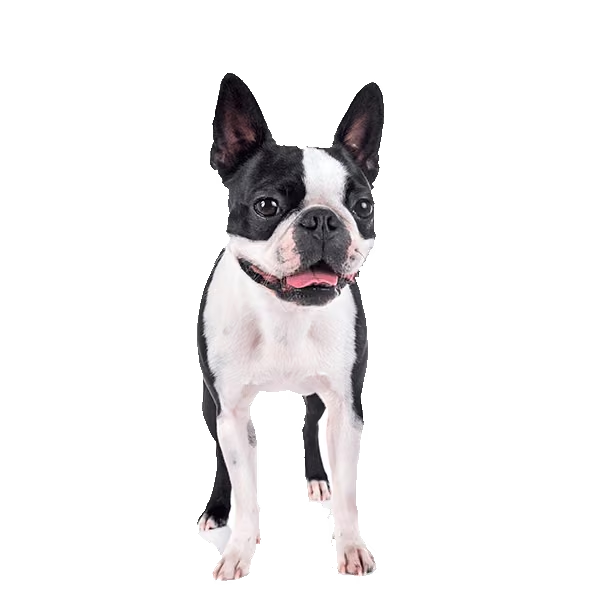
Rat Terrier
The Rat Terrier is a spirited, intelligent American farm dog prized for its versatility, friendly temperament, and tireless vermin-hunting drive.
- Size
- Small
- Lifespan
- 12–18 years
- Origin
- United States
- Temperament
- Spirited
- Standard colors
- Black, White and Blue and 7 more
Characteristics
Coat and grooming
How the Rat Terrier coat is built, and what that means when you groom it.
- Coat layers
- Single coat
- Coat texture
- Smooth
- Coat length
- Short
- Shedding
- Moderate shedding
Rat Terrier colors and patterns
What each club's breed standard says about every Rat Terrier color and pattern. Point at a ruling to see the club's own wording.
Breed standards describe the Rat Terrier in Black, White, Blue, Silver, Chocolate, Tan, Red, Lemon, Fawn and Apricot. Standard patterns: Solid, Bicolour, Tricolour, Piebald, Roan, Sable, Spotted and Tan point.
| Color or pattern | AKC | UKC |
|---|---|---|
| Black | Standard (“Black & White”) | Standard (“black”) |
| White | Standard (“White”) | Standard (“solid white ... must always have some white”) |
| Blue | Standard (“White & Blue”) | Standard (“blue and blue fawn”) |
| Silver | Standard (“White & Silver”) | Fault (“silver (the extreme dilution of blue)”) |
| Chocolate | Standard (“White & Chocolate”) | Standard (“chocolate (ranging from dark liver to light chocolate)”) |
| Tan | Standard (“White & Tan”) | Standard (“tan (ranging from dark tan to very light tan)”) |
| Red | Standard (“White & Red”) | Standard (“tan (... from intense dark mahogany red to light red)”) |
| Lemon | Standard (“White & Lemon”) | Standard (“lemon”) |
| Fawn | Standard (“White & Fawn”) | Fault (“Fawn (pale yellowish tan with self-colored nose)”) |
| Apricot | Standard (“White & Apricot”) | Standard (“apricot”) |
| Cream | Not recognised | Fault (“cream (pale yellow to off-white)”) |
| Albino | Not recognised | Disqualifying (“albinism”) |
| Patterns | ||
| Solid | Standard (“the "solid white" extreme piebald dog; never a solid ground color without white”) | Standard (“may be solid white; disqualification: any solid color other than white”) |
| Bicolour | Standard (“White & Black”) | Standard (“bi-color”) |
| Tricolour | Standard (“White Black & Tan”) | Standard (“tri-color”) |
| Piebald | Standard (“Piebald”) | No ruling |
| Roan | Standard (“Speckling, ticking and mottling is common, but heavy ticking is undesirable”) | Standard (“The white area may be ticked as long as white predominates”) |
| Sable | Standard (“Sabling is permitted”) | Standard (“Colored areas may have sable overlay”) |
| Spotted | Standard (“Spotted Or Patched”) | No ruling |
| Tan point | Standard (“Tan Points”) | No ruling |
| Brindle | Disqualifying (“Brindle or merle color patterns”) | Disqualifying (“Brindle”) |
| Merle | Disqualifying (“Brindle or merle color patterns”) | Disqualifying (“merle”) |
| Reverse brindle | Disqualifying (“Brindle or merle color patterns”) | Disqualifying (“Brindle”) |
| Double merle | No ruling | No ruling |


| Color or pattern | AKC | UKC |
|---|---|---|
| Grey | Standard (“Gray eyes are acceptable in blue or blue-fawn dogs only”) | Standard (“a dark gray eye with gray eye rims is preferred”) |
| Blue | Disqualifying (“Any blue in the eye(s) is a disqualification”) | Standard (“Blue or amber eyes are permitted in blue-colored dogs only”) |
| Dark brown | Standard (“from darkest brown to hazel”) | Standard (“dark brown”) |
| Hazel | Standard (“from darkest brown to hazel”) | Standard (“Hazel eyes are acceptable in dogs with lighter coat color”) |
| Amber | No ruling | Standard (“Blue or amber eyes are permitted in blue-colored dogs only”) |
| Light brown | No ruling | Fault (“light-colored eyes in a dog with black coat color or black pigment”) |
| Patterns | ||
| Odd-eyed | No ruling | Fault (“both eyes not of matching colors”) |
| Sectoral | Disqualifying (“Any blue in the eye(s) is a disqualification”) | Fault (“eye with iris containing more than one color”) |


| Color or pattern | AKC | UKC |
|---|---|---|
| Black | No ruling | Standard (“The nose is black or self-colored”) |
| Blue | No ruling | Standard (“blue and blue fawn (with self-colored nose)”) |
| Liver | No ruling | Standard (“chocolate ... with self-colored nose”) |
| Pink | Fault (“Flesh-colored noses are considered a fault in lemon or light apricot colorations”) | No ruling |
| Dudley | No ruling | Fault (“Dudley ... nose”) |
| Patterns | ||
| Butterfly nose | No ruling | Fault (“Dudley or butterfly nose”) |

What the rulings mean
- Standard
- Described by the club's breed standard.
- Fault
- Named by the club's breed standard as a fault: the animal can be shown but is penalised.
- Disqualifying
- The club's breed standard disqualifies an animal of this colour or pattern.
- Not recognised
- The club does not accept this colour or pattern for the breed.
Color changes
How a Rat Terrier's colors can change over its life.
Blackchanges toRust
Coat · With body condition · can change back
Blackchanges toGrey
Coat · Progressive
Blackchanges toBrown
Coat · In the sun · can change back
Whitechanges toRoan
Coat · With age · from 2 weeks
Tan pointchanges toSaddle
Coat · With age · from 6 to 156 weeks
Bluechanges toDark brown
Eyes · With age · from 2 weeks
Bluechanges toBrown
Eyes · With age · from 2 weeks
Bluechanges toLight brown
Eyes · With age · from 2 weeks
Bluechanges toAmber
Eyes · With age · from 2 weeks
Bluechanges toHazel
Eyes · With age · from 2 weeks
Bluechanges toYellow
Eyes · With age · from 2 weeks
Blackchanges toSnow nose
Nose · With the season · can change back
Blackchanges toPink
Nose · With the season · can change back


Sources
Each ruling comes from the club's published breed standard or color list.
Meet some of our Rat Terrier
A few of the Rat Terrier profiles members have added to United Pet Club.




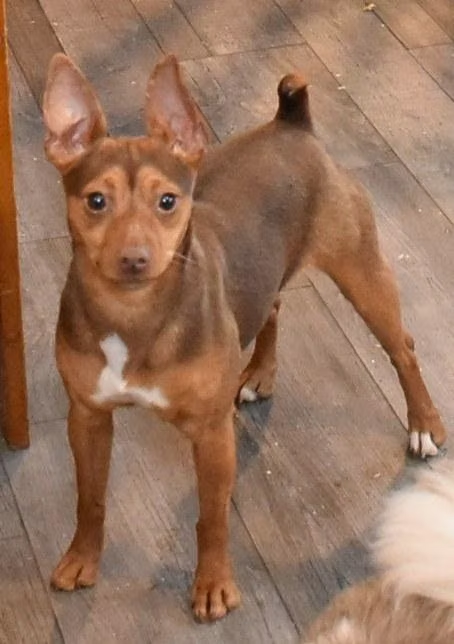


About the Rat Terrier
The Rat Terrier is a small, sharp-witted American farm dog with a friendly nature, high energy, and a strong urge to hunt vermin.
The Rat Terrier is a small working dog that was developed in the United States as an all-round farm companion and vermin hunter. It pairs a compact, muscular build with a sharp mind and steady nerves, and it earned its keep on American farms right through the early twentieth century. Most adults stand between 25 and 46 cm at the shoulder and weigh roughly 4.5 to 11 kg, depending on the line and the individual dog.
Some registries recognise two size types, a miniature and a standard, but both carry the same alert expression and easy short coat. Rat Terriers are people dogs through and through, and they bond closely with their household. They stay active well into adulthood and hold onto the hunting instincts that shaped the breed.
This is a dog that wants a job and company. It suits owners with an active routine who can offer daily exercise, mental stimulation, and a securely fenced yard or supervised time outdoors.
| Attribute | Detail |
|---|---|
| Origin | United States |
| Size | Small (about 4.5 to 11 kg) |
| Lifespan | 12 to 18 years |
| Group / role | Terrier, farm dog and vermin hunter |
| Good with | Families, older kids, and households that enjoy an active dog |
Who it suits
The Rat Terrier suits a household that can keep pace with a busy, inquisitive dog. It goes well with owners after a small companion that is still hardy and athletic. First-time owners can manage the breed if they commit to early socialisation and a consistent routine, because the dog's drive and intelligence need somewhere to go.
History of the Rat Terrier
The Rat Terrier was developed in the United States from several British terrier types and became a familiar farm and vermin-control dog in the early 1900s.
The Rat Terrier's roots go back to terriers brought to North America by British immigrants in the nineteenth century. Early stock drew on the same European working terriers that fed many ratting breeds of the period, including types that were ancestors of the Manchester Terrier and the smooth Fox Terrier.
American farmers crossed these terriers with other breeds to sharpen particular traits. Outcrosses to the Beagle and the Whippet are often mentioned, adding scenting ability and speed to the original digging and killing instinct. The result was a versatile farm dog that could clear barns and paddocks of rats and other small pests.
The name Rat Terrier came into common use in the early twentieth century, and the breed was a familiar sight on American farms of that era. As farming practices changed and chemical pest control spread through the mid-1900s, numbers fell, and the breed survived mostly in rural pockets and among dedicated keepers.
Formal breed recognition came later. The United Kennel Club recognised the Rat Terrier in 1999, and the American Kennel Club granted full recognition in 2013, placing it in the Terrier Group. These steps helped set the standard down in writing while the breed kept much of its working character.
Rat Terrier appearance
The Rat Terrier is a small, compact, muscular dog with a short smooth coat, erect or button ears, and a wide range of colour patterns.
The Rat Terrier has a balanced, athletic outline that reads as sturdy rather than fine-boned. The body is slightly longer than it is tall, with a deep chest, level topline, and clean muscling suited to a dog built for digging and short bursts of speed. The head is wedge-shaped with a moderate stop, and the ears may stand erect, fold into a button, or tip at the crown.
Movement is smooth and economical, a throwback to the breed's working days. Despite the small frame, the overall impression is one of strength and agility.
| Trait | Standard |
|---|---|
| Height | Miniature about 25 to 33 cm; standard about 33 to 46 cm at the shoulder |
| Weight | About 4.5 to 11 kg |
| Coat | Short, dense, and smooth |
| Colours | Often pied (white with coloured patches); black, chocolate, tan, blue, lemon, and combinations |
| Eyes | Round to slightly oval, dark, with an alert expression |
Coat and colours
The coat is short and close-lying, which keeps grooming simple and shedding moderate. Most Rat Terriers carry a pied pattern, a white base with one or more coloured patches, though solid and bicolour dogs turn up too. Common colours include black, chocolate, tan, blue, and lemon, often with tan points or ticking. The skin under the coat is tight, and the short hair gives limited protection once the mercury drops, so a coat is worth having on hand for cold snaps.
Rat Terrier temperament
The Rat Terrier is friendly, alert, and clever, devoted to its family while staying watchful with strangers and keen to chase small animals.
The Rat Terrier is affectionate and stays close to its people. It tends to bond with the whole household and often trails family members from room to room. With kids it is usually playful and patient, and it does best with older children who know how to handle a lively small dog.
With strangers the breed is alert and sometimes a bit reserved. It sounds the alarm on visitors and notices changes around the place, so it doubles as a capable watchdog despite its size. Early socialisation helps it settle quickly once it works out a newcomer is welcome.
Around other pets the picture is mixed. Rat Terriers generally get on well with dogs they are raised alongside, but the strong prey drive means small animals such as rodents, rabbits, and sometimes cats can set off a chase. Secure fencing and supervision are worth the effort. The breed is sharp and quick to learn, but that same intelligence can tip into stubborn or mischievous behaviour without enough to do.
| Trait | Rating |
|---|---|
| Affection | 5 |
| Energy | 4 |
| Trainability | 4 |
| Vocalness | 3 |
| Shedding | 2 |
Rat Terrier care
The Rat Terrier needs daily exercise and mental work, but its short coat keeps grooming simple and low maintenance.
Grooming
- Brush the short coat once a week to clear loose hair and spread skin oils.
- Bathe only when needed, since frequent washing can dry out the skin.
- Trim nails every two to four weeks to keep the feet comfortable.
- Check and clean the ears regularly, especially on dogs with folded ear tips.
- Brush teeth several times a week to support dental health.
Exercise
- Provide at least 45 to 60 minutes of activity each day, split between walks and play.
- Add games that work the nose and the mind, such as scent searches or puzzle feeders.
- Give a securely fenced area for off-lead running, since the prey drive makes recall unreliable near small animals.
- Time exercise for the cooler parts of the day over summer; heat builds fast on bitumen and bare ground, and a hot surface can burn paws in minutes.
- Use structured activities like agility, earthdog trials, or flyball to burn off energy.
Environment
The Rat Terrier settles into an apartment or a house as long as it gets enough daily exercise. It prefers to be near its family and can develop nuisance behaviours if left alone for long stretches. The short coat means the dog feels the cold quickly, so a coat or jumper helps through the cooler months, and shade plus fresh water are essential once the summer heat sets in.
Rat Terrier nutrition
The Rat Terrier does well on a complete diet suited to small, active dogs, with portions controlled to prevent weight gain.
The Rat Terrier needs a balanced, complete diet formulated for its life stage and activity level. An active adult benefits from quality protein to support lean muscle, with calories matched to how much the dog moves each day. Because the breed is small and food-motivated, portions should be measured rather than left out ad lib, to avoid excess weight, which puts strain on the joints and shortens healthy years.
Fresh water should always be on hand. Most owners feed a commercial diet labelled complete and balanced; a home-prepared diet should be planned with a vet to avoid gaps.
| Life stage | Amount per day | Meals |
|---|---|---|
| Puppy (2 to 6 months) | About 60 to 120 g, by weight and product | 3 to 4 |
| Junior (6 to 12 months) | About 60 to 120 g | 2 to 3 |
| Adult | About 60 to 120 g | 2 |
| Senior | Adjusted slightly down for lower activity | 2 |
Treats and supplements
Keep treats to roughly 10 percent of daily calories and use small pieces for training. Most Rat Terriers on a complete diet do not need supplements. Talk to a vet about joint, skin, or coat supplements before adding them, and trim meal portions on days with heavy treat use.
Rat Terrier health
The Rat Terrier is generally healthy with a long lifespan of 12 to 18 years, though it can be prone to a few joint, eye, and dental conditions.
The Rat Terrier is a hardy breed and often lives 12 to 18 years. Many lines stay sound well into old age, partly because the breed kept its working background rather than being bred for extreme physical features. Even so, sound care and routine vet checks help catch problems early. Reputable breeders screen their breeding stock for known issues and share results with buyers.
| Condition | Signs | Note |
|---|---|---|
| Patellar luxation | Skipping gait, intermittent hind-leg lameness | Common in small breeds; ranges from mild to needing surgery |
| Hip dysplasia | Stiffness, reduced activity, trouble rising | Less frequent than in large breeds but possible |
| Dental disease | Bad breath, tartar, red gums | Small jaws crowd the teeth; routine dental care helps |
| Allergies and skin issues | Itching, ear infections, hair loss | May be food-related or environmental |
| Eye conditions | Cloudiness, changes in vision | Screening recommended in breeding dogs |
Preventive care
- Book annual vet exams, with twice-yearly visits for seniors.
- Keep vaccinations and parasite prevention up to date.
- Maintain a healthy weight to protect the joints.
- Brush teeth regularly and arrange professional dental cleans as advised.
- Ask breeders for health clearances on patellas, hips, and eyes.
Training a Rat Terrier
The Rat Terrier is clever and quick to learn, and it responds best to short, varied, reward-based sessions that hold its attention.
The Rat Terrier picks things up fast and enjoys the challenge of training. That intelligence cuts both ways, because a bored or under-exercised dog will invent its own games, usually ones the owner would rather it didn't. Keep sessions short and upbeat, and finish on a win. The breed's prey drive and independent streak mean recall and impulse control need steady, patient work, especially around small animals.
Socialisation should start early. Exposing the puppy to a range of people, dogs, surfaces, and sounds builds the confident, settled adult the breed can become.
Basics
- Start with name recognition and attention games in a quiet space.
- Teach sit, down, and stay using small food rewards.
- Build a reliable recall over time, starting on a long line in safe areas.
- Add lead manners and gentle exposure to new environments.
- Bring in enrichment such as scent work or trick training to occupy the dog's mind.
Breeding the Rat Terrier
Rat Terriers reach maturity at around one to two years, carry litters of about three to six puppies, and benefit from health screening before breeding.
Responsible Rat Terrier breeding starts with health-tested parents and sound temperaments. Females generally should not be bred until they are physically mature, often after the first year and once health clearances are in hand. Gestation in dogs runs about 63 days from conception, and litter sizes for the breed typically fall between three and six puppies, though smaller and larger litters happen.
Raising the litter calls for a clean, warm whelping area and close monitoring of the dam and pups through the first weeks. Puppies should stay with the mother and littermates until at least eight weeks, which supports their social development. Early gentle handling and exposure during this window help produce well-adjusted adults. Breeding is best left to people who can commit to health screening, lifelong support of the puppies they produce, and finding them suitable homes.
| Metric | Value |
|---|---|
| Sexual maturity | About 6 to 12 months (breed later, once fully mature) |
| Recommended breeding age | After about 1 to 2 years, with health clearances |
| Gestation | About 63 days |
| Average litter size | About 3 to 6 puppies |
| Weaning age | About 6 to 8 weeks |
| Earliest rehoming | 8 weeks or later |
Getting your Rat Terrier registered, chip and all
A free lifetime United Pet Club record for your Rat Terrier, with the microchip registered at no charge and nothing falling due each year.
How to register a Rat Terrier in Australia
Rangers and shelters can only call the number the scan hands them. Give your Rat Terrier a free United Pet Club profile and that number is yours: dog registration takes a few minutes, costs nothing for his lifetime, and works with or without a chip in place.
The vet does the implant and not one thing more; the register entry is yours. Register the microchip free on the lifetime plan: every brand an Aussie vet reaches for qualifies, moving house costs nothing to record, and the number stays searchable round the clock. Create your free account and sort the lot in one go.
How do I register my Rat Terrier in Australia?
Sign up free with United Pet Club, add his name, breed, and a photo, and you're done. The lifetime plan keeps the profile live at no cost, and the chip number can go in whenever the vet's done his bit.
How do I register my Rat Terrier's microchip?
Add the 15-digit number to your free account with your address and mobile. Registration and every update after it are free, and chips from any manufacturer an Australian vet implants are accepted.
Does my Rat Terrier have to be microchipped in Australia?
In most states and territories, yes, chipping is required and the register entry comes with it. The state register and your United Pet Club record do different jobs: one satisfies the council, the other keeps a current phone number one scan away, free.
What does it cost to register a Rat Terrier?
Nothing with United Pet Club. Profile, chip registration, and unlimited updates are covered for his whole life, no annual fee in sight.
Rat Terrier frequently asked questions
Common questions about Rat Terrier size, temperament, care needs, lifespan, suitability, and availability.
How big do Rat Terriers get?
Rat Terriers are small dogs. Miniatures stand about 25 to 33 cm at the shoulder and standards about 33 to 46 cm, with weight ranging from roughly 4.5 to 11 kg depending on type and individual.
Are Rat Terriers good with families?
Yes. They are friendly and affectionate with their own family and usually playful with kids, doing best with older children. Early socialisation helps them settle around visitors and other pets.
Are Rat Terriers hard work to look after?
Grooming is easy thanks to the short coat, but the breed is high energy and sharp. The main job is meeting its daily exercise and mental stimulation needs so it doesn't get bored.
How long do Rat Terriers live?
The breed is long-lived for a dog, often reaching 12 to 18 years with good care, a healthy weight, and routine vet attention.
Do Rat Terriers get along with cats and small pets?
It depends. They can live happily with cats and dogs they are raised with, but a strong prey drive means small animals like rodents and rabbits may be chased. Supervision and secure spaces matter.
Are Rat Terriers easy to find in Australia?
The breed is less common here than in the United States, so a wait list through a registered breeder is likely, and it is worth checking rescue groups too. Always ask about health clearances before committing.
Do Rat Terriers bark a lot?
They are alert and will sound off at visitors or unusual activity, which makes them handy watchdogs. Excessive barking is usually a sign of boredom and eases off with enough exercise and training.
From the community
Ask about the Rat TerrierNo questions about the Rat Terrier yet. Be the first to ask.
Browse Dog breeds