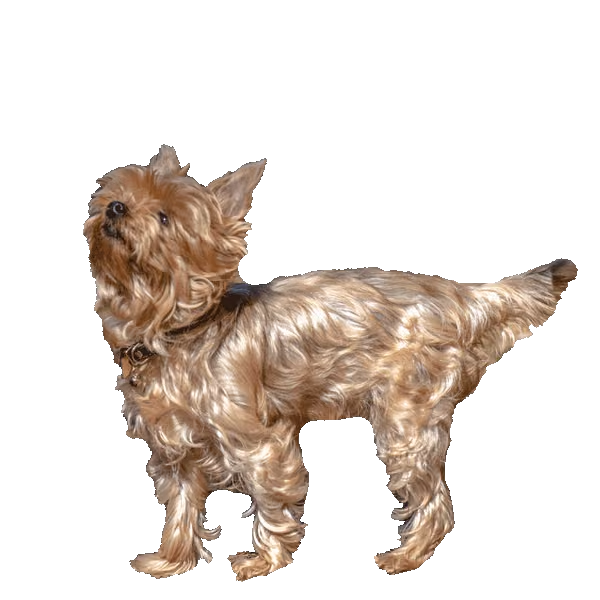
The Pumi is a lively, whimsical Hungarian herding breed known for its spirited energy and quick, clever mind.
How the Pumi coat is built, and what that means when you groom it.
Caution: A Pumi coat mats easily.
Fine or long hair tangles at the base of the coat, out of sight, where the mats tighten and pull on the skin. Brushing has to reach right down to the roots in sections, not just skim the surface.
Information: A Pumi needs clipping every few weeks.
This coat keeps growing rather than shedding out, so it has to be trimmed every few weeks. Left to grow it mats down against the skin and traps moisture, dirt and heat.
The Pumi is a medium-sized Hungarian herding dog with a corkscrew-curly coat, high energy, and a quick, clever mind suited to active homes.
The Pumi (plural Pumik) is a medium herding dog from Hungary. It was bred to move and gather livestock, mainly sheep, in close-quarters work that rewards speed, agility, and fast decisions. The breed is easy to pick out by its corkscrew-curly coat and its high-set, expressive ears that fold over at the tips.
A Pumi is alert and busy. It watches its surroundings, reacts fast to movement and sound, and tends to use its voice. Owners call the breed whimsical, partly for its lively expression and its readiness to join in with whatever is going on nearby. The dog attaches closely to its family and would rather be in the thick of daily activity than left on its own for long stretches.
This is a working breed that has kept much of its drive. It needs a job, training, or sport to settle. Given enough physical and mental work, the Pumi is responsive, affectionate, and well-mannered indoors.
| Attribute | Detail |
|---|---|
| Origin | Hungary |
| Size | Medium |
| Lifespan | 12 to 13 years |
| Group/role | Herding (sheep and general livestock) |
| Good with | Active families, older children, homes that can provide daily exercise and training |
The Pumi suits people who want an active, trainable mate and can commit to daily exercise plus regular mental work. It does well with owners who enjoy dog sports such as agility, obedience, or herding trials. It is a poor fit for a household out at work all day or after a quiet, low-energy dog, because an under-exercised Pumi tends to bark and make its own fun.
The Pumi developed in Hungary from older herding stock crossed with imported terrier and herding dogs, taking shape as a distinct breed by the seventeenth and eighteenth centuries.
The Pumi comes from Hungary, where it drove and herded livestock on farms. It shares ancestry with the Puli, the older Hungarian herding dog. The Pumi took shape when the Puli and related local herders were crossed with terrier-type and herding dogs brought into the region from western and central Europe, including German and French stock.
This mixing is generally dated to roughly the seventeenth and eighteenth centuries. The result was a more terrier-influenced dog with a curly rather than corded coat, a lighter build, and the quick, vocal driving style needed to move stock in tight spaces and along roads.
For a long time the Pumi was not separated from the Puli in records, and the two were counted together. The Pumi was recognised as a distinct breed in Hungary during the early twentieth century, and a formal standard followed. Breeders worked to fix the curly coat, the folded ear, and the alert herding temperament that set the Pumi apart.
The breed stayed mainly a Hungarian working dog for much of its history before spreading abroad. It gained wider recognition over the twentieth and early twenty-first centuries, reaching Australia among other countries, and is now kept as a working herder, a companion, and a sport dog. It is registered here with the Australian National Kennel Council.
The Pumi is a medium, square-built dog with a distinctive curly coat, a long head, and high-set ears that fold over at the tips, giving it an alert, whimsical look.
The Pumi is a square, medium-sized dog of light to moderate build. Its outline is lean and athletic, with a long, narrow head and a slightly raised, lively carriage. The most recognisable features are the curly coat and the ears, which are high-set and carried with the upper third folding forward. The overall impression is alert, quick, and a little comical.
| Trait | Standard |
|---|---|
| Height | Males about 41 to 47 cm; females about 38 to 44 cm at the withers |
| Weight | Males about 10 to 15 kg; females about 8 to 13 kg |
| Coat | Medium-length, curly and wavy, with a mix of harsh topcoat and softer undercoat; not corded |
| Colours | Grey (various shades), black, white, and fawn (maszkos fako) |
| Eyes | Medium-sized, dark, oval, set somewhat obliquely with a keen expression |
The coat is a mix of curl and wave, formed from both topcoat and undercoat in roughly even proportion. It is never corded like the Puli. Grey is the most common colour and appears in many shades, with most grey pups born black and lightening as they mature. Black, white, and fawn also occur. The coat does not shed heavily and instead grows continuously, so it needs trimming and regular combing to keep its texture and shape.
The Pumi is spirited, intelligent, and energetic, devoted to its family, reserved with strangers, and inclined to bark, which makes it a watchful and highly trainable companion.
The Pumi is spirited and quick to react. It is intelligent and learns fast, which makes it a strong performer in training and dog sports but also means it needs steady direction and a job to do. Left without enough activity, the breed tends to become restless and noisy.
With its family the Pumi is affectionate and closely bonded, and it likes to be part of whatever its people are doing. It is alert and naturally watchful, so it usually greets visitors and unfamiliar sounds with barking. Toward strangers it is often reserved at first and warms up once it has sized up the situation. Early, ongoing socialisation helps it stay confident rather than wary.
With other pets the Pumi can live well alongside dogs and animals it is raised with, though its herding drive may show as chasing or nipping at fast movement, which training can manage. It generally suits homes with older children who know how to handle an active, sensitive dog.
| Trait | Rating |
|---|---|
| Affection | 5 |
| Energy | 5 |
| Trainability | 5 |
| Vocalness | 5 |
| Shedding | 2 |
The Pumi needs regular combing and periodic trimming for its curly coat, daily vigorous exercise, and steady mental work to stay content in most home settings.
The Pumi adapts to different homes, units included, when given enough daily exercise and training. Its tendency to bark is the main thing to manage where neighbours are close, and it should be handled through training and enough stimulation. A securely fenced yard suits the breed but does not replace active exercise and company. In hot weather, walk in the cooler parts of the day and provide shade and water.
Feed the Pumi a complete diet matched to its life stage and activity level, split into measured daily meals, with portions adjusted to keep this athletic breed lean.
The Pumi does well on a complete, balanced dog food suited to its age, size, and activity level. As an active working breed, a Pumi in regular sport or herding work may need more energy than a pet kept at moderate exercise. Adjust portions to keep the dog lean, with a visible waist and ribs that can be felt under a light cover of muscle and fat. Provide fresh water at all times.
| Life stage | Amount per day | Meals |
|---|---|---|
| Puppy (2 to 6 months) | Per product guide for expected adult weight | 3 to 4 |
| Junior (6 to 12 months) | Per product guide, tapering toward adult amount | 2 to 3 |
| Adult (1 to 7 years) | About 150 to 250 g of quality dry food | 2 |
| Senior (8+ years) | Slightly reduced if activity drops | 2 |
Keep treats to no more than about ten percent of daily kilojoules, which matters for a food-motivated breed used in reward-based training. Use small, low-kilojoule treats during sessions. A dog on a complete commercial diet usually needs no supplements; introduce any supplement, such as joint support, only on veterinary advice.
The Pumi is a generally healthy breed with a lifespan of about 12 to 13 years, with a few inherited conditions that responsible breeders screen for.
The Pumi is generally a healthy, hardy breed with a typical lifespan of 12 to 13 years. As with most pedigree dogs, a small number of inherited conditions occur, and reputable breeders test their stock and choose mating pairs to reduce the risk of passing them on. Routine veterinary care, weight control, and dental hygiene support a long, active life.
| Condition | Signs | Note |
|---|---|---|
| Hip dysplasia | Stiffness, limping, reluctance to jump or run | Screen breeding dogs; keep the dog lean to reduce joint load |
| Patellar luxation | Intermittent skipping or holding up a hind leg | Ranges from mild to surgical; check at vet visits |
| Degenerative eye conditions | Cloudiness, vision changes, bumping into objects | Eye screening of breeding stock helps reduce risk |
| Primary lens luxation | Red, painful, or cloudy eye; sudden vision change | DNA testing available; a veterinary emergency if acute |
The Pumi is highly trainable and eager to work, responding best to short, varied, reward-based sessions that channel its energy and reduce nuisance barking.
The Pumi is one of the more trainable herding breeds. It is quick to learn, keen to work with its handler, and well suited to obedience, agility, herding, and trick training. That same quickness means it needs consistent rules and enough mental challenge, or it will invent its own activities, often involving barking. The breed is sensitive, so firm but gentle, reward-based methods work far better than harsh corrections.
Start training and socialisation early. Expose the pup to varied people, dogs, places, and sounds to build confidence and soften the breed's natural reserve with strangers. Build a reliable recall before allowing off-lead freedom, since the herding instinct can trigger chasing.
The Pumi reaches breeding maturity at around two years, with a roughly nine-week pregnancy producing a small to moderate litter that needs early socialisation.
Breeding a Pumi calls for the same care as any pedigree dog. Breeding stock should be physically mature, health-tested for conditions known in the breed, and of sound temperament. Although bitches can come into season earlier, responsible breeders generally wait until around two years of age so the dog is fully mature and health screening is complete.
Pregnancy lasts about 63 days from conception, roughly nine weeks. Litters are typically small to moderate. Puppies are usually born black or dark and, in the case of grey dogs, lighten as they grow. Early handling and socialisation matter for this alert, sensitive breed, so the litter should be raised in the home with exposure to everyday sights, sounds, and gentle human contact from the first weeks. Puppies generally go to new homes at around eight weeks or later, once weaned and well started on socialisation.
| Metric | Value |
|---|---|
| Breeding maturity | Around 2 years (recommended) |
| Gestation | About 63 days (roughly 9 weeks) |
| Typical litter size | Small to moderate (commonly a few puppies) |
| Weaning | About 6 to 8 weeks |
| Go-home age | About 8 weeks or later |
A free lifetime United Pet Club record for your Pumi, with the microchip registered at no charge and nothing falling due each year.
Punch in your Pumi's name, his date of birth, and a decent photo, attach your mobile, and save. Done: a lifetime record that never bills you. Registering your dog is the easy half of responsible ownership, and the half people skip.
The vet does the implant and not one thing more; the register entry is yours. Register the microchip free on the lifetime plan: every brand an Aussie vet reaches for qualifies, moving house costs nothing to record, and the number stays searchable round the clock. Create your free account and sort the lot in one go.
Sign up free with United Pet Club, add his name, breed, and a photo, and you're done. The lifetime plan keeps the profile live at no cost, and the chip number can go in whenever the vet's done his bit.
Add the 15-digit number to your free account with your address and mobile. Registration and every update after it are free, and chips from any manufacturer an Australian vet implants are accepted.
In most states and territories, yes, chipping is required and the register entry comes with it. The state register and your United Pet Club record do different jobs: one satisfies the council, the other keeps a current phone number one scan away, free.
Nothing with United Pet Club. Profile, chip registration, and unlimited updates are covered for his whole life, no annual fee in sight.
Common questions about the Pumi cover its size, temperament, care needs, lifespan, suitability, and availability.
The Pumi is a medium-sized dog. Males stand about 41 to 47 cm and weigh roughly 10 to 15 kg; females are a little smaller at about 38 to 44 cm and 8 to 13 kg.
The Pumi is spirited, intelligent, energetic, and alert. It bonds closely with its family, is often reserved with strangers at first, and tends to bark, which makes it both a good watchdog and a dog that needs barking managed through training.
It is moderate in care but high in commitment. The curly coat needs regular combing and periodic trimming rather than heavy shed management, and the dog needs one to two hours of exercise a day plus mental work to stay settled.
The typical lifespan is about 12 to 13 years. Good nutrition, weight control, exercise, and routine veterinary care support a full, healthy life.
Yes, for active households. It suits families that can provide daily exercise and training and generally does best with older children who know how to handle an energetic, sensitive dog.
No, the Pumi sheds little. Its coat grows continuously and is kept by combing and trimming, which makes loose hair around the home minimal compared with many breeds.
The Pumi is still relatively uncommon in Australia, so availability varies and there may be a wait for a pup from a health-testing breeder. Contacting breed clubs is a practical way to find responsible breeders.
