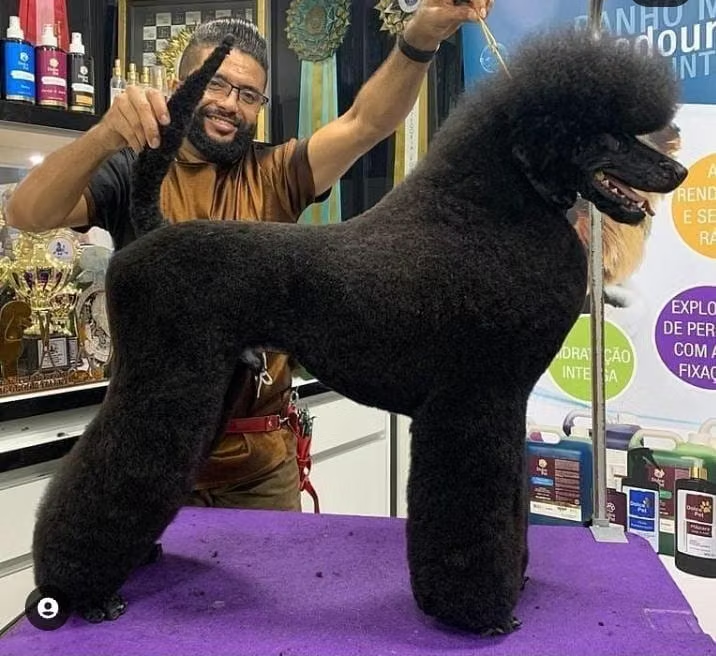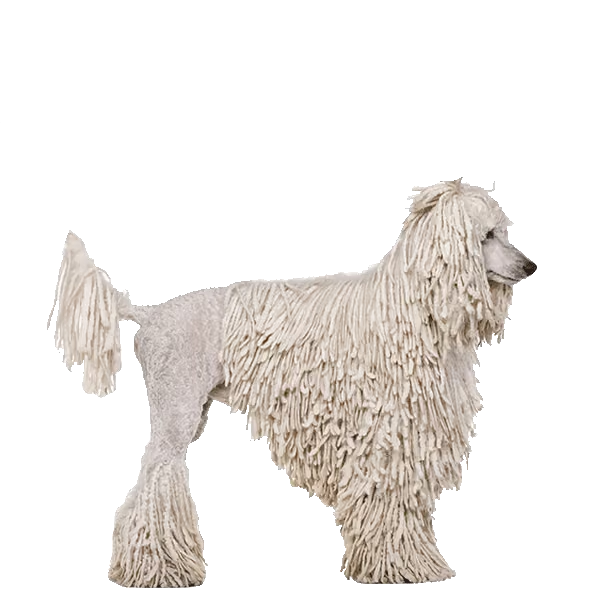
The Standard Poodle is a highly intelligent, athletic dog that excels at training and water retrieving while remaining a devoted family companion.
How the Poodle (Standard) coat is built, and what that means when you groom it.
Caution: A Poodle (Standard) coat mats easily.
Fine or long hair tangles at the base of the coat, out of sight, where the mats tighten and pull on the skin. Brushing has to reach right down to the roots in sections, not just skim the surface.
Information: A Poodle (Standard) needs clipping every few weeks.
This coat keeps growing rather than shedding out, so it has to be trimmed every few weeks. Left to grow it mats down against the skin and traps moisture, dirt and heat.
A few of the Poodle (Standard) profiles members have added to United Pet Club.
The Standard Poodle is a large, clever dog bred in Germany for water retrieving, now a popular, low-shedding family companion across Australia.
The Standard Poodle is the largest of the three Poodle varieties and one of the most trainable dogs you'll find in an Australian backyard or show ring. Despite the fancy clips people picture when they hear the name, the breed started out as a working water retriever. The athletic frame, dense curly coat, and sharp mind all come from that original job.
Standard Poodles are friendly and keen to please. They attach closely to their family and like to be part of whatever's going on around the house rather than off doing their own thing. That mix of intelligence and willingness to work is why the breed does so well in obedience, agility, scent work, and assistance roles, all popular disciplines with dog clubs around the country.
The coat sheds very little, which is one reason the breed suits owners who want a big dog without hair over the couch. That low-shedding trait comes with a catch: the dense curls mat quickly without regular brushing and clipping.
| Attribute | Detail |
|---|---|
| Origin | Germany |
| Size | Large |
| Lifespan | 12 to 15 years |
| Group / role | Non-sporting (originally a water retriever) |
| Good with | Families, children, and other dogs when socialised |
The Standard Poodle fits an active household that can offer both exercise and mental work. Owners who enjoy training get the most from the breed, since a Poodle without enough to do can turn bored and restless. The low-shedding coat suits families dealing with allergies or who just don't want fur on the furniture, provided they're willing to book regular grooming or learn to clip at home. It's a solid choice for a committed first-time owner and just as rewarding for an experienced handler after a dog that picks things up fast.
The Poodle was bred in Germany as a water retriever, with a name from the German word for splashing, before France made it a national favourite.
The Poodle's roots trace back to Germany, where it worked as a water-retrieving dog, bringing back waterfowl that hunters had shot down. Its name comes from the German word "pudel", tied to splashing in water, a nod straight back to that original job. The dense, curly coat kept the dog insulated while it worked in cold water.
Even the show clip has working origins. Hunters trimmed sections of coat to cut drag while the dog swam, leaving hair over the joints and chest for protection in cold water. What looks purely decorative today started out as practical grooming for a working dog.
Although German by origin, the Poodle became firmly associated with France, where breeders developed smaller sizes and kept the dog mainly as a companion. That's why some people still call it the French Poodle, though the Standard, the largest of the three varieties, stayed closest to the original working type.
The three sizes, Standard, Miniature, and Toy, are recognised today as varieties of a single breed. The Standard remains the original and largest form, and it continues to work in retrieving, assistance roles, and dog sports, including here in Australia, where agility and obedience trials with the breed are popular at local clubs.
The Standard Poodle is a tall, square-built dog with a dense, curly single coat in a range of solid colours, familiar in Australian show and pet homes.
The Standard Poodle is a tall dog built on square proportions, carrying itself with an upright, balanced posture. The frame is athletic rather than heavy, with a deep chest, a level back, and well-angled legs suited to swimming and running. The head is long and refined, with long drop ears and dark, oval eyes that give the breed its alert look.
| Trait | Standard |
|---|---|
| Height | Over 38 cm (15 inches) at the shoulder; many stand 46 to 61 cm (18 to 24 inches) |
| Weight | Roughly 18 to 32 kg (40 to 70 pounds) |
| Coat | Dense, curly, single coat; low shedding |
| Colours | Solid colours including black, white, apricot, cream, brown, silver, blue, and red |
| Eyes | Dark, oval shaped, alert |
The coat is a single layer of dense, curling hair with no soft undercoat underneath. That's why the breed sheds so little and why it mats fast without regular grooming. Coat colour is solid under the breed standard, spanning black and white through apricot, cream, brown, silver, blue, and red. Because the hair keeps growing instead of shedding out with the seasons, clipping is simply part of normal upkeep. Owners can choose anything from a short, even pet clip that suits our summers through to the more elaborate show clips, though all of them need regular maintenance to look right.
Standard Poodles are friendly, sharp, and keen to please, forming close bonds with family and usually getting on well with kids and other pets.
The Standard Poodle is friendly and genuinely enjoys being around people. It forms strong attachments to its family and would rather be nearby than left alone for hours at a stretch. Its intelligence shows in how fast it picks up routines, reads its owner's mood, and learns new tasks.
Well-socialised Standard Poodles are patient and playful with children, though given the dog's size, supervision around very young kids is still sensible. With strangers the breed tends to hang back at first rather than act aggressively, warming up once it decides the situation is safe. Many will bark to let you know someone's at the door. Around other dogs and household pets, Standard Poodles generally get on well, particularly if raised together.
The flip side of all that intelligence is a need for engagement. A bored or under-exercised Standard Poodle can become anxious or pick up habits nobody wants, from chewing to excessive barking. Consistent training and daily activity keep the temperament settled and the dog genuinely content.
| Trait | Rating |
|---|---|
| Affection | 5 |
| Energy | 4 |
| Trainability | 5 |
| Vocalness | 3 |
| Shedding | 1 |
Standard Poodles need regular grooming, daily exercise, and protection from Australian heat and ticks to stay healthy and comfortable.
The Standard Poodle adapts to a house with a yard or to an apartment, as long as it gets enough daily exercise and company. It's an indoor dog that wants to live alongside its family rather than be kennelled outside. Australian summers can be hard on a heavy coat, so many owners clip shorter over the warmer months and always keep shade and fresh water on hand. If you're bringing a Standard Poodle into Australia from overseas, check the current biosecurity import conditions well ahead of time, since dogs typically need specific vaccinations, testing, and a quarantine period before entry is approved.
Standard Poodles do best on a complete diet for a large, active dog, split into measured meals to keep a lean, healthy body condition.
A Standard Poodle needs a complete and balanced diet made for a large, active breed. Because the dog is athletic, it benefits from quality protein to support muscle, fat for energy, and a controlled calorie level to keep it lean. Split the daily food into two meals rather than one big serve, which suits the breed and helps lower the risk of bloat in deep-chested dogs. Fresh water should always be available. Adjust the amount to your individual dog's age, weight, and activity level, and go by body condition rather than relying on the bag's chart alone.
| Life stage | Amount per day | Meals |
|---|---|---|
| Puppy (2 to 12 months) | Per puppy-food label, by age and weight | 3 to 4 |
| Adult (1 to 7 years) | Roughly 2 to 3 cups of dry food | 2 |
| Senior (7+ years) | Slightly reduced to match lower activity | 2 |
Keep treats to around 10 percent of daily calories so they don't throw the diet out of balance or pack on weight. Most Standard Poodles on a complete commercial food don't need supplements at all, so only add them on veterinary advice. Treats also double as handy training rewards given how much the breed loves to learn, so factor those into the daily total rather than adding them on top.
Standard Poodles typically live 12 to 15 years and are generally healthy, though there are some inherited conditions worth screening for.
The Standard Poodle is generally a healthy, long-lived breed, with a typical lifespan of 12 to 15 years. Like many large dogs, it carries a handful of inherited and size-related conditions that responsible breeders screen for. Buying from a breeder who health tests both parents lowers the odds of running into the most common problems.
| Condition | Signs | Note |
|---|---|---|
| Hip dysplasia | Stiffness, limping, trouble rising | More common in large breeds; parents should be hip-screened |
| Gastric dilatation-volvulus (bloat) | Swollen abdomen, retching, restlessness, distress | Emergency; deep-chested dogs are at higher risk |
| Progressive retinal atrophy | Night blindness, declining vision | Inherited; eye screening of breeding dogs helps |
| Sebaceous adenitis | Patchy hair loss, scaly skin | Skin condition seen in the breed |
| Addison's disease | Weakness, vomiting, low energy | Hormonal; manageable once diagnosed |
The Standard Poodle is one of the most trainable breeds and responds best to consistent, reward-based training that keeps its sharp mind busy.
The Standard Poodle ranks among the easiest breeds to train. It picks up commands quickly, holds onto them well, and genuinely enjoys working alongside its handler. That intelligence cuts both ways, though: the breed also picks up habits you don't want just as fast, so early and consistent training matters. Keep sessions varied and short enough to hold its attention, and the dog will keep offering its best effort. Socialise the puppy widely with different people, dogs, and situations, including trips into busy areas, so its natural reserve around strangers stays balanced rather than turning into wariness.
Standard Poodles reach breeding maturity at one to two years, typically carry around seven puppies, and need both parents health screened first.
Breeding Standard Poodles responsibly starts with health-tested parents. Both the dam and sire should be screened for the conditions known in the breed, including hip and eye issues, before any mating goes ahead. Dogs can reach sexual maturity earlier, but most reputable breeders wait until the dam is physically mature, generally around two years old, so she can carry and raise a litter safely.
Gestation in dogs runs about 63 days. A Standard Poodle litter is typically large, often around seven puppies, though numbers vary a fair bit between individual dams. Most dams whelp without help, but a vet should be on call for a first litter or a difficult birth.
Raising the litter matters just as much as the mating itself. Puppies stay with the dam and littermates for the early weeks, where they pick up bite inhibition and basic dog-to-dog manners. Early handling and gentle exposure to household sounds and people build the friendly, confident temperament the breed is known for. Puppies usually head to new homes from around eight weeks of age.
| Metric | Value |
|---|---|
| Breeding maturity | About 1 to 2 years (breed at full maturity) |
| Gestation | Roughly 63 days |
| Average litter size | Around 7 puppies |
| Weaning | About 6 to 8 weeks |
| Ready for new homes | From about 8 weeks |
A free lifetime United Pet Club record for your Poodle (Standard), with the microchip registered at no charge and nothing falling due each year.
Every state and territory keeps its own Companion Animal Register, and council rangers scan as a matter of course, so a Poodle (Standard) with a current record is home before dinner. Register your dog free with United Pet Club: the profile carries your details beside his photo for his whole life, and no renewal ever turns up.
A chipped Poodle (Standard) without a registration is carrying a number nobody can use. File it with United Pet Club and the number works for him: free for life, open to every chip brand sold here, searchable from any clinic or pound in the country. Microchip registration now, free account while you're at it.
Sign up free with United Pet Club, add his name, breed, and a photo, and you're done. The lifetime plan keeps the profile live at no cost, and the chip number can go in whenever the vet's done his bit.
Add the 15-digit number to your free account with your address and mobile. Registration and every update after it are free, and chips from any manufacturer an Australian vet implants are accepted.
In most states and territories, yes, chipping is required and the register entry comes with it. The state register and your United Pet Club record do different jobs: one satisfies the council, the other keeps a current phone number one scan away, free.
Nothing with United Pet Club. Profile, chip registration, and unlimited updates are covered for his whole life, no annual fee in sight.
Common questions Australian owners ask about the Standard Poodle's size, temperament, grooming, lifespan, and fit as a family dog.
The Standard Poodle is a large dog. It stands over 38 cm (15 inches) at the shoulder, with many between 46 and 61 cm (18 to 24 inches), and weighs roughly 18 to 32 kg (40 to 70 pounds).
Yes. They're friendly, devoted, and bond closely with their families. Well-socialised Poodles are patient with children, though their size means supervision around very young kids is still a good idea.
No, they shed very little because the coat is a single curly layer with no soft undercoat. The trade-off is regular grooming, including brushing several times a week and a clip every four to six weeks.
Care sits somewhere between moderate and demanding. The dog is easy to train but needs daily exercise, mental work, and steady grooming. A Poodle that isn't kept busy can turn bored and restless.
A typical Standard Poodle lives 12 to 15 years. Good nutrition, a lean weight, regular vet care, and buying from health-tested parents all support a longer life.
Very. It's one of the most trainable breeds around, intelligent and keen to please. It does best with consistent, reward-based methods and early socialisation.
Reasonably well if you manage it. Many owners clip the coat shorter for the warmer months, exercise during the cooler parts of the day, and keep shade and water on hand at all times. The breed also enjoys swimming, which doubles as good low-impact exercise on a hot day.