
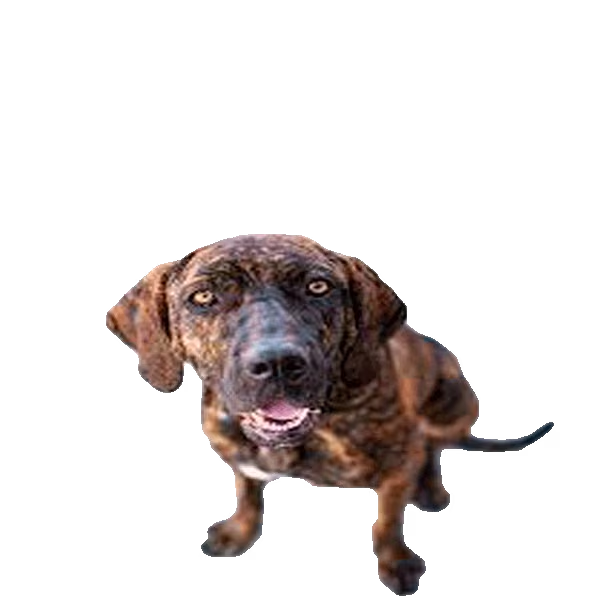
Plott Hound
The Plott Hound is a determined, courageous scenthound known for its tenacity on the trail and devotion to its family.
- Size
- Medium
- Lifespan
- 12–14 years
- Origin
- United States
- Temperament
- Loyal
- Standard colors
- Black, White and Grey and 7 more
Characteristics
Coat and grooming
How the Plott Hound coat is built, and what that means when you groom it.
- Coat layers
- Single coat
- Coat texture
- Smooth
- Coat length
- Short
- Shedding
- Moderate shedding
Plott Hound colors and patterns
What each club's breed standard says about every Plott Hound color and pattern. Point at a ruling to see the club's own wording.
Breed standards describe the Plott Hound in Black, White, Grey, Blue, Brown, Tan, Red, Orange, Yellow and Fawn. Standard patterns: Solid, Brindle and Reverse brindle.
| Color or pattern | AKC | UKC |
|---|---|---|
| Black | Standard (“Black”) | Standard (“solid black”) |
| White | Standard (“White Chest & Feet”) | Standard (“Some white on chest and feet is permissible”) |
| Grey | Standard (“Gray Brindle”) | Standard (“Any shade of brindle”) |
| Blue | Standard (“Blue Brindle”) | Standard (“Any shade of brindle”) |
| Brown | Standard (“Brown Brindle”) | Standard (“Any shade of brindle”) |
| Tan | Standard (“Tan Brindle”) | Standard (“Any shade of brindle”) |
| Red | Standard (“Red Brindle”) | Standard (“Any shade of brindle”) |
| Orange | Standard (“Orange Brindle”) | Standard (“Any shade of brindle”) |
| Yellow | Standard (“Yellow Brindle”) | Standard (“Any shade of brindle”) |
| Fawn | Standard (“Buckskin”) | Standard (“solid buckskin”) |
| Albino | No ruling | Disqualifying (“Albinism”) |
| Patterns | ||
| Solid | Standard (“solid black”) | Standard (“solid buckskin and solid black”) |
| Brindle | Standard (“Any shade of brindle”) | Standard (“Any shade of brindle”) |
| Reverse brindle | Standard (“Any shade of brindle”) | Standard (“Any shade of brindle”) |


| Color or pattern | AKC | UKC |
|---|---|---|
| Brown | Standard (“Brown or hazel”) | Standard (“brown or hazel in color”) |
| Hazel | Standard (“Brown or hazel”) | Standard (“brown or hazel in color”) |
| Color or pattern | AKC | UKC |
|---|---|---|
| Black | Standard (“Eye rims, lips and nose are black”) | Standard (“Fully pigmented, black in color”) |
What the rulings mean
- Standard
- Described by the club's breed standard.
- Disqualifying
- The club's breed standard disqualifies an animal of this colour or pattern.
Color changes
How a Plott Hound's colors can change over its life.
Blackchanges toRust
Coat · With body condition · can change back
Blackchanges toGrey
Coat · Progressive
Blackchanges toBrown
Coat · In the sun · can change back
Whitechanges toRoan
Coat · With age · from 2 weeks
Blackchanges toSnow nose
Nose · With the season · can change back
Blackchanges toPink
Nose · With the season · can change back


Sources
Each ruling comes from the club's published breed standard or color list.
Meet some of our Plott Hound
A few of the Plott Hound profiles members have added to United Pet Club.

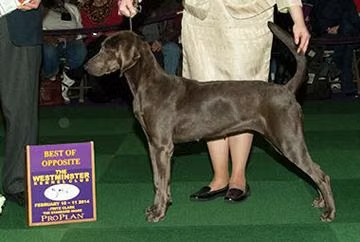


About the Plott Hound
The Plott Hound is a medium-sized American scenthound built for big-game trailing, fiercely determined on the job and just as attached to its family at home.
The Plott Hound is a medium-sized scenthound developed in the United States to trail and corner big game, chiefly bear and wild boar, over rough country. Unusually for an American coonhound type, it doesn't trace back to foxhound blood at all: its ancestry runs to German hunting dogs brought into North Carolina in the mid-1700s.
The breed carries a smooth, brindled coat, a solidly built frame, and a deep, carrying voice that hunters rely on to track it from a fair distance off. On a trail it won't give up easily and is bold enough to hold big, dangerous quarry at bay until its handler catches up. Around the house it tends to fix its loyalty on its own people and stays switched on to whatever's happening around the property.
That working drive doesn't switch off just because the dog's at home. A Plott Hound needs a proper job to do, solid daily exercise, and an owner who understands that hounds think for themselves. Skimp on activity and the dog turns restless, and loud with it.
| Attribute | Detail |
|---|---|
| Origin | United States (North Carolina) |
| Size | Medium |
| Lifespan | 12 to 14 years |
| Group / role | Scenthound, big-game trailing and treeing |
| Good with | Family members and kids raised alongside the dog; keep an eye on it around small pets |
Who it suits
The Plott Hound suits a busy household that can put in daily exercise and give its brain some work too. Hunters, people on rural properties, and owners who enjoy long walks, tracking sports, or trailing trials get the most out of this breed. Its strong prey drive and big voice make it a bad fit for units or homes with small animals running loose. First-timers should go in expecting an independent dog that responds best to patient, steady handling rather than a heavy hand.
History of the Plott Hound
The Plott Hound is descended from German hunting dogs brought to North Carolina in the 1750s, bred over generations by the Plott family to trail bear and wild boar.
The breed's story starts with Johannes Plott, a German immigrant who landed in North Carolina around 1750 with a handful of hunting dogs from home. Those dogs were bred to trail and hold large game in the mountains of the southern Appalachians.
Generations of the Plott family kept refining the line, selecting for nose, stamina, courage, and the nerve to bay and tree dangerous quarry like black bear and wild boar. For most of its history the breed stayed within the family and among local hunters rather than being groomed for the show ring, which is exactly what kept its working ability intact.
Unlike the rest of America's coonhounds, the Plott Hound has no English foxhound in its background. Its German hunting-dog ancestry is what gives it that distinctive brindle coat and its dogged temperament.
The United Kennel Club recognised the breed in 1946, and the American Kennel Club followed with full recognition in 2006, placing it in the Hound Group. North Carolina named the Plott Hound its official state dog in 1989. Interest in the breed within Australia sits mainly with working and hunting dog circles rather than the show bench, and any import is arranged individually through an overseas breeder rather than a local breed club.
Appearance of the Plott Hound
The Plott Hound is a medium-sized, muscular scenthound with a short brindle coat, a deep chest, and an alert look about it.
The Plott Hound is built to go the distance over rough terrain. It has a moderately long, muscular frame, a deep chest, and clean, powerful legs underneath it. The head sits high with a moderate stop, medium-length ears set high on the skull, and round, expressive eyes that give it an alert, confident look. The tail carries up in a sabre curve and is often long and tapering.
The coat is what people notice first. It's short to medium in length, smooth, and fine to medium in texture, lying flat against the body.
| Trait | Standard |
|---|---|
| Height | Males 51 to 64 cm (20 to 25 in); females 51 to 58 cm (20 to 23 in) |
| Weight | Males 23 to 27 kg (50 to 60 lb); females 18 to 25 kg (40 to 55 lb) |
| Coat | Short to medium, smooth, fine to medium texture; a rare double coat turns up occasionally |
| Colours | Brindle in many shades (yellow, buckskin, tan, brown, chocolate, liver, orange, red, grey, blue, black); also solid black, often with brindle trim or a white chest mark |
| Eyes | Brown or hazel, round, set well apart |
Coat and colours
Brindle is the signature pattern: dark streaks over a lighter base across a wide range of shades. Some dogs turn up solid black, and small white markings on the chest and feet are acceptable under the standard. The short coat is easy to keep on top of and gives reasonable protection without a heavy grooming routine, though it offers little insulation against the harsh Australian sun, so shade matters as much as brushing. A small number of Plotts carry a smooth double coat, which sheds a bit more heavily during seasonal changes.
Temperament of the Plott Hound
The Plott Hound is loyal, gutsy, and alert: devoted to its family but independent minded and strongly driven by scent once it's on a trail.
The Plott Hound is bold and self-assured, traits built up over generations of work against large, dangerous game. With its family it's affectionate and loyal, often forming a tight bond with one or two people while staying warm toward everyone in the house. It's generally good with kids it has grown up alongside, though its energy means playtime needs supervision with very young children.
Around strangers the breed tends to be watchful rather than aggressive, and that loud voice makes it a decent watchdog into the bargain. It usually gets on fine with other dogs, especially with early socialisation, a reflection of its history hunting in packs. Small pets are a different story: the strong prey drive can turn cats, rabbits, and similar animals into a target unless the dog is raised alongside them and managed carefully.
This is an independent thinker. Once it's locked onto a scent it can go single-minded and tune out recall altogether, so secure fencing and leashed walks matter far more than they might for other breeds. That same drive that makes it relentless on a trail can tip into boredom and constant barking at home if the dog isn't getting enough to do.
| Trait | Rating |
|---|---|
| Affection | 4 |
| Energy | 5 |
| Trainability | 3 |
| Vocalness | 5 |
| Shedding | 2 |
Caring for a Plott Hound
The Plott Hound needs solid daily exercise and secure space; its short coat is low maintenance, so grooming demands stay modest.
The Plott Hound is a low-maintenance breed when it comes to coat care but a high-demand one for exercise and mental engagement. Staying on top of the basics keeps it healthy and comfortable.
Grooming
- Brush the short coat weekly with a rubber curry comb or hound mitt to shift loose hair
- Bathe only when it's needed, roughly every one to two months or after a muddy outing
- Check and clean the ears regularly, since drop ears trap moisture and grass seeds easily in Australian paddocks and bushland
- Trim nails every two to three weeks
- Brush teeth several times a week
Exercise
- Aim for at least 60 to 90 minutes of solid activity every day
- Get in long walks, hikes, or leashed runs in open, unfenced country
- Use scent games and tracking work to give the nose and brain something to do
- Save off-leash running for fully fenced areas only
In summer, exercise in the early morning or evening and skip the middle of the day, when footpaths and dry ground heat up fast underfoot.
Environment
The Plott Hound does best on a property with a securely fenced yard and room to move about. It's not suited to unit living given its energy and its voice. Fencing needs to be tall and solid, since a dog locked onto a scent will try to get through, over, or under it. Across most of Australia this breed handles the climate well, but summer heat is a real risk: give it shade, water, and cool concrete or tile to lie on, and bring it indoors on the worst days. In the cooler southern states it also needs shelter from wind and rain.
Feeding a Plott Hound
Feed a Plott Hound a complete diet matched to its life stage and high activity level, split across two meals a day to suit a working build.
The Plott Hound is an athletic, working-type dog that does best on a complete and balanced diet formulated for active or medium-to-large breeds. Protein and fat levels should support muscle and stamina, with portions adjusted for the individual dog's workload, age, and body condition. Feed two meals a day rather than one big one to keep energy steady and cut the risk of bloat in a deep-chested breed.
| Life stage | Amount per day | Meals |
|---|---|---|
| Puppy (2 to 6 months) | As per the puppy food label, split across meals | 3 to 4 |
| Puppy (6 to 12 months) | As per label, growth formula | 2 to 3 |
| Adult (working / active) | Around 300 to 420 g dry food | 2 |
| Adult (moderate activity) | Around 240 to 340 g dry food | 2 |
| Senior (7+ years) | Reduced slightly to hold weight steady | 2 |
Treats and supplements
Keep treats to around 10 percent of daily calories so they don't throw the diet out of balance. Small, low-fat treats work well for training, and this breed responds to them readily. Most Plott Hounds on a good complete commercial diet don't need supplements, but ask your vet about joint support for dogs that are very active or getting on in years. Always have fresh water on hand, especially after exercise and on hot days.
Health of the Plott Hound
The Plott Hound is a generally hardy breed with a 12 to 14 year lifespan, though hip dysplasia, bloat, and ear infections can turn up.
The Plott Hound rates as one of the healthier purebred dogs, a payoff from its long history as a working line bred purely for function. With good care, most live 12 to 14 years. As with any breed, a handful of conditions crop up more often than others and are worth watching for, particularly issues that go with a deep chest and drop ears.
| Condition | Signs | Note |
|---|---|---|
| Hip dysplasia | Stiffness, limping, trouble getting up | Choose breeders who screen hips; keep the dog lean |
| Gastric dilatation-volvulus (bloat) | Swollen belly, retching, restlessness, distress | A medical emergency; feed two smaller meals and skip exercise straight after eating |
| Ear infections | Head shaking, odour, redness, scratching | Drop ears trap moisture; clean and dry ears regularly, and check after time in long grass |
| Demodectic mange | Patchy hair loss, mild skin irritation | Most common in young dogs; usually treatable |
Preventive care
- Keep core and lifestyle vaccinations current
- Run year-round parasite control for fleas, ticks, and heartworm, and check for paralysis ticks if you're in a tick-prone area
- Book annual vet check-ups, twice yearly once the dog is a senior
- Keep the dog at a healthy weight to protect the joints
- Clean ears and check the skin and coat after time outdoors
- Ask the breeder about hip and elbow screening on both parents
Training a Plott Hound
The Plott Hound is smart but independent; it trains best with early socialisation, consistency, and reward-based methods that work with its strong nose.
The Plott Hound is sharp but carries the independent streak common to scenthounds. It was bred to make its own calls out on the trail, well away from its handler, so it doesn't always wait around for instruction. Training goes best when it starts early, stays consistent, and gives the dog a genuine reason to cooperate. Heavy-handed correction tends to backfire and can shut a sensitive hound down completely. Once it's on a scent, even a well-trained Plott can tune out commands entirely, so leashes and secure fencing stay essential rather than leaning on recall alone.
Basics
- Start socialisation as a puppy, with people, other dogs, new places, and handling
- Teach name recognition and a solid sit before moving on to harder skills
- Build recall in low-distraction settings first, then add distance and distractions gradually
- Use a long line for recall practice so the dog can never fully reward itself by shooting off
- Keep sessions short and varied to hold the dog's interest
- Bring in scent games and tracking early so the nose gets a sanctioned outlet
Breeding the Plott Hound
Plott Hounds reach breeding maturity around two years, carry litters for about 63 days, and typically produce five to nine puppies.
Responsible breeding of the Plott Hound centres on health, temperament, and working ability. Females generally reach physical and mental maturity around 18 to 24 months, and reputable breeders hold off on a first litter until then so the dam is fully grown. Before breeding, both parents should be checked for hip soundness and general health, and assessed for temperament that suits the breed's purpose.
Gestation runs about 63 days from conception. Litters commonly run five to nine puppies, though numbers vary with the dam. She typically manages whelping with little help needed, but a quiet, warm whelping area and a vet on call for backup matter regardless.
Puppies are born blind and deaf and rely completely on the dam for the first few weeks. Eyes and ears open at around 10 to 14 days. Weaning starts near three to four weeks and usually wraps up by six to eight weeks. Early handling, gentle exposure to new sounds and surfaces, and contact with people during this window shape a confident adult dog. Puppies should stay with the litter until at least eight weeks to pick up bite inhibition and social skills from the dam and littermates.
| Metric | Value |
|---|---|
| Breeding maturity | About 18 to 24 months |
| Heat cycle | Roughly every 6 to 8 months |
| Gestation | About 63 days |
| Average litter size | 5 to 9 puppies |
| Eyes and ears open | 10 to 14 days |
| Weaning | 6 to 8 weeks |
| Earliest rehoming | 8 weeks |
Getting your Plott Hound registered, chip and all
A free lifetime United Pet Club record for your Plott Hound, with the microchip registered at no charge and nothing falling due each year.
How to register a Plott Hound in Australia
Punch in your Plott Hound's name, his date of birth, and a decent photo, attach your mobile, and save. Done: a lifetime record that never bills you. Registering your dog is the easy half of responsible ownership, and the half people skip.
The vet does the implant and not one thing more; the register entry is yours. Register the microchip free on the lifetime plan: every brand an Aussie vet reaches for qualifies, moving house costs nothing to record, and the number stays searchable round the clock. Create your free account and sort the lot in one go.
How do I register my Plott Hound in Australia?
Sign up free with United Pet Club, add his name, breed, and a photo, and you're done. The lifetime plan keeps the profile live at no cost, and the chip number can go in whenever the vet's done his bit.
How do I register my Plott Hound's microchip?
Add the 15-digit number to your free account with your address and mobile. Registration and every update after it are free, and chips from any manufacturer an Australian vet implants are accepted.
Does my Plott Hound have to be microchipped in Australia?
In most states and territories, yes, chipping is required and the register entry comes with it. The state register and your United Pet Club record do different jobs: one satisfies the council, the other keeps a current phone number one scan away, free.
What does it cost to register a Plott Hound?
Nothing with United Pet Club. Profile, chip registration, and unlimited updates are covered for his whole life, no annual fee in sight.
Plott Hound frequently asked questions
Common questions about the Plott Hound's size, temperament, care needs, lifespan, suitability, and availability.
How big do Plott Hounds get?
The Plott Hound is a medium-sized dog. Males stand around 51 to 64 cm (20 to 25 in) and weigh 23 to 27 kg (50 to 60 lb); females stand around 51 to 58 cm (20 to 23 in) and weigh 18 to 25 kg (40 to 55 lb).
Is the Plott Hound a good family dog?
Yes, in the right home. It's loyal and affectionate with its family and usually good with kids it has grown up alongside. It does best in an active household and needs supervision around small pets because of its strong prey drive.
Are Plott Hounds hard to look after?
Grooming is easy thanks to the short coat, but exercise and mental engagement are demanding. The breed needs 60 to 90 minutes of solid activity a day and a job to do, or it gets bored and loud. Overall it's a moderate to challenging breed to own.
How long do Plott Hounds live?
They typically live 12 to 14 years. Regular vet care, a healthy weight, and good nutrition help most dogs reach the upper end of that range.
Do Plott Hounds bark a lot?
Yes. They've got a loud, ringing voice bred for trailing and treeing game, and they use it. Enough exercise and mental work cuts down nuisance barking, but this is a genuinely vocal breed that doesn't suit noise-sensitive neighbours.
Are Plott Hounds easy to train?
They're intelligent but independent. Early socialisation, consistency, and reward-based methods get the best results. Recall can go out the window once the dog picks up a scent, so leashes and secure fencing are non-negotiable.
Are Plott Hounds common in Australia?
They're relatively uncommon outside hunting and working circles, and rarer again in Australia than in the United States. Anyone after one will likely need to go through an overseas breeder or a specialist working-dog contact, and imports involve Australia's usual quarantine requirements.
From the community
Ask about the Plott HoundNo questions about the Plott Hound yet. Be the first to ask.
Browse Dog breeds