The Norwegian Lundehund is a uniquely agile, curious puffin-hunting dog famed for its extra toes and remarkable flexibility.
How the Norwegian Lundehund coat is built, and what that means when you groom it.
Critical: A Norwegian Lundehund should not be shaved.
The undercoat keeps heat out as well as in, and the outer coat shields the skin from sun and insect bites. Clipping the whole coat off removes both. It often grows back patchy, soft or a different colour, and in some animals the guard hairs never return properly. Brush the undercoat out instead of cutting it off.
Information: A Norwegian Lundehund drops its undercoat in heavy bursts.
The undercoat comes out in heavy bursts over a few weeks. An undercoat rake, or a bath followed by a proper blow-dry, clears it far faster than daily brushing. Clipping the coat down is not a shortcut for this.
A few of the Norwegian Lundehund profiles members have added to United Pet Club.
The Norwegian Lundehund is a small, agile Norwegian Spitz breed with six toes per foot, originally bred to climb sea cliffs and haul puffins from their burrows.
The Norwegian Lundehund is a small Spitz-type dog that developed on the remote islands and sea cliffs of northern Norway. Its name joins the Norwegian words for puffin (lunde) and dog (hund), a nod to the job it was bred for: climbing wet rock faces and squeezing into narrow burrows to bring back puffins and their eggs.
A handful of physical traits set this breed apart from almost any other dog. Each foot carries at least six toes, several fully formed and jointed, which gave the dog extra purchase on slippery rock. The shoulders are exceptionally mobile, so the front legs can splay out sideways, and the neck bends back far enough for the head to touch the spine. Together these traits suited the Lundehund to vertical, cramped work that would stop most dogs cold.
These days the Lundehund is kept mainly as a companion and an active small dog rather than a working hunter. Owners find it loyal, curious, alert and full of energy. It has held onto the independent, problem-solving streak of a dog once left to work alone on a cliff face, so it is switched on but not always keen to take orders.
| Attribute | Detail |
|---|---|
| Origin | Norway |
| Size | Small |
| Lifespan | 12 to 14 years |
| Group/role | Spitz type, originally a puffin-hunting dog |
| Good with | Families and committed owners who can meet its activity and dietary needs |
The Lundehund suits an active household that enjoys a curious, busy small dog and has the patience for a strong independent streak. It rewards owners who treat training as a game rather than a chore. Because the breed is prone to a serious digestive disorder, it needs an owner who will watch diet and weight closely and work with a vet. It is not the right fit for someone after an easy, automatically obedient first dog.
The Norwegian Lundehund is an old Norwegian landrace bred for centuries to harvest puffins from cliff burrows, and it survived a near wipeout in the 1900s from a handful of dogs.
The Lundehund comes from the rugged coast of northern Norway, where puffins were once an important food source. For generations, families on islands such as Vaeroy in the Lofoten group kept these dogs to harvest puffins and their eggs from burrows dug into steep cliffs. The dog's extra toes, flexible joints and ability to fold its ears shut protected it during this tough climbing work.
The breed is old as a working landrace, shaped by its job rather than by a formal pedigree. Its value dropped once nets came into wide use for catching puffins, and puffin hunting itself was later restricted. As the old hunting way of life faded, so did the number of Lundehunds.
In the twentieth century the population hit a crisis point. Disease outbreaks, including distemper, cut the breed down to a very small number of dogs. By mid-century only a handful of animals were left, and the entire modern breed traces back to that tiny group. Careful, coordinated breeding rebuilt the numbers from this narrow base.
Because the rebuilt population descends from so few founders, the breed carries low genetic diversity. Norwegian breeders and clubs have since worked on plans to widen the gene pool while keeping the breed's distinctive features. The Lundehund remains rare worldwide and is valued as a living piece of Norwegian working history.
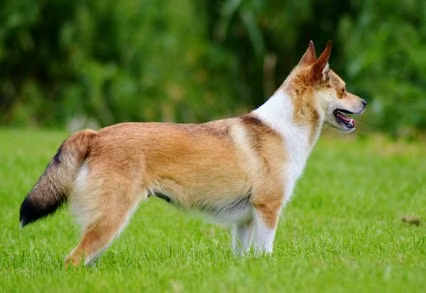
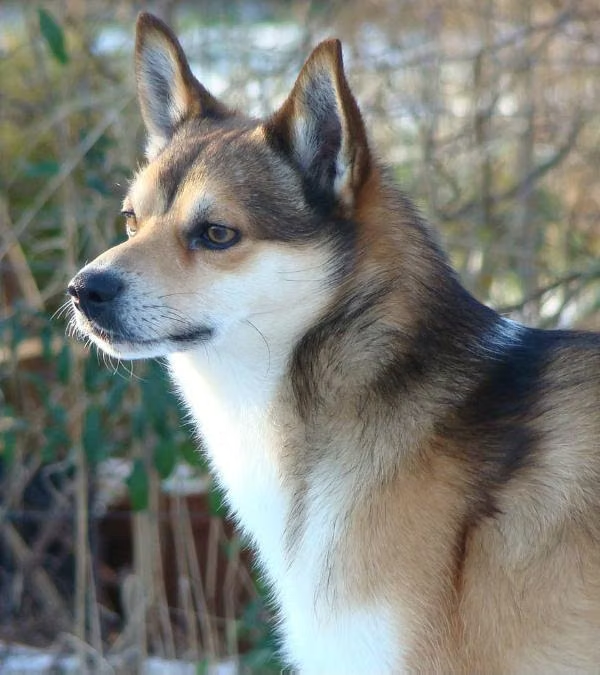
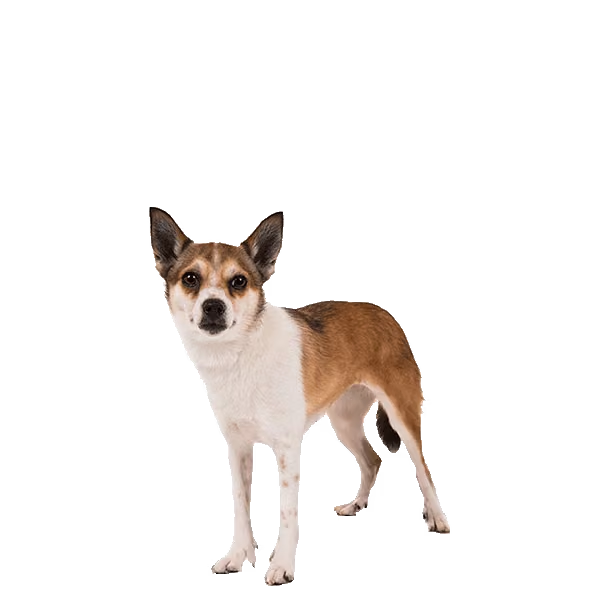
The Norwegian Lundehund is a small rectangular Spitz with a wedge-shaped head, prick ears that fold shut, a dense double coat, and the breed-defining six toes on each foot.
The Lundehund is a small, light, rectangular dog with a clear Spitz outline: a wedge-shaped head, pricked triangular ears and a tail carried over the back. Its body is slightly longer than it is tall. The overall impression is of an alert, nimble dog built for agility rather than power.
A few features are unique to the breed. The ears can fold or close, forward or backward, to seal out debris and water. The neck is highly flexible, and the front legs can splay out to the sides at wide angles. Most striking are the feet: each one has at least six toes, with extra pads, which gave the dog secure footing on slick cliff rock.
| Trait | Description |
|---|---|
| Height | Roughly 30 to 38 cm (about 12 to 15 inches) at the shoulder |
| Weight | Around 6 to 9 kg (about 13 to 20 lb) |
| Coat | Dense double coat with a harsh outer layer and soft undercoat |
| Colours | Reddish brown to fallow with black tips, often with white markings; also black or grey variants |
| Eyes | Slightly oblique, dark brown to yellowish brown |
The double coat suits a cold, wet coastal climate, which means Australian owners need to think about the flip side: a heavy coat plus hot, dry summers calls for care around exercise timing and shade. The outer hairs are coarse and weather resistant, and the undercoat is dense and soft. Around the neck and shoulders the coat forms a fuller collar, usually heavier in males. Most Lundehunds range from reddish brown to a pale fallow shade, often with black-tipped guard hairs that deepen with age and white on the chest, feet and tail tip. The coat sheds seasonally and is easy to keep clean.
The Norwegian Lundehund is loyal, curious, alert and energetic, affectionate with its family but often reserved with strangers and independent in its thinking.
The Lundehund keeps the character of a dog bred to work alone in tough terrain. It is intelligent, inquisitive and quick on its feet, and it likes to suss out its surroundings. With its own family it is affectionate and attached, and it often forms a tight bond with its people.
With strangers the breed tends to be cautious or reserved rather than instantly friendly, and it will usually sound the alarm when someone comes to the door. This watchfulness makes it a handy little watchdog, though it is far too small to guard anything. Early, steady socialisation helps it stay confident and settled around new people and places.
With other dogs and household pets the Lundehund is generally sociable, especially when raised alongside them. Its strong nose and curiosity mean small fleeing animals, think possums or lizards in the backyard, can grab its attention, so introductions should be supervised. The breed's independent streak shows up as a habit of making its own decisions, which owners often find both charming and a little maddening.
| Trait | Rating |
|---|---|
| Affection | 4 |
| Energy | 4 |
| Trainability | 2 |
| Vocalness | 3 |
| Shedding | 3 |
The Norwegian Lundehund needs regular brushing, daily activity and a secure yard, with close attention to diet and weight because of its sensitive digestion.
The Lundehund adapts to a house or a unit as long as it gets daily activity and company. It is an agile climber and a known escape artist, so fences and gates need to be secure with no gaps to squeeze through. The breed handles cold well thanks to its double coat, but in Australian conditions it needs shade, fresh water and a cool spot to retreat to during hot spells. House-training can take patience, and some owners find it slow going, so a consistent routine helps.
The Norwegian Lundehund does best on a measured, high-quality diet fed in small meals, with careful monitoring because the breed is prone to a protein-losing digestive disorder.
The Lundehund needs a complete, good-quality diet suited to a small, active dog. Because the breed is prone to gastrointestinal problems, owners should keep an eye on how the dog digests its food, along with stool quality, appetite and body condition. Many Lundehunds do better on a consistent, easily digestible diet rather than frequent changes. Any dog showing weight loss, ongoing loose stools or fluid swelling should be checked by a vet, who may recommend a specific therapeutic diet.
| Life stage | Amount per day | Meals |
|---|---|---|
| Puppy (2 to 6 months) | Per puppy food label for body weight | 3 to 4 |
| Junior (6 to 12 months) | About 125 to 250 mL (roughly 1/2 to 1 cup) of quality food | 2 to 3 |
| Adult | About 125 to 250 mL (roughly 1/2 to 1 cup), adjusted to weight and activity | 2 |
| Senior | Slightly reduced; adjust for lower activity | 2 |
Keep treats to about ten per cent of daily calories and choose plain, low-fat options so they do not upset digestion. Use small training treats during short sessions and subtract them from meal portions to stop weight creeping on. Do not add supplements without veterinary advice; a dog managed for a digestive disorder may need specific vitamin or mineral support set by a professional.
The Norwegian Lundehund typically lives 12 to 14 years and is generally hardy, but the breed carries a notable risk of a digestive disorder linked to its small founding population.
The Lundehund usually lives 12 to 14 years and is an active, sound little dog overall. Its main health concern is a group of gastrointestinal conditions often grouped under the term Lundehund syndrome, a protein-losing disorder that can affect digestion and nutrient absorption. The breed's low genetic diversity, a result of its near wipeout and recovery from very few dogs, adds to this raised risk. Responsible breeders track digestive health closely and support efforts to widen the gene pool.
| Condition | Signs | Note |
|---|---|---|
| Lundehund syndrome (protein-losing enteropathy/gastroenteropathy) | Weight loss, loose stools, low energy, fluid swelling | The breed's most significant health concern; manage with veterinary care and diet |
| Digestive upset | Vomiting, soft stools, poor appetite | Often linked to diet changes; keep food consistent |
| Dental disease | Bad breath, tartar, sore gums | Common in small breeds; regular brushing helps |
| Patellar issues | Skipping steps, intermittent lameness | Discuss any persistent limp with a vet |
The Norwegian Lundehund is smart but independent, so it learns best with short, varied, reward-based sessions and patient, consistent handling, especially for house-training.
The Lundehund is intelligent and quick to catch on, but it was bred to work alone and make its own calls, so it will not always obey on the first ask. It responds far better to training that feels like a game than to repetitive drilling. Keep sessions short, mix up the activities and finish on a win. House-training in particular can take longer than with many breeds, so a steady routine and patience matter.
Breeding the Norwegian Lundehund calls for special care because of the breed's very small gene pool and its risk of a hereditary digestive disorder.
Breeding the Lundehund is more involved than for most small dogs. Females typically reach maturity and can be bred from around 18 to 24 months, once health screening is complete. Mating follows the usual canine pattern, and gestation runs roughly 63 days. Litters tend to be small, often two to four puppies.
The central challenge is genetics. Because the modern breed descends from a very small number of founders, inbreeding levels are high and the digestive disorder is widespread. Norwegian breed clubs have run cross-breeding and diversity programs that bring in carefully chosen outside dogs to widen the gene pool while keeping breed type intact. Responsible breeders screen for digestive health, share results openly, and plan matings to spread the risk rather than concentrate it.
When raising a litter, the priority is steady nutrition and close monitoring, since puppies from a breed prone to absorption problems need careful feeding and weight tracking. Early socialisation and gentle handling set up the confident, curious temperament the breed is known for. Prospective owners in Australia should expect a wait, and should ask breeders directly about health testing and where their lines sit on genetic diversity.
| Metric | Value |
|---|---|
| Breeding maturity | About 18 to 24 months |
| Gestation | Around 63 days |
| Typical litter size | 2 to 4 puppies |
| Key concern | Very low genetic diversity and hereditary digestive disorder |
| Recommended practice | Health screening and participation in approved diversity programs |
A free lifetime United Pet Club record for your Norwegian Lundehund, with the microchip registered at no charge and nothing falling due each year.
Rangers and shelters can only call the number the scan hands them. Give your Norwegian Lundehund a free United Pet Club profile and that number is yours: dog registration takes a few minutes, costs nothing for his lifetime, and works with or without a chip in place.
The vet does the implant and not one thing more; the register entry is yours. Register the microchip free on the lifetime plan: every brand an Aussie vet reaches for qualifies, moving house costs nothing to record, and the number stays searchable round the clock. Create your free account and sort the lot in one go.
Sign up free with United Pet Club, add his name, breed, and a photo, and you're done. The lifetime plan keeps the profile live at no cost, and the chip number can go in whenever the vet's done his bit.
Add the 15-digit number to your free account with your address and mobile. Registration and every update after it are free, and chips from any manufacturer an Australian vet implants are accepted.
In most states and territories, yes, chipping is required and the register entry comes with it. The state register and your United Pet Club record do different jobs: one satisfies the council, the other keeps a current phone number one scan away, free.
Nothing with United Pet Club. Profile, chip registration, and unlimited updates are covered for his whole life, no annual fee in sight.
Common questions about the Norwegian Lundehund's size, temperament, care needs, lifespan, suitability and availability.
It is a small dog, standing about 30 to 38 cm (12 to 15 inches) at the shoulder and weighing roughly 6 to 9 kg (13 to 20 lb).
It is loyal, curious, alert and energetic. It is affectionate with its family, often reserved with strangers, and quite independent, so it thinks for itself.
It is moderately demanding. Grooming is straightforward, but the breed needs daily activity, patient training and close attention to diet and weight because of its sensitive digestion.
Most live about 12 to 14 years with good care, regular vet checks and careful management of diet.
It can be, for active households that enjoy a busy, curious small dog and can handle its independent streak and dietary needs. It is less suited to someone after an easy first dog.
The extra toes are a breed trait that gave the dog better grip while climbing wet, steep sea cliffs to hunt puffins. Each foot has at least six toes, several fully formed.
Yes. The breed nearly died out in the twentieth century and was rebuilt from very few dogs, so it remains uncommon and can mean a waitlist to find a puppy from a responsible breeder.