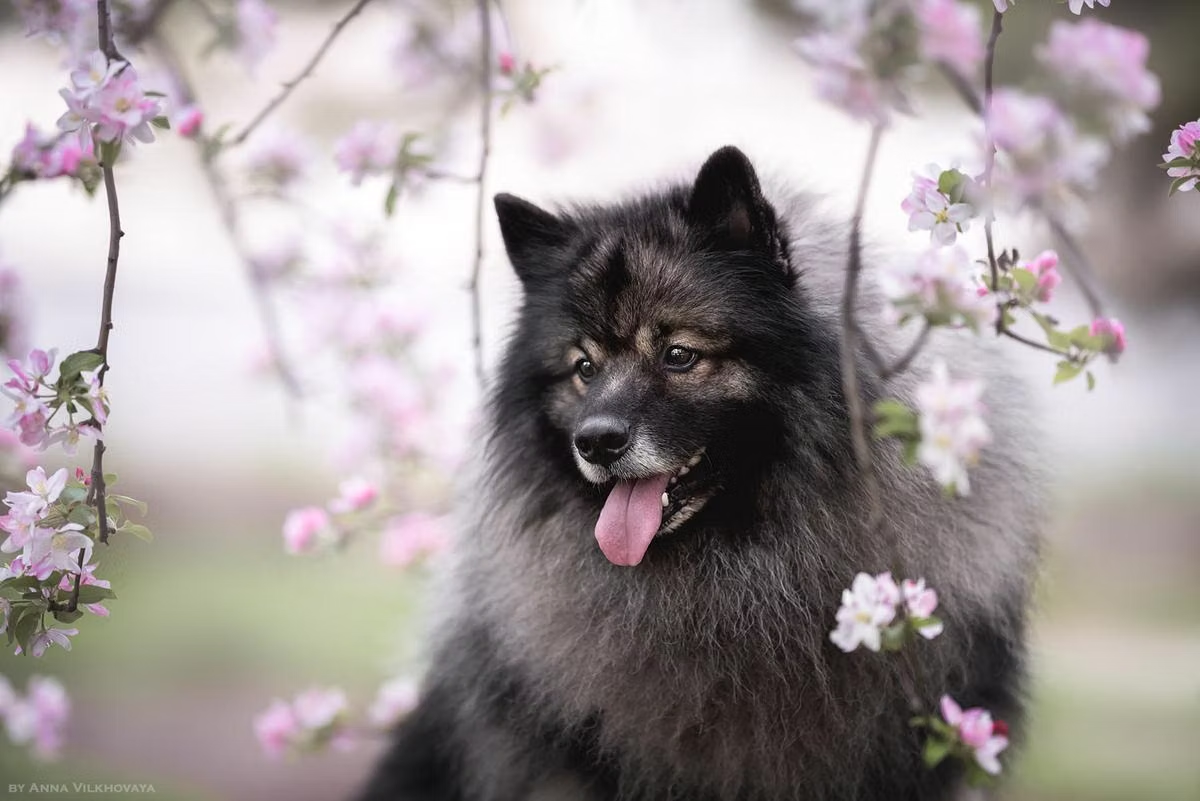
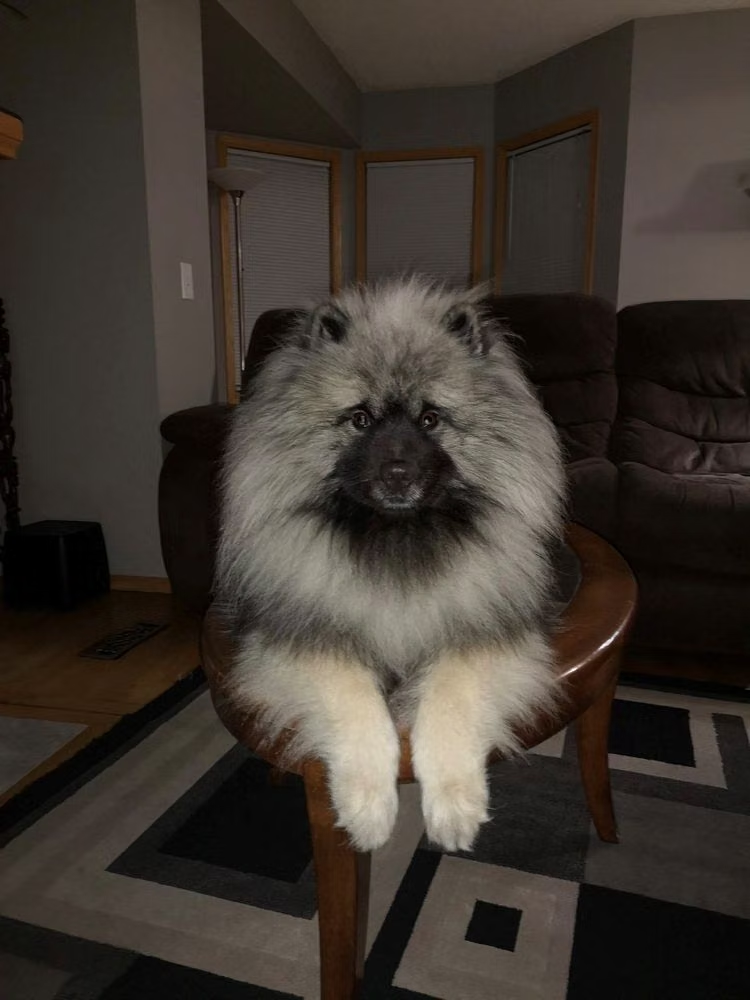
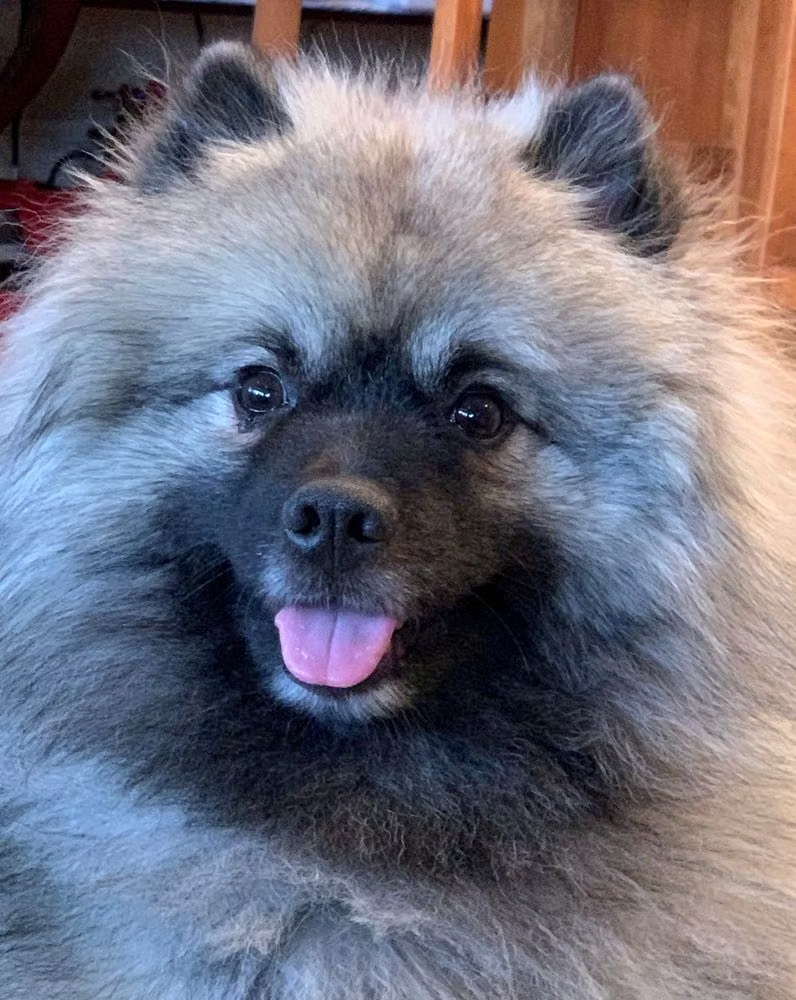
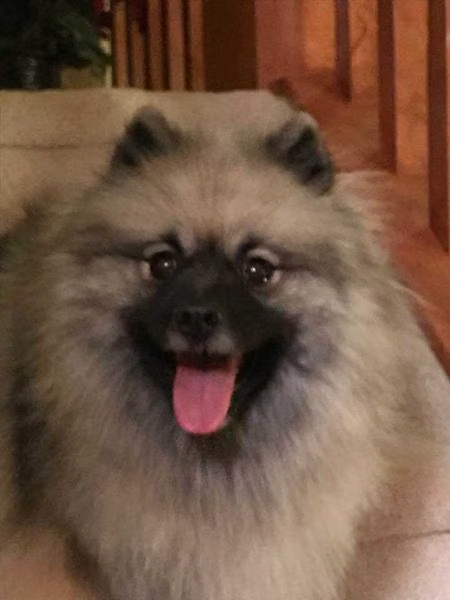
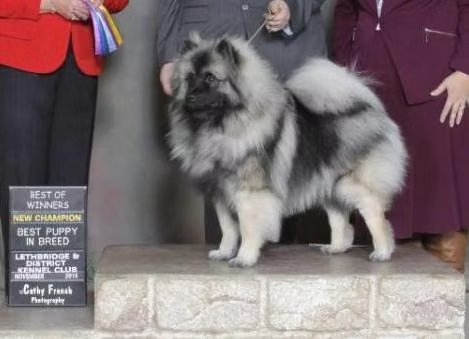
The Keeshond is a friendly, fluffy Dutch spitz known for its 'spectacled' eyes, alert watchfulness, and affectionate devotion to family.
How the Keeshond coat is built, and what that means when you groom it.
Critical: A Keeshond should not be shaved.
The undercoat keeps heat out as well as in, and the outer coat shields the skin from sun and insect bites. Clipping the whole coat off removes both. It often grows back patchy, soft or a different colour, and in some animals the guard hairs never return properly. Brush the undercoat out instead of cutting it off.
Caution: A Keeshond coat mats easily.
Fine or long hair tangles at the base of the coat, out of sight, where the mats tighten and pull on the skin. Brushing has to reach right down to the roots in sections, not just skim the surface.
Information: A Keeshond drops its undercoat in heavy bursts.
The undercoat comes out in heavy bursts over a few weeks. An undercoat rake, or a bath followed by a proper blow-dry, clears it far faster than daily brushing. Clipping the coat down is not a shortcut for this.
A few of the Keeshond profiles members have added to United Pet Club.
The Keeshond is a medium-sized Dutch spitz prized for its plush double coat, foxy 'spectacles' markings, and warm, people-focused nature.
The Keeshond is a medium-sized spitz breed that developed in the Netherlands. It has the wedge-shaped head, pricked ears, and tightly curled tail common to northern spitz breeds, set beneath a dense grey, black, and cream double coat. The breed's calling card is the marking around its eyes, known as spectacles: shading and fine lines that give the face a bright, attentive look.
Keeshonden were kept as companions and watchdogs rather than hunters or herders, and that history still shows. The dog stays close to its people, picks up on household moods, and lets everyone know when someone arrives at the gate. Adult Keeshonden typically weigh 16 to 20 kilograms and stand 43 to 46 centimetres at the shoulder, a size that suits most Australian homes, from inner-city units to suburban blocks.
The temperament lines up with the friendly face. Keeshonden are affectionate, sharp, and watchful, with a vocal streak that makes them handy alarm dogs but can turn into a habit if it isn't managed. Rather than fixing on one favourite person, they tend to bond with the whole household.
This breed suits families and individuals after a close, indoor companion who can offer daily attention and company. It gets on well with kids and other pets once properly socialised. The heavy coat calls for regular brushing, and the alert, chatty side means households wanting a quiet dog should plan for training from the start. People who are out long hours or travel a lot are a poorer match, since the Keeshond doesn't cope well with being left on its own.
| Attribute | Detail |
|---|---|
| Origin | Netherlands |
| Size | Medium (16 to 20 kg) |
| Lifespan | 12 to 15 years |
| Group / role | Spitz, companion and watchdog |
| Good with | Families, kids, other pets when socialised |
The Keeshond took shape in the Netherlands as a barge dog and companion, then became a political symbol during Dutch unrest in the 1700s.
The Keeshond sits within the wider group of European spitz breeds that share ancestry with the German Spitz. In the Netherlands it developed as an all-purpose companion and watchdog, kept on farms and aboard the barges that worked the canals. Its job was to raise the alarm rather than hunt or muster stock, and that alert, vocal streak has carried through to the modern dog.
The breed became caught up in Dutch politics in the late 1700s. During the standoff between supporters of the House of Orange and the Patriot faction, the dog was taken up as a mascot of the Patriots, and the breed name is generally traced back to this period and to the figure associated with the movement. When the Patriot cause lost ground, the breed's popularity dropped away with it, and numbers fell sharply.
The breed came back from the brink in the early 20th century. Dutch breeders, backed by supporters overseas, worked to fix type and rebuild numbers. Stock went out to Britain and further afield, where the dog was recognised and shown under the Keeshond name, while other parts of Europe kept classifying it within the broader spitz grouping.
Through the 20th century the Keeshond settled into its role as a family companion rather than a working dog. It reached Australia along with other imported spitz breeds and is registered here through Dogs Australia, the national body that oversees pedigree breeds, though it remains a modestly popular choice rather than an everyday sight at the local dog park.
The Keeshond is a square, medium-sized spitz with a plush grey, black, and cream double coat, a foxy spectacled face, and a tightly curled tail.
The Keeshond reads as a compact, square dog carried on a thick coat. The body is balanced rather than long, the chest is deep, and the tail curls tightly over the back, usually lying flat against it. The head is wedge-shaped with a clear stop, small triangular ears standing erect, and dark eyes framed by the spectacle markings that give the breed its trademark look. The coat draws the eye first: a harsh, standoff outer coat over a soft, dense undercoat, with a full ruff around the neck and feathering down the legs.
| Trait | Standard |
|---|---|
| Height | 43 to 46 cm at the shoulder |
| Weight | 16 to 20 kg |
| Coat | Double coat: harsh standoff outer coat, dense undercoat |
| Colours | Mix of grey, black, and cream |
| Eyes | Dark, medium, almond-shaped with spectacle markings |
The accepted colouring is a blend of grey, black, and cream. Each hair of the outer coat is pale at the base and tipped with black, which gives the body its shaded, silvered look. The shoulders carry a lighter patch sometimes called the cape, and the legs, feet, and tail tip run from cream to pale grey. The face shows darker shading toward the muzzle, with the fine spectacle lines running from the outer corner of each eye toward the ear. Pups are often born darker and lighten as the adult coat comes through, so the final colour can take months to settle.
Keeshonden are friendly, affectionate, alert family dogs that bond closely with the whole household, get along with kids and pets, and bark readily as natural watchdogs.
The Keeshond is a companion breed through and through, and its temperament reflects that background. It's friendly and affectionate, seeking out the company of its people and settling nearby indoors. Rather than fixing on one person, the breed tends to bond with the whole household, and settles as a steady, dependable family dog. It's also sharp and quick to size up a situation, traits that help with both training and its natural watchdog role.
With strangers the Keeshond is alert and will announce arrivals, but it isn't typically aggressive. Early socialisation helps it shift from alarm barking to calm acceptance once a visitor is welcomed in. It's patient and playful with kids, and usually accepts other dogs and household pets when raised alongside them. The main behavioural point owners need to plan for is the noise: this is a chatty breed, and barking can get out of hand if the dog is bored, anxious, or left alone too long. Keeshonden are prone to separation distress, so they do best with company and daily interaction, not shut in the laundry or backyard on their own for hours.
| Trait | Rating |
|---|---|
| Affection | 5 |
| Energy | 3 |
| Trainability | 4 |
| Vocalness | 4 |
| Shedding | 4 |
The Keeshond needs a weekly brush that steps up during seasonal shedding, moderate daily exercise timed around the heat, and a home close to its family to stay content.
The thick double coat is the biggest part of routine care, though it's more manageable than its bulk suggests, since the harsh outer coat resists matting when brushed on a regular schedule.
The Keeshond is an indoor companion that wants to be with its family, not left out the back. It adapts to units or houses as long as it gets daily exercise and company, and it copes with cold far better than heat thanks to its coat. Long stretches alone are the main thing to avoid.
Feed a Keeshond a complete diet suited to its life stage in two measured meals a day, watching portions closely since the breed can carry extra weight under its coat unnoticed.
A Keeshond does well on a complete, balanced diet formulated for its life stage. Because the heavy coat can hide weight gain, portions should be measured rather than free-fed, and body condition checked by feel along the ribs and waist. Puppies need a growth formula split across more frequent meals, while adults are usually fed twice a day. The amounts below are general starting points; adjust for the individual dog's age, activity, and condition, and follow the feeding guide on the chosen food.
| Life stage | Amount per day | Meals |
|---|---|---|
| Puppy (2 to 6 months) | Per growth-formula label, by weight | 3 to 4 |
| Junior (6 to 12 months) | Per label, moving to adult food | 2 to 3 |
| Adult | Roughly 150 to 250 g dry food | 2 |
| Senior | Adjusted down for lower activity | 2 |
Keep treats to a small share of daily calories so they don't unbalance the diet or pile on weight; use part of the day's ration for training rewards where possible. Most Keeshonden on a good complete commercial diet need no extra supplements. Talk to a vet before adding any joint or coat supplements, since a quality diet usually covers what a healthy dog needs. Keep fresh water down at all times.
The Keeshond is generally healthy with a 12 to 15 year lifespan, though it can be prone to hip dysplasia, patellar luxation, hypothyroidism, and some heart and skin conditions.
The Keeshond is generally a hardy breed with a typical lifespan of 12 to 15 years. Like most purebred dogs, it has a handful of conditions that turn up more often than average, several of which can be screened for in breeding stock. Buying from breeders who test their dogs, and keeping up routine vet care, cuts the risk and catches problems early.
| Condition | Signs | Note |
|---|---|---|
| Hip dysplasia | Stiffness, limping, reluctance to get up | Screened by hip evaluation in breeding dogs |
| Patellar luxation | Skipping gait, on-and-off hind-leg lameness | Ranges from mild to needing surgery |
| Hypothyroidism | Weight gain, low energy, coat changes | Managed with daily medication |
| Heart conditions | Coughing, tiring easily, reduced stamina | Picked up on vet exam and imaging |
| Skin problems | Itching, hair loss, irritation | Often linked to allergies or thyroid issues |
Keeshonden are bright and keen to please, which makes them quick to train with reward-based methods, though their barking and need for company call for early, consistent work.
The Keeshond is intelligent and tuned in to its handler, which makes it one of the more trainable spitz breeds. It responds well to positive, reward-based methods and enjoys the mental workout of learning something new. Harsh corrections work against this sensitive breed and can leave it anxious or withdrawn. The two areas that need attention early are barking, which the breed does naturally as a watchdog, and coping with being alone, since it's prone to separation distress.
Keeshond females typically have litters of three to eight puppies after a pregnancy of about 63 days, with health screening of parents and early socialisation key to raising sound pups.
Responsible Keeshond breeding starts with health-tested parents that are physically mature and sound in temperament. Breeders commonly wait until a dog is past its first year and screen for the hip and patella issues seen in the breed before mating. Females come into season roughly twice a year. After a successful mating, pregnancy runs about nine weeks, and litters tend to be small to moderate in size.
Newborn pups are dark and develop their adult grey, black, and cream colouring gradually over the following months. They're weaned from around three to four weeks while still nursing from their mother, and should stay with the litter until at least eight weeks, which supports normal social development. Early handling and gentle exposure to household life help shape the friendly, confident adult the breed is known for. Anyone thinking about breeding should factor in the time, cost, and responsibility of placing pups in suitable homes.
| Metric | Value |
|---|---|
| Sexual maturity | Around 1 year, breed after physical maturity |
| Seasons per year | About 2 |
| Gestation | Approximately 63 days |
| Litter size | 3 to 8 puppies |
| Weaning | About 3 to 4 weeks |
| Leave for new home | From 8 weeks |
A free lifetime United Pet Club record for your Keeshond, with the microchip registered at no charge and nothing falling due each year.
Rangers and shelters can only call the number the scan hands them. Give your Keeshond a free United Pet Club profile and that number is yours: dog registration takes a few minutes, costs nothing for his lifetime, and works with or without a chip in place.
A chipped Keeshond without a registration is carrying a number nobody can use. File it with United Pet Club and the number works for him: free for life, open to every chip brand sold here, searchable from any clinic or pound in the country. Microchip registration now, free account while you're at it.
Sign up free with United Pet Club, add his name, breed, and a photo, and you're done. The lifetime plan keeps the profile live at no cost, and the chip number can go in whenever the vet's done his bit.
Add the 15-digit number to your free account with your address and mobile. Registration and every update after it are free, and chips from any manufacturer an Australian vet implants are accepted.
In most states and territories, yes, chipping is required and the register entry comes with it. The state register and your United Pet Club record do different jobs: one satisfies the council, the other keeps a current phone number one scan away, free.
Nothing with United Pet Club. Profile, chip registration, and unlimited updates are covered for his whole life, no annual fee in sight.
Common questions about the Keeshond cover its size, temperament, grooming demands, lifespan, suitability for families, and how easy it is to find one.
The Keeshond is a medium-sized dog. Adults stand about 43 to 46 centimetres at the shoulder and weigh 16 to 20 kilograms. The thick coat can make the dog look bigger than it actually is.
Keeshonden are friendly, affectionate, sharp, and alert. They bond closely with the whole family, get on well with kids and other pets once socialised, and bark readily as natural watchdogs.
Care is moderate. The main commitments are a weekly brush that steps up during two heavy shedding seasons, about an hour of exercise a day, and enough company, since the breed doesn't handle being left alone for long.
The typical lifespan is 12 to 15 years. Routine vet care, a healthy weight, and choosing health-tested breeding lines all support a long, sound life.
Yes. They're patient with kids, accept other household pets when raised with them, and thrive on being part of daily family life, which suits active households that are home often.
They can. The breed has a vocal watchdog history and will announce visitors and unusual noises. Early training of a quiet cue, plus enough exercise and company, keeps barking from getting out of hand.
The Keeshond is recognised but not common here, so pups are found through specialist breeders and breed-specific rescues rather than in big numbers. Expect a wait when buying from a breeder who health-tests.