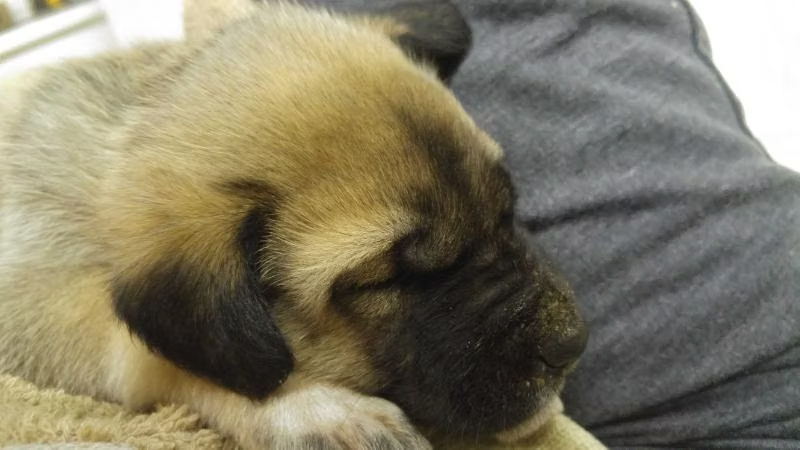
The Kangal Shepherd Dog is a noble Turkish livestock guardian known for its calm strength and unwavering protection of its charges.
How the Kangal Shepherd Dog coat is built, and what that means when you groom it.
Critical: A Kangal Shepherd Dog should not be shaved.
The undercoat keeps heat out as well as in, and the outer coat shields the skin from sun and insect bites. Clipping the whole coat off removes both. It often grows back patchy, soft or a different colour, and in some animals the guard hairs never return properly. Brush the undercoat out instead of cutting it off.
Information: A Kangal Shepherd Dog drops its undercoat in heavy bursts.
The undercoat comes out in heavy bursts over a few weeks. An undercoat rake, or a bath followed by a proper blow-dry, clears it far faster than daily brushing. Clipping the coat down is not a shortcut for this.
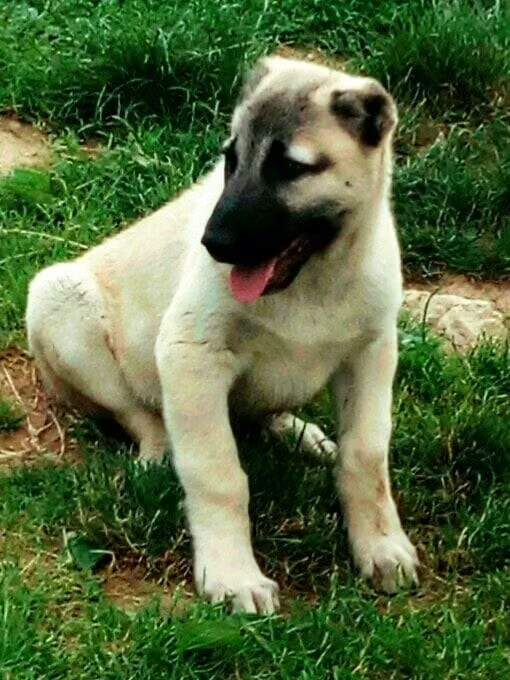
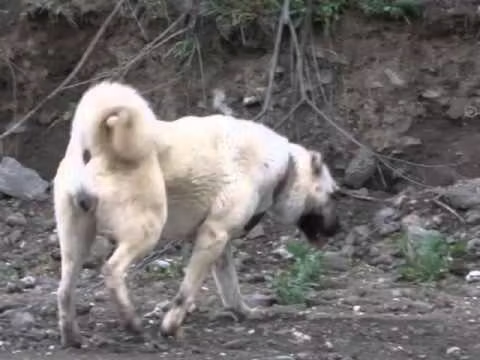
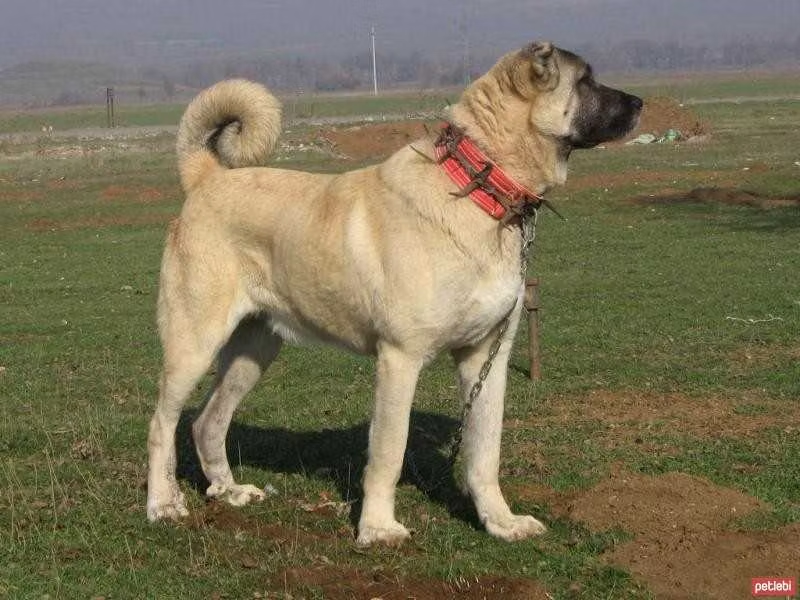
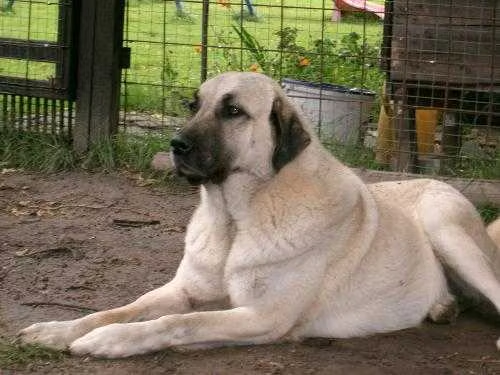
A few of the Kangal Shepherd Dog profiles members have added to United Pet Club.
The Kangal Shepherd Dog is a giant livestock guardian breed from Turkey, valued for its calm temperament and steady protection of flocks and family.
The Kangal Shepherd Dog is a large guardian breed developed in central Turkey to protect sheep and goats from predators. It works at a distance from people, making its own decisions about threats, and it is built for endurance rather than speed. The breed is known for a measured, watchful manner: quiet most of the day, alert when something changes.
Adult Kangals are powerful animals with a broad head, a dense double coat, and a characteristic black mask. They were bred to face wolves and other large predators, so size and confidence are part of the working type. Despite that strength, a well-raised Kangal is typically gentle with the animals and people it considers its own.
This is a working dog first. It suits owners who can give it space, a clear job or routine, and consistent leadership. It is less suited to apartment living or to homes that want a constantly biddable companion.
| Attribute | Detail |
|---|---|
| Origin | Turkey |
| Size | Giant |
| Lifespan | 12 to 15 years |
| Group / role | Livestock guardian dog |
| Good with | Family and livestock it is raised with; needs careful introductions to strangers and unfamiliar animals |
The Kangal fits experienced owners with rural property, a farm, or a large securely fenced area. It rewards people who understand independent guardian breeds and can commit to early socialization. It is not a good match for first-time dog owners, small homes, or anyone wanting an off-leash dog park companion.
The Kangal Shepherd Dog comes from the Sivas region of central Turkey, where it has guarded livestock for centuries and is treated as a national breed.
The Kangal takes its name from the Kangal district in Sivas Province, central Turkey. Shepherds in this part of Anatolia have kept large guardian dogs for generations to defend flocks against wolves, jackals, and bears on open grazing land. The breed developed through working selection rather than show breeding, with shepherds keeping the dogs that proved steady and effective.
Guardian dogs of this general type have a long presence across Anatolia, and the Kangal is the regional variety associated with Sivas. In its homeland the dog is held in high regard, and Turkey treats the Kangal as a national breed with cultural significance.
Through the twentieth century the Kangal began to spread beyond Turkey. Working examples were exported to other countries for livestock protection, including programs that pair guardian dogs with herds to reduce predator losses. Kennel clubs in several countries recognized the breed, sometimes under names tied to the broader Anatolian guardian type, which has caused ongoing naming debate.
Today the Kangal is kept both as a working guardian and as a property dog. Its core function has changed little: it remains an animal bred to live with a flock and respond to threats on its own judgment.
The Kangal is a giant, powerfully built dog with a short dense double coat, usually fawn to dun with a black mask and ears.
The Kangal is tall and heavy without looking bulky. The body is slightly longer than it is high, with a deep chest, strong legs, and a curled tail that the dog often carries over its back when alert. The head is broad with a defined stop, and the expression is calm and steady. Males are noticeably larger than females.
| Trait | Description |
|---|---|
| Height | Males about 72 to 81 cm; females about 65 to 75 cm at the shoulder |
| Weight | Males about 50 to 65 kg; females about 40 to 55 kg |
| Coat | Short to medium, dense double coat |
| Colors | Fawn to dun or pale gray, typically with a black mask and black ears |
| Eyes | Medium, almond shaped, brown to amber |
The coat is a weather resistant double layer with a coarser outer coat over a soft undercoat. This combination protects the dog through hot Anatolian summers and cold winters. The classic color runs from light fawn through dun, often with a darker overlay along the back. The black mask and dark ears are a defining feature of the breed. The coat sheds and goes through heavier seasonal molts.
Kangals are calm, devoted, and independent guardians: gentle with their own family and flock, naturally wary of strangers, and willing to act on their own judgment.
The Kangal is a steady, self contained dog. With its own family it is affectionate and patient, and it usually bonds closely with the household and any livestock it is raised alongside. The default state is watchful calm. The dog conserves energy and observes, then responds decisively if it judges a threat.
With strangers the Kangal is reserved and protective. It does not warm up quickly and may position itself between a visitor and the family until it is satisfied. Early and ongoing socialization helps the dog tell a normal guest from a genuine threat. Around other animals it is generally tolerant of those it grew up with, but unfamiliar dogs and predators trigger its guarding instinct.
Independence is central to the breed. A Kangal was bred to make decisions without a handler nearby, so it can seem stubborn or selectively obedient. This is working behavior, not a fault, and it shapes how the dog should be trained and managed.
| Trait | Rating |
|---|---|
| Affection (with family) | 4 |
| Energy | 2 |
| Trainability | 2 |
| Vocalness | 3 |
| Shedding | 4 |
The Kangal needs moderate grooming, daily space to move, and a secure outdoor area; its guarding nature requires solid fencing and a clear routine.
The Kangal does best with land. It is suited to farms, smallholdings, or homes with a large, securely fenced yard. The breed tolerates heat and cold well thanks to its double coat, but it still needs shade, shelter, and fresh water. Fencing must be tall and solid, because a guarding dog will patrol its boundary and may challenge what crosses it.
As a giant breed, the Kangal needs a balanced diet with controlled growth in puppyhood and portions matched to its activity to avoid excess weight.
The Kangal is a giant breed, so diet quality and portion control matter for joint and overall health. Choose a complete food formulated for large or giant breeds, and feed amounts based on the dog's weight, age, and activity level. Working dogs and growing puppies need more than an adult dog kept as a property guardian. Slow, steady growth in puppyhood is better for the joints than rapid weight gain.
| Life stage | Amount per day | Meals |
|---|---|---|
| Puppy (2 to 6 months) | Per large or giant breed puppy food guidelines, by weight | 3 to 4 |
| Adolescent (6 to 18 months) | Adjusted to growth and body condition | 2 to 3 |
| Adult | About 4 to 8 cups of dry food, split by size and activity | 2 |
| Senior | Reduced to match lower activity | 2 |
Keep treats to a small share of daily calories to protect against weight gain, which strains the joints of a heavy breed. Fresh water should always be available. Discuss joint support or any supplement with a veterinarian before adding it, since a balanced complete diet usually covers a healthy dog's needs.
The Kangal is a generally hardy breed with a lifespan of 12 to 15 years, though like other giant dogs it can face joint and heart conditions.
The Kangal is considered a robust working breed, helped by its functional build and broad working gene pool. The typical lifespan is 12 to 15 years, which is long for a dog of this size. Most health concerns are those common to large and giant breeds, and responsible breeding plus good weight management reduce the risk of several of them.
| Condition | Signs | Note |
|---|---|---|
| Hip dysplasia | Stiffness, limping, reluctance to rise | Common in large breeds; screening of breeding stock helps |
| Elbow dysplasia | Foreleg lameness, reduced movement | Managed with weight control and veterinary care |
| Bloat (gastric dilatation volvulus) | Swollen abdomen, retching, distress | A deep chested breed emergency; seek immediate care |
| Hypothyroidism | Weight gain, low energy, coat changes | Diagnosed by blood test, managed with medication |
The Kangal is intelligent but independent, so training relies on early socialization, consistency, and respect for its guarding instincts rather than repetitive drills.
The Kangal learns quickly but was bred to think for itself, so it will weigh whether a command is worth following. This independence means training takes patience and consistency. Harsh methods damage trust and can make a guarding dog harder to manage. The goal is a dog that respects its handler and has reliable manners, not one that performs on demand. Start socialization young, exposing the puppy to people, places, animals, and normal household events so it can judge real threats from routine activity.
Kangals reach breeding maturity slowly for a giant breed, carry litters of roughly six to eight puppies, and need careful raising to develop sound guardian temperament.
As a giant breed, the Kangal matures slowly, and responsible breeders wait until a dog is physically and mentally mature before breeding, generally around two years of age. Health screening of breeding stock, particularly for hip and elbow joints, helps reduce inherited problems. Pregnancy lasts about 63 days, the standard canine gestation. Litters are commonly in the range of six to eight puppies, though larger litters occur.
Raising Kangal puppies well shapes the adult guardian. Pups intended for livestock work are usually raised with the animals they will protect so that bonding forms early. Pups intended as family or property dogs need broad socialization with people and everyday situations. Either way, the puppy needs careful nutrition for steady growth, room to develop, and consistent handling. Because of the breed's size, strength, and strong guarding instinct, breeding and placement should be handled by people who understand the breed and can match each puppy to a suitable home.
| Metric | Value |
|---|---|
| Breeding maturity | About 2 years |
| Gestation | About 63 days |
| Typical litter size | 6 to 8 puppies |
| Weaning | About 7 to 8 weeks |
A free lifetime United Pet Club record for your Kangal Shepherd Dog, with the microchip registered at no charge and nothing falling due each year.
Rangers and shelters can only call the number the scan hands them. Give your Kangal Shepherd Dog a free United Pet Club profile and that number is yours: dog registration takes a few minutes, costs nothing for his lifetime, and works with or without a chip in place.
The vet does the implant and not one thing more; the register entry is yours. Register the microchip free on the lifetime plan: every brand an Aussie vet reaches for qualifies, moving house costs nothing to record, and the number stays searchable round the clock. Create your free account and sort the lot in one go.
Sign up free with United Pet Club, add his name, breed, and a photo, and you're done. The lifetime plan keeps the profile live at no cost, and the chip number can go in whenever the vet's done his bit.
Add the 15-digit number to your free account with your address and mobile. Registration and every update after it are free, and chips from any manufacturer an Australian vet implants are accepted.
In most states and territories, yes, chipping is required and the register entry comes with it. The state register and your United Pet Club record do different jobs: one satisfies the council, the other keeps a current phone number one scan away, free.
Nothing with United Pet Club. Profile, chip registration, and unlimited updates are covered for his whole life, no annual fee in sight.
Common questions about the Kangal Shepherd Dog cover its size, temperament, care needs, lifespan, suitability, and availability.
It is a giant breed. Males typically stand about 72 to 81 cm at the shoulder and weigh roughly 50 to 65 kg, while females are smaller at about 65 to 75 cm and 40 to 55 kg.
Kangals are calm, devoted, and independent. They are affectionate and gentle with their own family and flock, naturally reserved with strangers, and protective by instinct.
Care is moderate but the breed is demanding in other ways. Grooming is straightforward, but the dog needs space, secure fencing, early socialization, and an owner experienced with independent guardian breeds.
The typical lifespan is 12 to 15 years, which is long for a dog of this size.
It can be devoted to its family, but it is a working guardian rather than a casual pet. It suits rural or large fenced homes and experienced owners, not apartments or first-time owners.
Raised with the household, a Kangal is usually patient with its own family and tolerant of animals it grew up with. Supervision and careful introductions are needed with unfamiliar people and pets.
They are less common than mainstream breeds outside Turkey. Availability varies by country, and prospective owners should seek breeders who health test and understand the breed's guardian nature.