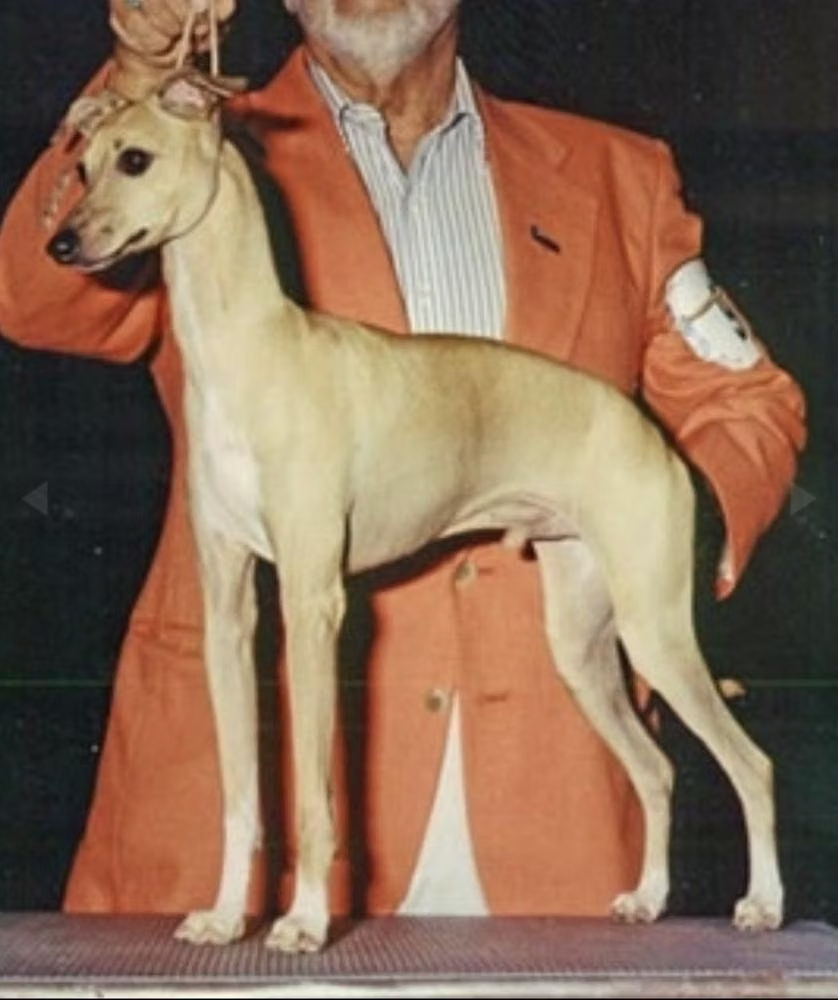
The Italian Greyhound is an affectionate, elegant toy sighthound known for its sensitivity, playful athleticism, and devotion to its owner.
How the Italian Greyhound coat is built, and what that means when you groom it.
A few of the Italian Greyhound profiles members have added to United Pet Club.
The Italian Greyhound is an affectionate toy sighthound from Italy, known for its slim build, sensitivity, and close attachment to its owner.
The Italian Greyhound is a true sighthound shrunk to toy size. It carries the same arched topline, deep chest, and long legs as the larger Greyhound, but stands under 38 cm at the shoulder and usually weighs between 3 and 6 kg. The breed combines a fine, almost fragile appearance with real running ability, and it can reach high speeds over short distances in a yard or park.
This is a companion breed first. Italian Greyhounds form a strong bond with one or two people and prefer to stay close, often pressing against a person or burrowing under blankets. They are quiet indoors and spend much of the day resting, then switch to short bursts of play. The breed is sensitive to tone of voice and to changes in routine, so a calm household tends to suit it better than a loud or chaotic one.
The coat is short and needs little grooming, but it gives almost no insulation. Italian Greyhounds feel the cold quickly and often wear a coat or jumper outdoors in winter, which matters in the cooler southern states. Their thin legs can also be injured by rough play or jumps from furniture, so owners usually manage the home to reduce those risks. The Australian National Kennel Council lists the breed in the Toy group.
| Attribute | Detail |
|---|---|
| Origin | Italy |
| Size | Toy (3 to 6 kg, under 38 cm tall) |
| Lifespan | 14 to 15 years |
| Group/role | Toy sighthound, companion |
| Good with | Older children, gentle adults, calm households |
The Italian Greyhound fits owners who want a small, affectionate dog that stays close and is quiet at home. It suits units and smaller homes because it needs little space, though it still wants daily exercise. The breed is better for households with older or careful children, since its legs break more easily than those of sturdier small dogs. People who can provide warmth in winter, soft places to rest, and patient, gentle handling will find it an easy companion.
The Italian Greyhound descends from small sighthounds of the ancient Mediterranean and became a favoured companion of the nobility across Italy and the rest of Europe.
Small sighthounds resembling the Italian Greyhound appear in art and artefacts from the ancient Mediterranean, including Egypt, Greece, and the Roman world. These dogs were kept as companions and, in some settings, for hunting small game. The exact line of descent is not documented, but the type of a slim, short-coated hound in miniature is very old.
By the Renaissance the breed was established in Italy as a companion of the wealthy, which is the source of its modern name. It became a frequent subject in portraits of the period, often shown at the feet of nobles or in the arms of their owners. Painters across Italy and northern Europe included these small hounds in family and court scenes.
From Italy the breed spread through European courts. It was kept by royal and aristocratic households in several countries over the following centuries, valued for its elegant look and gentle nature rather than for work. Several well-known historical figures are recorded as owners.
Formal recognition came with the rise of organised dog clubs in the 19th and early 20th centuries, when breed standards were written and pedigrees were tracked. The breed reached Australia with British settlers and continues today mainly as a companion, keeping the long-legged, fine-boned shape seen in centuries of portraits.
The Italian Greyhound is a small, fine-boned sighthound with a short smooth coat, a deep chest, an arched back, and long slender legs.
The Italian Greyhound looks like a miniature Greyhound. The body shows a deep, narrow chest, a tucked-up belly, and an arched loin that gives the back a gentle curve. The head is long and narrow, the muzzle fine, and the ears small and folded back at rest, lifting and rotating when the dog is alert. The legs are long and thin in proportion to the body, and the dog moves with a high-stepping, springy gait.
| Trait | Standard |
|---|---|
| Height | 33 to 38 cm at the shoulder |
| Weight | 3 to 6 kg |
| Coat | Short, smooth, fine, and glossy |
| Colours | Fawn, blue, black, red, cream, and these with white markings |
| Eyes | Medium, dark, alert expression |
The coat is very short and lies flat against the skin, which makes the dog feel smooth to the touch and easy to keep clean. It carries no undercoat, so it offers little protection from cold or sun. Common colours include fawn, blue (a diluted grey), black, red, and cream, with many dogs showing white on the chest, feet, or face. Because the coat is so thin, the body shape and muscle definition are easy to see, and the skin can burn in strong Australian sun, so limit midday exposure.
The Italian Greyhound is affectionate and devoted to its family, playful in short bursts, and sensitive to noise, handling, and changes in routine.
Italian Greyhounds are devoted companions that attach closely to their household and like to stay near their people. At home they are usually calm and quiet, content to rest on a lap or under a blanket for long stretches, with short bouts of fast, playful movement in between. With family members the breed is warm and affectionate.
With strangers many Italian Greyhounds are reserved or shy at first and may take time to warm up. Early, gentle socialisation helps them stay confident around new people and places. The breed is sensitive and reacts to raised voices and harsh handling, so it does best with calm, consistent treatment.
With other dogs the breed is generally sociable, especially with dogs of similar size and play style. Care is needed around large or rough dogs because of the Italian Greyhound's thin legs. As a sighthound it may chase small running animals, so a secure yard and a reliable recall matter. They can live with cats they are raised with, though the chase instinct varies between individuals.
| Trait | Rating |
|---|---|
| Affection | 5 |
| Energy | 3 |
| Trainability | 3 |
| Vocalness | 3 |
| Shedding | 2 |
The Italian Greyhound needs little grooming but requires warmth in cold weather, daily exercise in short bursts, and a home set up to protect its fragile legs.
The Italian Greyhound is an indoor dog that needs a warm, draught-free place to rest, with soft bedding it can burrow into. Provide a jumper or coat for walks in cold weather, which is common through winter in the southern states. Manage jumps from sofas and beds, since landings on hard floors are a common cause of broken legs. Ramps or steps and a non-slip floor surface help reduce injury risk.
An Italian Greyhound needs a measured diet of quality food split into small meals, with care to keep the dog lean and to avoid foods that are toxic to dogs.
Italian Greyhounds do well on a complete dog food suited to small breeds and to the dog's life stage. Because the breed is small and naturally lean, portions are modest and easy to overfeed by eye, so measuring food helps prevent excess weight. A visible waist and easily felt ribs are the usual signs of good condition. Fresh water should always be available. Some Italian Greyhounds are picky eaters, and steady mealtimes with limited treats often help more than frequent food changes.
| Life stage | Amount per day | Meals |
|---|---|---|
| Puppy (2 to 6 months) | Per food label for weight, divided | 3 to 4 |
| Puppy (6 to 12 months) | Per food label for weight, divided | 2 to 3 |
| Adult | Roughly 60 to 120 g of dry food | 2 |
| Senior | Slightly reduced to match activity | 2 |
Keep treats to a small share of daily kilojoules so the dog stays lean. Small, low-calorie treats work well for training. A balanced complete diet usually supplies all needed nutrients, so supplements should be given only on a vet's advice, such as for a specific health concern.
The Italian Greyhound is generally long-lived at 14 to 15 years, with the main concerns being leg fractures, dental disease, and a few inherited conditions.
The Italian Greyhound is a generally healthy, long-lived breed with a typical lifespan of 14 to 15 years. The most common problems are not internal diseases but injuries and dental issues. The thin legs are prone to fractures, especially from jumps and falls, and the small mouth is prone to crowding, plaque, and early tooth loss without regular care. A number of inherited conditions also occur in the breed and can be screened for in breeding stock.
| Condition | Signs | Note |
|---|---|---|
| Leg fractures | Sudden lameness, pain, swelling after a fall or jump | Most common in young dogs; prevent with ramps and managed jumps |
| Periodontal disease | Bad breath, tartar, red gums, loose teeth | Common in the breed; needs home brushing and vet cleanings |
| Patellar luxation | Skipping gait, intermittent hind-leg lameness | Kneecap slips out of place; varies in severity |
| Progressive retinal atrophy | Night blindness, fading vision over time | Inherited eye disease; DNA tests exist for some forms |
| Hypothyroidism | Weight gain, low energy, coat changes | Managed with daily medication after diagnosis |
The Italian Greyhound is intelligent but sensitive and easily distracted, so it responds best to short, gentle, reward-based training, with house-training the main challenge.
Italian Greyhounds are intelligent and capable of learning a wide range of commands and even dog sports, but they are sensitive and lose focus if training is harsh or repetitive. They respond to praise, food, and play, and they shut down under scolding or rough correction. House-training is often the hardest part, since the breed dislikes cold and wet conditions and may avoid going outside in bad weather; consistent routines, an indoor option, and patience all help. Keep sessions short and end on success.
Italian Greyhounds reach maturity by about one to two years, produce small litters of usually two to four puppies, and need health screening before breeding.
Responsible breeding of Italian Greyhounds starts with health-tested parents, since the breed carries several inherited conditions. Breeders commonly screen for eye disease, patellar luxation, and other known issues, and they wait until dogs are physically and behaviourally mature before breeding. Females are usually bred after they are fully grown, generally not at their first season.
Gestation lasts about 63 days, as in other dogs. Litters are small, often two to four puppies, in keeping with the breed's toy size. The puppies are born fine-boned and fragile and need careful handling. Early weeks focus on warmth, steady feeding, and gentle handling, and from a few weeks of age socialisation begins so puppies grow into confident adults. Because the legs are delicate, puppies are kept from high jumps and slippery surfaces as they grow.
| Metric | Value |
|---|---|
| Sexual maturity | Around 6 to 12 months (breed later) |
| Recommended breeding age | Physically mature, often after 18 to 24 months |
| Gestation | About 63 days |
| Typical litter size | 2 to 4 puppies |
| Weaning | Around 6 to 8 weeks |
A free lifetime United Pet Club record for your Italian Greyhound, with the microchip registered at no charge and nothing falling due each year.
Punch in your Italian Greyhound's name, his date of birth, and a decent photo, attach your mobile, and save. Done: a lifetime record that never bills you. Registering your dog is the easy half of responsible ownership, and the half people skip.
A chipped Italian Greyhound without a registration is carrying a number nobody can use. File it with United Pet Club and the number works for him: free for life, open to every chip brand sold here, searchable from any clinic or pound in the country. Microchip registration now, free account while you're at it.
Sign up free with United Pet Club, add his name, breed, and a photo, and you're done. The lifetime plan keeps the profile live at no cost, and the chip number can go in whenever the vet's done his bit.
Add the 15-digit number to your free account with your address and mobile. Registration and every update after it are free, and chips from any manufacturer an Australian vet implants are accepted.
In most states and territories, yes, chipping is required and the register entry comes with it. The state register and your United Pet Club record do different jobs: one satisfies the council, the other keeps a current phone number one scan away, free.
Nothing with United Pet Club. Profile, chip registration, and unlimited updates are covered for his whole life, no annual fee in sight.
Common questions about the Italian Greyhound cover its size, temperament, care needs, lifespan, suitability, and availability.
It is a toy breed, standing about 33 to 38 cm at the shoulder and weighing roughly 3 to 6 kg. The build is slim and fine-boned, like a small Greyhound.
It is affectionate, playful, and devoted to its family, and it likes to stay close to its people. The breed is also sensitive and often reserved with strangers, so it does best with gentle, calm handling.
Grooming is easy because the coat is short, but the breed needs warmth in cold weather and a home managed to protect its fragile legs. House-training can also take patience, since the dog dislikes going out in bad weather.
They are long-lived for a dog, typically reaching 14 to 15 years with good care, regular dental attention, and a lean weight.
Yes for units, since they are small and quiet indoors and need little space. They suit gentle adults and older or careful children better than homes with very young or rough children, because their legs break easily.
Yes. The short coat has no undercoat, so they feel the cold quickly and often need a jumper or coat for walks in cool or wet weather, particularly in the southern states.
They are available from ANKC-registered, health-testing breeders and through breed-specific rescue groups. Choose a source that screens parents for inherited eye and knee conditions and lets you see how the puppies are raised.