The Irish Terrier is a fiery, courageous breed known as the daredevil of terriers, fiercely loyal and bold-hearted with its family.
How the Irish Terrier coat is built, and what that means when you groom it.
Caution: A Irish Terrier coat should be hand-stripped rather than clipped.
A wire coat is meant to be pulled out at the root once the hair is ready to release. Clippers cut it off part way instead, leaving the soft undercoat behind. The result is a coat that grows back limp and faded, and the weatherproof texture only returns after the hair is stripped out again.
A few of the Irish Terrier profiles members have added to United Pet Club.
The Irish Terrier is a medium-sized working terrier from Ireland, gutsy and devoted, with a dense red coat that copes well in Australian summers, living 13 to 15 years.
The Irish Terrier is a medium-sized dog developed in Ireland to work the farm, chiefly as a ratter and general vermin hunter. It ranks among the oldest terrier breeds and is known at a glance by its solid red coat and long-legged, racy build. Early fanciers nicknamed it the "daredevil," a tag that stuck because of its fearless streak around animals many times its size.
This is an alert, active dog that bonds tightly with its household. Irish Terriers are loyal, spirited, clever, brave and self-assured. Bred to work alone against rats and other pests, they carry a strong independent streak and back their own judgement rather than waiting on instructions. Around people they trust, they settle into an affectionate, steady companion.
The breed suits an owner who can offer daily exercise, firm and consistent handling, and plenty of company. Irish Terriers can be standoffish or pushy with unfamiliar dogs, and the hunting instinct never really switches off, so a secure backyard and supervision around cats, poultry or other small pets matter. Given structure and attention, they settle comfortably into family life.
| Feature | Detail |
|---|---|
| Origin | Ireland |
| Size | Medium |
| Lifespan | 13 to 15 years |
| Group / role | Terrier; farm vermin control and companion dog |
| Good with | Family members; needs supervision with other dogs and small pets |
The Irish Terrier fits an active person or family after a hardy, devoted dog who will commit to training and daily activity. It is a poor match for owners who are away from home for long stretches, or who keep small caged pets without proper separation. Early socialisation helps take the edge off its wariness toward unfamiliar dogs.
The Irish Terrier developed on Irish farms as a working vermin dog and was among the first terrier breeds given formal recognition in the late 1800s.
The Irish Terrier comes from Ireland, where farmers kept hardy red terriers to keep rats and other vermin down and to guard the homestead. The breed's early ancestry was never documented in detail, but it is counted among the oldest terrier types from the British Isles. Working ability, not looks, drove its early development.
Organised interest grew through the second half of the nineteenth century. Irish dog shows began offering classes for the breed in the 1870s, which pushed breeders toward a more consistent type. A breed club formed in Dublin in 1879, and standards for size, coat and colour followed soon after. The solid red coat became the feature that set the breed apart from other terriers.
The Irish Terrier spread beyond Ireland into Britain and then North America in the late 1800s, and it built a reputation for courage and gameness along the way. During the First World War, dogs of the breed served as messengers and sentries in the field, which added further to its standing.
Today the Irish Terrier is kept mainly as a companion and show dog, in Australia and elsewhere, though it still carries the working drive of its origins. Registered with Dogs Australia in the Terrier Group, it remains less common than many other terriers but keeps a loyal following among people who value its character and history.
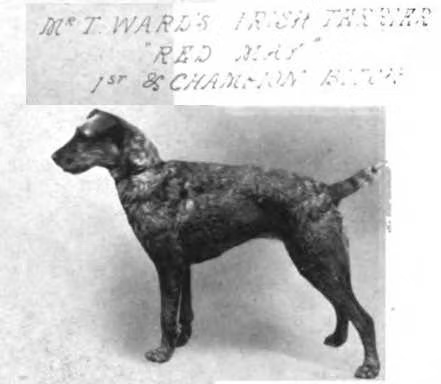
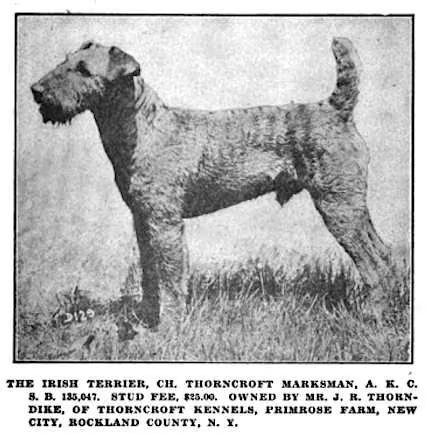
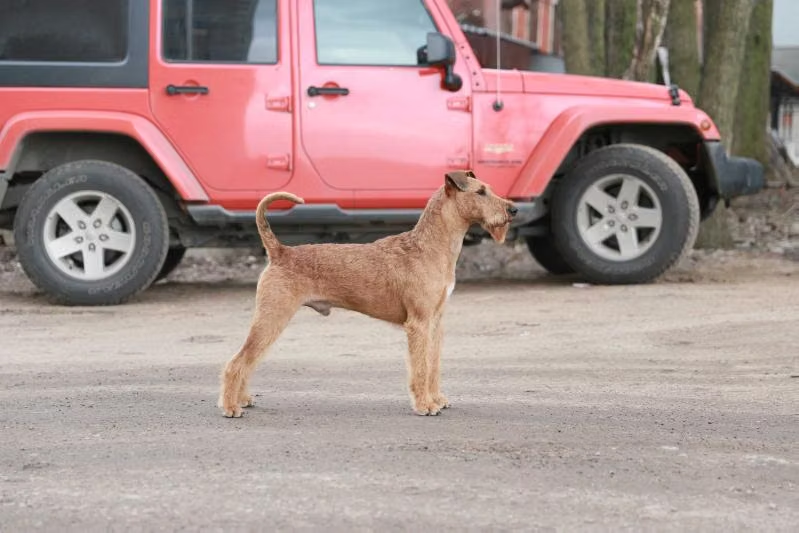
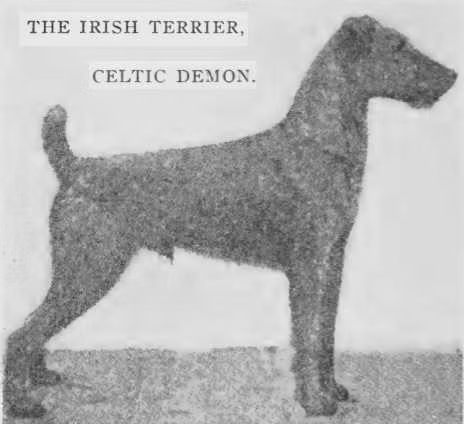
The Irish Terrier is a medium, leggy dog with a dense wiry red coat, a long flat-skulled head and dark eyes, built for stamina rather than bulk.
The Irish Terrier has a racy, well-balanced outline with a moderately long body, straight front legs and a chest that is deep rather than broad. The overall impression is of an active dog built for speed and stamina rather than bulk. The head is long with a flat skull, and the ears are small and V-shaped, folding forward toward the side of the head. The tail is carried with a slight upward set.
| Trait | Standard |
|---|---|
| Height | About 46 to 48 cm (18 to 19 in) at the shoulder |
| Weight | About 11 to 12 kg (25 to 27 lb) |
| Coat | Dense, wiry, harsh outer coat with a softer undercoat |
| Colours | Solid red, red wheaten, or golden red |
| Eyes | Small, dark, set fairly close |
The coat is the breed's signature feature. It is hard and wiry to the touch, lies close to the body and sheds rain and mud rather than soaking them up. A small patch of white on the chest turns up occasionally and is generally tolerated, but the desired colour is a clear, even red right across the body. Puppies can show darker shading that clears as they mature. The wiry texture holds up best with hand stripping, which keeps both colour and harshness, rather than clipping, which softens and fades the coat over time.
The Irish Terrier is loyal, bold and sharp-witted, devoted to its family but often pushy with strange dogs and quick to chase small animals.
The Irish Terrier is spirited and game, with a strong attachment to its household. With family it is affectionate, playful and protective, and it often appoints itself the household watchdog. The breed is clever and quick to size up a situation, which makes it good company but also means it can dig its heels in when it disagrees with a handler.
With strangers the Irish Terrier is alert and can be reserved at first, warming up once it decides a visitor is acceptable. Toward other dogs it can be pushy or quarrelsome, particularly with dogs of the same sex, a trait behind the breed's bold reputation. Early and ongoing socialisation takes the edge off but rarely removes the underlying readiness to stand its ground.
The hunting drive runs strong. Cats, rodents and other small animals can trigger a chase, so households with small pets need careful management. Around kids the breed generally does well when raised with them, though its energy means supervision with very young children makes sense. This is a dog that needs a job, mental engagement and a confident owner.
| Trait | Rating |
|---|---|
| Affection | 4 |
| Energy | 5 |
| Trainability | 3 |
| Vocalness | 3 |
| Shedding | 2 |
The Irish Terrier needs hand stripping of its wiry coat, daily vigorous exercise timed around the heat, and a secure backyard that respects its prey drive.
The Irish Terrier adapts to house or apartment life if it gets enough exercise, but does best with a securely fenced backyard to patrol. Fencing needs to be solid and dig-proof, because the breed will tunnel out and chase anything that moves. The dense coat copes with cold and wet reasonably well, but over an Australian summer the dog needs shade, fresh water and a cool spot to retreat to during the heat of the day. It should not be left alone for long stretches, as boredom can lead to barking and digging.
Feed the Irish Terrier a complete diet suited to its life stage, split into measured meals, and adjust portions to keep this active dog lean.
The Irish Terrier does well on a complete, balanced dog food formulated for its age and activity level. As an active medium breed, it needs decent protein and fat to fuel its energy, but portions need watching to prevent weight gain, since extra kilos put strain on the joints. Pick a food suited to the dog's life stage and keep an eye on body condition rather than relying only on the guide on the packet. Fresh water should always be on hand.
| Life stage | Amount per day | Meals |
|---|---|---|
| Puppy (2 to 6 months) | Per puppy-food guide, divided | 3 to 4 |
| Junior (6 to 12 months) | About 1 to 1.5 cups | 2 to 3 |
| Adult | About 1.25 to 1.75 cups | 2 |
| Senior | Slightly reduced, monitor weight | 2 |
Keep treats to about 10 percent of daily calories and factor them into meal portions. Most Irish Terriers on a complete diet need no extra supplements. A vet may suggest joint or skin support in specific cases, but only add supplements on professional advice.
The Irish Terrier is generally hardy with a lifespan of 13 to 15 years, though a handful of inherited conditions are worth watching for with regular vet checks.
The Irish Terrier is regarded as a robust, healthy breed with a typical lifespan of 13 to 15 years. Responsible breeding and routine veterinary care keep most dogs in good shape well into old age. As with any breed, a few inherited and acquired conditions turn up more often than in the general dog population, and knowing about them helps with early detection.
| Condition | Signs | Note |
|---|---|---|
| Hyperkeratosis (corny feet) | Thickened, cracked footpads | An inherited condition documented in the breed; managed, not cured |
| Hypothyroidism | Weight gain, lethargy, coat changes | Diagnosed by blood test, controlled with medication |
| Cystinuria | Bladder stones, straining to urinate | A urinary stone disorder; needs veterinary management |
| Eye disorders | Cloudiness, vision changes | Periodic eye checks recommended |
The Irish Terrier is sharp and capable but independent and strong-willed, so it responds best to consistent, reward-based training started early.
The Irish Terrier is clever and picks things up fast, but it was bred to work on its own initiative, so it can be stubborn and choosy about which commands it obeys. Training works best when it is consistent, firm and fair, with clear house rules from the outset. Harsh methods tend to backfire and produce a dog that digs in rather than cooperates. Short, varied sessions hold the breed's attention better than long, repetitive drills.
Socialisation matters as much as obedience. Exposure to other dogs, people and situations from puppyhood cuts down the breed's tendency toward dog-directed aggression. Recall is a challenge because of the strong prey drive, so practise it heavily and keep the dog leashed wherever small animals or traffic are about.
Irish Terriers reach breeding maturity in their second year, carry litters for about nine weeks, and produce moderate litters that need careful socialisation.
Responsible breeding of Irish Terriers focuses on temperament, conformation and health screening. Breeding dogs should be physically mature, which usually means waiting until the second year rather than the first season or two. Both parents should be checked for known inherited conditions in the breed before mating.
Gestation runs about 63 days from conception. Litters are generally moderate in size. The dam typically whelps without major trouble, but a quiet whelping area and a vet on standby are sensible precautions. Puppies are born deaf and blind and rely entirely on the mother for the first weeks.
Early handling and socialisation shape this breed's temperament. Puppies should be exposed to gentle handling, household sounds and varied surfaces from a young age, and should stay with the dam and littermates until old enough to leave, usually around eight weeks. Given the breed's drive and dog-directed assertiveness, early social experience pays off for life.
| Metric | Value |
|---|---|
| Breeding maturity | Usually after about 18 to 24 months |
| Gestation | About 63 days |
| Average litter size | Roughly 4 to 7 puppies |
| Weaning age | About 6 to 8 weeks |
| Recommended age to leave dam | Around 8 weeks |
A free lifetime United Pet Club record for your Irish Terrier, with the microchip registered at no charge and nothing falling due each year.
Rangers and shelters can only call the number the scan hands them. Give your Irish Terrier a free United Pet Club profile and that number is yours: dog registration takes a few minutes, costs nothing for his lifetime, and works with or without a chip in place.
A chipped Irish Terrier without a registration is carrying a number nobody can use. File it with United Pet Club and the number works for him: free for life, open to every chip brand sold here, searchable from any clinic or pound in the country. Microchip registration now, free account while you're at it.
Sign up free with United Pet Club, add his name, breed, and a photo, and you're done. The lifetime plan keeps the profile live at no cost, and the chip number can go in whenever the vet's done his bit.
Add the 15-digit number to your free account with your address and mobile. Registration and every update after it are free, and chips from any manufacturer an Australian vet implants are accepted.
In most states and territories, yes, chipping is required and the register entry comes with it. The state register and your United Pet Club record do different jobs: one satisfies the council, the other keeps a current phone number one scan away, free.
Nothing with United Pet Club. Profile, chip registration, and unlimited updates are covered for his whole life, no annual fee in sight.
Common questions about the Irish Terrier cover its size, temperament, care needs, lifespan, suitability and availability.
It is a medium-sized dog, standing about 46 to 48 cm (18 to 19 in) at the shoulder and weighing roughly 11 to 12 kg (25 to 27 lb).
It is loyal, spirited, clever and brave. It is affectionate with its family, alert with strangers, and often pushy toward other dogs, with a strong drive to chase small animals.
Care is moderate. The wiry coat needs hand stripping a few times a year plus weekly brushing, and the dog needs at least an hour of exercise daily on top of mental work. It is not a low-maintenance breed.
The typical lifespan is 13 to 15 years, and the breed is generally hardy when given routine veterinary care.
Yes, for active families who can provide exercise and consistent training. They are good with kids they are raised with, but need supervision around small pets and other dogs.
They are less common than many other terriers, so prospective owners may need to contact breed clubs affiliated with Dogs Australia or wait for a litter from a reputable breeder.
No. The wiry coat sheds little, especially when hand stripped, which is part of its appeal for people sensitive to loose hair.



![Ted Malone [Mrs. Butcher's], a Male Irish Terrier registered with United Pet Club](https://media.unitedpetclub.com/m/udqt44FdYl/ted-malone-mrs-butcher-s-irish-terrier_orig.avif "Ted Malone [Mrs. Butcher's] — Irish Terrier")


![Sport [Mr Jamison's], a Male Irish Terrier registered with United Pet Club](https://media.unitedpetclub.com/m/G4RVCgYDbI/sport-mr-jamison-s-irish-terrier_orig.avif "Sport [Mr Jamison's] — Irish Terrier")
![Badger [Dr. Mark's], a Male Irish Terrier registered with United Pet Club](https://media.unitedpetclub.com/m/KKEFCHScxd/badger-dr-mark-s-irish-terrier_orig.avif "Badger [Dr. Mark's] — Irish Terrier")
![Kate [Dr. Mark's], a Female Irish Terrier registered with United Pet Club](https://media.unitedpetclub.com/m/fGUbeif4or/kate-dr-mark-s-irish-terrier_orig.avif "Kate [Dr. Mark's] — Irish Terrier")