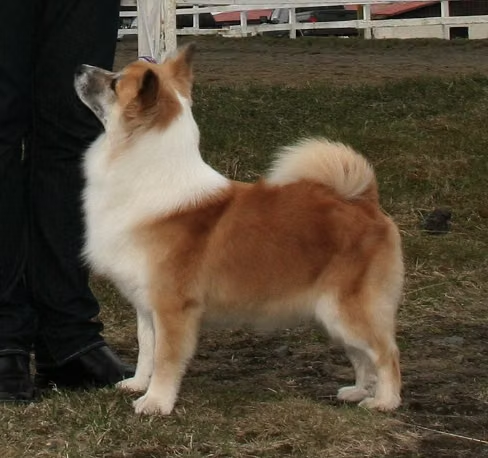
The Icelandic Sheepdog is a friendly, cheerful herder known for its expressive face, playful energy, and welcoming spirit.
How the Icelandic Sheepdog coat is built, and what that means when you groom it.
Critical: A Icelandic Sheepdog should not be shaved.
The undercoat keeps heat out as well as in, and the outer coat shields the skin from sun and insect bites. Clipping the whole coat off removes both. It often grows back patchy, soft or a different colour, and in some animals the guard hairs never return properly. Brush the undercoat out instead of cutting it off.
Information: A Icelandic Sheepdog drops its undercoat in heavy bursts.
The undercoat comes out in heavy bursts over a few weeks. An undercoat rake, or a bath followed by a proper blow-dry, clears it far faster than daily brushing. Clipping the coat down is not a shortcut for this.
A few of the Icelandic Sheepdog profiles members have added to United Pet Club.
A medium-sized herding breed from Iceland, the Icelandic Sheepdog is cheerful, energetic, and famously friendly, with a fox-like face and a big bark.
The Icelandic Sheepdog is a medium-sized Nordic spitz, bred to herd and guard livestock across Iceland's open country. It has a compact, sturdy body, a dense weatherproof coat, pricked ears, and a tail that curls up over the back. The face is open and alert, and most dogs greet people and other animals with obvious enthusiasm.
This is the only dog breed that originated in Iceland. For centuries it worked alongside farmers, moving sheep and horses and barking to flag the location of stock or the approach of strangers. That working background explains two of its defining traits: plenty of energy and a strong instinct to bark.
The breed is friendly, playful, and devoted to its household, and usually gets on well with children, other dogs, and household pets when raised around them. It is not a guard dog in the protective sense, but it stays alert and will let you know when someone is at the gate.
| Attribute | Detail |
|---|---|
| Origin | Iceland |
| Size | Medium |
| Lifespan | 12 to 15 years |
| Group / role | Herding dog (Nordic spitz) |
| Good with | Families, children, other dogs and pets when socialised |
The Icelandic Sheepdog suits an active household that can offer daily exercise and plenty of company. It does best where someone is around for much of the day, since it does not cope well with being left alone for long stretches. Anyone after a quiet apartment dog should factor in the breed's tendency to bark. Owners who enjoy walks, play, dog sports, and an affectionate companion will get on well with this breed.
Norse settlers brought spitz-type dogs to Iceland over a thousand years ago, and their descendants became the country's only native breed, the Icelandic Sheepdog.
The breed's story starts in the Viking Age. Norse settlers arrived in Iceland during the late 9th and 10th centuries and brought spitz-type dogs on their ships. Those dogs adapted to the island's harsh terrain and climate and became the working farm dog of the Icelandic countryside.
For centuries the dogs herded sheep and horses, helped move stock across rough ground, and tracked down animals scattered across wide pastures. Their value was practical, not decorative, and they stayed closely tied to farm life. Early Icelandic sagas and later travel accounts both mention the dogs, a sign of their long, unbroken presence on the island.
The breed came close to dying out more than once. Outbreaks of disease among dogs and periods of rural depopulation cut numbers sharply, and at times the population fell low enough to threaten its survival. Organised efforts through the 20th century, in Iceland and with support from breeders overseas, worked to rebuild and stabilise numbers from what stock remained.
The Icelandic Sheepdog is recognised as the national dog of Iceland and remains the only dog breed to have originated there. Today it is kept both as a companion and a working herder, and dedicated breeding programs continue to protect its numbers and health.
A medium-sized Nordic spitz with a dense double coat, pricked ears, and a curled tail, the Icelandic Sheepdog comes in several colours, usually with white markings.
The Icelandic Sheepdog is a little longer than it is tall, with a sturdy, rectangular outline. Seen from above, the head is triangular, the muzzle tapers, and the dark eyes give the breed its familiar friendly, alert look. The ears stand erect and are highly mobile, and the bushy tail curls up over the back. Movement is light and agile, in keeping with a dog bred to cover the paddock all day. In Australia, Dogs Australia maintains the breed standard used by registered breeders and at conformation shows.
| Trait | Description |
|---|---|
| Height | Roughly 42 to 46 cm at the shoulder, females slightly smaller |
| Weight | About 9 to 14 kg |
| Coat | Double coat, in two lengths: short-haired and long-haired varieties |
| Colours | Tan/golden, chocolate brown, grey, black, usually with white markings |
| Eyes | Dark brown, medium-sized, almond-shaped |
The breed carries a thick, weatherproof double coat: a soft undercoat under a coarser outer coat. It comes in two lengths. The short-haired variety has a medium-length outer coat, while the long-haired variety carries a longer outer coat with fuller feathering on the legs, tail, and ruff.
Several base colours are accepted, including shades of tan and golden, chocolate brown, grey, and black. One colour always predominates, and white markings are typical, often on the face, chest, legs, and tip of the tail. Some dogs also carry black tips on the outer coat.
Friendly, cheerful, and full of energy, the Icelandic Sheepdog bonds closely with its family, warms to strangers fast, and is not shy about barking.
The Icelandic Sheepdog is friendly and outgoing. It enjoys human company, sticks close to its people, and is gentle and patient with children. Families tend to do well with this breed. It stays playful well into adulthood and enjoys games, training sessions, and shared activity.
With strangers, the breed is welcoming rather than wary. It rarely shows aggression towards people and is not a protection dog, though it stays alert and will bark to flag visitors or anything out of the ordinary. With other dogs and household pets, it is generally sociable, especially when raised among them.
The trait owners most often need to manage is the breed's voice. Barking was a working tool in herding, and the dog will use it freely at movement, sounds, and visitors. Early training and steady exercise help keep it in check. The breed also dislikes long stretches alone and can turn restless or noisy when bored or isolated.
| Trait | Rating |
|---|---|
| Affection | 5 |
| Energy | 4 |
| Trainability | 4 |
| Vocalness | 5 |
| Shedding | 4 |
The Icelandic Sheepdog needs regular brushing, daily exercise, and company; its double coat sheds heavily during the seasonal moults.
The breed adapts to most homes but does best with daily outdoor activity and company for much of the day. A house with a secure backyard suits it well. Its double coat handles cold with ease, but Australian summers are a different story: over the hotter months, exercise in the early morning or evening, keep to shade during the heat of the day, and always have water on hand, since heatstroke is a real risk for a dog built for Nordic winters. Apartment living is possible only if the owner manages exercise and barking and is around often.
Feed a complete, balanced diet matched to age and activity, split across daily meals, and adjust portions to keep the dog a healthy weight.
The Icelandic Sheepdog does well on a complete, balanced diet formulated for its life stage and activity level. As an active medium breed, it needs enough quality protein and fat to support daily work and play. Portion size depends on the individual dog's weight, age, and exercise, so treat the feeding guide on the packet as a starting point and adjust to maintain a lean body condition. Fresh water should be available at all times.
| Life stage | Amount per day | Meals |
|---|---|---|
| Puppy (2 to 6 months) | Per puppy food label, divided | 3 to 4 |
| Junior (6 to 12 months) | Per label for growth | 2 to 3 |
| Adult | About 1 to 1.75 cups of dry food | 2 |
| Senior | Slightly reduced, lower in calories | 2 |
Keep treats to about ten percent of daily calories so they do not throw out the balance of the diet or add extra weight. Use small training treats or bits of the dog's own kibble during sessions. A healthy dog on a complete diet usually needs no supplements; add joint, skin, or other supplements only on veterinary advice.
The Icelandic Sheepdog is generally healthy and lives 12 to 15 years, though it can be prone to hip and eye conditions seen in the breed.
The Icelandic Sheepdog is a hardy, generally healthy breed with a typical lifespan of 12 to 15 years. Because the modern population was rebuilt from a small number of dogs, responsible breeders screen for inherited conditions to keep the gene pool sound. Buying from a breeder who health-tests parent dogs lowers the risk of the problems below.
| Condition | Signs | Note |
|---|---|---|
| Hip dysplasia | Stiffness, limping, reluctance to jump | Screen breeding stock; keep the dog lean |
| Patellar luxation | Skipping gait, occasional hind-leg lameness | Ranges from mild to surgical |
| Eye disorders (cataracts, PRA) | Cloudiness, night vision loss, bumping into things | Annual eye checks aid early detection |
| Hypothyroidism | Weight gain, coat changes, low energy | Diagnosed by blood test, managed with medication |
Intelligent and keen to please, the Icelandic Sheepdog trains well with positive, consistent methods, with early focus on recall and barking.
The Icelandic Sheepdog is intelligent, alert, and keen to work with its handler, and takes to training readily. It responds best to reward-based training and short, varied sessions that hold its interest. Two areas deserve early attention: a reliable recall, since the breed is active and curious, and control of barking, since barking comes naturally to this breed. Early socialisation with people, dogs, and everyday situations helps it grow into a confident, easy-going adult.
Breeding the Icelandic Sheepdog calls for health-tested parents, careful pedigree management, and a standard canine gestation of about 63 days.
Breeding the Icelandic Sheepdog carries extra responsibility, since the breed went through severe population bottlenecks and the gene pool remains fairly small. Reputable breeders put genetic diversity alongside health and temperament, and they plan matings carefully to avoid concentrating bloodlines. Females are usually bred only once they have matured physically, and both parents should clear hip and eye screening before mating. Breeders who show or work their dogs often register litters with Dogs Australia.
Gestation runs about 63 days, the standard length for dogs. Litters are typically moderate in size. Puppies are born blind and deaf and rely fully on the dam in the first weeks. From around three weeks the breeder starts gentle handling and early socialisation. This matters for a breed valued for its friendly, steady character. Puppies usually head to new homes at about eight weeks, after weaning and initial vaccinations.
| Metric | Value |
|---|---|
| Sexual maturity | Around 6 to 12 months (breeders wait longer) |
| Gestation | About 63 days |
| Average litter size | Roughly 4 to 6 puppies |
| Weaning age | About 6 to 8 weeks |
| Homing age | About 8 weeks |
A free lifetime United Pet Club record for your Icelandic Sheepdog, with the microchip registered at no charge and nothing falling due each year.
Rangers and shelters can only call the number the scan hands them. Give your Icelandic Sheepdog a free United Pet Club profile and that number is yours: dog registration takes a few minutes, costs nothing for his lifetime, and works with or without a chip in place.
The vet does the implant and not one thing more; the register entry is yours. Register the microchip free on the lifetime plan: every brand an Aussie vet reaches for qualifies, moving house costs nothing to record, and the number stays searchable round the clock. Create your free account and sort the lot in one go.
Sign up free with United Pet Club, add his name, breed, and a photo, and you're done. The lifetime plan keeps the profile live at no cost, and the chip number can go in whenever the vet's done his bit.
Add the 15-digit number to your free account with your address and mobile. Registration and every update after it are free, and chips from any manufacturer an Australian vet implants are accepted.
In most states and territories, yes, chipping is required and the register entry comes with it. The state register and your United Pet Club record do different jobs: one satisfies the council, the other keeps a current phone number one scan away, free.
Nothing with United Pet Club. Profile, chip registration, and unlimited updates are covered for his whole life, no annual fee in sight.
Common questions about the Icelandic Sheepdog's size, temperament, care needs, lifespan, suitability, and availability in Australia.
It is a medium-sized breed. Adults stand roughly 42 to 46 cm at the shoulder and weigh about 9 to 14 kg, with females usually a touch smaller than males.
Yes. They are friendly, playful, and gentle with children, and bond closely with their household. They also tend to get on with other dogs and pets when socialised early.
They can. Barking was part of their herding job, so they readily sound off at movement, noises, and visitors. Early training and a "quiet" cue, along with enough exercise, help keep it manageable.
Care is moderate. The double coat needs weekly brushing, more during the seasonal moults, and the dog needs at least an hour of daily exercise plus company. It is not suited to being left alone for long periods.
They are generally healthy and typically live 12 to 15 years. A lean body weight, regular veterinary care, and parents screened for hip and eye conditions support a long life.
Yes, relatively. The breed nearly died out and was rebuilt from limited stock, so it stays uncommon outside Iceland and the Nordic countries, including in Australia. Expect a waiting list and to source a puppy from a dedicated, health-testing breeder.
It is possible but not easy. The breed's exercise needs, tendency to bark, and dislike of long stretches alone make a home with a secure backyard and frequent company a better fit.