

Havanese
The Havanese is a friendly, playful Cuban companion known for its affectionate nature, intelligence, and outgoing love of people.
- Size
- Toy
- Lifespan
- 14–16 years
- Origin
- Cuba
- Temperament
- Friendly
- Standard colors
- Black, White and Blue and 7 more
Characteristics
Coat and grooming
How the Havanese coat is built, and what that means when you groom it.
- Coat layers
- Single coat
- Coat texture
- Silky, Wavy
- Coat length
- Long
- Shedding
- Low shedding
Grooming guidance
Caution: A Havanese coat mats easily.
Fine or long hair tangles at the base of the coat, out of sight, where the mats tighten and pull on the skin. Brushing has to reach right down to the roots in sections, not just skim the surface.
Information: A Havanese needs clipping every few weeks.
This coat keeps growing rather than shedding out, so it has to be trimmed every few weeks. Left to grow it mats down against the skin and traps moisture, dirt and heat.
Havanese colors and patterns
What each club's breed standard says about every Havanese color and pattern. Point at a ruling to see the club's own wording.
Breed standards describe the Havanese in Black, White, Blue, Silver, Chocolate, Tan, Red, Gold, Cream and Fawn. Standard patterns: Solid, Bicolour, Tricolour, Brindle, Piebald, Parti-colour, Roan, Sable, Tan point and Reverse brindle.
| Color or pattern | FCI | AKC | UKC | KC | KUSA |
|---|---|---|---|---|---|
| Black | Standard (“black”) | Standard (“Black”) | Standard (“All colors are acceptable; singly or in any combination”) | Standard (“Black”) | Standard (“black”) |
| White | Standard (“Rarely completely pure white”) | Standard (“White”) | Standard (“All colors are acceptable; singly or in any combination”) | Standard (“White”) | Standard (“Rarely completely pure white”) |
| Blue | Not recognised | Standard (“Blue”) | Standard (“All colors are acceptable; singly or in any combination”) | Standard (“Any colour or combination of colours permissible”) | Not recognised |
| Silver | Not recognised | Standard (“Silver”) | Standard (“All colors are acceptable; singly or in any combination”) | Standard (“Any colour or combination of colours permissible”) | Not recognised |
| Chocolate | Standard (“havana-brown, tobacco colour, reddish-brown”) | Standard (“Chocolate”) | Standard (“true chocolate-coated dogs”) | Standard (“Chocolate”) | Standard (“havana-brown, tobacco colour, reddish-brown”) |
| Tan | Standard (“Tan markings in all nuances permitted”) | Standard (“Black & Tan”) | Standard (“All colors are acceptable; singly or in any combination”) | Standard (“Black & Tan”) | Standard (“Tan markings in all nuances permitted”) |
| Red | Not recognised | Standard (“Red”) | Standard (“All colors are acceptable; singly or in any combination”) | Standard (“Red”) | Not recognised |
| Gold | Not recognised | Standard (“Gold”) | Standard (“All colors are acceptable; singly or in any combination”) | Standard (“Gold”) | Not recognised |
| Cream | Not recognised | Standard (“Cream”) | Standard (“All colors are acceptable; singly or in any combination”) | Standard (“Cream”) | Not recognised |
| Fawn | Standard (“fawn in its different shades”) | Standard (“Fawn”) | Standard (“All colors are acceptable; singly or in any combination”) | Standard (“Any colour or combination of colours permissible”) | Standard (“fawn in its different shades”) |
| Albino | Not recognised | No ruling | Disqualifying (“Albinism”) | No ruling | Not recognised |
| Patterns | |||||
| Solid | Standard (“Rarely completely pure white, fawn in its different shades”) | Standard (“All colors and marking patterns are permissible”) | Standard (“All colors are acceptable; singly or in any combination”) | Standard (“Any colour or combination of colours permissible”) | Standard (“Rarely completely pure white, fawn in its different shades”) |
| Bicolour | Standard (“Patches in mentioned colours allowed”) | Standard (“All colors and marking patterns are permissible”) | Standard (“All colors are acceptable; singly or in any combination”) | Standard (“Black & White”) | Standard (“Patches in mentioned colours allowed”) |
| Tricolour | No ruling | Standard (“All colors and marking patterns are permissible”) | Standard (“All colors are acceptable; singly or in any combination”) | Standard (“Tricolour”) | No ruling |
| Brindle | No ruling | Standard (“Black Brindle”) | Standard (“All colors are acceptable; singly or in any combination”) | Standard (“Any colour or combination of colours permissible”) | No ruling |
| Piebald | No ruling | Standard (“Irish Pied”) | Standard (“All colors are acceptable; singly or in any combination”) | Standard (“Any colour or combination of colours permissible”) | No ruling |
| Parti-colour | No ruling | Standard (“Parti-Color”) | Standard (“All colors are acceptable; singly or in any combination”) | Standard (“Particolour”) | No ruling |
| Roan | No ruling | Standard (“Parti Belton”) | Standard (“All colors are acceptable; singly or in any combination”) | Standard (“Any colour or combination of colours permissible”) | No ruling |
| Sable | Standard (“slight blackened overlay admitted”) | Standard (“Gold Sable”) | Standard (“All colors are acceptable; singly or in any combination”) | Standard (“Sable”) | Standard (“slight blackened overlay admitted”) |
| Tan point | Standard (“Tan markings in all nuances permitted”) | Standard (“Tan Points”) | Standard (“All colors are acceptable; singly or in any combination”) | Standard (“Black & Tan”) | Standard (“Tan markings in all nuances permitted”) |
| Reverse brindle | No ruling | Standard (“Black Brindle”) | Standard (“All colors are acceptable; singly or in any combination”) | Standard (“Any colour or combination of colours permissible”) | No ruling |
| Merle | No ruling | No ruling | No ruling | Not recognised (“except merle which is unacceptable”) | No ruling |
| Double merle | No ruling | No ruling | No ruling | No ruling | No ruling |


| Color or pattern | FCI | AKC | UKC | KC | KUSA |
|---|---|---|---|---|---|
| Dark brown | Standard (“of brown colour as dark as possible”) | Standard (“dark brown”) | Standard (“dark”) | Standard (“Dark”) | Standard (“of brown colour, as dark as possible”) |
| Light brown | No ruling | Standard (“Chocolate dogs may have somewhat lighter brown eyes”) | No ruling | Standard (“In brown shades eyes can be a slightly lighter colour”) | No ruling |
| Yellow | Fault (“Bird of prey eyes”) | No ruling | No ruling | No ruling | Fault (“Bird of prey eyes”) |
| Color or pattern | FCI | AKC | UKC | KC | KUSA |
|---|---|---|---|---|---|
| Black | Standard (“Black or brown”) | Standard (“solid black for all colors except for chocolate dogs”) | Standard (“all other coat colors require jet black pigment”) | Standard (“Nose and lips solid black”) | Standard (“Black or brown”) |
| Liver | Standard (“Black or brown”) | Standard (“chocolate dogs which have solid brown pigment”) | Standard (“true chocolate-coated dogs, which have dark brown/liver colored pigment”) | Standard (“for brown shades the pigment may be brown”) | Standard (“Black or brown”) |
| Pink | Disqualifying (“Depigmented nose”) | Disqualifying (“Incomplete or total lack of pigmentation of the nose”) | Disqualifying (“Less than full, dark pigment on eye rims, nose or lips”) | No ruling | Disqualifying (“Depigmented nose”) |
| Patterns | |||||
| Butterfly nose | No ruling | Disqualifying (“Incomplete or total lack of pigmentation of the nose”) | Disqualifying (“Less than full, dark pigment on eye rims, nose or lips”) | No ruling | No ruling |

What the rulings mean
- Standard
- Described by the club's breed standard.
- Fault
- Named by the club's breed standard as a fault: the animal can be shown but is penalised.
- Disqualifying
- The club's breed standard disqualifies an animal of this colour or pattern.
- Not recognised
- The club does not accept this colour or pattern for the breed.
Color changes
How a Havanese's colors can change over its life.
Blackchanges toRust
Coat · With body condition · can change back
Blackchanges toGrey
Coat · Progressive
Blackchanges toBrown
Coat · In the sun · can change back
Whitechanges toRoan
Coat · With age · from 2 weeks
Tan pointchanges toSaddle
Coat · With age · from 6 to 156 weeks
Blackchanges toSnow nose
Nose · With the season · can change back
Blackchanges toPink
Nose · With the season · can change back


Sources
Each ruling comes from the club's published breed standard or color list.
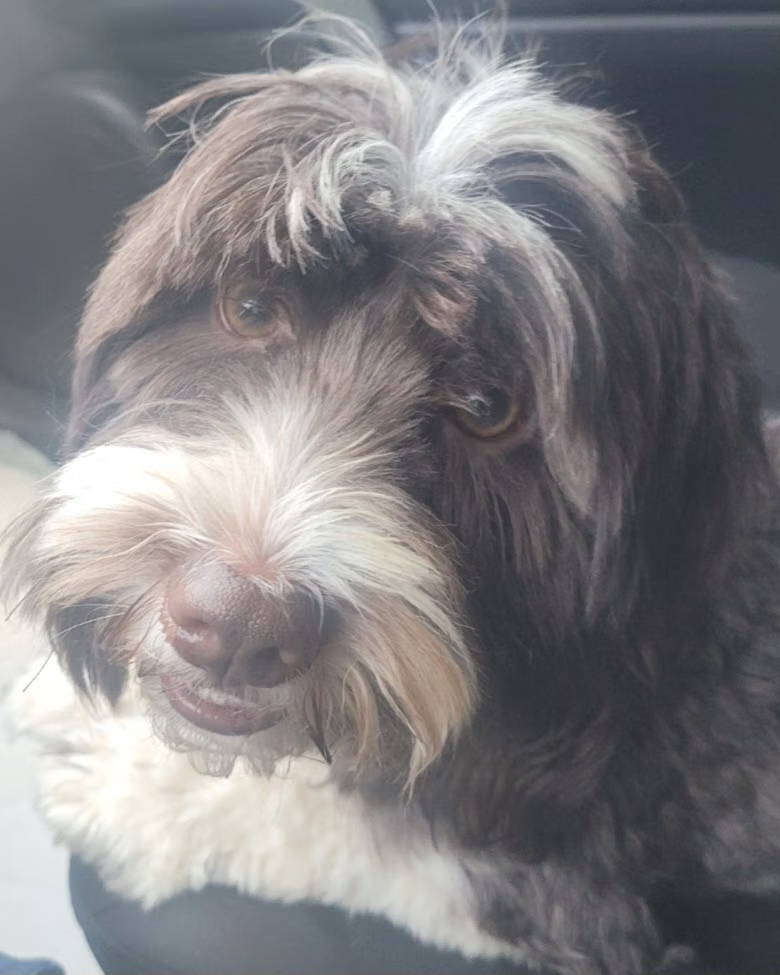
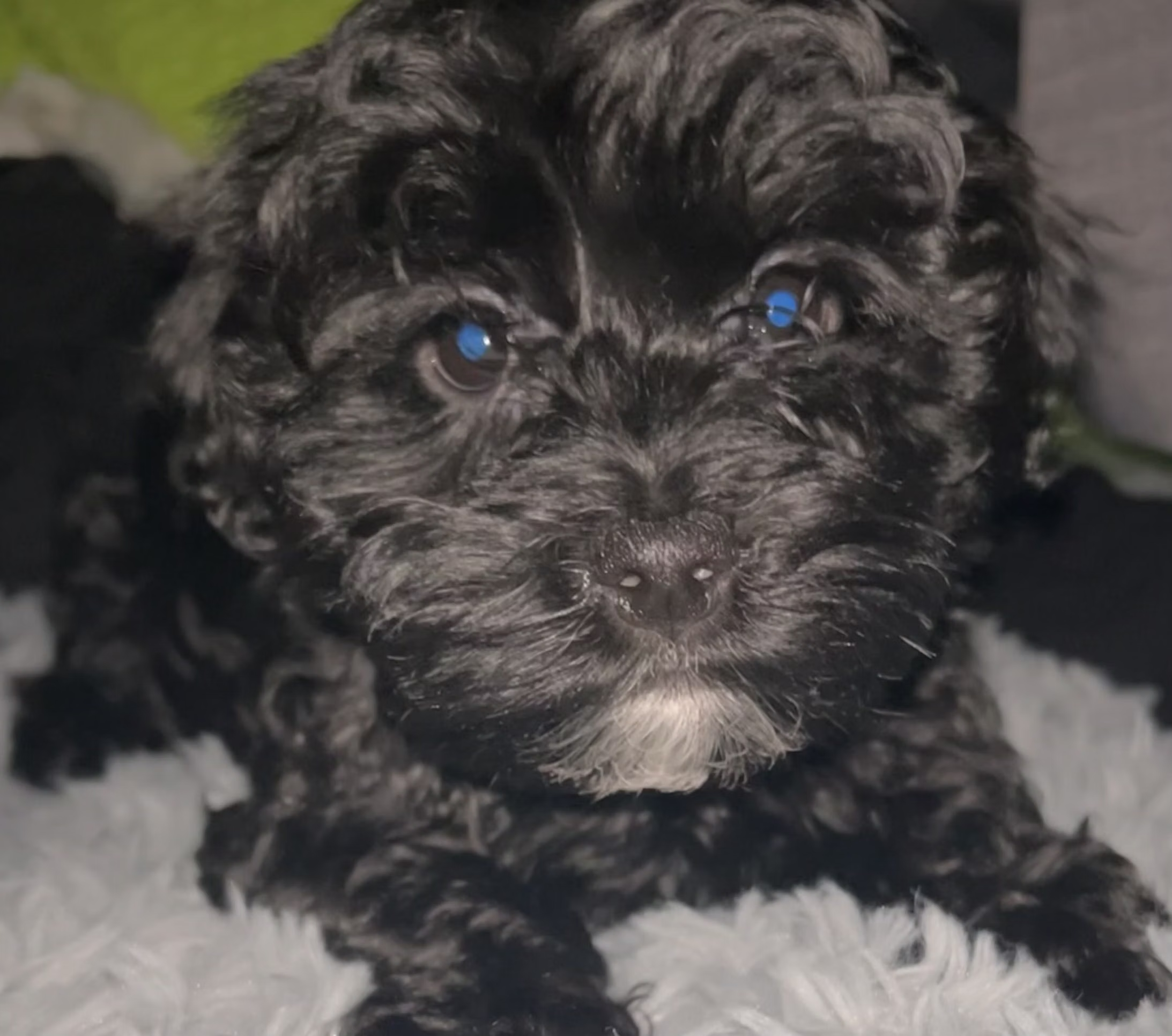
Meet some of our Havanese
A few of the Havanese profiles members have added to United Pet Club.


About the Havanese
The Havanese is a small Cuban companion breed, affectionate and playful, that suits Australian families and unit living.
The Havanese is a toy breed that developed in Cuba, where it grew into the island's national dog and a familiar presence in Cuban households. Fully grown, the breed is small, generally between 7 and 13 pounds, with a long, soft double coat. It was bred for companionship rather than work, and most of its history has unfolded indoors, close to people.
Temperament sets the breed apart. Havanese are sociable and devoted to their people, typically friendly, affectionate, playful and quick to learn. They tend to shadow their owners around the house and form tight bonds with the whole family. That same closeness means a Havanese copes poorly with being left alone for long stretches during the day.
The coat is eye catching but needs consistent upkeep. Owners either commit to regular brushing of the full coat or opt for a shorter, low maintenance clip. With a typical lifespan of 14 to 16 years, bringing a Havanese into the home is a long term commitment.
| Attribute | Detail |
|---|---|
| Origin | Cuba |
| Size | Toy (around 7 to 13 lb) |
| Lifespan | 14 to 16 years |
| Group / role | Companion dog |
| Good with | Families, kids, other pets, unit and apartment living |
Who it suits
A Havanese suits people after a small, social dog who can offer daily company, whether in a unit, a townhouse or a house with a yard. It gets on well with kids and other pets once introductions are handled properly. It is a poor fit for households that are out most of the day, since the breed is prone to separation distress when left isolated. Anyone weighing one up should also budget time for the grooming the coat demands.
History and origin of the Havanese
The Havanese descends from small bichon-type dogs brought to Cuba by European settlers, later becoming the island's companion dog and national breed.
The Havanese traces back to small bichon family dogs that arrived in Cuba during the era of European settlement and trade. These dogs came over with travellers and settlers from the Mediterranean and, across generations on the island, developed into a distinct type suited to the tropical climate and to a life spent as a household companion.
The name comes from Havana, Cuba's capital. By the 1800s, small white and cream dogs of this type were established in Cuban homes, particularly among wealthier families, and the breed became closely tied to the island's identity. In time it came to be regarded as the national dog of Cuba.
Political upheaval in Cuba in the mid twentieth century pushed many families abroad, and a number brought their dogs with them. A small handful of Havanese reached the United States during this period, and breeders there used these dogs to rebuild the population outside Cuba. That small founding group underpins much of the breed as it exists today.
From there the Havanese spread through North America and Europe as a companion breed, and it was admitted to major kennel registries later in the twentieth century. In Australia the breed is recognised and registered through Dogs Australia, the national body for pedigree dogs, and interest in the Havanese here has grown steadily. It remains first and foremost a household companion rather than a working dog.
What does a Havanese look like?
The Havanese is a small, sturdy toy dog with a long, soft double coat, a plumed tail carried over the back and a friendly expression.
The Havanese is small but solidly built, slightly longer in body than it is tall at the shoulder. It carries a long, soft double coat and a plumed tail that arches over its back. Its expression is alert and friendly, with dark eyes and drop ears hidden under hair. Movement is springy and lively, a bouncy gait often noted as characteristic of the breed.
| Trait | Typical range |
|---|---|
| Height | About 8.5 to 11.5 in at the shoulder |
| Weight | About 7 to 13 lb |
| Coat | Long, soft, double coat; wavy to slightly curly |
| Colours | All colours permitted, including white, cream, gold, black, silver, sable and parti-colours |
| Eyes | Large, almond shaped, dark brown |
Coat and colour
The coat is the breed's most distinctive feature: double layered, soft to the touch, and ranging from wavy to slightly curly. Left full, it grows long and flowing; many owners instead keep it trimmed in a shorter, easier care clip. The breed standard accepts all colours and combinations, so coats turn up in white, cream, gold, black, silver, sable and a range of parti coloured and marked patterns. Colour can shift as a puppy matures, so an adult dog's coat may end up a different shade to the one it was born with.
Havanese temperament and personality
The Havanese is friendly, affectionate and playful, bonding closely with its family and usually getting on well with kids, strangers and other pets.
The Havanese is a companion breed through and through, and its personality reflects that. Dogs of this breed are affectionate and people focused, forming strong bonds with their household and staying close to family members through the day. They remain playful well into adulthood and enjoy games and attention.
Around family, the Havanese is warm and steady, and it usually does well with kids who handle it gently. The breed tends to greet strangers with curiosity rather than suspicion, often welcoming visitors at the door. It also generally gets on with other dogs and cats, especially when socialised from a young age.
The trade off for this attachment is sensitivity to being left on its own. A Havanese left isolated for long periods can become anxious and may bark or turn destructive. The breed can be vocal, alerting to activity around the house, though it is not typically aggressive. Early socialisation and steady company bring out the friendliest side of the breed.
| Trait | Rating |
|---|---|
| Affection | 5 |
| Energy | 3 |
| Trainability | 4 |
| Vocalness | 3 |
| Shedding | 2 |
Caring for a Havanese
The Havanese needs regular coat care, moderate daily exercise and steady human company; its small size suits units and houses alike.
Grooming
- Brush the full coat several times a week, or daily if kept long, to stop mats and tangles forming
- Consider a shorter clip if a full coat is too hard to keep up; many owners choose this option
- Bathe as needed, generally every few weeks, and dry the coat thoroughly afterwards
- Check and gently clean the ears, which hang down and trap moisture
- Trim nails regularly and keep the hair around the eyes and paws tidy
Exercise
- Provide moderate daily activity, such as a walk or two plus some play at home
- Around 30 minutes of activity a day suits most adults
- Use play and short training games to keep the dog mentally engaged
- Watch for overexertion in hot weather, given the dog's small size and coat
Environment
The Havanese adapts well to units and smaller homes and does not need a backyard. What it needs most is company. Given its tropical Cuban origins, the breed copes reasonably well with Australia's hot, dry summers, though shade and fresh water should always be on hand during warm weather. The breed struggles when left alone for long stretches, so a household where someone is around for much of the day is the better fit.
Feeding a Havanese
The Havanese does well on a complete diet formulated for small or toy breeds, fed in measured portions across two meals to avoid weight gain.
A Havanese does well on a complete, balanced dog food suited to its size and life stage. Small and toy breed formulas typically use smaller kibble and a calorie density matched to a little dog's needs. Because the breed is small, portions are modest, and small feeding errors can add up to weight gain over time. Measure meals rather than leaving food out, and adjust the amount to the individual dog's activity level and body condition.
| Life stage | Amount per day | Meals |
|---|---|---|
| Puppy | Per product guidance for weight; smaller, more frequent portions | 3 to 4 |
| Adult | About 0.5 to 1 cup of dry food, by weight and activity | 2 |
| Senior | Adjusted slightly down to maintain a healthy weight | 2 |
Treats and supplements
Use treats sparingly, ideally for training, and count them as part of the daily calorie total. Fresh water should be available at all times. A dog on a complete commercial diet usually does not need supplements; only introduce one on veterinary advice, since a vet can confirm whether a particular dog genuinely needs it.
Havanese health
The Havanese is generally healthy with a long lifespan of 14 to 16 years, though it can be prone to certain eye, joint and ear conditions.
The Havanese is generally a healthy breed and one of the longer lived, with a typical lifespan of 14 to 16 years. Like all purebred dogs, it carries a handful of conditions that turn up more often than average. Responsible breeders screen breeding stock for known heritable problems, which lowers but does not remove the risk.
| Condition | Signs | Note |
|---|---|---|
| Patellar luxation | Skipping or hopping gait, intermittent lameness | Common in small breeds; ranges from mild to needing surgery |
| Eye disorders (including cataracts and retinal disease) | Cloudy eyes, changes in vision, bumping into objects | Screening of breeding dogs helps cut incidence |
| Hip dysplasia | Stiffness, reluctance to jump, altered movement | Less common than in large breeds but does occur |
| Ear infections | Head shaking, odour, scratching at the ears | Drop ears with plenty of hair trap moisture; check regularly |
| Dental disease | Bad breath, tartar build up, loose teeth | Small mouths are prone to crowding; routine care matters |
Preventive care
- Keep up with routine vet check ups and core vaccinations
- Maintain dental hygiene through brushing and professional cleans as advised
- Keep the dog at a healthy weight to protect its joints
- Clean and check ears regularly to catch infections early
- Use parasite prevention suited to the local area
- Choose puppies from breeders who screen for eye and joint conditions
Training a Havanese
The Havanese is intelligent and eager to please, which makes it responsive to consistent, reward-based training; house training can take patience.
The Havanese is intelligent and tuned in to its people, which makes it a willing learner. The breed responds best to reward based methods and short, upbeat sessions. It is sensitive, so harsh corrections tend to backfire and can make a dog shut down. Early socialisation to people, places and other animals builds the confident, friendly adult the breed is known for. House training can take patience, a trait shared by many small breeds, so a consistent routine helps.
Basics
- Start socialisation and gentle handling from puppyhood
- Set a fixed house-training routine with frequent trips outside and praise for success
- Teach foundation cues such as sit, come and stay using food and play rewards
- Build up time alone gradually to head off separation distress
- Practise in short, frequent sessions and finish on a win
- Keep up training and enrichment through adulthood to keep the mind busy
Breeding Havanese
The Havanese reaches breeding maturity at one to two years; litters are small, typically one to nine puppies, and need attentive early care.
Breeding a Havanese calls for planning and health screening. Females should be physically mature before any mating, generally not before the second season and ideally around one to two years of age, by which point health clearances can be completed. Responsible breeders screen for the breed's known eye and joint conditions before pairing dogs.
Gestation in dogs runs about 63 days from conception. Havanese litters are usually small, often one to nine puppies, with smaller litters common in a toy breed. Whelping should be supervised, and a vet consulted at the first sign of trouble.
Newborn puppies rely entirely on the mother for warmth and nutrition in the first weeks. Weaning typically starts around three to four weeks, and puppies stay with the mother and littermates until roughly eight weeks, a period that matters for early socialisation. Early, gentle handling lays the groundwork for the breed's sociable temperament.
| Metric | Value |
|---|---|
| Breeding maturity | About 1 to 2 years |
| Gestation | About 63 days |
| Typical litter size | 1 to 9 puppies |
| Weaning begins | About 3 to 4 weeks |
| Weaning / rehoming age | About 8 weeks or older |
Getting your Havanese registered, chip and all
A free lifetime United Pet Club record for your Havanese, with the microchip registered at no charge and nothing falling due each year.
How to register a Havanese in Australia
Rangers and shelters can only call the number the scan hands them. Give your Havanese a free United Pet Club profile and that number is yours: dog registration takes a few minutes, costs nothing for his lifetime, and works with or without a chip in place.
A chipped Havanese without a registration is carrying a number nobody can use. File it with United Pet Club and the number works for him: free for life, open to every chip brand sold here, searchable from any clinic or pound in the country. Microchip registration now, free account while you're at it.
How do I register my Havanese in Australia?
Sign up free with United Pet Club, add his name, breed, and a photo, and you're done. The lifetime plan keeps the profile live at no cost, and the chip number can go in whenever the vet's done his bit.
How do I register my Havanese's microchip?
Add the 15-digit number to your free account with your address and mobile. Registration and every update after it are free, and chips from any manufacturer an Australian vet implants are accepted.
Does my Havanese have to be microchipped in Australia?
In most states and territories, yes, chipping is required and the register entry comes with it. The state register and your United Pet Club record do different jobs: one satisfies the council, the other keeps a current phone number one scan away, free.
What does it cost to register a Havanese?
Nothing with United Pet Club. Profile, chip registration, and unlimited updates are covered for his whole life, no annual fee in sight.
Havanese: frequently asked questions
Common questions about the Havanese cover its size, temperament, grooming needs, lifespan, suitability for families and units, and availability.
How big does a Havanese get?
The Havanese is a toy breed. Adults stand about 8.5 to 11.5 inches at the shoulder and usually weigh between 7 and 13 pounds.
What is the Havanese temperament like?
Havanese dogs are friendly, affectionate, playful and intelligent. They bond closely with their family, get on with kids and other pets, and are usually sociable with strangers.
Is the Havanese hard to look after?
The main demand is the coat, which needs regular brushing or a shorter clip to stay free of mats. Exercise needs are moderate, but the breed needs steady company and does not cope well left alone for long periods.
How long do Havanese live?
The Havanese is a long lived breed, with a typical lifespan of 14 to 16 years.
Is the Havanese good for families and units?
Yes. The breed suits families with kids and adapts well to unit and apartment living thanks to its small size. It is happiest in a home where it is not left alone for most of the day.
Do Havanese shed a lot?
The Havanese sheds relatively little compared with many breeds. Loose hair tends to stay caught in the coat, which is why regular brushing matters to prevent mats.
Are Havanese easy to find in Australia?
The breed is established across Australia, as well as North America and Europe, and is available through registered breeders and breed rescue groups. Choosing a breeder who screens for eye and joint conditions is worth doing.
From the community
Ask about the HavaneseNo questions about the Havanese yet. Be the first to ask.
Browse Dog breeds