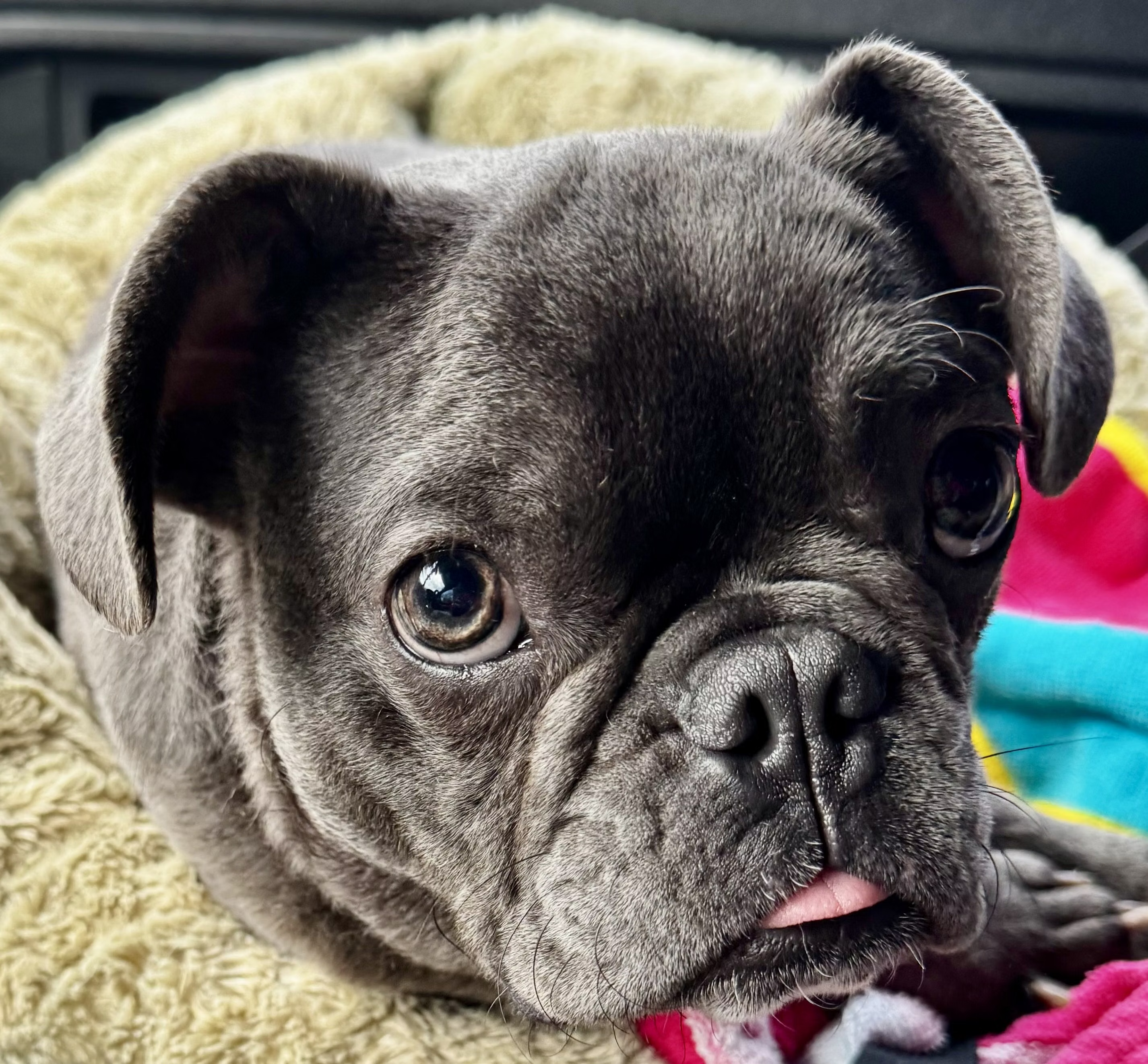
The French Bulldog is a playful, affectionate breed with signature bat ears and an adaptable, easygoing charm that suits city living.
How the French Bulldog coat is built, and what that means when you groom it.
A few of the French Bulldog profiles members have added to United Pet Club.
The French Bulldog is a small, affectionate companion breed with bat ears and a compact body, well suited to apartment living across Australia.
The French Bulldog is a small companion breed, weighing under 12.7 kg (28 lb) and standing roughly 28 to 33 cm (11 to 13 in) at the shoulder. It has a heavy-boned, compact frame, a short muzzle, and upright, rounded ears that earned it the nickname "bat ears." The smooth, single coat sits close to the body and comes in a range of solid and patterned colours.
The breed took shape in nineteenth century France from small bulldog stock and became a familiar sight in city households there. It was bred purely for companionship rather than work, and that shows in its temperament today. French Bulldogs are friendly, affectionate, playful, and alert, and they attach closely to the people they live with.
The breed suits small living spaces well, which is one reason it turns up so often in apartment blocks across Sydney and Melbourne. It needs only modest daily exercise, settles well indoors, and is quieter than many small breeds. Its flat face makes it sensitive to heat, and Australian summers demand real care around exercise timing and cooling.
| Attribute | Detail |
|---|---|
| Origin | France |
| Size | Small (under 12.7 kg / 28 lb) |
| Lifespan | 10 to 12 years |
| Group / role | Companion dog |
| Good with | Families, singles, retirees, apartment households |
French Bulldogs suit an owner after a small, low-distance companion rather than a running or hiking partner. That makes the breed a good match for apartment dwellers in Australian cities, first-time dog owners, and households where someone is around for most of the day, since Frenchies prefer company and can struggle with long stretches alone. Anyone bringing a puppy in from overseas should also budget time and paperwork for Australia's biosecurity import rules, which apply to dogs entering the country. Owners need to be comfortable with heat management and the ongoing health checks a flat-faced breed needs.
The French Bulldog developed from small English bulldogs taken to France in the 1800s, growing into the bat eared companion breed Australians know today.
The French Bulldog's story starts with the bulldogs of England. Once bull baiting was banned there in 1835, breeders reworked the bulldog as a companion rather than a fighting dog, and smaller toy versions began to appear. These miniature bulldogs became popular among lace workers in Nottingham and the wider English Midlands.
When the Industrial Revolution pushed many of those lace workers across the Channel to France for work, their small dogs went with them. Through the second half of the nineteenth century the toy bulldogs built a following in Normandy and Paris, and French breeders crossed them with local dogs until a distinct type emerged.
The upright, rounded "bat ear" became the hallmark of the French type, setting it apart from the rose ear carried by the English bulldog. The breed grew fashionable in Parisian street life, kept first by shopkeepers and cafe owners, later by wealthier owners and artists. Breed clubs formed near the end of the century to record and fix the standard.
The French Bulldog reached the United States in the 1890s, where the French Bull Dog Club of America was founded in 1897 and American fanciers pushed hard for the bat ear, helping lock it in as the standard. The breed has stayed a companion dog throughout its history, and it now ranks among the most popular small breeds registered with kennel clubs in Australia and many other countries.
The French Bulldog is a small, muscular dog with a flat face, large upright bat ears, a short smooth coat, and a solid, heavy boned body.
A French Bulldog is built low and wide rather than tall, and nearly all of that bulk is muscle. The head sits square and oversized for the body, the muzzle short, with heavy wrinkles folding above the nose and a jaw that carries a slight undershot bite. Nothing else on a dog looks quite like the ears: flared at the base, rounded off at the tip, and standing straight up rather than folding over, the one feature that gives the breed away at a glance. The frame underneath runs short and solid, flat along the back, deep through the chest, finishing in a stub of a tail that sits straight or twists into a slight screw.
| Trait | Standard |
|---|---|
| Height | 28 to 33 cm (11 to 13 in) at the shoulder |
| Weight | Under 12.7 kg (28 lb) |
| Coat | Short, smooth, fine, single layer |
| Colours | Brindle, fawn, white, cream, and combinations such as brindle and white |
| Eyes | Dark, round, set wide and low on the skull |
Upkeep here is about as easy as dog coats get: short, fine, smooth, a single layer with barely any undercoat to speak of. The accepted colour range runs from brindle through fawn to white and cream, plus pied coats where patches of colour sit against a white base. A few coat types, solid black, liver, and merle among them, will not pass under most breed club rules and get turned away in the show ring. The trade-off for such a low-maintenance coat is the facial folds, which need regular cleaning to stay dry, doubly so through Australia's humid coastal summers.
French Bulldogs are friendly, affectionate, and playful companions that bond closely with their household, get on well with other pets, and stay fairly quiet.
Company is what a French Bulldog wants more than anything else, and that shapes almost everything about how it behaves. At home it stays affectionate and playful, sticking close to its favourite person rather than off doing its own thing, and while it will register a visitor at the door, constant barking is not part of the package, nor is any real instinct to guard the place.
Family members generally get warmth and patience, and children who know how to handle a small dog tend to get along with it fine. New people are more likely to get curiosity than suspicion, which rules the breed out as any kind of deterrent. Most Frenchies share a home well with other dogs and cats too, particularly when raised around them, though the odd individual can turn possessive over a specific toy.
What this breed handles badly is solitude. Long stretches alone, repeated too often, can bring on whining or chewed furniture that would not otherwise happen. A steady routine and early socialisation both help keep that in check. Add a stubborn streak and a decent sense of humour to the mix, and it is easy to see why patient, reward-based training beats repetition every time.
| Trait | Rating |
|---|---|
| Affection | 5 |
| Energy | 2 |
| Trainability | 3 |
| Vocalness | 2 |
| Shedding | 3 |
French Bulldogs need light daily exercise, simple coat care with regular facial fold cleaning, and careful heat management through the Australian summer.
Day-to-day care of a French Bulldog comes down to managing its flat-faced anatomy, keeping the skin folds clean, and protecting the dog from heat, which is a genuine concern across most of Australia. Beyond that, the breed is low-maintenance and well suited to indoor life.
The French Bulldog is built for life indoors and adapts well to apartments, which suits the housing stock in most Australian capital cities. It needs a climate-controlled space, since it cannot cool itself efficiently once heat or humidity rises. Keep the dog inside with air conditioning or a fan running through hot spells rather than leaving it outdoors, and never leave it in a parked car, even briefly, given how fast temperatures climb in an Australian summer. The breed is also a poor swimmer, since its heavy front and short muzzle make staying afloat hard, so watch it closely around pools and at the beach.
French Bulldogs do best on a measured, complete diet fed in two daily meals, with portions controlled to stop the weight gain the breed is prone to.
French Bulldogs need a complete and balanced diet suited to their life stage. Because the breed puts on weight easily, and extra kilograms add strain to its breathing and joints, portion control matters more here than for many breeds. Measure food rather than leaving it out all day, and adjust the amount to keep the dog at a lean body condition where you can feel the ribs under a light layer of fat.
| Life stage | Amount per day | Meals |
|---|---|---|
| Puppy (2 to 6 months) | Per puppy-formula label, by weight | 3 to 4 |
| Puppy (6 to 12 months) | Per puppy-formula label, by weight | 2 to 3 |
| Adult | About 1 to 1.5 cups of dry food | 2 |
| Senior | Reduced calories, adjusted to activity | 2 |
Keep treats to no more than about 10 percent of daily calories and subtract them from meal portions. A complete commercial diet usually covers all the nutrients a Frenchie needs, so supplements are not necessary unless a vet recommends them for something specific, such as joint or skin support. Keep fresh water down at all times, and use a shallow bowl the short muzzle can reach without trouble.
French Bulldogs live about 10 to 12 years and are prone to breathing, spinal, eye, and skin problems linked to their flat face and compact body.
A French Bulldog's lifespan generally runs 10 to 12 years, and it makes a sturdy, affectionate companion throughout that time. Where the breed comes up short is its body shape, which raises the odds of several specific conditions well above what most dogs deal with. The good news is that early detection handles most of them, and choosing a careful breeder, keeping the dog trim, and staying on top of vet visits all tilt the odds further in its favour.
| Condition | Signs | Note |
|---|---|---|
| Brachycephalic airway syndrome | Noisy breathing, snoring, poor tolerance of exercise and heat | Linked to the flat face; severe cases may need surgery |
| Intervertebral disc disease | Back pain, weakness, dragging the hind legs | The short, screwed tail and spine raise the risk |
| Skin fold dermatitis | Redness, odour, or irritation in facial and tail folds | Prevented with regular cleaning and drying |
| Eye problems (cherry eye, ulcers) | Red mass in the corner of the eye, squinting, discharge | Prominent eyes are easily injured |
| Allergies | Itching, ear infections, paw licking | May be food related or environmental |
French Bulldogs are intelligent but independent, so short, reward-based sessions and early socialisation work better than repetitive drilling.
The French Bulldog is smart and keen to please, but it also has an independent, stubborn streak. It learns best when training stays short, upbeat, and tied to food or play, and it switches off during long, repetitive sessions. Keep sessions to a few minutes and finish on a win. House training takes patience and goes more smoothly with a consistent schedule and a crate routine.
French Bulldog breeding is demanding: small litters, frequent need for artificial insemination, and a high rate of caesarean section due to narrow hips.
There is nothing casual about breeding French Bulldogs properly. Veterinary involvement runs high throughout, and so do the costs and risks compared with most other breeds. Females often reach sexual maturity somewhere between 8 and 12 months, but a responsible breeder waits until the dog is at least 2 years old and has cleared health screening before any mating is considered.
The breed's shape frequently rules out natural mating, which is why artificial insemination has become the standard route. Pregnancy runs close to 63 days, and litters stay small, averaging around three pups. Large puppy heads set against a narrow maternal pelvis mean most French Bulldog litters arrive by planned caesarean section, with a vet on hand throughout.
The weeks after birth need just as much attention as the mating itself. Newborns chill quickly and rely on a warm, clean whelping space plus frequent nursing, and breeders should track weight gain daily through the early stretch. Weaning typically falls between 6 and 8 weeks, with socialisation already underway before puppies leave for new homes. Given the health concerns built into the breed, ethical programmes put screening the parents ahead of appearance, and reputable Australian breeders are typically registered with their state kennel body.
| Metric | Value |
|---|---|
| Sexual maturity | About 8 to 12 months |
| Recommended breeding age | From about 2 years |
| Gestation | About 63 days |
| Average litter size | Around 3 puppies |
| Typical delivery | Planned caesarean section |
| Weaning age | About 6 to 8 weeks |
A free lifetime United Pet Club record for your French Bulldog, with the microchip registered at no charge and nothing falling due each year.
Every state and territory keeps its own Companion Animal Register, and council rangers scan as a matter of course, so a French Bulldog with a current record is home before dinner. Register your dog free with United Pet Club: the profile carries your details beside his photo for his whole life, and no renewal ever turns up.
A chipped French Bulldog without a registration is carrying a number nobody can use. File it with United Pet Club and the number works for him: free for life, open to every chip brand sold here, searchable from any clinic or pound in the country. Microchip registration now, free account while you're at it.
Sign up free with United Pet Club, add his name, breed, and a photo, and you're done. The lifetime plan keeps the profile live at no cost, and the chip number can go in whenever the vet's done his bit.
Add the 15-digit number to your free account with your address and mobile. Registration and every update after it are free, and chips from any manufacturer an Australian vet implants are accepted.
In most states and territories, yes, chipping is required and the register entry comes with it. The state register and your United Pet Club record do different jobs: one satisfies the council, the other keeps a current phone number one scan away, free.
Nothing with United Pet Club. Profile, chip registration, and unlimited updates are covered for his whole life, no annual fee in sight.
Common questions Australian owners ask about French Bulldog size, temperament, care needs, lifespan, suitability, and availability.
French Bulldogs are a small breed. They stand about 28 to 33 cm (11 to 13 in) at the shoulder and weigh under 12.7 kg (28 lb), with a compact, heavy-boned build.
They are friendly, affectionate, playful, and alert. Frenchies bond closely with their people, are usually good with children and other pets, and tend to be quiet rather than yappy.
Grooming and exercise needs are low, but the breed needs careful heat management, regular facial-fold cleaning, and routine health checks because of its flat face. Day-to-day care sits at a moderate level overall, and Australia's summer heat adds an extra layer of attention.
The average lifespan is 10 to 12 years. A healthy weight, early vet care, and avoiding heat and over-exertion all help support a longer, more comfortable life.
Yes. They adapt well to small spaces, need only light daily exercise, and are generally easygoing, which is part of why they suit apartment living in cities such as Sydney and Melbourne. They also suit many first-time owners, provided someone is around for much of the day.
They dislike long periods alone and can develop separation-related behaviour, so they do best in households with regular company. They are also poor swimmers and should be kept away from unsupervised water, including backyard pools.
The breed is one of the most popular small dogs registered with Australian kennel clubs and is widely available, but demand runs high. Healthy puppies from screened parents are limited, so reputable breeders often keep waiting lists.