The English Cocker Spaniel is a cheerful, affectionate sporting dog, famous for its merry temperament and ever-wagging tail.
How the English Cocker Spaniel coat is built, and what that means when you groom it.
Critical: A English Cocker Spaniel should not be shaved.
The undercoat keeps heat out as well as in, and the outer coat shields the skin from sun and insect bites. Clipping the whole coat off removes both. It often grows back patchy, soft or a different colour, and in some animals the guard hairs never return properly. Brush the undercoat out instead of cutting it off.
Caution: A English Cocker Spaniel coat mats easily.
Fine or long hair tangles at the base of the coat, out of sight, where the mats tighten and pull on the skin. Brushing has to reach right down to the roots in sections, not just skim the surface.
A few of the English Cocker Spaniel profiles members have added to United Pet Club.
The English Cocker Spaniel is a medium-sized gundog from England, merry and affectionate, well suited to active Australian families who can offer daily exercise and plenty of company.
The English Cocker Spaniel is a medium-sized gundog developed in England as a flushing and retrieving dog for upland game birds. Its name comes from its long history hunting woodcock. Compact and well balanced, it has long feathered ears, a silky coat, and an expressive face.
The breed is friendly and people-oriented. It forms close bonds with its household and prefers to stay near family members rather than working at a distance. Its tail is almost always in motion, which is part of why owners often describe it as merry.
In Australia the breed is registered with Dogs Australia in the Gundog Group. It retains a strong nose and natural flushing instinct, and working-bred dogs still compete in Australian field trials. Many others take part in obedience, agility, and scent work, while the majority live as companions.
| Attribute | Detail |
|---|---|
| Origin | England |
| Size | Medium |
| Lifespan | 12 to 14 years |
| Group/role | Gundog (flushing and retrieving spaniel), Dogs Australia Gundog Group |
| Good with | Families, children, and other dogs when socialised |
The English Cocker Spaniel suits households that are home often and can give daily activity and attention. It does well with children and other pets when introduced properly. People who want a quiet, independent dog, or who are away from home for long hours, are generally a poor match: the breed is social and can become distressed when left alone for extended periods.
The English Cocker Spaniel developed in England from older land spaniels and was recognised as a distinct breed in the late nineteenth century, later arriving in Australia through imported stock.
Spaniels have a long record in Britain as bird dogs, with references to spaniel-type dogs going back several centuries. For much of that history they were sorted by size and job rather than by formal breed. Larger dogs from the same litters worked as springing spaniels, while smaller ones flushed woodcock and were called cocker spaniels.
During the nineteenth century, English breeders began to separate these types into distinct breeds. After the Kennel Club was founded in Britain in 1873, spaniel classification became more organised. By the 1890s the Cocker Spaniel was recognised in its own right, with weight and conformation guidelines used to distinguish it from the Springer and other land spaniels.
The breed was later exported to North America, where breeders developed it along a different line. The American type diverged enough in size, head shape, and coat that it was separated into its own breed. To avoid confusion, the original English form became known as the English Cocker Spaniel, and the two are now registered as separate breeds worldwide.
In Australia the breed arrived through imported stock, primarily from Britain. Dogs Australia and its ANKC-affiliated state bodies recognise the breed within the Gundog Group. Imported dogs from the United Kingdom or Europe must meet DAFF Category B biosecurity requirements, including an import permit, microchip, rabies titre test, and a 10-day post-arrival management period. Some kennels focus on field ability, while others concentrate on conformation, producing recognisable working and show lines within the same breed.
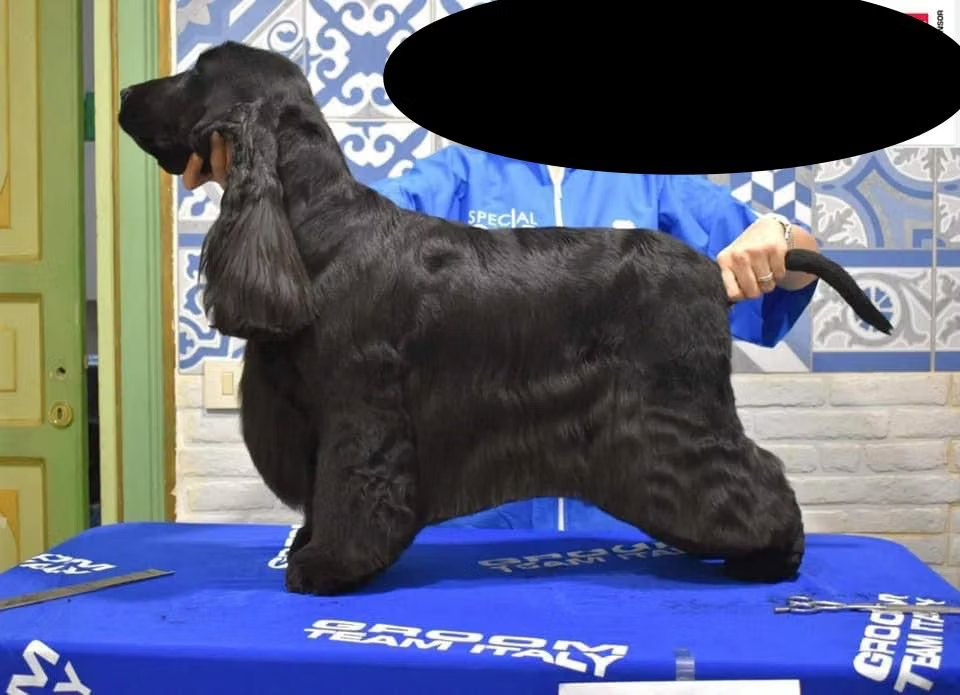
The English Cocker Spaniel is a compact, balanced medium dog with long feathered ears, a silky coat, and a soft expression. It comes in many solid, parti-colour, and roan patterns.
The English Cocker Spaniel is slightly longer than it is tall, with a sturdy body and a level topline. The head is refined with a clear stop, and the ears are set low, hanging close to the head and covered in long silky hair. The eyes are full and dark, giving the soft, alert expression typical of the breed.
Tail docking is banned in most Australian states, including Victoria, Queensland, New South Wales, Western Australia, South Australia, and the ACT. The natural tail is now standard in Australian-bred dogs and wags freely when the dog is active.
| Trait | Detail |
|---|---|
| Height | Roughly 38 to 43 cm at the shoulder |
| Weight | About 13 to 16 kg |
| Coat | Medium-length, silky, flat or slightly wavy, with feathering on ears, chest, legs, and belly |
| Colours | Solid, parti-colour, and roan; black, liver, red, and golden, with tan points and roaning common |
| Eyes | Full, medium to dark brown, with a gentle expression |
The coat carries feathering on the ears, legs, chest, and underside that needs regular grooming. Colour varies widely. Solid dogs may be black, liver, red, or golden, sometimes with tan markings. Parti-colours combine white with a second colour in patches, and roans mix white and coloured hairs throughout for blue roan, liver roan, and similar patterns. Blue roan is among the most recognisable colourings of the breed.
The English Cocker Spaniel is friendly, affectionate, and eager to please, getting along well with family, visitors, and other animals. It is energetic and social and does not cope well when left alone for long.
The English Cocker Spaniel is a cheerful, affectionate dog that wants to be near its people. It is generally good with children and tends to greet visitors in a friendly way rather than acting as a guard, which means it is not suited to guarding. With early socialisation it usually lives well alongside other dogs and household pets, though its hunting background means it may want to chase small animals and birds.
The breed is playful and active and enjoys having a job, whether that is fetch, scent games, or training sessions. It is sensitive and responds best to calm, consistent handling; harsh corrections can make it anxious or withdrawn. Because it bonds closely and dislikes isolation, it can develop separation-related behaviours and excessive barking if left alone too often. Some lines, particularly field-bred dogs, have higher energy and drive than show-bred dogs.
| Trait | Rating |
|---|---|
| Affection | 5 |
| Energy | 4 |
| Trainability | 4 |
| Vocalness | 3 |
| Shedding | 3 |
The English Cocker Spaniel needs regular coat grooming, daily exercise, and steady company. Its ears need routine checks and cleaning, especially in Australia's warmer and more humid conditions.
The breed adapts to houses or apartments as long as it gets daily exercise and company. It is not suited to living outdoors or alone for long stretches. A securely fenced yard is useful because the dog will follow scents. Access to family activity and a comfortable indoor resting place matter more than the size of the home.
The English Cocker Spaniel does well on a complete, balanced dog food fed in measured amounts across two meals a day. The breed gains weight easily, so portions and treats need to be controlled.
Feed a complete and balanced dog food appropriate to the dog's life stage, formulated for medium breeds. Amounts depend on the individual's weight, age, and activity level, so the figures below are starting points to adjust based on body condition. The English Cocker Spaniel enjoys food and puts on weight quickly, so measure portions rather than free-feeding and keep ribs easily felt but not visible. Fresh water should always be available, particularly in hot weather.
| Life stage | Amount per day | Meals per day |
|---|---|---|
| Puppy (2 to 6 months) | Per product guide for growth, divided | 3 to 4 |
| Puppy (6 to 12 months) | Per product guide for growth | 2 to 3 |
| Adult | About 150 to 250 g of dry food, adjusted to weight and activity | 2 |
| Senior | Slightly reduced from adult; monitor weight closely | 2 |
Keep treats to a small share of daily calories and count them as part of total intake. Using part of the regular ration for training rewards helps avoid overfeeding. Most dogs on a complete diet do not need supplements; discuss any joint, skin, or coat product with a vet before starting.
The English Cocker Spaniel typically lives 12 to 14 years and is generally healthy, but the breed is prone to ear infections and several inherited conditions that screening can help reduce.
The English Cocker Spaniel is a generally robust breed with a typical lifespan of 12 to 14 years. Its long drop ears make ear infections the most frequent everyday health issue. The breed also carries several inherited conditions, and responsible Dogs Australia breeders test their stock for eye, hip, and kidney problems. Routine vet care, weight control, and ear maintenance support a long, healthy life.
| Condition | Signs | Note |
|---|---|---|
| Ear infections (otitis) | Head shaking, scratching at ears, odour, discharge | Linked to the long drop ears; humidity worsens risk; regular cleaning helps prevent it |
| Progressive retinal atrophy | Night blindness, declining vision | Inherited; DNA and eye testing available for breeding dogs |
| Cataracts | Cloudy eye, vision changes | Can be inherited; identified on eye exam |
| Hip dysplasia | Stiffness, limping, difficulty rising | Hip scoring of parents lowers risk in offspring |
| Familial nephropathy | Increased thirst, weight loss in young dogs | Inherited kidney disease; DNA test available; ask the breeder for parent results |
| Obesity | Weight gain, reduced energy | Common due to the breed's appetite; managed through measured diet and daily exercise |
The English Cocker Spaniel is intelligent and eager to please, which makes it responsive to reward-based training, though its sensitivity means harsh methods backfire.
The English Cocker Spaniel learns quickly and wants to work with its handler, so it usually responds well to training. It is sensitive, so calm, consistent, reward-based methods produce the best results. Early socialisation with people, dogs, and everyday situations helps the breed's friendly nature develop into genuine confidence. Because the breed is scent-driven, a reliable recall and impulse control around birds and small animals are worth prioritising from an early age.
English Cocker Spaniels reach sexual maturity within their first year, carry litters of about four to seven puppies after a roughly nine-week pregnancy, and benefit from health screening of both parents before mating.
English Cocker Spaniels reach sexual maturity in the first year, though responsible breeders wait until a dog is physically mature and has passed health screening before breeding. Mating is timed to the female's heat cycle, which usually occurs about twice a year. Gestation lasts roughly 63 days, after which the female gives birth to a litter that commonly numbers four to seven puppies.
Newborn puppies are blind and deaf and depend fully on the mother for warmth and feeding in the first weeks. Eyes open at around two weeks, and weaning begins near three to four weeks. The period from about three to twelve weeks is important for socialisation, so puppies should meet people and experience normal household life before going to new homes. Rehoming is usually at eight weeks or later. Dogs Australia registered breeders should screen both parents for inherited eye, hip, and kidney conditions before pairing, and documentation of these results should be available to buyers.
| Metric | Value |
|---|---|
| Sexual maturity | Around 6 to 12 months |
| Heat cycle | Roughly twice per year |
| Gestation | About 63 days (nine weeks) |
| Average litter size | 4 to 7 puppies |
| Eyes open | Around 2 weeks |
| Weaning | About 3 to 4 weeks |
| Earliest rehoming age | Usually 8 weeks or later |
A free lifetime United Pet Club record for your English Cocker Spaniel, with the microchip registered at no charge and nothing falling due each year.
Every state and territory keeps its own Companion Animal Register, and council rangers scan as a matter of course, so an English Cocker Spaniel with a current record is home before dinner. Register your dog free with United Pet Club: the profile carries your details beside his photo for his whole life, and no renewal ever turns up.
A chipped English Cocker Spaniel without a registration is carrying a number nobody can use. File it with United Pet Club and the number works for him: free for life, open to every chip brand sold here, searchable from any clinic or pound in the country. Microchip registration now, free account while you're at it.
Sign up free with United Pet Club, add his name, breed, and a photo, and you're done. The lifetime plan keeps the profile live at no cost, and the chip number can go in whenever the vet's done his bit.
Add the 15-digit number to your free account with your address and mobile. Registration and every update after it are free, and chips from any manufacturer an Australian vet implants are accepted.
In most states and territories, yes, chipping is required and the register entry comes with it. The state register and your United Pet Club record do different jobs: one satisfies the council, the other keeps a current phone number one scan away, free.
Nothing with United Pet Club. Profile, chip registration, and unlimited updates are covered for his whole life, no annual fee in sight.
Common questions from Australian owners about the English Cocker Spaniel's size, temperament, care needs, lifespan, and suitability as a family dog.
It is a medium dog, standing about 38 to 43 cm at the shoulder and weighing roughly 13 to 16 kg, with males usually a little larger than females.
Yes. It is friendly, affectionate, and playful, and it generally does well with children and other pets when properly socialised. It bonds closely with its household and prefers to be around people, which suits family life well.
The typical lifespan is 12 to 14 years. Good weight management, regular ear care, and routine vet checks all help support a long, healthy life.
They are moderate in their needs. The main commitment is regular coat grooming, routine ear cleaning, and daily exercise of around an hour. They also need plenty of company and do not cope well with long periods alone.
They manage in most Australian climates with sensible care. Exercise in the cooler parts of the day during summer, provide shade and fresh water at all times, and be aware that heavy ear feathering can trap heat. In humid regions such as northern Queensland, ear care needs extra attention.
They can be vocal, particularly when excited or left alone. Adequate exercise, early training, and not leaving them isolated for long stretches help keep barking in check.
Look for Dogs Australia registered breeders through the national body or your state canine council; reputable breeders health-test their stock and can provide documentation. The RSPCA and breed-specific rescue groups occasionally have English Cocker Spaniels looking for homes, which is also worth checking.