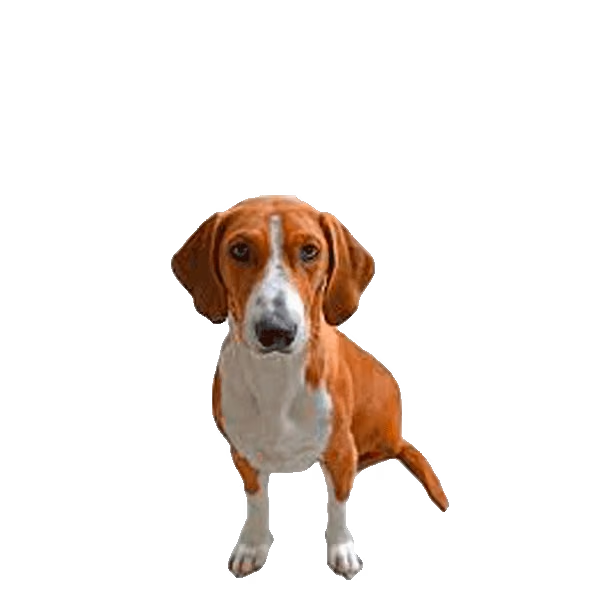
The Drever is a friendly, short-legged Swedish scenthound known for its cheerful disposition and steady tracking drive.
How the Drever coat is built, and what that means when you groom it.
Critical: A Drever should not be shaved.
The undercoat keeps heat out as well as in, and the outer coat shields the skin from sun and insect bites. Clipping the whole coat off removes both. It often grows back patchy, soft or a different colour, and in some animals the guard hairs never return properly. Brush the undercoat out instead of cutting it off.
Information: A Drever drops its undercoat in heavy bursts.
The undercoat comes out in heavy bursts over a few weeks. An undercoat rake, or a bath followed by a proper blow-dry, clears it far faster than daily brushing. Clipping the coat down is not a shortcut for this.
The Drever is a low-set Swedish scenthound bred to track deer and hare at walking pace, valued for its friendly nature and steady nose.
The Drever is a short-legged scenthound from Sweden, bred to push deer and hare towards a hunter at a slow, steady pace rather than run them down. Its low build keeps its nose close to the ground scent, and its loud, musical voice tells the hunter which way the chase is heading. Away from fieldwork, the breed is even-tempered, sociable, and settles easily into home life.
Adult Drevers sit low to the ground but carry a sturdy, rectangular body built for stamina rather than speed. The breed is friendly with people of all ages and rarely shows aggression. Its tracking instinct runs deep, so a scent trail across a paddock or patch of bush can pull its attention away in an instant.
The Drever is still widely used for hunting in Sweden and neighbouring Scandinavian countries, and it remains a rare sight in Australia, where most litters come through hunting or hound-specific networks rather than mainstream breeders. Owners who can offer a solid daily outing and regular scent work get the best out of the breed.
| Attribute | Detail |
|---|---|
| Origin | Sweden |
| Size | Small |
| Lifespan | 12 to 15 years |
| Group / role | Scenthound, deer and hare tracking |
| Good with | Families, children, and other dogs |
The Drever suits active owners who can commit to long daily walks and a properly fenced yard. It fits homes involved in hunting or tracking sports, and it gets on well with kids and other dogs. Its carrying voice and strong nose make it a poor match for units or terraces with close neighbours, since a determined bark can bring a noise complaint from the local council, and it does not suit owners who cannot keep a nose-led dog under control on walks.
Sweden shaped the Drever from imported short-legged hounds in the early 1900s, and a public competition settled on the name Drever in 1947.
The Drever traces back to short-legged scenthounds brought into Sweden from continental Europe in the early 1900s. Hunters wanted a hound low enough to work deer and hare at a slow pace, so the game moved towards the gun rather than being run down. Crosses between imported dachshund-type hounds and local Swedish scenthounds produced the foundation stock.
For several decades these dogs were lumped in with other short-legged Swedish hounds under one broad label. As the type grew more distinct, Swedish breeders worked to fix its size, proportions, and working style into a recognisable breed.
A public naming competition held in Sweden in 1947 settled on the name Drever. The word comes from the Swedish term for driving game, which sums up the breed's job in the field. Formal recognition in Sweden followed soon after.
The Drever is still widely used for hunting in Sweden and turns up in smaller numbers across the rest of the Nordic region and North America. It has never caught on as a mainstream companion breed outside hunting circles, which has kept its working instincts largely intact.
The Drever is a low, long-bodied scenthound with short legs, a short dense coat, and any base colour showing clear white patches.
The Drever has a long, low body set on short, strong legs. The build is rectangular rather than compact, giving it reach and stamina at a steady working pace. The head is fairly long with a clear stop, and the ears sit moderately high, of medium length, hanging flat against the cheeks. The tail is fairly long and may be carried level or slightly raised when the dog is working.
| Trait | Standard |
|---|---|
| Height | Around 30 to 38 cm (12 to 15 in) at the withers |
| Weight | Around 14 to 16 kg (31 to 35 lb) |
| Coat | Short, straight, dense, and close-lying |
| Colours | Any colour, always with white markings |
| Eyes | Dark, clear, with a calm and alert expression |
The coat lies short and dense against the body, with slightly longer hair on the neck, the back of the thighs, and the underside of the tail. The breed standard allows any colour, but white markings must always be present and clearly visible, which helps a hunter spot the dog in cover. Common patterns include tricolour, and red or fawn with white. The white usually shows on the muzzle, neck, chest, feet, and tip of the tail. The short coat is low maintenance, though dogs with a lot of white or pale colouring can be prone to sunburn on exposed skin during harsh Australian summers, so shaded rest spots matter over the warmer months.
The Drever is friendly, good-natured, and alert, sociable with people and other dogs, and quick to give voice once it is onto a scent trail.
The Drever has an easygoing, cheerful temperament. It is friendly towards family members and usually welcomes strangers without fuss, showing little tendency towards shyness or aggression. Around kids it is patient and tolerant, and it generally gets on with other dogs without drama, a trait that reflects its history of working in packs.
The breed is alert and quick to raise the alarm at visitors or unusual noises, which makes it a capable watchdog without being aggressive about it. Its hunting background shows in a powerful scent drive. A fresh trail can hold its full attention to the point that little else gets through, and it will follow a scent with single-minded focus. The Drever also has a loud, carrying voice that it uses freely on a trail, and sometimes around the house.
Because cats and small pets can trigger the chase instinct, early introductions and supervision are worth the effort. Given enough activity and company, the Drever settles into a calm, affectionate companion around the home.
| Trait | Rating |
|---|---|
| Affection | 4 |
| Energy | 4 |
| Trainability | 3 |
| Vocalness | 5 |
| Shedding | 3 |
The Drever needs a solid daily outing and scent work to stay content, while its short coat only asks for routine brushing and basic upkeep.
The Drever settles into most homes with a yard, provided it gets daily exercise. A secure fence matters, since the breed will follow a trail for a surprising distance given the chance. Its loud voice carries well, so it suits a house with some space from the neighbours better than a unit or a terrace close to the fence line. The short coat gives little protection against the cold in the southern states during winter, so shelter and supervision matter on long outings. The same coat offers little defence against the sun, so shade, fresh water, and a break from the midday heat matter just as much over an Australian summer.
The Drever does well on a complete, balanced diet matched to its small frame and activity level, with portions watched closely to protect the long back from extra weight.
The Drever does well on a complete, balanced dog food suited to its size, age, and activity level. Working and hunting dogs need more fuel during active seasons, while a less active pet needs less to avoid piling on weight. Because the breed has a long back and short legs, extra weight adds real strain to the spine and joints, so portion control matters. Fresh water should be available at all times, particularly through hot Australian summers when the dog will drink more.
| Life stage | Amount per day | Meals |
|---|---|---|
| Puppy (2 to 6 months) | As per the puppy food label, split into small feeds | 3 to 4 |
| Junior (6 to 12 months) | Around 150 to 220 g dry food | 2 to 3 |
| Adult (1 to 7 years) | Around 150 to 200 g dry food | 2 |
| Senior (7+ years) | Around 130 to 180 g dry food | 2 |
Use treats sparingly and count them toward the day's calories, since this breed puts on weight easily. Most Drevers on a complete diet need no extra supplements. A vet may suggest joint support for older dogs given the long-backed build, but any supplement should only go in on professional advice.
The Drever is a generally healthy breed with a lifespan of 12 to 15 years, though the long back and drop ears mean spinal and ear problems need watching.
The Drever is a generally healthy, hardy breed with a typical lifespan of 12 to 15 years. Its working background and low profile as a breed have helped keep the gene pool sound. The main concerns tie back to its body shape and ears rather than to any widespread inherited disease. Regular vet checks and sensible weight management support a long, active life.
| Condition | Signs | Note |
|---|---|---|
| Intervertebral disc problems | Back pain, reluctance to jump, weakness in the legs | Linked to the long back. Keeping weight down and limiting hard jumps helps. |
| Ear infections | Head shaking, scratching, odour, discharge | The drop ears trap moisture; weekly checks reduce the risk. |
| Obesity | Weight gain, low energy, trouble getting around | Adds strain to the spine and joints; manage portions and exercise. |
| Dental disease | Bad breath, tartar, sore gums | Routine brushing and checks help prevent it. |
The Drever is intelligent and willing, but goes its own way once it is on a scent, so it responds best to consistent, reward-based training and early socialisation.
The Drever is intelligent and keen to please, but its scenthound streak means it can switch off from commands the moment it picks up an interesting trail. Training works best when it starts early and stays consistent. Short, varied sessions hold the dog's interest better than long, repetitive drills. A reliable recall is the hardest and most important lesson, since the breed will chase a scent over real distance, so most off-lead work should happen in a securely fenced area, such as a fenced oval or dog park, until the recall is solid.
Female Drevers usually reach maturity by their second season and whelp litters of around four to six puppies after a gestation of roughly 63 days.
Drevers generally reach sexual maturity between six and twelve months, though responsible breeders hold off until a bitch is physically and mentally mature, usually around two years, before breeding. Health screening ahead of mating helps cut the risk of passing on problems, with particular attention to back and joint soundness given the breed's long build.
Gestation runs about 63 days from conception. Litters typically run four to six puppies, and most whelpings go without complication, though a vet should be on call regardless. The mother raises the litter, with normal weaning around four to seven weeks. Early handling and gentle exposure to household life help the puppies build the steady, friendly temperament the breed is known for. Puppies usually head to new homes from about eight weeks of age.
| Metric | Value |
|---|---|
| Sexual maturity | 6 to 12 months |
| Recommended breeding age (female) | Around 2 years |
| Gestation | About 63 days |
| Average litter size | 4 to 6 puppies |
| Weaning | About 4 to 7 weeks |
| Homing age | From about 8 weeks |
A free lifetime United Pet Club record for your Drever, with the microchip registered at no charge and nothing falling due each year.
Every state and territory keeps its own Companion Animal Register, and council rangers scan as a matter of course, so a Drever with a current record is home before dinner. Register your dog free with United Pet Club: the profile carries your details beside his photo for his whole life, and no renewal ever turns up.
A chipped Drever without a registration is carrying a number nobody can use. File it with United Pet Club and the number works for him: free for life, open to every chip brand sold here, searchable from any clinic or pound in the country. Microchip registration now, free account while you're at it.
Sign up free with United Pet Club, add his name, breed, and a photo, and you're done. The lifetime plan keeps the profile live at no cost, and the chip number can go in whenever the vet's done his bit.
Add the 15-digit number to your free account with your address and mobile. Registration and every update after it are free, and chips from any manufacturer an Australian vet implants are accepted.
In most states and territories, yes, chipping is required and the register entry comes with it. The state register and your United Pet Club record do different jobs: one satisfies the council, the other keeps a current phone number one scan away, free.
Nothing with United Pet Club. Profile, chip registration, and unlimited updates are covered for his whole life, no annual fee in sight.
Common questions about the Drever cover its size, temperament, everyday care, lifespan, suitability as a family pet, and how easy the breed is to track down in Australia.
The Drever is a small, low-set breed. It stands about 30 to 38 cm (12 to 15 in) at the shoulder and weighs around 14 to 16 kg (31 to 35 lb), carrying a long body on short legs.
Yes. The Drever is friendly, good-natured, and patient with kids, and it usually gets on well with other dogs. Its calm temperament suits family life, though small pets such as guinea pigs or rabbits need careful introductions because of its hunting instinct.
Not really. Grooming is easy thanks to the short coat, but the breed needs daily exercise and scent outlets to stay content. The main challenges are keeping its strong nose in check on walks and managing its loud, carrying voice, especially if neighbours are close by.
A Drever typically lives 12 to 15 years. Keeping the dog at a healthy weight and looking after its back, ears, and teeth supports a long, active life.
It can. The Drever has a loud, musical voice that it uses on a trail and sometimes around the house, which makes it a solid watchdog but a harder sell in units or townhouses with close neighbours.
The breed is common in Sweden and other Nordic countries, where it is mainly kept for hunting, but it is rare in Australia. Prospective owners typically need to go through hunting or hound-specific contacts, sometimes overseas, and Dogs Australia or a state member body is a sensible first stop for checking a breeder's credentials. Expect patience and a wait list either way.
