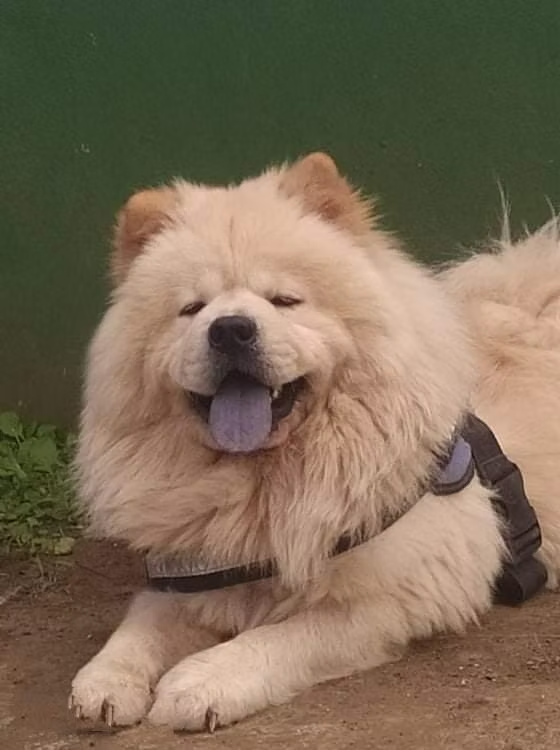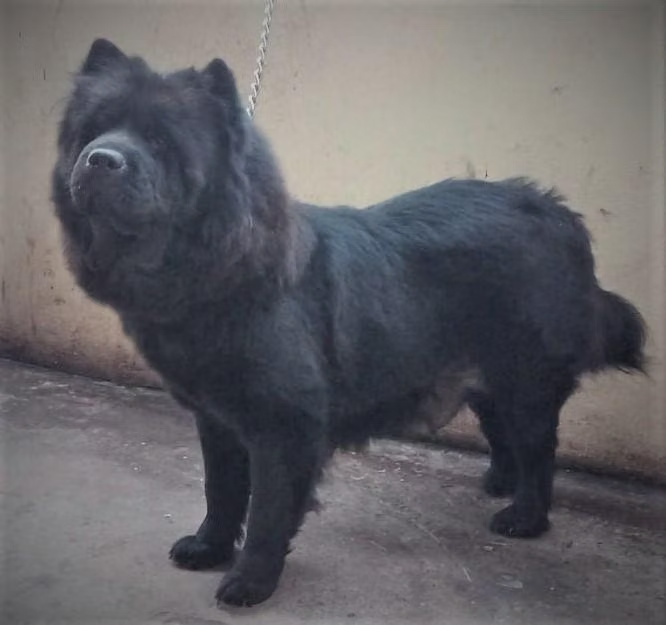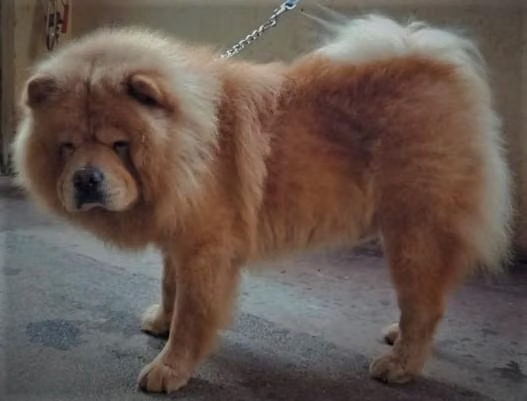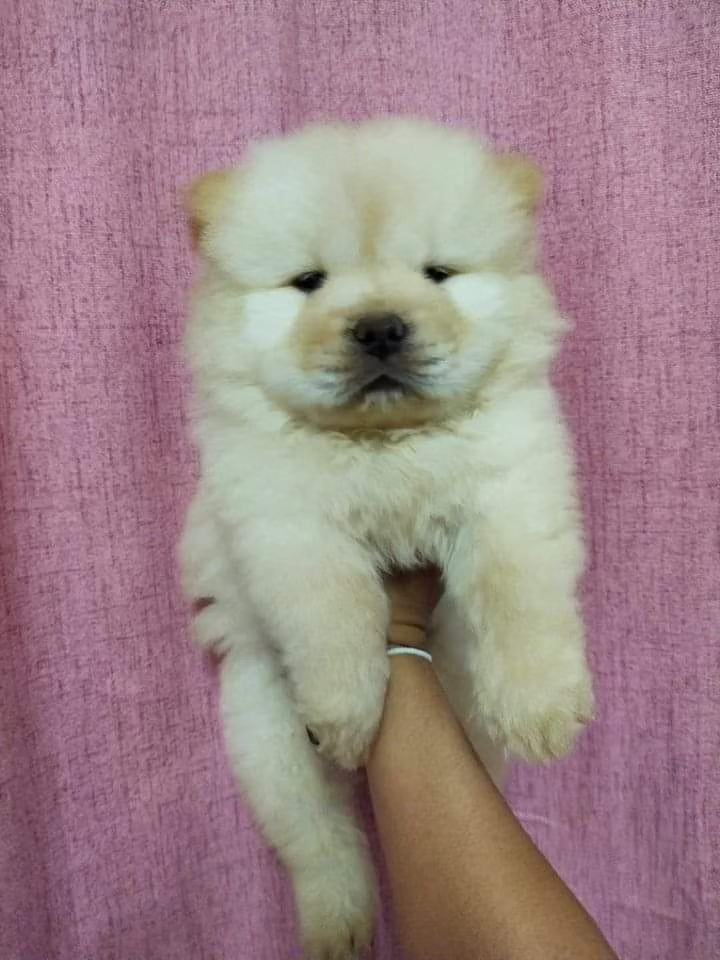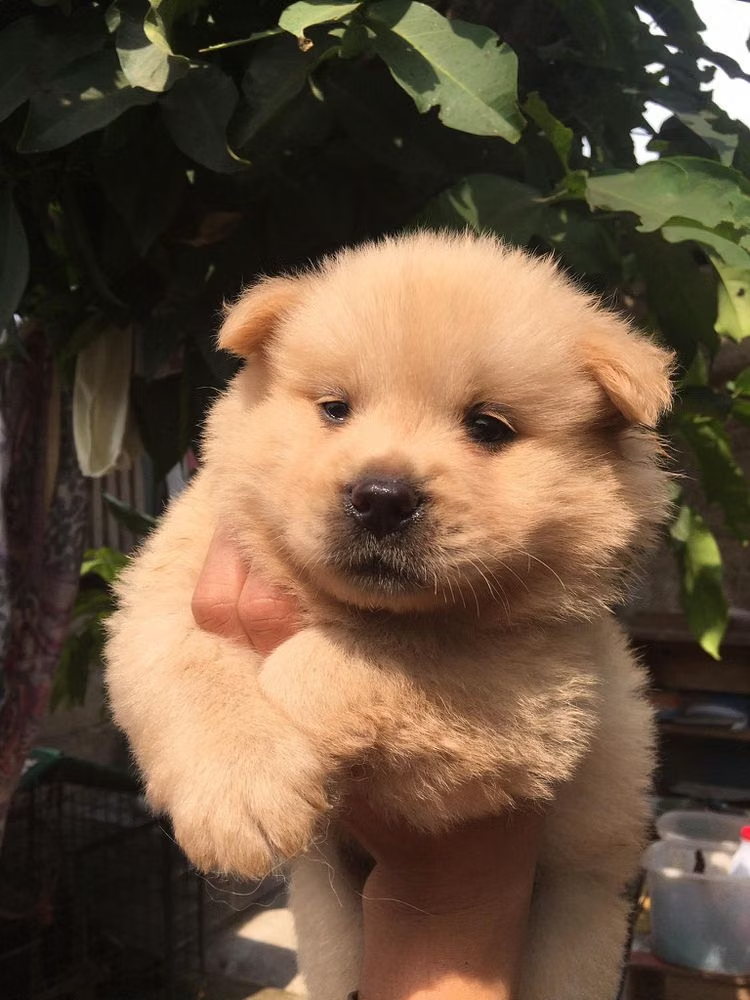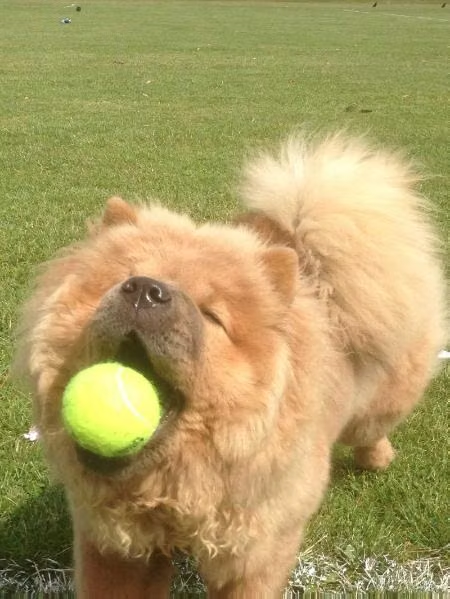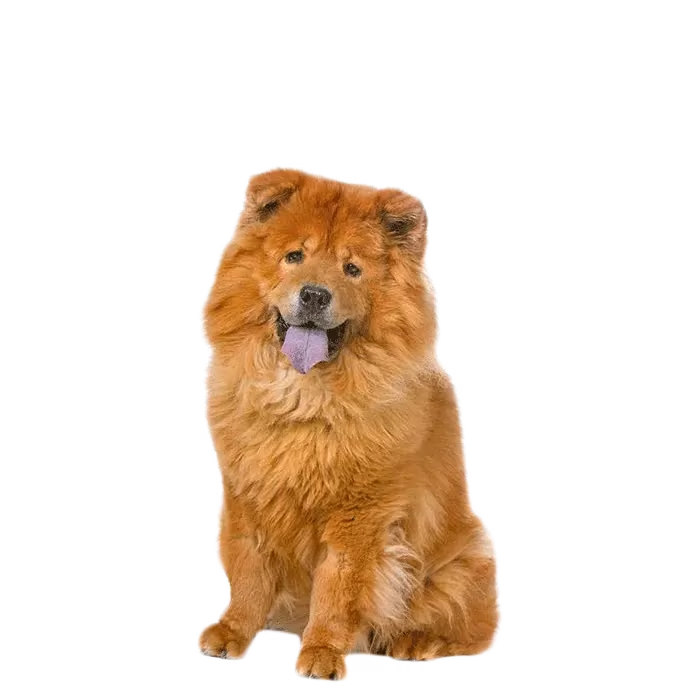
The Chow Chow is a dignified, lion-maned Chinese breed known for its aloof independence and deep loyalty to its chosen family.
How the Chow Chow coat is built, and what that means when you groom it.
Critical: A Chow Chow should not be shaved.
The undercoat keeps heat out as well as in, and the outer coat shields the skin from sun and insect bites. Clipping the whole coat off removes both. It often grows back patchy, soft or a different colour, and in some animals the guard hairs never return properly. Brush the undercoat out instead of cutting it off.
Caution: A Chow Chow coat mats easily.
Fine or long hair tangles at the base of the coat, out of sight, where the mats tighten and pull on the skin. Brushing has to reach right down to the roots in sections, not just skim the surface.
Information: A Chow Chow drops its undercoat in heavy bursts.
The undercoat comes out in heavy bursts over a few weeks. An undercoat rake, or a bath followed by a proper blow-dry, clears it far faster than daily brushing. Clipping the coat down is not a shortcut for this.
A few of the Chow Chow profiles members have added to United Pet Club.
The Chow Chow is a medium-sized Chinese breed with a lion-like mane, an aloof and dignified manner, and a deep bond with its own family.
The Chow Chow is a sturdy, square-built dog from China, recognized at once by the thick ruff around its head and its blue-black tongue. Adults usually stand between 17 and 20 inches at the shoulder and weigh roughly 45 to 70 pounds, placing the breed in the medium range. The coat comes in two types, rough and smooth, and gives the dog a heavy, compact silhouette.
Temperament sets the Chow Chow apart as much as appearance. The breed is loyal and dignified, often choosing one or two people as its close companions while staying reserved or aloof with strangers. It tends to be quiet and self-contained rather than demonstrative, and many owners compare its manner to that of a cat.
A Chow Chow does well in a calm household that respects its independence. It is not a dog that craves constant fuss, and it forms its strongest attachments through steady routine rather than high energy play.
| Attribute | Detail |
|---|---|
| Origin | China |
| Size | Medium (17-20 in, 45-70 lb) |
| Lifespan | 8-12 years |
| Group/role | Companion and former guardian |
| Good with | One household it knows well; cautious with strangers |
The Chow Chow fits an experienced, patient owner who values a calm, loyal companion over an eager-to-please pet. Early, consistent socialization is important because the breed is naturally reserved. Homes with very young children or a steady stream of unfamiliar visitors should weigh the dog's aloof nature before committing.
The Chow Chow is one of the oldest dog types from China, used over centuries for guarding, hunting, and other working roles before becoming a companion breed in the West.
The Chow Chow is among the oldest recognizable dog types and traces to northern China. Depictions of dogs resembling the breed appear in Chinese art from the Han dynasty period, roughly two thousand years ago, which points to a long history in the region.
Over the centuries the breed filled several working roles in China. Dogs of this type were kept as guardians of homes and temples, used in hunting, and worked alongside people in other practical tasks. The thick double coat suited the cold northern climate.
The breed reached Britain in the late 1700s and early 1800s through trade with China, and the name Chow Chow is generally linked to a catch-all term used for miscellaneous cargo from the East. Interest grew through the 1800s, and Queen Victoria's keeping of a Chow Chow helped raise the breed's profile in England.
Formal recognition followed as breed clubs formed. The American Kennel Club recognized the Chow Chow in 1903. From a working background in China the breed shifted toward life as a companion and show dog in Europe and North America, the role it mainly holds today.
The Chow Chow is a compact, square dog with a dense mane, a broad head, deep-set eyes, and a distinctive blue-black tongue.
The Chow Chow has a powerful, square body carried on straight hind legs that give it a stilted, deliberate gait. The broad skull, full ruff, and small rounded ears set close together create a scowling, lion-like expression. The tail is set high and carried over the back. A defining feature is the blue-black tongue and dark mouth tissue, present in the breed and in few others.
| Trait | Standard |
|---|---|
| Height | 17-20 in (43-51 cm) |
| Weight | 45-70 lb (20-32 kg) |
| Coat | Double coat in rough (long) or smooth (short) type |
| Colors | Red, black, blue, cinnamon, cream |
| Eyes | Dark, deep-set, almond-shaped |
Two coat types are recognized. The rough coat is abundant and dense with a thick off-standing outer layer and a soft undercoat, heaviest around the neck. The smooth coat is shorter and hard but still double-layered. Accepted solid colors are red, black, blue, cinnamon, and cream, sometimes with lighter shading. The dense undercoat sheds heavily during seasonal coat changes.
The Chow Chow is loyal, independent, and dignified, devoted to its own household and reserved or aloof toward strangers.
The Chow Chow is independent and self-assured. It bonds closely with its family but often picks one or two favored people and shows quiet devotion rather than open affection. With strangers the breed is reserved and watchful, a trait that comes from its guardian past, so early socialization matters.
With children the Chow Chow can be tolerant of those it has grown up with, though its low tolerance for rough handling makes supervision sensible. Around other dogs and pets it may be territorial or aloof, and same-sex aggression can occur, so careful introductions help. The breed is generally quiet and not prone to needless barking, but it will alert to anything out of place.
| Trait | Rating |
|---|---|
| Affection | 2 |
| Energy | 2 |
| Trainability | 2 |
| Vocalness | 2 |
| Shedding | 4 |
The Chow Chow needs regular brushing of its dense double coat, moderate daily exercise, and a cool, calm environment.
The Chow Chow suits a calm home and tolerates apartment life if exercise needs are met. The heavy coat makes the breed sensitive to heat, so cool, shaded, well-ventilated space is important. A securely fenced area suits its territorial nature.
The Chow Chow needs a measured, balanced diet matched to its life stage, with care taken to avoid overfeeding and joint strain from excess weight.
The Chow Chow does well on a complete, balanced diet formulated for its size and activity level. Because the breed has moderate energy and a heavy coat that hides weight gain, portions should be measured and body condition checked regularly. Diets with controlled fat and adequate protein support a healthy coat and steady weight. Always provide fresh water, particularly given the breed's sensitivity to heat.
| Life stage | Amount per day | Meals |
|---|---|---|
| Puppy (2-6 mo) | Per product guide for growth | 3-4 |
| Puppy (6-12 mo) | Per product guide for growth | 2-3 |
| Adult | 2-3 cups (split) | 2 |
| Senior | Adjusted lower for activity | 2 |
Keep treats to a small share of daily calories to prevent weight gain. Joint supplements such as glucosamine may help given the breed's risk of hip and elbow problems, but introduce any supplement only after discussing it with a veterinarian.
The Chow Chow lives about 8 to 12 years and is prone to joint, eye, and skin problems linked to its build and heavy coat.
The Chow Chow generally lives 8 to 12 years. Its build and dense coat predispose it to several conditions, so routine veterinary care and weight control are important. Eye and joint issues are the most common concerns, and the deep coat and facial folds call for regular skin and ear monitoring.
| Condition | Signs | Note |
|---|---|---|
| Hip dysplasia | Stiffness, limping, reluctance to rise | Worsened by excess weight |
| Elbow dysplasia | Foreleg lameness, swelling | Screen breeding stock |
| Entropion | Eye irritation, tearing, squinting | Eyelid rolls inward; may need surgery |
| Heat intolerance | Heavy panting, lethargy in warmth | Manage with cool, shaded conditions |
| Skin and ear infections | Odor, redness, scratching | Linked to dense coat and folds |
The Chow Chow is intelligent but independent and stubborn, so it responds best to early, consistent, reward-based training and thorough socialization.
The Chow Chow is intelligent and capable but strong-willed and not naturally eager to please. It learns quickly when motivated yet may choose not to comply, so training calls for patience, consistency, and a calm, firm handler. Harsh methods tend to backfire and erode trust. Early, broad socialization is essential to temper the breed's reserve with strangers and other animals.
Chow Chows reach maturity at one to two years, carry litters for about 63 days, and typically produce four to six puppies that need early socialization.
Chow Chows reach sexual maturity around 9 to 12 months, but responsible breeders usually wait until physical and mental maturity at one to two years before mating, with health clearances for hips, elbows, and eyes completed first. Gestation runs about 63 days. Litters commonly number four to six puppies. Because of the breed's broad head, some litters need close monitoring at whelping, and veterinary supervision is advisable.
Newborn puppies depend fully on the dam for warmth and feeding in the early weeks. Early handling and gentle exposure to people and everyday sights from a young age are important, since the breed's reserve makes early socialization a key part of raising sound, well-adjusted dogs. Puppies generally go to new homes from about eight weeks.
| Metric | Value |
|---|---|
| Sexual maturity | 9-12 months |
| Recommended breeding age | 1-2 years |
| Gestation | ~63 days |
| Average litter size | 4-6 puppies |
| Weaning age | ~6-8 weeks |
A free lifetime United Pet Club record for your Chow Chow, with the microchip registered at no charge and nothing falling due each year.
Punch in your Chow Chow's name, his date of birth, and a decent photo, attach your mobile, and save. Done: a lifetime record that never bills you. Registering your dog is the easy half of responsible ownership, and the half people skip.
A chipped Chow Chow without a registration is carrying a number nobody can use. File it with United Pet Club and the number works for him: free for life, open to every chip brand sold here, searchable from any clinic or pound in the country. Microchip registration now, free account while you're at it.
Sign up free with United Pet Club, add his name, breed, and a photo, and you're done. The lifetime plan keeps the profile live at no cost, and the chip number can go in whenever the vet's done his bit.
Add the 15-digit number to your free account with your address and mobile. Registration and every update after it are free, and chips from any manufacturer an Australian vet implants are accepted.
In most states and territories, yes, chipping is required and the register entry comes with it. The state register and your United Pet Club record do different jobs: one satisfies the council, the other keeps a current phone number one scan away, free.
Nothing with United Pet Club. Profile, chip registration, and unlimited updates are covered for his whole life, no annual fee in sight.
Common questions about the Chow Chow cover its size, temperament, care needs, lifespan, suitability, and availability.
The Chow Chow is a medium breed, standing about 17 to 20 inches at the shoulder and weighing roughly 45 to 70 pounds when fully grown.
It is loyal, independent, and dignified, devoted to its own family while reserved or aloof with strangers. Many owners describe its manner as cat-like.
It needs regular care. The dense double coat requires frequent brushing, the breed is sensitive to heat, and its independent nature calls for patient, consistent training.
The typical lifespan is 8 to 12 years, supported by routine veterinary care, weight control, and screening for joint and eye conditions.
It is better suited to experienced owners. Its stubbornness, reserve toward strangers, and grooming demands make early socialization and steady handling important.
They can tolerate children they are raised with under supervision, but their low tolerance for rough handling and territorial streak mean careful introductions to children and other pets are needed.
Chow Chows are available through responsible breeders who health-test their dogs, and through breed-specific rescue groups. Choose sources that screen for hip, elbow, and eye conditions.