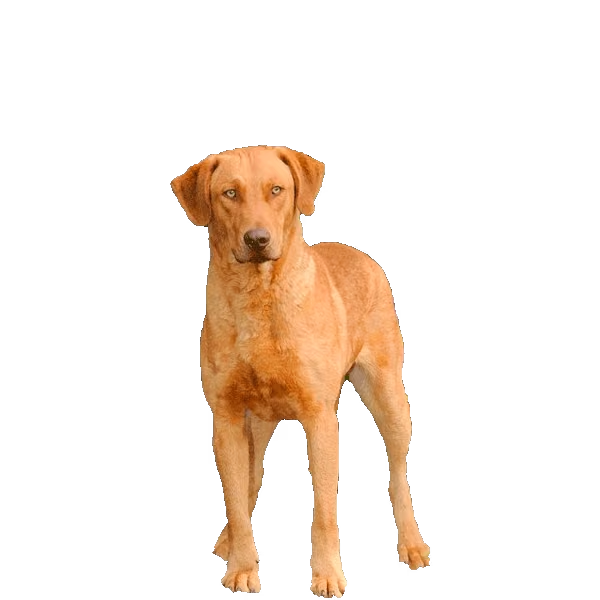
The Chesapeake Bay Retriever is a powerful, devoted American water dog, bred to brave icy waters with courage and unwavering loyalty.
How the Chesapeake Bay Retriever coat is built, and what that means when you groom it.
Critical: A Chesapeake Bay Retriever should not be shaved.
The undercoat keeps heat out as well as in, and the outer coat shields the skin from sun and insect bites. Clipping the whole coat off removes both. It often grows back patchy, soft or a different colour, and in some animals the guard hairs never return properly. Brush the undercoat out instead of cutting it off.
Information: A Chesapeake Bay Retriever drops its undercoat in heavy bursts.
The undercoat comes out in heavy bursts over a few weeks. An undercoat rake, or a bath followed by a proper blow-dry, clears it far faster than daily brushing. Clipping the coat down is not a shortcut for this.
A few of the Chesapeake Bay Retriever profiles members have added to United Pet Club.
The Chesapeake Bay Retriever is a large sporting dog bred for cold-water work, living 10 to 13 years. Registered breeders are found mainly in Victoria, NSW and SA.
The Chesapeake Bay Retriever is a large, powerful sporting dog bred for cold-water retrieving. It is registered with Dogs Australia in the Sporting Group.
| Characteristic | Detail |
|---|---|
| Origin | United States (Maryland, Chesapeake Bay area) |
| Size | Large |
| Lifespan | 10 to 13 years |
| Group/role | Sporting Group; water retriever |
| Good with | Family members, older children, and pets it is raised with |
The Chessie is not a breed for everyone. It is more independent and reserved than a Labrador or Golden Retriever, and suits active owners who want a serious working dog. In Australia, some Dogs Australia registered breeders exist, mainly in Victoria, New South Wales, and South Australia. The breed performs well in duck shooting contexts along Victorian and NSW river systems, SA wetlands, and Tasmanian rivers, where its oily, water-resistant coat provides a clear advantage in cold conditions.
The Chesapeake Bay Retriever began in 1807 Maryland from two shipwrecked Newfoundland-type dogs, and was recognised in 1878. Aussie duck shooters use it on wetlands today.
The Chesapeake Bay Retriever's origins trace to the early 19th century in Maryland, on the eastern coast of the United States. In 1807, a ship ran aground near the Chesapeake Bay, and two Newfoundland-type dogs were rescued from the wreck. These dogs were bred with local retrievers and hounds over several decades, producing a dog suited to working in the bay's cold, rough waters.
Chesapeake Bay duck hunting clubs developed the breed through the 1800s, selecting dogs that could retrieve large numbers of waterfowl from icy water under tough conditions. The American Kennel Club recognised the breed in its Sporting Group in 1878, making the Chessie one of the earliest retriever breeds to gain official recognition.
Today, the Chesapeake Bay Retriever is recognised by Dogs Australia in the Sporting Group. It has a modest presence in Australia and is valued in the field by licensed duck shooters working Victorian and NSW wetlands, SA lakes, and Tasmanian rivers.
Chesapeake Bay Retrievers stand 53 to 66 cm and weigh 25 to 36 kg, with an oily, wavy double coat in brown, sedge or deadgrass, and yellow to amber eyes.
The Chesapeake Bay Retriever is a well-muscled, athletic dog with a broad head, strong neck, and a distinctive wavy or curly coat. The coat is short and dense, with an oily outer layer and a thick woolly undercoat that provides insulation in cold water. Permitted colours are brown, sedge (reddish-gold), and deadgrass (tan to straw). The eyes are yellow to amber, which is unusual among retrievers.
| Feature | Standard |
|---|---|
| Height | Males 58–66 cm (23–26 in); females 53–61 cm (21–24 in) at shoulder |
| Weight | Males 29–36 kg (65–80 lb); females 25–32 kg (55–70 lb) |
| Coat | Short, dense double coat with oily, water-resistant outer layer and woolly undercoat |
| Colours | Brown, sedge (reddish-gold), and deadgrass (tan to straw) |
| Eyes | Yellow to amber, medium-large and wide-set |
The Chessie's build reflects its working origins: it is strong and deep-chested, with hindquarters that are as high as or slightly higher than the shoulder. The tail is medium length and may be straight or slightly curved. The breed's dense, oily coat is its most practical feature, shedding water quickly and providing protection against cold conditions in Australian river and wetland environments.
The Chesapeake Bay Retriever is loyal to its family yet reserved with strangers, with a stubborn streak that suits experienced owners. Early socialisation is essential.
The Chesapeake Bay Retriever is loyal and devoted to its family but noticeably more reserved with strangers than most other retrievers. It does not greet everyone warmly. The breed has a confident, sometimes stubborn streak, and suits experienced dog owners who can provide consistent, firm, and fair handling.
With family members it is affectionate and protective. It can be good with older children, though its size and energy level mean supervision around young children is sensible. The Chessie is generally not aggressive but can be territorial. Early socialisation is essential to develop a well-adjusted adult.
| Trait | Rating (out of 5) |
|---|---|
| Affection | 4 |
| Energy | 4 |
| Trainability | 3 |
| Vocalness | 3 |
| Shedding | 4 |
Chesapeake Bay Retriever care: 60 to 90 minutes of daily exercise, ideally swimming, weekly brushing and only a few baths a year to protect the coat's natural oils.
Grooming
The Chessie's coat repels water and resists dirt, and over-bathing will strip the natural oils that make this possible. Bathe only a few times a year or when the dog is genuinely dirty. Weekly brushing with a rubber curry comb or firm bristle brush removes loose hair and distributes coat oils.
Exercise
The Chesapeake Bay Retriever needs 60 to 90 minutes of vigorous exercise each day. Swimming is ideal and suits the breed's history and build. In Australia, the Chessie is well suited to retrieving work along river and wetland environments, including the Murray, Murrumbidgee, and Riverina systems in Victoria and NSW, and wetlands in South Australia and Tasmania.
Environment
This breed needs a large home with a secure yard. It does not suit apartment living. The Chessie's cold-water origins make it well suited to southern Australian winters in Victoria, Tasmania, and South Australia. In hotter northern climates, exercise should be scheduled for early morning or late evening, and shade and fresh water must always be available.
The Chessie is reserved with strangers and can be territorial. It is not suited to households with frequent visitors who expect an outgoing, sociable dog.
Feed a Chesapeake Bay Retriever a large-breed diet, roughly 2.5 to 3.5 cups of dry food daily over two meals. Keep it lean and split meals to lower the bloat risk.
Feed the Chesapeake Bay Retriever a complete, balanced diet formulated for large breeds. Puppies need a large-breed puppy formula to support controlled bone and joint development. Adults and seniors should be kept at a lean, healthy weight, as extra body weight increases strain on joints and raises the risk of conditions such as hip dysplasia and bloat. Divide daily food into two or more meals to reduce bloat risk.
| Life stage | Amount per day | Meals per day |
|---|---|---|
| Puppy (2–6 months) | Per puppy-food label by weight | 3 to 4 meals |
| Puppy (6–12 months) | Per puppy-food label by weight | 2 to 3 meals |
| Adult | Roughly 2.5 to 3.5 cups of dry food | 2 meals |
| Senior/less active | Reduced portion to maintain weight | 2 meals |
The amounts in the table are a starting point. Active dogs working in the field or swimming regularly may need more than the table suggests. Sedentary or older dogs need less. Monitor body condition by feel: you should be able to feel the ribs with light pressure but not see them. Consult your vet if you are unsure about portion sizes or food type.
Chesapeake Bay Retriever health concerns include hip and elbow dysplasia, PRA, exercise-induced collapse and bloat. Ask Australian breeders for clearances on both parents.
The Chesapeake Bay Retriever is generally a hardy breed, but it carries several inherited conditions that prospective owners should know about. Reputable breeders screen for the most significant hereditary conditions before breeding. When looking for a puppy in Australia, ask for documented health clearances from both parents.
| Condition | Signs | Note |
|---|---|---|
| Hip dysplasia | Stiffness, limping, trouble rising | Hereditary; screen breeding dogs; maintain lean weight |
| Elbow dysplasia | Front-leg lameness, reduced activity | Inherited; screening recommended |
| Progressive retinal atrophy | Night blindness, declining vision | Inherited; eye exams advised for breeding dogs |
| Cataracts | Cloudy eye, vision loss | Can be hereditary; annual eye checks |
| Exercise-induced collapse | Weakness or collapse after intense activity | Genetic condition; DNA test available; avoid intense exercise in heat |
| Bloat (gastric torsion) | Swollen abdomen, retching, restlessness | Life-threatening emergency in deep-chested breeds; seek vet immediately |
Hip and elbow scoring, ophthalmologist eye checks, and DNA testing for progressive retinal atrophy and exercise-induced collapse are the minimum health tests buyers should request from any breeder. Maintaining a healthy weight throughout the dog's life reduces joint stress and supports overall health. Schedule annual vet checks and keep vaccinations and parasite prevention current. In Australia, heartworm prevention is important across most regions.
Chesapeake Bay Retrievers are clever but independent, so training needs consistent, positive handling from 8 weeks. They excel in Dogs Australia retrieving and water trials.
The Chesapeake Bay Retriever is intelligent but more independent than most sporting breeds. It does not train with the eager-to-please responsiveness of a Labrador or Golden Retriever. The Chessie thinks for itself, a quality that made it effective as a working dog but can make it challenging for inexperienced owners.
The breed responds well to consistent, positive, and firm handling. Harsh or inconsistent training methods are counterproductive and can produce a dog that becomes evasive or difficult. Early training and socialisation, started at 8 to 12 weeks, are important for a well-mannered adult.
Training focus areas
Breeding Chesapeake Bay Retrievers needs Dogs Australia registration and health testing, with dogs bred from 18 to 24 months. Litters average 7 to 10 pups after 63 days.
Breeding Chesapeake Bay Retrievers in Australia requires registration with Dogs Australia and compliance with the national breed standard. Responsible breeders complete health testing, including hip and elbow scoring, eye examinations, and DNA tests for known genetic conditions, before breeding any dog. Litters should be registered, and buyers should receive documentation of health clearances for both parents.
The breed matures relatively slowly. Most breeders wait until a dog is 18 to 24 months old before breeding, to allow time for health testing results and physical maturity.
| Characteristic | Detail |
|---|---|
| Sexual maturity | About 1 to 2 years |
| Heat cycle (female) | Roughly twice a year |
| Gestation | About 63 days |
| Average litter size | 7 to 10 puppies |
| Weaning age | About 6 to 8 weeks |
| Recommended age to new home | Around 8 weeks |
A free lifetime United Pet Club record for your Chesapeake Bay Retriever, with the microchip registered at no charge and nothing falling due each year.
Punch in your Chesapeake Bay Retriever's name, his date of birth, and a decent photo, attach your mobile, and save. Done: a lifetime record that never bills you. Registering your dog is the easy half of responsible ownership, and the half people skip.
A chipped Chesapeake Bay Retriever without a registration is carrying a number nobody can use. File it with United Pet Club and the number works for him: free for life, open to every chip brand sold here, searchable from any clinic or pound in the country. Microchip registration now, free account while you're at it.
Sign up free with United Pet Club, add his name, breed, and a photo, and you're done. The lifetime plan keeps the profile live at no cost, and the chip number can go in whenever the vet's done his bit.
Add the 15-digit number to your free account with your address and mobile. Registration and every update after it are free, and chips from any manufacturer an Australian vet implants are accepted.
In most states and territories, yes, chipping is required and the register entry comes with it. The state register and your United Pet Club record do different jobs: one satisfies the council, the other keeps a current phone number one scan away, free.
Nothing with United Pet Club. Profile, chip registration, and unlimited updates are covered for his whole life, no annual fee in sight.
Common Chesapeake Bay Retriever questions answered: size of 25 to 36 kg, 10 to 13 year lifespan, exercise needs, duck shooting suitability and finding a breeder in Australia.
The Chesapeake Bay Retriever is a large breed. Males stand 58 to 66 cm at the shoulder and weigh 29 to 36 kg. Females are slightly smaller, standing 53 to 61 cm and weighing 25 to 32 kg.
They can suit active families who understand the breed. The Chessie is loyal and affectionate with its own family but more reserved with strangers than a Labrador or Golden Retriever. It is better suited to families with older children and to owners who have some experience with dogs.
Not particularly. The oily coat needs regular brushing, though bathing should be kept to a minimum to preserve the coat's natural water resistance. Exercise needs are high, at 60 to 90 minutes daily. The breed is intelligent but independent, which makes it less suited to first-time owners.
The typical lifespan is 10 to 13 years. Regular vet care, keeping the dog at a healthy weight, and sourcing from health-tested parents all support a longer, healthier life.
Yes. The Chessie is one of the best breeds for cold-water duck retrieving. Its oily, water-resistant coat performs well in Victorian and SA wetlands, along the Murray and Murrumbidgee systems, and in Tasmanian rivers. Licensed duck shooting under the relevant state body, such as the Game Management Authority in Victoria, is where the breed's abilities are well used.
The breed is intelligent but more independent than a Labrador or Golden Retriever. It responds well to consistent, firm, positive training and does not respond well to harsh or inconsistent handling. An experienced handler and early training started at 8 weeks give the best results.
Some Dogs Australia registered breeders exist, mainly in Victoria, New South Wales, and South Australia. Contact Dogs Australia to access the national breed register. Importing from the USA is possible but requires a DAFF import permit, microchipping, rabies vaccination and titre testing, parasite treatment, and a 10-day post-arrival management period.



