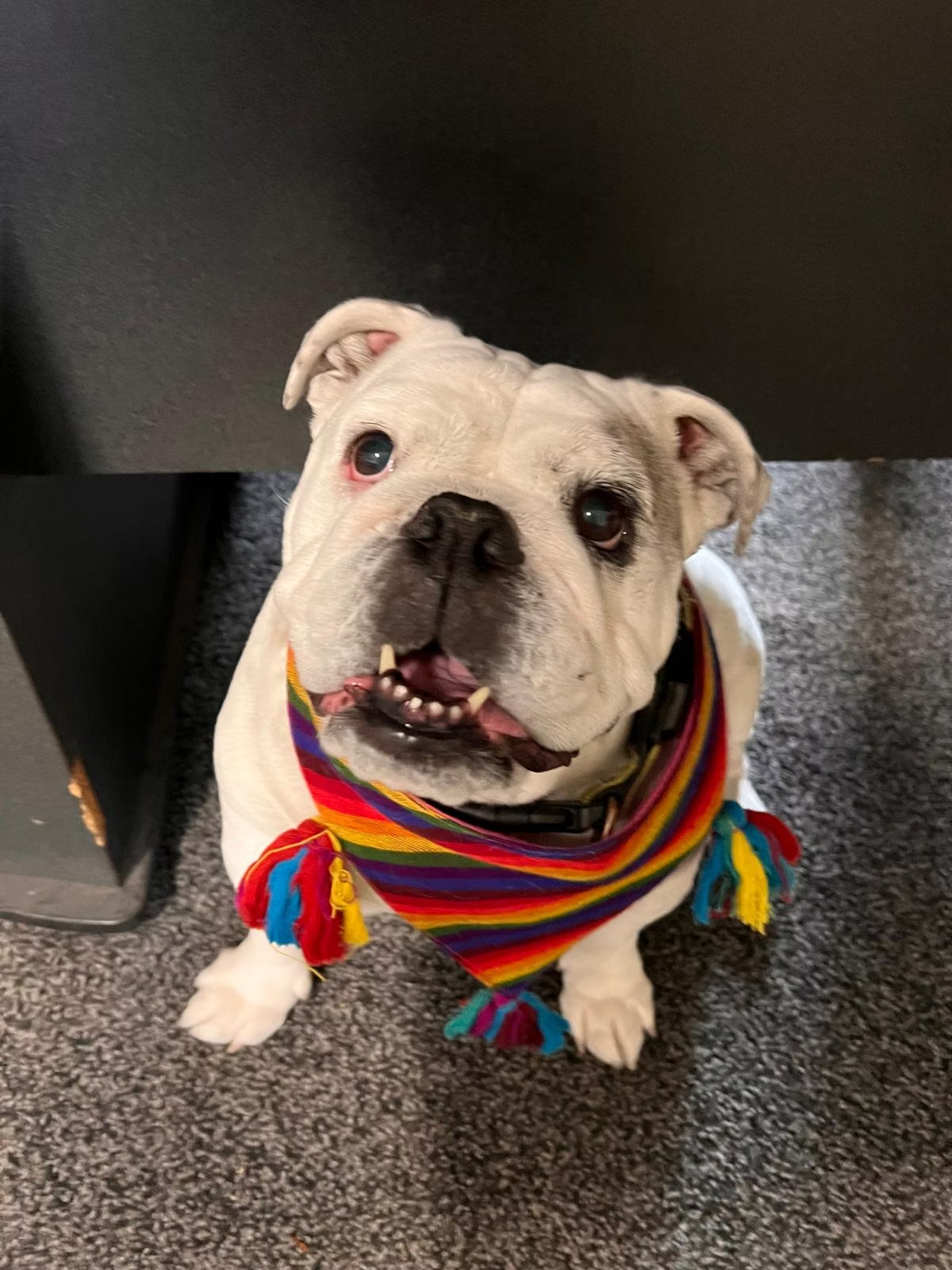
The Bulldog is a calm, courageous English breed with a wrinkled face and gentle, devoted temperament that makes it a steadfast family friend.
How the Bulldog coat is built, and what that means when you groom it.
A few of the Bulldog profiles members have added to United Pet Club.
The Bulldog is a stocky, medium-sized English breed with a wrinkled face and a calm, affectionate nature that suits Australian family life.
The Bulldog is a medium-sized companion dog that originated in England. It has a broad head, a short muzzle, loose facial skin that folds into wrinkles, and a wide, muscular body set low to the ground. The rolling gait and undershot jaw are part of the recognised breed type. Adults usually weigh between 18 and 23 kg and stand about 31 to 40 cm at the shoulder.
Despite the stern expression, the Bulldog is friendly and good-natured. It settles well indoors, attaches closely to its household, and is patient with children. The breed is steady rather than aggressive in a normal home, and most Bulldogs are happy with a short walk followed by a long rest on a cool floor.
Australian summers are the main planning point for a prospective owner. The short muzzle limits how well the dog can cool itself, so a Bulldog needs air conditioning or reliable shade through the hotter months, particularly outside the temperate south. Anyone importing a Bulldog from overseas should also budget time for Australia's biosecurity permits and quarantine steps, since several airlines already restrict brachycephalic breeds from cargo holds because of heat stress risk.
| Attribute | Detail |
|---|---|
| Origin | England |
| Size | Medium (18 to 23 kg) |
| Lifespan | 8 to 10 years |
| Group/role | Companion dog |
| Good with | Children, families, and other household pets |
The Bulldog suits owners who want a low-energy, affectionate companion and can commit to its grooming and health needs. It adapts well to units and houses alike, since it needs little space and only modest exercise. It's a poor match for anyone after a jogging or hiking partner, and it struggles in homes without reliable cooling once the weather turns hot.
The Bulldog developed in England, originally bred for bull-baiting before being reshaped into the gentle, home-loving companion Australians know today.
The Bulldog gets its name from bull-baiting, a blood sport carried out in England from medieval times into the early 1800s. Dogs were bred low to the ground, with a wide jaw and enough grip and nerve to hold on to a tethered bull. The short muzzle and pushed-back nose let the dog keep breathing while it held its bite.
England banned bull-baiting and similar blood sports under the Cruelty to Animals Act of 1835. Once the sport was gone, the Bulldog lost its working purpose, and numbers fell away for a period.
Over the following decades, English breeders worked to save the dog and steer its temperament toward companionship rather than combat. They bred away from aggression and toward the calm, affectionate character the breed carries now, while holding on to the distinctive head and body shape. England drew up the first formal Bulldog breed standard in 1865.
The Bulldog went on to become a popular family and show dog through the twentieth century, and that popularity has carried through to Australia, where it is recognised by the Australian National Kennel Council and kept as a household companion in capital cities and regional towns alike. It also turns up as a mascot for sporting clubs and institutions, prized for its sturdy build and determined look.
The Bulldog has a wide, low-slung body, a large wrinkled head with a short muzzle, and a smooth, short coat in a range of colours recognised in Australia.
The Bulldog is thickset and low to the ground, built wider than it is tall. The head is large for the body, with heavy cheeks, deep facial folds, and a short, broad muzzle. The lower jaw sits forward of the upper jaw, giving the undershot bite that marks the breed. The shoulders are broad and the chest is deep, while the hindquarters are lighter, which produces the breed's characteristic rolling walk.
The ears are small, set high, and usually carried folded in a rose shape. The tail is short and set low, either straight or screwed.
| Feature | Standard |
|---|---|
| Height | 31 to 40 cm at the shoulder |
| Weight | 18 to 23 kg |
| Coat | Short, smooth, and close-lying |
| Colours | Brindle, white, red, fawn, fallow, and piebald combinations |
| Eyes | Round, dark, and set wide and low on the skull |
The coat is short, fine, and smooth, lying flat against the skin and needing very little trimming. Recognised colours include brindle, solid white, red, fawn, and fallow, plus piebald patterns that combine white with another colour. The skin is loose across the head, neck, and shoulders, forming the folds that need regular cleaning to stay healthy, particularly once the humidity climbs in summer.
The Bulldog is calm, affectionate, and steady, generally gentle with kids and easygoing with other pets while keeping a courageous, no-fuss nature.
The Bulldog has a calm, good-natured temperament. It bonds closely with its family and often trails household members from room to room while staying relaxed rather than pushy about attention. With children it's usually patient and gentle, which is a big part of why Australian families keep it as a house dog, though young kids should always be supervised around any dog regardless of breed.
With strangers the Bulldog tends to be friendly or mildly reserved rather than suspicious. It isn't a natural watchdog, since it greets visitors calmly more often than not, though its blocky build and set expression can still put off anyone looking for an easy target. It generally gets on well with other pets when introduced early, cats included.
The breed is courageous and stubborn in equal measure. A Bulldog plants its feet and can take a while to change its mind, so handling needs to stay consistent. Most are quiet dogs, with low to moderate barking, and would rather flop down on a cool tile floor than keep moving.
| Trait | Rating |
|---|---|
| Affection | 5 |
| Energy | 2 |
| Trainability | 2 |
| Vocalness | 2 |
| Shedding | 3 |
Caring for a Bulldog in Australia means routine fold cleaning, short walks timed around the heat, and a cool, air-conditioned home to protect its breathing.
The Bulldog needs steady, moderate care rather than heavy grooming or training. The most breed-specific job is keeping the facial wrinkles and tail pocket clean and dry to head off skin infections, something that matters even more in Australia's humid coastal cities.
The Bulldog is an indoor dog suited to units and houses alike. Its short muzzle means it overheats easily, so air conditioning or a cool, shaded room is close to essential through an Australian summer, not just a nice extra. It's a poor swimmer thanks to its heavy front end, so keep it well away from pools and other open water when unsupervised.
A Bulldog needs a measured, balanced diet matched to its life stage, since it gains weight easily and extra kilos make its joint and breathing problems worse.
The Bulldog does well on a complete, balanced dog food suited to its age and activity level. The breed puts on weight easily, and any extra kilos add strain to the joints and airway, so measure portions rather than leaving food down all day. Split the daily amount into two meals to help digestion and lower the risk of bloat.
| Life stage | Amount per day | Meals |
|---|---|---|
| Puppy (2 to 6 months) | Per product label for growth | 3 to 4 |
| Puppy (6 to 12 months) | Per product label for growth | 2 to 3 |
| Adult | About 250 to 400 g of dry food, adjusted to weight | 2 |
| Senior | Reduced calories, vet-guided | 2 |
Keep treats to a small share of daily calories to guard against weight gain. Joint supplements containing glucosamine and chondroitin are sometimes used to support the breed's joints, and omega-3 fatty acids can help the skin and coat. Check with a vet before starting any supplement.
The Bulldog typically lives 8 to 10 years and is prone to breathing, joint, and skin problems tied to its build, so regular vet checks matter in Australia's heat.
The Bulldog has an average lifespan of 8 to 10 years. As a short-muzzled, heavily built breed, it carries a higher risk of several inherited and structural health problems. Many are manageable with attentive care, weight control, and regular veterinary checks, but owners should understand them before taking on the breed, and it's worth asking a vet about pet insurance early given how much brachycephalic-related treatment can cost.
| Condition | Signs | Note |
|---|---|---|
| Brachycephalic airway syndrome | Noisy breathing, snoring, exercise and heat intolerance | Related to the short muzzle; severe cases may need surgery |
| Hip and elbow dysplasia | Stiffness, limping, reluctance to move | Joint malformation worsened by excess weight |
| Skin fold dermatitis | Redness, odour, irritation in the wrinkles | Prevented by routine fold cleaning and drying |
| Cherry eye | Visible red mass in the corner of the eye | Prolapse of the tear gland; usually corrected surgically |
The Bulldog is smart but stubborn, so it learns best with short, consistent, reward-based sessions that start early and stay positive.
The Bulldog is capable of learning but has an independent, stubborn streak that can slow training down. It responds poorly to harsh correction and far better to patient repetition and rewards. Keep sessions short, since the breed loses interest quickly and tires fast in the heat. Early socialisation with people, other animals, and everyday situations helps the adult dog stay calm and friendly.
Bulldog breeding often needs veterinary help, since the breed commonly struggles with natural mating and frequently needs a caesarean because of the puppies' large heads.
Breeding Bulldogs is demanding and should only be attempted with veterinary support and careful health screening of both parents. Both sexes reach sexual maturity by around 12 to 18 months, though responsible breeders wait until the dog is fully mature and health-tested before breeding.
Natural mating is often difficult given the breed's body shape, and many litters are produced with veterinary assistance. Gestation runs roughly 63 days. Because Bulldog puppies have large heads relative to the mother's pelvis, natural birth is frequently unsafe, and a planned caesarean is common practice, usually arranged with a vet well ahead of the due date.
Litters tend to be small, often around three to four puppies. Newborns are vulnerable and need a warm, clean environment and close monitoring, since the dam may struggle to manage a litter without help. Puppies are typically weaned and ready to leave for new homes at about eight weeks old, after their first health checks.
| Metric | Value |
|---|---|
| Sexual maturity | About 12 to 18 months |
| Gestation | Around 63 days |
| Average litter size | 3 to 4 puppies |
| Delivery | Often by caesarean section |
| Weaning age | About 8 weeks |
A free lifetime United Pet Club record for your Bulldog, with the microchip registered at no charge and nothing falling due each year.
Every state and territory keeps its own Companion Animal Register, and council rangers scan as a matter of course, so a Bulldog with a current record is home before dinner. Register your dog free with United Pet Club: the profile carries your details beside his photo for his whole life, and no renewal ever turns up.
A chipped Bulldog without a registration is carrying a number nobody can use. File it with United Pet Club and the number works for him: free for life, open to every chip brand sold here, searchable from any clinic or pound in the country. Microchip registration now, free account while you're at it.
Sign up free with United Pet Club, add his name, breed, and a photo, and you're done. The lifetime plan keeps the profile live at no cost, and the chip number can go in whenever the vet's done his bit.
Add the 15-digit number to your free account with your address and mobile. Registration and every update after it are free, and chips from any manufacturer an Australian vet implants are accepted.
In most states and territories, yes, chipping is required and the register entry comes with it. The state register and your United Pet Club record do different jobs: one satisfies the council, the other keeps a current phone number one scan away, free.
Nothing with United Pet Club. Profile, chip registration, and unlimited updates are covered for his whole life, no annual fee in sight.
Common questions about the Bulldog's size, temperament, care needs, lifespan, suitability, and how it copes with the Australian climate.
The Bulldog is a medium-sized breed. Adults usually weigh 18 to 23 kg and stand about 31 to 40 cm at the shoulder, with a wide, muscular, low-slung build.
Bulldogs are calm, friendly, and devoted. They bond closely with their families, are generally gentle with kids, and tend to get along with other pets, though they can be stubborn.
They need moderate but specific care. The main jobs are cleaning the facial folds, keeping weight in check, limiting exercise in the heat, and staying on top of vet checks for breathing and joint issues.
The average lifespan is 8 to 10 years. A healthy weight, clean folds, and protection from heat all help towards a comfortable life.
Yes. Their low energy and small space needs suit units, and their calm nature works for many first-time owners, as long as the owner can manage the grooming and health side of things.
Not well. Because of the short muzzle, Bulldogs overheat easily and need to stay in cool, well-ventilated or air-conditioned spaces, with exercise kept to the cooler parts of the day.