The Boxer is a playful, devoted breed known for its boundless energy, expressive face, and loyal guardianship of family.
How the Boxer coat is built, and what that means when you groom it.
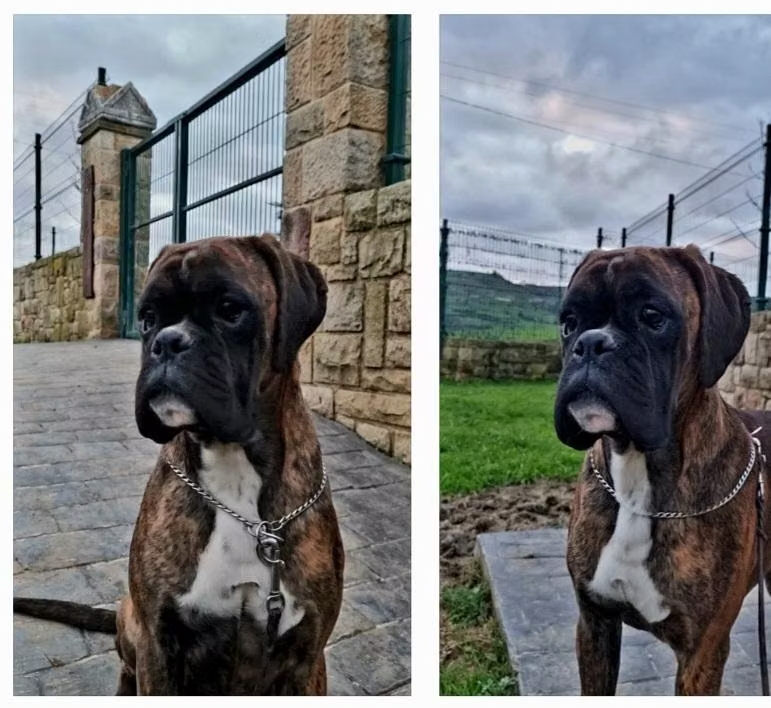
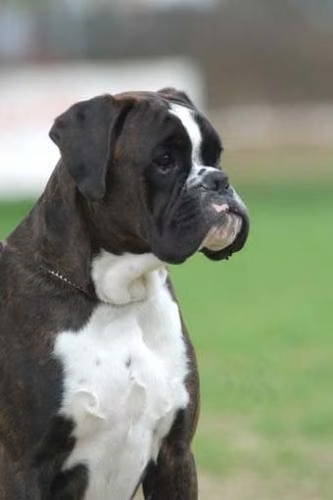
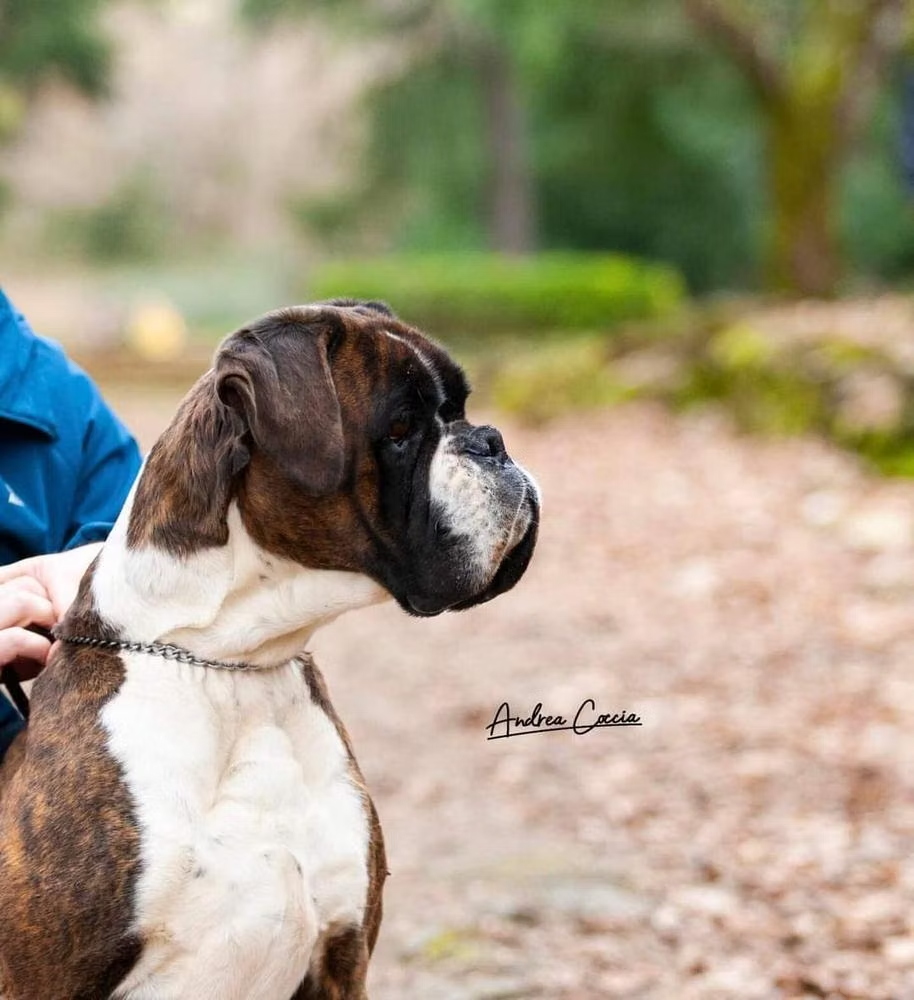
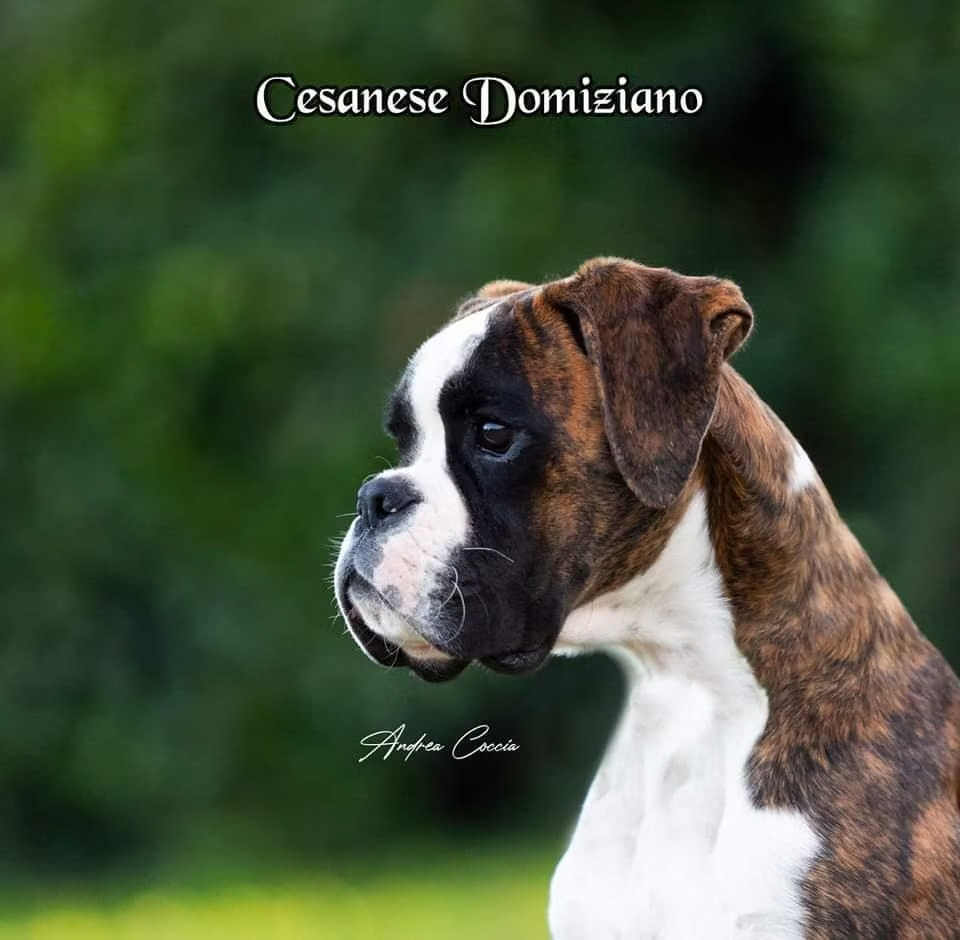
A few of the Boxer profiles members have added to United Pet Club.
The Boxer is a large working dog from Germany, recognised by the ANKC, with a broad muzzle, high energy, and a close attachment to the people it lives with.
Few breeds stay as actively playful through adulthood as the Boxer. Developed in Germany in the late 19th century as a hunting and guard dog, the breed settled into family life without losing the energy that defined its working origins. Adults stand 53 to 63 cm at the shoulder and weigh 25 to 32 kg. The square head, blunt muzzle, deep chest, and muscular frame are immediately recognisable.
In Australia, the Boxer is recognised through the Australian National Kennel Council (ANKC) and the affiliated state canine councils. Council registration and microchipping are mandatory for all dogs in every state and territory. Owners should confirm the local council requirements when taking on a Boxer.
The Boxer wants to be near people and does not manage long stretches alone. Owners who offer daily exercise and consistent training find the breed adaptable and settled at home. Those who cannot commit to that level of engagement tend to find the dog restless and prone to destructive behaviour.
| Attribute | Detail |
|---|---|
| Origin | Germany |
| Size | Large (25 to 32 kg) |
| Lifespan | 10 to 12 years |
| Group / role | Working dog; guardian and companion |
| Good with | Children and familiar people; needs introductions to other dogs |
The Boxer suits active households that can commit to daily outdoor exercise and want a dog actively involved in family life. A securely fenced backyard is a practical advantage, though the breed also manages in apartments in Sydney or Melbourne if the owner is committed to regular exercise outside. It fits homes with children and owners who enjoy training. It is not well suited to households where the dog will spend most of the day alone.
The Boxer was developed in Germany in the late 1800s from the Bullenbeisser crossed with an English Bulldog and standardised by a Munich breed club in 1895. Returning servicemen brought the breed to Australia after the World Wars.
The Boxer arrived in Australia through the same route it reached much of the world: returning servicemen brought dogs home after both World Wars. The breed had performed as a messenger and guard dog in wartime, and soldiers who worked alongside Boxers sought to keep them. That postwar civilian uptake, combined with the breed's temperament and trainability, established it firmly in Australia through the mid-20th century.
The German origins go back to the 19th century. The Boxer descends from the Bullenbeisser, a hunting dog bred to hold large game such as boar and deer until the hunting party arrived on foot. As large estates declined and big-game hunting faded through the 1800s, the working role of the Bullenbeisser diminished, and breeders began shaping a smaller, more versatile dog.
In the 1880s and 1890s, the Bullenbeisser was crossed with an English Bulldog imported from Britain. The result fixed the short muzzle, square head, and compact body that identify the breed today. The first dogs recognisably of this type appeared in Munich. A group of enthusiasts founded the Deutscher Boxer Club there in 1895 and published the first formal breed standard. The club's records and organised shows set the breed on a consistent developmental path. The name Boxer is commonly linked to the way the dogs use their front paws when playing, though the exact origin of the name is not established with certainty.
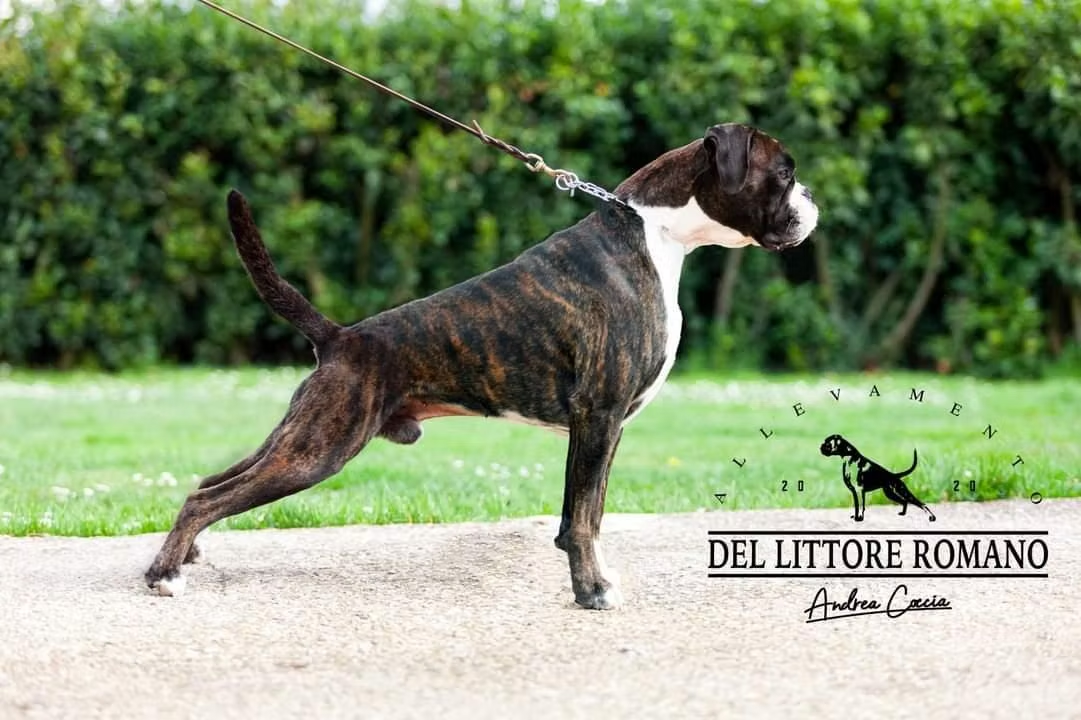
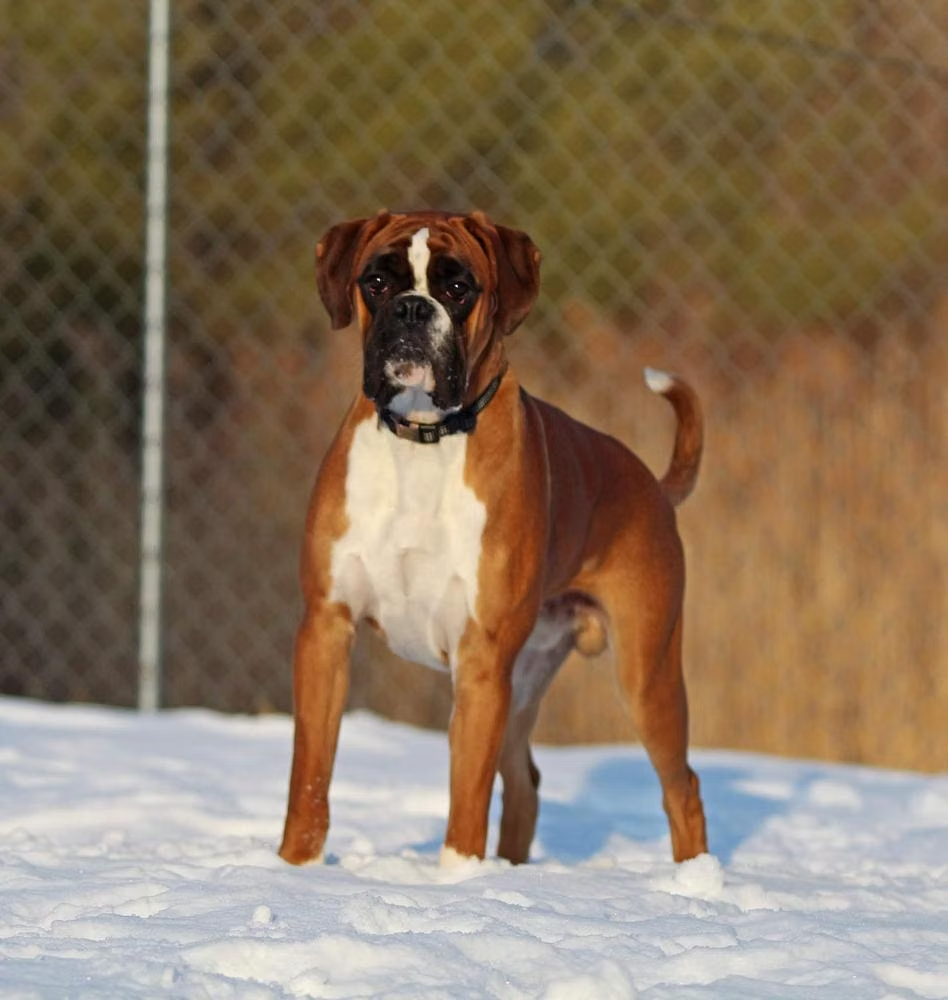
The Boxer is a square-built, muscular dog with a broad blunt muzzle, deep chest, and a short smooth coat in fawn or brindle, commonly with white markings.
The Boxer's coat is short, smooth, and tight against the body. It sheds moderately and requires little grooming, but it offers minimal insulation and no meaningful protection from strong sun. In an Australian summer, those two facts combine to create a genuine heat-stress risk, particularly when the flat muzzle is factored in. A Boxer spending extended time in full midday sun is poorly equipped to manage its own temperature.
Beyond the coat, the breed presents as strongly built and athletic. The body is square and compact, with a deep chest, a short straight back, and well-muscled limbs. The head carries the most individual character: a broad, blunt muzzle with a slightly undershot jaw, a furrowed brow, and a direct, searching expression that owners typically describe as alert or quizzical. Movement is free and ground-covering, consistent with the breed's working background.
| Feature | Standard |
|---|---|
| Height | Males 57 to 63 cm; females 53 to 59 cm at the shoulder |
| Weight | Males 27 to 32 kg; females 25 to 29 kg |
| Coat | Short, smooth, tight to the body |
| Colours | Fawn and brindle, with or without white markings |
| Eyes | Dark brown, set forward, with an alert expression |
Fawn ranges from pale champagne to deep reddish-brown. Brindle lays dark stripes across a fawn base. White markings on the chest, feet, and muzzle are common and acceptable under the breed standard. A dog that is more than one-third white, or entirely white, falls outside the show standard and carries an elevated risk of congenital deafness. Predominantly white dogs should have their hearing assessed before breeding. The muzzle typically carries a dark mask, which is a defining feature of the breed's appearance.
The Boxer is watchful with strangers, devoted and playful with family, patient with children it knows well, and manageable with other pets when socialised early.
The Boxer is naturally alert to what happens on the other side of the fence. Visitors approaching the gate, delivery drivers, and unfamiliar sounds at the street will draw the dog's attention reliably. That attentiveness has given the breed a reputation as a watchdog, but consistent socialisation is what keeps the response measured. A well-socialised Boxer will assess a new person or situation before committing to a reaction. Without that early exposure, the caution can tip into wariness.
With the household it belongs to, the Boxer is affectionate and genuinely playful. The breed matures slowly and retains a puppy-like energy and curiosity well into adulthood. With children it has grown up alongside, it is patient and tolerant. Its size and enthusiasm mean that very young children should not be left alone with the dog, since play can turn physical without the dog intending any harm.
Some Boxers, particularly intact males, can be assertive with other dogs. Introductions on neutral ground, managed calmly, usually go smoothly. A Boxer raised alongside cats and other household pets typically coexists with them without difficulty. The breed is sensitive to tone and responds poorly to harsh handling or raised voices, which tend to produce anxiety or stubbornness rather than compliance.
| Trait | Rating |
|---|---|
| Affection | 5 |
| Energy | 5 |
| Trainability | 3 |
| Vocalness | 2 |
| Shedding | 2 |
The Boxer needs at least 60 to 90 minutes of daily exercise, timed carefully in hot weather because of its flat face, and requires minimal grooming. East-coast owners should maintain year-round tick prevention.
The short coat is easy to manage.
The Boxer is a high-energy breed that needs substantial daily activity.
A fenced backyard is the most practical arrangement for a Boxer in Australia. The breed is strong and active, so fencing needs to be solid with secure gates. The dog should live indoors. Its short coat and flat face leave it poorly adapted to sleeping outside, whether in the heat of a Queensland summer or the cold of an alpine winter in the south.
Apartment living in Sydney or Melbourne is feasible for owners who commit to daily outdoor exercise. The Boxer will not entertain itself or regulate its own activity indoors.
Owners on the east coast should maintain a vet-recommended tick prevention program year-round and check the dog for ticks after any time in bush, coastal scrub, or long grass. Tick paralysis caused by the paralysis tick (Ixodes holocyclus) progresses quickly and can be fatal without treatment. In warmer months, awareness of snakes is also worthwhile, particularly in properties on the suburban fringe.
An adult Boxer needs a high-protein diet of around 2 to 3 cups of quality food daily, split into at least two meals to reduce the risk of bloat.
Because the Boxer is deep-chested and prone to gastric dilatation-volvulus (bloat), meal management is a practical priority. Splitting the daily ration into at least two meals is a minimum precaution. Vigorous exercise should be avoided for about an hour before and after feeding. If unsure about bowl height, speak to the vet: evidence on raised feeders and bloat risk in large breeds is mixed.
The diet itself should be a complete, balanced food formulated for large, active breeds. Good-quality animal protein and moderate fat are the main requirements. Match the daily quantity to the dog's age, weight, and activity level, and adjust if weight changes over several weeks. Some Boxers develop food sensitivities; any diet change should be gradual, mixed in over seven to ten days to avoid digestive upset.
| Life stage | Amount per day | Meals |
|---|---|---|
| Puppy (2 to 6 months) | 2 to 3 cups | 3 to 4 |
| Adolescent (6 to 12 months) | 2.5 to 3.5 cups | 2 to 3 |
| Adult (1 to 7 years) | 2 to 3 cups | 2 |
| Senior (7 years and older) | 2 to 2.5 cups | 2 |
Treats should make up no more than 10 percent of daily food intake. Lean meat, raw carrot, or small commercial training treats are practical choices. Weight gain puts added strain on the Boxer's joints and heart, which matters for a breed already prone to cardiac conditions. Most Boxers on a complete commercial diet need no supplements, but the vet may suggest joint support for older dogs or those under heavy physical loads. Keep fresh water available at all times.
The Boxer lives 10 to 12 years and carries an above-average rate of cancer, two inherited heart conditions, hip dysplasia, and bloat risk. East-coast owners should treat tick paralysis prevention as a routine part of care.
Cancer is the Boxer's most significant health concern as a breed. Mast cell tumours, lymphoma, and brain tumours all occur at higher rates in Boxers than in most other breeds. Any new lump should be assessed by the vet promptly rather than watched at home. Alongside the cancer risk, the breed carries two inherited heart conditions: Boxer cardiomyopathy (arrhythmogenic right ventricular cardiomyopathy, or ARVC) and aortic stenosis. Both are screenable, and responsible breeders provide documentation of results.
Before buying a puppy, ask to see the parents' heart-screening and hip-evaluation certificates. ANKC-affiliated breeders are expected to follow the breed's health-testing protocols. Annual vet checks are appropriate for adult Boxers. For dogs over seven years, twice-yearly visits allow earlier detection of the cancers and cardiac changes that the breed is prone to.
| Condition | Signs | Note |
|---|---|---|
| Cancer (mast cell tumours, lymphoma) | Lumps, swelling, weight loss, lethargy | Boxers have an above-average cancer rate; check skin lumps promptly |
| Boxer cardiomyopathy (ARVC) | Fainting, weakness, irregular heartbeat | Inherited heart-rhythm disorder; can be screened by Holter monitor |
| Aortic stenosis | Tiring easily, fainting, heart murmur | Congenital narrowing near the heart; detected on exam and ultrasound |
| Hip dysplasia | Stiffness, limping, trouble rising | Inherited joint condition; breeding stock should be hip-scored |
| Bloat (gastric torsion) | Swollen abdomen, retching, distress | Life-threatening emergency; feed split meals and limit exercise near meals |
The Boxer is intelligent but slow to mature and can be stubborn, so training works best when started early, kept consistent across the household, and based on rewards rather than correction.
The Boxer matures slowly. A two-year-old Boxer often behaves more like an overgrown puppy than a composed adult, testing limits, losing focus during repetitive drills, and looking for ways to turn every session into play. This is characteristic of the breed, not a training failure. It means that clear rules need to be set early and applied consistently by every person in the household. When one person allows jumping and another discourages it, the dog will work with whichever position suits it at the time.
The breed is sensitive to how it is handled. Harsh corrections or raised voices tend to produce shutdown or stubbornness rather than compliance. Short, reward-based sessions with clear and immediate feedback work considerably better. The Boxer is capable of performing at a high level in obedience trials, agility, and tracking once the foundational skills are reliable.
Boxers should not be bred before 18 to 24 months, require heart and hip screening beforehand, carry litters of 6 to 8 puppies after a 63-day gestation, and often need veterinary support during whelping.
Whelping is a genuine practical concern in the Boxer. The breed's broad skull means a proportion of litters need veterinary assistance during birth, and caesarean section is not uncommon. Anyone taking on a breeding programme should have a vet on call through late pregnancy and a plan for emergency intervention if labour is prolonged or stalls. The dam needs close supervision from the final weeks of pregnancy through the whelping.
On timing and health screening: females may cycle as early as six months, but responsible breeding does not proceed until both parents are physically mature and have completed the required health tests. For Boxers, that means heart assessment for cardiomyopathy and aortic stenosis and hip evaluation, with documented results from both parents before mating. In practice, this puts responsible breeding no earlier than 18 to 24 months of age.
Gestation runs approximately 63 days. Litters typically contain six to eight puppies, though larger litters occur. Puppies are ready to go to new homes at eight weeks. Time with the dam and littermates before that point is important for normal social development. Litters from ANKC-registered breeders are recorded through the relevant state canine council. Breeders should supply pedigree papers and evidence of health testing alongside each puppy.
| Metric | Value |
|---|---|
| Breeding maturity | About 18 to 24 months |
| Gestation | About 63 days |
| Average litter size | 6 to 8 puppies |
| Weaning age | 6 to 8 weeks |
| Recommended pre-breeding tests | Heart screening and hip evaluation |
A free lifetime United Pet Club record for your Boxer, with the microchip registered at no charge and nothing falling due each year.
Every state and territory keeps its own Companion Animal Register, and council rangers scan as a matter of course, so a Boxer with a current record is home before dinner. Register your dog free with United Pet Club: the profile carries your details beside his photo for his whole life, and no renewal ever turns up.
A chipped Boxer without a registration is carrying a number nobody can use. File it with United Pet Club and the number works for him: free for life, open to every chip brand sold here, searchable from any clinic or pound in the country. Microchip registration now, free account while you're at it.
Sign up free with United Pet Club, add his name, breed, and a photo, and you're done. The lifetime plan keeps the profile live at no cost, and the chip number can go in whenever the vet's done his bit.
Add the 15-digit number to your free account with your address and mobile. Registration and every update after it are free, and chips from any manufacturer an Australian vet implants are accepted.
In most states and territories, yes, chipping is required and the register entry comes with it. The state register and your United Pet Club record do different jobs: one satisfies the council, the other keeps a current phone number one scan away, free.
Nothing with United Pet Club. Profile, chip registration, and unlimited updates are covered for his whole life, no annual fee in sight.
Common questions about the Boxer's size, temperament, exercise and heat requirements, lifespan, suitability for families, and where to find one in Australia.
Adult males stand 57 to 63 cm at the shoulder and weigh 27 to 32 kg. Females are somewhat smaller at 53 to 59 cm and 25 to 29 kg. The breed is classified as large.
Playful, affectionate, and alert. The Boxer bonds closely with its household, is generally patient with children it has grown up with, and watches strangers carefully before warming to them. Early socialisation is important to keep that watchfulness from becoming reactive. The breed stays puppy-spirited for longer than most large dogs.
The coat is low-maintenance. The exercise commitment is not. A Boxer needs 60 to 90 minutes of genuine activity each day, and in Australian summers that activity has to happen before the heat of the day because the breed's flat muzzle limits its ability to cool itself. On the east coast, year-round tick prevention is also a real part of routine care.
Typically 10 to 12 years. The breed has an above-average rate of cancer and carries two inherited heart conditions, so annual vet checks and choosing a puppy from health-tested parents both make a practical difference.
Generally yes. They are affectionate with the people they live with and patient with children they have grown up alongside. Supervision around very young children is sensible given the breed's size and energy level.
They are effective watchdogs. The Boxer is naturally alert and will respond to activity outside the property, but socialisation shapes how it responds. A well-socialised Boxer will assess a situation and alert the household rather than escalating without cause.
Yes. The Boxer is well established in Australia. Puppies from ANKC-registered breeders can be found through the state canine councils' breeder referral services. The breed also appears in breed-specific rescue organisations. Look for breeders who can provide heart-screening and hip-evaluation results for both parents.