The Boston Terrier is a friendly, dapper American breed known as the 'American Gentleman' for its tuxedo coat and amiable, playful nature.
How the Boston Terrier coat is built, and what that means when you groom it.
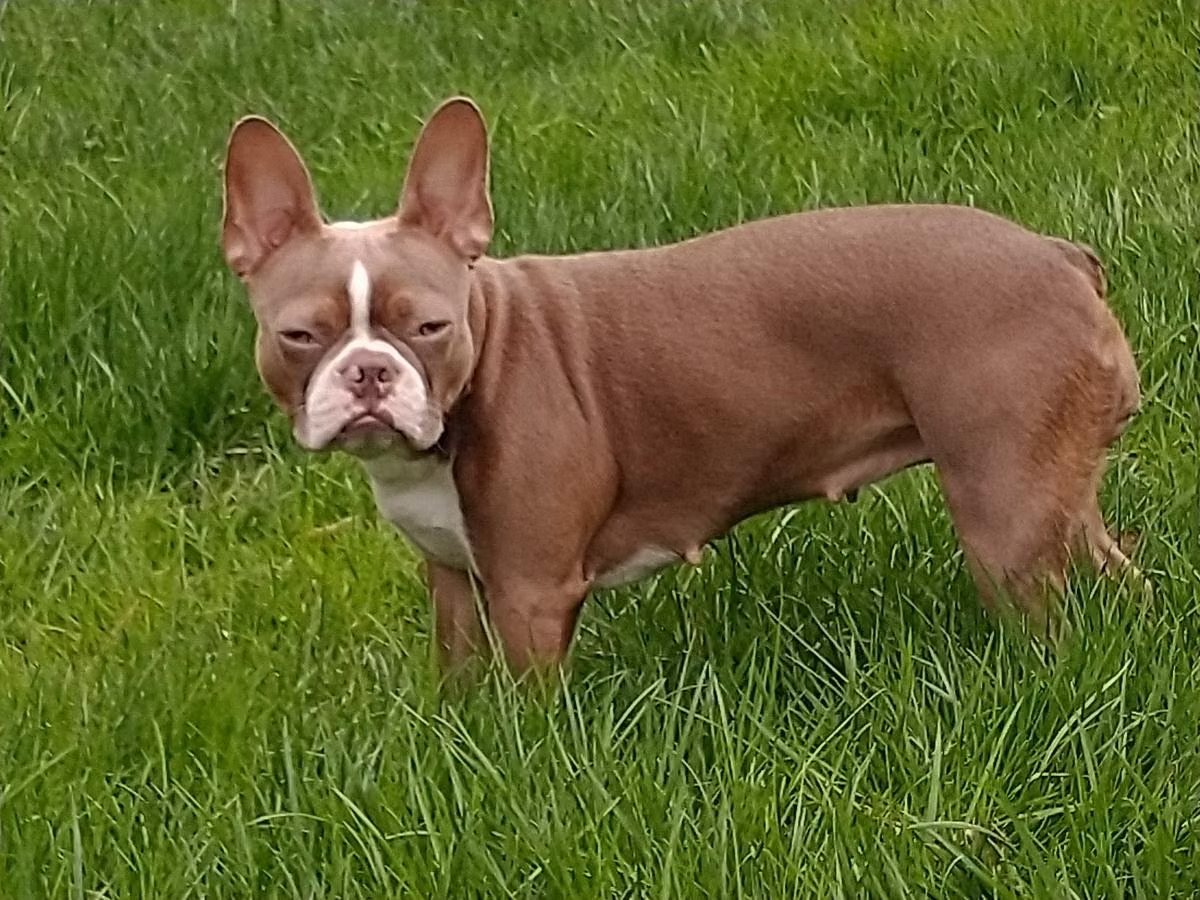
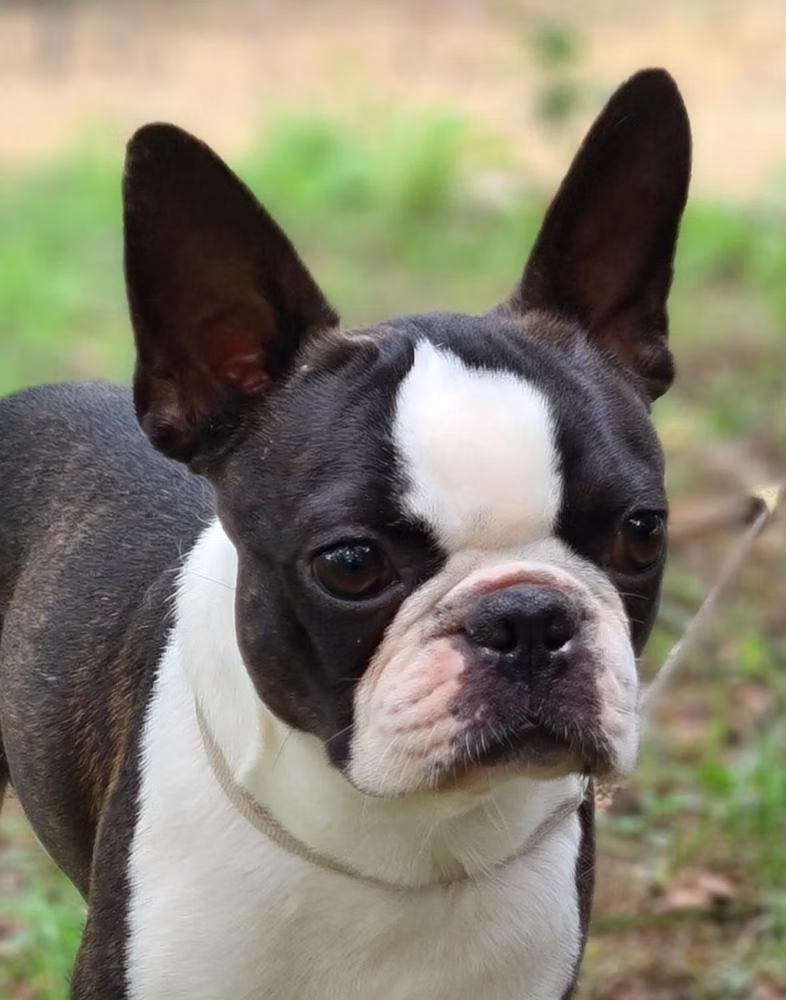
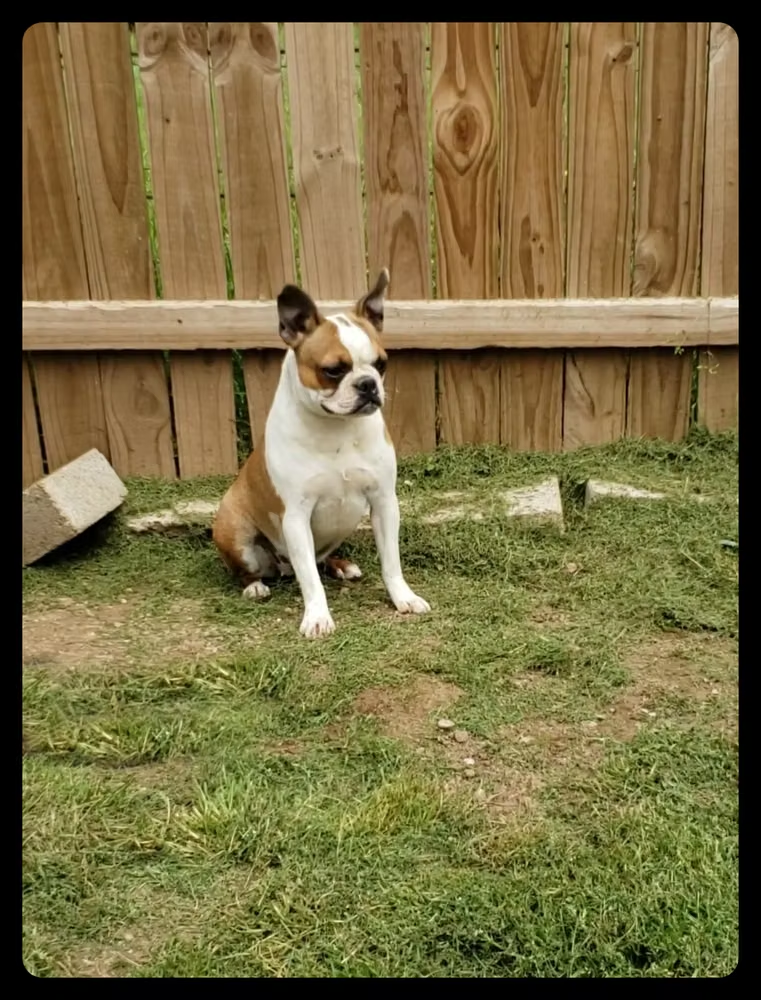
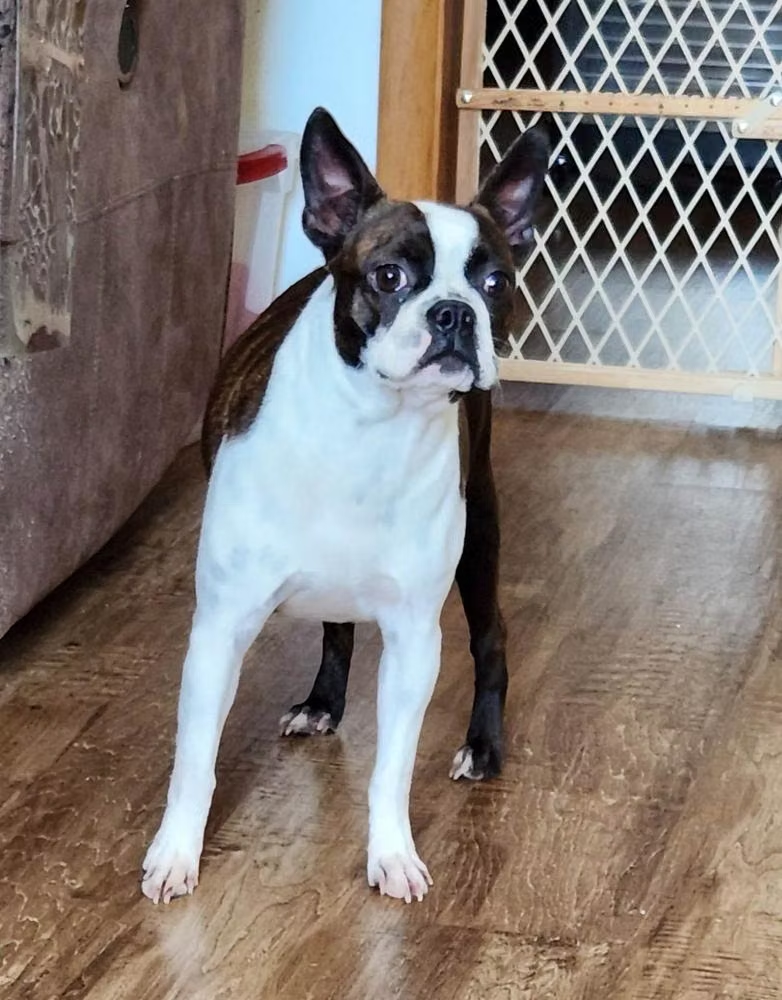
A few of the Boston Terrier profiles members have added to United Pet Club.
A compact, tuxedo-coated companion dog from the United States, the Boston Terrier is known for its friendly nature and neat, low-fuss coat.
The Boston Terrier is a small, square-built companion breed from the United States, instantly recognisable by its short muzzle, large round eyes and smooth tuxedo-patterned coat. Adults stand 15 to 17 inches at the shoulder and weigh between 12 and 25 pounds, with the breed split into separate weight classes even though temperament stays remarkably consistent across the range: cheerful, alert and devoted to its people.
The breed's nickname, the 'American Gentleman', nods to its black-and-white dinner-jacket colouring and its generally polite manners around the house. Bred purely as a companion rather than a working dog, the Boston Terrier does its best living indoors close to family, and it copes just as well in a flat as in a house with a backyard, since its exercise needs are modest and most individuals aren't big barkers.
This is very much a people dog. Left alone for long stretches, a Boston Terrier can turn bored or anxious, so the breed suits a household where someone is around for a fair chunk of the day. Its short face also makes it prone to overheating, which matters here more than in many countries: Australian summers run hot and dry, and owners need to plan walks and play around the heat rather than against it.
| Attribute | Detail |
|---|---|
| Origin | United States |
| Size | Small (12 to 25 lb) |
| Lifespan | 11 to 13 years |
| Group/role | Companion (non-sporting) |
| Good with | Families, children, other pets, seniors |
The Boston Terrier suits first-time dog owners, people in flats, families with kids and older Australians after a small, affectionate dog that doesn't demand hours of grooming or exercise. It's a poorer match for anyone out of the house all day, or for someone chasing a dog for serious distance work in the heat.
Bred in Boston, Massachusetts in the late 1800s from English Bulldog and white English Terrier stock, the breed became one of the first American dogs recognised internationally.
The breed's story starts in Boston, Massachusetts, around 1870, with a dog named Judge (often recorded as Hooper's Judge) as the common ancestor. Judge came from a cross between an English Bulldog and a white English Terrier, a terrier type that has since died out entirely. Brought to Boston and paired with a smaller female, he founded the line that local breeders spent the next few decades refining.
Those early dogs carried a heavier, more bull-and-terrier build than today's Boston Terrier. Breeders through the 1880s worked steadily towards a smaller, calmer dog with the marked coat now considered typical of the breed, and for a while the dogs went by names such as Round Heads and Bull Terriers before settling on the name tied to their home city.
The American Kennel Club recognised the Boston Terrier in 1893, making it one of the earliest breeds developed on American soil to gain formal recognition. A breed club soon followed to draw up a written standard, steering the dogs firmly away from their fighting-stock ancestry and towards a role as companion. In Australia, Boston Terriers are registered through Dogs Australia, the national body for pedigree dogs, which holds the breed standard and oversees registered breeders in this country.
By the early twentieth century the Boston Terrier ranked among the most popular dogs in the United States. It remains tied to its home city today and was named the official state dog of Massachusetts in 1979.
A compact, square-built small dog with a short flat face, erect ears and a smooth tuxedo coat in brindle, black or seal with white markings.
The Boston Terrier has a solid, square outline: a short body, a level back, and a low-set tail that's either straight or screw-shaped and naturally short. The head is square with a short, flat muzzle and a well-defined stop. Small ears sit erect on top of the head, and the eyes are large, round, dark and set wide apart, giving the breed its alert, wide-awake expression. The coat itself is short, smooth and fine.
| Trait | Standard |
|---|---|
| Height | 15 to 17 in at the shoulder |
| Weight | 12 to 25 lb (divided into under 15, 15 to under 20, 20 to 25 lb classes) |
| Coat | Short, smooth, fine textured |
| Colours | Brindle, black, or seal, each with white markings |
| Eyes | Large, round, dark, set wide apart |
The coat shows the breed's characteristic tuxedo pattern. The standard allows brindle, black or seal as the base colour, always paired with white markings. Seal reads as black at first glance but throws a reddish cast in direct sunlight. The white markings required by the standard include a band around the muzzle, a blaze between the eyes and a white forechest. Solid colours, and shades such as liver or grey, sit outside the standard. Because the coat has just one layer and lies close to the body, shedding is light and upkeep stays minimal.
Boston Terriers are affectionate, playful companions that bond closely with family and usually get along well with kids, visitors and other pets.
A Boston Terrier is a steady, good-natured companion that likes to be wherever its family is, often trailing owners from room to room rather than settling somewhere out of sight. Around children the breed is patient and playful, and its solid little frame handles ordinary family rough-and-tumble better than more delicate toy breeds tend to.
Most Bostons greet strangers with interest rather than suspicion. They'll bark to announce a visitor at the door, but they're not watchdogs by temperament and typically warm to guests within minutes. The breed generally gets on well with other dogs and with cats too, particularly when they're raised together or introduced as puppies.
Alert and quick to catch on, the Boston Terrier has a clownish streak that most owners end up fond of. Boredom and long stretches alone are what tend to cause problems, since the breed was built for company and doesn't do well shut out of the household for hours on end. Given enough attention, most individuals are otherwise fairly quiet and bark only when there's a reason to.
| Trait | Rating |
|---|---|
| Affection | 5 |
| Energy | 3 |
| Trainability | 4 |
| Vocalness | 2 |
| Shedding | 2 |
Grooming is minimal and exercise needs are moderate, but the short face calls for care around heat and clean facial folds.
Day to day, the Boston Terrier is a low-maintenance dog. The short coat and its preference for life indoors keep general care simple, with most of the attention going towards the eyes, the face and managing heat.
The Boston Terrier suits flats and houses alike and would rather live indoors with its family than out in the yard. It feels temperature extremes at both ends: the short coat gives almost no protection against cold, and the flat face raises the risk of overheating once the weather turns warm. Through a typical Australian summer, when temperatures climb and stay hot and dry for weeks at a stretch, keep the dog somewhere air-conditioned during the hottest part of the day.
A complete diet in measured portions suits the Boston Terrier, since the breed puts on weight easily and extra weight strains its breathing further.
A Boston Terrier does best on a complete and balanced dog food suited to its life stage. Because the breed carries weight easily, portion control matters more than which brand sits in the bowl. Extra weight adds load to a respiratory system already working against a short muzzle, so keeping the dog lean is one of the more useful things an owner can do for its long-term health. Daily amounts depend on weight, age and activity level, so treat the figures below as a starting point and adjust until the ribs are easy to feel under a light layer of fat.
| Life stage | Amount per day | Meals |
|---|---|---|
| Puppy (2 to 6 months) | Per product label, by weight | 3 to 4 |
| Puppy (6 to 12 months) | Per product label, by weight | 2 to 3 |
| Adult | About 1 to 1.75 cups | 2 |
| Senior | Adjusted down for lower activity | 2 |
Keep treats to roughly 10 percent of daily calories at most, and count them as part of the day's total rather than extra. A dog eating a complete commercial diet generally needs no added supplements; only introduce them on veterinary advice. Fresh water should be available at all times, and splitting food into measured meals, rather than leaving a bowl out all day, makes weight far easier to manage.
Boston Terriers typically live 11 to 13 years and are generally robust, though the short face and prominent eyes bring a few breed-specific risks to watch for.
A Boston Terrier typically lives 11 to 13 years and is, overall, a sturdy small dog. Its build does carry a handful of predictable risks. The flat face puts it among the brachycephalic breeds, which affects breathing and heat tolerance, a real consideration given how hot and dry Australian summers can run, and the large, prominent eyes are exposed to injury and disease more than in flatter-faced breeds. Reputable breeders screen for known conditions, and routine trips to the vet catch most problems while they're still minor.
| Condition | Signs | Note |
|---|---|---|
| Brachycephalic airway issues | Noisy or laboured breathing, snoring, heat intolerance | Keep the dog lean and avoid heat and overexertion |
| Eye problems (corneal ulcers, cataracts) | Cloudiness, redness, squinting, discharge | Prominent eyes are easily injured; check often |
| Patellar luxation | Skipping steps, intermittent hind-leg lameness | Ranges from mild to surgical |
| Allergies and skin sensitivity | Itching, ear infections, paw licking | Manageable with veterinary guidance |
| Deafness | Poor response to sound, often in dogs with a lot of white | Tested by BAER screening in pups |
Quick-witted and eager to please, Boston Terriers respond well to consistent, reward-based training and socialise easily from a young age.
The Boston Terrier is sharp and switched on, and it wants nothing more than to be near its owner. That alone gives training a head start. The breed responds best to short, upbeat sessions built around food and praise. A mild stubborn streak shows up in some individuals, but harsh correction tends to backfire, and a sensitive Boston is more likely to withdraw than improve under it. Early socialisation with people, other animals and new places helps the breed grow into the friendly, easygoing adult the standard describes. Toilet training can take a bit of patience, so a steady routine from day one pays off.
Boston Terriers are difficult to breed because their build often calls for assisted mating and caesarean delivery, so breeding suits experienced, health-tested breeders.
Breeding Boston Terriers is not a job for beginners. Females usually reach sexual maturity somewhere between 6 and 12 months old, but responsible breeders hold off until the dog is fully mature, generally around two years, and have health clearances in hand before any mating takes place. The breed's narrow hips, combined with the large heads on the puppies, make natural mating and natural whelping difficult in practice, so artificial insemination is common and many litters arrive by planned caesarean.
Gestation runs about 63 days, the same as in other dogs. Litters tend to be small, often just 1 to 4 puppies, which reflects the breed's compact body shape. Because whelping carries real risk, breeders usually work closely with a vet from early in the pregnancy and plan ahead for a surgical delivery rather than leaving it to chance.
Newborn puppies need the same basic care as any litter: warmth, frequent feeds and a gradual weaning process starting around three to four weeks. Early, gentle handling and exposure to everyday household noise help build the confident, friendly temperament the breed is known for. Responsible breeders have parent dogs screened for eye, knee and hearing problems, and puppies go to new homes only once they're weaned and have had a start on socialisation.
| Metric | Value |
|---|---|
| Sexual maturity | About 6 to 12 months |
| Recommended breeding age | About 2 years, after health clearances |
| Gestation | About 63 days |
| Typical litter size | 1 to 4 puppies |
| Delivery | Often caesarean section |
| Weaning | About 3 to 4 weeks onward |
A free lifetime United Pet Club record for your Boston Terrier, with the microchip registered at no charge and nothing falling due each year.
Punch in your Boston Terrier's name, his date of birth, and a decent photo, attach your mobile, and save. Done: a lifetime record that never bills you. Registering your dog is the easy half of responsible ownership, and the half people skip.
The vet does the implant and not one thing more; the register entry is yours. Register the microchip free on the lifetime plan: every brand an Aussie vet reaches for qualifies, moving house costs nothing to record, and the number stays searchable round the clock. Create your free account and sort the lot in one go.
Sign up free with United Pet Club, add his name, breed, and a photo, and you're done. The lifetime plan keeps the profile live at no cost, and the chip number can go in whenever the vet's done his bit.
Add the 15-digit number to your free account with your address and mobile. Registration and every update after it are free, and chips from any manufacturer an Australian vet implants are accepted.
In most states and territories, yes, chipping is required and the register entry comes with it. The state register and your United Pet Club record do different jobs: one satisfies the council, the other keeps a current phone number one scan away, free.
Nothing with United Pet Club. Profile, chip registration, and unlimited updates are covered for his whole life, no annual fee in sight.
Common questions about the Boston Terrier's size, temperament, care needs, lifespan and suitability as a family companion.
Boston Terriers are a small breed, standing about 15 to 17 inches at the shoulder and weighing between 12 and 25 pounds. The breed is split into weight classes: under 15 pounds, 15 to under 20 pounds, and 20 to 25 pounds.
The breed is friendly, affectionate, playful and alert. Boston Terriers bond closely with their family, usually get along with kids and other pets, and tend to be welcoming towards strangers rather than wary of them.
Yes, in most respects. The short coat only needs a weekly brush and exercise needs are moderate. The extra effort goes into protecting the dog from heat, keeping an eye on its prominent eyes, and holding it at a lean weight.
The typical lifespan is 11 to 13 years. Good weight management, dental care and regular vet visits help plenty of dogs reach the upper end of that range.
Yes. Their small size, moderate exercise needs and generally quiet, sociable nature suit flats, families and people who haven't owned a dog before.
Because of the short, flat face, the breed can develop brachycephalic airway issues and has limited heat tolerance, worth taking seriously through an Australian summer. Avoiding heat and hard exercise, and keeping the dog lean, both reduce the strain.
Yes. The breed's body shape often means assisted mating and caesarean delivery are needed, and litters are small. Breeding is best left to experienced breeders who health-test the parents.