

Bodeguero Andaluz
The Bodeguero Andaluz is a lively Spanish ratting terrier, alert and energetic with a sharp mind and steadfast loyalty to its family.
- Size
- Small
- Lifespan
- 12–15 years
- Origin
- Spain
- Temperament
- Alert
Characteristics
Coat and grooming
How the Bodeguero Andaluz coat is built, and what that means when you groom it.
- Coat layers
- Single coat
- Coat texture
- Smooth
- Coat length
- Short
- Shedding
- Moderate shedding
Bodeguero Andaluz colors and patterns
What each club's breed standard says about every Bodeguero Andaluz color and pattern. Point at a ruling to see the club's own wording.


Meet some of our Bodeguero Andaluz
A few of the Bodeguero Andaluz profiles members have added to United Pet Club.




About the Bodeguero Andaluz
The Bodeguero Andaluz is a small Spanish ratting terrier, sharp witted and full of energy, that stays devoted to its family while keeping half an eye on anything that moves.
The Bodeguero Andaluz, sometimes called the Ratonero Bodeguero Andaluz, is a small terrier that started out working the wine cellars of southern Spain. Breeders developed it to hunt rats and mice through the sherry warehouses of Andalusia, and that background still comes through in the dog you meet today. It's quick on its feet, watchful, and built to slip through gaps and tight spaces most dogs can't be bothered with.
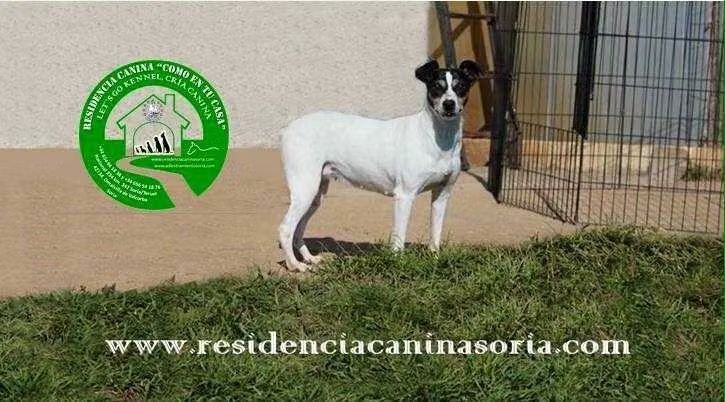
Most stand toward the smaller end of the size range and wear a smooth white coat marked with black or tan across the head. The breed gets on well with people it knows and keeps a strong urge to chase anything small that darts past. It attaches itself firmly to its household and likes to keep tabs on whatever's going on around the place.
This is an active companion suited to owners who can commit to a daily walk and some mental work on top of it. Long stretches parked on the lounge aren't really its scene.
| Attribute | Detail |
|---|---|
| Origin | Spain (Andalusia) |
| Size | Small |
| Lifespan | 12 to 15 years |
| Group/role | Terrier, rat and vermin control |
| Good with | Families and people it knows; supervision needed with very small pets |
Who it suits
The Bodeguero Andaluz suits an active household after a small, alert companion rather than a dog happy to snooze the day away. It works well for owners who get out for a walk every day, enjoy training games, and can manage a solid prey drive around rodents and other small animals. First-time dog owners can do fine with it, provided the routine stays consistent. Homes with guinea pigs, rabbits, or other caged pets need to plan proper separation from day one.
History and origin
The Bodeguero Andaluz was bred in Andalusia, Spain, to keep rats out of sherry cellars, with English ratting terriers arriving through the wine trade among its ancestors.
The breed hails from Andalusia in southern Spain, where it takes its name from the bodegas, the wine and sherry cellars scattered across the region. Its job was straightforward: kill the rats and mice getting into stored grain and threatening the casks and supplies kept in those warehouses.
Most accounts trace the dog back to small English terriers that arrived in Andalusia through the busy sherry trade running between Spain and Britain. Over the generations, local breeders crossed these imports with native ratting dogs and shaped a distinct white terrier suited to cellar work. Its smooth coat and compact build let it move through barrels and squeeze into narrow gaps with ease.
For most of its history the breed worked for cellar hands and farmers rather than showring or pet homes, so it developed around function rather than looks. Pedigree records from this period are patchy at best, and the type was kept true by the work it did, not by any formal standard.
Spanish breed authorities later recognised the Ratonero Bodeguero Andaluz as a national breed and drew up a written standard to protect it. It's still far more common in Spain than anywhere else, and remains a rare sight in Australia and other countries outside its homeland.
Appearance and breed standard
The Bodeguero Andaluz is a small, lean white terrier with a short smooth coat and dark or tan markings concentrated on the head.
The Bodeguero Andaluz is a small, light framed, well-muscled terrier built for speed and agility. The body runs slightly longer than it stands tall, with straight legs, a deep chest, and a lean overall outline. The head is wedge shaped with a flat skull, and the ears sit high, folding forward into a triangular shape. The whole dog reads as quick and alert, with no spare bulk anywhere.
| Trait | Standard |
|---|---|
| Height | About 35 to 43 cm at the withers |
| Weight | Roughly 5 to 8 kg |
| Coat | Short, smooth, fine, sitting close to the body |
| Colours | Predominantly white with black or tan markings, mainly on the head |
| Eyes | Dark, round, lively expression |
Coat and colours
The coat is short, smooth, and low maintenance. White covers most of the body as the base colour, with black or tan markings sitting mainly on the head and ears, sometimes with a patch or two near the base of the tail. The result is often a white body with a strongly marked face. Because the coat sits thin and close, the breed has little natural protection against cold, and just as little against Australian sun: a light-coloured, short-coated dog can pick up sunburn on exposed skin, particularly on the nose and ear tips, so shade matters as much as warmth does here.
Temperament and personality
The Bodeguero Andaluz is loyal, sharp, and full of energy, affectionate with its family, wary of strangers, and strongly driven to chase small animals.
The Bodeguero Andaluz is an alert, busy dog that keeps tabs on everything happening around it. With its own family it's affectionate and loyal, often forming a tight bond with the people it lives alongside. At home it tends to be playful and sociable, and it likes being included in whatever the household is up to.
Around strangers the breed is typically reserved and watchful to start with. It picks up on change quickly and will bark to flag visitors or an odd noise, which makes it a decent little watchdog. It isn't generally aggressive, but it can be chatty.
With other dogs it's usually sociable, particularly if it gets early exposure. The real thing to watch is its prey drive. As a working ratting terrier, it's wired to chase small, fast-moving animals, so cats, rodents, and other small pets can set off a pursuit. Introductions want care, and small caged pets are best kept in a separate room altogether. With kids the breed generally does well as long as play is supervised and the dog gets enough exercise to actually settle down.
| Trait | Rating |
|---|---|
| Affection | 4 |
| Energy | 5 |
| Trainability | 4 |
| Vocalness | 4 |
| Shedding | 2 |
Care and daily needs
The Bodeguero Andaluz needs very little grooming but plenty of daily exercise and mental work, plus protection from both cold snaps and harsh Australian sun.
Grooming
- Brush the short coat once a week to lift out loose hair and keep it tidy.
- Bathe only when needed, since washing too often strips the coat's natural oils.
- Check and clean the ears regularly, since the folded shape traps dirt easily.
- Trim nails every few weeks and brush teeth several times a week.
Exercise
- Aim for at least 60 minutes of activity a day, split across walks and play.
- Add games that tap into the chase and search instinct, such as fetch or scent work.
- Use a securely fenced yard for off-lead time, since recall can fall apart near prey.
- Mix physical exercise with short training sessions to work the mind as well as the legs.
Environment
The breed adapts to houses and units alike if its exercise needs are covered, though its alert barking suits a place where that's not going to bother the neighbours. A secure yard helps but doesn't replace proper walks. Because the coat is thin, this dog feels the cold fast, so a coat or jumper earns its keep on chilly mornings, and outdoor time should be trimmed back in wet, cold conditions. During hot Australian summers, keep walks to the cool of early morning or evening and check bitumen and pavers with the back of your hand before setting off. If it's too hot for your palm, it's too hot for paws.
Nutrition and feeding
The Bodeguero Andaluz needs a complete, balanced diet portioned for a small active dog, split into measured meals through the day to match its high energy.
The Bodeguero Andaluz does well on a complete and balanced diet formulated for small, active dogs. Its energy means it burns through food efficiently, but small breeds still pack on weight fast if portions aren't measured out properly. Feed according to the dog's weight, age, and activity level rather than leaving food down all day, and keep fresh water available at all times. Look for a food built around quality protein to support muscle on this working-type frame.
| Life stage | Amount per day | Meals |
|---|---|---|
| Puppy (2 to 6 months) | Per puppy formula instructions | 3 to 4 |
| Junior (6 to 12 months) | Per label for growth | 2 to 3 |
| Adult (1 to 7 years) | About 80 to 150 g dry food | 2 |
| Senior (8+ years) | Slightly reduced, adjust for activity | 2 |
Treats and supplements
Keep treats to roughly 10 percent of daily calories and subtract them from meal portions to stop the weight creeping on. Small, low-calorie treats work well as training rewards for a breed this keen on food. A healthy dog on a complete diet generally needs no extra supplements; check with a vet before adding anything, especially for puppies or older dogs.
Health and lifespan
The Bodeguero Andaluz is generally a hardy small breed with a lifespan of 12 to 15 years, and routine preventive care does most of the work in keeping it that way.
The Bodeguero Andaluz is generally a robust working breed with few widely documented hereditary problems, helped along by generations of function-first breeding. Typical lifespan sits at 12 to 15 years. As with most small, active dogs, keeping on top of dental care, weight, and joints supports a long, comfortable life. Buying from breeders who screen their dogs cuts the odds of inherited issues turning up later.
| Condition | Signs | Note |
|---|---|---|
| Dental disease | Bad breath, tartar, sore gums | Common in small breeds; regular brushing helps |
| Patellar luxation | Skipping steps, intermittent hind-leg lameness | Kneecap slips out of place; varies in severity |
| Ear problems | Head shaking, odour, scratching | Folded ears can trap moisture and debris |
| Weight gain | Reduced waist, low energy | Easily prevented with measured feeding and exercise |
Preventive care
- Keep vaccinations and parasite control up to date.
- Book annual vet check-ups, and more often for older dogs.
- Brush teeth regularly and arrange a professional dental clean as advised.
- Keep the dog at a healthy weight to protect its joints.
- Check ears weekly and clean when needed.
- Ask your vet about tick prevention if you're in a paralysis tick area, since terriers that hunt through undergrowth are more likely to pick one up.
Training and socialisation
The Bodeguero Andaluz is bright and quick to learn, and responds well to reward-based training, with prey drive and recall the main things to manage.
The Bodeguero Andaluz is sharp and keen, which makes it a fast learner once training stays consistent and positive. It likes having a job to do and responds well to short, varied sessions that hold its attention. The main sticking point is its strong prey drive, which can override commands the moment something small moves nearby, so recall and impulse control are worth the extra effort. Early socialisation with people, dogs, and everyday situations helps it grow into a settled adult.
Basics
- Start with name response and focus, then build up to sit and down.
- Teach a reliable recall in a quiet spot before adding distractions.
- Work on loose-lead walking, since the breed darts after movement fast.
- Practise settle and stay to balance out the dog's natural energy.
- Add scent or search games that channel the chasing instinct somewhere it's allowed to go.
Breeding and raising puppies
The Bodeguero Andaluz reaches breeding maturity within its first year, carries a litter for around nine weeks, and typically has small to medium litters that need early socialisation.
Bodeguero Andaluz dogs reach sexual maturity within the first year, though responsible breeders hold off until a dog is physically and mentally mature, usually past the second year, before breeding. Mating follows the female's heat cycle, and a vet check beforehand helps confirm both dogs are healthy and free of conditions that shouldn't be passed on.
Gestation runs about 63 days. Litters tend to be small to medium for the breed's size, often somewhere around three to six puppies, though numbers vary from one dog to the next. The mother usually manages whelping without much help, but a quiet, warm, supervised space still supports a safer birth.
Puppies arrive blind and deaf and rely completely on the mother through the first weeks. Early handling and gentle exposure to sounds, surfaces, and people from a few weeks old build a confident adult dog. Given the breed's prey drive, calm early contact with other animals is worth arranging where possible. Puppies are generally weaned and ready to head to new homes at around eight weeks.
| Metric | Value |
|---|---|
| Sexual maturity | Within the first year |
| Recommended breeding age | After about 2 years |
| Gestation | About 63 days |
| Typical litter size | Around 3 to 6 puppies |
| Weaning age | About 7 to 8 weeks |
| Ready for new home | About 8 weeks |
Getting your Bodeguero Andaluz registered, chip and all
A free lifetime United Pet Club record for your Bodeguero Andaluz, with the microchip registered at no charge and nothing falling due each year.
How to register a Bodeguero Andaluz in Australia
Punch in your Bodeguero Andaluz's name, his date of birth, and a decent photo, attach your mobile, and save. Done: a lifetime record that never bills you. Registering your dog is the easy half of responsible ownership, and the half people skip.
A chipped Bodeguero Andaluz without a registration is carrying a number nobody can use. File it with United Pet Club and the number works for him: free for life, open to every chip brand sold here, searchable from any clinic or pound in the country. Microchip registration now, free account while you're at it.
How do I register my Bodeguero Andaluz in Australia?
Sign up free with United Pet Club, add his name, breed, and a photo, and you're done. The lifetime plan keeps the profile live at no cost, and the chip number can go in whenever the vet's done his bit.
How do I register my Bodeguero Andaluz's microchip?
Add the 15-digit number to your free account with your address and mobile. Registration and every update after it are free, and chips from any manufacturer an Australian vet implants are accepted.
Does my Bodeguero Andaluz have to be microchipped in Australia?
In most states and territories, yes, chipping is required and the register entry comes with it. The state register and your United Pet Club record do different jobs: one satisfies the council, the other keeps a current phone number one scan away, free.
What does it cost to register a Bodeguero Andaluz?
Nothing with United Pet Club. Profile, chip registration, and unlimited updates are covered for his whole life, no annual fee in sight.
Frequently asked questions
Common questions about the Bodeguero Andaluz cover its size, temperament, care needs, lifespan, suitability, and how easy it is to find in Australia.
How big does a Bodeguero Andaluz get?
It's a small breed, standing about 35 to 43 cm at the withers and weighing roughly 5 to 8 kg.
What's the breed's temperament like?
It's loyal, sharp, energetic, alert, and watchful. It's affectionate with its family, reserved around strangers, and strongly inclined to chase small animals.
Is the Bodeguero Andaluz hard work to look after?
Grooming is easy thanks to the short coat, but the breed needs at least an hour of exercise and some mental work every day, so the real demand is on time and activity rather than upkeep.
How long does a Bodeguero Andaluz live?
Typical lifespan is 12 to 15 years, and it's generally a hardy small breed.
Is it a good family dog?
Yes, in an active household. It bonds closely with its people and can do well with kids when play is supervised. Homes with guinea pigs, rabbits, or other caged pets need to plan careful separation because of its prey drive.
Does it bark a lot?
It's fairly vocal and tends to sound off at visitors and unusual noises, which makes it a handy little watchdog but something to manage in a unit or townhouse.
Is the breed easy to find in Australia?
Not really. It's common in Spain but rare here, and it isn't currently registered with Dogs Australia, so anyone after one is generally looking at a long wait, a small dedicated fancier network, or import from Spain.
From the community
Ask about the Bodeguero AndaluzNo questions about the Bodeguero Andaluz yet. Be the first to ask.
Browse Dog breeds