The Australian Shepherd is an intelligent, energetic herding dog known for its versatility, drive, and loyal devotion.
How the Australian Shepherd coat is built, and what that means when you groom it.
Critical: A Australian Shepherd should not be shaved.
The undercoat keeps heat out as well as in, and the outer coat shields the skin from sun and insect bites. Clipping the whole coat off removes both. It often grows back patchy, soft or a different colour, and in some animals the guard hairs never return properly. Brush the undercoat out instead of cutting it off.
Caution: A Australian Shepherd coat mats easily.
Fine or long hair tangles at the base of the coat, out of sight, where the mats tighten and pull on the skin. Brushing has to reach right down to the roots in sections, not just skim the surface.
Information: A Australian Shepherd drops its undercoat in heavy bursts.
The undercoat comes out in heavy bursts over a few weeks. An undercoat rake, or a bath followed by a proper blow-dry, clears it far faster than daily brushing. Clipping the coat down is not a shortcut for this.
A few of the Australian Shepherd profiles members have added to United Pet Club.
The Australian Shepherd is a medium-sized herding dog from the United States, popular in Australia for its intelligence, drive and loyalty to its owner.
The Australian Shepherd is a medium-sized working dog bred to move livestock across open country. Despite the name, the breed was developed in the western United States, not Australia, and the mismatch trips up plenty of new owners here. It is one of the most capable herding dogs used on working properties, and it remains a firm favourite in Australian dog sports.
The breed is built for stamina rather than bulk. A typical adult weighs between 18 and 32 kilograms and carries a weather-resistant double coat. The Aussie is alert, quick to learn, and happiest with a job to do, whether that is herding, agility, search work or daily structured exercise with its owner.
This is a dog that forms strong attachments to its family. It bonds closely with one household and can be reserved with strangers until it has sized them up. Owners often describe the breed as devoted and tireless, and it responds fast to training when its people put in consistent daily work.
| Attribute | Detail |
|---|---|
| Origin | United States |
| Size | Medium |
| Lifespan | 12 to 15 years |
| Group / role | Working dog (herding) |
| Good with | Active families, experienced owners, other dogs when socialised |
The Australian Shepherd suits people who can provide daily physical exercise and mental work. It does well with runners, hikers, farmers and graziers, and with households committed to training and dog sport. It is a poor match for sedentary homes or owners who are away for long stretches, since an under-exercised Aussie often develops destructive or anxious behaviour.
The Australian Shepherd took shape on ranches in the western United States during the 1800s and 1900s, before it was recognised as a working breed in Australia.
The breed's name is misleading, and it catches out plenty of Australians who assume the dog came from here. The Australian Shepherd was developed in the western United States, and its working ancestry traces through a mix of European herding dogs brought west by shepherds and stockmen during the 1800s.
One common account links the name to flocks of sheep imported to North America from Australia in the 19th century. Dogs that worked alongside those flocks picked up the association, and the label stuck even though the breed itself took its modern form on American ranches, nowhere near Australian soil.
Through the early and mid-20th century, ranchers in California and the western states bred these dogs for working ability rather than looks. What mattered was stamina, biddability and a strong herding instinct. The breed gained wider public attention after World War II, helped by rodeo performers and the spread of western horse culture.
Breed clubs were organised in the United States from the 1950s onward, and the Australian Shepherd was recognised by the American Kennel Club in 1991. Most lines today still descend from proven working stock, which is why drive and herding instinct remain strong across the breed. The breed reached Australia later, and it is recognised today by the Australian National Kennel Council (ANKC) in the working dog group, with a small but dedicated following among graziers and dog sport competitors.
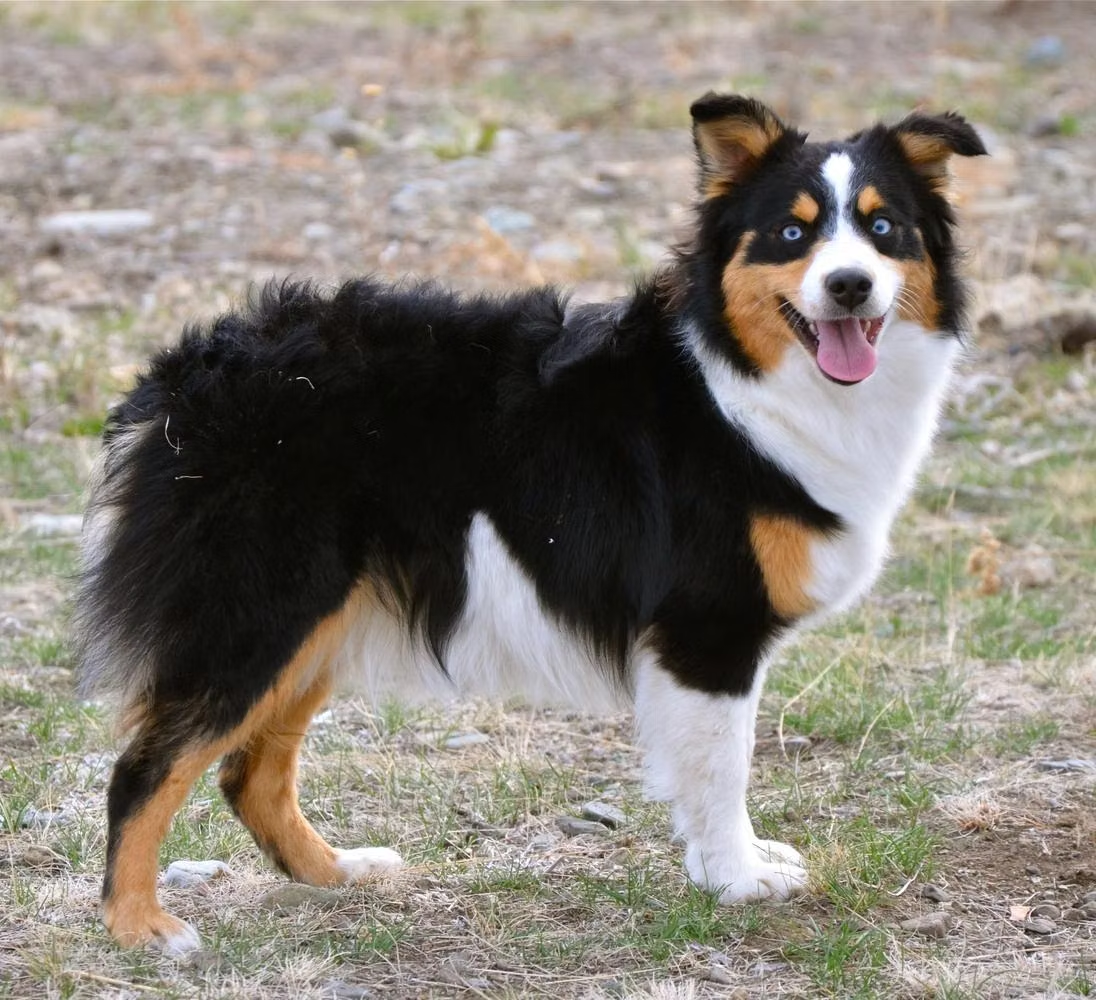
The Australian Shepherd has a medium build and a weather-resistant double coat in black, blue merle, red or red merle, usually marked with white and tan.
The Australian Shepherd is slightly longer than it is tall, with a level topline and a body built for agility and endurance. The head is clean cut and strong, the ears are triangular and set high, and the expression is alert. Some Aussies are born with a natural bobtail, while others carry a full tail.
The coat is medium in length, weather-resistant and double-layered, with a coarser outer coat over a softer undercoat. Hair is shorter on the head and the front of the legs, and longer behind the legs and around the neck.
| Trait | Detail |
|---|---|
| Height | Males 51 to 58 cm; females 46 to 53 cm at the shoulder |
| Weight | Males 23 to 32 kg; females 18 to 25 kg |
| Coat | Medium-length, weather-resistant double coat |
| Colours | Black, blue merle, red or red merle, often with white and tan |
| Eyes | Brown, blue, amber, or any combination, including marbled eyes |
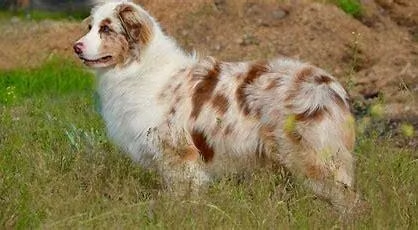
The four recognised base colours are black, blue merle, red and red merle. White markings and copper or tan points can appear on any of them. The merle pattern produces mottled patches over a lighter background. Two merle dogs should never be paired together, because the double merle combination is linked to hearing and vision defects. Eye colour varies widely, and a single dog may have two different coloured eyes.
Loyal, intelligent and energetic, the Australian Shepherd sticks close to its family, is often wary of strangers, and cannot resist herding anything that moves.
The Australian Shepherd is a thinking dog. It learns quickly, reads its handler closely and looks for tasks to complete. With its own family it is affectionate and steady. With unfamiliar people it is often watchful and may hold back until it decides the situation is safe, which is why early socialisation matters so much.
The herding instinct stays switched on even in suburban homes. An Aussie may try to gather running children, other dogs or moving objects by circling and nudging. This is normal behaviour and can be redirected with training. The breed generally gets along with other dogs and with pets it grows up alongside, though its drive means small animals on the run can trigger a chase.
This is a high-energy breed, and boredom is the main cause of problem behaviour. An Aussie that does not get enough exercise and mental work may bark, dig, chew or grow anxious. Given a job and consistent leadership, it settles into a calm, reliable dog that stays deeply bonded to its people.
| Trait | Rating |
|---|---|
| Affection | 5 |
| Energy | 5 |
| Trainability | 5 |
| Vocalness | 3 |
| Shedding | 4 |
The Australian Shepherd needs regular brushing, plenty of daily exercise and mental work, and protection from the Australian sun to stay settled and healthy.
The Australian Shepherd does best in a home with a securely fenced yard and an active household. It can adapt to a unit or townhouse only if its exercise needs are fully met elsewhere, which is a big ask for a dog this driven. The weather-resistant coat copes well with cold, but heat is the bigger test across most of Australia, particularly through summer in places like western Sydney, Perth or the Northern Territory. Give the dog shade, fresh water and a cool place to rest, and watch for signs of heat stress on very hot days. Merle-coated dogs with pink skin around the nose and eyes can sunburn too, so dog-safe sunscreen on exposed skin is worth considering. Before a summer walk, press the back of your hand to the footpath for five seconds. If it is too hot for you, it is too hot for your dog's paws, a rule the RSPCA recommends for every breed.
The Australian Shepherd needs a balanced, high-protein diet matched to its activity level, with portions adjusted by life stage, workload and the weather.
The Australian Shepherd is an active breed, and its diet needs to support sustained energy without piling on excess weight. A complete dog food with a good proportion of quality animal protein suits most Aussies. Working dogs and dogs in heavy training need more calories than pets with light activity, so portions should track actual workload rather than a fixed number on the bag.
Feed adults twice a day rather than one large meal. Split feeding supports steady energy and reduces the risk of bloat in deep-chested dogs such as this one. Keep fresh water available at all times, especially after exercise and on hot days.
| Life stage | Amount per day | Meals |
|---|---|---|
| Puppy (2 to 6 months) | Per product guide, adjusted for growth | 3 to 4 |
| Adolescent (6 to 12 months) | About 250 to 350 g dry food | 2 to 3 |
| Adult (1 year and over) | About 200 to 350 g dry food | 2 |
| Senior | Slightly reduced, watch weight | 2 |
Use treats in moderation and count them towards the day's calories to prevent weight gain. Most Australian Shepherds on a complete diet do not need supplements. Owners of working dogs sometimes add omega-3 oils for coat and joint support, but any supplement is worth discussing with a vet first.
Hip dysplasia, eye disorders and MDR1 drug sensitivity are the main inherited risks for the Australian Shepherd, though it typically lives 12 to 15 years.
The Australian Shepherd is a hardy breed that typically lives 12 to 15 years. Responsible breeding and health screening have kept most lines sound, but the breed does carry several inherited risks that owners should understand. The best known is the MDR1 gene mutation, which makes some Aussies sensitive to certain common medications, including some used routinely for parasite control. A simple cheek swab test, available through Australian laboratories such as Orivet, identifies affected dogs so the vet can adjust drug choices before they become dangerous.
| Condition | Signs | Note |
|---|---|---|
| Hip dysplasia | Stiffness, limping, reluctance to jump | Screen breeding stock; manage weight |
| Collie eye anomaly | Often none; found on eye exam | Inherited; test before breeding |
| Cataracts | Cloudy eye, reduced vision | May need surgery |
| Epilepsy | Seizures | Manageable with veterinary care |
| MDR1 drug sensitivity | Severe reaction to certain drugs | Genetic test; inform every vet |
Few breeds train as easily as the Australian Shepherd. With consistent, reward-based work it excels at obedience, herding and dog sports around Australia.
The Australian Shepherd ranks among the easiest breeds to train. It learns commands fast, retains them well and clearly enjoys the process. That intelligence cuts both ways, though: an untrained or bored Aussie will invent its own activities, and they are rarely activities an owner would choose. Consistent training from puppyhood channels the breed's drive into useful behaviour.
Early socialisation matters because the breed can be wary of strangers. Expose puppies to new people, places and other animals while they are young, including the sounds and bustle of Australian streets, markets or dog parks. Address the herding instinct early by teaching the dog what it may and may not chase or gather.
Local clubs affiliated with the Australian National Kennel Council run agility, obedience and herding trials in most states and territories, giving owners a long-term outlet for the breed's working drive.
Breeding maturity in the Australian Shepherd arrives at one to two years, litters usually run six to seven puppies, and genetic screening is essential.
Responsible breeding of Australian Shepherds depends on health testing and careful pairing. Females are usually not bred until they are physically and mentally mature, generally after the first or second year. Breeding stock should be screened for hip dysplasia, eye conditions and the MDR1 mutation, and reputable breeders register litters with their state body under the Australian National Kennel Council.
A central rule for the breed is to avoid merle-to-merle pairings. Crossing two merle dogs produces double merle offspring with a high risk of deafness and blindness. Pairing a merle with a solid-coloured dog avoids this outcome.
Gestation lasts about 63 days. Litters commonly contain six to seven puppies, though size varies. Puppies are weaned at around seven to eight weeks, and early handling and socialisation during this window shape adult temperament. Some puppies are born with natural bobtails, which is normal for the breed.
| Metric | Value |
|---|---|
| Breeding maturity | 1 to 2 years |
| Gestation | About 63 days |
| Average litter size | 6 to 7 puppies |
| Weaning age | 7 to 8 weeks |
| Key rule | Never breed merle to merle |
A free lifetime United Pet Club record for your Australian Shepherd, with the microchip registered at no charge and nothing falling due each year.
Punch in your Australian Shepherd's name, his date of birth, and a decent photo, attach your mobile, and save. Done: a lifetime record that never bills you. Registering your dog is the easy half of responsible ownership, and the half people skip.
The vet does the implant and not one thing more; the register entry is yours. Register the microchip free on the lifetime plan: every brand an Aussie vet reaches for qualifies, moving house costs nothing to record, and the number stays searchable round the clock. Create your free account and sort the lot in one go.
Sign up free with United Pet Club, add his name, breed, and a photo, and you're done. The lifetime plan keeps the profile live at no cost, and the chip number can go in whenever the vet's done his bit.
Add the 15-digit number to your free account with your address and mobile. Registration and every update after it are free, and chips from any manufacturer an Australian vet implants are accepted.
In most states and territories, yes, chipping is required and the register entry comes with it. The state register and your United Pet Club record do different jobs: one satisfies the council, the other keeps a current phone number one scan away, free.
Nothing with United Pet Club. Profile, chip registration, and unlimited updates are covered for his whole life, no annual fee in sight.
Prospective and current owners in Australia often ask about the Australian Shepherd's size, temperament, care, lifespan, family fit and where to find a puppy.
It is a medium-sized dog. Males typically stand 51 to 58 cm at the shoulder and weigh 23 to 32 kg. Females run smaller, at roughly 46 to 53 cm and 18 to 25 kg.
Aussies are loyal, intelligent and full of energy. They form a tight bond with their family, tend to hang back with strangers at first, and carry a herding instinct that needs a regular outlet.
They ask more of you in exercise and mental stimulation than in grooming. Plan on 1 to 2 hours of activity plus mental work every day, along with weekly brushing. They are not suited to inactive households.
Most Australian Shepherds live 12 to 15 years. Keeping the dog lean, feeding it well and staying on top of vet visits all support a long life.
Yes, provided the household is active enough to meet its exercise needs. Aussies are affectionate and quick to train, though the herding instinct can show up around young children as circling and nudging, which consistent training can redirect.
Yes. The double coat sheds year-round and blows out heavily during the seasonal coat change in spring and autumn. Regular brushing keeps it under control.
They are a moderately popular breed here, though less common than some other herding breeds, so reputable breeders sometimes run waiting lists. Look for breeders registered with a state body affiliated with the Australian National Kennel Council (ANKC) who health-test for hip, eye and MDR1 conditions, and check breed rescue groups or the RSPCA, since Aussies do occasionally need new homes. Anyone importing a dog from overseas also has to clear Australia's biosecurity quarantine rules, which protect the country's rabies-free status.