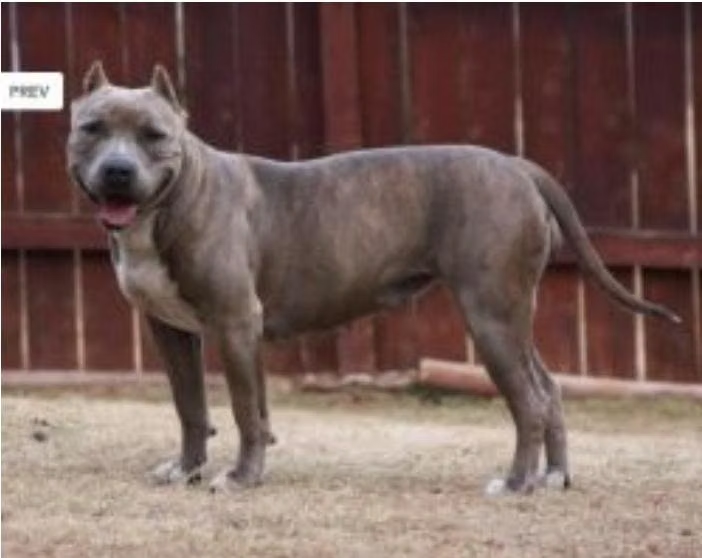
The American Pit Bull Terrier is a loyal, affectionate, and confident companion renowned for its devotion and people-loving nature.
How the American Pit Bull Terrier coat is built, and what that means when you groom it.
A few of the American Pit Bull Terrier profiles members have added to United Pet Club.
The American Pit Bull Terrier is a solidly built, medium-sized dog from the United States, known in Australia mainly through its restricted-breed status and its loyal, people-focused nature.
The American Pit Bull Terrier is a medium-sized dog developed in the United States from bulldog and terrier stock. It has a compact, muscular build made for strength and agility, a broad head, defined cheek muscles, and a short, smooth coat. Adults typically weigh 14 to 27 kg (30 to 60 lb), with males running larger than females.
In Australia the breed carries a reputation shaped less by temperament and more by law: it is one of the restricted dog breeds listed under state and territory companion animal legislation, and import of the breed has been banned nationally since 1991. Owners and handlers who work with the breed overseas commonly describe it as affectionate, people-oriented, and keen to please, with well-socialised dogs friendly toward strangers and closely bonded to their families. The breed is energetic and sharp, qualities that respond well to consistent training and a solid daily routine.
The American Pit Bull Terrier is recognised by the United Kennel Club and the American Dog Breeders Association in the United States. Dogs Australia does not register the breed, and it is not shown at Australian conformation events.
| Attribute | Detail |
|---|---|
| Origin | United States |
| Size | Medium (14 to 27 kg) |
| Lifespan | 12 to 16 years |
| Group/role | Terrier; companion and working dog |
| Good with | Family members and children when socialised; supervision advised around other dogs |
The breed suits an experienced, active household able to provide daily exercise, firm structure, and ongoing socialisation. Before taking one on, check state or territory law and your local council's rules, since ownership of restricted breeds carries extra conditions such as mandatory desexing, secure enclosures, and muzzling in public in most jurisdictions. Households with other dogs should plan careful introductions and keep a close eye on interactions.
The American Pit Bull Terrier traces to 19th-century British bull-and-terrier crosses, developed into a farm and companion dog in the United States before becoming a nationally restricted breed in Australia.
The breed traces to the bull-and-terrier dogs of 19th-century Britain and Ireland, produced by crossing bulldogs with terriers. These crosses combined the bulldog's strength with the terrier's drive and agility. They were used in blood sports later outlawed in Britain under the Cruelty to Animals Act of 1835.
Immigrants brought these dogs to the United States through the middle and later 1800s. On American farms the dogs took on broader work: guarding property, controlling vermin, working stock, and serving as family companions. Breeders of the period favoured a stable temperament around people alongside physical capability.
The United Kennel Club registered the breed as the American Pit Bull Terrier in 1898, with founder C. Z. Bennett issuing the first registration number. The American Dog Breeders Association followed in 1909. The American Kennel Club declined to register the breed under that name, instead recognising a related line as the Staffordshire Terrier in 1936, later renamed the American Staffordshire Terrier in 1972.
Through the 20th century the breed appeared in advertising and public life, and individual dogs were recognised for wartime service and companionship. Later decades brought an association with dogfighting and a wave of breed-specific laws across multiple countries. Australia acted early: import of the American Pit Bull Terrier was banned under Commonwealth customs regulations in 1991, and every state and territory now lists it as a restricted or dangerous breed, which is why the dog stays uncommon here compared with its numbers in the United States.
Built for a balance of strength, speed, and agility, the American Pit Bull Terrier has a broad head, short glossy coat, and a build that needs careful heat management in Australia's climate.
The American Pit Bull Terrier is a well-muscled, medium-sized dog built for a balance of strength, speed, and agility rather than bulk alone. The head is medium length with a broad, flat skull, pronounced cheek muscles, and a wide, deep muzzle. The body runs slightly longer than tall, with a deep chest, level back, and a tail that tapers to a point. Movement is light and powerful. Because Dogs Australia does not register the breed, there is no local conformation standard; the description below follows the working standards used by American registries.
| Trait | Standard |
|---|---|
| Height | 43 to 53 cm (17 to 21 in) at the shoulder |
| Weight | 14 to 27 kg (30 to 60 lb) |
| Coat | Short, smooth, glossy, close to the body |
| Colours | Most colours and patterns except merle |
| Eyes | Round to almond, any colour except blue in some standards |
The coat is short and stiff to the touch, sitting flat against the skin. It needs little upkeep and gives almost no protection from cold, which matters more in the southern states over winter than in the humid, sun-heavy north. Accepted colours run wide and include black, blue, brown, fawn, red, brindle, and white, in solid, patched, or ticked patterns. Merle is excluded from standards because it is not considered native to the breed and is linked to health problems. Nose colour generally matches the coat, and pale-coated dogs need sun protection during the middle of the day.
The American Pit Bull Terrier is affectionate and people-focused, typically friendly toward humans, though its restricted status in Australia calls for careful management around other dogs and in public.
The American Pit Bull Terrier forms strong attachments to its people. Well-bred, well-socialised dogs are affectionate and confident, and many are openly friendly with strangers, which makes them poor guard dogs despite their reputation. The breed is people-oriented and generally wants to be part of the household rather than left to its own devices in the yard.
With children the breed is commonly gentle and tolerant, though its strength and energy mean play with young kids needs supervision. Terrier ancestry can produce drive toward other animals, and some individuals show reactivity toward other dogs, a trait that matters given the public-space muzzling and leash conditions attached to restricted breeds. Early socialisation and careful management around unfamiliar dogs reduce the risk of conflict and keep an owner on the right side of local rules.
The breed is intelligent and responsive, with a strong will to please that supports training. Boredom or a lack of exercise can tip into destructive behaviour, so both mental and physical outlets matter. Temperament varies by individual and by breeding line, and sourcing a dog responsibly, where the law allows it, improves the odds of a stable, easygoing adult.
| Trait | Rating |
|---|---|
| Affection | 5 |
| Energy | 5 |
| Trainability | 4 |
| Vocalness | 2 |
| Shedding | 3 |
Grooming is minimal, but the breed needs strong daily exercise, careful heat management over the Australian summer, and secure fencing given its restricted status.
The breed adapts to houses and units as long as daily exercise needs are met, though most Australian councils place extra conditions on keeping a restricted breed in a unit or townhouse, so check before signing a lease or contract. It is an indoor dog that should live with its family rather than be kept outside. A secure, childproofed enclosure with high fencing is a legal requirement for restricted breeds in most states and territories, and the dog is athletic enough to climb or jump a low or poorly maintained fence. Cold snaps in the southern states call for a coat, while the north and inland summers call for shade, fresh water, and exercise timed away from the heat of the day.
Feed a complete diet matched to life stage and activity, split across two meals a day, and watch portions to keep the muscular frame at a healthy weight.
The American Pit Bull Terrier does well on a complete and balanced diet formulated for its life stage and activity level. Active adults need solid protein to maintain muscle, with fat for energy. Because the breed carries dense muscle, judge weight by body condition rather than the scale alone, looking for a visible waist and ribs you can feel without pressing hard. Portions depend on the individual dog's size, age, and activity, so treat the figures below as a starting point to adjust with your vet.
| Life stage | Amount per day | Meals |
|---|---|---|
| Puppy (2 to 6 months) | 1.5 to 2.5 cups | 3 to 4 |
| Puppy (6 to 12 months) | 2 to 3 cups | 2 to 3 |
| Adult | 1.5 to 2.5 cups | 2 |
| Senior | 1.25 to 2 cups | 2 |
Keep treats to about 10 percent of daily calories to guard against weight gain. Use small, low-calorie rewards during training. Most dogs on a complete diet need no supplements, though a vet may recommend joint support for active or ageing dogs. Keep fresh water available at all times, especially through the warmer months.
Generally hardy with a lifespan of 12 to 16 years, the breed can be prone to hip dysplasia, skin allergies, and several hereditary conditions worth screening for before breeding.
The American Pit Bull Terrier is generally a sturdy, healthy breed with a typical lifespan of 12 to 16 years. Like all breeds it carries some predispositions, several of which can be reduced through health screening of breeding dogs. The short coat makes skin issues easy to spot early, and routine veterinary care supports a long life. Australian summers add another layer of risk: the coat gives little protection from sunburn or heat stress, so shade, water, and sensible exercise timing matter as much as diet.
| Condition | Signs | Note |
|---|---|---|
| Hip dysplasia | Stiffness, limping, trouble rising | Screen breeding stock; manage weight and activity |
| Skin allergies | Itching, redness, ear infections | Often environmental or food-related; needs diagnosis |
| Cerebellar ataxia | Loss of coordination, tremors | Hereditary; DNA testing available in some lines |
| Hypothyroidism | Weight gain, lethargy, coat changes | Diagnosed by blood test; managed with medication |
| Heart disease | Coughing, fatigue, fainting | Some lines screened for valve and rhythm issues |
Intelligent and eager to please, the breed learns fast with consistent, reward-based training, and early socialisation matters even more given the handling conditions attached to restricted breeds.
The American Pit Bull Terrier is intelligent and strongly motivated to please its handler, which makes it a capable student. It responds best to consistent, reward-based methods and clear structure; harsh handling tends to backfire and can damage the dog's trust. Because the breed is powerful and energetic, lead manners and a reliable recall are priorities from an early age. In most Australian jurisdictions a restricted breed must be muzzled and leashed in public, so building calm, confident lead work early makes daily life considerably easier for both dog and owner.
Females mature around 18 to 24 months and carry litters for about 63 days, though breeding a restricted breed in Australia carries extra legal conditions in most states and territories.
Responsible breeding of the American Pit Bull Terrier centres on temperament and health rather than appearance alone. Breeding dogs should be screened for hip dysplasia, cardiac issues, and hereditary conditions such as cerebellar ataxia where testing exists. Although females can cycle earlier, breeding is best delayed until full physical and mental maturity, generally around 18 to 24 months.
In Australia, breeding a restricted breed is heavily regulated or banned outright in several states and territories, and permits, desexing exemptions, or extra council approval commonly apply where it is allowed at all. Anyone considering a litter needs to check state and local rules well before mating, since penalties for non-compliance can be significant.
Gestation runs about 63 days. Litters average five to ten puppies, with size varying by individual and dam. The mother handles most early care, including nursing and cleaning. Puppies open their eyes around two weeks and begin weaning onto solid food between three and four weeks, completing the transition by about eight weeks.
Early handling and exposure shape adult temperament, so the period from birth to placement matters. Puppies should stay with the dam and littermates until at least eight weeks to learn bite inhibition and basic social skills.
| Metric | Value |
|---|---|
| Sexual maturity | 6 to 12 months |
| Recommended breeding age | 18 to 24 months |
| Gestation | About 63 days |
| Average litter size | 5 to 10 puppies |
| Weaning age | About 8 weeks |
| Eyes open | About 2 weeks |
A free lifetime United Pet Club record for your American Pit Bull Terrier, with the microchip registered at no charge and nothing falling due each year.
Rangers and shelters can only call the number the scan hands them. Give your American Pit Bull Terrier a free United Pet Club profile and that number is yours: dog registration takes a few minutes, costs nothing for his lifetime, and works with or without a chip in place.
A chipped American Pit Bull Terrier without a registration is carrying a number nobody can use. File it with United Pet Club and the number works for him: free for life, open to every chip brand sold here, searchable from any clinic or pound in the country. Microchip registration now, free account while you're at it.
Sign up free with United Pet Club, add his name, breed, and a photo, and you're done. The lifetime plan keeps the profile live at no cost, and the chip number can go in whenever the vet's done his bit.
Add the 15-digit number to your free account with your address and mobile. Registration and every update after it are free, and chips from any manufacturer an Australian vet implants are accepted.
In most states and territories, yes, chipping is required and the register entry comes with it. The state register and your United Pet Club record do different jobs: one satisfies the council, the other keeps a current phone number one scan away, free.
Nothing with United Pet Club. Profile, chip registration, and unlimited updates are covered for his whole life, no annual fee in sight.
Common questions about the American Pit Bull Terrier's legal status in Australia, size, temperament, care needs, and lifespan.
Import has been banned nationally since 1991, and the breed is listed as restricted or dangerous under every state and territory's companion animal laws. Existing dogs can generally stay with their owners under conditions such as desexing, secure enclosures, and muzzling in public, but rules vary by state, so check with your local council.
It is a medium-sized breed, standing about 43 to 53 cm at the shoulder and weighing roughly 14 to 27 kg, with males larger than females.
Well-socialised dogs are typically affectionate and people-oriented, and many do well with children. Supervision is advised with young kids given the dog's size and energy, and introductions to other dogs should be handled carefully.
Grooming is minimal thanks to the short coat, but the breed needs substantial daily exercise, mental engagement, and heat management through the Australian summer. It suits active owners who can provide structure, consistent training, and secure fencing.
The typical lifespan is 12 to 16 years. Good nutrition, a lean body weight, regular veterinary care, and responsible breeding all support a long life.
The breed is generally friendly toward people and was historically bred against human aggression. Some individuals show drive toward other animals, which is part of why socialisation and public handling conditions matter. Temperament depends heavily on breeding, training, and handling, not on the breed label alone.
Yes. Plan for at least 60 to 90 minutes of activity each day, combining walks or runs with play and training, and time it around the heat rather than through the middle of a summer's day. Without enough exercise the breed can become bored and destructive.