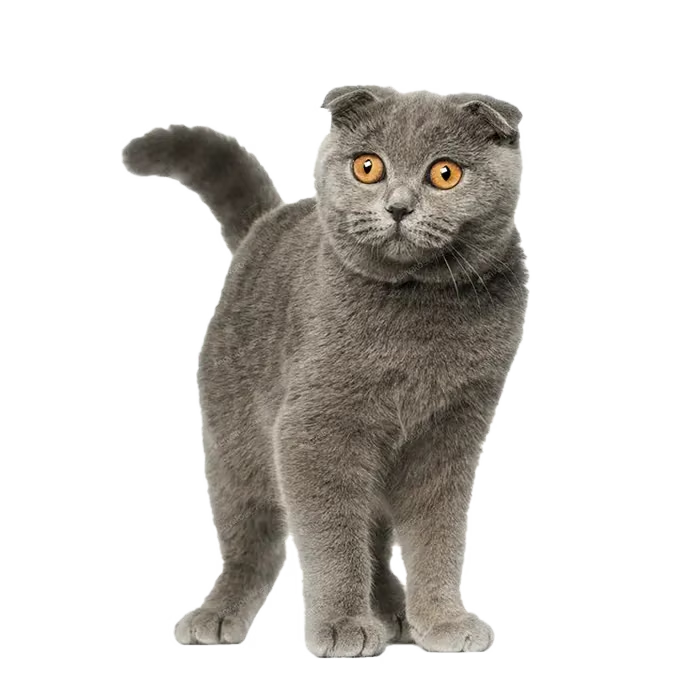
The Scottish Fold is instantly recognizable for its folded ears and is cherished for its sweet, affectionate, and easygoing temperament.
How the Scottish Fold coat is built, and what that means when you groom it.
Critical: A Scottish Fold should not be shaved.
The undercoat keeps heat out as well as in, and the outer coat shields the skin from sun and insect bites. Clipping the whole coat off removes both. It often grows back patchy, soft or a different colour, and in some animals the guard hairs never return properly. Brush the undercoat out instead of cutting it off.
Information: A Scottish Fold drops its undercoat in heavy bursts.
The undercoat comes out in heavy bursts over a few weeks. An undercoat rake, or a bath followed by a proper blow-dry, clears it far faster than daily brushing. Clipping the coat down is not a shortcut for this.
The Scottish Fold is a medium-sized cat from Scotland known for its forward-folded ears and a calm, affectionate temperament that suits families and children.
The Scottish Fold is a medium-sized domestic cat best known for the cartilage fold that bends the ears forward and down toward the front of the head. This single physical trait gives the breed its rounded, owl-like face. Kittens are born with straight ears, and in cats that carry the fold the ears begin to bend within the first few weeks of life.
Beyond the ears, the Scottish Fold is valued for temperament. The breed tends to be affectionate, calm, and good-natured, and it usually settles well into busy households. Folds often form a strong attachment to one or two people and like to stay near them, following from room to room rather than demanding constant handling.
Not every cat in a Fold litter has folded ears. Cats with straight ears, sometimes called Scottish Straights, share the same body type and temperament and are bred back into Fold lines. The folded ear comes from a dominant gene that also affects cartilage elsewhere in the body, which is why responsible breeding and health awareness matter for this breed.
| Attribute | Detail |
|---|---|
| Origin | Scotland |
| Size | Medium |
| Lifespan | 11 to 14 years |
| Role | Companion cat |
| Good with | Children, calm households, other pets |
The Scottish Fold suits people who want a quiet, people-oriented cat rather than a highly active one. It does well with children who handle animals gently, and it generally tolerates other cats and dogs that are introduced calmly. The breed prefers company and can become lonely if left alone for long stretches, so it fits homes where someone is around for part of the day or where a second pet provides company.
The Scottish Fold traces to a single white barn cat named Susie, found in Perthshire, Scotland, in 1961, whose folded ears passed to her descendants.
The breed began in 1961 on a farm in the Tayside region of Perthshire, Scotland. A white barn cat named Susie carried an unusual fold in her ears that bent forward and down. A neighbouring farmer and cat enthusiast, William Ross, noticed Susie and took an interest in the trait when she produced kittens with the same folded ears.
Working with geneticists, breeders established that the fold came from a single dominant gene. Early breeding used British Shorthairs and local domestic cats to build the line. One of Susie's folded kittens, named Snooks, became a foundation cat for the developing breed.
The breed was first registered in the United Kingdom, but concerns about ear-related health problems led the governing body there to stop registering the cats. The GCCF and FIFe still do not recognise the breed on welfare grounds tied to the cartilage mutation. Development continued in the United States, where the breed gained recognition through American cat associations during the 1970s. Outcrossing to British Shorthairs and American Shorthairs helped maintain genetic variety.
Because the fold gene also affects cartilage in the limbs and tail, modern breeding practice pairs a folded-ear cat with a straight-eared cat. This approach reduces the chance of producing kittens with two copies of the gene, which is linked to severe skeletal problems.
The Scottish Fold is a rounded, medium-sized cat with folded ears, large round eyes, and a dense coat that comes in many colours and patterns.
The Scottish Fold has a rounded body, a broad chest, and short, sturdy legs. The head is round with full cheeks, and the overall impression is soft and curved. The folded ears sit forward against the head, which makes the skull look domed and the eyes appear larger. Folds range from a single fold to a tight triple fold that lies flat against the head.
The large, round eyes are set wide apart and give the breed an open, gentle expression. A long-haired variety, sometimes called the Highland Fold, carries the same body and ear type with a longer coat.
| Trait | Standard |
|---|---|
| Height | About 20 to 25 cm at the shoulder |
| Weight | Females 2.7 to 4 kg, males 4 to 6 kg |
| Coat | Short and dense, or long in the Highland Fold variety |
| Colours | Many, including solid, tabby, bicolour, calico, and colourpoint |
| Eyes | Large, round, wide-set; colour usually matches coat |
The short coat is dense and plush, standing slightly away from the body. The long-haired variety has a soft, flowing coat with feathering on the legs and tail. The breed appears in a wide range of colours and patterns, including solid shades such as white, black, blue, and cream, along with tabby, tortoiseshell, calico, bicolour, and colourpoint patterns. Eye colour generally follows the coat, with copper and gold common in darker cats and blue or green in pointed and lighter cats.
The Scottish Fold is affectionate, calm, and playful, bonding closely with its people and generally getting along with children and other pets.
The Scottish Fold is a gentle, people-oriented cat. It tends to attach to its family and likes to be in the same room as its owners, often choosing a nearby spot rather than a hidden one. The breed is affectionate without being demanding, and many Folds greet visitors calmly rather than hiding.
With children, the breed is patient and good-natured, which makes it a steady choice for families where the cat is handled with care. Folds usually accept other cats and dogs when introductions are gradual, and they often do well in multi-pet homes. With strangers the breed is curious and friendly once it has had time to observe.
Folds keep a playful streak well into adulthood and enjoy interactive toys and short games, but their energy is moderate rather than high. They are quiet cats and tend to use a soft voice. The breed does not like being alone for long periods and is happiest with regular company.
| Trait | Rating |
|---|---|
| Affection | 5 |
| Energy | 3 |
| Trainability | 3 |
| Vocalness | 2 |
| Shedding | 3 |
The Scottish Fold needs routine coat brushing, careful ear checks, and moderate daily play, and it does best as an indoor companion with regular company.
The Scottish Fold is a moderate-maintenance cat. The folded ears need particular attention because the fold can trap wax and debris and limit airflow.
The Scottish Fold is best kept indoors, where it is protected from traffic, predators, and disease. It prefers a calm home with soft resting spots and access to its people. Because the breed dislikes being alone for long, a companion pet or a daytime presence helps prevent loneliness.
The Scottish Fold needs a complete, meat-based cat food fed in measured daily portions, with weight kept in check to protect its joints.
Cats are obligate carnivores, so the Scottish Fold needs a diet built around animal protein. Choose a complete and balanced commercial food that meets recognised feeding standards for the cat's life stage. A mix of wet and dry food can help with hydration while supporting dental and bodily needs. Fresh water should always be available. Because the breed is prone to joint issues, keeping the cat at a healthy weight is important, since excess weight adds strain to the limbs and tail.
| Life stage | Amount per day | Meals |
|---|---|---|
| Kitten (up to 12 months) | Free-fed or per package, growing portions | 3 to 4 |
| Adult (1 to 7 years) | About 200 to 280 kcal, adjusted to weight | 2 |
| Senior (7 years and older) | Adjusted to activity and weight | 2 |
Keep treats to no more than about 10 percent of daily kilojoules. A complete diet usually provides everything a healthy cat needs, so add supplements only on veterinary advice. Joint supplements with glucosamine are sometimes recommended for this breed because of its cartilage-related risks, but discuss any supplement with a vet first.
The Scottish Fold lives about 11 to 14 years and is prone to a cartilage and bone disorder linked to the fold gene, along with some other inherited conditions.
The Scottish Fold typically lives 11 to 14 years. The breed's defining trait, the folded ear, comes from a gene that affects cartilage throughout the body, which means the breed carries a known risk of skeletal problems. Cats with two copies of the gene are at the highest risk. The welfare concerns tied to this mutation are why the GCCF and FIFe do not recognise the breed. Responsible breeders pair a folded cat with a straight-eared cat to lower this risk, and prospective owners should ask about the parents' health and ear type.
| Condition | Signs | Note |
|---|---|---|
| Osteochondrodysplasia | Stiff gait, thick or short tail, lameness, reluctance to jump | Linked to the fold gene; affects bone and cartilage |
| Degenerative joint disease | Limping, stiffness, reduced activity | Often follows from the cartilage disorder |
| Polycystic kidney disease | Increased thirst, weight loss, poor appetite | Inherited; screening helps detect it |
| Hypertrophic cardiomyopathy | Lethargy, fast breathing, weakness | Heart muscle thickening; common in many cat breeds |
| Ear infection | Head shaking, odour, dark discharge | Folded ears trap moisture and debris |
The Scottish Fold is intelligent and food-motivated, and it responds well to gentle, reward-based training for litter habits, handling, and simple tricks.
The Scottish Fold is a clever, attentive cat that learns household routines quickly. It is not as driven as some active breeds, but its strong bond with people makes it willing to cooperate when training is calm and rewarding. Folds can learn to come when called, accept grooming and nail trims, and perform simple tricks. Short sessions work better than long ones, and consistency matters more than length.
Scottish Folds are bred by pairing a folded-ear cat with a straight-eared cat to avoid the severe skeletal disease that occurs when both parents carry the fold gene.
Female cats reach sexual maturity at around five to nine months, but responsible breeders wait until the cat is fully grown and health-screened before breeding. The defining rule of Scottish Fold breeding is to never pair two folded-ear cats. Mating two Folds increases the chance of kittens inheriting two copies of the fold gene, which causes severe, painful bone and cartilage disease. Instead, a folded cat is paired with a straight-eared cat, often a Scottish Straight, British Shorthair, or American Shorthair.
Gestation lasts about 63 to 67 days. Litters usually contain three to five kittens. All kittens are born with straight ears; in those that inherit the fold gene, the ears begin to fold at around three to four weeks of age, which is when breeders can tell folded from straight kittens. Kittens should stay with the mother until at least 12 weeks so they are weaned, socialised, and ready for vaccinations before going to new homes.
| Metric | Value |
|---|---|
| Sexual maturity | About 5 to 9 months |
| Recommended pairing | Folded cat with straight-eared cat only |
| Gestation | 63 to 67 days |
| Average litter size | 3 to 5 kittens |
| Ears begin to fold | About 3 to 4 weeks of age |
| Weaning and rehoming | 12 weeks or older |
Free lifetime registration for your Scottish Fold, chip record included, searchable wherever in the country she wanders.
Set the record up before she needs it: name, colouring, photo, your mobile, save. That is the whole of registering your cat with United Pet Club, and the record stands for life without a bill.
Scanners find chips in seconds; the question is what the number points at. Point your Scottish Fold's chip at a live record: free with the lifetime plan, open to all brands, kept current through every move without charges. Microchip registration plus a free account, and she's covered.
Free with United Pet Club: set up an account, add her name, colouring, and a photo, and the profile's live for her whole life. A chip isn't required to start.
Enter the 15-digit number into your free account with your current details. Registration and updates never cost anything, whatever brand of chip your vet used.
Several states and territories require it, and shelters chip before rehoming as standard. Requirement or not, the register entry with your current number is what actually brings a Scottish Fold home.
Nothing at all. United Pet Club's lifetime plan covers her profile, the chip record, and every update, with no annual renewal.
Common questions about the Scottish Fold cover its size, temperament, care needs, lifespan, suitability for families, and availability.
The Scottish Fold is a medium-sized cat. Females usually weigh about 2.7 to 4 kg and males about 4 to 6 kg, standing roughly 20 to 25 cm at the shoulder.
The breed is affectionate, calm, and good-natured. Folds bond closely with their people, stay playful into adulthood, are quiet, and generally get along with children and other pets.
Care is moderate. The coat needs brushing once or twice a week, the folded ears need weekly checks and gentle cleaning, and the cat needs daily play and a healthy weight to protect its joints.
A Scottish Fold usually lives about 11 to 14 years with good care, routine vet visits, and a healthy weight.
Yes. The breed is patient and gentle with children who handle it carefully, and it tolerates other cats and dogs that are introduced gradually. It prefers company and dislikes being alone for long periods.
No. Kittens are born with straight ears, and only those that inherit the fold gene develop folds at around three to four weeks. Straight-eared cats from Fold litters share the same body type and temperament.
They are a popular breed and available from registered breeders, though demand can mean waiting lists. Choose a breeder who pairs folded cats only with straight-eared cats and screens for health problems. Note that some registries do not recognise the breed on welfare grounds.
