
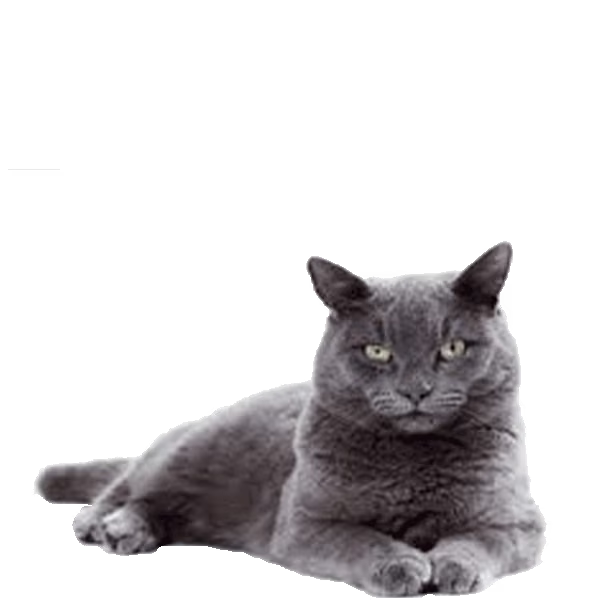
Korat
The Korat is a devoted, affectionate breed treasured in Thailand as a good-luck cat with a silver-blue coat and gentle, loyal heart.
- Size
- Small
- Lifespan
- 12–15 years
- Origin
- Thailand
- Temperament
- Devoted
- Standard colors
- Blue
Characteristics
Coat and grooming
How the Korat coat is built, and what that means when you groom it.
- Coat layers
- Single coat
- Coat texture
- Smooth
- Coat length
- Short
- Shedding
- Low shedding
Korat colors and patterns
What each club's breed standard says about every Korat color and pattern. Point at a ruling to see the club's own wording.
Breed standards describe the Korat in Blue. Standard patterns: Solid.
| Color or pattern | TICA | CFA | FIFE | GCCF |
|---|---|---|---|---|
| Blue | Standard (“Blue”) | Standard (“Silver-Tipped Blue”) | Standard (“silver blue”) | Standard (“blue”) |
| Patterns | ||||
| Solid | Standard (“Solid”) | No ruling | Standard (“solid”) | No ruling |

| Color or pattern | TICA | CFA | FIFE | GCCF |
|---|---|---|---|---|
| Amber | Standard (“amber cast”) | Standard (“amber cast”) | Standard (“amber”) | Standard (“amber cast”) |
| Green | Standard (“green”) | Standard (“luminous green”) | Standard (“brilliant green”) | Standard (“Brilliant green”) |
| Color or pattern | TICA | CFA | FIFE | GCCF |
|---|---|---|---|---|
| Blue | Standard (“dark blue”) | Standard (“dark blue”) | Standard (“dark blue-grey”) | Standard (“dark blue”) |
| Lilac | Standard (“lavender”) | Standard (“lavender”) | Standard (“lavender”) | Standard (“lavender”) |
| Color or pattern | TICA | CFA | FIFE | GCCF |
|---|---|---|---|---|
| Blue | Standard (“dark blue”) | Standard (“dark blue”) | Standard (“dark blue-grey”) | Standard (“dark blue”) |
| Lilac | Standard (“lavender with a pinkish cast”) | Standard (“lavender with a pinkish tinge”) | Standard (“lavender with a pink tinge”) | Standard (“lavender with pinkish tinge”) |
What the rulings mean
- Standard
- Described by the club's breed standard.
Color changes
How a Korat's colors can change over its life.
Bluechanges toTortoiseshell
Coat · With age
Tabbychanges toSolid
Coat · With age
Solidchanges toSmoke
Coat · With age · from 3 to 104 weeks
Amberchanges toGreen
Eyes · With age · from 4 to 208 weeks
Yellowchanges toGreen
Eyes · With age · from 4 to 208 weeks
%22%3E%3Cg%20fill%3D%22%23A6402A%22%3E%3Cpath%20d%3D%22M33.4%2041.5C32.7%2042.3%2029.1%2042.6%2027.6%2042.6C26.1%2042.6%2024.8%2042.1%2024.2%2041.4C23.7%2040.8%2024.1%2039.5%2024.4%2038.7C24.7%2037.9%2025.4%2037.1%2026.1%2036.6C26.7%2036.2%2027.1%2036.1%2028.2%2036C29.4%2035.8%2032.3%2035.3%2032.9%2035.7C33.5%2036.1%2031.8%2037.2%2031.9%2038.2C32%2039.1%2034.1%2040.8%2033.4%2041.5ZM43.8%2021C44.8%2021.8%2044.6%2022.4%2045.1%2023.5C45.7%2024.7%2047.5%2026.8%2047.1%2027.9C46.8%2029.1%2044.4%2030.1%2042.9%2030.2C41.5%2030.3%2039.7%2029.4%2038.4%2028.8C37.2%2028.1%2035.9%2027.2%2035.5%2026.3C35%2025.3%2035.4%2024.2%2036%2023C36.5%2021.8%2037.3%2019.3%2038.6%2019C39.9%2018.6%2042.7%2020.3%2043.8%2021ZM32.1%2031.7C30.8%2031.1%2027.1%2030.8%2026.3%2030.2C25.5%2029.5%2026%2028.5%2027.2%2027.9C28.4%2027.2%2031.6%2026.4%2033.4%2026.5C35.1%2026.5%2036.4%2027.9%2037.7%2028.4C38.9%2028.9%2040.6%2029.1%2040.9%2029.6C41.2%2030.2%2040.6%2031.1%2039.5%2031.7C38.5%2032.4%2035.8%2033.6%2034.5%2033.6C33.3%2033.6%2033.5%2032.3%2032.1%2031.7ZM14.2%2025.9C14.7%2025.4%2017.6%2025%2018.9%2025C20.2%2024.9%2021.2%2025.1%2022.2%2025.4C23.2%2025.6%2024.4%2025.9%2024.9%2026.4C25.5%2026.8%2025.8%2027.3%2025.7%2027.8C25.7%2028.3%2025.4%2029.2%2024.5%2029.4C23.6%2029.6%2021.8%2029.2%2020.3%2029C18.8%2028.8%2016.5%2028.7%2015.5%2028.2C14.5%2027.7%2013.6%2026.5%2014.2%2025.9ZM12.7%2024.9C11.2%2024.1%208.1%2024.5%207.7%2023.6C7.4%2022.8%209.8%2020.5%2010.7%2019.8C11.7%2019.1%2012.2%2019.6%2013.3%2019.5C14.3%2019.4%2015.7%2018.9%2017.1%2019.1C18.5%2019.3%2021.2%2019.9%2021.7%2020.8C22.3%2021.6%2021.1%2023%2020.3%2024.3C19.5%2025.6%2018.3%2028.2%2017%2028.3C15.7%2028.4%2014.2%2025.7%2012.7%2024.9ZM4.1%2022.6C5%2021.8%209.9%2021.6%2011.1%2022.2C12.2%2022.8%2010.7%2025.1%2011%2026.1C11.2%2027.2%2012.6%2027.6%2012.8%2028.5C12.9%2029.3%2012.9%2030.8%2011.9%2031.2C10.9%2031.6%208.2%2031.1%206.8%2030.9C5.4%2030.7%203.9%2030.6%203.6%2029.9C3.3%2029.2%205.2%2027.9%205.2%2026.7C5.3%2025.5%203.1%2023.3%204.1%2022.6ZM44.6%2058.9C43.2%2058.4%2041.4%2057.6%2040.5%2056.7C39.7%2055.9%2038.9%2054.4%2039.5%2053.7C40.1%2053%2042.8%2053.2%2043.9%2052.4C45.1%2051.5%2045.7%2048.8%2046.6%2048.6C47.5%2048.4%2048.7%2050.2%2049.1%2051.3C49.6%2052.3%2049.3%2053.4%2049.2%2054.9C49.2%2056.4%2049.8%2059.5%2049%2060.1C48.3%2060.8%2046%2059.5%2044.6%2058.9Z%22%2F%3E%3Cpath%20d%3D%22M13.4%2021.1C13.1%2021.7%2011.8%2022%2010.3%2022.4C8.8%2022.9%205.2%2023.9%204.3%2023.6C3.4%2023.3%205.5%2021.4%204.8%2020.6C4.1%2019.8%200.1%2019.3%200.2%2018.9C0.3%2018.4%203.6%2018.1%205.3%2017.8C7%2017.6%209.3%2017.2%2010.4%2017.3C11.5%2017.4%2011.7%2018%2012.2%2018.6C12.7%2019.2%2013.8%2020.4%2013.4%2021.1ZM19.7%2020.4C18.8%2020.9%2017.5%2019.9%2016.2%2019.7C14.9%2019.4%2012.5%2019.9%2011.8%2019C11.2%2018%2011.6%2015.2%2012.4%2014.3C13.3%2013.3%2015.6%2013.6%2016.8%2013.4C18.1%2013.3%2019.1%2013.2%2019.9%2013.3C20.8%2013.4%2021.5%2013.5%2021.7%2014C22%2014.5%2021.8%2015.4%2021.5%2016.5C21.1%2017.5%2020.6%2019.8%2019.7%2020.4ZM34.3%2048.7C33.9%2048%2035%2046.2%2035%2044.7C35.1%2043.2%2034.2%2040.4%2034.6%2039.4C35.1%2038.5%2036.2%2038.8%2037.5%2038.9C38.9%2039.1%2042.1%2039.5%2042.7%2040.3C43.2%2041.2%2040.9%2042.8%2040.7%2044.1C40.6%2045.4%2042.3%2047.5%2041.8%2048.3C41.3%2049.1%2038.8%2048.7%2037.5%2048.7C36.3%2048.8%2034.8%2049.3%2034.3%2048.7ZM40.6%2033.5C40.2%2032.1%2038.2%2031.9%2038.5%2030.8C38.7%2029.8%2041.1%2027.9%2042.2%2027.2C43.3%2026.6%2044.6%2026.3%2045.3%2027.1C45.9%2027.8%2046%2030.2%2046.4%2031.6C46.7%2032.9%2047.4%2034.1%2047.2%2035.2C47%2036.4%2046.4%2037.8%2045.2%2038.5C44.1%2039.2%2041.1%2040.3%2040.3%2039.4C39.5%2038.6%2040.9%2035%2040.6%2033.5ZM27.8%2024.7C27%2023.4%2027.6%2020.6%2028%2019.3C28.3%2018%2028.9%2017.8%2030%2017C31%2016.1%2033.4%2014%2034.2%2014.1C35%2014.3%2034.3%2016.9%2034.9%2018.1C35.5%2019.3%2037.9%2020.5%2037.8%2021.2C37.7%2022%2035.1%2021.9%2034.2%2022.8C33.3%2023.8%2033.7%2026.8%2032.7%2027.1C31.6%2027.4%2028.5%2026%2027.8%2024.7ZM24.5%2050.5C23.4%2050.6%2022.7%2048.1%2022.1%2047.5C21.6%2046.9%2021.5%2047.5%2020.9%2046.8C20.3%2046%2018.2%2043.9%2018.4%2043.2C18.6%2042.6%2020.6%2043.2%2022.1%2042.9C23.6%2042.6%2026.4%2041.1%2027.3%2041.4C28.2%2041.7%2027.3%2043.8%2027.5%2044.7C27.7%2045.6%2029%2045.8%2028.5%2046.8C28%2047.7%2025.5%2050.4%2024.5%2050.5ZM49.9%2046.9C48.9%2047.3%2046.2%2047%2045.3%2046.6C44.3%2046.3%2044.2%2045.5%2044%2044.6C43.8%2043.7%2043.8%2041.9%2044.2%2041.2C44.6%2040.6%2045.6%2040.7%2046.2%2040.5C46.9%2040.3%2047.4%2039.8%2048.2%2040.1C49%2040.3%2050.4%2041.2%2050.8%2041.9C51.3%2042.6%2051.2%2043.3%2051.1%2044.1C50.9%2045%2050.8%2046.5%2049.9%2046.9Z%22%2F%3E%3Cpath%20d%3D%22M23.4%2058.2C22.3%2058.9%2020.7%2061.5%2020.2%2061.2C19.7%2060.9%2020.6%2058%2020.2%2056.3C19.8%2054.6%2017.8%2052.5%2017.9%2051.1C17.9%2049.6%2019.7%2047.9%2020.7%2047.7C21.6%2047.5%2022.8%2049%2023.6%2049.8C24.3%2050.6%2024.6%2051.1%2025.1%2052.3C25.6%2053.6%2027%2056.2%2026.7%2057.2C26.4%2058.2%2024.4%2057.6%2023.4%2058.2ZM50.2%2017.9C51%2018.5%2052.1%2021.9%2052.1%2023.2C52%2024.5%2050.5%2025.2%2050%2025.8C49.5%2026.4%2049.7%2026.4%2049%2026.8C48.4%2027.1%2046.8%2028.5%2046.3%2028.1C45.8%2027.7%2046.3%2025.6%2046.2%2024.5C46%2023.5%2045.4%2022.5%2045.5%2021.7C45.7%2020.9%2046.3%2020.3%2047%2019.7C47.8%2019.1%2049.4%2017.3%2050.2%2017.9Z%22%2F%3E%3C%2Fg%3E%3Cpath%20d%3D%22M18.9%2037.1h.1M44.8%2032.6h.1M39.4%2020.9h.1M26.4%2038.1h.1M31.6%2025.6h.1M32.5%2038.6h.1M48.1%2025h.1M56.5%2014.7h.1M16.4%2022.9h.1M45.4%2042.6h.1M12.2%2025.5h.1M15.6%2014.7h.1M44.2%2026.5h.1M47.1%2050.9h.1M7.7%2021.4h.1M25.8%2025.2h.1M38%2041.5h.1M21.9%2028.5h.1M17%2043.1h.1M26.4%2033.5h.1M7.6%2012h.1M56.3%2022.8h.1%22%20fill%3D%22none%22%20stroke%3D%22%231C1C1C%22%20stroke-width%3D%222%22%20stroke-linecap%3D%22round%22%20stroke-linejoin%3D%22round%22%2F%3E%3Cpath%20d%3D%22M48.6%2029.8h.1M8.5%2028.3h.1M21.9%2030h.1M48.5%2042.7h.1M18.7%2047.5h.1M45.4%2052.3h.1M27.7%2036h.1M34%2029.5h.1M44.5%2039.6h.1M57.5%2017.2h.1M31.4%2026.1h.1M17.5%2025.8h.1M22.4%2051.3h.1M14.5%2019h.1M55.2%2012.8h.1M22.2%2039.1h.1M18.9%2021h.1M36.4%2037.7h.1M58.8%208.8h.1M7.2%2016.6h.1M26.4%2030h.1M38.5%2047.6h.1%22%20fill%3D%22none%22%20stroke%3D%22%23A6402A%22%20stroke-width%3D%222%22%20stroke-linecap%3D%22round%22%20stroke-linejoin%3D%22round%22%2F%3E%3C%2Fg%3E%3Cuse%20href%3D%22%23s%22%20fill%3D%22none%22%20stroke%3D%22%233B2A20%22%20stroke-opacity%3D%220.6%22%20stroke-width%3D%221%22%20stroke-linejoin%3D%22round%22%2F%3E%3Cpath%20d%3D%22M3.4%2022.3L5.4%2022.5L4.3%2024Z%22%20fill%3D%22%23E8A0B4%22%2F%3E%3Ccircle%20cx%3D%229.6%22%20cy%3D%2221.2%22%20r%3D%221.1%22%20fill%3D%22%231C1C1C%22%2F%3E%3C%2Fsvg%3E)
%22%3E%3Cpath%20d%3D%22M20%2021Q34%2018.8%2048%2022%22%20fill%3D%22none%22%20stroke%3D%22%231C1C1C%22%20stroke-width%3D%222.2%22%20stroke-linecap%3D%22round%22%20stroke-linejoin%3D%22round%22%2F%3E%3Cpath%20d%3D%22M25%2021.5q3%206%20-.5%2016M31.5%2020.8q3%207%20-.5%2016.6M38%2021q3%207%20-.5%2016.6M44.5%2022q2.6%206%20-.5%2014%22%20fill%3D%22none%22%20stroke%3D%22%231C1C1C%22%20stroke-width%3D%222.6%22%20stroke-linecap%3D%22round%22%20stroke-linejoin%3D%22round%22%2F%3E%3Cpath%20d%3D%22M15%2044H50M15%2048H50%22%20fill%3D%22none%22%20stroke%3D%22%231C1C1C%22%20stroke-width%3D%221.8%22%20stroke-linecap%3D%22round%22%20stroke-linejoin%3D%22round%22%2F%3E%3Cpath%20d%3D%22M50%2022H62M51%2017H62M52%2012H63%22%20fill%3D%22none%22%20stroke%3D%22%231C1C1C%22%20stroke-width%3D%221.8%22%20stroke-linecap%3D%22round%22%20stroke-linejoin%3D%22round%22%2F%3E%3Ccircle%20cx%3D%2259.8%22%20cy%3D%227.8%22%20r%3D%222%22%20fill%3D%22%231C1C1C%22%2F%3E%3Cpath%20d%3D%22M12.6%2015.5l.6%204.2M15%2015.5l-.2%204.2M9%2025.2l4.6%201M9.6%2027.4l4%20.2%22%20fill%3D%22none%22%20stroke%3D%22%231C1C1C%22%20stroke-width%3D%221.1%22%20stroke-linecap%3D%22round%22%20stroke-linejoin%3D%22round%22%2F%3E%3C%2Fg%3E%3Cuse%20href%3D%22%23s%22%20fill%3D%22none%22%20stroke%3D%22%233B2A20%22%20stroke-opacity%3D%220.6%22%20stroke-width%3D%221%22%20stroke-linejoin%3D%22round%22%2F%3E%3Cpath%20d%3D%22M3.4%2022.3L5.4%2022.5L4.3%2024Z%22%20fill%3D%22%23E8A0B4%22%2F%3E%3Ccircle%20cx%3D%229.6%22%20cy%3D%2221.2%22%20r%3D%221.1%22%20fill%3D%22%231C1C1C%22%2F%3E%3C%2Fsvg%3E)
%22%3E%3Crect%20x%3D%220%22%20y%3D%220%22%20width%3D%2264%22%20height%3D%2264%22%20fill%3D%22%231C1C1C%22%2F%3E%3Crect%20x%3D%220%22%20y%3D%220%22%20width%3D%2264%22%20height%3D%2264%22%20fill%3D%22url(%23g)%22%2F%3E%3Cpath%20d%3D%22M17.5%2030.4l0.2%203.7M48.5%2036.2l-0.3%203.1M40.1%2038.4l0.7%202.8M21.3%2029.4l0.3%202.9M38.5%2024l-0.7%202.7M19.4%2041l0.9%203.8M47.2%2026.3l0.3%203M28.1%2031.1l-0.4%202.6M21%2027l-0.7%203.4M20.1%2035l0.7%202.8M27.4%2035.9l1.2%203.6M31.5%2032.2l0.5%202.5M43.7%2038.4l0.2%202.9M15.5%2027.6l0.2%203M33.5%2029.7l0%203.8M50%2028l0.5%203.8M50.1%2029.5l-0.2%203.3M39.4%2037.1l0.8%203M31.1%2025l1%203.1M19.5%2028.3l0.3%203.1M29.5%2034.2l-0.3%203.8M50.4%2033.8l-0.5%202.6M39.3%2028.8l1.2%203.8M36.6%2037.2l-0.3%202.8M41.6%2026.3l-0.7%202.7M24.2%2038.3l-0.2%203.3M20.5%2033.1l0.7%203M24%2032.2l-0.7%203.3M42.7%2038.5l-0.6%203.8M20.4%2038.2l0.2%203.3M37.5%2036.9l-0.8%202.4M36%2035.3l-0.7%202.9M46.2%2033.2l-0.8%203.8M38.1%2030.5l-0.6%203.6M29%2038.9l-0.7%203.7M42.8%2031.3l0.1%203.1M22.5%2025.1l0.4%202.9M47.4%2025l0.2%203M24.7%2032l-0.8%203.2M14.8%2024.5l1.1%203.3%22%20fill%3D%22none%22%20stroke%3D%22%23F5F5F0%22%20stroke-width%3D%221%22%20stroke-opacity%3D%220.85%22%20stroke-linecap%3D%22round%22%20stroke-linejoin%3D%22round%22%2F%3E%3C%2Fg%3E%3Cuse%20href%3D%22%23s%22%20fill%3D%22none%22%20stroke%3D%22%233B2A20%22%20stroke-opacity%3D%220.6%22%20stroke-width%3D%221%22%20stroke-linejoin%3D%22round%22%2F%3E%3Cpath%20d%3D%22M3.4%2022.3L5.4%2022.5L4.3%2024Z%22%20fill%3D%22%23E8A0B4%22%2F%3E%3Ccircle%20cx%3D%229.6%22%20cy%3D%2221.2%22%20r%3D%221.1%22%20fill%3D%22%231C1C1C%22%2F%3E%3C%2Fsvg%3E)
Sources
Each ruling comes from the club's published breed standard or color list.
About the Korat
The Korat is virtually unknown in Australia, recognized by the CCCA but kept by only a handful of dedicated catteries; its silver-blue coat and Thai good-luck heritage from the Tamra Maew draw passionate breed seekers willing to wait.
The Korat is one of the oldest natural cat breeds, with origins in the Korat province of north-eastern Thailand. It is a small to medium cat whose single, close-lying coat is blue tipped with silver, giving the fur a distinctive luminous sheen under good light. A heart-shaped head, large green eyes, and a compact, muscular body that feels heavier than it looks define the breed.
In Thailand the Korat is called Si-Sawat and is honoured as a living symbol of good fortune. The Tamra Maew, an ancient Thai manuscript also known as the Cat-Book Poems, describes the Si-Sawat as cloud-coloured with eyes like dewdrops, a portrait that has remained accurate for centuries. Pairs of Korats were given as wedding gifts to bring prosperity to newlyweds. That cultural weight travels with the breed wherever it goes.
In Australia the Korat is virtually unknown compared with popular breeds. The Co-ordinating Cat Council of Australia (CCCA) recognises it, and TICA-affiliated bodies also register the breed, but only a handful of Australian catteries keep Korats. For Thai-Australian Buddhist communities whose temples, such as Wat Buddharangsee in Sydney and Wat Thai Melbourne, preserve living traditions of Thai culture, the Korat's role as a sacred prosperity symbol carries genuine resonance here.
| Attribute | Detail |
|---|---|
| Origin | Thailand (Korat province) |
| Size | Small to medium |
| Lifespan | 12 to 15 years |
| Group/role | Companion cat |
| Good with | Attentive adults, older children, calm households |
Who the Korat suits
The Korat suits people who want a rare, deeply loyal cat and are prepared to seek one out. Cat show enthusiasts familiar with the Burmese blue variety will find the Korat distinct: where the Burmese presents a full, even blue saturation, the Korat's coat has individual silver-tipped hairs that produce a glowing halo effect unique to the breed. Australian breeders maintain a waiting list, and importing from the USA or Thailand involves meeting AQIS biosecurity requirements. Those willing to take that path are rewarded with a devoted companion unlike any other.
History of the Korat
The Korat is a natural Thai breed documented for centuries as the Si-Sawat good-luck cat, brought to the West in the mid-twentieth century and developed from a small number of imported cats.
The Korat takes its name from the Korat province (Nakhon Ratchasima) in the north-east of Thailand, where it has existed as a natural breed for centuries. In Thailand it is known as the Si-Sawat, a name that refers to its silver-blue colour and carries a sense of good fortune and prosperity.
The breed appears in a Thai manuscript known as the Tamra Maew, or Cat-Book Poems, a collection of verse and illustration describing native cats. The Si-Sawat is among the cats depicted there, which places written record of the type well before its arrival in the West. Korats were given in pairs to mark weddings and to wish good luck, and they were kept and bred close to their original population.
Korats reached the United States in 1959, when a breeding pair was imported from Thailand. American breeders built their lines from this and later imports, keeping the population close to its Thai roots rather than crossing widely with other breeds. The Korat Cat Fanciers Association formed in the years that followed to record pedigrees and promote the breed.
Major registries recognised the Korat through the 1960s, and breeders have continued to import cats directly from Thailand to maintain genetic diversity. In Australia the breed is registered through the Co-ordinating Cat Council of Australia (CCCA) and through TICA-affiliated bodies. It remains relatively uncommon, and many catteries still trace their cats to documented foundation imports.
Korat appearance
The Korat is a small, muscular cat with a heart-shaped face, large luminous green eyes, and a single silver-tipped blue coat that has no other accepted colour.
The Korat is a compact, semi-cobby cat that carries surprising weight for its size because of dense muscle. The head forms a heart shape when viewed from the front, with a strong jaw and a slight stop on the nose. The ears are large, set high, and rounded at the tips. The eyes are the breed's most striking feature: large, round when open, and a luminous green at maturity. Kittens are often born with amber or yellow-green eyes that deepen to full green over the first two to four years.
| Trait | Standard |
|---|---|
| Height | About 23 to 25 cm at the shoulder |
| Weight | 2.7 to 4.5 kg |
| Coat | Short, single, close-lying, no undercoat |
| Colours | Blue tipped with silver only |
| Eyes | Large, round, luminous green at maturity |
Coat and colours
The Korat has one accepted colour: a solid blue coat in which each hair is tipped with silver. The silver tipping catches the light and produces a halo or sheen, most visible on a cat in good condition. The coat is short, fine, and lies flat against the body, with no woolly undercoat. Because there is only one coat and no undercoat, the Korat sheds less than many cats and needs little grooming. There are no markings, patches, or alternative colours in the breed standard.
Korat temperament
The Korat is affectionate, devoted, and gentle, forming deep bonds with its people while staying alert and sensitive to noise and change.
The Korat is a people-focused cat that attaches closely to its household, and it often picks one or two favourite people. It likes to stay near them, sit on a lap, and join whatever they are doing. The breed communicates with a soft, expressive voice rather than constant loud demands, and it reads its owner's moods with noticeable attention.
With family, the Korat is warm and loyal. With strangers it tends to be reserved at first, watching from a distance before it decides to approach. It is intelligent and curious and learns household routines quickly. The breed can be assertive about wanting company and may dislike being left alone for long stretches.
Korats are sensitive cats. Sudden noise, rough handling, and frequent disruption unsettle them. They usually do well with another calm, compatible cat or a respectful dog, though they can be wary of boisterous animals. With gentle older children who handle them quietly, they are affectionate; very young, loud children are a poorer match.
| Trait | Rating |
|---|---|
| Affection | 5 |
| Energy | 3 |
| Trainability | 4 |
| Vocalness | 3 |
| Shedding | 2 |
Korat care
The Korat is low-maintenance to groom thanks to its single coat, but it needs steady company, moderate play, and a calm, stable home to stay content.
Grooming
The Korat's single, short coat is easy to maintain and sheds modestly.
- Brush or hand-stroke once a week to lift loose hair and keep the silver sheen
- Wipe the coat with a damp hand or chamois between brushings for shine
- Trim claws every two to three weeks
- Check and clean the large ears regularly, and brush the teeth to limit dental disease
Exercise
The Korat has moderate energy and enjoys short, regular bouts of play.
- Offer two or three play sessions a day with wand toys or chase toys
- Provide a cat tree or shelves for climbing and a high perch for watching
- Rotate puzzle feeders and small toys to keep an intelligent cat occupied
- Use interactive play to bond, since this cat prefers playing with its person
Environment
The Korat does best in a calm, predictable indoor home. It dislikes loud, chaotic settings and copes poorly with long hours alone, so a companion pet or a household where someone is often present helps. Keep feeding, play, and rest on a steady routine, and introduce any change gradually. If you are considering importing a kitten from the USA or Thailand, allow time for AQIS biosecurity requirements and the quarantine process before your cat arrives. Indoor housing protects this uncommon breed from traffic, theft, and disease.
Korat nutrition
The Korat needs a complete, protein-rich cat food fed in measured portions to keep its dense, muscular body in good condition without excess weight.
As an obligate carnivore, the Korat needs a complete and balanced diet built around animal protein. Choose a quality cat food appropriate to the cat's life stage and follow the feeding guide on the label, then adjust to body condition. The Korat is muscular and can carry more weight than its frame suggests, so portion control matters. Fresh water should always be available, and many cats benefit from some wet food to support hydration.
| Life stage | Amount per day | Meals |
|---|---|---|
| Kitten (2 to 12 months) | Per label, free-fed or 3 to 4 meals | 3 to 4 |
| Adult (1 to 7 years) | About 50 to 70 g of dry, or equivalent wet | 2 |
| Senior (7+ years) | Adjusted to weight and activity | 2 |
Treats and supplements
Keep treats to no more than about ten per cent of daily calories so the main diet stays balanced. A complete commercial food usually needs no added supplements; give any vitamins or joint support only on a vet's advice. Use small, low-calorie treats during training and play to reward the cat without encouraging weight gain.
Korat health
The Korat is generally a healthy, long-lived breed of 12 to 15 years, with a known genetic risk for two related neurological storage disorders that responsible breeders screen for.
The Korat is a robust natural breed and usually lives 12 to 15 years with good care. Its main documented health concern is a pair of inherited neurological conditions, GM1 and GM2 gangliosidosis, which are lysosomal storage disorders seen in the breed. Reliable DNA tests exist for both, and reputable breeders test their breeding cats so affected kittens are not produced. Buying from a breeder who screens for these conditions is the most important health step for the breed.
| Condition | Signs | Note |
|---|---|---|
| GM1 gangliosidosis | Tremors, weakness, declining coordination in young cats | Inherited; DNA test available, breeders should screen |
| GM2 gangliosidosis | Progressive neurological decline in early life | Inherited; DNA test available, breeders should screen |
| Dental disease | Bad breath, drooling, tartar, sore gums | Common in cats; managed with dental care |
| Obesity | Weight gain, reduced activity | Manage with measured portions and play |
Preventive care
- Schedule annual veterinary exams, and twice yearly for senior cats
- Keep core vaccinations and parasite control up to date
- Maintain dental care with brushing and professional cleaning as advised
- Feed measured portions and monitor body condition
- Buy only from breeders who DNA-test for GM1 and GM2 gangliosidosis
Korat training
The Korat is intelligent and eager to please its people, which makes it responsive to gentle, reward-based training for litter habits, handling, and simple tricks.
The Korat is a smart, attentive cat that learns quickly and enjoys interacting with its owner, which gives training a strong foundation. Because the breed is sensitive, it responds far better to patience and rewards than to pressure or scolding. Short, positive sessions hold its interest, and the close bond it forms means it is often motivated by praise and time with its person as much as by food.
Basics
- Set up a clean, quiet litter tray early and keep it in a consistent place
- Provide a scratching post and reward its use to protect furniture
- Get the cat used to gentle handling, carrier, and grooming from kittenhood
- Reward calm, wanted behaviour right away with a treat or praise
- Teach simple cues such as come or sit in brief sessions, then build from there
Korat breeding
Korat breeding centres on health-tested parents and careful, ethical pairing, since the breed carries inherited gangliosidosis and is uncommon enough to require attention to genetic diversity.
Responsible Korat breeding begins with DNA testing both parents for GM1 and GM2 gangliosidosis so that no affected kittens are produced. The breed is relatively rare, and many lines trace to a small number of foundation imports, so breeders also weigh genetic diversity and sometimes work with cats imported directly from Thailand. Females typically reach sexual maturity within the first year, though responsible breeders wait until a queen is physically mature and health-checked before mating.
Gestation in cats lasts about 63 to 67 days. Korat litters are usually small to moderate in size. Queens generally raise their kittens well, and newborns depend fully on the mother for warmth and milk in the first weeks. Kittens open their eyes within the first two weeks and begin weaning around four to six weeks. Eye colour is amber or yellow-green at first and deepens toward the breed's mature green over the following years.
Kittens should stay with the mother and litter until at least twelve weeks so they are weaned, socialised, vaccinated, and ready for a new home. Early gentle handling helps produce confident adults that match the breed's affectionate reputation.
| Metric | Value |
|---|---|
| Sexual maturity | Around 6 to 12 months (breed when mature) |
| Gestation | About 63 to 67 days |
| Litter size | Typically 2 to 5 kittens |
| Eyes open | Around 7 to 14 days |
| Weaning | About 4 to 6 weeks |
| Ready for new home | 12 weeks or older |
Registering a Korat the easy way, microchip included
Free lifetime registration for your Korat, chip record included, searchable wherever in the country she wanders.
Korat registration and microchipping in Australia
Set the record up before she needs it: name, colouring, photo, your mobile, save. That is the whole of registering your cat with United Pet Club, and the record stands for life without a bill.
If she's already chipped, the register entry is the missing half; the vet's part ended with the needle. Register the microchip free for life with United Pet Club: any brand qualifies, address changes cost nothing, and the record answers scans from any clinic or shelter in the country. Create your free account and knock both jobs over tonight.
How do I register my Korat in Australia?
Free with United Pet Club: set up an account, add her name, colouring, and a photo, and the profile's live for her whole life. A chip isn't required to start.
How do I register my Korat's microchip?
Enter the 15-digit number into your free account with your current details. Registration and updates never cost anything, whatever brand of chip your vet used.
Do cats need to be microchipped in Australia?
Several states and territories require it, and shelters chip before rehoming as standard. Requirement or not, the register entry with your current number is what actually brings a Korat home.
How much is it to register a Korat?
Nothing at all. United Pet Club's lifetime plan covers her profile, the chip record, and every update, with no annual renewal.
Korat frequently asked questions
Common questions about the Korat cover its size, temperament, care needs, lifespan, suitability, and how readily the breed can be found.
How is the Korat different from a Russian Blue or Burmese in Australia?
All three are blue cats, but the Korat stands apart. The Burmese blue as shown at CCCA shows has a rich, even blue saturation with no silver tipping. The Korat's coat has every hair individually tipped with silver, creating a glowing halo unique to the breed. The Russian Blue has a denser double coat. The Korat is also the only blue cat with an ancient written description, the Tamra Maew, placing it among Thailand's most revered natural breeds.
Where can I find a Korat breeder in Australia?
Only a handful of Australian catteries breed Korats. Contact CCCA or TICA Australia to find registered breeders, and expect to join a waiting list. Some owners import kittens from established USA or Thai catteries, which requires meeting AQIS biosecurity documentation and quarantine requirements.
How big does a Korat get?
The Korat is a small to medium cat, usually weighing about 2.7 to 4.5 kg. It is muscular and dense, so it often feels heavier than it looks.
Is the Korat hard to care for?
Grooming is easy: the single, short coat needs only weekly brushing and minimal attention. The bigger need is consistent company and a calm home environment, as the breed dislikes long periods alone and is sensitive to disruption.
How long do Korats live?
With good care a Korat typically lives 12 to 15 years. Buying from a breeder who DNA-tests for GM1 and GM2 gangliosidosis supports a healthy, long life.
Does the Korat shed a lot?
No. The Korat has a single coat with no woolly undercoat, so it sheds less than many cats and is relatively low-maintenance to groom.
Is the Korat good for families?
Yes, for the right household. It suits attentive adults, older children who handle cats gently, and homes with a calm routine. It is less suited to very loud, busy environments or long daily absences.