
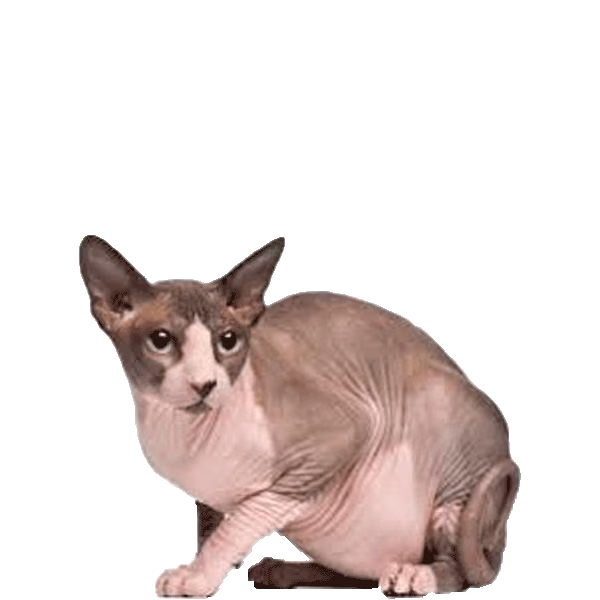
Dwelf
The Dwelf is a playful, affectionate breed combining hairless skin, short legs, and curled ears with an outgoing, curious personality.
- Size
- Small
- Lifespan
- 12–15 years
- Origin
- United States
- Temperament
- Playful
Characteristics
Coat and grooming
How the Dwelf coat is built, and what that means when you groom it.
- Coat layers
- Hairless
- Coat length
- Short
- Shedding
- Low shedding
Grooming guidance
Caution: A Dwelf needs protection from the sun.
Bare skin burns quickly and offers no insulation against cold either. Time outdoors needs shade, a coat in cool weather, or a sunscreen a vet has approved for animals.
About the Dwelf cat
The Dwelf is a small hairless cat with short legs and curled ears. In Australia it sits at the centre of an ongoing welfare debate, with RSPCA Australia and CCCA-affiliated breeders urging caution about stacking multiple physical mutations in a single animal.
The Dwelf is one of the most discussed and divisive experimental cat breeds to have reached Australian shores. It was developed in the United States by crossing three breeds: the Sphynx for a hairless coat, the Munchkin for shortened limbs, and the American Curl for backward-curling ears. The name blends "dwarf" and "elf," a nod to the cat's low stature and pointed ear shape.
In Australia, the Dwelf occupies contested ground. RSPCA Australia has published guidance expressing concern about deliberate selective breeding for physical characteristics that may compromise an animal's welfare, including skeletal abnormalities and the loss of a protective coat. Several state animal welfare acts contain provisions relevant to breeding practices that cause pain or distress, and the Coordinating Cat Council of Australia (CCCA) has not extended formal championship recognition to the Dwelf. Responsible breeders affiliated with CCCA state bodies have, on the whole, taken a cautious approach to experimental breeds that layer multiple heritable mutations.
For those who proceed, the Dwelf requires committed ownership. The hairless skin needs regular cleaning, the cat must be kept indoors and warm, and the short legs limit agility. Numbers in Australia remain small.
| Attribute | Detail |
|---|---|
| Origin | United States |
| Size | Small |
| Lifespan | 12 to 15 years |
| Group / role | Companion cat (rare/experimental breed) |
| Recognition | Not recognised by the CCCA; registerable under TICA |
Who the Dwelf suits
The Dwelf suits owners who have researched the welfare debate and still wish to proceed, and who can give the cat daily attention. It is best suited to households where someone is home most of the day, where there is another companion animal or substantial human contact, and where the owner has the time and commitment for regular skin and ear care. First-time cat owners are advised to consider the breed's welfare complexities carefully before committing.
History and origin
The Dwelf was developed in the United States in the early 2000s by deliberately crossing the Sphynx, Munchkin and American Curl to combine hairlessness, shortened limbs and curled ears in one cat.
The Dwelf emerged in the United States in the early 2000s. Its development was intentional: breeders selected three established breeds and combined them with the goal of fixing three distinct traits in a single small cat.
The Sphynx supplied the hairless coat, the result of a recessive mutation first documented in Canadian cats during the 1960s. The Munchkin contributed the shortened limbs caused by a dominant autosomal gene affecting cartilage and bone growth. The American Curl added the backward-arcing ears, a trait that appeared spontaneously in California in 1981 and spreads through a dominant gene.
Because the short-leg mutation carries welfare implications and the combination of three heritable anomalies in one cat is unusual, the Dwelf has attracted scrutiny from animal welfare bodies worldwide, including in Australia. It has not attained championship status in any major international registry and is produced globally by a small number of dedicated breeders.
Appearance and breed standard
The Dwelf is a small, compact, muscular hairless cat with shortened legs, large backward-curling ears, wrinkled warm skin and wide-set eyes.
The Dwelf is immediately recognisable. Short legs give the body a low-slung profile. The head is wedge-shaped with pronounced cheekbones, wide-set eyes and the large ears that arc backward at the tips. The skin is bare, warm to the touch and visibly wrinkled around the head and shoulders. A fine, near-invisible down is present on some individuals.
Because there is no fur to carry pigment, coat colour appears instead as variation in skin tone. Patterns that would read as tabby or pointed markings on a coated cat are visible as shifts in skin pigmentation.
| Feature | Standard |
|---|---|
| Height | Approx. 15 to 18 cm at the shoulder |
| Weight | 1.8 to 3.2 kg |
| Coat | Hairless; may carry fine down; skin is warm and suede-like |
| Colours | Skin pigment in any colour or pattern |
| Eyes | Large, wide-set, round to lemon-shaped, colour varies |
Coat and colours
The absence of fur means temperature regulation falls entirely on the environment and on the owner's management. The skin can be solid, mottled or patterned, and direct sunlight will burn it in the same way it burns human skin. Sunscreen formulated for cats and shade are both relevant in the Australian context.
Temperament and personality
The Dwelf is highly affectionate, curious and sociable, forming close bonds with its family and generally adapting well to children and other pets.
Dwelfs are emphatically people-oriented. They trail their owners through the house, seek out laps and stay involved in whatever is happening around them. The breed is curious and investigative, moving toward new people and situations rather than retreating.
With family the Dwelf is warm and attentive. It usually does well with children who handle it gently, is friendly toward visitors once introduced, and tends to get along with other cats and with dogs. It is not suited to long periods of solitude and does best with regular human company or another companion animal.
| Trait | Rating |
|---|---|
| Affection | 5 |
| Energy | 4 |
| Trainability | 3 |
| Vocalness | 3 |
| Shedding | 1 |
Care and grooming
In Australia's climate the Dwelf needs careful temperature management in both summer and winter, alongside weekly skin cleaning, regular ear maintenance and strict indoor housing.
Grooming
- Wipe or bathe the skin regularly, typically once a week, to remove the oils that a fur coat would normally absorb
- Clean the ear folds carefully; the curled shape traps wax and debris more readily than upright ears
- Trim nails regularly and inspect skin folds for redness or irritation after each cleaning session
- Pat the skin fully dry after bathing to prevent chilling
Exercise
- Schedule daily interactive play using wand toys, feather teasers and puzzle feeders
- Provide low climbing platforms and perches designed with short-legged cats in mind
- Rotate the toy selection regularly; the Dwelf's curiosity means it tires of the same stimuli quickly
- Continue structured play into adulthood; the breed does not become less active with age
Environment and the Australian climate
The Dwelf is a strict indoor cat. The hairless skin provides no insulation against cold and, critically in Australia, no protection from the sun. In Queensland and New South Wales, summer temperatures regularly exceed 35 degrees Celsius, and a hairless cat left in a warm room or near a sunny window can overheat or sustain sunburn rapidly. Air conditioning, shade and avoidance of glass-amplified sun are essential during warmer months. A pet-safe, vet-recommended sunscreen can protect exposed skin during brief periods near windows.
In the cooler southern states, and during winter nights across most of the country, the lack of a coat means the Dwelf loses body warmth quickly. Heated beds, fleece wraps and a consistently warm indoor temperature are the safeguards against cold-related distress.
Nutrition and feeding
The Dwelf needs a high-protein, portion-controlled diet formulated for cats, with slightly higher energy intake to offset the heat loss caused by having no coat.
Hairless cats burn more energy maintaining body temperature than coated cats of a similar size, so the Dwelf may eat a little more relative to its frame. A complete, commercially formulated, high-protein cat food is the most reliable foundation. Portions should still be measured against the cat's small body weight to avoid overfeeding, and fresh water should be available at all times.
| Life stage | Amount per day | Meals |
|---|---|---|
| Kitten (2 to 12 months) | Free-fed or 4 small portions | 3 to 4 |
| Adult (1 to 7 years) | Approx. 50 to 70 g measured to body weight | 2 to 3 |
| Senior (7+ years) | Adjusted to activity and current weight | 2 |
Treats and supplements
Keep treats to a small share of daily calories. A diet that is complete and balanced for the cat's life stage rarely needs supplementation, but any addition (such as omega fatty acids for skin condition) should be discussed with a vet first.
Health and common conditions
The Dwelf usually lives 12 to 15 years, but the combination of three heritable mutations means owners and vets need to actively monitor skin health, skeletal integrity and ear condition throughout the cat's life.
The Dwelf's lifespan of 12 to 15 years is broadly comparable to other cat breeds, but its layered genetic background creates specific health considerations. The hairless skin is vulnerable to oil buildup, sunburn and temperature extremes. The short-leg gene is associated with spinal and joint stress. The curled ears require regular cleaning to prevent infection.
Owners in Australia should identify a veterinarian comfortable with exotic breeds before acquiring a Dwelf. Specialist knowledge of the Sphynx and Munchkin parent lines is useful for accurate monitoring. Outside the major cities, such vets can be harder to find, so the search should happen before purchase.
| Condition | Signs | Note |
|---|---|---|
| Skin issues and sunburn | Redness, oily buildup, blackheads, peeling or soreness on skin | Hairless skin is vulnerable to oil buildup and Australian sun; clean weekly and limit all direct sun exposure |
| Skeletal or spinal strain | Reluctance to jump, abnormal gait, back tenderness | Associated with the short-leg gene |
| Ear infections | Head shaking, odour, discharge in the folds | Curled ear canal traps debris more than upright ears |
| Cold exposure | Shivering, huddling for warmth, lethargy | Risk in southern states during winter; heated bedding required |
| Cardiac conditions | Lethargy, altered breathing | Reported in related hairless lines; vet screening advised |
Preventive care
- Annual or biannual veterinary examinations with a vet experienced in exotic breeds
- Weekly skin cleaning and checks for irritation or infection
- Ear cleaning at least every two weeks
- Weight monitoring to reduce strain on the spine and joints
- Keeping the cat indoors, shaded and away from direct sunlight
Training
The Dwelf is intelligent and interaction-driven, making it receptive to short positive training sessions for handling routines, litter habits and basic commands.
The Dwelf's curiosity and social drive make it more trainable than most cats. It can learn its name, respond to recall and pick up simple behaviours. Short sessions with immediate food rewards or praise work best; the breed's attention shifts quickly when there is nothing new happening.
Because the Dwelf needs regular bathing and ear cleaning throughout its life, getting a kitten comfortable with calm handling from the start pays long-term dividends. A cat that tolerates and even anticipates grooming routines is far easier to maintain than one that resists.
Basics
- Begin gentle handling and simulated bathing during the kitten period
- Reward correct litter tray use and keep the tray consistently clean and accessible
- Pair a clicker or marker word with food rewards to build simple commands
- Introduce ear cleaning and nail trimming gradually, one short session at a time
- Redirect scratching to appropriate posts and reward use promptly
Breeding
In Australia, Dwelf breeding sits outside the CCCA recognition framework. Breeders work under TICA registration, and the welfare considerations of combining three heritable mutations require careful genetic planning.
The CCCA, which oversees affiliated cat councils in each Australian state and territory, has not granted the Dwelf formal breed recognition or championship status. Breeders producing Dwelfs in Australia typically register litters with TICA, which accepts the breed under its experimental or rare-breed framework. Cats imported from overseas must meet Australian biosecurity requirements: live cat imports are subject to Department of Agriculture permits, mandatory health testing and a quarantine period.
Breeding the Dwelf itself is genetically demanding. The short-leg mutation must not be homozygous; pairing two short-legged parents risks producing non-viable offspring. Outcrossing to one or more of the parent breeds is standard practice to maintain health and structural soundness. Litters are typically small at two to four kittens. Newborns are hairless and depend entirely on external warmth, making a controlled, heated whelping environment essential.
Given the concerns raised by RSPCA Australia about breeding for physical mutations, responsible Dwelf breeders in Australia will screen both parents for cardiac, skeletal and skin conditions and will provide full health disclosure to prospective buyers.
| Metric | Value |
|---|---|
| Sexual maturity | Around 6 to 12 months |
| Recommended breeding age | After physical maturity (12 months or older) |
| Gestation | Approx. 63 to 67 days |
| Average litter size | 2 to 4 kittens |
| Weaning age | Around 8 to 12 weeks |
Registering a Dwelf the easy way, microchip included
Free lifetime registration for your Dwelf, chip record included, searchable wherever in the country she wanders.
Dwelf registration and microchipping in Australia
Set the record up before she needs it: name, colouring, photo, your mobile, save. That is the whole of registering your cat with United Pet Club, and the record stands for life without a bill.
Scanners find chips in seconds; the question is what the number points at. Point your Dwelf's chip at a live record: free with the lifetime plan, open to all brands, kept current through every move without charges. Microchip registration plus a free account, and she's covered.
How do I register my Dwelf in Australia?
Free with United Pet Club: set up an account, add her name, colouring, and a photo, and the profile's live for her whole life. A chip isn't required to start.
How do I register my Dwelf's microchip?
Enter the 15-digit number into your free account with your current details. Registration and updates never cost anything, whatever brand of chip your vet used.
Do cats need to be microchipped in Australia?
Several states and territories require it, and shelters chip before rehoming as standard. Requirement or not, the register entry with your current number is what actually brings a Dwelf home.
How much is it to register a Dwelf?
Nothing at all. United Pet Club's lifetime plan covers her profile, the chip record, and every update, with no annual renewal.
Frequently asked questions
Common questions from Australian prospective owners cover welfare concerns, RSPCA Australia guidance, CCCA recognition, the climate challenge and how to find a kitten.
What does RSPCA Australia say about Dwelf cats?
RSPCA Australia has published guidance expressing concern about deliberately breeding animals for physical traits that may compromise their welfare. This includes skeletal mutations that affect mobility and the absence of a protective coat. The RSPCA does not specifically name the Dwelf, but its stated positions on structurally compromised animals apply directly to a cat combining three separate physical mutations. Prospective owners are encouraged to read the RSPCA position statements and to speak with a veterinarian before acquiring one of these cats.
Is the Dwelf recognised by the CCCA?
No. The Coordinating Cat Council of Australia (CCCA), which oversees state cat registries and show standards, has not granted the Dwelf formal recognition or championship status. Breeders in Australia can register litters with TICA under its experimental or rare-breed framework.
Can a Dwelf cope with Australian summer heat?
Not without active management. The hairless coat leaves the Dwelf without insulation from heat and without protection from sunburn. In Queensland, New South Wales and Western Australia, peak summer temperatures require air conditioning, full shade and careful supervision near sun-warmed windows. A vet-recommended pet-safe sunscreen can help during any brief sun exposure.
How do I find a Dwelf kitten in Australia?
Dwelfs are rare in Australia. Look for breeders registered with TICA, ask for health screening records covering both parents, and visit the kitten in its breeding environment before committing. Importing from an overseas breeder is possible but involves permits, health certification and a quarantine period under Australian biosecurity rules.
How big does a Dwelf cat get?
A Dwelf is a small cat, typically weighing 1.8 to 3.2 kg. The short legs and compact body make it appear even smaller than that weight suggests.
Do Dwelf cats shed?
No. The Dwelf is hairless and produces no shed fur. It does produce skin oils and some dander, so it is not completely allergen-free.
Is the Dwelf a good family pet?
For families who have researched the breed's welfare complexities and can provide daily attention, regular grooming and a climate-controlled indoor environment, the Dwelf can be an engaging and affectionate companion. It is not a low-maintenance cat.