
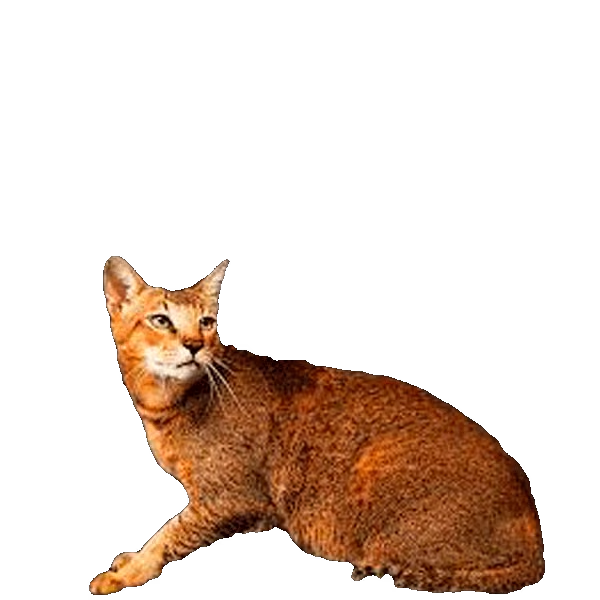
Chausie
The Chausie is an energetic, athletic breed prized for its wild jungle-cat looks and curious, highly active personality.
- Size
- Large
- Lifespan
- 12–15 years
- Origin
- United States
- Temperament
- Energetic
- Standard colors
- Black and Brown
Characteristics
Coat and grooming
How the Chausie coat is built, and what that means when you groom it.
- Coat layers
- Double coat
- Coat texture
- Smooth
- Coat length
- Short
- Shedding
- Moderate shedding
Grooming guidance
Critical: A Chausie should not be shaved.
The undercoat keeps heat out as well as in, and the outer coat shields the skin from sun and insect bites. Clipping the whole coat off removes both. It often grows back patchy, soft or a different colour, and in some animals the guard hairs never return properly. Brush the undercoat out instead of cutting it off.
Chausie colors and patterns
What each club's breed standard says about every Chausie color and pattern. Point at a ruling to see the club's own wording.
Breed standards describe the Chausie in Black and Brown. Standard patterns: Solid, Ticked tabby and Grizzle.
| Color or pattern | TICA | LOOF |
|---|---|---|
| Black | Standard (“Black”) | Standard (“Noir”) |
| Brown | Standard (“Brown Ticked Tabby”) | Standard (“Brown ticked tabby”) |
| Patterns | ||
| Solid | Standard (“Solid”) | Standard (“solide”) |
| Ticked tabby | Standard (“Ticked Tabby”) | Standard (“ticked tabby”) |
| Grizzle | Standard (“Grizzled”) | No ruling |
| Mackerel tabby | No ruling | Disqualifying (“mackerel”) |
| Classic tabby | No ruling | Disqualifying (“classic tabby”) |


What the rulings mean
- Standard
- Described by the club's breed standard.
- Disqualifying
- The club's breed standard disqualifies an animal of this colour or pattern.
Color changes
How a Chausie's colors can change over its life.
Brownchanges toCopal
Coat · With age · from 0 to 52 weeks
Blackchanges toRusset
Coat · Progressive
Blackchanges toBrown
Coat · With body condition · can change back
Blackchanges toBrown
Coat · In the sun · can change back
Blackchanges toBrown
Coat · Progressive
Solidchanges toSmoke
Coat · With age · from 3 to 104 weeks
Pinkchanges toSeal
Paw pads · With age · from 1 to 52 weeks
Pinkchanges toBlue
Paw pads · With age · from 1 to 52 weeks
Pinkchanges toChocolate
Paw pads · With age · from 1 to 52 weeks
Pinkchanges toLilac
Paw pads · With age · from 1 to 52 weeks

Sources
Each ruling comes from the club's published breed standard or color list.
About the Chausie
The Chausie is a large, athletic domestic cat with a wild jungle-cat look and a curious, high-energy nature. Prospective owners in Australia should confirm their state and local council rules before acquiring one, as some states restrict early-generation hybrid cats.
In Australia, the first question for any prospective Chausie owner is regulatory. Some states restrict or require permits for early-generation hybrid cats: F1 and F2 Chausies, which are one or two generations from the wild jungle cat, may be prohibited or subject to licensing in certain states and territories. By the F3 generation and beyond the Chausie is fully domestic in the eyes of most Australian authorities, but individual local councils can still classify hybrids differently. The Coordinating Cat Council of Australia (CCCA) and its affiliated bodies can provide guidance on registration and current state requirements; confirming your rules before joining a breeder's waiting list is simply good sense. RSPCA Australia is also a useful starting point for welfare and permit questions.
Regulatory check done, the Chausie is a large domestic cat developed in the United States to hold onto the long-legged, lean look of a wild jungle cat while behaving like an ordinary house pet. The name comes from the scientific name of the jungle cat, Felis chaus, which was crossed with domestic cats during the breed's early years. What emerged is a tall, muscular cat that moves with the loose, springy gait of something far wilder.
Owners describe the Chausie as curious, clever, and rarely still. These cats poke about in cupboards, trail people from room to room, and pick up household routines in no time. They attach themselves firmly to the people they live with and are not fond of being left on their own for long.
This is no low-effort lap cat. A Chausie wants room to run and climb, plenty of company, and a household at ease with a busy, athletic animal. Given the right home it stays affectionate, playful, and good company well into adulthood.
| Attribute | Detail |
|---|---|
| Origin | United States |
| Size | Large |
| Lifespan | 12 to 15 years |
| Group / role | Domestic companion cat (hybrid lineage) |
| Good with | Active families, older children, cat-savvy owners; best with another playful pet |
Who it suits
The Chausie suits people who want an interactive, athletic cat and can offer it daily attention and space to move. It settles well with experienced owners, active households, and homes where someone is about for much of the day. It is a poor fit for anyone after a calm, sedentary cat or a pet that copes happily with long hours alone.
History and origins
The Chausie is a modern American breed created by crossing the wild jungle cat (Felis chaus) with domestic cats, then breeding the offspring toward a stable, even-tempered type.
The Chausie is a young breed by feline standards, developed in the United States late last century. Its foundation lies in pairings between the jungle cat, Felis chaus, a medium-sized wild cat native to parts of Asia and the Middle East, and domestic cats. Accounts of jungle cat and domestic cat hybrids circulated well before any organised breeding programme, which gave breeders a place to start.
Breeders set out to keep the tall, athletic body and wild appearance of the jungle cat while producing a reliable, even-tempered companion. Because early hybrids can be unpredictable, the programme leaned on later generations several steps removed from the wild ancestor. Cats further from that foundation are generally calmer and better suited to life indoors.
The breed gained formal recognition for development and showing within The International Cat Association, which records generation labels (such as F1, F2, and F3) noting how many generations separate a cat from its wild ancestor. In Australia the breed is uncommon and registration is handled through bodies affiliated with the Co-ordinating Cat Council of Australia (CCCA) or through TICA. These labels matter for temperament and, in some places, for legal ownership.
Today the Chausie remains scarce. Litters are small, the gene pool is narrow, and responsible breeders screen carefully, so demand often runs ahead of supply.
Appearance and breed standard
The Chausie is a tall, lean, muscular cat with long legs, large ears, and a short coat in a small range of natural colours. Adults stand noticeably larger than most domestic cats.
The Chausie has a long, lean, deep-chested body built for running and jumping. The legs are long and the hindquarters powerful, which gives the cat a tall, upright stance and an easy, athletic stride. The head is a moderate wedge with large, often tufted ears set high, and the overall impression is of a small wild cat rather than a typical moggy. Adults are large: many males weigh roughly 7 to 11 kg and females somewhat less, on a frame that reads long rather than heavy.
| Trait | Typical range |
|---|---|
| Height (at shoulder) | Approx. 35 to 45 cm |
| Weight | Approx. 5 to 11 kg (males larger than females) |
| Coat | Short, dense, close-lying |
| Colours | Solid black, brown ticked tabby, black grizzled tabby |
| Eyes | Gold to yellow, sometimes light green |
Coat and colours
The Chausie wears a short, dense coat that lies close to the body and asks for little upkeep. The breed standard recognises a narrow set of natural colours: solid black, brown (or grizzled) ticked tabby, and black grizzled tabby, a pattern that echoes the agouti banding of the wild jungle cat. In the ticked tabby, individual hairs carry bands of light and dark colour, which gives the coat a flecked, wild look. Eye colour is usually gold to yellow and deepens as the cat matures.
Temperament and personality
The Chausie is curious, clever, and very active, with strong ties to its people and a need for constant stimulation. It is affectionate, yet rarely calm.
The Chausie is a busy, inquisitive cat that wants a part in whatever is going on. It bonds closely with its household, trails favourite people about, oversees daily chores, and seeks out company. Many Chausies stay playful and kitten-like for years, long past the age when other cats settle.
With family the breed is affectionate and loyal. With strangers it is often wary at first and may take a while to warm up, though a well-socialised Chausie usually relaxes once it decides a visitor is safe. With other animals it does best beside another energetic cat or a confident dog that can keep up; a lone Chausie left in a quiet home is prone to boredom and the mischief that comes with it.
This breed is clever and quick to bore. Without enough to do it will open cupboards, climb to high spots, or invent its own fun. Owners often say a Chausie needs a job as much as it needs food and water.
| Trait | Rating |
|---|---|
| Affection | 4 |
| Energy | 5 |
| Trainability | 4 |
| Vocalness | 3 |
| Shedding | 2 |
Care and grooming
The Chausie needs little grooming but plenty of daily exercise, vertical space, and steady company. In Australia, indoor-only living is strongly recommended, with a secure catio as the ideal outdoor solution.
Day-to-day care for a Chausie is light on grooming and heavy on activity. The short coat looks after itself easily, but the breed's energy and intelligence mean the real work is keeping it occupied.
Grooming
- Brush once a week to lift loose hair and spread skin oils.
- Check ears weekly and clean gently if needed.
- Trim claws every few weeks and provide sturdy scratching posts.
- Brush teeth regularly or follow a dental routine advised by your vet.
Exercise
- Set aside one or two active play sessions a day with wand toys or chase games.
- Provide tall cat trees, shelves, and perches so the cat can climb and survey.
- Offer puzzle feeders and rotate toys to keep the mind busy.
- Consider harness training or a secure outdoor enclosure for safe time outside.
Environment
The Chausie does best in a roomy home with vertical space and room to run. A small, quiet unit is a poor fit unless the owner commits to substantial daily play. In Australia, keeping a Chausie strictly indoors is strongly recommended. Its hybrid drive to roam puts native wildlife at genuine risk, and Australia's wildlife protection laws hold cat owners responsible for predation on protected species such as native birds, lizards, and small marsupials. Cane toads are a real poisoning hazard for any cat that mouths one, particularly in Queensland and the Northern Territory. The widely used solution is a secure outdoor enclosure, commonly called a catio, which gives the Chausie safe outdoor time without threatening local fauna. Because the Chausie bonds strongly and hates isolation, a second active pet or a household with people about for much of the day helps head off boredom and stress.
Nutrition and feeding
The Chausie is a large, active cat that needs a high-protein, meat-based diet with steady portions matched to its size and energy. Some lines digest plant-heavy foods poorly.
The Chausie is a large, high-energy cat, and its diet should mirror that. A meat-based food high in animal protein suits the breed well. Some Chausies, particularly those closer to the wild foundation, tolerate grain and plant-heavy diets poorly and may do better on foods with limited fillers; watch for loose stools or a dull coat and adjust with your vet's guidance. Fresh water should always be within reach.
| Life stage | Amount per day | Meals |
|---|---|---|
| Kitten (to 12 months) | Free-fed or per-pack growth amount | 3 to 4 |
| Adult (1 to 7 years) | Portion matched to weight and activity | 2 |
| Senior (7+ years) | Slightly reduced; monitor weight | 2 |
Treats and supplements
Keep treats to a small share of daily kilojoules so the cat holds its lean build. Plain cooked meat makes a good reward. A healthy Chausie on a complete, balanced diet usually needs no supplements; add them only on your vet's advice, for instance to support the joints of an older cat.
Health and common conditions
The Chausie is generally healthy and lives 12 to 15 years, though some lines have digestive sensitivities and the breed is prone to a few inherited conditions seen across many cats.
The Chausie is generally a sturdy, healthy breed with a typical lifespan of 12 to 15 years. Its narrow gene pool and hybrid background make responsible breeding and screening important. The issue most tied to the breed is digestive sensitivity in some lines, where cats struggle to digest plant-based ingredients and need a meat-forward diet to stay well.
| Condition | Signs | Note |
|---|---|---|
| Digestive sensitivity | Loose stools, weight loss, poor coat | More common in lines closer to the wild foundation; manage with diet |
| Hypertrophic cardiomyopathy (HCM) | Lethargy, breathing difficulty, sudden collapse | Heart disease seen in many cat breeds; ask about screening |
| Dental disease | Bad breath, drooling, reluctance to eat | Common in cats generally; prevent with dental care |
| Obesity (if under-exercised) | Weight gain, reduced activity | Avoid with portion control and daily exercise |
Preventive care
- Keep up annual veterinary check-ups and core vaccinations.
- Maintain regular parasite control for fleas and worms.
- Follow a dental routine and have the teeth checked yearly.
- Feed a suitable diet and watch the weight to keep the cat lean.
- Ask the breeder about health testing of the parent cats.
Training and enrichment
The Chausie is clever and trainable, and responds well to reward-based methods. It can learn tricks, lead walking, and games, which also help burn off its high energy.
The Chausie is one of the more trainable cat breeds. Its intelligence and drive to interact make it receptive to teaching, and training doubles as enrichment for a cat that needs mental work. Many Chausies learn to fetch, walk on a harness, and answer to a name or cue. Short, frequent sessions work better than long ones, and the cat's curiosity does much of the work once it grasps that a reward is on offer.
Basics
- Start young and keep sessions short, a few minutes at a time.
- Use a clear marker, such as a clicker or a consistent word, paired with a treat.
- Teach one simple behaviour at a time, such as coming when called.
- Build up to fetch, harness walking, or puzzle games as the cat gains confidence.
- End each session on a success and before the cat loses interest.
Breeding and raising kittens
The Chausie is bred carefully from a small gene pool, often using later-generation cats. Litters are usually small, and early generations can bring fertility and temperament challenges.
Breeding the Chausie is specialised work. The breed descends from crosses between the wild jungle cat and domestic cats, and males in the first few hybrid generations are often infertile, a known hurdle in hybrid breeding. For that reason breeders lean heavily on later-generation cats and a limited pool of proven lines.
Females reach sexual maturity at roughly the same age as other domestic cats, and gestation runs close to the feline norm of about 63 to 67 days. Litters tend to be small. Kittens do best with early, steady handling so they grow into the confident, sociable adults the breed is known for; socialisation in the first weeks has a lasting effect on temperament.
Responsible breeders screen breeding cats for health, register generations accurately, and place kittens in homes ready for an active, demanding cat. Anyone weighing up breeding should also check local laws, since some jurisdictions restrict ownership of early-generation hybrids.
| Metric | Value |
|---|---|
| Gestation | Approx. 63 to 67 days |
| Typical litter size | Small (often 2 to 4 kittens) |
| Early-generation males | Often infertile (F1 to F3) |
| Weaning age | Around 8 to 12 weeks |
| Generation labels | F1, F2, F3 onward (steps from wild ancestor) |
Registering a Chausie the easy way, microchip included
Free lifetime registration for your Chausie, chip record included, searchable wherever in the country she wanders.
Chausie registration and microchipping in Australia
Set the record up before she needs it: name, colouring, photo, your mobile, save. That is the whole of registering your cat with United Pet Club, and the record stands for life without a bill.
If she's already chipped, the register entry is the missing half; the vet's part ended with the needle. Register the microchip free for life with United Pet Club: any brand qualifies, address changes cost nothing, and the record answers scans from any clinic or shelter in the country. Create your free account and knock both jobs over tonight.
How do I register my Chausie in Australia?
Free with United Pet Club: set up an account, add her name, colouring, and a photo, and the profile's live for her whole life. A chip isn't required to start.
How do I register my Chausie's microchip?
Enter the 15-digit number into your free account with your current details. Registration and updates never cost anything, whatever brand of chip your vet used.
Do cats need to be microchipped in Australia?
Several states and territories require it, and shelters chip before rehoming as standard. Requirement or not, the register entry with your current number is what actually brings a Chausie home.
How much is it to register a Chausie?
Nothing at all. United Pet Club's lifetime plan covers her profile, the chip record, and every update, with no annual renewal.
Frequently asked questions
Common questions about the Chausie in Australia cover its size, temperament, care needs, lifespan, legality, suitability as a pet, and how hard it is to find.
How big does a Chausie get?
The Chausie is a large cat. It is tall and long-legged, with many males weighing roughly 7 to 11 kg and females somewhat less. The body looks long and lean rather than heavy.
What is the Chausie's temperament like?
It is curious, clever, and very active, with strong ties to its people. It stays playful for years, is affectionate with family, and can be wary of strangers at first.
Is the Chausie hard to care for?
Grooming is easy thanks to the short coat, but the breed needs plenty of daily exercise, mental stimulation, and company. It suits committed, active owners rather than anyone wanting a calm cat.
How long does a Chausie live?
A Chausie typically lives 12 to 15 years with good care, a suitable diet, and regular veterinary check-ups.
Is the Chausie legal to own in Australia?
It depends on the generation and your state or territory. F1 and F2 Chausies, which are one or two generations removed from the wild jungle cat, may be restricted or require a permit in certain Australian states. F3 and later generations are typically treated as fully domestic cats and are not subject to hybrid restrictions, though individual local councils may apply their own rules. Always check with your state primary industries or agriculture department and your local council before acquiring any hybrid cat. The CCCA and RSPCA Australia can help point you toward the right authorities.
Is the Chausie a good family pet?
Yes, in an active household. It suits families with older children and other energetic pets, and does best where someone is home much of the day. It dislikes being left alone for long stretches.
Are Chausies easy to find in Australia?
No. The breed is uncommon here, litters are small, and the gene pool is narrow, so kittens from responsible breeders usually involve waiting lists. Registration is handled through TICA or bodies affiliated with the CCCA. Importing from an overseas breeder is possible but requires compliance with Australian biosecurity and import requirements.
From the community
Ask about the ChausieNo questions about the Chausie yet. Be the first to ask.
Browse Cat breeds