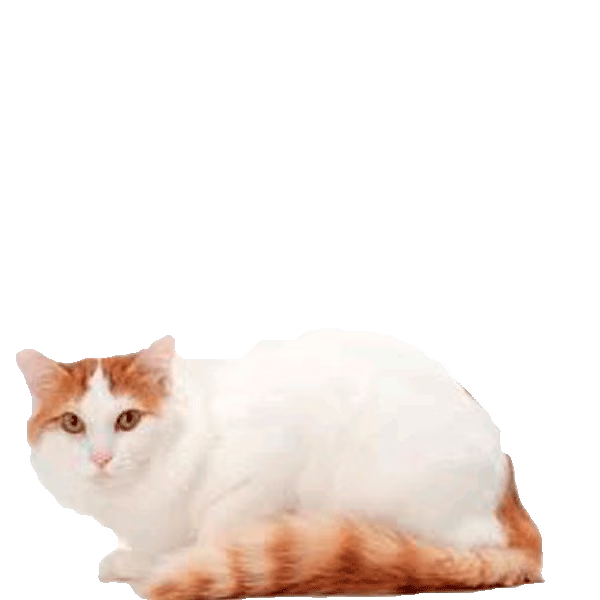
The Turkish Van is a powerful, water-loving breed known for its active, playful nature and famously affectionate devotion to family.
How the Turkish Van coat is built, and what that means when you groom it.
Caution: A Turkish Van coat mats easily.
Fine or long hair tangles at the base of the coat, out of sight, where the mats tighten and pull on the skin. Brushing has to reach right down to the roots in sections, not just skim the surface.
Information: A Turkish Van drops its undercoat in heavy bursts.
The undercoat comes out in heavy bursts over a few weeks. An undercoat rake, or a bath followed by a proper blow-dry, clears it far faster than daily brushing. Clipping the coat down is not a shortcut for this.
The Turkish Van is a large, semi-longhaired cat from the Lake Van region of eastern Turkey. In Australia, the breed arrives via strict biosecurity pathways and suits active households that can provide space, engagement, and climate-conscious care.
Bringing a Turkish Van to Australia means navigating the Department of Agriculture, Fisheries and Forestry (DAFF) biosecurity framework. Importers must obtain a BICON permit before shipment, provide a rabies-free health certificate issued by an accredited veterinarian in the country of export, and comply with mandatory post-arrival quarantine. The process is thorough by design: Australia's island status depends on keeping exotic diseases out, and cats from Turkey or via intermediary countries must meet every checkpoint.
The Turkish Van itself comes from a semi-arid highland plateau surrounding Lake Van in eastern Anatolia. Elevations there range from 1,600 to over 2,000 metres, with hot dry summers and cold winters. That origin gives the breed a coat engineered for extremes: a water-resistant, cashmere-like single layer that sheds heat in summer and insulates against cold. Owners in Queensland, Western Australia, and the Northern Territory find the coat surprisingly manageable in warm conditions, provided the cat has access to shade and fresh water at all times.
Australia's peak registration body for pedigreed cats, ANCATS (Australian National Cats Inc.), recognises the Turkish Van and issues pedigree certificates for cats that meet the breed standard. Breeders operating under ANCATS codes of ethics must meet health-testing requirements, which provides a layer of consumer protection for buyers seeking an imported bloodline or a locally bred kitten with documented ancestry.
| Characteristic | Detail |
|---|---|
| Origin | Lake Van region, eastern Turkey |
| Coat | Semi-longhaired, single layer, water-resistant |
| Colour pattern | White body with colour restricted to head and tail (van pattern) |
| Weight range | 4.5-9 kg (males larger) |
| Lifespan | 13-17 years |
The Turkish Van suits Australian households that want an active, engaged companion rather than a lap cat. The breed is athletic, curious, and often comfortable around water, whether that is a dripping tap, a shallow garden pond, or a backyard pool edge. Families with older children and dog-tolerant households tend to do well with the breed. The Turkish Van does not thrive in small apartments without enrichment; a home with room to run, climb, and explore indoors suits its energy level. Buyers should source kittens from ANCATS-registered breeders who can supply full import or local pedigree documentation.
The Turkish Van's path to Australia tracks the country's evolving biosecurity laws. ANCATS recognition gave the breed a formal home in the Australian cat fancy.
The Turkish Van was first documented outside Turkey by British travellers in the 1950s. Laura Lushington and Sonia Halliday brought cats back to the United Kingdom after encounters near Lake Van, and the breed entered formal Western registration through the Governing Council of the Cat Fancy (GCCF) in 1969. From the UK, bloodlines spread to Europe and North America over the following decades.
Reaching Australia required navigating import rules that have always been among the world's most restrictive. Pre-2000, live cat imports faced quarantine periods of up to 180 days at approved facilities. After biosecurity reforms, the period shortened for cats originating from approved countries, but the documentary requirements remained exacting: country-of-origin health certificates, microchipping, rabies vaccinations at prescribed intervals, and post-arrival quarantine at an approved Australian facility. Breeders who completed this process in the late 1990s and 2000s established the foundation lines that underpin most Australian Turkish Vans today.
ANCATS formally recognised the Turkish Van as a championship breed, allowing cats to compete in conformation shows and earn titles across member clubs in New South Wales, Victoria, Queensland, South Australia, and Western Australia. The TICA Australia chapter also operates within the country, providing an alternative registration pathway for breeders who show internationally or import from TICA-registered catteries in the United States or Canada.
The Australian population of Turkish Vans remains relatively small compared with more common breeds. This means waitlists for kittens from reputable breeders are common, and buyers often need to plan six to twelve months ahead. The limited gene pool also means that responsible breeders occasionally import new bloodlines, repeating the biosecurity journey to maintain genetic diversity within the Australian population.
The Turkish Van is a large, muscular cat with a distinctive van colour pattern, a semi-long single-layer coat, and amber, blue, or odd eyes.
The Turkish Van is one of the larger domestic cat breeds. Males are substantially heavier than females and can take three to five years to reach full muscular development. The body is long and broad-chested, with strong hindquarters that give the cat impressive jumping ability. Despite the substantial frame, the Turkish Van moves with agility and speed.
The coat is the defining physical characteristic. It is semi-longhaired with a single layer and no dense undercoat, which means it does not mat as readily as double-coated breeds. The texture is often compared to cashmere or angora: soft, silky, and water-resistant. In Australian summers, this coat naturally lies flatter against the body, and the cat sheds its lighter winter growth in spring. The van colour pattern restricts pigment to the head (typically over the ears and eye area) and the tail. The body is chalk white. Occasional body spots are permitted in most standards but should not dominate the coat.
| Feature | Description |
|---|---|
| Body type | Long, muscular, broad-chested; substantial bone structure |
| Coat length | Semi-long, single layer, no dense undercoat |
| Accepted colours | Red, cream, black, blue, tabby, tortoiseshell restricted to head and tail |
| Eye colours | Amber, blue, or odd-eyed (one of each) |
| Tail | Full, brush-like, plumed; often displays ringed colouring |
The head is a broad, modified wedge with high cheekbones and a medium-length nose. Ears are large, set high, and lightly furnished inside. Eyes are large, oval, and expressive. Odd-eyed Turkish Vans, one amber eye and one blue eye, are particularly associated with the breed and are highly sought after in the show ring. Australian breed standards as recognised through ANCATS align closely with international standards, so cats imported with overseas pedigrees generally present well at local conformation events.
The Turkish Van is active, intelligent, and often described as dog-like in its loyalty. The breed forms strong bonds but prefers engagement on its own terms rather than prolonged lap time.
The Turkish Van is not a breed that sits quietly on a windowsill all day. It is energetic, inquisitive, and needs regular interaction to remain content. Owners who travel frequently or work long hours without enrichment provision often find the breed becomes destructive or vocal. Conversely, households where someone is reliably home during the day, or where the cat has a feline companion of similar energy, report highly rewarding relationships with the breed.
The affinity for water that the Turkish Van displays is not universal in every individual, but it is common enough to be a breed hallmark. Some cats will deliberately step into shallow water dishes, investigate running taps, or accompany their owners to the bathroom. This behaviour is rarely destructive; it is curiosity-driven. Owners should secure fish tanks and garden ponds with appropriate covers, not because the cat poses a safety risk to itself in shallow water, but because unsecured ponds attract a determined Turkish Van repeatedly.
With people, the Turkish Van tends to choose one or two favourite humans and follow them through the house. It is not typically a lap cat in the conventional sense; it prefers to sit beside its person rather than on them, and it often initiates play rather than passive contact.
| Trait | Description |
|---|---|
| Energy level | High; needs daily active play sessions |
| Affection style | Loyal to chosen humans; prefers proximity over constant handling |
| Compatibility with children | Good with older children who understand cat boundaries |
| Compatibility with dogs | Generally adaptable, particularly with calm or cat-accustomed dogs |
| Vocalisation | Moderate; communicates but not as chatty as Oriental breeds |
Turkish Vans are relatively low-maintenance for a semi-longhaired breed, but Australian heat, outdoor safety concerns, and the cat's high activity level all shape the care routine.
Australian summers present real heat-stress risks for cats, including the Turkish Van. Despite the breed's semi-arid origin, sustained temperatures above 38 degrees Celsius require active management. Ensure indoor spaces have functioning air conditioning or at least an evaporative cooling option. Fresh, cool water must be available in multiple locations around the house, and elevated or shaded resting spots help the cat self-regulate. Watch for signs of heat stress: excessive panting, lethargy, drooling, or unsteady movement all warrant immediate veterinary contact.
The Turkish Van should be kept as an indoor cat or provided with a fully secured outdoor enclosure in Australia. Native wildlife protection laws mean free-roaming cats can have serious legal consequences in many local government areas, and the Turkish Van's athleticism and prey drive make it an effective hunter. Screen doors, cat-proof fencing systems, and purpose-built catios all provide safe outdoor access while protecting local wildlife. Ensure any outdoor enclosure has both shaded areas and a fresh water source, particularly through the warmer months from November to March.
The Turkish Van is a large, muscular breed with a moderately high caloric need during growth. Adult portion control prevents the weight gain that can compound joint stress in a heavy-framed cat.
The Turkish Van reaches full body weight slowly, with males sometimes not filling out completely until four or five years of age. During the growth phase, a high-protein diet that supports muscle development is important. Kitten-formula wet foods or raw diets formulated to AAFCO or FEDIAF standards suit this period well. Once the cat reaches adulthood, portion sizes should be adjusted to maintain a lean body condition: the ribs should be palpable with light finger pressure but not visually prominent.
Australia has a growing availability of premium commercial cat foods, including raw-frozen options from local producers. When selecting a product, look for a named meat protein as the first ingredient and avoid formulas with corn, wheat, or soy as primary fillers. All raw diets fed in Australia should follow safe food-handling practices: thaw in the refrigerator, serve within 30 minutes, and discard uneaten portions promptly to reduce bacterial risk in warm weather.
| Life stage | Food type | Portion guidance |
|---|---|---|
| Kitten (under 12 months) | High-protein wet or raw | 3-4 small meals per day; follow product guidelines by weight |
| Junior adult (1-3 years) | Wet or mixed wet and dry | 2 meals per day; monitor body condition monthly |
| Mature adult (4-10 years) | Wet preferred; limit dry | 2 meals per day; reduce if weight creeps up |
| Senior (10+ years) | Easily digestible wet or prescription | 2 small meals; increase frequency if appetite drops |
Treats should make up no more than 10 percent of the daily caloric intake. The Turkish Van has an enthusiastic appetite and will accept food readily, which makes overfeeding an easy mistake. A heavy body condition puts stress on the joints of a large-framed cat, so weigh the cat monthly and adjust portions if the body condition score rises above four on a five-point scale. Consult an Australian veterinarian familiar with pedigreed cat nutrition if you plan to feed a home-prepared or raw diet, as taurine and calcium balance are critical for long-term health.
The Turkish Van is a generally hardy breed, but hypertrophic cardiomyopathy screening and awareness of heat-related risks are essential for Australian owners.
The Turkish Van does not carry the same volume of breed-specific genetic conditions as some heavily inbred pedigree lines. The gene pool, while not enormous in Australia, has been maintained with periodic imports that help avoid the bottleneck effects seen in some cat breeds. That said, all large cat breeds warrant monitoring for hypertrophic cardiomyopathy (HCM), a condition in which the heart muscle thickens and can impair cardiac function over time. Annual cardiac auscultation and periodic echocardiography from around three years of age are recommended by many feline cardiologists.
| Condition | Risk level | Recommended action |
|---|---|---|
| Hypertrophic cardiomyopathy (HCM) | Moderate; monitor all adults | Annual vet cardiac check; echo from age 3 |
| Heat stress and heatstroke | High in Australian summers | Air-conditioned access; fresh water always available |
| Urinary tract disease | Moderate, particularly on dry diets | Wet food diet; fresh water in multiple locations |
Routine preventive care in Australia should follow the vaccination schedule recommended by the Australian Veterinary Association: core vaccines against feline herpesvirus, calicivirus, and panleukopenia (the F3 combination) are the minimum for all cats. Cats with any outdoor access, even secured catios, should also be covered for flea and tick prevention appropriate to the local region. In paralysis tick areas of eastern Australia, a Turkish Van with access to any garden must be on an approved tick preventive. Annual dental checks are also worthwhile; the breed's large jaw can conceal early periodontal disease.
The Turkish Van's intelligence and food motivation make it a responsive training partner. Short, consistent sessions using positive reinforcement produce the best results.
The Turkish Van is one of the more trainable domestic cat breeds. Its high energy level and curiosity translate into genuine engagement with training sessions when rewards are meaningful. Most Turkish Vans respond well to small pieces of cooked chicken, commercially available freeze-dried treats, or any high-value food they do not receive at mealtimes. The key constraint is session length: cats have shorter attention spans than dogs for structured training, and five to ten minutes per session is typically the productive window before interest wanes.
Start with recall training early. A Turkish Van that comes reliably when called is significantly safer in an Australian household where doors open onto gardens or cat enclosures. Pair a consistent verbal cue with an immediate food reward every time the cat approaches you on cue. Repeat this ten to fifteen times per session over several weeks before testing the cue from a greater distance or a different room.
Target training, which teaches the cat to touch a stick or your finger with its nose, opens up a range of secondary behaviours. Once the cat understands targeting, you can use it to guide the cat into a carrier, onto a scale for weigh-ins, or away from an area you want it to avoid. Carrier training is particularly valuable in Australia, where emergency evacuations due to bushfire or flood may require rapid cat containment.
Leash and harness training is achievable with the Turkish Van and is worth pursuing for owners who want to provide safe outdoor time beyond a catio. Begin with harness desensitisation indoors: leave the harness near the cat's sleeping area for several days, then drape it over the cat without fastening it, rewarding calm behaviour at each stage. Full outdoor leash walks generally take several months of gradual exposure to achieve reliably, but the Turkish Van's adaptability and confidence make it one of the more suitable breeds for this kind of training.
Turkish Van breeding in Australia is governed by ANCATS codes of ethics. The small local population means careful genetic management and occasional imports are part of responsible breeding practice.
Responsible Turkish Van breeding in Australia operates within ANCATS member club frameworks, which require health testing, accurate record-keeping, and adherence to breed standards. Because the Australian population is relatively small, breeders must pay close attention to coefficient of inbreeding when planning litters. The ANCATS pedigree database allows breeders to trace ancestry and avoid close pairings that could concentrate genetic health risks.
Importing new bloodlines requires completing the full DAFF/BICON importation process, which adds significant cost and time to a breeding programme. Despite this, periodic imports are considered essential to maintaining genetic health. Prospective breeding pairs sourced from TICA-registered catteries in North America or from established European lines represent the most common import pathways. All imported breeding cats must complete quarantine before entering the breeding programme.
Litters average three to five kittens. Queens are generally not bred before 18 months of age, and responsible breeders limit the number of litters per queen over her lifetime to protect long-term health. Kittens should remain with the queen until at least 12 weeks of age to ensure proper immune development and social learning.
| Parameter | Typical range |
|---|---|
| Litter size | 3-5 kittens |
| Minimum breeding age (queen) | 18 months |
| Gestation period | 63-67 days |
| Weaning age | 8-10 weeks |
| Kitten rehoming age | 12-14 weeks minimum |
| Price range (Australia) | AUD 1,800-3,500 per kitten from registered breeder |
Free lifetime registration for your Turkish Van, chip record included, searchable wherever in the country she wanders.
A Turkish Van does not need to roam to go missing; one open window does it. Her free United Pet Club profile keeps your details, her photo, and her chip number together where a vet or shelter can find them. Cat registration never costs a cent, now or later.
Scanners find chips in seconds; the question is what the number points at. Point your Turkish Van's chip at a live record: free with the lifetime plan, open to all brands, kept current through every move without charges. Microchip registration plus a free account, and she's covered.
Free with United Pet Club: set up an account, add her name, colouring, and a photo, and the profile's live for her whole life. A chip isn't required to start.
Enter the 15-digit number into your free account with your current details. Registration and updates never cost anything, whatever brand of chip your vet used.
Several states and territories require it, and shelters chip before rehoming as standard. Requirement or not, the register entry with your current number is what actually brings a Turkish Van home.
Nothing at all. United Pet Club's lifetime plan covers her profile, the chip record, and every update, with no annual renewal.
Common questions from Australians researching or owning Turkish Van cats, covering import rules, registration, costs, and practical care in the Australian climate.
You need to obtain an import permit through the BICON system on the DAFF website before the cat is shipped. The permit specifies the required health certificates, vaccination records including rabies, microchipping standard, and approved quarantine facility. Turkey is not on Australia's approved-country list for cat imports without rabies vaccination requirements, so cats must be vaccinated and titre-tested before departure. The full requirements depend on the country of export; check the BICON database for the current conditions specific to Turkey or any transit country.
The standard post-arrival quarantine period for cats imported from most countries is 10 days at an approved Australian Government quarantine facility. However, if the cat's paperwork is incomplete or there are health concerns identified on arrival, the period can be extended. Cats imported from countries with specific disease risk profiles may face longer requirements. Contact the Australian Centre for Disease Preparedness import team or a DAFF-accredited import agent for the current timeline specific to your cat's origin.
Registration is done through an ANCATS member club in your state or territory. You will need the kitten's pedigree certificate from the breeder, proof of microchipping, and the completed registration application form. For imported cats, you will also need the original overseas registration certificate and the DAFF import documentation. ANCATS member clubs can be found through the ANCATS website, and each state club manages its own registration process with slightly different paperwork timelines.
Kittens from ANCATS-registered breeders typically range from AUD 1,800 to AUD 3,500, depending on the breeder's reputation, the kitten's show potential, and whether the bloodline involves imported ancestry. Kittens sold on a desexed pet-only basis are usually at the lower end of that range, while show-quality or breeding-rights kittens command higher prices. Given the limited number of Australian Turkish Van breeders, waitlists of six to twelve months are common.
Air-conditioned indoor access is the most reliable solution for days above 35 degrees Celsius. Supplement this with multiple water bowls in cool locations, a ceramic or stainless-steel bowl which stays cooler than plastic, and elevated mesh or tile resting surfaces that allow airflow beneath the cat. Avoid feeding the main meal during the hottest part of the day, as digestion raises body temperature. Frozen treats such as small pieces of chicken breast frozen in water can provide enrichment and mild cooling.
Yes, with appropriate management. The breed's single-layer coat is actually better suited to warm climates than double-coated breeds because there is no dense undercoat trapping heat. Owners in tropical Queensland and the Northern Territory do successfully keep Turkish Vans provided the home is climate-controlled. The risks are primarily from sustained extreme heat and lack of access to shade or cool water, not from the climate category itself.
Yes. The Turkish Van is recognised as a championship breed through ANCATS member clubs and can compete for titles at affiliated shows across Australia. The TICA Australia chapter also runs shows under TICA rules, which is relevant for cats registered through the TICA system. If you plan to show an imported cat, check with the relevant club about transferring overseas registration to an Australian body before the first show date.
