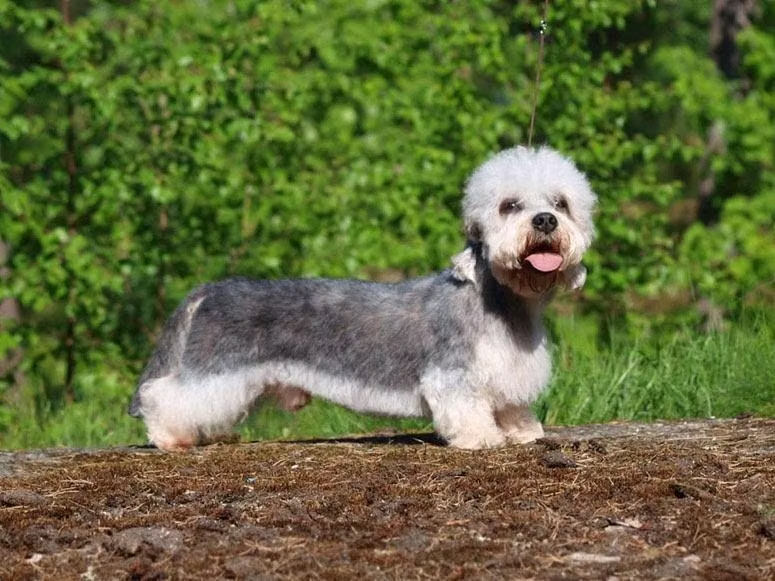
ڈینڈی ڈِنمونٹ ٹیریئر ایک باوقار، منفرد ٹیریئر ہے جو اپنے سر کے بالوں کے گچھے، لمبے جسم اور حیرت انگیز طور پر بڑی شخصیت کے لیے جانا جاتا ہے۔
ڈینڈی ڈنمونٹ ٹیریئر کے بال کس طرح بنے ہیں اور دیکھ بھال میں اس کا کیا مطلب ہے۔
احتیاط: ڈینڈی ڈنمونٹ ٹیریئر کے بال مشین سے کاٹنے کے بجائے ہاتھ سے نوچنے چاہییں۔
کھردری چادر اس لیے بنی ہے کہ بال پک کر الگ ہونے کو تیار ہو تو جڑ سے کھینچ لیا جائے۔ مشین اس کے بجائے اسے بیچ سے کاٹ دیتی ہے اور نیچے نرم زیریں تہہ چھوڑ دیتی ہے۔ نتیجہ ایسی چادر ہے جو ڈھیلی اور پھیکی اگتی ہے، اور موسم سے بچانے والی ساخت دوبارہ نوچنے کے بعد ہی لوٹتی ہے۔
احتیاط: ڈینڈی ڈنمونٹ ٹیریئر کے بال جلد الجھ جاتے ہیں۔
باریک یا لمبے بال چادر کی تہہ میں، نظر سے اوجھل، الجھ جاتے ہیں، جہاں گانٹھیں کس کر جلد کو کھینچتی ہیں۔ برش کو حصوں میں جڑ تک پہنچنا چاہیے، محض سطح پر پھرنا کافی نہیں۔
معلومات: ڈینڈی ڈنمونٹ ٹیریئر کو ہر چند ہفتے بعد تراش کی ضرورت ہوتی ہے۔
یہ چادر گرنے کے بجائے مسلسل بڑھتی ہے، اس لیے ہر چند ہفتے بعد اسے چھوٹا کرنا پڑتا ہے۔ بڑھنے دیا جائے تو یہ جلد کے ساتھ جم جاتی ہے اور نمی، میل اور حدت اندر بند کر لیتی ہے۔
A few of the ڈینڈی ڈنمونٹ ٹیریئر profiles members have added to United Pet Club.
The Dandie Dinmont Terrier is a small Scottish terrier with a long body, a distinctive topknot, and a confident, affectionate temperament, typically living 12 to 15 years.
The Dandie Dinmont Terrier is a small dog with an unmistakable outline: a long, low body, large expressive eyes, and a soft tuft of hair on the head called a topknot. It originated in the border country between Scotland and England, where it was bred to hunt badgers and otters. Despite its size, it carries itself with a calm, dignified air.
This is a terrier with two distinct settings. Indoors it tends to be quiet and steady, content to sit close to its family. Outdoors the working instinct returns, and it will dig, chase, and investigate with focus. Owners often describe the breed as having a large personality in a compact frame.
The Dandie Dinmont is affectionate with its household and bonds closely, often to one or two people in particular. It is independent enough to entertain itself but does not enjoy long stretches alone. The breed remains one of the rarer terriers, so finding a puppy usually involves a waiting list.
| Attribute | Detail |
|---|---|
| Origin | Scotland |
| Size | Small |
| Lifespan | 12 to 15 years |
| Group/role | Terrier; originally bred to hunt badgers and otters |
| Good with | Families and considerate older children; can live with other pets when socialized early |
The Dandie Dinmont fits an owner who wants a small companion with terrier character rather than a placid lapdog. It suits households that can offer daily walks, some mental stimulation, and company for most of the day. Its long back means it does best in homes where it is not encouraged to jump on and off high furniture. First-time owners can manage the breed if they are prepared for an independent dog that thinks for itself.
The Dandie Dinmont Terrier developed along the Scotland and England border to hunt badgers and otters, and took its name from a character in Sir Walter Scott's 1815 novel Guy Mannering.
The breed comes from the hill country along the border between Scotland and England. Farmers and gypsies in this region kept long-bodied, short-legged terriers to control badgers, otters, and other vermin. Records of these dogs date back to the 1700s, when they were already established as working terriers in the area.
The breed is unusual in being named after a fictional character. In his 1815 novel Guy Mannering, Sir Walter Scott described a farmer called Dandie Dinmont who kept a pack of these terriers. The name attached to the dogs and has been used ever since, making it one of the few breeds named from a work of literature.
One breeder, James Davidson of Hindlee, is often credited as a foundation figure. He is thought to have been part of the inspiration for Scott's character, and his dogs feature in many early pedigrees. Through the 1800s the type was refined into the recognizable modern dog, with its long body, low stance, and topknot.
The Dandie Dinmont was among the early breeds to gain formal recognition, with a breed club founded in 1875. It has never been numerous, and today it is counted among the more vulnerable native breeds in the United Kingdom, kept alive by a small base of dedicated breeders.
The Dandie Dinmont is a long, low terrier with a curved topline, a large domed head topped by a silky topknot, and a coat in two color patterns known as pepper and mustard.
The Dandie Dinmont has a long body set on short, sturdy legs, with a gentle curve over the loin and a distinctive arched topline. The head is large in proportion to the body, broad and domed, and crowned with a soft, silky topknot of lighter hair. The eyes are large, round, and dark, set wide apart, giving the breed a soft, intelligent expression. The ears hang close to the cheek and taper to a point, often with a thin feathering of hair at the tip.
| Feature | Standard |
|---|---|
| Height | Approximately 20 to 28 cm (8 to 11 in) at the shoulder |
| Weight | Approximately 8 to 11 kg (18 to 24 lb) |
| Coat | Double coat; a crisp, harder topcoat over a soft undercoat, about 5 cm long |
| Colors | Pepper (bluish grey to silvery) or mustard (reddish brown to fawn) |
| Eyes | Large, round, dark hazel, set wide apart |
The coat combines two textures, a harder outer layer and a soft, linty undercoat, which together give a crisp feel that is neither wiry nor woolly. Only two color patterns are recognized: pepper, which ranges from a dark bluish black through to a pale silvery grey, and mustard, which ranges from reddish brown to a pale fawn. In both patterns the topknot, the hair on the legs, and the feathering are lighter than the body. Puppies are often born much darker than their adult color and lighten as they mature.
The Dandie Dinmont is affectionate and devoted at home, calm and dignified in manner, yet independent and bold with a clear terrier streak when its hunting instincts are triggered.
At home the Dandie Dinmont is affectionate and steady, often attaching strongly to one or two members of the household. It is generally quieter than many terriers, with a measured, dignified manner that owners value. It enjoys close contact and will settle beside its people for long periods.
With strangers the breed tends to be reserved rather than nervous or aggressive. It will usually take a moment to assess a new person before warming up. As a guardian it is alert and will announce visitors with a notably deep, loud bark for its size, though it is not a constant barker.
Around other animals the picture is mixed. Raised together, a Dandie Dinmont can live happily with other dogs and even cats. Its strong prey drive means small pets such as rodents and rabbits are a poor match, and recall outdoors cannot always be trusted when something worth chasing appears. The breed is independent and can be stubborn, so it responds best to an owner who is patient and consistent.
| Trait | Rating |
|---|---|
| Affection | 5 |
| Energy | 3 |
| Trainability | 3 |
| Vocalness | 3 |
| Shedding | 2 |
The Dandie Dinmont needs regular brushing and periodic hand-stripping or trimming, moderate daily exercise, and care to protect its long back from strain.
The Dandie Dinmont is a moderate-maintenance breed. Its double coat sheds little but needs regular attention to stay in good condition, and its long back calls for some everyday care to prevent injury.
The Dandie Dinmont adapts well to flats or houses and to town or country, provided it gets daily walks. Because of its long spine, discourage repeated jumping on and off furniture and consider a ramp or steps for favored couches and beds. Use a harness rather than a neck collar to reduce strain.
Feed the Dandie Dinmont a complete diet suited to its life stage in measured portions, and watch weight closely because extra pounds strain its long back.
A Dandie Dinmont does well on a complete, balanced dog food appropriate to its age and activity level. Because the breed has a long back and a sturdy build, weight control matters more than in many small dogs. Excess weight adds load to the spine and joints, so portions should be measured rather than free-fed.
| Life stage | Amount per day | Meals |
|---|---|---|
| Puppy (2 to 6 months) | Per food label, divided across the day | 3 to 4 |
| Junior (6 to 12 months) | Per food label for growth | 2 to 3 |
| Adult | Approximately 100 to 180 g of dry food, by weight and activity | 2 |
| Senior | Slightly reduced; lower-calorie formula if less active | 2 |
Keep treats to no more than about 10 percent of daily calories and subtract them from meals to avoid weight gain. Most dogs on a complete diet need no supplements; discuss joint support or other additions with a vet rather than adding them routinely. Provide fresh water at all times.
The Dandie Dinmont is generally hardy with a lifespan of 12 to 15 years, but its long back and small gene pool make spinal problems and a few inherited conditions worth monitoring.
The Dandie Dinmont is a generally robust breed with a typical lifespan of 12 to 15 years. Its main health considerations relate to its long body shape and to the limited gene pool of a rare breed. Responsible breeders screen their stock and aim to keep the population genetically diverse.
| Condition | Signs | Note |
|---|---|---|
| Intervertebral disc disease | Back pain, reluctance to move, weakness or dragging in the hind legs | Linked to the long spine; avoid high jumps and obesity |
| Glaucoma | Red, painful or cloudy eye, squinting | Inherited in some lines; treat urgently to protect sight |
| Hypothyroidism | Weight gain, lethargy, coat and skin changes | Diagnosed by blood test, managed with daily medication |
| Patellar luxation | Intermittent skipping or holding up a hind leg | Common in small breeds; ranges from mild to surgical |
The Dandie Dinmont is intelligent but independent and can be stubborn, so it learns best through short, consistent, reward-based sessions started early.
The Dandie Dinmont is intelligent and capable of learning, but it has an independent mind and a stubborn streak typical of working terriers. It will weigh up whether a task is worth its effort, so training works best when it is interesting and rewarding. Harsh or repetitive drilling tends to make the breed switch off rather than comply. Early, patient socialization with people, places, and other animals helps shape a steady adult.
The Dandie Dinmont is a rare breed bred carefully from health-screened parents, with small litters and a strong emphasis on maintaining genetic diversity.
Breeding Dandie Dinmonts is undertaken by a small community of dedicated breeders, since the breed is among the more vulnerable native dogs in the United Kingdom. Because the population is limited, careful pairing to maintain genetic diversity is a central concern alongside health and type.
Responsible breeders health-test parents before mating, including eye examination and thyroid assessment where advised, and avoid pairings that concentrate spinal or other inherited risks. Bitches are usually bred only after they are physically mature and in good condition. Litters tend to be small, and puppies are born much darker than their final pepper or mustard color, lightening as they grow.
Newborns rely entirely on the mother for the first weeks. Weaning begins at around three to four weeks, and pups stay with the litter to learn early social skills before going to new homes at about eight weeks or later. Demand often outstrips supply, so prospective owners commonly join a waiting list and should choose a breeder who screens for health and temperament.
| Metric | Value |
|---|---|
| Sexual maturity | Around 6 to 12 months (breed later, when mature) |
| Gestation | Approximately 63 days |
| Average litter size | Typically 3 to 6 puppies |
| Weaning | About 4 to 6 weeks |
| Earliest rehoming | From about 8 weeks |
United Pet Club پر آپ کے ڈینڈی ڈنمونٹ ٹیریئر نسل کے کتے کے لیے تاحیات مفت پروفائل، مائیکروچپ رجسٹریشن سمیت، بغیر کسی فیس کے۔
ڈینڈی ڈنمونٹ ٹیریئر نسل کے کتے کا نام، تاریخِ پیدائش اور صاف تصویر درج کریں، اپنا فون نمبر شامل کریں اور محفوظ کر لیں۔ بس اتنا ہی کام ہے، اور یہ آج بھی مفت ہے اور ہمیشہ رہے گا۔ کتے کی رجسٹریشن چپ کے ساتھ بھی چلتی ہے اور اس کے بغیر بھی۔
ویٹرنری ڈاکٹر چپ لگا دیتا ہے مگر اس کا اندراج کوئی آپ کی جگہ نہیں کرتا، اور بغیر اندراج چپ کسی کی شناخت نہیں کراتی۔ مائیکروچپ رجسٹر کریں، تاحیات مفت پلان پر: ہر برانڈ کی چپ قبول ہے، پتہ بدلنے پر اپ ڈیٹ مفت ہے، اور ریکارڈ ہر وقت تلاش کے لیے دستیاب رہتا ہے، پاکستان میں بھی اور باہر بھی۔ مفت اکاؤنٹ بنائیں اور دونوں کام آج نمٹا لیں۔
United Pet Club پر مفت اکاؤنٹ بنائیں، ڈینڈی ڈنمونٹ ٹیریئر نسل کے کتے کی تفصیلات تصویر کے ساتھ درج کریں اور پروفائل محفوظ کریں۔ یہ کتے کی ساری عمر مفت رہتا ہے، اور چپ نمبر بعد میں بھی شامل ہو سکتا ہے۔
پندرہ ہندسوں کا چپ نمبر اپنے مفت اکاؤنٹ میں پتے اور فون نمبر کے ساتھ درج کریں۔ تاحیات پلان ہر برانڈ کی چپ قبول کرتا ہے اور اپ ڈیٹس کی کوئی فیس نہیں لیتا۔
قومی سطح پر کوئی پابندی نہیں؛ کچھ شہروں میں بلدیاتی لائسنس کے قواعد ہیں۔ چپ کا فائدہ صرف اس وقت ہے جب اس کے پیچھے تازہ ریکارڈ ہو، اور یہ ریکارڈ United Pet Club پر مفت ہے۔
کچھ نہیں۔ تاحیات مفت پلان میں پروفائل، مائیکروچپ رجسٹریشن اور آئندہ تمام اپ ڈیٹس شامل ہیں، سالانہ فیس کے بغیر۔
Common questions about the Dandie Dinmont Terrier, covering its size, temperament, grooming and care needs, lifespan, suitability, and availability.
It is a small breed, standing about 20 to 28 cm (8 to 11 in) at the shoulder and weighing roughly 8 to 11 kg (18 to 24 lb). The body is noticeably long and low in relation to its height.
Affectionate and devoted at home, with a calm, dignified manner that is quieter than many terriers. It is reserved with strangers, alert as a watchdog, and independent enough to show a stubborn, bold streak when its hunting instincts are triggered.
Care is moderate. It needs brushing once or twice a week, periodic hand-stripping or clipping, and about 30 to 60 minutes of daily exercise. The main extra consideration is protecting its long back by avoiding high jumps and keeping it lean.
Most live 12 to 15 years. Keeping the dog at a healthy weight and staying on top of routine veterinary care, including eye and thyroid checks, supports a long life.
It can be a fine family dog and does well with considerate older children. Raised together it can live with other dogs and cats, but its strong prey drive makes small pets such as rodents and rabbits a poor match.
No. The Dandie Dinmont is one of the rarer terrier breeds, so puppies are not widely available. Prospective owners usually join a waiting list with a reputable, health-testing breeder.
They are not constant barkers, but they have a surprisingly deep, loud bark for their size and will use it to announce visitors, which makes them effective alert dogs.