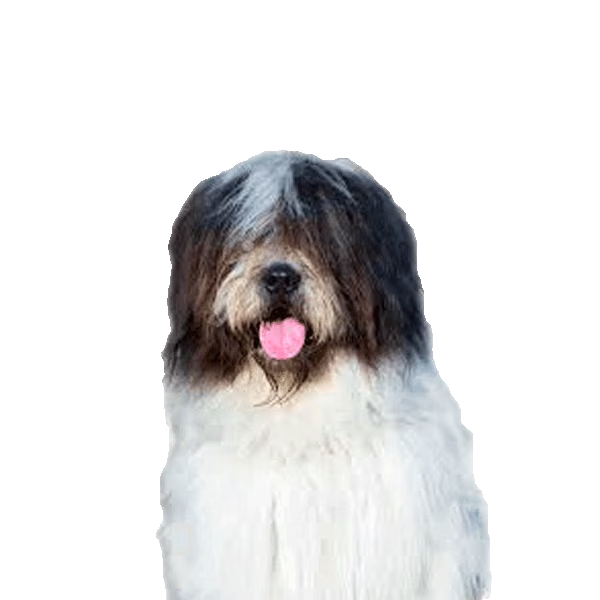
Румунски миоритички овчар је заштитнички, оданан чувар стада, храбар у одбрани али нежан према својој породици.
Како је длака расе Румунски мориорички овчар грађена и шта то значи при нези.
Критично: Расу Румунски мориорички овчар не треба шишати до коже.
Подлака држи врућину напољу једнако као и хладноћу, а покровна длака штити кожу од сунца и убода инсеката. Шишање целе длаке уклања обоје. Она често израсте на флеке, мека или друге боје, а код неких животиња покровна длака се више никада не врати како треба. Исчеткајте подлаку уместо да је сечете.
Опрез: Длака расе Румунски мориорички овчар се лако упетља.
Фина или дуга длака се заплиће при дну, где се не види, а чворови се стежу и вуку кожу. Четкање мора да стигне до корена по прамену, а не само да пређе преко површине.
Информација: Румунски мориорички овчар пушта подлаку у јаким налетима.
Подлака излази у јаким налетима током неколико недеља. Гребен за подлаку, или купање праћено правим сушењем феном, скида је далеко брже од свакодневног четкања. Кратко шишање овде није пречица.
The Romanian Mioritic Shepherd Dog is a large livestock guardian from Romania, protective and courageous in defense yet devoted and affectionate with its family.
The Romanian Mioritic Shepherd Dog is a large guardian breed developed in the Carpathian Mountains of Romania. For generations it worked beside shepherds, watching flocks against wolves, bears, and other predators. The job shaped the dog. It is independent enough to make decisions alone on open pasture, and it is strong enough to face a threat much larger than itself.
With its own family the Mioritic is calm and devoted. It forms close bonds and tends to be gentle with children and people it knows. Toward strangers it is reserved and watchful, and toward intruders it can be firmly territorial. This combination of softness at home and seriousness on duty is the defining trait of the breed.
The coat is long, thick, and usually white or light shaded, which once helped the dog blend with the flock. Adults are heavy-boned and powerful, built for endurance in cold mountain weather rather than for speed.
| Attribute | Detail |
|---|---|
| Origin | Romania (Carpathian Mountains) |
| Size | Large |
| Lifespan | 12 to 14 years |
| Group / role | Livestock guardian / flock protection |
| Good with | Family and known children; reserved with strangers |
This breed fits an experienced owner with space, a fenced property, and time for early socialization. It does well in a home that wants a steady guardian rather than a busy sport dog. It is a poor match for apartment living, for first-time owners who want an easy dog, or for households that cannot manage a large, independent animal with strong protective instincts.
The Romanian Mioritic Shepherd Dog developed over centuries in Romania's Carpathian Mountains as a flock guardian, with formal breed recognition coming in the modern era.
The breed comes from the Carpathian Mountains, the range that arcs through Romania. Shepherds there practiced transhumance, moving large flocks of sheep between high summer pastures and lower winter ground. Predators including wolves and brown bears were a constant danger, and the shepherds needed dogs that could live with the flock and defend it without close supervision.
The name traces to Mioriţa, an old Romanian pastoral ballad, and to the shepherding culture the poem describes. The dogs were bred for work rather than appearance. Selection favored size, a heavy weatherproof coat, a steady temperament with the flock, and the courage to confront large predators.
For most of its history the Mioritic was a regional working dog, known across the Romanian highlands but little recorded outside them. A written breed standard was drawn up in the twentieth century, and the type was later recognized internationally by the Fédération Cynologique Internationale within its sheepdog and cattle dog grouping.
The breed remains uncommon outside Romania and neighboring countries. Many individuals still perform their original guardian role, while a growing number live as family companions and property guardians.
The Romanian Mioritic Shepherd Dog is a large, heavy-boned guardian with a long, thick, mostly white coat suited to cold mountain weather.
The Mioritic is a large, robust dog with substantial bone and a broad frame. The body is slightly longer than tall, and the overall impression is one of power and stamina rather than refinement. The head is large with a broad skull, and the long coat often gives the face and body a shaggy outline. The tail is well furred and carried low at rest.
| Trait | Standard |
|---|---|
| Height | Males about 70 to 75 cm; females about 65 to 70 cm at the withers |
| Weight | Roughly 50 to 65 kg, varying with sex and build |
| Coat | Long, thick, slightly wavy double coat with a dense undercoat |
| Colors | Usually white or whitish; may show grey or light patches |
| Eyes | Dark, medium sized, with an alert and steady expression |
The double coat is the breed's most practical feature. A coarse outer layer sheds rain and snow, and a dense undercoat traps warmth through Carpathian winters. The most typical color is white or a pale off white, which helped the working dog stay visible among sheep and harder for a predator to pick out. Some dogs carry grey or light shaded markings. The coat grows long over the whole body and needs regular attention to stay free of mats.
The Romanian Mioritic Shepherd Dog is devoted and affectionate with its family, calm and confident at home, and watchful and territorial toward strangers and threats.
The Mioritic is loyal, courageous, and protective. Within the home it is typically calm, affectionate, and patient, and it bonds strongly with the people it lives with. Many are gentle and tolerant with children they have grown up alongside, though their size means young children should always be supervised around them.
Toward strangers the breed is reserved and assessing. It does not warm to new people quickly and may stay aloof until it decides a visitor is safe. This caution is part of the guardian temperament and is not aggression on its own. With genuine threats the dog can be firm and territorial, and it will act to defend its family and property.
With other animals the picture depends on upbringing. Raised with livestock or household pets, the Mioritic often guards and accepts them. Without early exposure it can be wary of unfamiliar dogs. The breed is independent by nature, a trait that served it well alone on the mountain but that calls for consistent leadership and thorough socialization from puppyhood.
| Trait | Rating |
|---|---|
| Affection (with family) | 4 |
| Energy | 3 |
| Trainability | 3 |
| Vocalness | 4 |
| Shedding | 4 |
The Romanian Mioritic Shepherd Dog needs regular coat care, daily moderate exercise, and a home with secure outdoor space rather than an apartment.
The long double coat is the main grooming task, and the breed's size and guardian drive shape the rest of its care. This is an outdoor working dog at heart, and it is happiest with room to patrol and a job to watch over.
The Mioritic suits a house with a securely fenced property and tolerates cold weather well thanks to its coat. It is not built for apartments or hot climates, and it needs shade and water in warm conditions. A bored or under exercised dog of this size can become restless, so daily activity and a clear role matter.
The Romanian Mioritic Shepherd Dog needs a balanced large-breed diet with controlled growth in puppyhood and portions matched to its size and activity.
As a large breed, the Mioritic does best on a complete, balanced diet formulated for big dogs. Puppies need controlled growth to protect developing joints, so a large-breed puppy food and steady portions matter more than fast weight gain. Adults need enough food to maintain a lean, muscular body without becoming overweight, which adds strain to the joints.
| Life stage | Amount per day | Meals |
|---|---|---|
| Puppy (2 to 6 months) | Per large-breed puppy food label, by weight | 3 to 4 |
| Junior (6 to 12 months) | Per label, adjusted to growth | 2 to 3 |
| Adult | About 4 to 6 cups of large-breed food, by weight and activity | 2 |
| Senior | Reduced calories to match lower activity | 2 |
Keep treats to a small share of daily calories so they do not unbalance the diet or add weight. Because this is a large, deep-chested breed, splitting food into two meals and avoiding hard exercise right after eating can lower bloat risk. Joint supplements are sometimes used in large breeds, but discuss any supplement with a veterinarian before adding it. Fresh water should always be available.
The Romanian Mioritic Shepherd Dog is generally hardy with a lifespan of 12 to 14 years, though as a large breed it can face joint and bloat-related concerns.
The Mioritic is a generally hardy working breed with a typical lifespan of 12 to 14 years, which is long for a dog of its size. Its health is supported by good breeding, sensible feeding, and routine veterinary care. As with most large breeds, the main concerns relate to joints, to the risk of bloat, and to the dense coat.
| Condition | Signs | Note |
|---|---|---|
| Hip and elbow dysplasia | Stiffness, limping, trouble rising | Screen breeding dogs; control puppy growth and weight |
| Gastric dilatation-volvulus (bloat) | Swollen belly, retching, restlessness | An emergency; large deep-chested breeds are at higher risk |
| Obesity | Weight gain, low stamina | Adds load to joints; manage portions and exercise |
| Ear infections | Head shaking, odor, scratching | The coat and ear folds trap moisture; check regularly |
The Romanian Mioritic Shepherd Dog is intelligent but independent, so it responds best to early, consistent, reward-based training and broad socialization.
The Mioritic is intelligent and capable, but it is also independent, a trait bred into a dog that once made its own decisions on the mountain. It will not work simply to please, so training depends on consistency, fairness, and a handler the dog respects. Harsh methods tend to backfire with a sensitive guardian breed and can damage trust.
Early socialization is the single most important task. Exposing the puppy to many people, places, animals, and situations helps it tell a normal visitor from a real threat, which keeps the protective instinct measured rather than reactive in adulthood.
The Romanian Mioritic Shepherd Dog reaches maturity slowly as a large breed, with litters typically raised over a roughly two-month gestation under health-screened parents.
Like most large breeds, the Mioritic matures slowly. Bones, joints, and temperament take time to settle, and responsible breeders wait until a dog is physically and behaviorally mature before breeding. Health screening of the parents, especially for hip and elbow dysplasia, helps reduce inherited problems in the puppies.
Gestation in dogs lasts around 63 days. The dam needs a quiet, warm whelping area, good nutrition through pregnancy and nursing, and close observation during and after birth. Large breeds can have demanding labors, so a veterinarian should be available.
Early weeks shape the adult dog. Puppies benefit from gentle handling, exposure to household sounds, and the start of socialization before they leave for new homes. Given the breed's size and guardian drive, matching puppies to suitable, prepared owners is part of responsible breeding.
| Metric | Value |
|---|---|
| Sexual maturity | Reached in the first year, but breeding is best delayed to full maturity |
| Gestation | About 63 days |
| Typical litter size | Several puppies, varying by dam and line |
| Weaning | Around 6 to 8 weeks |
| Recommended pre-breeding checks | Hip and elbow screening, general health |
Бесплатан доживотни профил за вашег пса расе Румунски мориорички овчар на United Pet Club, са регистрованим чипом и без накнада за обнову.
Скенер у прихватилишту вреди онолико колико вреди регистар иза броја. Дајте псу расе Румунски мориорички овчар онај који одговара увек: бесплатна картица са фотографијом, подацима и вашим телефоном, доступна из сваке земље, цео пасји век. Регистрација се обави једном и остаје.
Ветеринар уграђује чип и уписује га у државну базу; да број одговара и ван Србије, то остаје на вама. Региструјте микрочип бесплатно у доживотном плану: примају се чипови свих произвођача, промена адресе или телефона се не наплаћује, а запис одговара на скенирања у свако доба, овде и у иностранству. Отворите бесплатан налог и завршите оба корака данас.
Отворите бесплатан налог на United Pet Club, попуните податке пса расе Румунски мориорички овчар са фотографијом и сачувајте профил. Бесплатан је цео пасји век, а обавезни упис у базу Управе за ветерину иде засебно.
Упишите 15-цифрени број чипа у бесплатан налог заједно са адресом и телефоном. Доживотни план прима чип сваке марке и никада не наплаћује ажурирања.
Јесте, сваки пас мора да буде чипован и уписан у централну базу Управе за ветерину. Запис United Pet Club то допуњује да би број одговарао и ван Србије, бесплатно.
Ништа. Бесплатан доживотни план покрива профил, регистрацију чипа и сва будућа ажурирања, без годишњих накнада.
Common questions about the Romanian Mioritic Shepherd Dog's size, temperament, care needs, lifespan, suitability, and availability.
It is a large breed. Males commonly stand about 70 to 75 cm at the withers and females about 65 to 70 cm, with weights roughly in the 50 to 65 kg range depending on sex and build.
With its own family it is devoted and affectionate, and it is often gentle with children it has grown up with. It is reserved toward strangers and protective by nature, so it suits a family that wants a guardian and can provide supervision and socialization.
It is a higher-commitment breed. The long double coat needs brushing two to three times a week, the dog needs space and daily exercise, and its independent, protective temperament calls for an experienced, consistent owner.
The typical lifespan is 12 to 14 years, which is relatively long for a dog of this size, especially with good nutrition, weight control, and routine veterinary care.
It is generally not recommended for first-time owners or apartment living. It does best with an experienced handler, a house, and a securely fenced property where it has room to patrol.
The breed is uncommon outside Romania and neighboring countries. Finding a puppy from a responsible, health-screening breeder may take time and a waiting list.
Yes. The thick double coat is built for Carpathian winters, so the breed handles cold well. In hot weather it needs shade, water, and care to avoid overheating.
