
Енглески фоксхаунд је друштвен, добродушан чопорски гонич познат по издржљивости, толеранцији и складној нарави са другим псима.
Како је длака расе Енглески фоксхаунд грађена и шта то значи при нези.
A few of the Енглески фоксхаунд profiles members have added to United Pet Club.
The English Foxhound is a large, sociable pack hound from England, bred for stamina and a good-natured, harmonious temperament with other dogs.
The English Foxhound is a large scent hound developed in England to hunt fox in packs. It stands as one of the older recognized hound breeds, shaped over centuries for endurance across open country rather than for solo work. Adults are athletic and well boned, built to run for hours behind a pack.
Temperament is the defining feature. Generations of pack life produced a dog that is friendly, good-natured, and sociable. The breed is calm with people, tolerant of other dogs, and generally easy in a group. That same pack heritage means the English Foxhound is rarely a one-person dog and usually prefers company, whether human or canine.
This is an active breed with real exercise needs. It is happiest with daily running room and a job to occupy its nose. The English Foxhound is comparatively uncommon as a household pet and is still kept mainly by hunts and working kennels, so availability outside those circles is limited.
| Attribute | Detail |
|---|---|
| Origin | England |
| Size | Large |
| Lifespan | 10 to 13 years |
| Group / role | Hound, pack scent hunting |
| Good with | Other dogs and pets, families with space |
The English Foxhound suits active owners with secure outdoor space and time for long daily exercise. It fits well in homes that already have other dogs, given its strong pack tolerance. It is less suited to apartment living, to people away for long hours, or to anyone wanting a quiet, low-energy companion.
The English Foxhound was developed in England from older hound stock to hunt fox in organized packs, becoming central to mounted foxhunting.
The English Foxhound was bred in England as a specialist fox hunter. It descends from older British hound stock used for trailing game by scent. As mounted foxhunting grew in popularity, breeders selected hounds that could carry a scent line at speed and hold together as a coordinated pack across farmland and open country.
Pack masters kept careful records of their breeding lines, and the English Foxhound is among the breeds with the longest continuous documentation of its kind. Hounds were chosen for nose, stamina, voice, and the steady, biddable nature needed to work alongside many other dogs and mounted riders.
The breed was refined for cooperative work rather than independence. A foxhound that quarreled, hunted alone, or could not keep pace was of little use to a hunt, so temperament and physical soundness were selected together over many generations.
The English Foxhound spread with British field sports and influenced the development of related hounds abroad, including the American Foxhound. To this day it remains closely tied to working hunt kennels, and far fewer are kept purely as family companions than is the case for most popular breeds.
The English Foxhound is a large, balanced scent hound with a short dense coat, strong legs, and the typical hound colors of black, tan, and white.
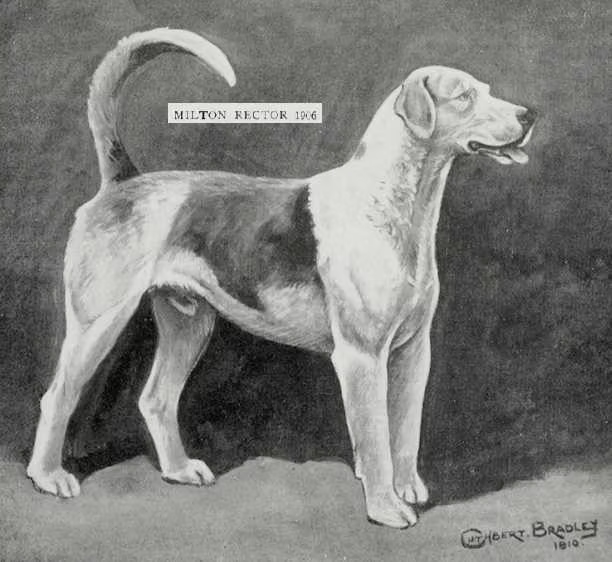
The English Foxhound is a clean, balanced dog built for endurance. The body is deep through the chest with a level topline and strong, straight legs set on round, cat-like feet. The head is moderate with a long muzzle, and the ears hang close to the cheeks in the typical hound fashion. Overall the look is one of an athlete made to gallop and recover over long distances.
| Trait | Description |
|---|---|
| Height | About 58 to 64 cm (23 to 25 in) at the shoulder |
| Weight | About 29 to 34 kg (65 to 75 lb) |
| Coat | Short, dense, hard, and weather resistant |
| Colors | Usually black, tan, and white (tricolor); also tan and white or lemon and white |
| Eyes | Medium sized, brown, with a gentle expression |
The coat is short, dense, and hard enough to protect the dog in the field. It lies flat and needs little upkeep beyond regular brushing. The classic pattern is hound tricolor, a mix of black, tan, and white, though tan and white or lemon and white also occur. The short coat sheds steadily but is easy to maintain compared with longer-coated breeds.
The English Foxhound is friendly, good-natured, and highly sociable, with strong tolerance for other dogs and a steady, even temper.
The English Foxhound has one of the most even temperaments among hounds. Centuries of pack work produced a dog that is friendly, good-natured, and comfortable in company. It tends to be gentle with people and patient with children, and it rarely shows aggression.
With strangers the breed is usually relaxed rather than protective, so it makes a poor guard dog. With other dogs it is notably tolerant, a direct result of living and working in large packs. Most English Foxhounds get on well with other pets, though the strong hunting drive means small animals can trigger a chase, and recall can fail once the nose takes over.
This is an active, busy dog that does not settle well when bored or left alone for long stretches. It can be vocal, with the deep, carrying bay typical of pack hounds. Given enough exercise and company, the English Foxhound is calm and easygoing at home.
| Trait | Rating |
|---|---|
| Affection | 4 |
| Energy | 5 |
| Trainability | 3 |
| Vocalness | 4 |
| Shedding | 3 |
The English Foxhound needs heavy daily exercise and space, but its short coat keeps grooming simple.
Care for the English Foxhound centers on exercise rather than coat work. The short, hard coat is low maintenance, but the breed's stamina and activity level demand far more than a short walk.
The English Foxhound does best in a home with a large, secure yard or rural access. It is not suited to apartments or to long hours alone. As a pack animal it thrives with canine company and steady human contact, and a high, sturdy fence is essential because a hound on a scent will follow it.
As a large, active hound the English Foxhound needs a complete diet sized to its high energy output, fed in measured meals to avoid bloat.
The English Foxhound is a large, hardworking breed, and its diet should reflect a high energy demand during active periods. Feed a complete, balanced food formulated for large or active dogs, and adjust portions to the individual's workload, age, and body condition. Working hounds in hunting season need considerably more than the same dog resting in the off season. Keep fresh water available at all times.
| Life stage | Amount per day | Meals |
|---|---|---|
| Puppy (2 to 6 months) | Per product guide for projected adult weight | 3 to 4 |
| Adolescent (6 to 12 months) | Slightly above adult maintenance | 2 to 3 |
| Adult (active) | About 3 to 4 cups of quality dry food | 2 |
| Adult (resting / senior) | Reduced to maintain lean weight | 2 |
Keep treats to about 10 percent of daily calories and use them for training and scent games. Most English Foxhounds on a complete diet need no extra supplements. Discuss joint support or any other additions with a veterinarian, especially for working dogs or older hounds. Split the daily ration into two meals and avoid hard exercise right after eating to reduce the risk of bloat in this deep-chested breed.
The English Foxhound is a generally hardy breed with a typical lifespan of 10 to 13 years, with hip dysplasia and bloat among the conditions to watch.
The English Foxhound is a robust, working-bred dog and is generally healthy. Its typical lifespan is 10 to 13 years. As a large, deep-chested breed it shares some risks common to that build, and responsible breeders screen for the conditions known to affect hounds.
| Condition | Signs | Note |
|---|---|---|
| Hip dysplasia | Stiffness, limping, reluctance to rise | Joint malformation; manage weight and screen breeding stock |
| Bloat (gastric torsion) | Swollen abdomen, retching, distress | Emergency in deep-chested dogs; seek vet care immediately |
| Ear infections | Head shaking, odor, scratching | Pendulous ears trap moisture; clean and check often |
| Renal disease | Increased thirst, weight loss | Reported in some hound lines; monitor in older dogs |
The English Foxhound is intelligent and willing but independent and scent-driven, so it responds best to patient, consistent, reward-based training.
The English Foxhound is intelligent and bred to work closely with a pack and its handlers, which gives it a cooperative streak. It is not, however, an eager obedience competitor. The breed was selected to follow its nose with persistence, so it can seem stubborn or distracted once a scent appears. Training takes patience and consistency, and the strongest results come from starting young and keeping sessions short and motivating. Recall is the hardest skill to make reliable, because a tracking hound will often choose the trail over a command.
English Foxhound breeding has long been managed by hunt kennels with careful records, producing moderate litters raised in a pack environment.
Breeding of the English Foxhound has traditionally been controlled by hunts and working kennels, which keep detailed pedigrees and select for stamina, nose, voice, and sound temperament. Females reach sexual maturity within the first year, but responsible breeders wait until a bitch is physically mature, usually around two years, before her first litter, and confirm health and structural soundness first.
Gestation runs the canine norm of roughly 63 days. Litters are moderate to large for the size of the dog. Puppies are typically raised in a pack setting, which reinforces the breed's strong tolerance of other dogs from an early age. Early handling and exposure to people and normal household sights help pups intended as companions adjust away from kennel life.
Because the breed is uncommon outside hunting circles, sourcing a well-bred puppy can take time, and prospective owners should expect to work directly with established kennels and confirm that breeding stock has been health screened.
| Metric | Value |
|---|---|
| Sexual maturity | Within the first year |
| Recommended breeding age (female) | About 2 years |
| Gestation | About 63 days |
| Typical litter size | Around 5 to 9 puppies |
| Weaning | About 6 to 8 weeks |
Бесплатан доживотни профил за вашег пса расе Енглески фоксхаунд на United Pet Club, са регистрованим чипом и без накнада за обнову.
Скенер у прихватилишту вреди онолико колико вреди регистар иза броја. Дајте псу расе Енглески фоксхаунд онај који одговара увек: бесплатна картица са фотографијом, подацима и вашим телефоном, доступна из сваке земље, цео пасји век. Регистрација се обави једном и остаје.
Петнаест цифара под кожом пса расе Енглески фоксхаунд показаће на вас тек кад то каже регистар. Нека каже бесплатно: запис на United Pet Club никад не истиче, прима сваку марку чипа, а свака измена података је бесплатна. Регистрација микрочипа прво, налог одмах затим.
Отворите бесплатан налог на United Pet Club, попуните податке пса расе Енглески фоксхаунд са фотографијом и сачувајте профил. Бесплатан је цео пасји век, а обавезни упис у базу Управе за ветерину иде засебно.
Упишите 15-цифрени број чипа у бесплатан налог заједно са адресом и телефоном. Доживотни план прима чип сваке марке и никада не наплаћује ажурирања.
Јесте, сваки пас мора да буде чипован и уписан у централну базу Управе за ветерину. Запис United Pet Club то допуњује да би број одговарао и ван Србије, бесплатно.
Ништа. Бесплатан доживотни план покрива профил, регистрацију чипа и сва будућа ажурирања, без годишњих накнада.
Common questions about the English Foxhound cover its size, temperament, care needs, lifespan, suitability, and availability.
It is a large breed, standing about 58 to 64 cm (23 to 25 in) at the shoulder and weighing roughly 29 to 34 kg (65 to 75 lb).
It is friendly, good-natured, and very sociable. Bred for pack life, it is tolerant of other dogs and gentle with people, though it makes a poor guard dog.
Grooming is simple thanks to the short coat, but the breed needs heavy daily exercise and secure space, which makes it demanding for owners without time or room.
The typical lifespan is 10 to 13 years, and the breed is generally hardy.
It can be, in an active household with space and ideally other dogs. It is less suited to apartments, long hours alone, or homes wanting a quiet, low-energy companion.
No. The breed is uncommon as a pet and is kept mainly by hunts and working kennels, so finding a companion puppy usually means working directly with established breeders.
Only in fully enclosed areas. Once it picks up a scent its recall is unreliable, so a secure fence and a leash in open spaces are essential.



![Willful [Foxhall Keene], a Female Енглески фоксхаунд registered with United Pet Club](https://media.unitedpetclub.com/m/DN4cWM1Xx1/willful-foxhall-keene-english-foxhound_orig.avif "Willful [Foxhall Keene] — Енглески фоксхаунд")

![Luddington [English Staghound] Capt. E. A. V. Stanl, a Male Енглески фоксхаунд registered with United Pet Club](https://media.unitedpetclub.com/m/8nHr9mXXm7/luddington-english-staghound-capt-e-a-v-stanl-english-foxhound_orig.avif "Luddington [English Staghound] Capt. E. A. V. Stanl — Енглески фоксхаунд")
![Talisman [English Staghound] Capt. E. A. V. Stanley, a Male Енглески фоксхаунд registered with United Pet Club](https://media.unitedpetclub.com/m/gzkwpO74xy/talisman-english-staghound-capt-e-a-v-stanley-english-foxhound_orig.avif "Talisman [English Staghound] Capt. E. A. V. Stanley — Енглески фоксхаунд")


