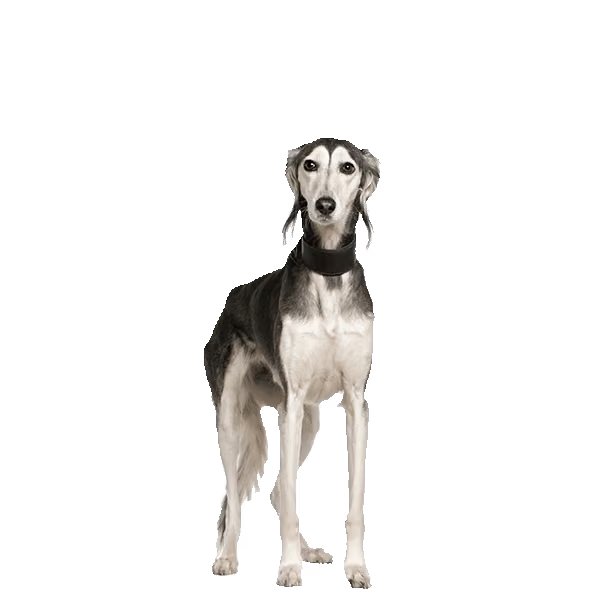
Saluki je starodavni, graciozen hrt, znan po izjemni hitrosti ter tihi, dostojanstveni, zadržani eleganci.
Kako je dlaka pasme Saluki zgrajena in kaj to pomeni pri negi.
Informacija: Saluki potrebuje striženje vsakih nekaj tednov.
Ta dlaka neprestano raste, namesto da bi odpadala, zato jo je treba vsakih nekaj tednov skrajšati. Če jo pustimo rasti, se spolsti tik ob koži in zadrži vlago, umazanijo in toploto.
A few of the Saluki profiles members have added to United Pet Club.
The Saluki is an ancient medium-sized sighthound from the Arabian Peninsula, built for speed and known for its gentle, reserved, and dignified nature.
The Saluki is one of the oldest known sighthound breeds, developed across the Arabian Peninsula and the wider Middle East. It is a medium-sized dog bred to hunt game by sight across open desert and rough terrain, using sustained speed and stamina rather than scent. The build is light and narrow, with long legs and a deep chest that supports a fast, ground-covering gallop.
In temperament the Saluki is gentle and quiet at home, but independent and reserved with people it does not know. It forms a strong attachment to its own family while staying aloof and undemonstrative with strangers. This combination of calm indoor manners and intense outdoor drive defines the breed.
Salukis are dignified rather than playful in the way many companion breeds are. They tend to be sensitive to harsh handling and respond best to patient, consistent owners who understand sighthound behavior, including a strong instinct to chase moving animals.
| Attribute | Detail |
|---|---|
| Origin | Arabian Peninsula |
| Size | Medium |
| Lifespan | 12 to 14 years |
| Group / role | Sighthound, originally a hunting hound |
| Good with | Family members and older children; needs careful introductions to small pets due to chase instinct |
The Saluki suits people who want a calm, clean, and quiet house companion that also needs regular hard exercise in a safe, enclosed space. It fits owners who accept an independent dog that may not always come when called once it is running. Homes with secure high fencing are important, and households with free-roaming small animals should plan introductions with care.
The Saluki is among the most ancient sighthound types, developed by desert peoples of the Arabian Peninsula and the Middle East as a coursing hound over thousands of years.
The Saluki traces back to the Arabian Peninsula and the broader Middle East, where desert and nomadic peoples kept lean coursing hounds to hunt gazelle, hare, and other game. Images of slender, long-legged hounds appear in ancient art from the region, and the type is generally regarded as one of the oldest hunting hounds still recognizable today.
The breed developed alongside a hunting culture in which fast hounds worked across open ground, sometimes in partnership with falcons and horses. Local lines were valued for speed and stamina, and dogs were often treated as prized members of the household rather than ordinary working stock. Regional variation produced both smooth-coated and feathered dogs adapted to different terrain.
Salukis reached Europe through travelers, traders, and diplomatic contact with the Middle East. Interest grew in Britain during the late nineteenth and early twentieth centuries, and dedicated breeders worked to establish the type in Western kennels.
From that base the Saluki was recognized by major kennel organizations and spread to other countries as a show and companion breed, while also retaining followers who continue lure coursing and similar speed sports. Throughout this history the core function stayed the same: a sighthound bred to find and overtake fast-moving game across distance.
The Saluki is a slender, graceful sighthound of medium size with long legs, a deep narrow chest, and either a smooth or lightly feathered coat in a wide range of colors.
The Saluki has a light, elegant outline built for speed. The body is narrow and deep through the chest, the back is tucked up at the loin, and the legs are long and fine-boned. The head is long and refined with a smooth skull, and the eyes are large and oval with a calm, far-looking expression. The long tail is carried low with a natural curve and often shows feathering on the underside.
Two coat types occur: the smooth variety, which has a short close coat all over, and the feathered variety, which carries longer hair on the ears, the backs of the legs, and the tail.
| Trait | Standard |
|---|---|
| Height | Roughly 58 to 71 cm (23 to 28 in) at the shoulder; females generally smaller |
| Weight | About 18 to 27 kg (40 to 60 lb) |
| Coat | Smooth or feathered; soft and silky in texture |
| Colors | Wide range, including cream, fawn, golden, red, grizzle, black and tan, and tricolor |
| Eyes | Large, oval, dark to hazel, with a calm expression |
The Saluki coat is fine and close to the body, which makes it low maintenance compared with heavier-coated breeds. Feathered dogs carry the extra hair mainly on the ears, legs, and tail. Color is varied and broadly accepted, ranging from solid creams and reds to grizzle, black and tan, and tricolor patterns. The relatively thin coat offers limited protection against cold, so the breed is sensitive to low temperatures.
Salukis are gentle, calm, and devoted with their own people but independent and reserved with strangers, with a strong instinct to chase fast-moving animals.
At home the Saluki is typically quiet and gentle, often content to rest for long stretches between bouts of exercise. With its own family it can be affectionate and closely attached, though it tends to show this in a reserved rather than effusive way. The breed is sensitive and does not respond well to rough handling or loud correction.
With strangers the Saluki is usually aloof and undemonstrative. It is not generally an aggressive breed, but it may keep its distance and take time to warm up. Around children it is often patient, and it tends to do best with older children who understand calm, respectful handling.
The defining behavior is the sighthound chase drive. A moving cat, small dog, or wildlife can trigger an instant high-speed pursuit, and a Saluki in full chase is very difficult to recall. For this reason secure fencing and leashed walks in unfenced areas are important, and introductions to smaller household pets should be careful and supervised.
| Trait | Rating |
|---|---|
| Affection | 3 |
| Energy | 4 |
| Trainability | 2 |
| Vocalness | 2 |
| Shedding | 2 |
Salukis need modest grooming but substantial running exercise in secure spaces, along with warmth and soft resting areas to protect their lean, thin-coated bodies.
The Saluki settles well in a calm home and is generally quiet indoors. Because the coat is thin and body fat is low, the breed feels the cold and benefits from a coat in winter, warm bedding, and padded resting spots that protect bony pressure points. Secure, high fencing is a key requirement, since a Saluki can clear low barriers and cover ground very fast.
Salukis do well on a complete, balanced diet matched to their lean build and activity level, with portions adjusted to keep the natural sighthound waistline.
The Saluki is naturally lean, and a slim, tucked-up waist is normal and healthy for the breed rather than a sign of being underweight. Feed a complete, balanced food appropriate to age and activity, and adjust the amount to keep ribs easily felt but not sharply visible. Active and coursing dogs may need more food on heavy work days, while quiet house dogs need less. Fresh water should always be available.
| Life stage | Amount per day | Meals |
|---|---|---|
| Puppy (2 to 6 months) | Per puppy food label, by weight | 3 to 4 |
| Adolescent (6 to 12 months) | Per label, by weight | 2 to 3 |
| Adult | About 2 to 3 cups of quality dry food, split across meals | 2 |
| Senior or less active | Reduced portion to maintain lean weight | 2 |
Keep treats to a small share of daily calories so the lean body condition is maintained. Most Salukis on a complete diet do not need routine supplements; any addition, such as joint support for an active or older dog, should be discussed with a veterinarian. Because the breed can be lean and fast-metabolizing, sudden diet changes should be made gradually to avoid digestive upset.
Salukis are generally healthy with a typical lifespan of 12 to 14 years, though owners should watch for heart conditions, certain cancers, and the breed's sensitivity to anesthesia.
The Saluki is generally a hardy and long-lived breed, with a typical lifespan of 12 to 14 years. As a lean sighthound it has a low body-fat profile, which affects how it tolerates cold and how it responds to some medications. Like all breeds it has a few health concerns worth monitoring, and care from a veterinarian familiar with sighthounds is helpful.
| Condition | Signs | Note |
|---|---|---|
| Heart disease (including cardiomyopathy) | Tiring easily, cough, fainting, breathing changes | Periodic cardiac checks are useful in older dogs |
| Cancer | Lumps, weight loss, lethargy | A relatively common cause of illness in aging sighthounds |
| Anesthesia sensitivity | Slow or unusual recovery from sedation | Lean body and low fat affect drug handling; tell the vet the dog is a sighthound |
| Hypothyroidism | Weight gain, coat changes, low energy | Diagnosed by blood test and managed with medication |
Salukis are intelligent but independent and sensitive, so they respond best to patient, reward-based training and early socialization rather than repetition or harsh correction.
The Saluki is intelligent but independent, and it does not train in the eager, biddable way of many working breeds. It can learn commands well, yet it may choose whether to comply, especially outdoors where the chase instinct competes with any recall. The breed is sensitive and shuts down under harsh handling, so calm, consistent, and rewarding methods work far better than pressure. Early socialization helps a naturally reserved dog become confident with people, places, and other animals.
Saluki breeding follows normal canine reproduction with average litters of several puppies, and responsible breeders screen for health and prioritize sound temperament and structure.
Salukis reach physical maturity slowly, and breeding is best left until both parents are fully grown and health-screened, generally around two years of age. Mating, pregnancy, and whelping follow the normal canine pattern, with a gestation of roughly nine weeks. Litters vary, with an average of several puppies.
Newborn puppies are dependent on the mother for warmth and milk in the first weeks. Because the breed is lean and not heavily insulated, a warm, draft-free whelping area matters. Puppies should stay with the mother and littermates through the early socialization window so they learn normal dog behavior, then continue gentle exposure to new experiences once they go to new homes. Responsible breeders screen breeding stock for heart and other known concerns and place puppies with owners prepared for a sighthound's exercise and containment needs.
| Metric | Value |
|---|---|
| Breeding maturity | Around 2 years |
| Gestation | About 63 days (roughly 9 weeks) |
| Average litter size | Several puppies (varies by individual) |
| Weaning | Around 6 to 8 weeks |
| Recommended health screening | Cardiac evaluation and general health checks of parents |
Brezplačen doživljenjski profil za vašega psa pasme Saluki pri United Pet Club, z registriranim čipom in brez obnovitvenih stroškov.
V Sloveniji mora biti vsak pes čipiran in vpisan v Centralni register psov, preden dopolni tri mesece ali odide k novemu lastniku; to velja tudi za psa pasme Saluki. Uradni register pa deluje predvsem doma. Brezplačni profil United Pet Club poskrbi za preostanek sveta: vaši kontakti spremljajo psa povsod. Registrirajte psa v nekaj minutah.
Veterinar čip vsadi in ga vpiše v državni register; da številka odgovarja tudi zunaj Slovenije, pa je vaša skrb. Registrirajte mikročip brezplačno v doživljenjskem načrtu: sprejme čip katerega koli proizvajalca, posodobitve po selitvi ne stanejo nič in zapis odgovarja na poizvedbe kadar koli, doma in v tujini. Ustvarite brezplačen račun in opravite oboje še danes.
Ustvarite brezplačen račun pri United Pet Club, izpolnite podatke psa pasme Saluki s fotografijo in shranite profil. Brezplačen je vse pasje življenje, obvezni vpis v Centralni register psov pa teče ločeno.
Vnesite 15-mestno številko čipa v brezplačni račun skupaj z naslovom in telefonom. Doživljenjski načrt sprejme čip vsakega proizvajalca in za posodobitve nikoli ne zaračuna.
Da, vsak pes mora biti čipiran in vpisan v Centralni register psov pred dopolnjenimi tremi meseci oziroma pred menjavo lastnika. Zapis United Pet Club to dopolnjuje, da številka odgovarja tudi v tujini, brezplačno.
Nič. Brezplačni doživljenjski načrt pokriva profil, registracijo čipa in vse prihodnje posodobitve, brez letnih stroškov.
Common questions about Saluki size, temperament, care needs, lifespan, suitability, and availability.
The Saluki is a medium-sized dog, standing roughly 58 to 71 cm (23 to 28 in) at the shoulder and weighing about 18 to 27 kg (40 to 60 lb). Females are usually smaller than males.
Salukis are gentle and quiet at home, independent in their thinking, and reserved with strangers. They are devoted to their own family but show it in a calm, undemonstrative way, and they have a strong instinct to chase fast-moving animals.
Grooming needs are modest, but the breed needs regular hard running in secure areas and reliable high fencing. The main challenges are containment, unreliable off-leash recall, and sensitivity to cold rather than coat care.
Salukis typically live 12 to 14 years. They are generally healthy, with heart conditions and certain cancers among the concerns to watch for in older dogs.
It can be, in the right home. Salukis are gentle and patient, and they often do well with older children. They suit calm households that can provide secure space to run and that understand the breed's chase drive around small pets.
The Saluki is a less common breed than many popular companion dogs, so finding a puppy from a responsible breeder can take time and may involve a waiting list. Sighthound rescue groups are another route to consider.

![Saluki Shami [Hon Florence Amherst's], a Male Saluki registered with United Pet Club](https://media.unitedpetclub.com/m/8dJUgTj1uz/saluki-shami-hon-florence-amherst-s-saluki_orig.avif "Saluki Shami [Hon Florence Amherst's] — Saluki")

