
The benefits of microchipping your pet: why it matters and how it works
A microchip is the one form of pet ID that cannot fall off or be removed. Here is how the procedure works, what it costs, and why it still needs a tag as backup.
United Pet Club@unitedpetclub5 min čítania
A microchip gives a lost pet a permanent identifier that cannot fall off, fade, or be cut away, which is exactly why it works so much better than a collar tag on its own. The chip itself does nothing until a shelter or clinic scans it and looks up the ID number in a registry, so the real benefit only shows up later, at the moment your animal turns up somewhere without you. That single detail, a number tied to your contact information in a database, is responsible for most of the difference in return-to-owner rates between chipped and unchipped pets.
What the chip is and what it is not
A pet microchip is a glass capsule about the size of a grain of rice, implanted just under the skin between the shoulder blades with a needle slightly larger than the one used for a vaccine. There is no battery, no circuitry that wears out, and no signal it broadcasts on its own. A handheld scanner passed over the area sends a small radio pulse, the chip returns its stored ID number, and that number means nothing until someone looks it up in the manufacturer's registry.
That last part surprises a lot of new owners. The chip has no GPS and cannot be tracked on a map, and it does not replace a collar and tag for everyday identification. What it does is survive the situations where a collar fails: a dog that slips its collar during a storm, a cat that loses a breakaway collar on purpose (they are designed to release under pressure), or a pet whose tag has worn illegible after a few years outside.
How the procedure actually goes
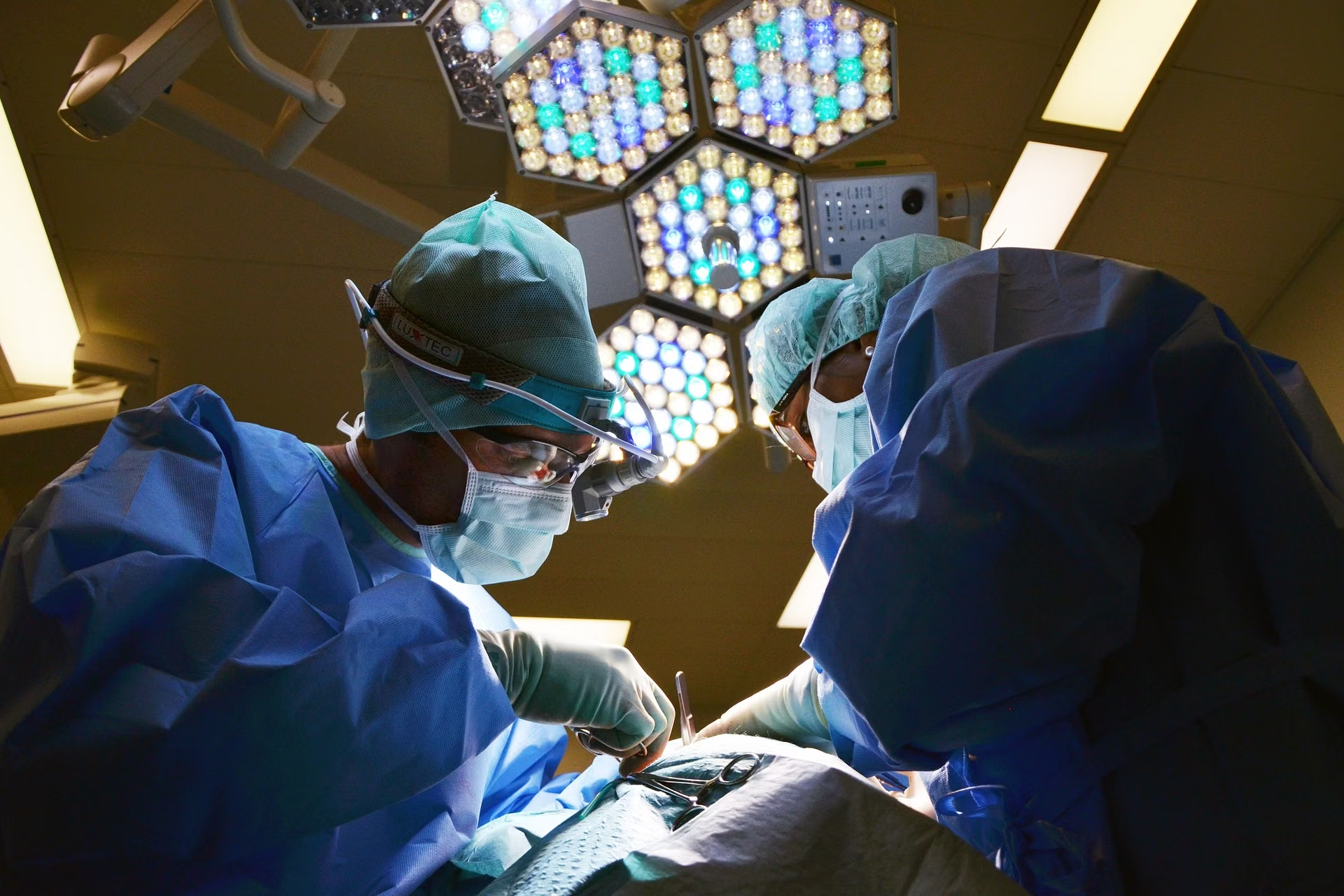
The implant itself takes a few seconds and most animals react about the way they do to a vaccination, a brief pinch and then nothing. No sedation is needed for the injection itself, though it is often done during a spay, neuter, or another procedure already under anesthesia simply for convenience. There is no incision, no stitches, and no recovery period beyond the usual day of being a little tender at the injection site.
The part owners skip, and the part that actually determines whether the chip helps anyone, is registration. The implant only creates the physical ID; you still have to submit your name, address, and phone number to the chip manufacturer's registry, and some clinics use a national database that consolidates several manufacturers' records. Skipping this step is the single most common reason a microchipped pet still does not get identified: shelters scan the chip, get a number, and find no owner attached to it.