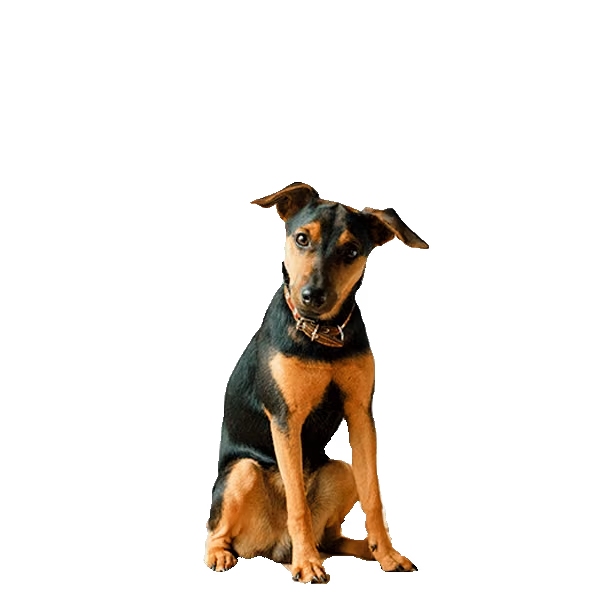
Sedmohradský durič je dobromyseľný, odhodlaný maďarský duričský pes cenený pre svoju odvahu a vytrvalosť v sledovaní stopy.
Ako je srsť plemena Sedmohradský durič stavaná a čo to znamená pri starostlivosti.
Kritické: Sedmohradský durič by sa nemal strihať nakrátko.
Podsada drží horúčavu vonku rovnako dobre ako chlad a krycí chlp chráni kožu pred slnkom a bodnutím hmyzu. Ostrihanie celej srsti odoberie oboje. Často dorastie v škvrnách, mäkká alebo v inej farbe, a u niektorých zvierat sa krycí chlp už nikdy poriadne nevráti. Podsadu vyčešte namiesto toho, aby ste ju strihali.
Informácia: Sedmohradský durič púšťa podsadu v silných návaloch.
Podsada vychádza v silných návaloch počas niekoľkých týždňov. Hrable na podsadu alebo kúpeľ s poriadnym prefúkaním ju odstránia oveľa rýchlejšie než každodenné kefovanie. Ostrihanie srsti tu skratkou nie je.
The Transylvanian Hound is a medium-sized Hungarian scenthound, good-natured and determined, known for its courage and tracking endurance over rough terrain.
The Transylvanian Hound is a medium-sized scenthound from Hungary, bred to track game across the forests and hills of the Carpathian region. It is a working dog first, with the stamina to follow a scent line for hours and the nerve to hold its ground against large quarry. Owners describe it as steady and good-natured at home, alert and focused once it picks up a trail.
The breed carries a short, dense coat that is usually black with tan markings on the face, chest, and legs. Build is athletic rather than heavy, with a deep chest and strong legs suited to long days outdoors in cold weather. Adults typically stand in the medium range and weigh enough to push through brush and snow without tiring quickly.
This is a dog that bonds closely with its family and tolerates children well, but it keeps the independent streak common to hounds. It needs daily activity and a job to focus on. In a quiet home with no outlet for its drive, it can grow restless and vocal.
| Attribute | Detail |
|---|---|
| Origin | Hungary |
| Size | Medium |
| Lifespan | 10 to 14 years |
| Group / role | Scenthound, tracking and hunting |
| Good with | Families, older children, and other dogs when socialized |
The Transylvanian Hound fits an active household that can give it real exercise and time outdoors. It does well with people who hunt, hike, or run, and with owners who enjoy scent work or tracking sports. It is less suited to apartment life or to homes where it would be left alone for long stretches. Early socialization helps it settle around small pets, since its prey drive is strong.
The Transylvanian Hound developed in the Carpathian Basin as a hunting dog of Hungarian nobility, declined sharply in the twentieth century, and was rebuilt through a focused recovery effort.
The Transylvanian Hound traces back to the medieval Kingdom of Hungary, where it was used to hunt game across the Carpathian Basin. The region's mix of high mountains, dense forest, and open valleys shaped a dog that could work different ground, and over time two forms developed: a taller variety for big game such as bison, bear, and boar, and a shorter-legged variety for fox and hare.
For centuries the breed was associated with Hungarian and Transylvanian nobility, who valued its nose and its courage on demanding hunts. As hunting practices changed and the large game it once pursued grew scarce, demand for the dog fell. By the early twentieth century its numbers had dropped sharply, and the short-legged variety effectively disappeared.
The breed reached a low point around the middle of the twentieth century, when the population came close to vanishing. A deliberate recovery program began in Hungary to gather the remaining dogs and rebuild the line, concentrating on the tall variety that had survived in small numbers in remote areas.
Through that effort the breed was stabilized and standardized, and it is recognized today as a national breed of Hungary. It remains uncommon outside its home region, kept mainly by hunters and by enthusiasts working to keep the bloodlines healthy.
The Transylvanian Hound is an athletic medium-sized dog with a short black-and-tan coat, a deep chest, and the lean, balanced build of a working scenthound.
The Transylvanian Hound has the clean, functional outline of a scenthound built for endurance. The body is slightly longer than it is tall, with a deep chest, level back, and well-muscled hindquarters. The head is elongated with a moderate stop, and the ears hang flat against the cheeks. The overall impression is of a strong but not bulky dog, able to cover ground for hours.
| Trait | Standard |
|---|---|
| Height | About 55 to 65 cm (22 to 26 in) at the shoulder |
| Weight | About 25 to 35 kg (55 to 77 lb) |
| Coat | Short, dense, smooth double coat that lies flat |
| Colors | Black with tan markings; tan points over the eyes, on the muzzle, chest, and legs |
| Eyes | Dark brown, oval, with an alert and calm expression |
The coat is short and weather-resistant, with a dense undercoat that protects the dog during cold, wet hunts. The standard color is black with clearly defined tan markings, including spots above the eyes that give the face its characteristic look, along with tan on the muzzle, chest, lower legs, and under the tail. A small white mark on the chest or toes is sometimes seen. The coat needs little upkeep beyond regular brushing and stays close to the body year round, with heavier shedding during seasonal changes.
The Transylvanian Hound is good-natured and devoted at home, courageous and single-minded on a trail, and generally friendly toward people and other dogs.
At home the Transylvanian Hound is even-tempered and affectionate, forming a strong bond with its family. It is patient with children and usually gets along with other dogs, especially when raised alongside them. With strangers it tends to be reserved rather than aggressive, watching first and warming up once it judges the situation safe. This watchfulness makes it a capable alert dog, though it is not a guard dog by nature.
The working side of its character shows on a trail. Once it locks onto a scent it becomes focused and determined, and it can be hard to call off. This same drive means it will chase small animals, so a secure yard and a reliable recall matter. The breed is intelligent and learns quickly, but it keeps the independent thinking of a hound and responds best to patient, consistent handling rather than heavy correction. Boredom tends to surface as digging, escaping, or extended baying.
| Trait | Rating |
|---|---|
| Affection | 4 |
| Energy | 4 |
| Trainability | 3 |
| Vocalness | 4 |
| Shedding | 3 |
The Transylvanian Hound needs a low-maintenance coat routine, substantial daily exercise, and a secure outdoor space to stay healthy and content.
The Transylvanian Hound suits a home with a securely fenced yard and access to outdoor space. The dense coat handles cold and wet weather well, so it is comfortable working outdoors in winter, but it should live indoors with its family rather than being kennelled alone. Fences need to be solid and tall enough to stop a determined climber or digger. The breed adapts poorly to apartments and to long periods left by itself.
The Transylvanian Hound does well on a balanced diet matched to its activity level, fed in measured meals to keep the dog lean and to lower bloat risk.
As an active medium-sized working dog, the Transylvanian Hound needs a complete, balanced diet with enough protein and fat to support stamina. Working or hunting dogs burn more energy and may need larger portions during active seasons, while a less active dog can gain weight quickly if overfed. Feed an amount appropriate to age, weight, and workload, and adjust based on body condition rather than the bag alone. Fresh water should always be available.
| Life stage | Amount per day | Meals |
|---|---|---|
| Puppy (2 to 6 months) | Per puppy-formula guidance, by weight | 3 to 4 |
| Junior (6 to 12 months) | Tapering toward adult portion | 2 to 3 |
| Adult (1 to 7 years) | About 250 to 400 g of quality dry food | 2 |
| Senior (8+ years) | Slightly reduced, watch weight | 2 |
Keep treats to roughly ten percent of daily calories and reduce the main meal to match, especially when using food rewards in training. Most dogs on a complete diet need no supplements; only add joint, skin, or other supplements on a veterinarian's advice. Because deep-chested dogs can be prone to bloat, avoid heavy exercise right before and after meals and consider splitting food into two servings.
The Transylvanian Hound is a generally hardy breed with a 10 to 14 year lifespan, though it shares the joint and ear concerns common to active drop-eared dogs.
The Transylvanian Hound is regarded as a robust, healthy breed, a product of its working history and the careful recovery program that rebuilt it. With good care most dogs live 10 to 14 years. The narrow gene pool from the breed's near-extinction means responsible breeders pay close attention to genetic diversity and screening. As with any active drop-eared dog, the main day-to-day concerns are joints and ears.
| Condition | Signs | Note |
|---|---|---|
| Hip dysplasia | Stiffness, limping, reluctance to jump or climb | Screen breeding stock; keep the dog lean |
| Elbow dysplasia | Foreleg lameness, especially after exercise | More likely in larger, active dogs |
| Ear infections | Head shaking, odor, scratching at the ears | Drop ears trap moisture; clean and dry regularly |
| Bloat (gastric torsion) | Swollen abdomen, retching, restlessness | Deep-chested build raises risk; an emergency |
The Transylvanian Hound is intelligent and willing but independent, so it learns best with early, consistent, reward-based training and a strong focus on recall.
The Transylvanian Hound is a smart dog that picks up commands quickly, but it carries the independent mindset of a scenthound. It works with a handler it respects and tends to tune out repetitive drilling or harsh handling. Short, varied sessions with clear rewards hold its attention better than long ones. Start training and socialization early, while the puppy is most open to new people, dogs, and situations.
Recall deserves special effort. Once this hound catches a scent it can become deaf to commands, so a reliable recall and a secure environment are safety priorities. Channeling the breed's nose into tracking or scent sports gives the mental work it craves and makes the dog easier to live with.
Breeding the Transylvanian Hound calls for health screening and careful pairing because of the breed's limited gene pool, with litters and rearing typical of a medium working dog.
Breeding the Transylvanian Hound is a careful undertaking because the breed nearly disappeared in the twentieth century and was rebuilt from a small number of dogs. Responsible breeders work to preserve genetic diversity, avoid close matings, and screen for hip and elbow problems before pairing. Bitches reach physical maturity before breeding, and a mating is normally planned around the female's heat cycle.
Gestation in dogs runs about 63 days. Litters are typical for a medium breed, and the dam usually manages whelping and early rearing with little intervention, though a quiet, warm whelping area and veterinary support on hand are wise. Puppies are weaned gradually onto solid food and should begin socialization early, since exposure during the first weeks shapes the calm, confident temperament the breed is known for. Because the breed is uncommon, prospective owners often join a waiting list with a recognized breeder.
| Metric | Value |
|---|---|
| Sexual maturity | About 6 to 12 months (breed later) |
| Recommended breeding age | From about 2 years, after health screening |
| Cycle | Female comes into heat roughly twice a year |
| Gestation | About 63 days |
| Average litter size | Around 6 to 8 puppies |
| Weaning | About 6 to 8 weeks |
Bezplatný doživotný profil pre vášho psa plemena Sedmohradský durič v United Pet Club, s registrovaným čipom a bez poplatkov za obnovu.
Vyplňte meno svojho psa plemena Sedmohradský durič, dátum narodenia a ostrú fotku, pridajte telefón a uložte. To je celé, a nikdy to nič nestojí. Registrácia psa funguje s čipom aj bez neho, takže netreba čakať na termín u veterinára.
Pätnásť číslic pod kožou psa plemena Sedmohradský durič ukáže na vás až vtedy, keď to povie register. Nechajte to United Pet Club povedať zadarmo: zápis nikdy nevyprší, berie každú značku čipu a každá zmena údajov je bezplatná. Registrácia mikročipu najprv, účet hneď po nej.
Založte si bezplatný účet v United Pet Club, vyplňte údaje psa plemena Sedmohradský durič s fotkou a profil uložte. Je zadarmo celý psí život a povinný zápis v Centrálnom registri beží popri tom.
Zapíšte 15-miestne číslo čipu do bezplatného účtu spolu s adresou a telefónom. Doživotný plán prijíma čip každej značky a za úpravy si nikdy nič neúčtuje.
Áno, od roku 2019 musí byť každý pes začipovaný a zapísaný v Centrálnom registri spoločenských zvierat. Záznam United Pet Club to dopĺňa tým, že odpovedá aj mimo Slovenska, zadarmo.
Nič. Bezplatný doživotný plán pokrýva profil, registráciu čipu aj všetky budúce úpravy, bez ročných poplatkov.
Common questions about the Transylvanian Hound cover its size, temperament, care needs, lifespan, suitability as a pet, and how hard it is to find.
It is a medium-sized dog, standing roughly 55 to 65 cm (22 to 26 in) at the shoulder and weighing about 25 to 35 kg (55 to 77 lb) when fully grown.
It is good-natured and devoted at home, patient with children, and usually friendly with other dogs. On a trail it becomes focused and courageous, with the independent streak common to scenthounds.
Coat care is simple, but exercise needs are high. It requires daily activity, a secure yard, and ideally a job for its nose. It is not well suited to apartments or to being left alone for long periods.
Most live 10 to 14 years with good nutrition, regular veterinary care, and a healthy weight.
Yes, for an active family that can meet its exercise needs. It bonds closely with its people and tolerates children well. Its prey drive means small pets need careful introductions and supervision.
No. It is uncommon outside Hungary and the surrounding region, and buyers often wait for a litter from a recognized breeder. Always choose a breeder who health-screens and works to maintain genetic diversity.
They can be. As a scenthound the breed will bay and bark, especially when bored or when tracking, so an outlet for its energy and nose helps keep noise down.
