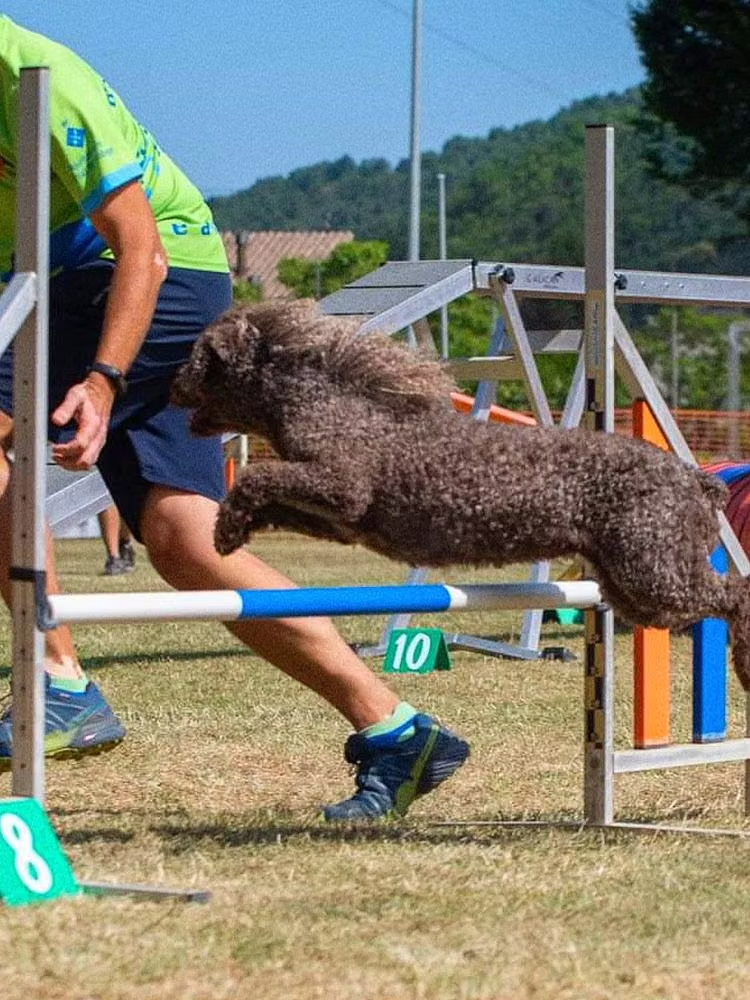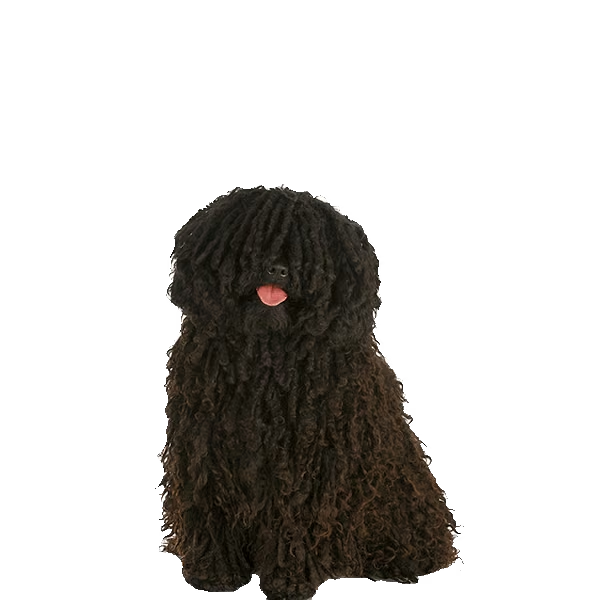
Španielsky vodný pes je všestranný pracovný pes s kučeravou srsťou známy svojou vernosťou, atletickosťou a ochotou vyhovieť.
Ako je srsť plemena Španielsky vodný pes stavaná a čo to znamená pri starostlivosti.
Pozor: Srsť plemena Španielsky vodný pes sa ľahko plstnatie.
Jemný alebo dlhý chlp sa zamotáva pri koreni srsti, kam nie je vidieť, a plstence sa sťahujú a ťahajú za kožu. Kefovanie musí po prameňoch dosiahnuť až ku korienkom, nielen skĺznuť po povrchu.
Informácia: Španielsky vodný pes potrebuje strih každých niekoľko týždňov.
Táto srsť neustále rastie namiesto toho, aby vypadávala, takže sa musí každých pár týždňov skracovať. Ponechaná rásť sa splstí tesne pri koži a uzavrie v sebe vlhkosť, nečistoty a teplo.
A few of the Španielsky vodný pes profiles members have added to United Pet Club.
The Spanish water dog is a medium, curly-coated working breed from Spain, valued for loyalty, intelligence, and versatility across herding, water retrieving, and family life.
The Spanish water dog is a medium-sized working breed from Spain. Its single coat grows in tight, woolly curls that form natural cords when left ungroomed, a feature that protected the dog through long days in the field and around water. The breed worked as a herder of sheep and goats and as a retriever for fishermen and waterfowl hunters along the coast and inland.
This is an active, attentive dog that bonds closely with its people. Owners describe it as loyal, intelligent, versatile, energetic, and alert. It learns quickly and enjoys having a job, whether that means herding, retrieving, dog sports, or structured household routines. Without enough work and exercise, the breed can grow restless and find its own outlets.
The Spanish water dog is naturally reserved with strangers and watchful of its surroundings, which makes early socialization important. With family members it is affectionate and playful, and it tends to stay closely involved in daily activity rather than settling on the sidelines.
| Attribute | Detail |
|---|---|
| Origin | Spain |
| Size | Medium |
| Lifespan | 12 to 14 years |
| Group/role | Herding and water retrieving |
| Good with | Families, active owners, and experienced first-time owners willing to train and socialize |
The Spanish water dog fits a household that can give it daily exercise and consistent training. It does well with active families, people who compete in dog sports such as agility or obedience, and anyone who wants a close working partner. It is less suited to homes that are away for long hours or that prefer a low-energy companion. The curly coat needs regular attention, so owners should be ready for that commitment.
The Spanish water dog developed in Spain as a multipurpose farm and coastal worker, herding livestock and retrieving from water, and gained formal breed recognition in the twentieth century.
The Spanish water dog comes from the Iberian Peninsula, where curly-coated working dogs have been present for centuries. Records and descriptions of woolly-coated herding and water dogs in Spain go back hundreds of years, though the early history is not documented with precise dates. The breed shares a general type with other water dogs found around the Mediterranean and along the Atlantic coast.
In Spain the dog filled several roles on the same farm. In the southern and Andalusian regions it herded sheep and goats and moved flocks across country. Along rivers and the coast it retrieved nets, lines, and waterfowl, and its dense single coat suited repeated work in wet conditions. This range of tasks shaped a hardy, adaptable dog rather than a single-purpose specialist.
Organized interest in the breed grew during the twentieth century, when enthusiasts in Spain worked to identify a consistent type and record breeding. The breed was recognized by Spanish authorities and later by international bodies, which set a written standard for size, coat, and structure.
The Spanish water dog has since spread beyond Spain and is kept as a companion, sport dog, and working dog in many countries. Its herding and retrieving background still shows in its drive, trainability, and attachment to its handler.
The Spanish water dog is a medium, athletic dog with a distinctive single curly coat that can cord, a balanced body, and an alert expression.
The Spanish water dog is a balanced, athletic dog of medium size, slightly longer than it is tall. It is built for stamina and agility rather than bulk, with a level topline, well-developed muscles, and a steady, ground-covering gait. The head is carried with an alert, attentive expression, and the ears hang close to the head.
| Trait | Standard |
|---|---|
| Height | Roughly 40 to 50 cm (16 to 20 in) at the shoulder, with males larger than females |
| Weight | About 14 to 22 kg (31 to 49 lb), depending on sex and build |
| Coat | Single, woolly, curly; cords into cords when left uncut |
| Colors | Solid white, black, brown, or beige; also white with black or brown markings |
| Eyes | Oval, ranging from hazel to dark brown, with an expressive look |
The coat is the breed's defining feature. It is a single layer of curly, wool-like hair with no undercoat. When allowed to grow without brushing, the curls join into cords. The coat is traditionally kept at one length over the whole body and is clipped down rather than scissored into shape, which keeps the natural texture. Solid colors include white, black, brown, and beige, and particolor dogs show white combined with black or brown. The breed is not shown in tricolor or in black-and-tan patterns.
The Spanish water dog is loyal, intelligent, and energetic, devoted to its family, naturally reserved with strangers, and generally good with other animals when socialized early.
The Spanish water dog is a devoted, people-focused breed that wants to be involved in family life. With its own household it is affectionate, playful, and quick to read its handler's mood. The breed is intelligent and eager to please, which makes it responsive in training, though that same intelligence means it needs mental work to stay content.
With strangers the breed is naturally cautious and watchful. It tends to hold back until it has assessed a new person, and its alertness makes it an effective watchdog that will announce visitors. This reserve is normal for the breed and is not the same as aggression, but it does mean early, positive exposure to many people and situations is important.
Around other dogs and pets the Spanish water dog usually does well when raised with them and socialized young. Its herding background can show as a tendency to gather or chase moving animals or children, so supervision and training help channel that instinct. The breed bonds strongly and can find long stretches of isolation difficult.
| Trait | Rating |
|---|---|
| Affection | 5 |
| Energy | 5 |
| Trainability | 5 |
| Vocalness | 3 |
| Shedding | 1 |
The Spanish water dog needs daily exercise, regular coat maintenance built around its corded texture, and an active home that keeps it mentally engaged.
The Spanish water dog adapts to different homes as long as its exercise needs are met. A house with a secure yard suits it well, but it can live in smaller spaces with committed daily activity. It prefers to be near its family and does best when included in the household rather than left alone for long periods. A securely fenced area is wise given the breed's drive and athleticism.
The Spanish water dog does well on a complete, age-appropriate diet portioned to its activity level, fed in measured meals to support its working energy without overfeeding.
The Spanish water dog needs a complete and balanced diet matched to its life stage and activity. As an active working breed it benefits from quality protein to support muscle and a moderate fat level for energy. Portion size should reflect how much the individual dog actually works and exercises, since a hard-working dog needs more than a mostly housebound one. Measure meals rather than free-feeding to keep the dog at a healthy weight, and adjust amounts based on body condition rather than the bag alone.
| Life stage | Amount per day | Meals |
|---|---|---|
| Puppy (2 to 6 months) | Per product guidance for growth, divided small | 3 to 4 |
| Young dog (6 to 12 months) | Growth-formula amount, tapering toward adult | 2 to 3 |
| Adult | Roughly 200 to 350 g of dry food, adjusted to activity | 2 |
| Senior | Adult amount reduced for lower activity | 2 |
Keep treats to a small share of daily calories so they do not unbalance the diet or cause weight gain. Healthy options include small pieces of the dog's regular food or vet-approved low-fat treats, which also work well as training rewards. Most Spanish water dogs on a complete commercial diet do not need supplements. Ask a veterinarian before adding joint, skin, or other supplements, especially for growing puppies or seniors. Provide fresh water at all times, particularly after exercise and swimming.
The Spanish water dog is generally healthy with a 12 to 14 year lifespan, though responsible breeding and preventive care help manage a few inherited conditions seen in the breed.
The Spanish water dog is generally a hardy, robust breed with a typical lifespan of 12 to 14 years. Like all breeds it can be affected by certain inherited and age-related conditions, and responsible breeders screen their stock to reduce the risk of passing them on. Buyers should ask to see health testing results for the parents. With good care, exercise, and routine veterinary attention, most dogs live active lives well into their senior years.
| Condition | Signs | Note |
|---|---|---|
| Hip dysplasia | Stiffness, limping, reluctance to jump or climb | Screened by hip scoring of breeding dogs |
| Progressive retinal atrophy | Night blindness, progressing to fuller vision loss | DNA testing available in the breed |
| Hypothyroidism | Weight gain, low energy, coat and skin changes | Diagnosed by blood test; managed with daily medication |
| Allergies and ear issues | Itching, ear infections, skin irritation | The dense coat and hairy ears need regular checks |
The Spanish water dog is highly trainable and eager to please, responding best to early socialization and consistent, reward-based methods that give its sharp mind a job to do.
The Spanish water dog is one of the more trainable breeds. It is intelligent, attentive, and genuinely motivated to work with its handler, which means it picks up commands quickly and enjoys the process. That capacity comes with a need for direction: a bored or under-stimulated dog will invent its own activities. Early socialization is especially important because of the breed's natural reserve with strangers, so puppies should meet many people, dogs, and environments in a positive way. Consistency matters more than force; clear, calm, repeated cues work far better than corrections.
Spanish water dogs reach breeding maturity in their second year, carry an average litter of several puppies after a roughly nine-week pregnancy, and benefit from health-tested parents.
Breeding a Spanish water dog should be approached responsibly, with health testing of both parents and attention to temperament and structure. Although dogs become sexually mature earlier, most reputable programs wait until the dog is physically and mentally mature, usually well into the second year, and until health screening for hips and eyes is complete. Mating is timed to the female's heat cycle.
Pregnancy in the dog lasts about 63 days, or roughly nine weeks. The expectant female needs good nutrition, gentle exercise, and a quiet, clean whelping area prepared before the due date. Litters vary, but a medium breed of this type commonly produces several puppies.
Raising the young calls for careful attention in the first weeks. Newborn puppies depend fully on the mother for warmth and feeding, and they should be kept in a warm, draft-free space. From a few weeks of age, gradual weaning, handling, and early socialization begin, all of which shape a confident adult. Puppies should stay with the mother and littermates until they are old enough to go to new homes, in line with local guidance and breed practice.
| Metric | Value |
|---|---|
| Breeding maturity | Generally in the second year, after health testing |
| Gestation | About 63 days (roughly 9 weeks) |
| Average litter | Several puppies, varying by individual |
| Weaning | Begins around 3 to 4 weeks of age |
| Recommended screening | Hip scoring and eye testing of both parents |
Bezplatný doživotný profil pre vášho psa plemena Španielsky vodný pes v United Pet Club, s registrovaným čipom a bez poplatkov za obnovu.
Vyplňte meno svojho psa plemena Španielsky vodný pes, dátum narodenia a ostrú fotku, pridajte telefón a uložte. To je celé, a nikdy to nič nestojí. Registrácia psa funguje s čipom aj bez neho, takže netreba čakať na termín u veterinára.
Pätnásť číslic pod kožou psa plemena Španielsky vodný pes ukáže na vás až vtedy, keď to povie register. Nechajte to United Pet Club povedať zadarmo: zápis nikdy nevyprší, berie každú značku čipu a každá zmena údajov je bezplatná. Registrácia mikročipu najprv, účet hneď po nej.
Založte si bezplatný účet v United Pet Club, vyplňte údaje psa plemena Španielsky vodný pes s fotkou a profil uložte. Je zadarmo celý psí život a povinný zápis v Centrálnom registri beží popri tom.
Zapíšte 15-miestne číslo čipu do bezplatného účtu spolu s adresou a telefónom. Doživotný plán prijíma čip každej značky a za úpravy si nikdy nič neúčtuje.
Áno, od roku 2019 musí byť každý pes začipovaný a zapísaný v Centrálnom registri spoločenských zvierat. Záznam United Pet Club to dopĺňa tým, že odpovedá aj mimo Slovenska, zadarmo.
Nič. Bezplatný doživotný plán pokrýva profil, registráciu čipu aj všetky budúce úpravy, bez ročných poplatkov.
Common questions about the Spanish water dog cover its size, temperament, grooming demands, lifespan, suitability for families, and availability.
It is a medium breed, standing roughly 40 to 50 cm (16 to 20 in) at the shoulder and weighing about 14 to 22 kg (31 to 49 lb), with males larger than females.
It is loyal, intelligent, energetic, and alert. The breed is affectionate with its family and naturally reserved with strangers, so early socialization helps it stay confident and balanced.
It is moderately demanding. The dog needs daily exercise and mental work, and its curly coat requires specific care: the cords are hand-separated rather than brushed, and the coat is clipped down once or twice a year.
The typical lifespan is 12 to 14 years. Good nutrition, regular exercise, preventive veterinary care, and health-tested parents all support a long, active life.
Yes, for active families who can meet their exercise and training needs. They bond closely with their people and generally do well with children and other pets when raised and socialized with them, though their herding instinct may show as gathering or chasing.
No. The single curly coat sheds very little because the hair tends to stay within the curls and cords. It still needs regular maintenance, and shed hair must be removed during coat care rather than dropping around the home.
The breed is more common in Spain but is kept in many countries. Look for a responsible breeder who health-tests for hips and eyes, or check breed-specific rescue groups. Availability outside Spain can be limited, so expect a possible waiting list.