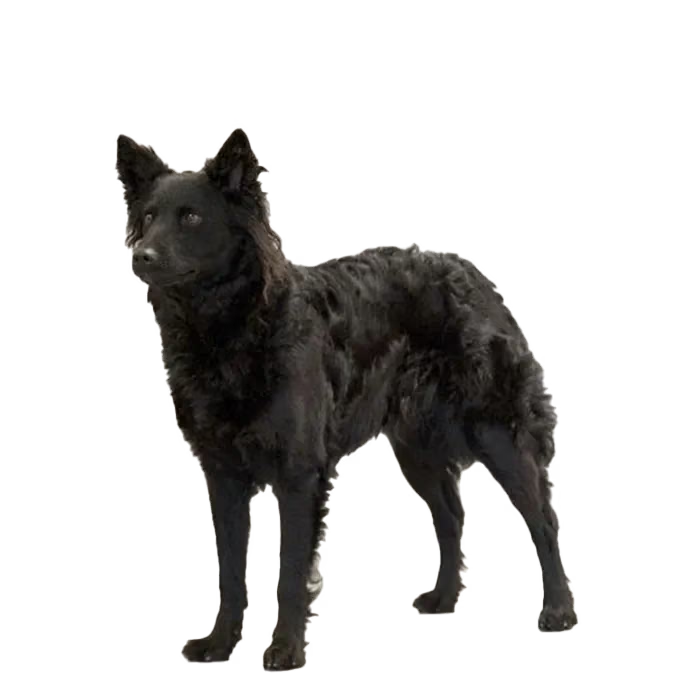
Chorvátsky ovčiak je obratný a inteligentný pastiersky pes známy svojou energiou, ostražitosťou a oddanosťou svojmu stádu a rodine.
Ako je srsť plemena Chorvátsky ovčiak stavaná a čo to znamená pri starostlivosti.
Kritické: Chorvátsky ovčiak by sa nemal strihať nakrátko.
Podsada drží horúčavu vonku rovnako dobre ako chlad a krycí chlp chráni kožu pred slnkom a bodnutím hmyzu. Ostrihanie celej srsti odoberie oboje. Často dorastie v škvrnách, mäkká alebo v inej farbe, a u niektorých zvierat sa krycí chlp už nikdy poriadne nevráti. Podsadu vyčešte namiesto toho, aby ste ju strihali.
Pozor: Srsť plemena Chorvátsky ovčiak sa ľahko plstnatie.
Jemný alebo dlhý chlp sa zamotáva pri koreni srsti, kam nie je vidieť, a plstence sa sťahujú a ťahajú za kožu. Kefovanie musí po prameňoch dosiahnuť až ku korienkom, nielen skĺznuť po povrchu.
Informácia: Chorvátsky ovčiak púšťa podsadu v silných návaloch.
Podsada vychádza v silných návaloch počas niekoľkých týždňov. Hrable na podsadu alebo kúpeľ s poriadnym prefúkaním ju odstránia oveľa rýchlejšie než každodenné kefovanie. Ostrihanie srsti tu skratkou nie je.
The Croatian Sheepdog is a medium-sized herding dog from Croatia, valued for its agility, intelligence, and strong bond with its handler.
The Croatian Sheepdog (Hrvatski ovÄar) is a medium-sized herding breed developed in Croatia to move and guard livestock. It stands lower than many working sheepdogs and carries a distinctive short, curly black coat. Most dogs weigh between 13 and 20 kilograms and measure roughly 40 to 50 centimeters at the shoulder.
The breed is quick on its feet and reads situations fast. It was bred to make decisions at a distance from the shepherd, so it tends to think for itself and act on what it sees. That independence sits alongside a deep attachment to one person or family.
With a lifespan of 13 to 14 years and an energetic, alert temperament, the Croatian Sheepdog suits an active household that can give it daily work or exercise. It is loyal and watchful, and it stays closely tuned to the people it lives with.
| Attribute | Detail |
|---|---|
| Origin | Croatia |
| Size | Medium (about 13 to 20 kg) |
| Lifespan | 13 to 14 years |
| Group/role | Herding and livestock dog |
| Good with | Family and children it is raised with; reserved toward strangers |
This breed fits owners who want an involved, responsive dog and can commit to regular activity. It does well with people who enjoy training, dog sports, or country life. It is less suited to a sedentary home or to owners away for long hours, since an under-worked dog can grow restless and vocal.
The Croatian Sheepdog traces to the region of Slavonia in eastern Croatia, where it worked sheep and cattle for centuries before formal recognition in the twentieth century.
The Croatian Sheepdog comes from the plains of Slavonia in eastern Croatia. Shepherds in the region kept a small, dark, curly-coated dog to drive and watch over sheep and cattle across open pasture. The type was prized for stamina and for moving stock without constant direction.
The breed's documented history is closely tied to the veterinarian Stjepan Romić, who began studying the regional dogs in the 1930s. He used old church and farm records from the area, some dating back several centuries, to describe a consistent local type and to guide a planned breeding program.
Through decades of selection based on Romić's work, the breed was standardized. The Fédération Cynologique Internationale recognized the Croatian Sheepdog in 1969, fixing the description that breeders use today.
The dog remains a working herder in parts of Croatia and has also spread to homes and dog-sport competitors abroad. Its core qualities, agility and a strong working drive, reflect the demands of the open Slavonian farmland where it developed.
The Croatian Sheepdog is a low-set, agile dog with a wedge-shaped head and a short, curly black coat that is the breed's signature feature.
The Croatian Sheepdog is built for quick, sustained movement. The body is slightly longer than it is tall, the chest is moderately deep, and the legs are lean. The head is wedge-shaped with a fairly long muzzle, and the ears are triangular and may be erect or semi-erect. The overall impression is of a light, athletic dog rather than a heavy one.
| Trait | Standard |
|---|---|
| Height | About 40 to 50 cm at the withers |
| Weight | About 13 to 20 kg |
| Coat | Short on the face and legs, longer and curly to wavy over the body |
| Colors | Black, with small white markings on the chest and toes permitted |
| Eyes | Almond-shaped, chestnut to black, alert expression |
The defining feature is the black coat, which is short and smooth on the head and the fronts of the legs but grows wavy or curly across the back, sides, and hindquarters. The standard calls for a base color of black; a small amount of white is allowed on the chest and the tips of the toes, while larger white patches are a fault. Some dogs are born with a naturally short tail.
The Croatian Sheepdog is intelligent, energetic, and devoted to its family, while staying alert and reserved around strangers.
This is a busy, attentive dog that wants a job and a close relationship with its people. It bonds strongly, often attaching most firmly to one person, and it likes to stay near and respond to direction. Within the family it is affectionate and playful, and it usually does well with children it has grown up alongside.
The breed is naturally watchful and tends to be reserved with strangers, which makes it a capable alert dog. It can be vocal, barking to signal movement or to manage stock, a trait that carries over into the home. Early, consistent socialization helps it settle around unfamiliar people and other animals.
With other dogs and pets it can live peaceably when raised together, though its herding instinct may show as chasing or nipping at heels. That same drive makes it lively and quick to learn, but it needs an outlet so the energy does not turn into restlessness.
| Trait | Rating |
|---|---|
| Affection | 5 |
| Energy | 5 |
| Trainability | 5 |
| Vocalness | 4 |
| Shedding | 3 |
The Croatian Sheepdog needs substantial daily exercise and mental work, with relatively modest grooming for its short curly coat.
The breed adapts to various homes as long as its activity needs are met, but it does best with access to a secure yard or rural space. It is not suited to being left alone for most of the day. A home that includes the dog in daily activity, and that can tolerate some barking, is the right setting.
The Croatian Sheepdog does well on a complete, balanced diet matched to its high activity level, fed in measured daily portions.
As an active medium-sized breed, the Croatian Sheepdog needs a complete and balanced diet with enough protein and fat to support its working energy. Choose a quality food formulated for the dog's life stage and adjust the amount to the individual's weight, age, and daily output. A dog in regular work needs more calories than one kept as a companion. Always provide fresh water.
| Life stage | Amount per day | Meals |
|---|---|---|
| Puppy (2 to 6 months) | Per product guide for growth | 3 to 4 |
| Junior (6 to 12 months) | About 1.5 to 2.5 cups | 2 to 3 |
| Adult (1 to 7 years) | About 1.5 to 2.5 cups | 2 |
| Senior (8 years and older) | Slightly reduced, per body condition | 2 |
Keep treats to roughly 10 percent of daily calories and use them mainly for training. Most dogs on a complete diet do not need supplements, but a veterinarian may advise joint support for very active or older dogs. Monitor body condition and adjust portions before weight problems develop.
The Croatian Sheepdog is generally a hardy, long-lived breed with a typical lifespan of 13 to 14 years and relatively few inherited disorders.
The Croatian Sheepdog is regarded as a robust, healthy breed, helped by its working background and modest size. Most individuals live 13 to 14 years. As with any breed, responsible breeding and routine veterinary care reduce the risk of inherited and age-related problems. The conditions below are seen across active herding dogs rather than being unique to this breed.
| Condition | Signs | Note |
|---|---|---|
| Hip dysplasia | Stiffness, limping, reluctance to jump | Screen breeding stock; keep lean weight |
| Eye disorders | Cloudiness, vision changes | Periodic eye checks advised |
| Dental disease | Bad breath, tartar, sore gums | Regular brushing and cleaning help |
| Ear infections | Head shaking, odor, scratching | More likely in semi-erect ears; clean routinely |
The Croatian Sheepdog is highly trainable and quick to learn, responding best to consistent, reward-based methods that engage its mind.
Few breeds learn faster than the Croatian Sheepdog. Its intelligence and eagerness to work with a handler make it well suited to obedience, herding, and dog sports. The same sharpness means it gets bored with repetition and can develop its own habits if training is inconsistent. Short, varied, frequent sessions hold its attention best. Early socialization is important, since the breed is naturally wary of strangers and can be vocal.
The Croatian Sheepdog reaches breeding maturity at one to two years and typically produces litters of around four to six puppies after a normal gestation.
Croatian Sheepdogs reach sexual maturity within the first year, but responsible breeders wait until the dog is physically and mentally mature, usually after the first or second year, and has passed health screening for hips and eyes. Females cycle about twice a year. Mating follows the female's season, and gestation runs roughly nine weeks.
Litters are typically small to medium, often four to six puppies. The dam usually whelps and nurses without difficulty given the breed's hardiness, though a clean, quiet whelping area and veterinary support should be arranged in advance.
Puppies should stay with the dam and littermates until at least eight weeks, with early handling and gentle exposure to everyday sights and sounds. Because the breed is naturally alert and vocal, early socialization during the first weeks in the new home strongly shapes the adult temperament.
| Metric | Value |
|---|---|
| Breeding maturity | 1 to 2 years |
| Heat cycle | About twice per year |
| Gestation | About 63 days (roughly 9 weeks) |
| Average litter size | 4 to 6 puppies |
| Weaning age | About 6 to 8 weeks |
| Recommended rehoming age | 8 weeks or older |
Bezplatný doživotný profil pre vášho psa plemena Chorvátsky ovčiak v United Pet Club, s registrovaným čipom a bez poplatkov za obnovu.
Sken v útulku je len taký dobrý ako register, na ktorý číslo ukazuje. Dajte psovi plemena Chorvátsky ovčiak taký, ktorý odpovie vždy: bezplatná karta s fotkou, údajmi a vaším telefónom, dohľadateľná z ktorejkoľvek ambulancie, celý psí život. Registrácia sa robí raz a ostáva.
Pätnásť číslic pod kožou psa plemena Chorvátsky ovčiak ukáže na vás až vtedy, keď to povie register. Nechajte to United Pet Club povedať zadarmo: zápis nikdy nevyprší, berie každú značku čipu a každá zmena údajov je bezplatná. Registrácia mikročipu najprv, účet hneď po nej.
Založte si bezplatný účet v United Pet Club, vyplňte údaje psa plemena Chorvátsky ovčiak s fotkou a profil uložte. Je zadarmo celý psí život a povinný zápis v Centrálnom registri beží popri tom.
Zapíšte 15-miestne číslo čipu do bezplatného účtu spolu s adresou a telefónom. Doživotný plán prijíma čip každej značky a za úpravy si nikdy nič neúčtuje.
Áno, od roku 2019 musí byť každý pes začipovaný a zapísaný v Centrálnom registri spoločenských zvierat. Záznam United Pet Club to dopĺňa tým, že odpovedá aj mimo Slovenska, zadarmo.
Nič. Bezplatný doživotný plán pokrýva profil, registráciu čipu aj všetky budúce úpravy, bez ročných poplatkov.
Common questions about the Croatian Sheepdog cover its size, temperament, care demands, lifespan, suitability, and availability.
It is a medium-sized breed, standing about 40 to 50 centimeters at the shoulder and weighing roughly 13 to 20 kilograms.
It is loyal, intelligent, energetic, and alert. It bonds closely with its family, is reserved with strangers, and can be vocal.
Grooming is fairly easy thanks to the short curly coat, but the breed needs a lot of daily exercise and mental work, so the main demand is time and activity rather than coat care.
The typical lifespan is 13 to 14 years, and the breed is generally healthy.
Yes, for active families. It is affectionate and does well with children it is raised with, but it needs exercise, training, and an owner who can manage its herding drive and barking.
They are common in Croatia but less widespread elsewhere, so prospective owners outside the region may need to seek out specialist breeders and join a waiting list.
