
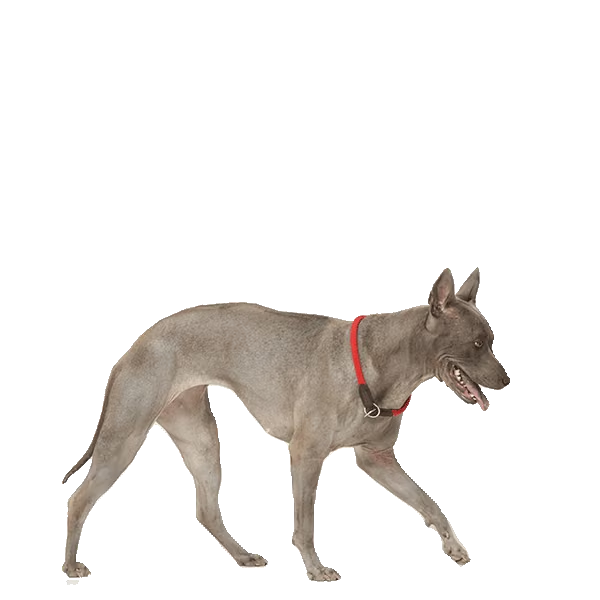
Thai ridgeback
Thai Ridgeback er en lojal og atletisk rase kjennetegnet ved hårkammen langs ryggen og sin beskyttende hengivenhet.
- Size
- Middels
- Lifespan
- 12–13 years
- Origin
- Thailand
- Temperament
- Lojal
- Standard colors
- Svart, Blå, Rød og Isabell
Characteristics
Coat and grooming
How the Thai ridgeback coat is built, and what that means when you groom it.
- Pelslag
- Enkel pels
- Pelsstruktur
- Glatt
- Pelslengde
- Kort
- Røyting
- Moderat røyting
Thai ridgeback colors and patterns
What each club's breed standard says about every Thai ridgeback color and pattern. Point at a ruling to see the club's own wording.
Breed standards describe the Thai ridgeback in Svart, Blå, Rød og Isabell. Standard patterns: Ensfarget.
| Color or pattern | FCI | AKC | UKC | KUSA |
|---|---|---|---|---|
| Svart | Standard (“black”) | Standard (“Black”) | Standard (“black”) | Standard (“black”) |
| Blå | Standard (“blue”) | Standard (“Blue”) | Standard (“blue”) | Standard (“blue”) |
| Rød | Standard (“red”) | Standard (“Red”) | Standard (“Red”) | Standard (“red”) |
| Isabell | Standard (“very light fawn (isabella)”) | Standard (“Fawn (Isabella)”) | Standard (“very light fawn (isabella)”) | Standard (“very light fawn (isabella)”) |
| Albino | Ikke anerkjent | Ikke anerkjent | Diskvalifiserende (“Albinism”) | Ikke anerkjent |
| Patterns | ||||
| Ensfarget | Standard (“Solid colour”) | Standard (“Solid colour”) | Standard (“The following solid colors are permitted”) | Standard (“Solid colour”) |

| Color or pattern | FCI | AKC | UKC | KUSA |
|---|---|---|---|---|
| Mørkebrun | Standard (“The eye colour is dark brown”) | Standard (“The eye colour is dark brown”) | Standard (“Eye color is dark brown”) | Standard (“The eye colour is dark brown”) |
| Ravgul | Standard (“In blues, amber-coloured eyes are permitted”) | Standard (“In blues, amber-coloured eyes are permitted”) | Standard (“in blue dogs, where amber eyes are permitted”) | Standard (“In blues, amber-coloured eyes are permitted”) |
| Color or pattern | FCI | AKC | UKC | KUSA |
|---|---|---|---|---|
| Svart | Standard (“Black”) | Standard (“Black”) | Standard (“Black”) | Standard (“Black”) |
| Blå | Standard (“In blue dogs, the nose is bluish”) | Standard (“In blue dogs, the nose is bluish”) | Standard (“In bluish dogs, the nose is bluish”) | Standard (“In blue dogs, the nose is bluish”) |
| Color or pattern | FCI | AKC | UKC | KUSA |
|---|---|---|---|---|
| Flekket | Standard (“Black marking on the tongue is preferable”) | Standard (“Black marking on the tongue is preferable”) | Standard (“Black marking on the tongue is preferable”) | Standard (“Black marking on the tongue is preferable”) |
%22%3E%3Cg%20fill%3D%22%231C1C1C%22%3E%3Cellipse%20cx%3D%2224%22%20cy%3D%2222%22%20rx%3D%224.5%22%20ry%3D%223.5%22%2F%3E%3Cellipse%20cx%3D%2240%22%20cy%3D%2228%22%20rx%3D%225%22%20ry%3D%224%22%2F%3E%3Cellipse%20cx%3D%2227%22%20cy%3D%2240%22%20rx%3D%224%22%20ry%3D%223%22%2F%3E%3Cellipse%20cx%3D%2240%22%20cy%3D%2246%22%20rx%3D%223%22%20ry%3D%222.5%22%2F%3E%3Cellipse%20cx%3D%2221%22%20cy%3D%2232%22%20rx%3D%222.5%22%20ry%3D%222%22%2F%3E%3C%2Fg%3E%3C%2Fg%3E%3Cpath%20d%3D%22M32%2010V44%22%20fill%3D%22none%22%20stroke%3D%22%231C1C1C%22%20stroke-opacity%3D%220.25%22%20stroke-width%3D%221.6%22%20stroke-linecap%3D%22round%22%2F%3E%3Cuse%20href%3D%22%23s%22%20fill%3D%22none%22%20stroke%3D%22%233B2A20%22%20stroke-opacity%3D%220.6%22%20stroke-width%3D%221%22%20stroke-linejoin%3D%22round%22%2F%3E%3Cellipse%20cx%3D%2225%22%20cy%3D%2216%22%20rx%3D%224%22%20ry%3D%222%22%20fill%3D%22%23F5F5F0%22%20fill-opacity%3D%220.25%22%2F%3E%3C%2Fsvg%3E)
What the rulings mean
- Standard
- Described by the club's breed standard.
- Diskvalifiserende
- The club's breed standard disqualifies an animal of this color or pattern.
- Ikke anerkjent
- The club does not accept this color or pattern for the breed.
Color changes
How a Thai ridgeback's colors can change over its life.
Svartchanges toRustrød
Pels · Med kroppstilstanden · can change back
Svartchanges toGrå
Pels · Progressiv
Svartchanges toBrun
Pels · I sola · can change back
Svartchanges toSnønese
Nese · Med årstiden · can change back
Svartchanges toRosa
Nese · Med årstiden · can change back
Rosachanges toBlåsvart
Tunge · Med alderen · from 8 to 26 weeks
%22%3E%3Crect%20x%3D%2217%22%20y%3D%2210%22%20width%3D%2230%22%20height%3D%2242%22%20fill%3D%22url(%23g)%22%2F%3E%3C%2Fg%3E%3Cuse%20href%3D%22%23s%22%20fill%3D%22none%22%20stroke%3D%22%233B2A20%22%20stroke-opacity%3D%220.6%22%20stroke-width%3D%221%22%20stroke-linejoin%3D%22round%22%2F%3E%3Cpath%20d%3D%22M12.5%2037Q13%2032%2018.5%2032Q23.5%2032.5%2023.5%2036.5Q20.5%2035.5%2018.8%2037Q17.4%2038.6%2018%2041.5Q13.6%2040.4%2012.5%2037Z%22%20fill%3D%22%231C1C1C%22%20fill-opacity%3D%220.8%22%20stroke%3D%22%23F5F5F0%22%20stroke-opacity%3D%220.4%22%20stroke-width%3D%220.9%22%2F%3E%3Cpath%20d%3D%22M51.5%2037Q51%2032%2045.5%2032Q40.5%2032.5%2040.5%2036.5Q43.5%2035.5%2045.2%2037Q46.6%2038.6%2046%2041.5Q50.4%2040.4%2051.5%2037Z%22%20fill%3D%22%231C1C1C%22%20fill-opacity%3D%220.8%22%20stroke%3D%22%23F5F5F0%22%20stroke-opacity%3D%220.4%22%20stroke-width%3D%220.9%22%2F%3E%3Cpath%20d%3D%22M32%2040V50%22%20fill%3D%22none%22%20stroke%3D%22%231C1C1C%22%20stroke-width%3D%221.3%22%20stroke-opacity%3D%220.5%22%20stroke-linecap%3D%22round%22%20stroke-linejoin%3D%22round%22%2F%3E%3Cellipse%20cx%3D%2232%22%20cy%3D%2221%22%20rx%3D%2212%22%20ry%3D%223.5%22%20fill%3D%22%23F5F5F0%22%20fill-opacity%3D%220.18%22%2F%3E%3C%2Fsvg%3E)
Sources
Each ruling comes from the club's published breed standard or color list.
Meet some of our Thai ridgeback
A few of the Thai ridgeback profiles members have added to United Pet Club.

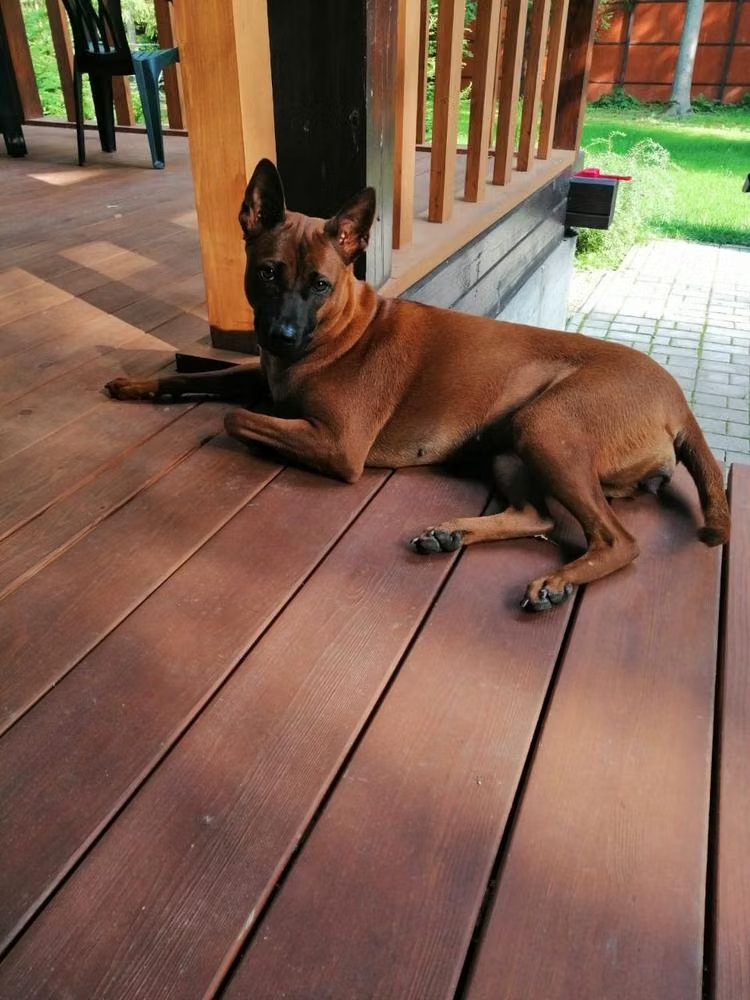


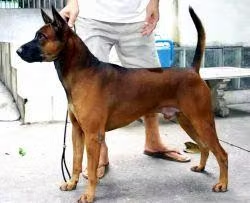


Om thairidgeback
Thairidgeback er en mellomstor hund fra Thailand, kjent for ryggkammen der hårene vokser motsatt vei, og for sin lojale, beskyttende natur.
Thairidgeback er en mellomstor hunderase som opprinnelig kommer fra Thailand. Det mest kjennetegnende trekket er ryggkammen langs ryggraden, der hårene vokser motsatt vei av resten av pelsen. Rasen er muskuløs og atletisk, med kort pels, et kileformet hode og en sterk, veltrent kropp som passer for et aktivt liv utendørs.
Rasen er lojal og knyttet til familien sin, men har samtidig et selvstendig gemytt. Thairidgebacker er årvåkne og har en naturlig beskyttertrang, egenskaper som historisk gjorde dem nyttige som vakt- og jakthunder på den thailandske landsbygda. De knytter seg gjerne tett til folk de kjenner og kan være tilbakeholdne overfor fremmede.
En voksen thairidgeback veier vanligvis mellom 16 og 34 kilo og måler omtrent 51 til 61 centimeter ved skulderen, der hannhunder som regel er større enn tisper. Den korte, tette pelsen krever lite stell, men rasens sterke vilje og høye aktivitetsbehov gjør den best egnet for eiere med hundeerfaring.
| Egenskap | Detalj |
|---|---|
| Opprinnelse | Thailand |
| Størrelse | Mellomstor |
| Levetid | 12 til 13 år |
| Gruppe/rolle | Vakt- og jakthund |
| Passer for | Familier med eldre barn og erfarne hundeeiere |
Hvem passer rasen for
Thairidgeback passer for en aktiv eier som kan tilby konsekvent trening, daglig mosjon og tidlig sosialisering. Den er et godt valg for husstander som ønsker en årvåken, trofast følgesvenn og som har tid til å håndtere en selvstendig og energisk hund. Rasen er mindre egnet for førstegangseiere eller hjem der noen er borte store deler av dagen.
Historien til thairidgeback
Thairidgeback ble utviklet gjennom flere hundre år i det østlige Thailand, der den ble brukt som jakt- og vakthund og forble lenge isolert fra andre raser.
Thairidgeback har sin opprinnelse i Thailand, der rasen har eksistert i flere hundre år. Den utviklet seg først og fremst i de østlige delene av landet, blant annet i områder rundt øya Phu Quoc og provinsene som grenser til dagens Kambodsja. Den lange isolasjonen i disse landlige strøkene antas å ha holdt rasens blodslinjer relativt rene sammenlignet med raser som spredte seg langs de store handelsveiene.
Gjennom det meste av sin historie fungerte thairidgeback som en allsidig gårdshund. Den ble holdt for å vokte hus og vogner, jage småvilt og holde skadedyr borte. Utholdenheten, årvåkenheten og selvstendigheten var verdifulle egenskaper i et miljø der hunder måtte arbeide og ta egne avgjørelser uten mye direkte styring fra mennesker.
Rasen er en av få hunderaser med en tydelig ryggkam, et trekk den deler med rhodesian ridgeback og Phu Quoc-hunden. Ryggkammen er et definerende kjennetegn som thailandske oppdrettere har videreført gjennom mange generasjoner.
Thairidgeback var lite kjent utenfor Thailand helt frem til slutten av det tjuende århundre, da interesse fra utenlandske oppdrettere gjorde rasen kjent for et bredere internasjonalt publikum. Den regnes fortsatt som en relativt sjelden rase i mange land i dag, også her i Norge, der Norsk Kennel Klub registrerer bare et fåtall individer.
Utseendet til thairidgeback
Thairidgeback er en muskuløs, mellomstor hund med kort pels og en ryggkam der hårene vokser motsatt vei langs ryggen.
Thairidgeback er en veltrent, atletisk hund av moderat størrelse. Kroppen er litt lengre enn den er høy, med dyp brystkasse, rett overlinje og rene, kraftige bein. Hodet er kileformet, ørene står oppreist og er trekantede, og halen smalner av og bæres oppover i en svak bue. Helhetsinntrykket er en spenstig, smidig hund bygget for fart og utholdenhet.
| Kjennetegn | Standard |
|---|---|
| Høyde | 51 til 61 cm ved skulderen |
| Vekt | 16 til 34 kg |
| Pels | Kort, glatt, tettliggende |
| Farger | Svart, blå, rød, fawn (isabella) |
| Øyne | Mørke, mandelformede |
Pels og farger
Pelsen er kort og glatt og ligger tett inntil kroppen, noe som gjør rasen enkel å stelle. Fire enkeltfarger er godkjent: svart, blå, rød og fawn. Det mest særpregede trekket er ryggkammen langs ryggen, der hårene vokser motsatt vei av resten av pelsen. Bredden og formen på ryggkammen varierer fra individ til individ, og flere ulike mønstre forekommer innenfor rasen.
Temperamentet til thairidgeback
Thairidgeback er trofast og knyttet til familien, selvstendig av natur, og naturlig beskyttende og tilbakeholden overfor fremmede.
Thairidgeback er trofast og danner sterke bånd til familien sin. Den er rolig og kjærlig hjemme sammen med folk den stoler på, men er samtidig selvstendig og tilbøyelig til å tenke selv, en arv fra tiden som en hund som måtte klare seg på egen hånd i arbeid. Denne selvstendigheten betyr at den ikke alltid underordner seg eieren uten tydelig og konsekvent ledelse.
Overfor fremmede er rasen som regel tilbakeholden og observant. Den naturlige beskyttertrangen gjør den til en god varslingshund, selv om den vanligvis ikke bjeffer uten grunn. Tidlig og vedvarende sosialisering er viktig for at hunden skal forbli trygg og veloppdragen i møte med ukjente mennesker og situasjoner.
Thairidgebacker kan leve sammen med andre dyr når de vokser opp med dem, men jaktinstinkt og revirtenkning betyr at introduksjoner bør skje forsiktig og under oppsyn. De fungerer som regel best sammen med eldre barn som vet hvordan de skal omgås en viljesterk hund med respekt.
| Egenskap | Vurdering |
|---|---|
| Kjærlighet | 4 |
| Energi | 4 |
| Lærevillighet | 3 |
| Bjeffing | 2 |
| Pelsfelling | 2 |
Stell av thairidgeback
Thairidgeback trenger daglig mosjon, konsekvent håndtering og lite stell takket være den korte pelsen.
Pelsstell
- Børst den korte pelsen ukentlig for å fjerne løse hår og holde den ren.
- Bad kun ved behov, siden pelsen holder skitt godt unna.
- Klipp klørne med noen ukers mellomrom og sjekk ørene jevnlig.
- Puss tennene flere ganger i uken for å ivareta tannhelsen.
Mosjon
- Sørg for minst 60 minutter aktivitet hver dag.
- Kombiner raske turer, løping og løs mosjon i et inngjerdet område.
- Legg inn problemløsningsleker og treningsøkter for mental stimulering.
- Bruk et godt inngjerdet område, siden rasen er dyktig til både å hoppe og klatre.
Miljø
Thairidgeback trives godt i varmt klima og tåler varme langt bedre enn kulde. Den foretrekker et hjem med tilgang til en godt inngjerdet hage fremfor å bo trangt i leilighet, selv om den kan klare seg på mindre plass dersom mosjonsbehovet dekkes. Pelsen gir liten beskyttelse mot kulde, så i de lange, kalde norske vintrene bør hunden ha hundedress og tilbringe mindre tid ute i sterk kulde.
Fôring av thairidgeback
En thairidgeback trives på et balansert kosthold tilpasset vekt og aktivitetsnivå, fordelt på to måltider daglig for voksne hunder.
Thairidgeback trenger et komplett og balansert fôr tilpasset alder, vekt og aktivitetsnivå. Som en atletisk rase har den nytte av fôr med protein av god kvalitet som støtter opp under den slanke muskelmassen. Porsjonsstørrelsen bør tilpasses den enkelte hunden og justeres slik at den holder en sunn vekt, siden rasen bør forbli slank og veldefinert fremfor tung.
| Livsfase | Mengde per dag | Måltider |
|---|---|---|
| Valp (2 til 6 måneder) | Følg produktets vektveiledning | 3 til 4 |
| Ungdom (6 til 12 måneder) | Følg produktets vektveiledning | 2 til 3 |
| Voksen | Ca. 200 til 350 g tørrfôr | 2 |
| Eldre hund | Justeres ned etter aktivitetsnivå | 2 |
Godbiter og tilskudd
Godbiter bør ikke utgjøre mer enn omtrent ti prosent av det daglige kaloriinntaket. De fleste friske thairidgebacker på et komplett fôr trenger ikke ekstra tilskudd, men leddstøtte kan være til nytte for eldre eller svært aktive hunder. Snakk med veterinæren før du gir hunden noe tilskudd. Sørg for tilgang på friskt vann til enhver tid, spesielt siden rasen er svært aktiv i varme forhold.
Helse hos thairidgeback
Thairidgeback er som regel en frisk rase med en levetid på 12 til 13 år, men kan rammes av en hudtilstand knyttet til ryggkammen og noen andre plager.
Thairidgeback er stort sett en robust og frisk rase med en typisk levetid på 12 til 13 år. Den begrensede innkrysningen med andre raser har bidratt til å holde genbassenget relativt sunt. Likevel forekommer noen tilstander i rasen, og ansvarlig avl kombinert med jevnlig veterinærtilsyn bidrar til å redusere omfanget.
| Tilstand | Tegn | Merknad |
|---|---|---|
| Dermoid sinus | Rørformet hudåpning langs ryggraden, væsking | Knyttet til ryggkammen; behandles kirurgisk |
| Hofteleddsdysplasi | Stivhet, redusert aktivitet, halting | Røntgenscreening av avlsdyr bidrar til å redusere risikoen |
| Hudallergi | Kløe, rødhet, hårtap | Utløsende faktorer håndteres i samråd med veterinær |
Forebyggende helsearbeid
- Hold vaksiner og parasittbehandling à jour.
- Sett opp årlige veterinærkontroller, oftere for eldre hunder.
- Hold en sunn vekt gjennom nøyaktig fôring og regelmessig mosjon.
- Undersøk ryggkammen og huden for åpninger, kuler eller irritasjon.
- Følg opp tannhelsen jevnlig.
Trening av thairidgeback
Thairidgeback er intelligent, men selvstendig, så treningen bygger på konsekvens, tidlig sosialisering og belønningsbaserte metoder.
Thairidgeback er intelligent og lærevillig, men samtidig selvstendig, noe som kan gjøre treningen mer krevende enn med raser som ivrig søker å tilfredsstille eieren. Den lærer raskt når motivasjonen er til stede, men kan velge å handle etter egen vurdering fremfor å følge en kommando. Konsekvens, tålmodighet og tydelige grenser er avgjørende, og treningen fungerer best når den starter tidlig. Harde metoder slår ofte tilbake og kan skade tilliten hos denne følsomme og viljesterke hunden.
Grunnleggende trening
- Start sosialisering og grunnleggende håndtering så tidlig som mulig.
- Lær hunden sentrale kommandoer som sitt, bli, innkalling og la det ligge.
- Hold øktene korte, varierte og engasjerende for å holde på oppmerksomheten.
- Øv på innkalling og impulskontroll med tanke på rasens jaktinstinkt.
- Øv på rolige, kontrollerte møter med nye mennesker og dyr.
Avl på thairidgeback
Thairidgeback når kjønnsmodenhet for avl ved rundt 18 måneder til 2 år og får kull på omtrent fem til syv valper etter en vanlig drektighetsperiode for hund.
Thairidgeback oppnår fysisk og atferdsmessig modenhet senere enn mange andre raser, og seriøse oppdrettere venter som regel til hunden er minst 18 måneder til 2 år gammel før den brukes i avl. Helsesjekk av begge foreldredyrene, inkludert vurdering av hofteleddsdysplasi og undersøkelse for dermoid sinus, bidrar til å redusere risikoen for å videreføre arvelige problemer.
Drektigheten varer omtrent 63 dager, som er standard lengde hos hund. Kullene inneholder som regel mellom fem og syv valper, selv om størrelsen varierer. Fordi både ryggkammen og enkelte hudtilstander er arvelige, følger erfarne oppdrettere nøye med på ryggkammens utforming og hudens tilstand når de planlegger paringer.
Valpene bør bli hos moren til de er minst åtte uker gamle. Tidlig håndtering og eksponering for mennesker, lyder og andre dyr i denne perioden er viktig for å utvikle trygge, veltilpassede voksenhunder, gitt rasens naturlig tilbakeholdne temperament.
| Mål | Verdi |
|---|---|
| Kjønnsmodenhet for avl | 18 måneder til 2 år |
| Drektighet | Ca. 63 dager |
| Gjennomsnittlig kullstørrelse | 5 til 7 valper |
| Avvenningsalder | Ca. 7 til 8 uker |
| Anbefalt alder for hjemflytting | Fra 8 uker |
Registrere Thai ridgeback og mikrochip i Norge
Gratis profil for hele hundelivet til din Thai ridgeback hos United Pet Club, med chipen registrert uten kostnad og ingen fornyelser.
Registrere en Thai ridgeback i Norge
Skriv inn navnet på din Thai ridgeback, fødselsdato og et godt bilde, legg til telefonnummeret ditt og lagre. Ferdig: en gratis oppføring som varer livet ut og tar imot chipnummeret når du har det. Hunderegistreringen venter ikke på noen.
Chipen settes hos veterinæren; registreringen av nummeret er din jobb, og et uregistrert nummer fører ingen steder. Registrer mikrochipen gratis på livstidsplanen: alle merker godtas, flytting oppdateres uten kostnad, og oppføringen svarer på oppslag hele døgnet, i Norge og utenfor. Opprett gratis konto og bli ferdig med begge deler nå.
Hvordan registrerer jeg min Thai ridgeback i Norge?
Opprett en gratis konto hos United Pet Club, skriv inn opplysningene om din Thai ridgeback med et bilde og lagre. Profilen er gratis hele hundelivet, og DyreID-innmelding hos veterinæren er et eget spor.
Hvordan registrerer jeg chipen til min Thai ridgeback?
Skriv det 15-sifrede nummeret inn i gratis-kontoen med adresse og telefonnummer. Livstidsplanen godtar alle merker og krever aldri betaling for endringer.
Er det påbudt å chippe en Thai ridgeback i Norge?
Nei, noe lovkrav finnes ikke, men de fleste hunder chippes likevel. Verdien ligger i en oppdatert oppføring bak nummeret, og den er gratis hos United Pet Club.
Hva koster registrering av en Thai ridgeback?
Null kroner. Gratis livstidsplan dekker profil, chipregistrering og alle endringer, uten fornyelser.
Ofte stilte spørsmål om thairidgeback
Vanlige spørsmål om thairidgeback dreier seg om størrelse, temperament, stellbehov, levetid, egnethet og tilgjengelighet.
Hvor stor blir en thairidgeback?
Det er en mellomstor rase som måler omtrent 51 til 61 centimeter ved skulderen og veier mellom 16 og 34 kilo, der hannhunder som regel er større enn tisper.
Er thairidgeback en god familiehund?
Den kan være en trofast og hengiven familiehund, særlig i hjem med eldre barn. Den selvstendige og beskyttende naturen betyr at den har godt av erfaren håndtering og tidlig sosialisering.
Er thairidgeback krevende å stelle?
Pelsstellet er enkelt takket være den korte pelsen, men rasen krever mye når det gjelder mosjon, trening og sosialisering. Selvstendigheten gjør den best egnet for eiere med litt hundeerfaring.
Hvor lenge lever en thairidgeback?
Den lever vanligvis 12 til 13 år. God ernæring, regelmessig mosjon og jevnlig veterinærtilsyn bidrar til et langt og friskt liv.
Passer thairidgeback for førstegangseiere?
Den anbefales som regel ikke til førstegangseiere. Den sterke viljen, jaktinstinktet og beskyttertrangen krever en trygg og konsekvent eier.
Er thairidgeback en sjelden rase?
Ja. Rasen var isolert i Thailand gjennom mesteparten av sin historie og regnes fortsatt som uvanlig i mange land, også i Norge, så det kan ta tid å finne en valp.
Feller thairidgeback mye?
Nei. Den korte, tettliggende pelsen feller lite og trenger bare ukentlig børsting for å holde seg i god stand.
From the community
Ask about the Thai ridgebackNo questions about the Thai ridgeback yet. Be the first to ask.
Browse Dog breeds