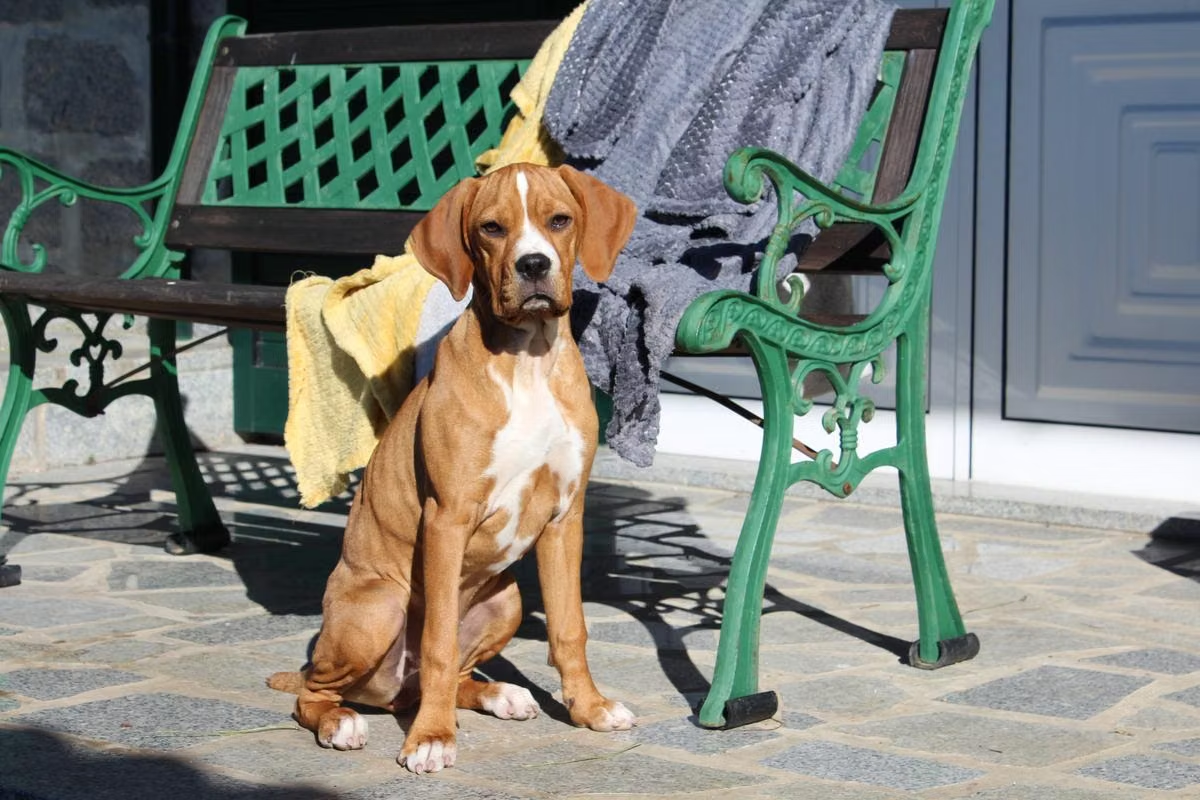
Portuguese Pointer er en vennlig, kjærlig fuglehund hvis kjærlige vesen og skarpe fugleinstinkter gjør den til en verdsatt følgesvenn.
Hvordan pelsen til en Portugisisk pointer er bygget opp, og hva det betyr for stellet.
A few of the Portugisisk pointer profiles members have added to United Pet Club.
The Portuguese Pointer is a medium-sized gundog from Portugal, friendly and affectionate at home and a steady, instinctive bird dog in the field.
The Portuguese Pointer, known in its homeland as the Perdigueiro Português, is a medium-sized hunting dog built for pointing and retrieving game birds. It stands moderately tall, carries a square, athletic frame, and wears a short coat that needs little upkeep. Owners describe it as one of the more openly affectionate gundog breeds, often pressing close for contact rather than keeping the reserved manner seen in some pointers.
In the field the breed works at a sensible pace, holds a firm point, and keeps in touch with its handler instead of ranging far ahead. That biddable, eager-to-please character is a defining feature. The same dog that quarters a hillside for partridge tends to settle indoors and seek out the family once the work is done.
This is an active breed that needs a job or regular outlet for its energy. With daily exercise and company it adapts well to family life, though it is less suited to a household that is away for long stretches or unable to give it room to run.
| Attribute | Detail |
|---|---|
| Origin | Portugal |
| Size | Medium |
| Lifespan | 12 to 14 years |
| Group / role | Gundog (pointing and retrieving) |
| Good with | Families, children, active households |
The Portuguese Pointer fits active owners and families who can give it an hour or more of exercise a day and want a dog that stays close and bonds tightly. Hunters value the breed for its pointing instinct and cooperative range. It is a poor match for sedentary homes, very long working days that leave it alone, or owners who prefer an aloof, independent dog.
The Portuguese Pointer is one of the oldest pointing breeds, developed in Portugal from medieval bird dogs and refined for hunting partridge and other game.
The Portuguese Pointer traces to bird dogs kept on the Iberian Peninsula in the Middle Ages. Pointing dogs of this general type appear in Portuguese hunting records and art from several centuries back, used to locate and hold game for falconers and, later, for hunters working with nets and guns. The breed shares ancestry with the wider family of Iberian pointing dogs from which several modern pointers descend.
For generations the dogs were maintained by hunters and noble households who selected for nose, a reliable point, and a close, cooperative working style. The breed's affectionate temperament is often linked to this history of dogs living alongside the people who hunted with them rather than being kennelled at a distance.
Numbers fell during periods of social and economic upheaval, and the breed reached a low point in the early twentieth century when interest in native hunting dogs declined. Portuguese enthusiasts later gathered remaining stock from rural and northern regions of the country and worked to rebuild a consistent population.
The Portuguese Pointer is recognised internationally as a pointing breed and is still used for hunting in Portugal, while a growing number of homes keep it as an active companion. It remains uncommon outside its native country.
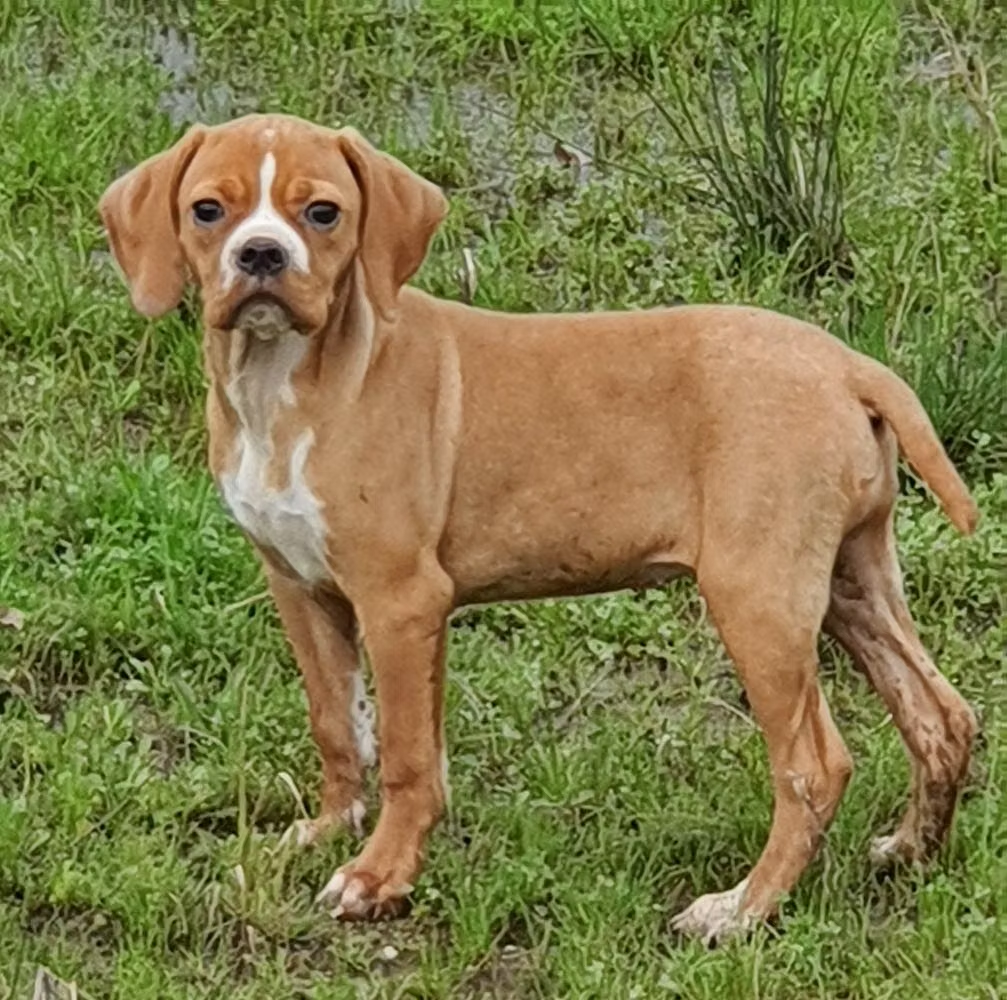
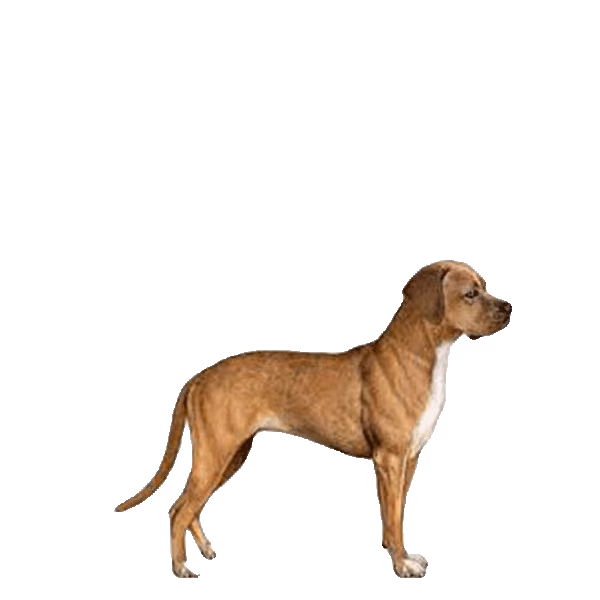
The Portuguese Pointer is a medium, squarely built gundog with a short coat, usually in shades of yellow or brown, and a distinctive broad, slightly concave head.
The Portuguese Pointer is a balanced, medium-sized dog of square proportions, meaning its body length is close to its height at the shoulder. The build is muscular without being heavy, suited to sustained work over varied ground. The head is a recognisable feature: broad with a slightly square outline, a defined stop, and a muzzle that tapers gently. The ears are triangular, set high, and hang against the cheeks. The expression is soft and attentive.
| Trait | Detail |
|---|---|
| Height | Males about 56 cm; females about 52 cm at the shoulder |
| Weight | Roughly 16 to 27 kg depending on sex and build |
| Coat | Short, dense, and close-lying |
| Colors | Yellow (fawn) in light to dark shades, and brown; white markings may occur |
| Eyes | Large, oval, brown, with an attentive expression |
The coat is short and lies flat against the body, with slightly finer hair on the head and ears. This single, low-maintenance coat gives little protection against cold or wet, so the breed feels temperature extremes more than heavily coated dogs. The most common colours are yellow, ranging from pale fawn to a deeper tan, and brown. White markings on the chest or feet are seen in some dogs. The overall look is clean and functional rather than ornamental.
The Portuguese Pointer is friendly, affectionate, and eager to please, bonding closely with its family while staying lively and people-focused.
The defining trait of the Portuguese Pointer is its warmth toward people. It forms strong attachments to its household and often wants physical closeness, following family members from room to room and settling near them. With children it is usually gentle and patient, though its energy means play with very young children should be supervised.
With strangers the breed tends to be sociable rather than guarded, which makes it a friendly greeter but a limited watchdog. Early and regular exposure to visitors keeps that openness balanced and confident. Toward other dogs it is generally amiable, and many live happily alongside other pets when raised with them, though its strong bird instinct means small fast-moving animals can trigger a chase.
This is an active, alert dog that thrives on involvement. Left without exercise, company, or a task, it can become restless and may develop nuisance behaviours out of boredom. Its eager-to-please nature makes it responsive to its owner's mood and quick to pick up on routines.
| Trait | Rating |
|---|---|
| Affection | 5 |
| Energy | 4 |
| Trainability | 4 |
| Vocalness | 2 |
| Shedding | 2 |
The Portuguese Pointer is low-maintenance to groom but high in exercise needs, requiring daily activity and close company to stay content.
The Portuguese Pointer does best in a home with secure outdoor space and people who are around for much of the day. Its short coat gives little insulation, so it needs shelter from cold and a cool, shaded spot in heat. It can adapt to smaller homes if exercise needs are fully met, but it is not suited to being left alone for long hours.
The Portuguese Pointer needs a complete, balanced diet suited to an active medium dog, with amounts adjusted to age, workload, and body condition.
Feed a complete dog food formulated for the breed's life stage and activity level. As an active medium dog, the Portuguese Pointer needs adequate protein and fat to support working muscle and stamina, with the total amount matched to how hard the dog is exercising. Dogs in a hunting season or heavy training need more than the same dog resting in the off-season. Split the daily ration into two meals to support steady energy and reduce the chance of bloat, and avoid hard exercise right around meal times.
| Life stage | Amount per day | Meals |
|---|---|---|
| Puppy (2 to 6 months) | Per food label, divided | 3 to 4 |
| Junior (6 to 12 months) | Per food label for growth | 2 to 3 |
| Adult (active) | Around 250 to 350 g of quality dry food | 2 |
| Senior | Slightly reduced; watch weight | 2 |
Keep treats to about ten percent of daily calories and reduce the main meal to match, since this breed gains weight if overfed and under-exercised. A balanced complete diet usually needs no extra supplements. Discuss any joint, skin, or working-dog supplement with a veterinarian before adding it, and make sure fresh water is always available, especially after exercise.
The Portuguese Pointer is generally healthy with a typical lifespan of 12 to 14 years, with hip dysplasia and ear issues among the points to watch.
The Portuguese Pointer is a robust working breed and most individuals stay sound through life, with a usual lifespan of 12 to 14 years. As with most medium and larger dogs, joint health is the main area to monitor, and the breed's hanging ears and active, outdoor lifestyle bring a few predictable issues. Buying from breeders who health-test their stock lowers the risk of inherited problems.
| Condition | Signs | Note |
|---|---|---|
| Hip dysplasia | Stiffness, limping, reluctance to jump | Ask breeders for hip scores of parents |
| Ear infections | Head shaking, odour, scratching at ears | More likely after work in wet ground; clean regularly |
| Eye conditions | Cloudiness, redness, reduced vision | Routine eye checks help catch issues early |
| Exercise-related injury | Sudden lameness, cuts, foot soreness | Check feet and legs after field work |
| Bloat (gastric torsion) | Swollen belly, retching, distress | Emergency; feed in two meals and avoid hard exercise around feeding |
The Portuguese Pointer is intelligent and eager to please, which makes it highly trainable when handled with consistent, reward-based methods.
The Portuguese Pointer's eagerness to please and strong bond with its handler make it one of the more trainable gundogs. It learns quickly and works for praise and food, but it is sensitive and responds poorly to harsh corrections, which can make it anxious or withdrawn. Short, upbeat sessions hold its attention better than long repetitive drills. Because the breed forms close attachments, early socialisation with people, other dogs, and everyday situations is important so its friendliness stays confident rather than tipping into over-excitement or, in under-socialised dogs, separation distress.
The Portuguese Pointer reaches breeding maturity at around two years, with a roughly nine-week pregnancy and litters that typically number a handful of puppies.
Responsible breeding of the Portuguese Pointer starts with health-tested parents of sound temperament and good working ability. Although dogs reach physical maturity earlier, breeders generally wait until around two years of age so that health screening, particularly hip evaluation, can be completed and the dog is fully grown. Females are usually mated during a suitable heat cycle once they are mature.
Pregnancy lasts about 63 days. The expectant female needs a quiet whelping area, a gradual increase in food through the later weeks, and veterinary monitoring. Litters are commonly in the range of four to eight puppies, though this varies with the individual dog.
Newborn puppies depend fully on the mother for the first weeks. From around three weeks they begin weaning and benefit from early, gentle handling and exposure to household sights and sounds, which suits this socially oriented breed. Puppies usually go to new homes from about eight weeks of age. Given that the breed is uncommon, prospective owners should expect to research breeders carefully and may face a wait for a litter.
| Metric | Value |
|---|---|
| Breeding maturity | Around 2 years |
| Gestation | About 63 days |
| Average litter size | 4 to 8 puppies |
| Weaning | From about 3 to 8 weeks |
| Homing age | From about 8 weeks |
Gratis profil for hele hundelivet til din Portugisisk pointer hos United Pet Club, med chipen registrert uten kostnad og ingen fornyelser.
En skanning gir bare det nummeret registeret svarer med. Gi din Portugisisk pointer et register som svarer med ditt: gratis profil med bilde, opplysninger og kontaktinformasjon, gyldig hele hundelivet uten gebyr. Registreringen gjøres én gang og står seg.
Chipen settes hos veterinæren; registreringen av nummeret er din jobb, og et uregistrert nummer fører ingen steder. Registrer mikrochipen gratis på livstidsplanen: alle merker godtas, flytting oppdateres uten kostnad, og oppføringen svarer på oppslag hele døgnet, i Norge og utenfor. Opprett gratis konto og bli ferdig med begge deler nå.
Opprett en gratis konto hos United Pet Club, skriv inn opplysningene om din Portugisisk pointer med et bilde og lagre. Profilen er gratis hele hundelivet, og DyreID-innmelding hos veterinæren er et eget spor.
Skriv det 15-sifrede nummeret inn i gratis-kontoen med adresse og telefonnummer. Livstidsplanen godtar alle merker og krever aldri betaling for endringer.
Nei, noe lovkrav finnes ikke, men de fleste hunder chippes likevel. Verdien ligger i en oppdatert oppføring bak nummeret, og den er gratis hos United Pet Club.
Null kroner. Gratis livstidsplan dekker profil, chipregistrering og alle endringer, uten fornyelser.
Common questions about the Portuguese Pointer cover its size, temperament, care needs, lifespan, family suitability, and availability.
It is a medium-sized dog. Males stand around 56 cm at the shoulder and females around 52 cm, with weight roughly between 16 and 27 kg depending on sex and build.
Yes. The breed is friendly and affectionate, bonds closely with its household, and is usually gentle with children. Its energy means it suits active families who can exercise it daily, and play with young children should be supervised.
Grooming is easy thanks to the short coat, but exercise needs are high. The main demand is giving it 60 to 90 minutes of activity a day plus company, since it dislikes being left alone for long periods.
The typical lifespan is 12 to 14 years. Good nutrition, a lean weight, regular exercise, and routine veterinary care help a dog reach the upper end of that range.
Yes. They are intelligent and eager to please, which makes them very responsive to reward-based training. They are sensitive, so consistent, gentle methods work far better than harsh corrections.
They are generally amiable with other dogs and can live with other pets when raised together. Because of a strong bird and prey instinct, small fast-moving animals may trigger a chase, so introductions should be careful.
The breed is uncommon outside Portugal. Prospective owners should research reputable, health-testing breeders and may need to join a waiting list to get a puppy.