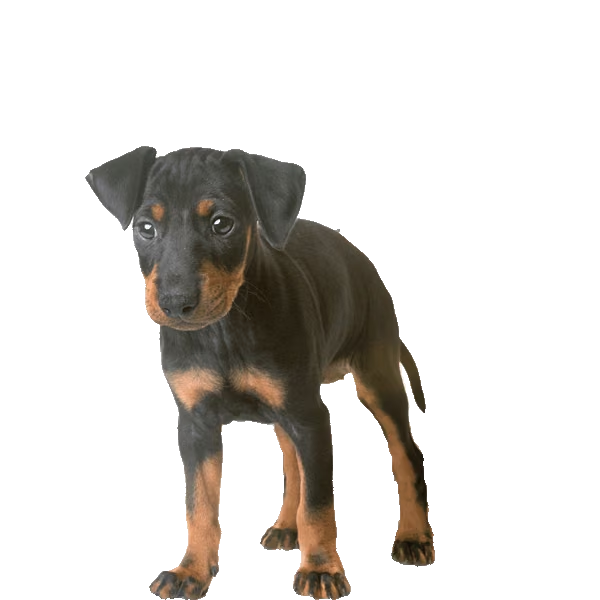
Standard manchesterterrier er en glatt og kvikk rottefangerrase fra England kjent for sin skarpe årvåkenhet og trofaste lojalitet.
Hvordan pelsen til en Manchesterterrier (standard) er bygget opp, og hva det betyr for stellet.
The Standard Manchester Terrier is a small, smooth-coated ratting breed from England, valued for its alertness, athleticism, and close loyalty to its family.
The Standard Manchester Terrier is a compact dog with a short, glossy black-and-tan coat and a clean, athletic outline. It was developed in England as a ratting and rabbit-coursing dog, and that working background shows in its quick reflexes and strong prey drive. Adults usually weigh between 12 and 22 pounds, placing the breed at the larger end of the small category.
The breed is devoted to the people it lives with and often attaches closely to one or two of them. It is alert and watchful, which makes it a capable small watchdog, though it is not a heavy barker when its needs are met. Owners describe the temperament as spirited and intelligent, with an independent streak typical of terriers.
There are two varieties of Manchester Terrier, Standard and Toy, separated by weight. This page covers the Standard variety, the larger of the two.
| Attribute | Detail |
|---|---|
| Origin | England |
| Size | Small (about 12 to 22 lb) |
| Lifespan | 15 to 17 years |
| Group/role | Terrier; vermin control and companion |
| Good with | Families, older children, experienced terrier owners |
The Standard Manchester Terrier fits active households that can give it daily exercise and mental work. It does well with owners who appreciate an alert, busy dog and who can manage a strong prey drive around small pets. Its short coat and modest size make it practical for apartments and houses alike, provided it gets enough activity.
The Standard Manchester Terrier developed in 19th-century England, around the city of Manchester, as a dog bred to kill rats and course rabbits.
The breed takes its name from Manchester, in the north of England, where it became established during the early to middle 1800s. The industrial towns of the period had large rat populations, and working people kept small, fast dogs to control vermin in homes, stables, and mills.
The most widely cited account credits a Manchester breeder named John Hulme, who is said to have crossed a Whippet with a black-and-tan terrier to produce a dog that combined speed with ratting ability. The result was a sleek terrier suited both to killing rats and to coursing rabbits, two popular pastimes of the time.
Rat-killing contests in pits were common entertainment, and the breed earned a reputation for efficiency at the task. The same dogs were valued at home for keeping properties free of rodents. Over time selective breeding fixed the smooth coat, the black-and-tan markings, and the trim build seen today.
The breed was later standardized and divided by weight into Standard and Toy varieties. The two were at times treated as a single breed with size divisions, and breed clubs in Britain and elsewhere worked to preserve the type as ratting contests declined and the dog shifted toward a companion role.
The Standard Manchester Terrier is a small, sleek dog with a smooth black-and-tan coat, a wedge-shaped head, and a tight, muscular build.
The Standard Manchester Terrier has a clean, racy outline that reflects its Whippet ancestry. The body is slightly longer than tall, with a deep, narrow chest, an arched loin, and a tapering tail carried in a slight upward curve. The head is long and wedge-shaped, tapering toward the muzzle, with small, dark, almond-shaped eyes set close. Ears may be naturally erect, button, or, where permitted, cropped.
| Trait | Standard |
|---|---|
| Height | About 15 to 16 in at the shoulder |
| Weight | About 12 to 22 lb |
| Coat | Short, smooth, dense, and glossy |
| Colors | Black and tan (mahogany tan) |
| Eyes | Small, dark, almond-shaped |
The coat is the breed's defining feature: short, close-lying, and hard to the touch, with a high shine. The only recognized color is black and tan. The black is jet and the tan is a deep mahogany, with sharp, clearly defined borders between the two. Tan markings appear in set places, including a spot above each eye, on the muzzle and cheeks, on the lower legs and feet, and beneath the tail. On the front legs the tan typically forms a clear line up to the pastern, and small black marks on the toes are referred to as thumb marks. The short coat sheds modestly and needs little maintenance.
The Standard Manchester Terrier is devoted, spirited, and alert, forming strong bonds with its family while staying reserved with strangers and driven to chase small animals.
The Standard Manchester Terrier is a lively, attentive dog that stays closely involved with its household. It tends to bond tightly with one or two people and follows them around the home. With family it is affectionate and playful, and it usually does well with older children who handle it with respect.
The breed is naturally reserved toward strangers rather than aggressive, and it will signal new arrivals with a bark. This watchfulness makes it a useful alarm dog. Early and regular socialization helps a Manchester Terrier stay confident and settled around unfamiliar people and situations.
With other dogs the breed can be sociable, though its terrier self-assurance means careful introductions help. Its strong prey drive is the main caution: rats, mice, and other small pets can trigger an instinct to chase. Households with rabbits, rodents, or similar animals should plan secure separation. The breed is intelligent and quick to learn, but it has an independent streak and responds best to engaging, consistent handling.
| Trait | Rating |
|---|---|
| Affection | 4 |
| Energy | 4 |
| Trainability | 4 |
| Vocalness | 3 |
| Shedding | 2 |
The Standard Manchester Terrier needs daily exercise and mental engagement but very little grooming thanks to its short coat.
The breed adapts to apartments or houses as long as it gets daily exercise. The short coat offers little protection in cold weather, so a coat or sweater helps on cold-weather walks. These dogs prefer warmth and like to seek out soft, sheltered spots to rest.
Feed the Standard Manchester Terrier a complete diet portioned to its small size and activity level, split across two meals a day to keep weight steady.
The Standard Manchester Terrier does well on a complete, balanced dog food suited to its life stage. Because the breed is small and deep-chested, portions should be measured rather than left out free-choice, and weight checked regularly to keep the ribs easy to feel. Active individuals burn more energy and may need slightly larger portions than the figures below.
| Life stage | Amount per day | Meals |
|---|---|---|
| Puppy (2 to 6 months) | About 3/4 to 1 1/2 cups | 3 to 4 |
| Adult (1+ year) | About 3/4 to 1 1/4 cups | 2 |
| Senior (8+ years) | About 1/2 to 1 cup | 2 |
Treats should make up no more than about 10 percent of daily calories, since this small breed gains weight quickly. Use small training treats or pieces of the dog's regular kibble for rewards. Most Manchester Terriers on a complete diet need no supplements; ask a veterinarian before adding any, including joint or skin products.
The Standard Manchester Terrier is generally healthy with a long lifespan of 15 to 17 years, though a few inherited conditions are worth monitoring.
The Standard Manchester Terrier is a hardy breed and one of the longer-lived small dogs, with a typical lifespan of 15 to 17 years. Responsible breeders screen for the inherited conditions known in the breed, which helps reduce their occurrence. Routine veterinary care and weight management support a long, active life.
| Condition | Signs | Note |
|---|---|---|
| Von Willebrand disease | Excess bleeding from minor wounds or surgery | Inherited clotting disorder; DNA test available |
| Cardiomyopathy | Tiring easily, coughing, fainting | Heart muscle disease; vet monitoring helps |
| Patellar luxation | Skipping steps, intermittent hind-leg lameness | Kneecap slips out of place; severity varies |
| Hypothyroidism | Weight gain, low energy, coat changes | Managed with daily medication |
| Juvenile cardiomyopathy | Sudden weakness or collapse in young dogs | Rare; reputable breeders screen lines |
The Standard Manchester Terrier is intelligent and quick to learn, but its independent terrier nature responds best to short, reward-based sessions.
The Standard Manchester Terrier learns quickly and enjoys mental challenges, but it has the self-directed streak common to terriers. It works best with handlers who keep sessions short, varied, and rewarding rather than repetitive. Harsh corrections tend to make the breed shut down or grow stubborn, while clear, consistent rules build cooperation. Early socialization with people, dogs, and everyday sights helps the dog stay confident, and recall training deserves extra attention because of the strong chase instinct.
Breeding Standard Manchester Terriers calls for health-tested parents, typical canine gestation of about 63 days, and small litters that need careful early socialization.
Females generally reach sexual maturity by around 6 to 12 months, but responsible breeding waits until the dog is physically and mentally mature, usually after the second year. Before mating, both parents should be screened for the inherited conditions known in the breed, including von Willebrand disease and cardiac problems, so that affected lines are not passed on.
Gestation in the breed follows the canine norm of about 63 days. Litters are small, commonly two to five puppies, which suits the breed's size. Whelping is usually straightforward, but a breeder should monitor the dam closely and have veterinary support available.
Puppies benefit from early, gentle handling and exposure to household sights and sounds. Because the breed bonds closely and carries a strong prey drive, early socialization shapes a stable adult. Pups normally go to new homes at about eight weeks, once weaned and started on basic routines.
| Metric | Value |
|---|---|
| Sexual maturity | About 6 to 12 months |
| Recommended breeding age | After about 2 years |
| Gestation | About 63 days |
| Average litter size | 2 to 5 puppies |
| Weaning age | About 6 to 8 weeks |
Gratis profil for hele hundelivet til din Manchesterterrier (standard) hos United Pet Club, med chipen registrert uten kostnad og ingen fornyelser.
En skanning gir bare det nummeret registeret svarer med. Gi din Manchesterterrier (standard) et register som svarer med ditt: gratis profil med bilde, opplysninger og kontaktinformasjon, gyldig hele hundelivet uten gebyr. Registreringen gjøres én gang og står seg.
Chipen settes hos veterinæren; registreringen av nummeret er din jobb, og et uregistrert nummer fører ingen steder. Registrer mikrochipen gratis på livstidsplanen: alle merker godtas, flytting oppdateres uten kostnad, og oppføringen svarer på oppslag hele døgnet, i Norge og utenfor. Opprett gratis konto og bli ferdig med begge deler nå.
Opprett en gratis konto hos United Pet Club, skriv inn opplysningene om din Manchesterterrier (standard) med et bilde og lagre. Profilen er gratis hele hundelivet, og DyreID-innmelding hos veterinæren er et eget spor.
Skriv det 15-sifrede nummeret inn i gratis-kontoen med adresse og telefonnummer. Livstidsplanen godtar alle merker og krever aldri betaling for endringer.
Nei, noe lovkrav finnes ikke, men de fleste hunder chippes likevel. Verdien ligger i en oppdatert oppføring bak nummeret, og den er gratis hos United Pet Club.
Null kroner. Gratis livstidsplan dekker profil, chipregistrering og alle endringer, uten fornyelser.
Common questions about the Standard Manchester Terrier's size, temperament, care, lifespan, and suitability as a pet.
Adults stand about 15 to 16 inches at the shoulder and weigh roughly 12 to 22 pounds, which places them at the larger end of the small category. The Toy variety is smaller.
Yes, for many families. It is devoted and playful with its people and does well with older children who handle it gently. Its strong prey drive means care is needed around small pets such as rabbits and rodents.
Grooming is easy thanks to the short coat, which needs only weekly brushing. The main demand is daily exercise and mental engagement, since this is an active, intelligent dog.
They are long-lived for a dog, typically reaching 15 to 17 years with good care and a healthy weight.
They are alert and will bark to announce visitors or unusual events, which makes them good watchdogs. With enough exercise and training, most are not excessive barkers.
Yes, the modest size and short coat suit apartments, provided the dog gets daily walks and play. They feel the cold, so a coat helps on chilly outings.
The breed is uncommon, so expect a wait. Look for breeders who health-test parents for von Willebrand disease and cardiac conditions, and check breed-specific rescues for dogs needing homes.
