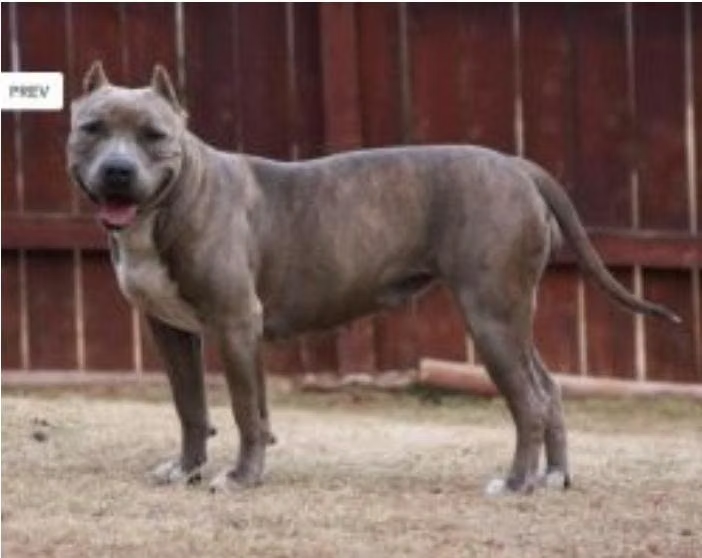
American Pit Bull Terrier er en lojal, kjærlig og selvsikker følgesvenn kjent for sin hengivenhet og menneskekjære natur.
Hvordan pelsen til en Amerikansk pitbullterrier er bygget opp, og hva det betyr for stellet.
A few of the Amerikansk pitbullterrier profiles members have added to United Pet Club.
The American Pit Bull Terrier is a medium-sized, muscular dog from the United States known for its loyalty, affection, and strong attachment to people.
The American Pit Bull Terrier is a medium-sized dog developed in the United States from bulldog and terrier stock. It stands as a compact, muscular animal built for strength and agility, with a broad head, well-defined cheeks, and a short, smooth coat. Adults typically weigh between 30 and 60 pounds, with males larger than females.
Despite a reputation shaped by misuse and media coverage, the breed is widely described by owners and handlers as affectionate, people-oriented, and eager to please. Well-socialized dogs tend to be friendly toward humans, including strangers, and form close bonds with their families. The breed is energetic and intelligent, traits that respond well to consistent training and regular activity.
The American Pit Bull Terrier is recognized by the United Kennel Club and the American Dog Breeders Association. It is not recognized by the American Kennel Club, which registers the closely related American Staffordshire Terrier under a separate standard.
| Attribute | Detail |
|---|---|
| Origin | United States |
| Size | Medium (30 to 60 lb) |
| Lifespan | 12 to 16 years |
| Group/role | Terrier; companion and working dog |
| Good with | Family members and children when socialized; supervision advised with other dogs |
The breed fits active households that can provide daily exercise, structure, and ongoing socialization. It does well with owners who enjoy training and want a dog that stays close. Prospective owners should check local and regional laws, as some areas restrict ownership of pit bull type dogs. Households with other dogs should plan for careful introductions and supervision.
The American Pit Bull Terrier descends from 19th-century British bull-and-terrier crosses brought to the United States, where it was bred as a farm and companion dog.
The breed traces to the bull-and-terrier dogs of 19th-century Britain and Ireland, produced by crossing bulldogs with terriers. These crosses combined the strength of the bulldog with the drive and agility of the terrier. They were used in blood sports that were later outlawed in the United Kingdom by the Cruelty to Animals Act of 1835.
Immigrants brought these dogs to the United States during the middle and later 1800s. On American farms and homesteads the dogs took on broader work: guarding property, controlling vermin, driving livestock, and serving as family companions. Selective breeding in this period favored stable temperament toward people alongside physical ability.
The United Kennel Club registered the breed under the name American Pit Bull Terrier in 1898, with founder C. Z. Bennett assigning the first registration number. The American Dog Breeders Association followed in 1909. The American Kennel Club declined to register the breed under that name and instead recognized a related line as the Staffordshire Terrier in 1936, later renamed the American Staffordshire Terrier in 1972.
Through the 20th century the breed appeared in advertising and public life, and individual dogs gained recognition for service in wartime and as companions. Later decades brought association with dogfighting and a series of breed-specific laws in various jurisdictions, which continue to shape ownership today.
The American Pit Bull Terrier is a muscular, medium-sized dog with a broad head, short smooth coat, and a wide range of accepted colors.
The American Pit Bull Terrier is a well-muscled dog of medium size, built for a balance of strength, speed, and agility rather than bulk alone. The head is medium length with a broad, flat skull, pronounced cheek muscles, and a wide, deep muzzle. The body is slightly longer than tall, with a deep chest, level back, and a tail that tapers to a point. Movement is light and powerful.
| Trait | Standard |
|---|---|
| Height | 17 to 21 inches (43 to 53 cm) at the shoulder |
| Weight | 30 to 60 lb (14 to 27 kg) |
| Coat | Short, smooth, glossy, close to the body |
| Colors | Most colors and patterns except merle |
| Eyes | Round to almond, any color except blue in some standards |
The coat is short and stiff to the touch, lying flat against the skin. It requires little maintenance and offers limited protection from cold. Accepted colors are wide-ranging and include black, blue, brown, fawn, red, brindle, and white, in solid, patched, or ticked patterns. The merle pattern is excluded from standards because it is not considered native to the breed and is linked to health concerns. Nose color generally matches the coat.
The breed is affectionate, loyal, and people-oriented, typically friendly toward humans while needing supervision and socialization around other dogs.
The American Pit Bull Terrier is known for strong attachment to people. Well-bred and well-socialized dogs are affectionate and confident, and many are openly friendly with strangers, which makes them poor candidates for guard work. The breed is people-oriented and often described as wanting to be involved in family activity rather than left alone.
With children the breed is commonly gentle and tolerant, though its size and energy mean interactions with young children should be supervised. The terrier ancestry can produce drive toward other animals, and some individuals show dog-directed reactivity. Early socialization and careful management around unfamiliar dogs reduce conflict.
The breed is intelligent and responsive, with a high will to please that supports training. Boredom or lack of exercise can lead to destructive behavior, so mental and physical outlets matter. Temperament varies by individual and by breeding, and responsible sourcing improves the odds of a stable adult dog.
| Trait | Rating |
|---|---|
| Affection | 5 |
| Energy | 5 |
| Trainability | 4 |
| Vocalness | 2 |
| Shedding | 3 |
The breed needs minimal grooming but high daily exercise and mental engagement, and it does best in homes that keep it active and close to people.
The breed adapts to houses and apartments as long as daily exercise needs are met. It is an indoor dog that should live with its family rather than be left outside. Secure fencing is important, because the breed is athletic and can climb or jump. The short coat means cold weather calls for a coat or limited outdoor time, and access to shade and water is needed in heat.
Feed a complete diet matched to life stage and activity, split across two meals, while watching portions to keep the muscular frame at a healthy weight.
The American Pit Bull Terrier does well on a complete and balanced diet formulated for its life stage and activity level. Active adults need adequate protein to maintain muscle, with fat for energy. Because the breed carries dense muscle, weight should be judged by body condition, with a visible waist and ribs that are easy to feel. Portions depend on the individual dog's size, age, and activity, so the figures below are starting points to adjust.
| Life stage | Amount per day | Meals |
|---|---|---|
| Puppy (2 to 6 months) | 1.5 to 2.5 cups | 3 to 4 |
| Puppy (6 to 12 months) | 2 to 3 cups | 2 to 3 |
| Adult | 1.5 to 2.5 cups | 2 |
| Senior | 1.25 to 2 cups | 2 |
Keep treats to about 10 percent of daily calories to protect against weight gain. Use small, low-calorie rewards during training. Most dogs on a complete diet need no supplements, though a veterinarian may recommend joint support for active or aging dogs. Provide fresh water at all times.
The breed is generally hardy with a lifespan of 12 to 16 years, though it can be prone to hip dysplasia, skin allergies, and certain hereditary conditions.
The American Pit Bull Terrier is generally a sturdy, healthy breed with a typical lifespan of 12 to 16 years. Like all breeds it has some predispositions, several of which can be reduced through health screening of breeding dogs. The short coat makes skin issues easy to spot early, and routine veterinary care supports a long life.
| Condition | Signs | Note |
|---|---|---|
| Hip dysplasia | Stiffness, limping, trouble rising | Screen breeding stock; manage weight and activity |
| Skin allergies | Itching, redness, ear infections | Often environmental or food-related; needs diagnosis |
| Cerebellar ataxia | Loss of coordination, tremors | Hereditary; DNA testing available in some lines |
| Hypothyroidism | Weight gain, lethargy, coat changes | Diagnosed by blood test; managed with medication |
| Heart disease | Coughing, fatigue, fainting | Some lines screened for valve and rhythm issues |
The breed is intelligent and eager to please, learning quickly with consistent, reward-based training and early socialization.
The American Pit Bull Terrier is intelligent and strongly motivated to please its owner, which makes it a capable student. It responds best to consistent, reward-based methods and clear structure. Harsh handling tends to backfire and can damage the dog's trust. Because the breed is powerful and energetic, leash manners and reliable recall are priorities from an early age. Early and ongoing socialization with people, places, and other animals is the single most valuable investment an owner can make.
Females reach maturity around 18 to 24 months, carry litters for about 63 days, and produce on average five to ten puppies that wean by eight weeks.
Responsible breeding of the American Pit Bull Terrier centers on temperament and health rather than appearance alone. Breeding dogs should be screened for hip dysplasia, cardiac issues, and hereditary conditions such as cerebellar ataxia where testing exists. Although females can cycle earlier, breeding is best delayed until full physical and mental maturity, generally around 18 to 24 months.
Gestation lasts about 63 days. Litters average five to ten puppies, with size varying by individual and dam. The mother handles most early care, including nursing and cleaning. Puppies open their eyes near two weeks and begin weaning onto solid food between three and four weeks, completing the transition around eight weeks.
Early handling and exposure shape adult temperament, so the breeding period from birth to placement matters. Puppies should stay with the dam and littermates until at least eight weeks to learn bite inhibition and basic social skills. Prospective breeders should also be aware of local laws affecting pit bull type dogs before planning a litter.
| Metric | Value |
|---|---|
| Sexual maturity | 6 to 12 months |
| Recommended breeding age | 18 to 24 months |
| Gestation | About 63 days |
| Average litter size | 5 to 10 puppies |
| Weaning age | About 8 weeks |
| Eyes open | About 2 weeks |
En kostnadsfri livstidsprofil for din Amerikansk pitbullterrier hos United Pet Club, med chipen registrert uten gebyr og ingenting å fornye.
Et dyremottak kan bare ringe nummeret et oppslag gir dem. Sørg for at din Amerikansk pitbullterrier har et oppslag som alltid svarer: den kostnadsfrie profilen samler telefonnummeret ditt, hundens bilde og opplysningene dens for hele hundelivet, uten en krone i gebyr. Registreringen gjør du én gang, så er den på plass.
De femten sifrene under pelsen på din Amerikansk pitbullterrier peker først på deg når et register sier det. La United Pet Club si det kostnadsfritt: registreringen varer livet ut, alle chipmerker godtas, og hver endring er gratis. Chipregistreringen først, kontoen rett etterpå.
Opprett en kostnadsfri konto hos United Pet Club, legg inn opplysningene om din Amerikansk pitbullterrier med et bilde og lagre profilen. Den er gratis hele hundelivet, og en eventuell DyreID-oppføring hos veterinæren lever sitt eget liv ved siden av.
Tast inn det 15-sifrede chipnummeret i den kostnadsfrie kontoen din sammen med adresse og telefonnummer. Livstidsplanen godtar alle chipmerker og tar aldri betalt for oppdateringer.
Norge har ikke noe lovpålagt krav om ID-merking av hunder, men de fleste chippes hos veterinæren likevel. Nytten kommer først med en oppdatert oppføring bak nummeret, og den holder United Pet Club gratis.
Ingenting. Den kostnadsfrie livstidsplanen dekker profilen, chipregistreringen og alle senere endringer, uten fornyelsesgebyr.
Common questions about the American Pit Bull Terrier's size, temperament, care needs, lifespan, and suitability as a family dog.
It is a medium-sized breed, standing about 17 to 21 inches at the shoulder and weighing roughly 30 to 60 pounds, with males larger than females.
Well-socialized dogs are typically affectionate and people-oriented, and many do well with children. Supervision is advised with young kids due to the dog's size and energy, and introductions to other dogs should be careful.
Grooming is minimal because of the short coat, but the breed needs substantial daily exercise and mental engagement. It suits active owners who can provide structure and consistent training.
The typical lifespan is 12 to 16 years. Good nutrition, a lean body weight, regular veterinary care, and responsible breeding all support a long life.
The breed is generally friendly toward people and was historically bred against human aggression. Some individuals show drive toward other animals, which makes socialization and management important. Temperament depends heavily on breeding, training, and handling.
Not always. Some regions and municipalities have breed-specific laws that restrict or ban pit bull type dogs. Check local regulations and any housing or insurance rules before acquiring one.
Yes. Plan for at least 60 to 90 minutes of activity each day, combining walks or runs with play and training. Without enough exercise the breed can become bored and destructive.