
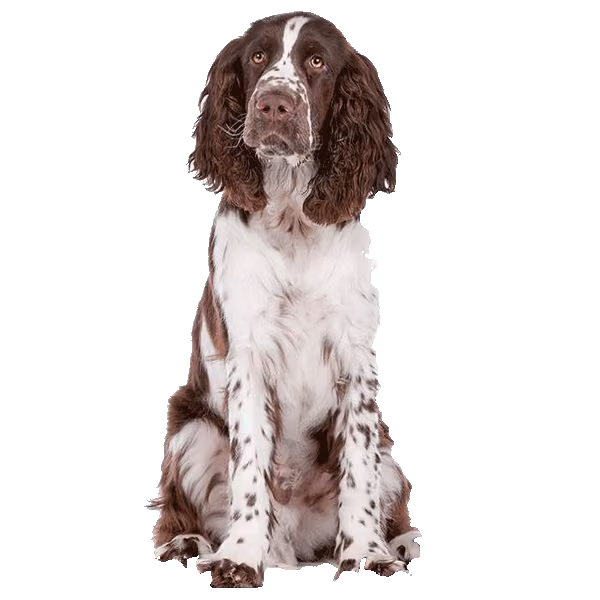
Small Munsterlander Pointer
The Small Munsterlander Pointer is an intelligent, affectionate versatile gundog that excels at pointing and retrieving.
- Size
- Medium
- Lifespan
- 12–14 years
- Origin
- Germany
- Temperament
- Intelligent
- Standard colors
- Balta, Ruda ir Rusva
Characteristics
Coat and grooming
How the Small Munsterlander Pointer coat is built, and what that means when you groom it.
- Kailio sluoksniai
- Vienguba kailis
- Plauko struktūra
- Šilkinis
- Plauko ilgis
- Vidutinis
- Šėrimasis
- Vidutinis šėrimasis
Grooming guidance
Atsargiai: A Small Munsterlander Pointer coat mats easily.
Plonas ar ilgas plaukas susipainioja kailio apačioje, kur nesimato, o kuokštai susitraukia ir tempia odą. Šukuoti reikia sruogomis iki pat šaknų, o ne tik paviršiumi.
Small Munsterlander Pointer colors and patterns
What each club's breed standard says about every Small Munsterlander Pointer color and pattern. Point at a ruling to see the club's own wording.
Breed standards describe the Small Munsterlander Pointer in Balta, Ruda ir Rusva. Standard patterns: Dvispalvė, Dereša, Mantijinė ir Su įdegiu.
| Color or pattern | FCI | AKC | UKC | KC | KUSA |
|---|---|---|---|---|---|
| Balta | Pagal standartą (“Brown-white”) | Pagal standartą (“Brown & White”) | Pagal standartą (“Brown and white”) | Pagal standartą (“Brown & white”) | Pagal standartą (“Brown-white”) |
| Ruda | Pagal standartą (“Brown-white and brown roan”) | Pagal standartą (“Brown & White”) | Pagal standartą (“Brown and white”) | Pagal standartą (“Brown & white”) | Pagal standartą (“Brown-white or brown roan”) |
| Rusva | Pagal standartą (“Tan coloured markings on the muzzle, the eyes and around the anus, and on the ears, tail and legs are permissible”) | Pagal standartą (“Tan Markings”) | Pagal standartą (“Tan points on cheeks, above eyes and around anus acceptable”) | Pagal standartą (“Tan coloured markings on the muzzle, the eyes, ears, tail, around the vent, and legs permissible”) | Pagal standartą (“Tan coloured markings on the muzzle, the eyes and around the anus, and on the ears, tail and legs are permissible”) |
| Albinosinė | Nepripažinta | Nepripažinta | Diskvalifikuojanti (“Albinism”) | Nepripažinta | Nepripažinta |
| Patterns | |||||
| Dvispalvė | Pagal standartą (“Brown-white”) | Pagal standartą (“Brown & White”) | Pagal standartą (“Brown and white”) | Pagal standartą (“Brown & white”) | Pagal standartą (“Brown-white”) |
| Dereša | Pagal standartą (“brown roan”) | Pagal standartą (“Brown Roan”) | Pagal standartą (“Brown roan”) | Pagal standartą (“Brown roan”) | Pagal standartą (“brown roan”) |
| Mantijinė | Pagal standartą (“brown mantle”) | Pagal standartą (“brown mantle”) | Pagal standartą (“Brown mantle”) | Pagal standartą (“brown mantle”) | Pagal standartą (“brown mantle”) |
| Su įdegiu | Pagal standartą (“Tan coloured markings”) | Pagal standartą (“Tan Markings”) | Pagal standartą (“Tan points on cheeks, above eyes and around anus acceptable”) | Pagal standartą (“Tan coloured markings”) | Pagal standartą (“Tan coloured markings”) |
| Vienspalvė | Diskvalifikuojanti (“Wholecoloured dogs”) | Diskvalifikuojanti (“Solid colored dog is disqualifying”) | No ruling | No ruling | Diskvalifikuojanti (“Whole-coloured dogs”) |
%22%3E%3Cpath%20d%3D%22M0%2023L9.5%2020.4L14%2025.4L19%2029.6Q21%2035%2023.5%2035.5Q36%2033%2050%2036L56%2040V64H0Z%22%20fill%3D%22%23F5F5F0%22%2F%3E%3C%2Fg%3E%3Cuse%20href%3D%22%23s%22%20fill%3D%22none%22%20stroke%3D%22%233B2A20%22%20stroke-opacity%3D%220.6%22%20stroke-width%3D%221%22%20stroke-linejoin%3D%22round%22%2F%3E%3Cellipse%20cx%3D%223.2%22%20cy%3D%2221.7%22%20rx%3D%221.3%22%20ry%3D%221.2%22%20fill%3D%22%231C1C1C%22%2F%3E%3Ccircle%20cx%3D%2210.8%22%20cy%3D%2219.3%22%20r%3D%221.1%22%20fill%3D%22%231C1C1C%22%2F%3E%3C%2Fsvg%3E)
%22%3E%3Cg%20fill%3D%22none%22%20stroke%3D%22%23F5F5F0%22%20stroke-width%3D%221.15%22%20stroke-linecap%3D%22round%22%20stroke-linejoin%3D%22round%22%3E%3Cpath%20d%3D%22M28.6%2025h.1M51.3%2028.8h.1M34.7%2024.3h.1M34.2%2041.6h.1M51%2044.2h.1M55.9%2024.7h.1M27.5%2026.3h.1M18.5%2028.6h.1M25.2%2028.9h.1M24.2%2019.3h.1M20.6%2017.6h.1M34.1%2030.6h.1M57.3%2023.3h.1M23.5%2030.7h.1M26.5%2023.1h.1M40%2031.5h.1M51.7%2038.6h.1M20.2%2022.1h.1M40.4%2037.8h.1M35%2043.1h.1M20.6%2031.7h.1M27.8%2031.9h.1M17.2%2021.1h.1M38.1%2037.7h.1M25.3%2040.5h.1M32%2029.3h.1M41.6%2039.5h.1M23.6%2024h.1M26.4%2018.6h.1M30.3%2031.9h.1M31.2%2035.2h.1M36.5%2043.7h.1M35.2%2026.3h.1M55.6%2019.1h.1M22.4%2036.8h.1M39.2%2020h.1M49.5%2039.1h.1M33.6%2033.5h.1M36.4%2032.4h.1M56.3%2042.4h.1M54.8%2031.2h.1M36.9%2023.2h.1M52.7%2019.1h.1M21.5%2033.8h.1M48.6%2028h.1M36.6%2017.5h.1M45.6%2031.3h.1M37.9%2030.5h.1M17%2031.8h.1M21.1%2043.1h.1M55.7%2021.1h.1M30.8%2041.9h.1M57.4%2038.4h.1M54.8%2026.9h.1M29.1%2017.5h.1M24.3%2037.7h.1M26%2032h.1M39.3%2022.8h.1M53.5%2029h.1M53.3%2023.3h.1M20%2038.4h.1M28.3%2044.7h.1M28.6%2039.8h.1M51.9%2041.1h.1M52.3%2033.7h.1M19.6%2042.2h.1M19%2033h.1M47.8%2021.7h.1M45.7%2024.8h.1M24.6%2035.5h.1M29.8%2036.8h.1M50.7%2032h.1M29.5%2043.5h.1M28.2%2041.5h.1M47.4%2034.8h.1M25.4%2033.7h.1M50.2%2041.2h.1M27.7%2029.5h.1M21.5%2024.8h.1M55.5%2017.5h.1M41.2%2044.3h.1M39.2%2018.4h.1M41.1%2042.5h.1M54.7%2035.3h.1M42.8%2034.5h.1M30.1%2023h.1M42.6%2025.1h.1M32.9%2024.4h.1M42.4%2032.4h.1M49.7%2022.2h.1M49.1%2043.1h.1M38%2035.2h.1M47.7%2043.8h.1M43.1%2022.4h.1M22.4%2040.4h.1M44.4%2019.8h.1M53.3%2040.1h.1M20.7%2029.3h.1M55.6%2043.9h.1M17.6%2039.2h.1M41.7%2028.9h.1M44.1%2036.3h.1M24.3%2043.6h.1M26.4%2038.1h.1M30.3%2029.2h.1M31.5%2030.8h.1M32.1%2023h.1M18.3%2040.9h.1M48%2033.4h.1M36.4%2038.7h.1M31.9%2020.8h.1M32.6%2026.2h.1M22%2031.2h.1M53.4%2021.7h.1M41.9%2017.7h.1M53.3%2037.3h.1M47.7%2040.3h.1M54.4%2033.7h.1M33.6%2037.5h.1M25.3%2017.2h.1M37.6%2019.7h.1M31.6%2019h.1M29.2%2019.6h.1M50.7%2027.3h.1M22%2022.1h.1M31%2037.8h.1M56.5%2026.6h.1M34.7%2039.5h.1M56.5%2040.8h.1M47.6%2038h.1M48.6%2026.1h.1M49.7%2034.2h.1M45.4%2027.4h.1M22.6%2038.9h.1M56.5%2035.3h.1M35.1%2021h.1M41.9%2020.1h.1M37.6%2040h.1M32.6%2044.4h.1M37.9%2025.2h.1M26.6%2043h.1M18.9%2036.7h.1M47.2%2028.9h.1M30.5%2026.2h.1M17.4%2027.3h.1M47.1%2017.2h.1M22.3%2044.3h.1M32.5%2042.4h.1M23.6%2025.7h.1M31.4%2024.9h.1%22%2F%3E%3Cpath%20d%3D%22M26%2020.9h.1M41.2%2023.8h.1M39.9%2026.4h.1M28.5%2033.4h.1M42.8%2043.8h.1M17.6%2034.3h.1M34%2017.1h.1M31.2%2017.2h.1M46.5%2036.1h.1M25.1%2022.1h.1M50.3%2023.7h.1M20.2%2026.6h.1M20.8%2020.4h.1M50.9%2017.3h.1M49.5%2020.2h.1M52.9%2044.1h.1M23.9%2017.8h.1M43.2%2028.1h.1M57.6%2030h.1M52%2025.6h.1M19.2%2019.1h.1M19.5%2024.4h.1M32.8%2040.1h.1M36.1%2027.7h.1M39.6%2029.5h.1M38.4%2041.5h.1M47.9%2019.4h.1M49.1%2031.7h.1M55.9%2036.9h.1M29.2%2027.2h.1M46%2043.5h.1M44.6%2028.8h.1M47.5%2031.5h.1M22.8%2020h.1M27.6%2017.1h.1M43.1%2018.6h.1M54.3%2020h.1M57.2%2033.8h.1M44.5%2043.8h.1M27.1%2035.5h.1M45.3%2041.8h.1M56.7%2028.8h.1M36.7%2021.4h.1M43.3%2042.3h.1M17.3%2022.9h.1M32.7%2035.5h.1M30.5%2039.8h.1M29.1%2021.2h.1M34.5%2018.8h.1M25.8%2027h.1%22%2F%3E%3C%2Fg%3E%3Cpath%20d%3D%22M56.3%2038.4l0%201.2M40%2027.2l-0.3%201.3M32.6%2043.6l-0.4%201.5M29%2023.3l0.8%201.5M55.1%2044l0.4%201.1M47.5%2022.5l-0.2%201.6M42.9%2038.6l0.7%201.2M35.2%2041.8l-0.5%201.7M26.9%2040l-0.1%201.2M41%2042.8l-0.1%201.6M18.4%2021.2l0.7%201.3M49.4%2019.3l-0.5%201.4M50.1%2041.7l0%201.8M28.2%2041.8l-0.6%201.2M55.5%2027.1l0.2%201.2M44.7%2019.3l0.5%201.7M48.6%2020.5l-0.8%201.4M43.7%2039.6l0.3%201.1M22.1%2033.8l-0.6%201.6M50.1%2038.1l-0.5%201.3M51.8%2044.1l-0.1%201.8M39%2017.5l0%201.4M30.2%2026.7l0.2%201.4M25.8%2031.2l0.2%201.6M29.6%2043.5l0.1%201M43.7%2018.3l0.1%201.5M29.6%2018.2l0.3%201.6M24.4%2017.6l0.3%201.1M22%2028.2l-0.6%201.6M25.9%2043.3l-0.3%201.4M22.2%2024.3l0.3%201.3M47.3%2029.2l-0.2%201.4M21.8%2033.2l0.5%200.9M32.9%2037l0.4%201M40%2029.9l0.8%201.4M17.4%2038.3l0.2%201.3M31%2039.2l0%201.2M37.3%2033.7l0.3%201.5M48.1%2040.5l0%201.6M33.9%2031.2l0.1%201.2M29.8%2035.2l-0.4%201M25.1%2037.3l-0.2%201.5M30.2%2039.8l0.5%201M44.6%2034.8l0.4%200.9M55.3%2034.2l0%201.7M50.6%2017.9l0.4%201M30.2%2034.9l-0.4%201.4M19.5%2035.7l-0.5%201.7M40.7%2028.7l0.8%201.4M23.3%2029l-0.4%201.4M17%2040.5l-0.2%201M48.4%2023.2l-0.3%201M37.3%2025.1l-0.4%201.3M23%2021.4l-0.4%201.3M20.4%2017.2l-0.1%201.3M42.3%2020.4l0.6%201.4M41%2031.8l0.6%201.2M45.4%2034.3l-0.1%201.2M32.5%2018l0%201.3M46.2%2021.6l0.1%201.4M30.5%2022.3l0.5%201.1M58%2044.6l0.3%201.5M57.1%2033.9l0.8%201.4M18.3%2042.6l0.3%201M40.5%2035.1l-0.6%201.4M38.8%2044.3l-0.3%201.1%22%20fill%3D%22none%22%20stroke%3D%22%23F5F5F0%22%20stroke-width%3D%220.8%22%20stroke-linecap%3D%22round%22%20stroke-linejoin%3D%22round%22%2F%3E%3C%2Fg%3E%3Cuse%20href%3D%22%23s%22%20fill%3D%22none%22%20stroke%3D%22%233B2A20%22%20stroke-opacity%3D%220.6%22%20stroke-width%3D%221%22%20stroke-linejoin%3D%22round%22%2F%3E%3Crect%20x%3D%2220%22%20y%3D%2258%22%20width%3D%223.6%22%20height%3D%222%22%20fill%3D%22%234A4038%22%2F%3E%3Crect%20x%3D%2226%22%20y%3D%2258%22%20width%3D%223.6%22%20height%3D%222%22%20fill%3D%22%234A4038%22%2F%3E%3Crect%20x%3D%2244%22%20y%3D%2258%22%20width%3D%223.6%22%20height%3D%222%22%20fill%3D%22%234A4038%22%2F%3E%3Crect%20x%3D%2250%22%20y%3D%2258%22%20width%3D%223.6%22%20height%3D%222%22%20fill%3D%22%234A4038%22%2F%3E%3Ccircle%20cx%3D%229.5%22%20cy%3D%2211.5%22%20r%3D%221.1%22%20fill%3D%22%231C1C1C%22%2F%3E%3C%2Fsvg%3E)
%22%3E%3Cpath%20d%3D%22M0%200H19L19.5%2019Q15%2021%2012.5%2023L9.5%2019.5L2%2022L0%2021Z%22%20fill%3D%22%231C1C1C%22%2F%3E%3Cpath%20d%3D%22M22.5%2018H52L55%2028Q53%2036%2047%2037Q36%2034%2026%2036L22%2032Z%22%20fill%3D%22%231C1C1C%22%2F%3E%3Cpath%20d%3D%22M51%2024L56%209L63%209L61%2019L54.5%2028Z%22%20fill%3D%22%231C1C1C%22%2F%3E%3Ccircle%20cx%3D%2258.4%22%20cy%3D%2212.8%22%20r%3D%222.6%22%20fill%3D%22%23F5F5F0%22%2F%3E%3C%2Fg%3E%3Cuse%20href%3D%22%23s%22%20fill%3D%22none%22%20stroke%3D%22%233B2A20%22%20stroke-opacity%3D%220.6%22%20stroke-width%3D%221%22%20stroke-linejoin%3D%22round%22%2F%3E%3Cellipse%20cx%3D%223.2%22%20cy%3D%2221.7%22%20rx%3D%221.3%22%20ry%3D%221.2%22%20fill%3D%22%231C1C1C%22%2F%3E%3Ccircle%20cx%3D%2210.8%22%20cy%3D%2219.3%22%20r%3D%221.1%22%20fill%3D%22%231C1C1C%22%2F%3E%3C%2Fsvg%3E)
%22%3E%3Ccircle%20cx%3D%2212%22%20cy%3D%2217.2%22%20r%3D%221.25%22%20fill%3D%22%23C4996A%22%2F%3E%3Cpath%20d%3D%22M1.5%2021.2L9%2018.6L12.6%2021L12.2%2026.2L3.5%2024.4Z%22%20fill%3D%22%23C4996A%22%2F%3E%3Cpath%20d%3D%22M10%2026L14.5%2026.4L18.2%2029.2L13.5%2029.8Z%22%20fill%3D%22%23C4996A%22%2F%3E%3Cellipse%20cx%3D%2221.2%22%20cy%3D%2230.6%22%20rx%3D%221.6%22%20ry%3D%222.3%22%20fill%3D%22%23C4996A%22%2F%3E%3Crect%20x%3D%220%22%20y%3D%2247%22%20width%3D%2264%22%20height%3D%2217%22%20fill%3D%22%23C4996A%22%2F%3E%3Cpath%20d%3D%22M51.5%2024.5L55%2027L54.2%2032L50.5%2028.5Z%22%20fill%3D%22%23C4996A%22%2F%3E%3Cpath%20d%3D%22M45%2038.5L48%2039L48.5%2047L45.5%2047Z%22%20fill%3D%22%23C4996A%22%2F%3E%3C%2Fg%3E%3Cuse%20href%3D%22%23s%22%20fill%3D%22none%22%20stroke%3D%22%233B2A20%22%20stroke-opacity%3D%220.6%22%20stroke-width%3D%221%22%20stroke-linejoin%3D%22round%22%2F%3E%3Cellipse%20cx%3D%223.2%22%20cy%3D%2221.7%22%20rx%3D%221.3%22%20ry%3D%221.2%22%20fill%3D%22%231C1C1C%22%2F%3E%3Ccircle%20cx%3D%2210.8%22%20cy%3D%2219.3%22%20r%3D%221.1%22%20fill%3D%22%231C1C1C%22%2F%3E%3C%2Fsvg%3E)

| Color or pattern | FCI | AKC | UKC | KC | KUSA |
|---|---|---|---|---|---|
| Tamsiai ruda | Pagal standartą (“As dark brown as possible”) | Pagal standartą (“As dark brown as possible”) | Pagal standartą (“Dark brown in color”) | Pagal standartą (“dark brown”) | Pagal standartą (“as dark brown as possible”) |
| Šviesiai ruda | Trūkumas (“Eyes too light”) | Trūkumas (“Eyes too light or light-yellow hawk eyes are severe faults”) | Trūkumas (“Light eyes”) | No ruling | Trūkumas (“Eyes too light”) |
| Geltona | Diskvalifikuojanti (“Bird’s eye”) | Trūkumas (“Eyes too light or light-yellow hawk eyes are severe faults”) | Diskvalifikuojanti (“bird of prey eyes”) | No ruling | Diskvalifikuojanti (“Bird’s eye”) |
| Color or pattern | FCI | AKC | UKC | KC | KUSA |
|---|---|---|---|---|---|
| Kepeninė | Pagal standartą (“Whole coloured brown”) | Pagal standartą (“Nose is solid brown”) | Pagal standartą (“Brown in color, fully pigmented”) | Pagal standartą (“Nose solid brown”) | Pagal standartą (“Whole-coloured brown”) |
| Rožinė | Diskvalifikuojanti (“Completely depigmented nose”) | Diskvalifikuojanti (“Completely depigmented nose”) | Diskvalifikuojanti (“Nose completely lacking in pigmentation”) | No ruling | Diskvalifikuojanti (“Completely unpigmented nose”) |
| Patterns | |||||
| Drugelio nosis | Trūkumas (“More than 50 % of the nose flesh-coloured or spotted”) | Trūkumas (“More than 50 percent of the nose flesh-colored or spotted is a severe fault”) | Trūkumas (“Butterfly nose”) | No ruling | Trūkumas (“More than 50% of the nose flesh-coloured or spotted”) |
%22%3E%3Cpath%20d%3D%22M28.4%2019.1C29.9%2017.7%2032.2%2016.4%2034%2016C35.8%2015.6%2037.4%2016%2039.2%2016.6C41.1%2017.2%2044.4%2018.5%2045.1%2019.5C45.8%2020.6%2044.3%2021.9%2043.3%2023.1C42.2%2024.3%2040.9%2025.9%2039%2026.6C37.1%2027.2%2034.3%2027.3%2032%2026.9C29.6%2026.4%2025.6%2025.3%2025%2024C24.4%2022.7%2026.9%2020.4%2028.4%2019.1Z%22%20fill%3D%22%23E8A0B4%22%2F%3E%3Cpath%20d%3D%22M23.8%2037.7C24.6%2037.5%2026.2%2037.9%2027.4%2038.1C28.5%2038.2%2030.2%2037.9%2030.8%2038.4C31.4%2039%2031.2%2040.7%2030.9%2041.5C30.7%2042.3%2029.9%2042.9%2029.1%2043.3C28.4%2043.8%2027.4%2044.6%2026.4%2044.4C25.4%2044.2%2023.8%2042.9%2023.1%2042.1C22.4%2041.3%2022.2%2040.2%2022.3%2039.5C22.4%2038.8%2022.9%2038%2023.8%2037.7Z%22%20fill%3D%22%23E8A0B4%22%2F%3E%3Cpath%20d%3D%22M10.5%2027.2C10.4%2026.7%2010.4%2025.4%2011%2025C11.5%2024.6%2013%2024.6%2013.9%2024.6C14.8%2024.6%2015.6%2024.5%2016.1%2024.9C16.6%2025.3%2017%2026.2%2017%2026.9C17.1%2027.7%2016.8%2028.8%2016.4%2029.4C15.9%2029.9%2014.9%2030.4%2014.2%2030.3C13.4%2030.1%2012.3%2028.8%2011.7%2028.3C11.1%2027.8%2010.6%2027.8%2010.5%2027.2Z%22%20fill%3D%22%23E8A0B4%22%2F%3E%3C%2Fg%3E%3Cuse%20href%3D%22%23s%22%20fill%3D%22none%22%20stroke%3D%22%233B2A20%22%20stroke-opacity%3D%220.6%22%20stroke-width%3D%221%22%20stroke-linejoin%3D%22round%22%2F%3E%3Cpath%20d%3D%22M12.5%2037Q13%2032%2018.5%2032Q23.5%2032.5%2023.5%2036.5Q20.5%2035.5%2018.8%2037Q17.4%2038.6%2018%2041.5Q13.6%2040.4%2012.5%2037Z%22%20fill%3D%22%231C1C1C%22%20fill-opacity%3D%220.8%22%20stroke%3D%22%23F5F5F0%22%20stroke-opacity%3D%220.4%22%20stroke-width%3D%220.9%22%2F%3E%3Cpath%20d%3D%22M51.5%2037Q51%2032%2045.5%2032Q40.5%2032.5%2040.5%2036.5Q43.5%2035.5%2045.2%2037Q46.6%2038.6%2046%2041.5Q50.4%2040.4%2051.5%2037Z%22%20fill%3D%22%231C1C1C%22%20fill-opacity%3D%220.8%22%20stroke%3D%22%23F5F5F0%22%20stroke-opacity%3D%220.4%22%20stroke-width%3D%220.9%22%2F%3E%3Cpath%20d%3D%22M32%2040V50%22%20fill%3D%22none%22%20stroke%3D%22%231C1C1C%22%20stroke-width%3D%221.3%22%20stroke-opacity%3D%220.5%22%20stroke-linecap%3D%22round%22%20stroke-linejoin%3D%22round%22%2F%3E%3Cellipse%20cx%3D%2232%22%20cy%3D%2221%22%20rx%3D%2212%22%20ry%3D%223.5%22%20fill%3D%22%23F5F5F0%22%20fill-opacity%3D%220.18%22%2F%3E%3C%2Fsvg%3E)
What the rulings mean
- Pagal standartą
- Described by the club's breed standard.
- Trūkumas
- Named by the club's breed standard as a fault: the animal can be shown but is penalized.
- Diskvalifikuojanti
- The club's breed standard disqualifies an animal of this color or pattern.
- Nepripažinta
- The club does not accept this color or pattern for the breed.
Color changes
How a Small Munsterlander Pointer's colors can change over its life.
Baltachanges toDereša
Kailis · Su amžiumi · from 2 weeks
Su įdegiuchanges toBalnuota
Kailis · Su amžiumi · from 6 to 156 weeks
%22%3E%3Cpath%20d%3D%22M22.5%2018.5Q24%2021%2025%2021.5L47%2022.5Q50%2022.5%2051.5%2023.5L54%2026Q55%2032%2053%2034Q46%2031.5%2038%2033Q30%2034.5%2025.5%2032Q22.5%2026%2022.5%2018.5Z%22%20fill%3D%22%231C1C1C%22%2F%3E%3Cpath%20d%3D%22M51%2024L56%209L63%209L61%2019L54.5%2028Z%22%20fill%3D%22%231C1C1C%22%2F%3E%3Cpath%20d%3D%22M2%2021.2L7.5%2019.2L8.5%2023.6L3.5%2024.2Z%22%20fill%3D%22%231C1C1C%22%20fill-opacity%3D%220.85%22%2F%3E%3C%2Fg%3E%3Cuse%20href%3D%22%23s%22%20fill%3D%22none%22%20stroke%3D%22%233B2A20%22%20stroke-opacity%3D%220.6%22%20stroke-width%3D%221%22%20stroke-linejoin%3D%22round%22%2F%3E%3Cellipse%20cx%3D%223.2%22%20cy%3D%2221.7%22%20rx%3D%221.3%22%20ry%3D%221.2%22%20fill%3D%22%231C1C1C%22%2F%3E%3Ccircle%20cx%3D%2210.8%22%20cy%3D%2219.3%22%20r%3D%221.1%22%20fill%3D%22%231C1C1C%22%2F%3E%3C%2Fsvg%3E)
Sources
Each ruling comes from the club's published breed standard or color list.
Meet some of our Small Munsterlander Pointer
A few of the Small Munsterlander Pointer profiles members have added to United Pet Club.
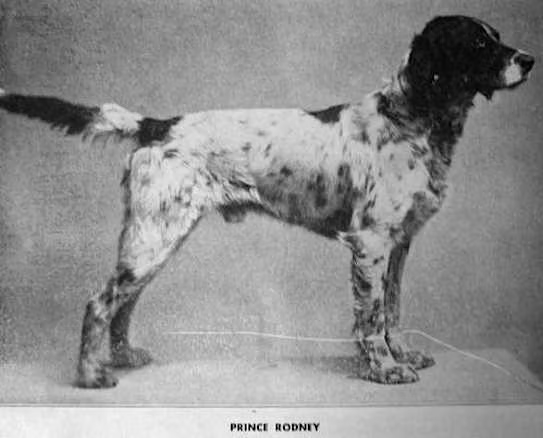
Apie mažąjį miunsterlenderį
Mažasis miunsterlenderis yra vidutinio dydžio vokiečių medžioklinis šuo, protingas ir prieraišus, sukurtas stovėti prieš žvėrį ir jį atnešti sausumoje bei vandenyje.
Mažasis miunsterlenderis yra vidutinio dydžio medžioklinis šuo, kilęs iš Vokietijos. Jis priklauso universaliųjų medžioklinių šunų grupei: veislė sukurta ne vienai užduočiai, o žvėries paieškai, stovėjimui prieš jį ir atnešimui laukuose, miške bei vandenyje. Šeimininkai jį apibūdina kaip darbo partnerį, kuris medžioklėje ir namuose lieka glaudžiai susijęs su žmogumi.
Veislė sujungia tvirtą stovėjimo instinktą su stipriu noru atnešti grobį. Šuo yra energingas ir kasdien jam reikia judėti, tačiau jis taip pat prieraišus ir stipriai susisieja su šeima, kurioje gyvena. Suaugę šunys paprastai sveria apie 18-27 kg, o ūgis ties ketera siekia maždaug 50-56 cm, tad tarp stovinčiųjų veislių jie priskiriami mažesniems.
Kailis vidutinio ilgio, su plunksnavimu, rudai baltos spalvos, su marmuriniu ir taškuotu piešiniu. Kūno sudėjimas darnus ir atletiškas, bet ne sunkus, todėl šuo tinka ir ilgoms darbo dienoms, ir aktyviam šeimos gyvenimui.
| Požymis | Informacija |
|---|---|
| Kilmė | Vokietija |
| Dydis | Vidutinis (apie 18-27 kg) |
| Gyvenimo trukmė | 12-14 metų |
| Grupė / paskirtis | Universalus medžioklinis šuo (stovėjimas ir atnešimas) |
| Sutaria su | Šeimomis, vyresniais vaikais, kitais šunimis, jei skiriama treniruočių ir judėjimo |
Kam ši veislė tinka
Ši veislė tinka aktyvioms šeimoms, galinčioms kasdien užtikrinti pakankamai judėjimo ir protinio krūvio. Ji gerai jaučiasi pas medžiotojus, kinologinio sporto entuziastus bei šeimas, kurios dažnai vaikšto, bėgioja ar dresuoja šunis. Mažiau tinka namams, kuriuose šuo ilgai lieka vienas ar turi mažai galimybių būti lauke, nes per mažai judėjimo gaunantis šuo tampa neramus ir sunkiai nurimsta.
Istorija ir kilmė
Mažasis miunsterlenderis kilęs iš Miunsterio krašto Vokietijoje, kur XX amžiaus pradžioje universalūs stovintys ir atnešantys šunys buvo suformuoti į atskirą veislę.
Veislės pavadinimas kilęs iš Miunsterio, esančio šiaurės vakarų Vokietijoje, regiono, kuriame susiformavo šiuolaikinis šios veislės tipas. Šio bendro tipo šunys, maži plunksnuoti stovintys šunys, galintys dirbti šalia medžiotojo pėsčiomis, Vokietijos kaimo ir medžioklės bendruomenėse gyvavo gerokai anksčiau, nei pradėti vesti veislynų įrašai.
Susidomėjimas veislės standartizavimu augo XIX amžiaus pabaigoje ir XX amžiaus pradžioje, kai vokiečių medžiotojai ieškojo universalių šunų, gebančių stovėti prieš žvėrį, sekti pėdsaką ir atnešti grobį tiek sausumoje, tiek vandenyje. Tuo laikotarpiu vietinės mažų ilgaplaukių stovinčiųjų šunų populiacijos buvo suburtos ir kryptingai veisiamos, siekiant vieningo tipo.
XX amžiaus pradžioje Vokietijoje įkurtas veislės klubas pradėjo registruoti kilmės knygas ir parengė rašytinį standartą, kuriuo įtvirtinta rudai balta kailio spalva ir universali darbo paskirtis. Veislė ir toliau liko pirmiausia medžiotojo šuo, o ne parodinis ar kompanijos gyvūnas, todėl atranka sutelkta į darbines savybes.
Iš Vokietijos veislė paplito į kitas Europos šalis, vėliau ir į Šiaurės Ameriką, kur ją daugiausia laikė medžiotojai, vertinantys jos universalumą. Ji ir šiandien retesnė nei dauguma medžioklinių veislių, o daugelyje regionų veisimo darbe kartu su eksterjeru vis dar akcentuojamos darbinės savybės.
Išvaizda ir veislės standartas
Mažasis miunsterlenderis yra darnaus sudėjimo vidutinio dydžio šuo su vidutinio ilgio rudai baltu plunksniuotu kailiu, atletišku siluetu ir tamsiomis akimis.
Mažasis miunsterlenderis pasižymi atletišku, proporcingu kūno sudėjimu, kuris labiau primena darbinį šunį nei sunkų. Kūnas šiek tiek ilgesnis nei aukštis ties ketera, krūtinė gili, kojos tiesios ir tvirtos. Galva vidutinio dydžio su aiškiai išreikšta kaktos duobute, ausys nuleistos, plokščiai priglaustos prie galvos, kraštuose su plunksnavimu. Uodega laikoma maždaug nugaros linijoje, apačioje su plunksnavimu.
| Požymis | Standartas |
|---|---|
| Ūgis | Maždaug 50-56 cm ties ketera |
| Svoris | Apie 18-27 kg |
| Kailis | Vidutinio ilgio, tankus, su plunksnavimu ant ausų, kojų ir uodegos |
| Spalvos | Rudai balta, įskaitant rudą marmurinį, taškuotą ir dėmėtą piešinį |
| Akys | Tamsiai rudos, vidutinio dydžio, budrios išraiškos |
Kailis ir spalvos
Kailis vidutinio ilgio, glaudžiai priglunda prie kūno, vietomis šiek tiek banguotas, su ilgesniu plunksnavimu ant ausų, kojų galinės pusės ir uodegos apačios. Standartinė spalva rudai balta. Ji pasireiškia kaip vientisos rudos dėmės ant balto fono, rudas marmurinis piešinys, kai abi spalvos susimaišo, ir taškuotas piešinys, kai smulkios rudos dėmelės išsibarstę baltuose plotuose. Dažnai pasitaiko ruda galva su baltais ženklais ar balta žyme kaktoje. Kailio struktūra atspari orams, todėl šuo tinka darbui šaltame vandenyje ir tankiuose brūzgynuose.
Temperamentas ir charakteris
Mažasis miunsterlenderis yra prieraišus, protingas ir energingas, stipriai susisiejantis su šeima, kartu likdamas paklusnus ir gerai reaguojantis į dresūrą.
Tai prieraiši veislė, stipriai susijusi su savo žmonėmis. Šuo linkęs sekti šeimos narius iš kambario į kambarį ir mieliau būna kompanijoje, nei paliktas vienas. Su vaikais paprastai švelnus ir žaismingas, ypač gerai sutaria su vyresniais vaikais, gerbiančiais šuns erdvę.
Su nepažįstamaisiais paprastai draugiškas arba mandagiai santūrus, ne agresyvus. Jis budrus ir pastebi svečius, tačiau nėra veisiamas kaip sargybinis šuo. Su kitais šunimis paprastai draugiškas, ypač jei auga kartu su jais, tačiau stiprus medžioklinis instinktas reiškia, kad smulkūs gyvūnai, pavyzdžiui, paukščiai ar triušiai, gali paskatinti jį vytis.
Veislė protinga ir noriai dirba, todėl gerai reaguoja į dresūrą, tačiau nuobodžiaudama greitai susiranda užsiėmimą pati. Šuo, negaunantis pakankamai fizinio ir protinio krūvio, gali loti, kasti ar kramtyti daiktus. Gaunantis reguliarų judėjimą ir turintis užduotį, jis tampa ramiu ir patogiu šeimos nariu.
| Bruožas | Įvertinimas |
|---|---|
| Prieraišumas | 5 |
| Energija | 5 |
| Dresuojamumas | 5 |
| Balsumas | 3 |
| Kailio slinkimas | 3 |
Priežiūra ir kasdieniai poreikiai
Mažajam miunsterlenderiui reikia daug kasdienio judėjimo, reguliarios kailio priežiūros dėl plunksnavimo ir namų, kuriuose jis būtų nuolat fiziškai bei protiškai užimtas.
Kailio priežiūra
- Šukuokite kailį kartą ar du per savaitę, kad pašalintumėte iškritusius plaukus ir išvengtumėte pinigėlių plunksnavimo vietose.
- Po pasivaikščiojimų tankmėje patikrinkite ausų, kojų ir uodegos plunksnavimą, pašalinkite dagius ir kitas šiukšles.
- Reguliariai valykite ausis, nes nuleistos ausys po maudynių ilgiau išlaiko drėgmę.
- Nagus trumpinkite kas kelias savaites, dantis valykite kelis kartus per savaitę.
- Maudykite tik prireikus, kai šuo tikrai purvinas.
Judėjimas
- Kasdien skirkite bent 1-2 valandas aktyvumo, įskaitant bėgiojimą be pavadėlio saugioje vietoje.
- Derinkite fizinį krūvį su uoslės žaidimais, daiktų atnešimu ar dresūra, kad būtų užimtas ir protas.
- Plaukimas šiai veislei tinka puikiai ir suteikia švelnų, sąnarius tausojantį krūvį.
- Įvairinkite kasdienybę, kad šuo išliktų susidomėjęs ir sveikai pavargęs.
Aplinka
Veislei geriausiai tinka namai su saugia lauko erdve ir aktyviu kasdienybės ritmu. Idealu turėti kiemą su tvora, tačiau šuo gali gyventi ir bute, jei kasdien gauna pakankamai judėjimo. Kailis leidžia gerai pakelti vėsų ir drėgną orą, tačiau šuns negalima ilgai palikti lauke vieno, nes jam būtinas kontaktas su žmogumi.
Mityba ir šėrimas
Mažajam miunsterlenderiui reikia pilnaverčio, subalansuoto raciono, pritaikyto aktyviam vidutinio dydžio šuniui, o porcijas reikia derinti pagal krūvį, amžių ir kūno būklę.
Rinkitės pilnavertį, subalansuotą pašarą, skirtą aktyviam vidutinio dydžio šuniui. Darbiniams ir intensyviai treniruojamiems šunims gali reikėti daugiau kalorijų, nei nurodyta ant pakuotės, o mažiau judantiems augintiniams mažiau, kad nepradėtų augti svoris. Porcijas derinkite taip, kad išliktų matoma juosmens linija ir lengvai apčiuopiami šonkauliai, o dienos davinį dalykite į kelis ėdimus, ne vieną. Švarus vanduo turi būti prieinamas visada, ypač po judėjimo ir plaukimo.
| Amžiaus grupė | Kiekis per dieną | Ėdimų skaičius |
|---|---|---|
| Šuniukas (2-6 mėn.) | Pagal šuniukų pašaro gaires, augimo normos | 3-4 |
| Paauglystė (6-12 mėn.) | Palaipsniui pereinama prie suaugusio šuns porcijų | 2-3 |
| Suaugęs (1-7 m.) | Apie 200-350 g sauso pašaro, pagal svorį ir aktyvumą | 2 |
| Vyresnio amžiaus (nuo 8 m.) | Šiek tiek sumažinta, stebėti svorį | 2 |
Skanėstai ir papildai
Skanėstai turėtų sudaryti ne daugiau kaip apie 10 procentų dienos kalorijų, o pagrindinį racioną atitinkamai sumažinkite. Šiai maistu motyvuojamai veislei gerai tinka smulkūs dresūros skanėstai. Šuniui, šeriamam pilnaverčiu pašaru, papildai paprastai nereikalingi; apie bet kokius sąnarių, odos ar kailio papildus pasitarkite su veterinaru, ypač augantiems šuniukams ir vyresnio amžiaus šunims.
Sveikata ir dažniausios ligos
Mažasis miunsterlenderis paprastai yra sveikas, gyvena 12-14 metų, tačiau jam būdingas polinkis į klubų sąnarių displaziją ir ausų uždegimus, kuriuos padeda išvengti prevencinė priežiūra.
Mažasis miunsterlenderis paprastai yra tvirtos sveikatos veislė, nes atrankoje visada pirmenybė teikta darbinėms savybėms, o ne kraštutiniams išoriniams bruožams. Įprasta gyvenimo trukmė - 12-14 metų. Kaip ir daugumai veislių, jam būdingos kelios ligos, į kurias verta atkreipti dėmesį, o atsakingi veisėjai tiria veislei naudojamus šunis dėl paveldimų sąnarių problemų.
| Liga | Požymiai | Pastaba |
|---|---|---|
| Klubų sąnarių displazija | Sustingimas, šlubavimas, nenoras šokinėti ar bėgioti | Paveldimas sąnario laisvumas; veislei naudojami šunys turėtų būti tiriami |
| Ausų uždegimai | Galvos purtymas, kvapas, ausies kasymas | Nuleistos ausys sulaiko drėgmę, dažnai pasireiškia po maudynių |
| Akių ligos | Drumstumas, paraudimas, regėjimo pokyčiai | Periodiniai akių patikrinimai padeda anksti pastebėti problemą |
| Odos dirginimas | Niežėjimas, paraudimas plunksnavimo vietose | Dažnai susijęs su šiukšlėmis ar alergijomis |
Prevencinė priežiūra
- Laiku atlikite skiepijimus ir parazitų prevenciją.
- Po maudynių ar drėgno darbo išdžiovinkite ir patikrinkite ausis.
- Palaikykite sveiką svorį, kad sumažėtų apkrova sąnariams.
- Kasmet lankykitės pas veterinarą, vyresniems šunims dažniau.
- Reguliariai valykite dantis ir pasitarkite dėl dantų priežiūros su veterinaru.
Dresūra ir socializacija
Mažasis miunsterlenderis yra protingas ir norintis įtikti, todėl gerai dresuojamas, kai nuo šuniuko amžiaus taikoma nuosekli, skatinimu pagrįsta dresūra.
Ši veislė greitai mokosi ir nori dirbti kartu su šeimininku, todėl dresūra teikia daug malonumo. Tačiau protas veikia į abi puses: šuo greitai išmoksta gerų įpročių, bet taip pat greitai perima ir nepageidaujamus, jei taisyklės nenuoseklios. Dresūrą ir socializaciją pradėkite anksti, treniruotes darykite trumpas ir įvairias, o šuniui reguliariai skirkite užduočių, kanalizuojančių jo energiją. Kadangi šuo stipriai susisieja su šeimininku, griežtas elgesys pažeidžia ryšį ir beveik niekada nėra reikalingas; ramus, aiškus vadovavimas veikia geriau.
Pagrindai
- Socializaciją pradėkite nuo šuniuko amžiaus, supažindindami su naujais žmonėmis, šunimis, vietomis ir garsais.
- Anksti išmokykite atsiliepti į vardą ir patikimai grįžti pašaukus, kol dar nesustiprėjęs medžioklinis instinktas.
- Įtvirtinkite pagrindinę paklusnumo dresūrą: sėdėti, gulėti, laukti, vaikščioti neįtemptu pavadėliu.
- Pridėkite pripratimą prie narvelio ir mokymą ramiai nurimti namuose.
- Įtraukite uoslės žaidimus, daiktų atnešimą ar lauko darbą, kad būtų panaudoti prigimtiniai veislės gabumai.
- Kasdien praktikuokite trumpas treniruotes ir nuolat tvirtinkite grįžimą pašaukus vietose su daug dirgiklių.
Veisimas ir šuniukų auginimas
Atsakingas mažojo miunsterlenderio veisimas reiškia palaukti visiško brandumo, ištirti šunis dėl paveldimų ligų ir kruopščiai auginti bei socializuoti vadą.
Kalės paprastai vedamos tik pasiekus visišką fizinę brandą, dažniausiai apie dvejus metus, kad kūnas ir charakteris būtų visiškai susiformavę. Atsakingi veisėjai tiria abu tėvus dėl paveldimų problemų, tokių kaip klubų sąnarių displazija ir akių ligos, ir atrenka juos pagal patikimą darbinį temperamentą, ne tik sveikatą. Nėštumas trunka maždaug 63 dienas. Vadoje dažniausiai būna 6-8 šuniukai, tačiau skaičius gali skirtis.
Šuniukams reikia kruopštingos priežiūros nuo pat pradžių: šiltos, švarios gimdymo vietos, svorio augimo stebėjimo ir palaipsnio pripratimo prie kietesnio maisto nuo maždaug trijų iki keturių savaičių amžiaus. Ankstyvas šuniukų glostymas ir supažindinimas su namų garsais bei vaizdais padeda formuotis draugiškam, paklusniam suaugusio šuns charakteriui. Į naujus namus šuniukai paprastai keliauja nuo aštuntos savaitės, gavę pirmąjį skiepą ir veterinaro patikrinimą.
| Rodiklis | Reikšmė |
|---|---|
| Patelės veisimo branda | Apie 2 metai |
| Nėštumo trukmė | Apie 63 dienas |
| Vidutinis vados dydis | Apie 6-8 šuniukai |
| Pripratimas prie kieto maisto | Prasideda apie 3-4 savaites |
| Perkėlimas į naujus namus | Nuo maždaug 8 savaičių |
Small Munsterlander Pointer veislės šuns ir mikroschemos registracija
Nemokamas profilis visam gyvenimui jūsų Small Munsterlander Pointer veislės šuniui United Pet Club, su užregistruota mikroschema ir be pratęsimo mokesčių.
Kaip užregistruoti Small Munsterlander Pointer veislės šunį Lietuvoje
Lietuvoje nuo 2016 metų kiekvienas šuo privalo būti paženklintas mikroschema ir įregistruotas Gyvūnų augintinių registre; formalumus atlieka veterinarijos gydytojas. Valstybinis registras atsako tik Lietuvoje, o nemokamas United Pet Club profilis prideda tai, ko trūksta jūsų Small Munsterlander Pointer veislės šuniui: jūsų kontaktai keliauja kartu, paieška veikia iš bet kurios šalies. Užregistruokite šunį per kelias minutes.
Penkiolika skaitmenų po Small Munsterlander Pointer veislės šuns oda parodys į jus tik tada, kai tai pasakys registras. Tegul pasako nemokamai: įrašas United Pet Club niekada nesibaigia, priima bet kurios markės mikroschemą, o kiekvienas duomenų pakeitimas nemokamas. Mikroschemos registracija pirmiausia, paskyra iškart po jos.
Kaip užregistruoti Small Munsterlander Pointer veislės šunį Lietuvoje?
Susikurkite nemokamą paskyrą United Pet Club, užpildykite Small Munsterlander Pointer veislės šuns duomenis su nuotrauka ir išsaugokite profilį. Jis nemokamas visą šuns gyvenimą, o privaloma registracija Gyvūnų augintinių registre vyksta atskirai.
Kaip užregistruoti Small Munsterlander Pointer veislės šuns mikroschemą?
Įveskite 15 skaitmenų mikroschemos numerį nemokamoje paskyroje kartu su adresu ir telefonu. Visą gyvenimą galiojantis planas priima bet kurios markės mikroschemą ir niekada neima mokesčio už atnaujinimus.
Ar mikroschema privaloma Small Munsterlander Pointer veislės šuniui Lietuvoje?
Taip, nuo 2016 metų šunys privalo būti paženklinti ir įregistruoti Gyvūnų augintinių registre. United Pet Club įrašas papildo valstybinį: atsako į paieškas ir už Lietuvos ribų, nemokamai.
Kiek kainuoja Small Munsterlander Pointer veislės šuns registracija?
Nieko. Nemokamas visą gyvenimą galiojantis planas apima profilį, mikroschemos registraciją ir visus būsimus atnaujinimus, be metinių mokesčių.
Dažniausiai užduodami klausimai
Dažniausi klausimai apie mažąjį miunsterlenderį apima jo dydį, temperamentą, priežiūros poreikius, gyvenimo trukmę, tinkamumą šeimai ir įsigijimo galimybes.
Koks mažojo miunsterlenderio dydis?
Tai vidutinio dydžio šuo, ūgis ties ketera siekia maždaug 50-56 cm, svoris apie 18-27 kg, patinai paprastai stambesni už pateles.
Ar mažasis miunsterlenderis tinka šeimoms?
Taip. Šuo prieraišus ir stipriai susisieja su savo žmonėmis, paprastai švelnus su vyresniais vaikais. Geriausiai jaučiasi aktyviose šeimose, galinčiose patenkinti jo judėjimo poreikius.
Ar šią veislę lengva prižiūrėti?
Kailio priežiūra vidutinė, pakanka šukuoti kartą ar du per savaitę. Didesnis įsipareigojimas yra judėjimas: reikia 1-2 valandų aktyvumo per dieną bei protinio krūvio, todėl veislė labiau tinka aktyviems, o ne ramaus gyvenimo būdo šeimininkams.
Kiek gyvena mažasis miunsterlenderis?
Įprasta gyvenimo trukmė - 12-14 metų. Reguliari veterinarinė priežiūra, sveikas svoris ir pakankamas judėjimas padeda šuniui gyventi ilgai ir tvirtai.
Ar jis sutaria su kitais augintiniais?
Paprastai draugiškas su kitais šunimis, ypač jei auga kartu nuo mažens. Stiprus medžioklinis instinktas reiškia, kad smulkius gyvūnus, pavyzdžiui, paukščius ar triušius, gali vytis, todėl svarbu supažindinti atsargiai ir prižiūrėti.
Ar mažąjį miunsterlenderį lengva rasti?
Jis retesnis nei dauguma medžioklinių veislių, jį daugiausia laiko medžiotojai ir aktyvūs šeimininkai. Šuniuko paieška gali užtrukti, o pas patikimą veisėją gali tekti palaukti eilėje.
Ar jis gali gyventi bute?
Gali priprasti prie gyvenimo bute, jei kasdien gauna pakankamai judėjimo ir protinio krūvio, tačiau namai su saugia lauko erdve jam tinka geriau.
From the community
Ask about the Small Munsterlander PointerNo questions about the Small Munsterlander Pointer yet. Be the first to ask.
Browse Dog breeds