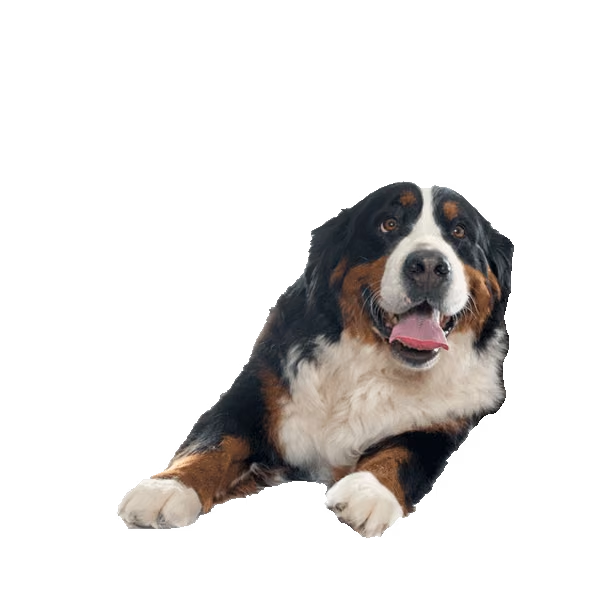
The Mountain Cur is a courageous, hardworking American treeing breed prized for its loyalty and versatile hunting ability.
How the Mountain Cur coat is built, and what that means when you groom it.
Kritiška: A Mountain Cur should not be shaved.
Poplaukis neįleidžia karščio lygiai taip pat, kaip ir šalčio, o dengiamasis plaukas saugo odą nuo saulės ir vabzdžių įkandimų. Nukirpus visą kailį, netenkama abiejų. Jis dažnai atauga lopais, minkštas arba kitos spalvos, o kai kuriems gyvūnams dengiamasis plaukas taip ir nebeatauga kaip reikiant. Poplaukį iššukuokite, o ne nukirpkite.
The Mountain Cur is a medium-sized American working dog bred for treeing game and guarding the homestead, known for loyalty, courage, and a strong work drive.
The Mountain Cur is a medium-sized working dog developed in the rural United States. It was bred for practical jobs: treeing small game such as squirrel and raccoon, hunting larger quarry, and guarding the family and property. Function came first, so the breed is built for stamina and grit rather than for a show ring.
Dogs of this type are muscular and athletic, with a short coat and an alert, businesslike expression. They form a close bond with their owners and tend to attach to one household. A Mountain Cur that has a job and a clear leader is steady and dependable. One left idle without exercise can become restless and difficult.
The traits most associated with the breed are loyalty, a strong work ethic, high energy, protectiveness, and courage. These qualities make it a capable hunting partner and watchdog, but they also mean the breed needs an experienced, active owner who can give it structure.
| Attribute | Detail |
|---|---|
| Origin | United States |
| Size | Medium |
| Lifespan | 12 to 16 years |
| Group/role | Treeing and hunting dog, homestead guardian |
| Good with | Its own family and older children; needs early socialization with strangers and other pets |
The Mountain Cur fits an active household that can give it daily exercise and a sense of purpose. Hunters, rural families, and owners who train and work their dogs tend to do well with the breed. It is less suited to apartment life, long hours alone, or first-time owners who want a low-maintenance pet.
The Mountain Cur was developed by settlers in the mountains of the southeastern and central United States as an all-purpose hunting and farm dog, and was organized as a breed in the mid-20th century.
The Mountain Cur traces to dogs kept by European settlers who moved into the mountain regions of the southeastern and central United States, including areas of Tennessee, Kentucky, Virginia, and Ohio. Pioneer families needed a single dog that could do many things at once: tree game for food and fur, hunt larger animals, and guard the cabin and livestock. Dogs that could not earn their keep were not bred, so the type was shaped by hard practical selection rather than written standards.
The word "cur" here refers to a working farm and hunting dog rather than a mongrel. These dogs were valued for their treeing instinct, their toughness, and their ability to work rough terrain. They were a fixture of frontier life across the Appalachian and Ozark regions for generations.
During the 20th century the numbers of these mountain working dogs fell as rural lifestyles changed. A group of breeders began organized efforts to preserve the type, and the Original Mountain Cur Breeders Association was formed in 1957 to register and protect the breed. This work helped keep the bloodlines from disappearing.
The breed has since gained wider recognition as a hunting and companion dog, and it is recognized by the United Kennel Club. It remains closest to its working roots and is still used as a treeing and hunting dog today.
The Mountain Cur is a compact, muscular medium dog with a short, dense coat, an athletic build for rough country, and an alert expression.
The Mountain Cur is built for work. It is a medium-sized, well-muscled dog with a sturdy frame, a broad head, and a deep chest that supports endurance. The legs are strong and the body is slightly longer than it is tall, giving the dog agility on steep, broken ground. The tail may be natural or short, and bobtails occur in some lines.
The overall look is functional and balanced rather than refined. Ears are set high and hang close to the head. The expression is alert and intelligent, reflecting a dog that is always aware of its surroundings.
| Feature | Description |
|---|---|
| Height | Roughly 16 to 26 inches (41 to 66 cm) at the shoulder |
| Weight | About 30 to 60 pounds (14 to 27 kg) |
| Coat | Short, dense, can be rough or smooth |
| Colors | Brindle, black, brown, yellow, blue, and red, often with white markings |
| Eyes | Medium, usually brown, alert |
The coat is short and protective, suited to outdoor work in variable weather. It can be smooth or somewhat rough. Common colors include brindle, black, brown, yellow, blue, and red, and many dogs carry white markings on the chest, feet, or face. The coat is low-maintenance and sheds at a moderate level.
The Mountain Cur is loyal, courageous, and protective with its family, reserved toward strangers, and driven to work, with a high prey drive around small animals.
The Mountain Cur is devoted to its family and bonds closely with its people. It is brave and protective, which makes it a natural watchdog that will alert to and stand its ground against perceived threats. With its household, including older children who understand dogs, it is affectionate and steady.
Toward strangers the breed tends to be reserved and watchful until it judges a situation safe. Early and ongoing socialization helps prevent excessive wariness. Around other dogs the breed can do well with proper introductions, but its strong prey drive means small pets such as cats, rabbits, and rodents may be chased. Households with small animals need careful management.
This is a high-energy, intelligent dog that wants a job. Bored or under-exercised dogs may bark, dig, or become hard to handle. Given enough physical and mental work, the Mountain Cur is calm and well-mannered at home.
| Trait | Rating |
|---|---|
| Affection (with family) | 4 |
| Energy | 5 |
| Trainability | 4 |
| Vocalness | 3 |
| Shedding | 3 |
The Mountain Cur is easy to groom but demands heavy daily exercise and a job to do, and is happiest with space and an active owner rather than confined apartment life.
The Mountain Cur does best in a home with a securely fenced yard and access to the outdoors. It tolerates a range of climates thanks to its dense coat, but it is not suited to long stretches alone or to cramped indoor living without daily exertion. A rural or suburban setting with an active family is ideal.
The Mountain Cur is an active working dog that needs a quality protein-rich diet, with portions adjusted to its workload, age, and body condition.
The Mountain Cur is a hardworking, athletic breed, and its diet should support that activity. Choose a complete, balanced dog food with quality animal protein as the main ingredient. Working and hunting dogs in heavy training burn more calories and may need more food during the season, while less active dogs need less to avoid weight gain. Always provide fresh water, especially after exercise.
| Life stage | Amount per day | Meals |
|---|---|---|
| Puppy (2 to 6 months) | Per food label for growth | 3 to 4 |
| Puppy (6 to 12 months) | Per food label, tapering | 2 to 3 |
| Adult | About 1.5 to 3 cups of dry food | 2 |
| Senior or less active | Reduced portion to hold body condition | 2 |
Keep treats to about ten percent of daily calories, and use small high-value treats for training. A balanced commercial diet usually meets all nutritional needs, so supplements should be given only on a veterinarian's advice. Watch body condition over time and adjust portions rather than free-feeding.
The Mountain Cur is generally a hardy, healthy breed with a lifespan of 12 to 16 years, though it can face ear infections, joint issues, and skin or eye problems.
The Mountain Cur is regarded as a robust, healthy breed, a result of generations of selection for working ability rather than appearance. With good care most dogs live 12 to 16 years. The breed has no large list of inherited disorders, but owners should still watch for a handful of common issues and keep up with routine veterinary care.
| Condition | Signs | Note |
|---|---|---|
| Ear infections | Head shaking, odor, scratching at ears | Drop ears trap moisture; clean and check regularly |
| Hip or joint problems | Limping, stiffness, reluctance to jump | Less common than in many breeds; keep weight in check |
| Skin irritation | Itching, redness, hot spots | Can follow ticks, allergies, or moisture |
| Eye irritation or injury | Redness, squinting, discharge | Working dogs are exposed to brush and debris |
The Mountain Cur is intelligent and eager to work, which makes it trainable, but its independence and prey drive call for early, consistent, reward-based training.
The Mountain Cur is smart and willing to work, and it picks up tasks quickly when it understands what is wanted. The same intelligence comes with independence, a trait bred into a dog expected to make decisions in the field. Training works best when it is consistent, fair, and started early. Harsh methods tend to backfire with this sensitive, loyal breed. Socialization with people, places, and other animals from puppyhood helps temper natural wariness and prey drive.
Responsible Mountain Cur breeding focuses on working ability, health, and temperament, with bitches typically producing litters of several puppies after a roughly nine-week pregnancy.
Mountain Cur breeding has long centered on working ability, soundness, and temperament rather than looks. Responsible breeders health-check the parents, confirm stable temperaments, and avoid breeding too young. Dogs generally reach physical maturity around one to two years of age, and breeding is best left until the dog is fully mature.
Pregnancy in dogs lasts about 63 days, or roughly nine weeks. A bitch should have a quiet, clean whelping area and veterinary support around the birth. Puppies are born blind and deaf and depend fully on the mother for the first weeks.
Raising the litter well means good maternal nutrition, careful weaning, and early handling so puppies grow into confident dogs. Because this breed has a strong working heritage, socialization and gentle exposure to new experiences should begin while the puppies are still with the litter.
| Metric | Value |
|---|---|
| Breeding maturity | About 1 to 2 years |
| Gestation | About 63 days (roughly 9 weeks) |
| Typical litter size | Around 4 to 8 puppies |
| Weaning | About 6 to 8 weeks |
| Eyes and ears open | Around 2 weeks of age |
Nemokamas profilis visam gyvenimui jūsų Mountain Cur veislės šuniui United Pet Club, su užregistruota mikroschema ir be pratęsimo mokesčių.
Skaitytuvas prieglaudoje vertas tiek, kiek vertas registras, į kurį veda numeris. Duokite Mountain Cur veislės šuniui registrą, kuris atsako visada: nemokama kortelė su nuotrauka, duomenimis ir jūsų telefonu, pasiekiama visą parą, namie ir užsienyje. Registracija atliekama kartą ir lieka visam laikui.
Penkiolika skaitmenų po Mountain Cur veislės šuns oda parodys į jus tik tada, kai tai pasakys registras. Tegul pasako nemokamai: įrašas United Pet Club niekada nesibaigia, priima bet kurios markės mikroschemą, o kiekvienas duomenų pakeitimas nemokamas. Mikroschemos registracija pirmiausia, paskyra iškart po jos.
Susikurkite nemokamą paskyrą United Pet Club, užpildykite Mountain Cur veislės šuns duomenis su nuotrauka ir išsaugokite profilį. Jis nemokamas visą šuns gyvenimą, o privaloma registracija Gyvūnų augintinių registre vyksta atskirai.
Įveskite 15 skaitmenų mikroschemos numerį nemokamoje paskyroje kartu su adresu ir telefonu. Visą gyvenimą galiojantis planas priima bet kurios markės mikroschemą ir niekada neima mokesčio už atnaujinimus.
Taip, nuo 2016 metų šunys privalo būti paženklinti ir įregistruoti Gyvūnų augintinių registre. United Pet Club įrašas papildo valstybinį: atsako į paieškas ir už Lietuvos ribų, nemokamai.
Nieko. Nemokamas visą gyvenimą galiojantis planas apima profilį, mikroschemos registraciją ir visus būsimus atnaujinimus, be metinių mokesčių.
Common questions about the Mountain Cur cover its size, temperament, care needs, lifespan, suitability as a family dog, and availability.
It is a medium-sized dog, generally about 16 to 26 inches (41 to 66 cm) tall and 30 to 60 pounds (14 to 27 kg), with a muscular, athletic build.
It is loyal, courageous, and protective with its family, reserved toward strangers, and highly energetic. It has a strong prey drive and bonds closely with its people.
Grooming is easy thanks to the short coat, but the breed needs a lot of daily exercise and a job to stay content. The main challenge is meeting its high activity needs, not coat care.
Most live about 12 to 16 years. It is a hardy breed, and good diet, exercise, and routine veterinary care support a long, healthy life.
It can be an excellent family dog for an active household, especially with older children, when given proper socialization, exercise, and training. It is best suited to experienced, outdoorsy owners.
It can live with other dogs when introduced carefully, but its strong prey drive means small animals such as cats and rabbits may be chased. Early socialization and supervision help.
They are less common than many popular breeds and are most often found through working and hunting dog breeders, particularly in the rural United States. Expect to search beyond mainstream pet sources.
