
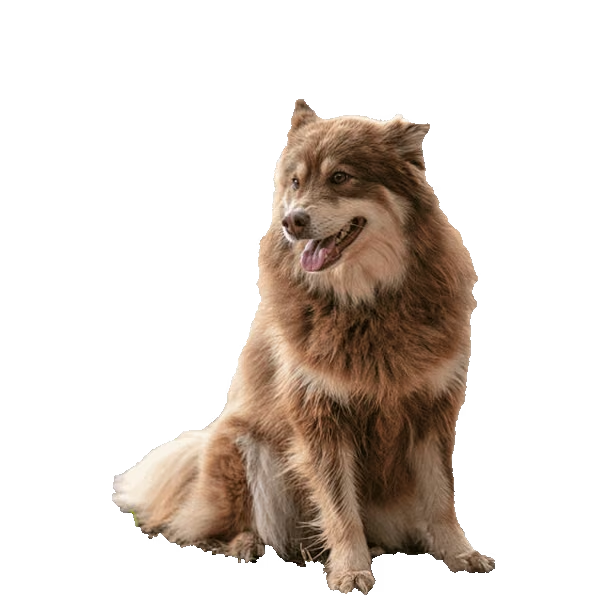
Lapponian Herder
The Lapponian Herder is a friendly, hardworking Finnish herding breed built for tireless work driving reindeer in harsh climates.
- Size
- Medium
- Lifespan
- 11–14 years
- Origin
- Finland
- Temperament
- Friendly
- Standard colors
- Juoda, Balta, Pilka ir Kepeninė
Characteristics
Coat and grooming
How the Lapponian Herder coat is built, and what that means when you groom it.
- Kailio sluoksniai
- Dvigubas kailis
- Plauko struktūra
- Pliušinis
- Plauko ilgis
- Vidutinis
- Šėrimasis
- Sezoninis šėrimasis
Grooming guidance
Kritiška: A Lapponian Herder should not be shaved.
Poplaukis neįleidžia karščio lygiai taip pat, kaip ir šalčio, o dengiamasis plaukas saugo odą nuo saulės ir vabzdžių įkandimų. Nukirpus visą kailį, netenkama abiejų. Jis dažnai atauga lopais, minkštas arba kitos spalvos, o kai kuriems gyvūnams dengiamasis plaukas taip ir nebeatauga kaip reikiant. Poplaukį iššukuokite, o ne nukirpkite.
Informacija: A Lapponian Herder drops its undercoat in heavy bursts.
Poplaukis išeina stipriais protrūkiais per kelias savaites. Poplaukio grėblys arba maudymas su tinkamu išpūtimu pašalina jį kur kas greičiau nei kasdienis šukavimas. Trumpai nukirpti kailį čia nėra trumpesnis kelias.
Lapponian Herder colors and patterns
What each club's breed standard says about every Lapponian Herder color and pattern. Point at a ruling to see the club's own wording.
Breed standards describe the Lapponian Herder in Juoda, Balta, Pilka ir Kepeninė. Standard patterns: Su įdegiu.
| Color or pattern | FCI | AKC |
|---|---|---|
| Juoda | Pagal standartą (“Black in different shades”) | Pagal standartą (“Black”) |
| Balta | Pagal standartą (“White markings may appear on neck, chest and legs”) | Pagal standartą (“White Markings”) |
| Pilka | Pagal standartą (“even greyish”) | Pagal standartą (“Gray”) |
| Kepeninė | Pagal standartą (“dark brown”) | Pagal standartą (“Liver”) |
| Mėlyna | Diskvalifikuojanti (“Blue, sable and fawn colour”) | Diskvalifikuojanti (“Blue, sable and fawn colour”) |
| Gelsva | Diskvalifikuojanti (“Blue, sable and fawn colour”) | Diskvalifikuojanti (“Blue, sable and fawn colour”) |
| Patterns | ||
| Su įdegiu | Pagal standartą (“greyish or brownish colour markings often on head, the lower parts of the body and legs”) | Pagal standartą (“greyish or brownish colour markings often on head, the lower parts of the body and legs”) |
| Sabalinė | Diskvalifikuojanti (“Blue, sable and fawn colour”) | Diskvalifikuojanti (“Blue, sable and fawn colour”) |
%22%3E%3Ccircle%20cx%3D%2212%22%20cy%3D%2217.2%22%20r%3D%221.25%22%20fill%3D%22%23C4996A%22%2F%3E%3Cpath%20d%3D%22M1.5%2021.2L9%2018.6L12.6%2021L12.2%2026.2L3.5%2024.4Z%22%20fill%3D%22%23C4996A%22%2F%3E%3Cpath%20d%3D%22M10%2026L14.5%2026.4L18.2%2029.2L13.5%2029.8Z%22%20fill%3D%22%23C4996A%22%2F%3E%3Cellipse%20cx%3D%2221.2%22%20cy%3D%2230.6%22%20rx%3D%221.6%22%20ry%3D%222.3%22%20fill%3D%22%23C4996A%22%2F%3E%3Crect%20x%3D%220%22%20y%3D%2247%22%20width%3D%2264%22%20height%3D%2217%22%20fill%3D%22%23C4996A%22%2F%3E%3Cpath%20d%3D%22M51.5%2024.5L55%2027L54.2%2032L50.5%2028.5Z%22%20fill%3D%22%23C4996A%22%2F%3E%3Cpath%20d%3D%22M45%2038.5L48%2039L48.5%2047L45.5%2047Z%22%20fill%3D%22%23C4996A%22%2F%3E%3C%2Fg%3E%3Cuse%20href%3D%22%23s%22%20fill%3D%22none%22%20stroke%3D%22%233B2A20%22%20stroke-opacity%3D%220.6%22%20stroke-width%3D%221%22%20stroke-linejoin%3D%22round%22%2F%3E%3Cellipse%20cx%3D%223.2%22%20cy%3D%2221.7%22%20rx%3D%221.3%22%20ry%3D%221.2%22%20fill%3D%22%231C1C1C%22%2F%3E%3Ccircle%20cx%3D%2210.8%22%20cy%3D%2219.3%22%20r%3D%221.1%22%20fill%3D%22%231C1C1C%22%2F%3E%3C%2Fsvg%3E)
%22%3E%3Crect%20x%3D%220%22%20y%3D%220%22%20width%3D%2264%22%20height%3D%2264%22%20fill%3D%22url(%23g)%22%2F%3E%3Cg%20fill%3D%22none%22%20stroke%3D%22%231C1C1C%22%20stroke-width%3D%221%22%20stroke-linecap%3D%22round%22%20stroke-linejoin%3D%22round%22%3E%3Cpath%20d%3D%22M15.7%2014.8l1.9%203.6M26.4%2024.1l1.2%204.1M42.7%2029.5l0.1%203.3M35.9%2025l1.6%203.2M31.3%2028.1l0.7%203.7M15.5%2011.1l1.6%203.6M41.1%2023.8l0.6%203.2M12.1%2020.7l1.2%203M15.4%2011.2l0.8%203.8M42.9%2027.3l0.7%202.9M48.2%2033.2l0.5%204.1M23.1%2024.7l1.4%203.4M51.9%2036.1l0.3%204.3M18.7%2023.9l1.2%203.7M50.4%2027.4l0.5%204.1M18.4%2020.4l0.1%203.1M55.6%2021.4l1.1%203.9M18.6%2024.9l1.7%203.8M8.3%2023.2l1.7%202.9M18.7%2024.2l0.2%203.1M46.4%2022.7l0.6%202.6M14.3%207l0.9%203.5M50.5%2024.9l0.5%203.7M23.2%2024.7l1.2%204.3M10.5%2022.3l1.6%203.4M56.9%2018.2l1.1%202.5M20.8%2021.7l1.1%203.5M10.9%2020.2l0.2%203.9M6.6%2023.3l1%202.4M54.5%2021.7l0.9%203.8M13.3%2021l0.4%203M11.7%2019.5l0.3%204M39%2023.2l0.7%202.5M20.8%2016.7l0%202.6M18.4%2016l0.2%202.6M46.4%2038.2l1.4%203.2M12.9%2022.6l0.6%203.3M13%2020.9l0.3%204.3M35.3%2024.9l1.3%202.3M29.5%2022.1l0.5%202.8M36.6%2023.4l0.2%204.3M20.5%2017.6l0.7%204.1M18.3%2020.6l0.6%203M20.5%2025.8l0.5%203.8M23.5%2040.2l1.1%202.9M22.8%2024.9l1.5%203M25.5%2023.1l0.5%203.3M47.7%2024.7l1.5%203.7M12.9%2018.4l1.9%203.8M29.5%2023.7l0.5%204.1M37.7%2026.5l0%202.9M16.8%2016.4l0.1%203.3M49.8%2028l1.7%203.8M29.4%2025.5l0.5%203.6M9.3%2023l1.3%203.1M47.4%2025.6l0.5%203.5M48.1%2023.8l1.6%203.2M9.9%2018.3l1.3%202.5M12.2%2016.6l0.4%203.2M22%2022.1l1.4%202.7M43.9%2024.7l1.4%203.9M14.3%2020l1.8%203.2M46.3%2040.1l0.3%203.6M14.9%207l0.3%204M17.5%2016.7l1.2%202.4M54.6%2040l1%203.5M13.3%2013.9l1.6%204.2M15.3%2016.5l1.2%202.9M23.8%2038.5l0.2%203.8M18.2%2019l0.6%203M11.2%2023.6l0.7%204.1M33.1%2023.2l0.9%204.3M13.6%2019.9l0.4%204.5M19.7%2023.1l1.9%203.7M50.5%2027.1l0.3%204.1M28.2%2028.5l0.2%203.8M29%2028.4l0.1%204M47.7%2024.5l0.6%202.5M10.7%2017.2l1.4%202.7M25.5%2040.3l0.6%204.1M37.6%2022.8l0.7%204.4M57%2018.6l0.2%203.4M16.9%2022.2l1.7%203.8M43.5%2024.7l1.8%203.4M49.2%2026l1.5%203.6M47.7%2032.3l0.4%203.7M35.4%2030.8l0.5%202.7M47%2026.1l1%203.9M24.3%2028.1l1.5%204.2M50.5%2023.8l1.3%203.4M58.1%2014.1l0.3%202.6M13.9%2018.2l0.7%202.5M8.2%2021l0.7%202.9M41.4%2026.4l0.4%202.7M16.3%2020.4l0.5%204.3M43.4%2025.9l1.2%203.2M32.3%2022.4l0.3%203.9M43.6%2025.9l2.1%203.8M33.5%2026.3l1.5%203M48.3%2030.6l1.4%203.4M44.2%2024.7l0.9%203.2M12.3%2017.7l0.9%203.7M46.2%2032l1.9%203.4M51%2028.3l0.1%203.7M30.4%2023.1l1.1%203.2M52.6%2022.6l0.9%204.3M16.6%2015.4l0.9%203.1M58.4%2012.8l0.3%202.8M42.8%2032.5l1.8%203.2%22%2F%3E%3Cpath%20d%3D%22M16.4%2026.1l0.1%204.3M14%2017.1l1.3%202.8M36.9%2027.2l1.3%202.6M38.6%2025.8l0.4%203.6M57.6%2014.3l0.3%203.9M14.7%208.2l1%204.3M53.4%2023l1.9%203.4M51.5%2030.3l0.8%202.7M56.2%2020l1.9%203.5M15.9%2010l0.2%202.8M15.8%2022.6l1.8%203.9%22%2F%3E%3C%2Fg%3E%3C%2Fg%3E%3Cuse%20href%3D%22%23s%22%20fill%3D%22none%22%20stroke%3D%22%233B2A20%22%20stroke-opacity%3D%220.6%22%20stroke-width%3D%221%22%20stroke-linejoin%3D%22round%22%2F%3E%3Cellipse%20cx%3D%223.2%22%20cy%3D%2221.7%22%20rx%3D%221.3%22%20ry%3D%221.2%22%20fill%3D%22%231C1C1C%22%2F%3E%3Ccircle%20cx%3D%2210.8%22%20cy%3D%2219.3%22%20r%3D%221.1%22%20fill%3D%22%231C1C1C%22%2F%3E%3C%2Fsvg%3E)
| Color or pattern | FCI | AKC |
|---|---|---|
| Tamsiai ruda | Pagal standartą (“Preferably dark in colour, yet harmonizing with the coat colour”) | Pagal standartą (“Preferably dark in colour, yet harmonizing with the coat colour”) |
| Šviesiai ruda | Trūkumas (“Very light eyes in black dogs”) | Trūkumas (“Very light eyes in black dogs”) |
What the rulings mean
- Pagal standartą
- Described by the club's breed standard.
- Trūkumas
- Named by the club's breed standard as a fault: the animal can be shown but is penalized.
- Diskvalifikuojanti
- The club's breed standard disqualifies an animal of this color or pattern.
Color changes
How a Lapponian Herder's colors can change over its life.
Juodachanges toRūdžių raudona
Kailis · Pagal kūno būklę · can change back
Juodachanges toPilka
Kailis · Progresuojanti
Juodachanges toRuda
Kailis · Saulėje · can change back
Baltachanges toDereša
Kailis · Su amžiumi · from 2 weeks
Su įdegiuchanges toBalnuota
Kailis · Su amžiumi · from 6 to 156 weeks
Juodachanges toŽiemos nosis
Nosis · Pagal sezoną · can change back
Juodachanges toRožinė
Nosis · Pagal sezoną · can change back
%22%3E%3Cg%20fill%3D%22none%22%20stroke%3D%22%23F5F5F0%22%20stroke-width%3D%221.15%22%20stroke-linecap%3D%22round%22%20stroke-linejoin%3D%22round%22%3E%3Cpath%20d%3D%22M28.6%2025h.1M51.3%2028.8h.1M34.7%2024.3h.1M34.2%2041.6h.1M51%2044.2h.1M55.9%2024.7h.1M27.5%2026.3h.1M18.5%2028.6h.1M25.2%2028.9h.1M24.2%2019.3h.1M20.6%2017.6h.1M34.1%2030.6h.1M57.3%2023.3h.1M23.5%2030.7h.1M26.5%2023.1h.1M40%2031.5h.1M51.7%2038.6h.1M20.2%2022.1h.1M40.4%2037.8h.1M35%2043.1h.1M20.6%2031.7h.1M27.8%2031.9h.1M17.2%2021.1h.1M38.1%2037.7h.1M25.3%2040.5h.1M32%2029.3h.1M41.6%2039.5h.1M23.6%2024h.1M26.4%2018.6h.1M30.3%2031.9h.1M31.2%2035.2h.1M36.5%2043.7h.1M35.2%2026.3h.1M55.6%2019.1h.1M22.4%2036.8h.1M39.2%2020h.1M49.5%2039.1h.1M33.6%2033.5h.1M36.4%2032.4h.1M56.3%2042.4h.1M54.8%2031.2h.1M36.9%2023.2h.1M52.7%2019.1h.1M21.5%2033.8h.1M48.6%2028h.1M36.6%2017.5h.1M45.6%2031.3h.1M37.9%2030.5h.1M17%2031.8h.1M21.1%2043.1h.1M55.7%2021.1h.1M30.8%2041.9h.1M57.4%2038.4h.1M54.8%2026.9h.1M29.1%2017.5h.1M24.3%2037.7h.1M26%2032h.1M39.3%2022.8h.1M53.5%2029h.1M53.3%2023.3h.1M20%2038.4h.1M28.3%2044.7h.1M28.6%2039.8h.1M51.9%2041.1h.1M52.3%2033.7h.1M19.6%2042.2h.1M19%2033h.1M47.8%2021.7h.1M45.7%2024.8h.1M24.6%2035.5h.1M29.8%2036.8h.1M50.7%2032h.1M29.5%2043.5h.1M28.2%2041.5h.1M47.4%2034.8h.1M25.4%2033.7h.1M50.2%2041.2h.1M27.7%2029.5h.1M21.5%2024.8h.1M55.5%2017.5h.1M41.2%2044.3h.1M39.2%2018.4h.1M41.1%2042.5h.1M54.7%2035.3h.1M42.8%2034.5h.1M30.1%2023h.1M42.6%2025.1h.1M32.9%2024.4h.1M42.4%2032.4h.1M49.7%2022.2h.1M49.1%2043.1h.1M38%2035.2h.1M47.7%2043.8h.1M43.1%2022.4h.1M22.4%2040.4h.1M44.4%2019.8h.1M53.3%2040.1h.1M20.7%2029.3h.1M55.6%2043.9h.1M17.6%2039.2h.1M41.7%2028.9h.1M44.1%2036.3h.1M24.3%2043.6h.1M26.4%2038.1h.1M30.3%2029.2h.1M31.5%2030.8h.1M32.1%2023h.1M18.3%2040.9h.1M48%2033.4h.1M36.4%2038.7h.1M31.9%2020.8h.1M32.6%2026.2h.1M22%2031.2h.1M53.4%2021.7h.1M41.9%2017.7h.1M53.3%2037.3h.1M47.7%2040.3h.1M54.4%2033.7h.1M33.6%2037.5h.1M25.3%2017.2h.1M37.6%2019.7h.1M31.6%2019h.1M29.2%2019.6h.1M50.7%2027.3h.1M22%2022.1h.1M31%2037.8h.1M56.5%2026.6h.1M34.7%2039.5h.1M56.5%2040.8h.1M47.6%2038h.1M48.6%2026.1h.1M49.7%2034.2h.1M45.4%2027.4h.1M22.6%2038.9h.1M56.5%2035.3h.1M35.1%2021h.1M41.9%2020.1h.1M37.6%2040h.1M32.6%2044.4h.1M37.9%2025.2h.1M26.6%2043h.1M18.9%2036.7h.1M47.2%2028.9h.1M30.5%2026.2h.1M17.4%2027.3h.1M47.1%2017.2h.1M22.3%2044.3h.1M32.5%2042.4h.1M23.6%2025.7h.1M31.4%2024.9h.1%22%2F%3E%3Cpath%20d%3D%22M26%2020.9h.1M41.2%2023.8h.1M39.9%2026.4h.1M28.5%2033.4h.1M42.8%2043.8h.1M17.6%2034.3h.1M34%2017.1h.1M31.2%2017.2h.1M46.5%2036.1h.1M25.1%2022.1h.1M50.3%2023.7h.1M20.2%2026.6h.1M20.8%2020.4h.1M50.9%2017.3h.1M49.5%2020.2h.1M52.9%2044.1h.1M23.9%2017.8h.1M43.2%2028.1h.1M57.6%2030h.1M52%2025.6h.1M19.2%2019.1h.1M19.5%2024.4h.1M32.8%2040.1h.1M36.1%2027.7h.1M39.6%2029.5h.1M38.4%2041.5h.1M47.9%2019.4h.1M49.1%2031.7h.1M55.9%2036.9h.1M29.2%2027.2h.1M46%2043.5h.1M44.6%2028.8h.1M47.5%2031.5h.1M22.8%2020h.1M27.6%2017.1h.1M43.1%2018.6h.1M54.3%2020h.1M57.2%2033.8h.1M44.5%2043.8h.1M27.1%2035.5h.1M45.3%2041.8h.1M56.7%2028.8h.1M36.7%2021.4h.1M43.3%2042.3h.1M17.3%2022.9h.1M32.7%2035.5h.1M30.5%2039.8h.1M29.1%2021.2h.1M34.5%2018.8h.1M25.8%2027h.1%22%2F%3E%3C%2Fg%3E%3Cpath%20d%3D%22M56.3%2038.4l0%201.2M40%2027.2l-0.3%201.3M32.6%2043.6l-0.4%201.5M29%2023.3l0.8%201.5M55.1%2044l0.4%201.1M47.5%2022.5l-0.2%201.6M42.9%2038.6l0.7%201.2M35.2%2041.8l-0.5%201.7M26.9%2040l-0.1%201.2M41%2042.8l-0.1%201.6M18.4%2021.2l0.7%201.3M49.4%2019.3l-0.5%201.4M50.1%2041.7l0%201.8M28.2%2041.8l-0.6%201.2M55.5%2027.1l0.2%201.2M44.7%2019.3l0.5%201.7M48.6%2020.5l-0.8%201.4M43.7%2039.6l0.3%201.1M22.1%2033.8l-0.6%201.6M50.1%2038.1l-0.5%201.3M51.8%2044.1l-0.1%201.8M39%2017.5l0%201.4M30.2%2026.7l0.2%201.4M25.8%2031.2l0.2%201.6M29.6%2043.5l0.1%201M43.7%2018.3l0.1%201.5M29.6%2018.2l0.3%201.6M24.4%2017.6l0.3%201.1M22%2028.2l-0.6%201.6M25.9%2043.3l-0.3%201.4M22.2%2024.3l0.3%201.3M47.3%2029.2l-0.2%201.4M21.8%2033.2l0.5%200.9M32.9%2037l0.4%201M40%2029.9l0.8%201.4M17.4%2038.3l0.2%201.3M31%2039.2l0%201.2M37.3%2033.7l0.3%201.5M48.1%2040.5l0%201.6M33.9%2031.2l0.1%201.2M29.8%2035.2l-0.4%201M25.1%2037.3l-0.2%201.5M30.2%2039.8l0.5%201M44.6%2034.8l0.4%200.9M55.3%2034.2l0%201.7M50.6%2017.9l0.4%201M30.2%2034.9l-0.4%201.4M19.5%2035.7l-0.5%201.7M40.7%2028.7l0.8%201.4M23.3%2029l-0.4%201.4M17%2040.5l-0.2%201M48.4%2023.2l-0.3%201M37.3%2025.1l-0.4%201.3M23%2021.4l-0.4%201.3M20.4%2017.2l-0.1%201.3M42.3%2020.4l0.6%201.4M41%2031.8l0.6%201.2M45.4%2034.3l-0.1%201.2M32.5%2018l0%201.3M46.2%2021.6l0.1%201.4M30.5%2022.3l0.5%201.1M58%2044.6l0.3%201.5M57.1%2033.9l0.8%201.4M18.3%2042.6l0.3%201M40.5%2035.1l-0.6%201.4M38.8%2044.3l-0.3%201.1%22%20fill%3D%22none%22%20stroke%3D%22%23F5F5F0%22%20stroke-width%3D%220.8%22%20stroke-linecap%3D%22round%22%20stroke-linejoin%3D%22round%22%2F%3E%3C%2Fg%3E%3Cuse%20href%3D%22%23s%22%20fill%3D%22none%22%20stroke%3D%22%233B2A20%22%20stroke-opacity%3D%220.6%22%20stroke-width%3D%221%22%20stroke-linejoin%3D%22round%22%2F%3E%3Crect%20x%3D%2220%22%20y%3D%2258%22%20width%3D%223.6%22%20height%3D%222%22%20fill%3D%22%234A4038%22%2F%3E%3Crect%20x%3D%2226%22%20y%3D%2258%22%20width%3D%223.6%22%20height%3D%222%22%20fill%3D%22%234A4038%22%2F%3E%3Crect%20x%3D%2244%22%20y%3D%2258%22%20width%3D%223.6%22%20height%3D%222%22%20fill%3D%22%234A4038%22%2F%3E%3Crect%20x%3D%2250%22%20y%3D%2258%22%20width%3D%223.6%22%20height%3D%222%22%20fill%3D%22%234A4038%22%2F%3E%3Ccircle%20cx%3D%229.5%22%20cy%3D%2211.5%22%20r%3D%221.1%22%20fill%3D%22%231C1C1C%22%2F%3E%3C%2Fsvg%3E)
%22%3E%3Cpath%20d%3D%22M22.5%2018.5Q24%2021%2025%2021.5L47%2022.5Q50%2022.5%2051.5%2023.5L54%2026Q55%2032%2053%2034Q46%2031.5%2038%2033Q30%2034.5%2025.5%2032Q22.5%2026%2022.5%2018.5Z%22%20fill%3D%22%231C1C1C%22%2F%3E%3Cpath%20d%3D%22M51%2024L56%209L63%209L61%2019L54.5%2028Z%22%20fill%3D%22%231C1C1C%22%2F%3E%3Cpath%20d%3D%22M2%2021.2L7.5%2019.2L8.5%2023.6L3.5%2024.2Z%22%20fill%3D%22%231C1C1C%22%20fill-opacity%3D%220.85%22%2F%3E%3C%2Fg%3E%3Cuse%20href%3D%22%23s%22%20fill%3D%22none%22%20stroke%3D%22%233B2A20%22%20stroke-opacity%3D%220.6%22%20stroke-width%3D%221%22%20stroke-linejoin%3D%22round%22%2F%3E%3Cellipse%20cx%3D%223.2%22%20cy%3D%2221.7%22%20rx%3D%221.3%22%20ry%3D%221.2%22%20fill%3D%22%231C1C1C%22%2F%3E%3Ccircle%20cx%3D%2210.8%22%20cy%3D%2219.3%22%20r%3D%221.1%22%20fill%3D%22%231C1C1C%22%2F%3E%3C%2Fsvg%3E)
%22%3E%3Crect%20x%3D%2217%22%20y%3D%2210%22%20width%3D%2230%22%20height%3D%2242%22%20fill%3D%22url(%23g)%22%2F%3E%3C%2Fg%3E%3Cuse%20href%3D%22%23s%22%20fill%3D%22none%22%20stroke%3D%22%233B2A20%22%20stroke-opacity%3D%220.6%22%20stroke-width%3D%221%22%20stroke-linejoin%3D%22round%22%2F%3E%3Cpath%20d%3D%22M12.5%2037Q13%2032%2018.5%2032Q23.5%2032.5%2023.5%2036.5Q20.5%2035.5%2018.8%2037Q17.4%2038.6%2018%2041.5Q13.6%2040.4%2012.5%2037Z%22%20fill%3D%22%231C1C1C%22%20fill-opacity%3D%220.8%22%20stroke%3D%22%23F5F5F0%22%20stroke-opacity%3D%220.4%22%20stroke-width%3D%220.9%22%2F%3E%3Cpath%20d%3D%22M51.5%2037Q51%2032%2045.5%2032Q40.5%2032.5%2040.5%2036.5Q43.5%2035.5%2045.2%2037Q46.6%2038.6%2046%2041.5Q50.4%2040.4%2051.5%2037Z%22%20fill%3D%22%231C1C1C%22%20fill-opacity%3D%220.8%22%20stroke%3D%22%23F5F5F0%22%20stroke-opacity%3D%220.4%22%20stroke-width%3D%220.9%22%2F%3E%3Cpath%20d%3D%22M32%2040V50%22%20fill%3D%22none%22%20stroke%3D%22%231C1C1C%22%20stroke-width%3D%221.3%22%20stroke-opacity%3D%220.5%22%20stroke-linecap%3D%22round%22%20stroke-linejoin%3D%22round%22%2F%3E%3Cellipse%20cx%3D%2232%22%20cy%3D%2221%22%20rx%3D%2212%22%20ry%3D%223.5%22%20fill%3D%22%23F5F5F0%22%20fill-opacity%3D%220.18%22%2F%3E%3C%2Fsvg%3E)
Sources
Each ruling comes from the club's published breed standard or color list.
Meet some of our Lapponian Herder
A few of the Lapponian Herder profiles members have added to United Pet Club.

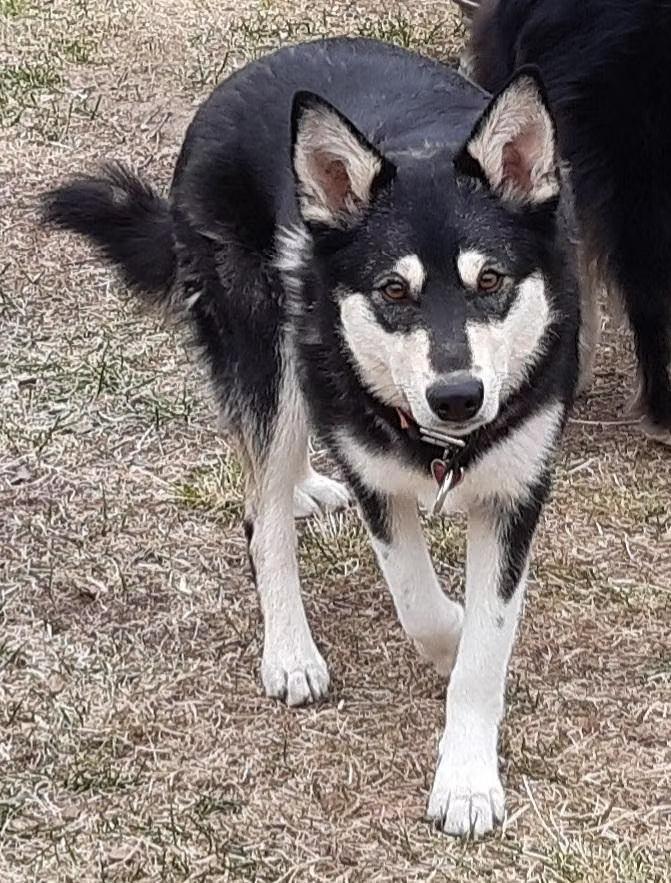


Apie Laplandijos aviganį
Laplandijos aviganis yra vidutinio dydžio suomių šuo, kadaise varęs elnių bandas per Arktį; draugiškas, energingas ir greitai išmoksta.
Laplandijos aviganis yra vidutinio dydžio darbinis šuo iš Suomijos, kurį samiai išvedė elnių bandoms ganyti ir varyti per šiaurinę Laplandijos dalį. Veislė sukurta ne greičiui trumpuose atstumuose, o ištvermei šaltame, atvirame krašte. Šis šuo lengvai juda ištisas valandas ir dirba tokiu oru, kuriame daugelis kitų šunų sustotų.
Būdu Laplandijos aviganis yra draugiškas ir prisirišęs prie žmonių, turi stiprų norą dirbti ir mielai loja darbo metu. Jis glaudžiai susieja su šeima ir seka, ką daro jo šeimininkas. Ši paklusnumo ir energijos derinys iš dalies paaiškina, kodėl veislė išlaikė savo vietą kaip elnių šuo ir kartu prisitaikė prie aktyvių augintinių bei sporto šeimų namų.
Suaugę šunys paprastai gyvena 11-14 metų. Už Šiaurės šalių ribų veislė vis dar gana reta, todėl būsimi šeimininkai dažnai laukia vados iš darbinių ar parodinių linijų.
| Požymis | Aprašymas |
|---|---|
| Kilmė | Suomija |
| Dydis | Vidutinis |
| Gyvenimo trukmė | 11-14 metų |
| Grupė / paskirtis | Ganymo šunys (elnių varymas) |
| Tinka | Aktyvioms šeimoms ir patyrusiems šeimininkams, galintiems kasdien užtikrinti darbą ar fizinį krūvį |
Kam tinka ši veislė
Laplandijos aviganiui reikia namų, kur jis gautų darbą ir nuolatinę kasdienę veiklą. Jis gerai jaučiasi pas šeimininkus, mėgstančius dresūrą, šunų sportą ar ilgus žygius gamtoje, ir nesipiktinančius, kad šuo loja dirbdamas. Namams, kuriuose norima ramaus, mažai energijos reikalaujančio bičiulio, ši veislė paprastai netinka. Šaltesnio ar vidutinio klimato vietovėse, kur yra erdvės judėti, veislei sekasi geriau nei mažuose, šiltuose ar sėslaus gyvenimo būdo namuose.
Istorija ir kilmė
Laplandijos aviganis kilęs iš šiaurės Suomijos samių elnių ganymo kultūros ir kaip atskira veislė pripažintas XX amžiaus viduryje.
Laplandijos aviganio šaknys siekia špico tipo šunis, kuriuos samiai laikė šiaurinėse Suomijos, Švedijos ir Norvegijos dalyse. Kartų kartas šie šunys dirbo kartu su elnių ganytojais, padėdami suburti ir varyti bandas per plačius Arkties plotus. Šunys buvo atrenkami pagal darbinius gebėjimus ir gebėjimą ištverti sunkias žiemas, o ne pagal išvaizdą.
Didžiąją ankstyvosios istorijos dalį ši veislė įrašuose nebuvo atskiriama nuo tankesnį kailį turinčio lapinkoira šuns. Abu tipai gyveno tuose pačiuose ganymo regionuose ir dažnai buvo laikomi kartu. Šiaurės šalyse plintant organizuotai šunų registracijai, veisėjai ėmė skirti trumpesnio kailio ganymo šunį nuo ilgesnio kailio bičiulio tipo šuns.
Suomijoje veislė gavo atskirą pripažinimą XX amžiaus viduryje, o Suomijos standartas įtvirtino ją kaip darbinį elnių šunį, angliškai vadinamą Lapponian Herder. Maždaug tuo pačiu metu, mechanizuotam transportui pakeitus elnininkystę, šunų skaičius smarkiai sumažėjo, ir veislė buvo atkurta iš nedidelės populiacijos.
Šiandien Laplandijos aviganis tebėra glaudžiai susijęs su savo tėvyne. Dalyje Laplandijos jis vis dar naudojamas elnių darbui, taip pat dalyvauja klusnumo, agiliti ir ganymo varžybose Suomijoje bei kitose Europos šalyse.
Išvaizda ir veislės standartas
Laplandijos aviganis yra vidutinio dydžio, šiek tiek stačiakampio kūno sudėjimo špico tipo šuo su orams atspariu dvigubu kailiu, dažniausiai tamsus su šviesesniais ženklais.
Laplandijos aviganis yra vidutinio dydžio šuo, kurio kūnas šiek tiek ilgesnis nei aukštis, todėl siluetas atrodo darnus ir judrus, tinkamas ilgoms darbo dienoms. Kūno sudėjimas tvirtas, bet nesunkus. Galva vidutinio pločio, ausys statačios arba pusiau statačios, žvilgsnis budrus ir draugiškas. Ramybės būsenoje uodega laikoma žemai, o judant ar būnant susikaupusiam gali kilti aukštyn.
| Požymis | Standartas |
|---|---|
| Ūgis | Patinai apie 51 cm, patelės apie 46 cm ties ketera |
| Svoris | Apytiksliai 25-30 kg |
| Kailis | Vidutinio ilgio, tiesus dvigubas kailis su tankiu apatiniu kailiu |
| Spalvos | Dažniausiai juoda arba nuo tamsiai pilkos iki rudos, su šviesesniais rusvais ar pilkais ženklais ant galvos, kojų ir pilvo |
| Akys | Ovalios, tamsios, budraus žvilgsnio |
Kailis ir spalvos
Kailis yra darbinis, dvigubas: šiurkštesnis, orams atsparus viršutinis sluoksnis dengia minkštą, šilumą sulaikantį apatinį kailį. Ties kaklu ir kojų užpakaline dalimi kailis ilgesnis, tačiau bendrai jis trumpesnis ir glaudesnis nei lapinkoira. Būdingos tamsios pagrindinės spalvos, tokios kaip juoda, pilka ir ruda, dažnai su šviesesniais ženklais, suteikiančiais veislei jai būdingą raštuotą išvaizdą. Kailis slenka, o sezono metu, kai keičiasi apatinis kailis, slinkimas sustiprėja.
Būdas ir elgesys
Draugiškas, energingas ir mielai dirbantis, Laplandijos aviganis glaudžiai susieja su šeima, paprastai draugiškas su žmonėmis ir mėgsta loti dirbdamas.
Laplandijos aviganis yra draugiškas, budrus šuo, kuriam patinka dalyvauti šeimos gyvenime. Namuose, kai jo veiklos poreikiai patenkinti, jis ramus ir meilus, tačiau turi tikrą norą dirbti ir geriausiai jaučiasi turėdamas tikslą. Veislė protinga ir gerai reaguoja į dresūrą, todėl ji peržengė ganymo ribas ir prasiskverbė į klusnumo bei agiliti sportą.
Su šeimos nariais veislė ištikima ir įsitraukusi. Su svetimais žmonėmis ji dažniausiai mandagi, o ne agresyvi, nors linkusi pranešti apie svečius. Daugelis Laplandijos aviganių apskritai mėgsta loti: lojimas jiems yra ir ganymo įrankis, ir kasdienio bendravimo būdas, todėl gyvenant ankštoje kaimynystėje svarbu atsižvelgti į triukšmo toleranciją. Su kitais šunimis veislė paprastai draugiška, o ankstyva socializacija padeda jai priprasti prie mažesnių augintinių, nors ganymo instinktas gali paskatinti vytis judančius gyvūnus.
| Savybė | Įvertinimas |
|---|---|
| Meilumas | 4 |
| Energija | 5 |
| Dresuojamumas | 5 |
| Lojumas | 4 |
| Kailio slinkimas | 3 |
Priežiūra ir kasdieniai poreikiai
Laplandijos aviganiui reikia daug kasdienio fizinio krūvio ir protinio darbo, vidutinės kailio priežiūros ir vėsesnio klimato.
Kailio priežiūra
- Šukuokite dvigubą kailį kartą ar du per savaitę, kad pašalintumėte iškritusius plaukus ir išvengtumėte susivėlimo
- Sezoninio slinkimo metu, kai keičiasi apatinis kailis, šukuokite dažniau, kelis kartus per savaitę
- Maudykite tik prireikus, nes kailis natūraliai atsparus orams
- Reguliariai tikrinkite ir trumpinkite nagus, ausis laikykite švarias ir sausas
Fizinis krūvis
- Kasdien skirkite bent valandą ar dvi veiklos: pasivaikščiojimams, bėgimui ir laisvam judėjimui
- Papildykite protiniu darbu: dresūros užsiėmimais, uoslės žaidimais ar ganymo tipo užduotimis
- Naudokite šunų sportą, tokį kaip agiliti, klusnumas ar rally, veislės energijai nukreipti
- Neleiskite šuniui likti be pakankamo krūvio, nes tai dažnai baigiasi lojimu ir neramumu
Aplinka
Laplandijos aviganiui tinka vėsus ir vidutinis klimatas, o dėl dvigubo kailio jis gerai pakelia šaltį. Jis gali gyventi įvairiuose namuose, jei gauna kasdienę veiklą, tačiau jaučiasi laimingiausias turėdamas galimybę būti lauke ir erdvę judėti. Karštu oru krūvį reikėtų riboti vėsesniu paros metu ir užtikrinti šešėlį bei vandenį. Kadangi veislė linkusi loti, jai labiau tinka namai, kur šiek tiek triukšmo yra priimtina.
Mityba ir šėrimas
Laplandijos aviganiui, aktyviai vidutinio dydžio darbinei veislei, reikia pilnaverčio, subalansuoto raciono, kurio porcijos atitinka didelį aktyvumą.
Laplandijos aviganiui tinka pilnavertis, subalansuotas racionas, sukurtas aktyviems vidutinio dydžio šunims. Kadangi tai darbinė veislė, kurios energijos poreikiai dideli, kalorijų kiekis turėtų augti priklausomai nuo fizinio krūvio ar ganymo darbo apimties ir mažėti ramesniais laikotarpiais. Porcijas koreguokite taip, kad šuo išliktų lieknas: šonkauliai turi būti lengvai apčiuopiami, bet nematomi. Švarus vanduo turi būti prieinamas visada, ypač po fizinio krūvio.
| Amžiaus tarpsnis | Kiekis per dieną | Šėrimų skaičius |
|---|---|---|
| Šuniukas (2-6 mėn.) | Pagal šuniukų maisto etiketę, padalinta į dalis | 3-4 |
| Jaunas šuo (6-12 mėn.) | Pagal etiketę, pereinant prie suaugusio šuns kiekio | 2-3 |
| Suaugęs (dirbantis / aktyvus) | Apytiksliai 250-350 g kokybiško sauso maisto | 2 |
| Suaugęs (mažiau aktyvus) | Apytiksliai 200-280 g kokybiško sauso maisto | 2 |
| Senstantis šuo | Mažiau kalorijų, palaikomasis baltymų kiekis | 2 |
Skanėstai ir papildai
Skanėstai turėtų sudaryti ne daugiau kaip dešimt procentų dienos kalorijų, ir juos reikia įskaičiuoti matuojant porcijas, nes ši veislė greitai priauga svorio, jei per mažo aktyvumo laikotarpiais ji peršeriama. Dauguma šunų, valgančių pilnavertį racioną, papildų nereikalauja. Dėl sąnarių ar odos papildų pasitarkite su veterinaru, ypač jei šuo daug dirba arba yra senstantis.
Sveikata ir dažniausios būklės
Laplandijos aviganis paprastai yra tvirtos sveikatos veislė, gyvenanti 11-14 metų, tačiau verta pasitikrinti dėl kelių paveldimų būklių.
Laplandijos aviganis paprastai yra sveikas ir tvirtas, o tai atspindi jo, kaip darbinio šuns, atrinkto ištvermei sudėtingoje aplinkoje, kilmę. Dauguma šunų gyvena 11-14 metų. Kaip ir bet kurios veislės, atkurtos iš nedidelės populiacijos, atveju, atsakingi veisėjai naudoja sveikatos patikrinimus, kad valdytų paveldimas būkles ir išlaikytų genetinę įvairovę.
| Būklė | Požymiai | Pastaba |
|---|---|---|
| Klubo sąnario displazija | Sustingimas, nenoras šokinėti, pakitusi eisena | Tikrinkite veislinius šunis, palaikykite lieknumą |
| Alkūnės sąnario displazija | Priekinės kojos šlubavimas, ypač po krūvio | Paveldima; tikrinkite tėvų patikrinimų rezultatus |
| Progresuojanti tinklainės atrofija | Naktinis aklumas, pereinantis į regėjimo praradimą | DNR ir akių tyrimai veisliniams šunims mažina riziką |
| Kataracta | Aptemusios akys, sumažėjęs regėjimas | Veterinaro atliekamas akių tyrimas gali aptikti anksti |
Prevencinė priežiūra
- Laiku atlikite pagrindinius skiepus ir parazitų kontrolę
- Palaikykite lieknumą, kad apsaugotumėte sąnarius
- Reguliariai lankykitės pas veterinarą, įskaitant periodinius akių tyrimus
- Rinkitės šuniukus iš tėvų, turinčių dokumentais patvirtintus klubų, alkūnių ir akių patikrinimus
- Krūvį didinkite palaipsniui, o ne staigiais intensyvaus fizinio aktyvumo protrūkiais
Dresūra
Laplandijos aviganis yra protingas ir gerai dresuojamas, geriausiai reaguoja į nuoseklią, skatinimu paremtą dresūrą, suteikiančią jam užduotį.
Laplandijos aviganis yra viena iš labiau dresuojamų ganymo veislių. Jis greitai mokosi, budriai stebi šeimininką ir jį motyvuoja veikla bei paskatinimas. Šis protingumas ateina kartu su savarankiškumu, ugdytu priimti sprendimus lauke vienam, todėl dresūra veiksmingiausia, kai ji nuosekli ir įdomi, o ne monotoniška. Veislė puikiai sekasi klusnumo, agiliti, rally ir ganymo užduotyse, o energijos nukreipimas į struktūruotą darbą sumažina bereikalingą lojimą.
Pagrindai
- Pradėkite socializaciją anksti, supažindindami šuniuką su žmonėmis, šunimis, gyvuliais ir įvairiomis aplinkomis
- Mokykite pagrindinių komandų (sėsti, gulti, likti, atšaukimas) trumpais, dažnais užsiėmimais
- Įtraukite ramybės komandą ir skatinkite ramų elgesį, kad valdytumėte veislės energiją
- Kai pagrindai jau tvirti, pradėkite užduotį ar sportą, pavyzdžiui, agiliti ar ganymą
- Dirbkite su tylos komandomis, kad lojimas namuose liktų valdomas
Veisimas
Laplandijos aviganiai subręsta apie vienerius-dvejus metus, po maždaug devynių savaičių nėštumo atveda vidutinio dydžio vadą, o dėl ribotos genetinės įvairovės svarbu atidžiai rinktis poras.
Laplandijos aviganiai fiziškai ir elgesio požiūriu paprastai subręsta būdami nuo vienerių iki dvejų metų, o atsakingi veisėjai dažniausiai laukia, kol šuo visiškai užaugs ir bus patikrintas sveikatos požiūriu, prieš leidžiant jam veistis. Poravimasis vyksta pagal natūralų kalės rujos ciklą, o nėštumas trunka apie 63 dienas. Vados dydis paprastai vidutinis, kaip ir tinka vidutinio dydžio veislei.
Jauniklių auginimas remiasi ankstyvu prisilietimu ir socializacija. Šuniukams naudinga pirmosiomis savaitėmis švelniai susipažinti su žmonėmis, buitiniais garsais ir įvairiais paviršiais, nes tai padeda formuotis veislei būdingam draugiškam, prisitaikančiam būdui. Kadangi veislė buvo atkurta iš nedidelės populiacijos, veisėjai, planuodami poras, atsižvelgia į genetinę įvairovę kartu su klubų, alkūnių ir akių patikrinimais.
| Rodiklis | Reikšmė |
|---|---|
| Lytinė branda | Apie 1-2 metus |
| Nėštumo trukmė | Apytiksliai 63 dienos |
| Vidutinis vados dydis | Apytiksliai 4-7 šuniukai |
| Nujunkymas | Apie 7-8 savaites |
| Sveikatos patikra | Veislinių šunų klubų, alkūnių ir akių tyrimai |
Lapponian Herder veislės šuns ir mikroschemos registracija
Nemokamas profilis visam gyvenimui jūsų Lapponian Herder veislės šuniui United Pet Club, su užregistruota mikroschema ir be pratęsimo mokesčių.
Kaip užregistruoti Lapponian Herder veislės šunį Lietuvoje
Įrašykite Lapponian Herder veislės šuns vardą, gimimo datą ir ryškią nuotrauką, pridėkite savo telefoną ir išsaugokite. Tiek darbo, ir jis nieko nekainuoja nei dabar, nei vėliau. Šuns registracija veikia su mikroschema ir be jos.
Mikroschemą implantuoja veterinaras ir įrašo į valstybinį registrą; kad numeris atsakytų ir už Lietuvos ribų, jau jūsų rūpestis. Užregistruokite mikroschemą nemokamai visam gyvenimui galiojančiame plane: tinka bet kurios markės mikroschema, atnaujinimai po persikraustymo nieko nekainuoja, o įrašas atsako į paieškas bet kada ir iš bet kur. Susikurkite nemokamą paskyrą ir užbaikite abu darbus šiandien.
Kaip užregistruoti Lapponian Herder veislės šunį Lietuvoje?
Susikurkite nemokamą paskyrą United Pet Club, užpildykite Lapponian Herder veislės šuns duomenis su nuotrauka ir išsaugokite profilį. Jis nemokamas visą šuns gyvenimą, o privaloma registracija Gyvūnų augintinių registre vyksta atskirai.
Kaip užregistruoti Lapponian Herder veislės šuns mikroschemą?
Įveskite 15 skaitmenų mikroschemos numerį nemokamoje paskyroje kartu su adresu ir telefonu. Visą gyvenimą galiojantis planas priima bet kurios markės mikroschemą ir niekada neima mokesčio už atnaujinimus.
Ar mikroschema privaloma Lapponian Herder veislės šuniui Lietuvoje?
Taip, nuo 2016 metų šunys privalo būti paženklinti ir įregistruoti Gyvūnų augintinių registre. United Pet Club įrašas papildo valstybinį: atsako į paieškas ir už Lietuvos ribų, nemokamai.
Kiek kainuoja Lapponian Herder veislės šuns registracija?
Nieko. Nemokamas visą gyvenimą galiojantis planas apima profilį, mikroschemos registraciją ir visus būsimus atnaujinimus, be metinių mokesčių.
Dažniausiai užduodami klausimai
Dažniausiai užduodami klausimai apie Laplandijos aviganio dydį, būdą, priežiūros poreikius, gyvenimo trukmę, tinkamumą ir prieinamumą.
Koks Laplandijos aviganio dydis?
Tai vidutinio dydžio šuo. Patinai ties ketera siekia apie 51 cm, patelės apie 46 cm, o dauguma šunų sveria apytiksliai 25-30 kg.
Koks yra Laplandijos aviganio būdas?
Veislė draugiška, energinga ir darbšti. Ji glaudžiai susieja su šeima, paprastai draugiška su žmonėmis ir kitais šunimis, ir mėgsta loti, ypač dirbdama ar perspėdama apie ką nors.
Ar Laplandijos aviganį sunku prižiūrėti?
Kailio priežiūra vidutinė: kas savaitę šukuojama, o sezoninio slinkimo metu priežiūros reikia daugiau. Didesnis įsipareigojimas tenka fiziniam krūviui ir protiniam darbui: šiai veislei kasdien reikia valandos ar dviejų veiklos bei užduoties, kad ji jaustųsi patenkinta.
Kiek gyvena Laplandijos aviganiai?
Paprastai jie gyvena 11-14 metų. Ilgą ir sveiką gyvenimą palaiko lieknumas, pakankamas fizinis krūvis ir reguliari veterinarinė priežiūra.
Ar Laplandijos aviganis yra geras šeimos šuo?
Taip, aktyvioms šeimoms. Jis meilus ir gerai dresuojamas, tačiau tinka namams, kurie gali užtikrinti kasdienį fizinį krūvį ir toleruoti šiek tiek lojimo, o ne ramiems, sėsliems namų ūkiams.
Ar lengva rasti Laplandijos aviganį?
Už Šiaurės šalių ribų veislė vis dar reta, todėl norint įsigyti šuniuką dažnai tenka kreiptis į veisėjus Suomijoje ar kitur Europoje ir laukti vados.
Ar Laplandijos aviganis daug loja?
Jis gali būti gana kalbus. Lojimas yra jo ganymo darbo dalis, o per mažai judantys šunys linkę loti daugiau. Tylos komandos mokymas ir kasdienis fizinis krūvis padeda lojimą suvaldyti.
From the community
Ask about the Lapponian HerderNo questions about the Lapponian Herder yet. Be the first to ask.
Browse Dog breeds