
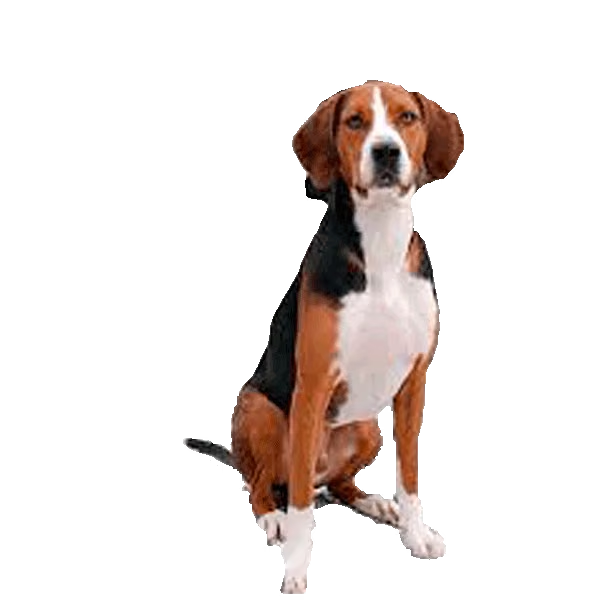
Hamiltonstovare
The Hamiltonstovare is a friendly, even-tempered Swedish scenthound that combines a keen nose with an affectionate home life.
- Size
- Medium
- Lifespan
- 12–15 years
- Origin
- Sweden
- Temperament
- Friendly
- Standard colors
- Juoda, Balta ir Rusva
Characteristics
Coat and grooming
How the Hamiltonstovare coat is built, and what that means when you groom it.
- Kailio sluoksniai
- Dvigubas kailis
- Plauko struktūra
- Lygus
- Plauko ilgis
- Trumpas
- Šėrimasis
- Sezoninis šėrimasis
Grooming guidance
Kritiška: A Hamiltonstovare should not be shaved.
Poplaukis neįleidžia karščio lygiai taip pat, kaip ir šalčio, o dengiamasis plaukas saugo odą nuo saulės ir vabzdžių įkandimų. Nukirpus visą kailį, netenkama abiejų. Jis dažnai atauga lopais, minkštas arba kitos spalvos, o kai kuriems gyvūnams dengiamasis plaukas taip ir nebeatauga kaip reikiant. Poplaukį iššukuokite, o ne nukirpkite.
Informacija: A Hamiltonstovare drops its undercoat in heavy bursts.
Poplaukis išeina stipriais protrūkiais per kelias savaites. Poplaukio grėblys arba maudymas su tinkamu išpūtimu pašalina jį kur kas greičiau nei kasdienis šukavimas. Trumpai nukirpti kailį čia nėra trumpesnis kelias.
Hamiltonstovare colors and patterns
What each club's breed standard says about every Hamiltonstovare color and pattern. Point at a ruling to see the club's own wording.
Breed standards describe the Hamiltonstovare in Juoda, Balta ir Rusva. Standard patterns: Trispalvė.
| Color or pattern | FCI | AKC | UKC | KC | KUSA |
|---|---|---|---|---|---|
| Juoda | Pagal standartą (“black colour to form a mantle”) | Pagal standartą (“Tri-Colored”) | Pagal standartą (“black”) | Pagal standartą (“black colour to form a mantle over body”) | Pagal standartą (“black colour to form a mantle”) |
| Balta | Pagal standartą (“White markings as a blaze, on throat, upper side of neck”) | Pagal standartą (“Tri-Colored”) | Pagal standartą (“tip of tail and lower part of legs and feet white”) | Pagal standartą (“White colouring as a blaze on muzzle, on throat, brisket, tip of tail”) | Pagal standartą (“White markings as a blaze on throat, upper side of neck”) |
| Rusva | Pagal standartą (“The tan colour can range from a golden tint to a rich, deep rusty red”) | Pagal standartą (“Tri-Colored”) | Pagal standartą (“Tan can range from golden tint to a rich, deep reddish-brown”) | Pagal standartą (“Tan ranges from golden to a rich, deep, rusty red”) | Pagal standartą (“The tan colour can range from a golden tint to a rich, deep, rusty red”) |
| Geltona | Diskvalifikuojanti (“Two-coloured (yellow-white”) | Diskvalifikuojanti (“Two-coloured (yellow-white”) | Trūkumas (“Two colored (yellow and white”) | Nepripažinta | Diskvalifikuojanti (“Bi-coloured (yellow-white”) |
| Albinosinė | Diskvalifikuojanti | Diskvalifikuojanti | Diskvalifikuojanti (“Albinism”) | Nepripažinta | Diskvalifikuojanti |
| Patterns | |||||
| Trispalvė | Pagal standartą (“Tricolour”) | Pagal standartą (“Tri-Colored”) | Pagal standartą (“Tri-color”) | Pagal standartą (“Tricolour”) | Pagal standartą (“Tricolour”) |
| Dvispalvė | Diskvalifikuojanti (“Two-coloured (yellow-white, black-white, black-tan)”) | Diskvalifikuojanti (“Two-coloured (yellow-white, black-white, black-tan)”) | Trūkumas (“Two colored (yellow and white, black and white, black and tan)”) | Nepripažinta | Diskvalifikuojanti (“Bi-coloured (yellow-white, black-white, black-tan)”) |
| Sabalinė | Trūkumas (“Undefined mantle with strong mixture of black and tan hairs”) | Trūkumas (“Undefined mantle with strong mixture of black and tan hairs”) | Trūkumas (“Black and brown hairs mixed together”) | Trūkumas (“Lack of clear division between black and tan undesirable in an adult dog”) | Trūkumas (“Undefined mantle with strong mixture of black and tan hairs”) |
| Su įdegiu | Diskvalifikuojanti (“Two-coloured (... black-tan)”) | Diskvalifikuojanti (“Two-coloured (... black-tan)”) | Trūkumas (“Two colored (... black and tan)”) | Trūkumas (“Lack of white markings highly undesirable”) | Diskvalifikuojanti (“Bi-coloured (... black-tan)”) |
%22%3E%3Cellipse%20cx%3D%2212.6%22%20cy%3D%2222.6%22%20rx%3D%223.2%22%20ry%3D%222.8%22%20fill%3D%22%23847865%22%2F%3E%3Ccircle%20cx%3D%2212%22%20cy%3D%2217.2%22%20r%3D%221.25%22%20fill%3D%22%23847865%22%2F%3E%3Crect%20x%3D%220%22%20y%3D%2247%22%20width%3D%2264%22%20height%3D%2217%22%20fill%3D%22%23847865%22%2F%3E%3Cpath%20d%3D%22M8.6%2018L12%2015.8L5.8%2021.8L3.2%2021.4Z%22%20fill%3D%22%23F5F5F0%22%2F%3E%3Cpath%20d%3D%22M1.5%2021.2L9%2018.6L12.6%2021L12.2%2026.2L3.5%2024.4Z%22%20fill%3D%22%23F5F5F0%22%2F%3E%3Cpath%20d%3D%22M14%2024.5L18.5%2026Q19.5%2033%2023%2039L18%2040Q17%2033%2014%2028Z%22%20fill%3D%22%23F5F5F0%22%2F%3E%3Cpath%20d%3D%22M21%2035.5Q35%2033.5%2048%2036.5V42H21Z%22%20fill%3D%22%23F5F5F0%22%2F%3E%3Crect%20x%3D%220%22%20y%3D%2252.5%22%20width%3D%2264%22%20height%3D%2212%22%20fill%3D%22%23F5F5F0%22%2F%3E%3Ccircle%20cx%3D%2258.4%22%20cy%3D%2212.8%22%20r%3D%222.6%22%20fill%3D%22%23F5F5F0%22%2F%3E%3C%2Fg%3E%3Cuse%20href%3D%22%23s%22%20fill%3D%22none%22%20stroke%3D%22%233B2A20%22%20stroke-opacity%3D%220.6%22%20stroke-width%3D%221%22%20stroke-linejoin%3D%22round%22%2F%3E%3Cellipse%20cx%3D%223.2%22%20cy%3D%2221.7%22%20rx%3D%221.3%22%20ry%3D%221.2%22%20fill%3D%22%231C1C1C%22%2F%3E%3Ccircle%20cx%3D%2210.8%22%20cy%3D%2219.3%22%20r%3D%221.1%22%20fill%3D%22%231C1C1C%22%2F%3E%3C%2Fsvg%3E)
%22%3E%3Cpath%20d%3D%22M0%2023L9.5%2020.4L14%2025.4L19%2029.6Q21%2035%2023.5%2035.5Q36%2033%2050%2036L56%2040V64H0Z%22%20fill%3D%22%23F5F5F0%22%2F%3E%3C%2Fg%3E%3Cuse%20href%3D%22%23s%22%20fill%3D%22none%22%20stroke%3D%22%233B2A20%22%20stroke-opacity%3D%220.6%22%20stroke-width%3D%221%22%20stroke-linejoin%3D%22round%22%2F%3E%3Cellipse%20cx%3D%223.2%22%20cy%3D%2221.7%22%20rx%3D%221.3%22%20ry%3D%221.2%22%20fill%3D%22%231C1C1C%22%2F%3E%3Ccircle%20cx%3D%2210.8%22%20cy%3D%2219.3%22%20r%3D%221.1%22%20fill%3D%22%231C1C1C%22%2F%3E%3C%2Fsvg%3E)
%22%3E%3Crect%20x%3D%220%22%20y%3D%220%22%20width%3D%2264%22%20height%3D%2264%22%20fill%3D%22url(%23g)%22%2F%3E%3Cg%20fill%3D%22none%22%20stroke%3D%22%231C1C1C%22%20stroke-width%3D%221%22%20stroke-linecap%3D%22round%22%20stroke-linejoin%3D%22round%22%3E%3Cpath%20d%3D%22M15.7%2014.8l1.9%203.6M26.4%2024.1l1.2%204.1M42.7%2029.5l0.1%203.3M35.9%2025l1.6%203.2M31.3%2028.1l0.7%203.7M15.5%2011.1l1.6%203.6M41.1%2023.8l0.6%203.2M12.1%2020.7l1.2%203M15.4%2011.2l0.8%203.8M42.9%2027.3l0.7%202.9M48.2%2033.2l0.5%204.1M23.1%2024.7l1.4%203.4M51.9%2036.1l0.3%204.3M18.7%2023.9l1.2%203.7M50.4%2027.4l0.5%204.1M18.4%2020.4l0.1%203.1M55.6%2021.4l1.1%203.9M18.6%2024.9l1.7%203.8M8.3%2023.2l1.7%202.9M18.7%2024.2l0.2%203.1M46.4%2022.7l0.6%202.6M14.3%207l0.9%203.5M50.5%2024.9l0.5%203.7M23.2%2024.7l1.2%204.3M10.5%2022.3l1.6%203.4M56.9%2018.2l1.1%202.5M20.8%2021.7l1.1%203.5M10.9%2020.2l0.2%203.9M6.6%2023.3l1%202.4M54.5%2021.7l0.9%203.8M13.3%2021l0.4%203M11.7%2019.5l0.3%204M39%2023.2l0.7%202.5M20.8%2016.7l0%202.6M18.4%2016l0.2%202.6M46.4%2038.2l1.4%203.2M12.9%2022.6l0.6%203.3M13%2020.9l0.3%204.3M35.3%2024.9l1.3%202.3M29.5%2022.1l0.5%202.8M36.6%2023.4l0.2%204.3M20.5%2017.6l0.7%204.1M18.3%2020.6l0.6%203M20.5%2025.8l0.5%203.8M23.5%2040.2l1.1%202.9M22.8%2024.9l1.5%203M25.5%2023.1l0.5%203.3M47.7%2024.7l1.5%203.7M12.9%2018.4l1.9%203.8M29.5%2023.7l0.5%204.1M37.7%2026.5l0%202.9M16.8%2016.4l0.1%203.3M49.8%2028l1.7%203.8M29.4%2025.5l0.5%203.6M9.3%2023l1.3%203.1M47.4%2025.6l0.5%203.5M48.1%2023.8l1.6%203.2M9.9%2018.3l1.3%202.5M12.2%2016.6l0.4%203.2M22%2022.1l1.4%202.7M43.9%2024.7l1.4%203.9M14.3%2020l1.8%203.2M46.3%2040.1l0.3%203.6M14.9%207l0.3%204M17.5%2016.7l1.2%202.4M54.6%2040l1%203.5M13.3%2013.9l1.6%204.2M15.3%2016.5l1.2%202.9M23.8%2038.5l0.2%203.8M18.2%2019l0.6%203M11.2%2023.6l0.7%204.1M33.1%2023.2l0.9%204.3M13.6%2019.9l0.4%204.5M19.7%2023.1l1.9%203.7M50.5%2027.1l0.3%204.1M28.2%2028.5l0.2%203.8M29%2028.4l0.1%204M47.7%2024.5l0.6%202.5M10.7%2017.2l1.4%202.7M25.5%2040.3l0.6%204.1M37.6%2022.8l0.7%204.4M57%2018.6l0.2%203.4M16.9%2022.2l1.7%203.8M43.5%2024.7l1.8%203.4M49.2%2026l1.5%203.6M47.7%2032.3l0.4%203.7M35.4%2030.8l0.5%202.7M47%2026.1l1%203.9M24.3%2028.1l1.5%204.2M50.5%2023.8l1.3%203.4M58.1%2014.1l0.3%202.6M13.9%2018.2l0.7%202.5M8.2%2021l0.7%202.9M41.4%2026.4l0.4%202.7M16.3%2020.4l0.5%204.3M43.4%2025.9l1.2%203.2M32.3%2022.4l0.3%203.9M43.6%2025.9l2.1%203.8M33.5%2026.3l1.5%203M48.3%2030.6l1.4%203.4M44.2%2024.7l0.9%203.2M12.3%2017.7l0.9%203.7M46.2%2032l1.9%203.4M51%2028.3l0.1%203.7M30.4%2023.1l1.1%203.2M52.6%2022.6l0.9%204.3M16.6%2015.4l0.9%203.1M58.4%2012.8l0.3%202.8M42.8%2032.5l1.8%203.2%22%2F%3E%3Cpath%20d%3D%22M16.4%2026.1l0.1%204.3M14%2017.1l1.3%202.8M36.9%2027.2l1.3%202.6M38.6%2025.8l0.4%203.6M57.6%2014.3l0.3%203.9M14.7%208.2l1%204.3M53.4%2023l1.9%203.4M51.5%2030.3l0.8%202.7M56.2%2020l1.9%203.5M15.9%2010l0.2%202.8M15.8%2022.6l1.8%203.9%22%2F%3E%3C%2Fg%3E%3C%2Fg%3E%3Cuse%20href%3D%22%23s%22%20fill%3D%22none%22%20stroke%3D%22%233B2A20%22%20stroke-opacity%3D%220.6%22%20stroke-width%3D%221%22%20stroke-linejoin%3D%22round%22%2F%3E%3Cellipse%20cx%3D%223.2%22%20cy%3D%2221.7%22%20rx%3D%221.3%22%20ry%3D%221.2%22%20fill%3D%22%231C1C1C%22%2F%3E%3Ccircle%20cx%3D%2210.8%22%20cy%3D%2219.3%22%20r%3D%221.1%22%20fill%3D%22%231C1C1C%22%2F%3E%3C%2Fsvg%3E)
%22%3E%3Ccircle%20cx%3D%2212%22%20cy%3D%2217.2%22%20r%3D%221.25%22%20fill%3D%22%23C4996A%22%2F%3E%3Cpath%20d%3D%22M1.5%2021.2L9%2018.6L12.6%2021L12.2%2026.2L3.5%2024.4Z%22%20fill%3D%22%23C4996A%22%2F%3E%3Cpath%20d%3D%22M10%2026L14.5%2026.4L18.2%2029.2L13.5%2029.8Z%22%20fill%3D%22%23C4996A%22%2F%3E%3Cellipse%20cx%3D%2221.2%22%20cy%3D%2230.6%22%20rx%3D%221.6%22%20ry%3D%222.3%22%20fill%3D%22%23C4996A%22%2F%3E%3Crect%20x%3D%220%22%20y%3D%2247%22%20width%3D%2264%22%20height%3D%2217%22%20fill%3D%22%23C4996A%22%2F%3E%3Cpath%20d%3D%22M51.5%2024.5L55%2027L54.2%2032L50.5%2028.5Z%22%20fill%3D%22%23C4996A%22%2F%3E%3Cpath%20d%3D%22M45%2038.5L48%2039L48.5%2047L45.5%2047Z%22%20fill%3D%22%23C4996A%22%2F%3E%3C%2Fg%3E%3Cuse%20href%3D%22%23s%22%20fill%3D%22none%22%20stroke%3D%22%233B2A20%22%20stroke-opacity%3D%220.6%22%20stroke-width%3D%221%22%20stroke-linejoin%3D%22round%22%2F%3E%3Cellipse%20cx%3D%223.2%22%20cy%3D%2221.7%22%20rx%3D%221.3%22%20ry%3D%221.2%22%20fill%3D%22%231C1C1C%22%2F%3E%3Ccircle%20cx%3D%2210.8%22%20cy%3D%2219.3%22%20r%3D%221.1%22%20fill%3D%22%231C1C1C%22%2F%3E%3C%2Fsvg%3E)
| Color or pattern | FCI | AKC | UKC | KC | KUSA |
|---|---|---|---|---|---|
| Tamsiai ruda | Pagal standartą (“dark brown”) | Pagal standartą (“dark brown”) | Pagal standartą (“dark brown”) | Pagal standartą (“dark brown”) | Pagal standartą (“dark brown”) |
| Šviesiai ruda | Trūkumas (“Light eyes”) | Trūkumas (“Light eyes”) | Trūkumas (“Light eyes”) | No ruling | Trūkumas (“Light eyes”) |
| Mėlyna | Diskvalifikuojanti (“Blue eyes, one or both”) | Diskvalifikuojanti (“Blue eyes, one or both”) | No ruling | No ruling | Diskvalifikuojanti (“Blue eyes, one or both”) |
| Patterns | |||||
| Skirtingaakė | Diskvalifikuojanti (“Blue eyes, one or both”) | Diskvalifikuojanti (“Blue eyes, one or both”) | No ruling | No ruling | Diskvalifikuojanti (“Blue eyes, one or both”) |
%22%3E%3Ccircle%20cx%3D%2216%22%20cy%3D%2232%22%20r%3D%228%22%20fill%3D%22%23D9C3A0%22%2F%3E%3Ccircle%20cx%3D%2216%22%20cy%3D%2232%22%20r%3D%223.4%22%20fill%3D%22%231C1C1C%22%2F%3E%3Ccircle%20cx%3D%2213.6%22%20cy%3D%2229.6%22%20r%3D%221.3%22%20fill%3D%22%23F5F5F0%22%2F%3E%3C%2Fg%3E%3Cpath%20d%3D%22M3%2032Q16%2017%2029%2032Q16%2047%203%2032Z%22%20fill%3D%22none%22%20stroke%3D%22%233B2A20%22%20stroke-opacity%3D%220.75%22%20stroke-width%3D%221.4%22%20stroke-linejoin%3D%22round%22%2F%3E%3Cpath%20d%3D%22M35%2032Q48%2017%2061%2032Q48%2047%2035%2032Z%22%20fill%3D%22%23F5F5F0%22%2F%3E%3Cg%20clip-path%3D%22url(%23e1)%22%3E%3Ccircle%20cx%3D%2248%22%20cy%3D%2232%22%20r%3D%228%22%20fill%3D%22%23847865%22%2F%3E%3Ccircle%20cx%3D%2248%22%20cy%3D%2232%22%20r%3D%223.4%22%20fill%3D%22%231C1C1C%22%2F%3E%3Ccircle%20cx%3D%2245.6%22%20cy%3D%2229.6%22%20r%3D%221.3%22%20fill%3D%22%23F5F5F0%22%2F%3E%3C%2Fg%3E%3Cpath%20d%3D%22M35%2032Q48%2017%2061%2032Q48%2047%2035%2032Z%22%20fill%3D%22none%22%20stroke%3D%22%233B2A20%22%20stroke-opacity%3D%220.75%22%20stroke-width%3D%221.4%22%20stroke-linejoin%3D%22round%22%2F%3E%3C%2Fsvg%3E)
| Color or pattern | FCI | AKC | UKC | KC | KUSA |
|---|---|---|---|---|---|
| Juoda | Pagal standartą (“Black”) | Pagal standartą (“Black”) | Pagal standartą (“Black, fully pigmented”) | Pagal standartą (“Nose always black”) | Pagal standartą (“Black”) |
What the rulings mean
- Pagal standartą
- Described by the club's breed standard.
- Trūkumas
- Named by the club's breed standard as a fault: the animal can be shown but is penalized.
- Diskvalifikuojanti
- The club's breed standard disqualifies an animal of this color or pattern.
- Nepripažinta
- The club does not accept this color or pattern for the breed.
Color changes
How a Hamiltonstovare's colors can change over its life.
Juodachanges toRūdžių raudona
Kailis · Pagal kūno būklę · can change back
Juodachanges toPilka
Kailis · Progresuojanti
Juodachanges toRuda
Kailis · Saulėje · can change back
Baltachanges toDereša
Kailis · Su amžiumi · from 2 weeks
Su įdegiuchanges toBalnuota
Kailis · Su amžiumi · from 6 to 156 weeks
Juodachanges toŽiemos nosis
Nosis · Pagal sezoną · can change back
Juodachanges toRožinė
Nosis · Pagal sezoną · can change back
%22%3E%3Cg%20fill%3D%22none%22%20stroke%3D%22%23F5F5F0%22%20stroke-width%3D%221.15%22%20stroke-linecap%3D%22round%22%20stroke-linejoin%3D%22round%22%3E%3Cpath%20d%3D%22M28.6%2025h.1M51.3%2028.8h.1M34.7%2024.3h.1M34.2%2041.6h.1M51%2044.2h.1M55.9%2024.7h.1M27.5%2026.3h.1M18.5%2028.6h.1M25.2%2028.9h.1M24.2%2019.3h.1M20.6%2017.6h.1M34.1%2030.6h.1M57.3%2023.3h.1M23.5%2030.7h.1M26.5%2023.1h.1M40%2031.5h.1M51.7%2038.6h.1M20.2%2022.1h.1M40.4%2037.8h.1M35%2043.1h.1M20.6%2031.7h.1M27.8%2031.9h.1M17.2%2021.1h.1M38.1%2037.7h.1M25.3%2040.5h.1M32%2029.3h.1M41.6%2039.5h.1M23.6%2024h.1M26.4%2018.6h.1M30.3%2031.9h.1M31.2%2035.2h.1M36.5%2043.7h.1M35.2%2026.3h.1M55.6%2019.1h.1M22.4%2036.8h.1M39.2%2020h.1M49.5%2039.1h.1M33.6%2033.5h.1M36.4%2032.4h.1M56.3%2042.4h.1M54.8%2031.2h.1M36.9%2023.2h.1M52.7%2019.1h.1M21.5%2033.8h.1M48.6%2028h.1M36.6%2017.5h.1M45.6%2031.3h.1M37.9%2030.5h.1M17%2031.8h.1M21.1%2043.1h.1M55.7%2021.1h.1M30.8%2041.9h.1M57.4%2038.4h.1M54.8%2026.9h.1M29.1%2017.5h.1M24.3%2037.7h.1M26%2032h.1M39.3%2022.8h.1M53.5%2029h.1M53.3%2023.3h.1M20%2038.4h.1M28.3%2044.7h.1M28.6%2039.8h.1M51.9%2041.1h.1M52.3%2033.7h.1M19.6%2042.2h.1M19%2033h.1M47.8%2021.7h.1M45.7%2024.8h.1M24.6%2035.5h.1M29.8%2036.8h.1M50.7%2032h.1M29.5%2043.5h.1M28.2%2041.5h.1M47.4%2034.8h.1M25.4%2033.7h.1M50.2%2041.2h.1M27.7%2029.5h.1M21.5%2024.8h.1M55.5%2017.5h.1M41.2%2044.3h.1M39.2%2018.4h.1M41.1%2042.5h.1M54.7%2035.3h.1M42.8%2034.5h.1M30.1%2023h.1M42.6%2025.1h.1M32.9%2024.4h.1M42.4%2032.4h.1M49.7%2022.2h.1M49.1%2043.1h.1M38%2035.2h.1M47.7%2043.8h.1M43.1%2022.4h.1M22.4%2040.4h.1M44.4%2019.8h.1M53.3%2040.1h.1M20.7%2029.3h.1M55.6%2043.9h.1M17.6%2039.2h.1M41.7%2028.9h.1M44.1%2036.3h.1M24.3%2043.6h.1M26.4%2038.1h.1M30.3%2029.2h.1M31.5%2030.8h.1M32.1%2023h.1M18.3%2040.9h.1M48%2033.4h.1M36.4%2038.7h.1M31.9%2020.8h.1M32.6%2026.2h.1M22%2031.2h.1M53.4%2021.7h.1M41.9%2017.7h.1M53.3%2037.3h.1M47.7%2040.3h.1M54.4%2033.7h.1M33.6%2037.5h.1M25.3%2017.2h.1M37.6%2019.7h.1M31.6%2019h.1M29.2%2019.6h.1M50.7%2027.3h.1M22%2022.1h.1M31%2037.8h.1M56.5%2026.6h.1M34.7%2039.5h.1M56.5%2040.8h.1M47.6%2038h.1M48.6%2026.1h.1M49.7%2034.2h.1M45.4%2027.4h.1M22.6%2038.9h.1M56.5%2035.3h.1M35.1%2021h.1M41.9%2020.1h.1M37.6%2040h.1M32.6%2044.4h.1M37.9%2025.2h.1M26.6%2043h.1M18.9%2036.7h.1M47.2%2028.9h.1M30.5%2026.2h.1M17.4%2027.3h.1M47.1%2017.2h.1M22.3%2044.3h.1M32.5%2042.4h.1M23.6%2025.7h.1M31.4%2024.9h.1%22%2F%3E%3Cpath%20d%3D%22M26%2020.9h.1M41.2%2023.8h.1M39.9%2026.4h.1M28.5%2033.4h.1M42.8%2043.8h.1M17.6%2034.3h.1M34%2017.1h.1M31.2%2017.2h.1M46.5%2036.1h.1M25.1%2022.1h.1M50.3%2023.7h.1M20.2%2026.6h.1M20.8%2020.4h.1M50.9%2017.3h.1M49.5%2020.2h.1M52.9%2044.1h.1M23.9%2017.8h.1M43.2%2028.1h.1M57.6%2030h.1M52%2025.6h.1M19.2%2019.1h.1M19.5%2024.4h.1M32.8%2040.1h.1M36.1%2027.7h.1M39.6%2029.5h.1M38.4%2041.5h.1M47.9%2019.4h.1M49.1%2031.7h.1M55.9%2036.9h.1M29.2%2027.2h.1M46%2043.5h.1M44.6%2028.8h.1M47.5%2031.5h.1M22.8%2020h.1M27.6%2017.1h.1M43.1%2018.6h.1M54.3%2020h.1M57.2%2033.8h.1M44.5%2043.8h.1M27.1%2035.5h.1M45.3%2041.8h.1M56.7%2028.8h.1M36.7%2021.4h.1M43.3%2042.3h.1M17.3%2022.9h.1M32.7%2035.5h.1M30.5%2039.8h.1M29.1%2021.2h.1M34.5%2018.8h.1M25.8%2027h.1%22%2F%3E%3C%2Fg%3E%3Cpath%20d%3D%22M56.3%2038.4l0%201.2M40%2027.2l-0.3%201.3M32.6%2043.6l-0.4%201.5M29%2023.3l0.8%201.5M55.1%2044l0.4%201.1M47.5%2022.5l-0.2%201.6M42.9%2038.6l0.7%201.2M35.2%2041.8l-0.5%201.7M26.9%2040l-0.1%201.2M41%2042.8l-0.1%201.6M18.4%2021.2l0.7%201.3M49.4%2019.3l-0.5%201.4M50.1%2041.7l0%201.8M28.2%2041.8l-0.6%201.2M55.5%2027.1l0.2%201.2M44.7%2019.3l0.5%201.7M48.6%2020.5l-0.8%201.4M43.7%2039.6l0.3%201.1M22.1%2033.8l-0.6%201.6M50.1%2038.1l-0.5%201.3M51.8%2044.1l-0.1%201.8M39%2017.5l0%201.4M30.2%2026.7l0.2%201.4M25.8%2031.2l0.2%201.6M29.6%2043.5l0.1%201M43.7%2018.3l0.1%201.5M29.6%2018.2l0.3%201.6M24.4%2017.6l0.3%201.1M22%2028.2l-0.6%201.6M25.9%2043.3l-0.3%201.4M22.2%2024.3l0.3%201.3M47.3%2029.2l-0.2%201.4M21.8%2033.2l0.5%200.9M32.9%2037l0.4%201M40%2029.9l0.8%201.4M17.4%2038.3l0.2%201.3M31%2039.2l0%201.2M37.3%2033.7l0.3%201.5M48.1%2040.5l0%201.6M33.9%2031.2l0.1%201.2M29.8%2035.2l-0.4%201M25.1%2037.3l-0.2%201.5M30.2%2039.8l0.5%201M44.6%2034.8l0.4%200.9M55.3%2034.2l0%201.7M50.6%2017.9l0.4%201M30.2%2034.9l-0.4%201.4M19.5%2035.7l-0.5%201.7M40.7%2028.7l0.8%201.4M23.3%2029l-0.4%201.4M17%2040.5l-0.2%201M48.4%2023.2l-0.3%201M37.3%2025.1l-0.4%201.3M23%2021.4l-0.4%201.3M20.4%2017.2l-0.1%201.3M42.3%2020.4l0.6%201.4M41%2031.8l0.6%201.2M45.4%2034.3l-0.1%201.2M32.5%2018l0%201.3M46.2%2021.6l0.1%201.4M30.5%2022.3l0.5%201.1M58%2044.6l0.3%201.5M57.1%2033.9l0.8%201.4M18.3%2042.6l0.3%201M40.5%2035.1l-0.6%201.4M38.8%2044.3l-0.3%201.1%22%20fill%3D%22none%22%20stroke%3D%22%23F5F5F0%22%20stroke-width%3D%220.8%22%20stroke-linecap%3D%22round%22%20stroke-linejoin%3D%22round%22%2F%3E%3C%2Fg%3E%3Cuse%20href%3D%22%23s%22%20fill%3D%22none%22%20stroke%3D%22%233B2A20%22%20stroke-opacity%3D%220.6%22%20stroke-width%3D%221%22%20stroke-linejoin%3D%22round%22%2F%3E%3Crect%20x%3D%2220%22%20y%3D%2258%22%20width%3D%223.6%22%20height%3D%222%22%20fill%3D%22%234A4038%22%2F%3E%3Crect%20x%3D%2226%22%20y%3D%2258%22%20width%3D%223.6%22%20height%3D%222%22%20fill%3D%22%234A4038%22%2F%3E%3Crect%20x%3D%2244%22%20y%3D%2258%22%20width%3D%223.6%22%20height%3D%222%22%20fill%3D%22%234A4038%22%2F%3E%3Crect%20x%3D%2250%22%20y%3D%2258%22%20width%3D%223.6%22%20height%3D%222%22%20fill%3D%22%234A4038%22%2F%3E%3Ccircle%20cx%3D%229.5%22%20cy%3D%2211.5%22%20r%3D%221.1%22%20fill%3D%22%231C1C1C%22%2F%3E%3C%2Fsvg%3E)
%22%3E%3Cpath%20d%3D%22M22.5%2018.5Q24%2021%2025%2021.5L47%2022.5Q50%2022.5%2051.5%2023.5L54%2026Q55%2032%2053%2034Q46%2031.5%2038%2033Q30%2034.5%2025.5%2032Q22.5%2026%2022.5%2018.5Z%22%20fill%3D%22%231C1C1C%22%2F%3E%3Cpath%20d%3D%22M51%2024L56%209L63%209L61%2019L54.5%2028Z%22%20fill%3D%22%231C1C1C%22%2F%3E%3Cpath%20d%3D%22M2%2021.2L7.5%2019.2L8.5%2023.6L3.5%2024.2Z%22%20fill%3D%22%231C1C1C%22%20fill-opacity%3D%220.85%22%2F%3E%3C%2Fg%3E%3Cuse%20href%3D%22%23s%22%20fill%3D%22none%22%20stroke%3D%22%233B2A20%22%20stroke-opacity%3D%220.6%22%20stroke-width%3D%221%22%20stroke-linejoin%3D%22round%22%2F%3E%3Cellipse%20cx%3D%223.2%22%20cy%3D%2221.7%22%20rx%3D%221.3%22%20ry%3D%221.2%22%20fill%3D%22%231C1C1C%22%2F%3E%3Ccircle%20cx%3D%2210.8%22%20cy%3D%2219.3%22%20r%3D%221.1%22%20fill%3D%22%231C1C1C%22%2F%3E%3C%2Fsvg%3E)
%22%3E%3Crect%20x%3D%2217%22%20y%3D%2210%22%20width%3D%2230%22%20height%3D%2242%22%20fill%3D%22url(%23g)%22%2F%3E%3C%2Fg%3E%3Cuse%20href%3D%22%23s%22%20fill%3D%22none%22%20stroke%3D%22%233B2A20%22%20stroke-opacity%3D%220.6%22%20stroke-width%3D%221%22%20stroke-linejoin%3D%22round%22%2F%3E%3Cpath%20d%3D%22M12.5%2037Q13%2032%2018.5%2032Q23.5%2032.5%2023.5%2036.5Q20.5%2035.5%2018.8%2037Q17.4%2038.6%2018%2041.5Q13.6%2040.4%2012.5%2037Z%22%20fill%3D%22%231C1C1C%22%20fill-opacity%3D%220.8%22%20stroke%3D%22%23F5F5F0%22%20stroke-opacity%3D%220.4%22%20stroke-width%3D%220.9%22%2F%3E%3Cpath%20d%3D%22M51.5%2037Q51%2032%2045.5%2032Q40.5%2032.5%2040.5%2036.5Q43.5%2035.5%2045.2%2037Q46.6%2038.6%2046%2041.5Q50.4%2040.4%2051.5%2037Z%22%20fill%3D%22%231C1C1C%22%20fill-opacity%3D%220.8%22%20stroke%3D%22%23F5F5F0%22%20stroke-opacity%3D%220.4%22%20stroke-width%3D%220.9%22%2F%3E%3Cpath%20d%3D%22M32%2040V50%22%20fill%3D%22none%22%20stroke%3D%22%231C1C1C%22%20stroke-width%3D%221.3%22%20stroke-opacity%3D%220.5%22%20stroke-linecap%3D%22round%22%20stroke-linejoin%3D%22round%22%2F%3E%3Cellipse%20cx%3D%2232%22%20cy%3D%2221%22%20rx%3D%2212%22%20ry%3D%223.5%22%20fill%3D%22%23F5F5F0%22%20fill-opacity%3D%220.18%22%2F%3E%3C%2Fsvg%3E)
Sources
Each ruling comes from the club's published breed standard or color list.
Apie hamiltonstovarą
Hamiltonstovaras yra vidutinio dydžio Švedijos skalikas: namie draugiškas ir ramaus būdo, o lauke išlaiko stiprų medžioklės instinktą.
Hamiltonstovaras yra vidutinio dydžio Švedijos skalikas, išvestas sekti kiškius ir lapes per sniegą ir miškingą vietovę. Jis dirba vienas, ne gaujoje: eina kvapo taku ir loja, kad medžiotojas girdėtų, kur žvėris bėga. Veislei būdingas trispalvis kailis, kaip ir daugeliui Europos skalikų: juoda, ruda ir balta spalvos sudaro lengvai atpažįstamą raštą.
Ne darbo metu hamiltonstovaras yra geraširdis ir prieraišus. Jis greitai apsipranta namuose ir stipriai susiriša su šeima, kurioje gyvena. Veislė yra aktyvi ir budri, pasižyminti medžioklinio skaliko ištverme, todėl tinka šeimininkams, galintiems kasdien skirti laiko mankštai ir protiniam užimtumui.
Šuo turi dvi puses, kurias šeimininkas turėtų numatyti iš anksto: namie jis ramus, malonus draugas, o lauke, sekdamas pėdsaką, tampa aistringu medžiotoju. Svarbu turėti patikimai aptvertą teritoriją ir nuo mažens mokyti grįžti pašaukus, nes kvapą pagavęs skalikas gali susikoncentruoti vien į jį ir negirdėti komandų.
| Požymis | Aprašymas |
|---|---|
| Kilmė | Švedija |
| Dydis | Vidutinis |
| Gyvenimo trukmė | 12-15 metų |
| Grupė/paskirtis | Skalikas, medžioja kiškius ir lapes vienas |
| Tinka | Šeimoms ir vyresniems vaikams; su smulkiais gyvūnais bendrauti prižiūrint dėl medžioklės instinkto |
Kam tinka
Hamiltonstovaras tinka aktyviai šeimai, galinčiai kasdien pasiūlyti ilgus pasivaikščiojimus, bėgiojimą ar užuodimo pratybas. Namuose jis elgiasi tvarkingai, tačiau jam būtina išleisti energiją ir panaudoti uoslę. Žygiuojantiems, bėgiojantiems ar medžiojantiems šeimininkams jis taps ištikimu palydovu. Turintiems mažai laiko mankštai arba laikantiems laisvai vaikštančius smulkius gyvūnus verta gerai apsvarstyti stiprų veislės potraukį medžioti prieš įsigyjant šunį.
Istorija ir kilmė
Hamiltonstovaras išvestas Švedijoje XIX amžiaus pabaigoje sukryžminus angliškus ir vokiškus skalikus, taip sukurta Švedijos sąlygoms pritaikyta kiškių medžioklės veislė.
Veislė pavadinta grafo Adolfo Patriko Hamiltono garbei. Jis buvo vienas Švedijos kinologų draugijos įkūrėjų ir XIX amžiaus pabaigoje išvedė šį tipą. Jo tikslas buvo sukurti skaliką, galintį medžioti kiškius ir lapes įvairiuose Švedijos regionuose bei ištverti šaltą klimatą.
Veislei sukurti Hamiltonas naudojo importuotus skalikus, tarp jų angliškus Foxhound veislės šunis ir kelias vokiškas skalikų veisles. Kryptingas kryžminimas davė trispalvį šunį su gera uosle, garsiu balsu ir ištverme, gebantį sekti žvėrį vienas, be gaujos, o tai atitiko to meto Švedijos medžioklės tradicijas.
Visuomenei veislė pristatyta 1886 metais Stokholme vykusioje šunų parodoje, kur ji dar buvo vadinama ankstesniu pavadinimu, o vėliau pervadinta kūrėjo garbei. Vėliau hamiltonstovaras tapo viena labiausiai paplitusių medžioklinių skalikų veislių Švedijoje.
Gimtinėje veislė ir šiandien pirmiausia laikoma darbiniu skaliku, vertinamu už sekimo gebėjimus, tačiau kartu ji vis dažniau laikoma ir šeimos augintiniu. Už Skandinavijos ribų veislė paplitusi mažiau, tačiau ją pripažįsta didžiosios kinologinės organizacijos.
Išvaizda
Hamiltonstovaras yra vidutinio dydžio, darniai sudėtas trispalvis skalikas: juodos, rudos ir baltos spalvos kailis, nusvirusios ausys ir ištvermei pritaikytas kūno sudėjimas.
Hamiltonstovaro kūno sudėjimas stačiakampis, darnus, pritaikytas ne greičiui, o ištvermei. Galva gana ilga, nosis juoda, akys tamsiai rudos, žvilgsnis ramus. Ausys pritvirtintos aukštai, glaudžiai priglunda prie skruostų ir yra vidutinio ilgio. Uodega laikoma maždaug nugaros linijos lygyje.
| Požymis | Aprašymas |
|---|---|
| Ūgis | Patinai apie 53-61 cm, patelės apie 49-57 cm ties ketera |
| Svoris | Apie 23-27 kg |
| Kailis | Trumpas, glaudžiai gulintis, su tankiu pomečiu |
| Spalvos | Trispalvis: juoda, ruda (rausva) ir balta |
| Akys | Tamsiai rudos, žvilgsnis ramus |
Kailis ir spalvos
Kailis trumpas, glaudžiai gulintis prie kūno, o orui atsparus pomatis žiemą sutankėja. Būdingiausias bruožas yra trispalvis raštas: sprando viršus, nugara ir šonai juodi, ant galvos ir kojų matomi rudi ženklai, o balta spalva pasirodo ant snukio, tarp akių, ant kaklo, krūtinės, letenų ir uodegos galiuko. Juodas balno formos raštas nugaroje turi būti aiškiai išryškėjęs, ne dėmėtas. Dvigubas kailis gerai saugo nuo šalčio ir drėgmės, tai atspindi veislės kilmę: švedišką darbinio skaliko paveldą.
Būdas ir elgesys
Namie hamiltonstovaras yra draugiškas, ramaus būdo ir geraširdis, o lauke išlieka aktyvus, budrus darbininkas su stipriu potraukiu sekti kvapą.
Hamiltonstovaras garsėja ramiu būdu ir draugišku, geraširdžiu elgesiu. Su savo šeima jis prieraišus ir nusiteikęs ramiai, o užaugintas kartu su vaikais paprastai puikiai su jais sutaria. Tai nėra tipiškas sarginis šuo: dauguma individų yra draugiški žmonėms ir svetimus pasitinka ramiai, o ne įtariai.
Su kitais šunimis veislė paprastai sutaria draugiškai, tai būdinga skalikui, kuris išvestas dirbti šalia žmonių ir naminių gyvulių. Su smulkiais gyvūnais padėtis kitokia. Veislė turi stiprų medžioklės instinktą, išugdytą vejant kiškius ir lapes, todėl su katėmis ir kitais smulkiais augintiniais reikia supažindinti atsargiai ir stebėti jų bendravimą.
Hamiltonstovaras yra budrus ir mielai naudoja balsą. Sekdamas pėdsaką jis loja, kad praneštų medžiotojui apie žvėrį, o namuose gali loti, jei kas nors patraukia jo dėmesį. Nuobodulys gali sukelti triukšmą ir nerimastingumą, todėl veislei geriausia reguliari mankšta ir protinis krūvis. Šuo protingas, tačiau savarankiškas, nes išvestas medžioti vienas ir pats priimti sprendimus sekdamas kvapą.
| Bruožas | Įvertinimas |
|---|---|
| Prieraišumas | 5 |
| Energingumas | 4 |
| Dresūros lengvumas | 3 |
| Balsingumas | 4 |
| Kailio slinkimas | 3 |
Priežiūra ir šukavimas
Hamiltonstovaro kailio priežiūra nesudėtinga, tačiau šuniui būtina nemažai kasdienio judėjimo ir saugi aplinka, padedanti valdyti medžioklės instinktą.
Šukavimas
- Šukuokite kartą per savaitę šeriuotu šepečiu ar šukavimo pirštine, kad pašalintumėte iškritusius plaukus ir tolygiai paskirstytumėte odos riebalus.
- Sezoninio kailio kaitos metu vilnos iškrenta daugiau, tuomet šukuoti reikia dažniau.
- Maudykite šunį tik kai jis purvinas: trumpas kailis, jam išdžiūvus, purvą nusimeta lengvai.
- Reguliariai tikrinkite nusvirusias ausis ir prireikus jas valykite, nes tokios ausys sulaiko drėgmę.
- Nagus trumpinkite kas kelias savaites, o dantis valykite kelis kartus per savaitę.
Fizinis krūvis
- Kasdien skirkite bent valandą ar dvi judėjimui, dalį laiko pasivaikščiojimams, dalį laisvam bėgiojimui.
- Siūlykite užuodimo žaidimus, sekimo ar pėdsako ieškojimo užduotis, kad būtų panaudota veislės uoslė ir šuo pavargtų protiškai.
- Atvirose vietose šunį laikykite pavadėliu arba aptvertoje teritorijoje, nes kvapas gali nustelbti grįžimo į vietą komandą.
- Nuo mažens ugdykite patikimą grįžimą pašaukus ir nuosekliai už tai apdovanokite.
Gyvenimo sąlygos
Hamiltonstovarui geriau tinka namas su saugiai aptvertu kiemu nei gyvenimas bute, daugiausia dėl didelio judėjimo poreikio ir polinkio loti. Dvigubas kailis gerai atlaiko šaltį, kaip ir dera šuniui iš Švedijos, tačiau jam vis tiek reikia pastogės ir jo nereikėtų ilgam palikti vieno lauke. Laimingiausias jis būna gyvendamas šalia šeimos ir kasdien turėdamas galimybę būti lauke.
Mityba ir šėrimas
Aktyviam vidutinio dydžio skalikui hamiltonstovarui tinka pilnavertis, jo energijos poreikius atitinkantis maistas, duodamas saikingomis porcijomis, kad nesikauptų perteklinis svoris.
Hamiltonstovarui reikia pilnaverčio, subalansuoto raciono, pritaikyto vidutinio dydžio aktyviam šuniui. Dirbantiems ar intensyviai mankštinamiems šunims maisto gali reikėti daugiau nei ramesnį gyvenimo būdą turintiems augintiniams, todėl porcijas geriau rinktis pagal šuns kūno būklę, o ne pagal fiksuotą skaičių. Šonkaulius turėtumėte jausti pirštais, bet nematyti jų akimis, o žiūrint iš viršaus turėtų matytis juosmens linija. Kiekį koreguokite pagal svorį, amžių ir aktyvumo lygį.
| Amžiaus tarpsnis | Kiekis per dieną | Maitinimų skaičius |
|---|---|---|
| Šuniukas (2-6 mėn.) | Pagal augimui skirto pašaro gamintojo nurodymus | 3-4 |
| Jaunas šuo (6-12 mėn.) | Palaipsniui mažinama iki suaugusio šuns normos | 2-3 |
| Suaugęs | Apie 250-350 g kokybiško sauso pašaro | 2 |
| Senstantis | Šiek tiek mažiau, stebėti svorį | 2 |
Skanėstai ir papildai
Skanėstai turėtų sudaryti ne daugiau kaip apie dešimt procentų dienos kalorijų, tai ypač svarbu maistu motyvuojamam skalikui, dresuojamam uoslės pratybomis. Pratybų metu naudokite mažus, mažai kalorijų turinčius skanėstus ir atimkite juos iš dienos raciono. Pilnavertis gamyklinis pašaras paprastai patenkina mitybos poreikius be papildomų priedų; prieš duodami sąnarių, odos ar kitus papildus, pasitarkite su veterinarijos gydytoju ir visada palikite prieinamo švaraus vandens.
Sveikata ir gyvenimo trukmė
Hamiltonstovaras paprastai yra tvirtos sveikatos veislė, gyvenanti vidutiniškai 12-15 metų, o didžiausią priežiūros dėmesį reikalauja reguliarus ausų tikrinimas.
Hamiltonstovaras laikomas tvirtos sveikatos veisle, neturinčia ilgo specifinių sutrikimų sąrašo. Gerai prižiūrimas jis paprastai gyvena 12-15 metų. Kaip ir daugelio vidutinio dydžio šunų, pagrindiniai rūpesčiai jam būdingi bendrai, o ne vien šiai veislei, todėl atsakinga veisyba ir reguliari veterinarinė priežiūra padeda išlaikyti populiaciją sveiką. Nusvirusios ausys reikalauja dėmesio, nes jose gali kauptis drėgmė ir kilti uždegimas.
| Būklė | Požymiai | Pastaba |
|---|---|---|
| Ausų uždegimas | Galvos purtymas, kasymasis, kvapas, išskyros | Nusvirusias ausis reikia reguliariai tikrinti ir valyti |
| Klubo sąnario displazija | Sustingimas, nenoras judėti, pakitusi eisena | Rinkitės veisėjus, tikrinančius veislinius šunis |
| Antsvoris | Išnykusi juosmens linija, vangumas | Kontroliuokite porcijas: veislė mėgsta maistą |
| Nedideli sužalojimai | Šlubavimas, įpjovimai, svetimkūniai kailyje ar letenose | Aktyvus darbas lauke didina smulkių traumų riziką |
Prevencinė priežiūra
- Laiku pasirūpinkite skiepais ir apsauga nuo parazitų (blusų, erkių, kirmėlių).
- Reguliariai tikrinkite ir valykite ausis, ypač po pasivaikščiojimų lyjant.
- Palaikykite sveiką svorį saikingomis porcijomis ir kasdiene mankšta.
- Kasmet lankykitės pas veterinarijos gydytoją, senstantį šunį vežkite dažniau.
- Reguliariai valykite dantis, kad palaikytumėte burnos sveikatą.
Dresūra
Hamiltonstovaras protingas, bet savarankiškas, todėl geriausiai reaguoja į ankstyvą, nuoseklią dresūrą, paremtą paskatinimais, ypač daug dėmesio skiriant grįžimui pašaukus.
Hamiltonstovaras yra sumanus šuo, tačiau jis išvestas medžioti vienas ir sekti savo nosimi, todėl yra savarankiškesnis nei veislės, siekiančios įtikti šeimininkui. Dresūra geriausiai sekasi, kai ji nuosekli, kantri ir paremta paskatinimais. Trumpi, įvairūs užsiėmimai išlaiko šuns dėmesį geriau nei ilgi pratimų kartojimai. Ypač daug dėmesio verta skirti grįžimui pašaukus, nes kvapą pagavęs skalikas gali nekreipti dėmesio į komandas; šio įgūdžio mokykite nuo pat šuniuko amžiaus ir nuolat jį įtvirtinkite. Ankstyva socializacija su žmonėmis, kitais šunimis ir namų gyvūnais padeda veislei užaugti į subalansuotą suaugusį šunį.
Pagrindai
- Socializaciją ir švelnų elgesio mokymą pradėkite nuo šuniuko amžiaus.
- Prieš sudėtingesnius įgūdžius išmokykite reaguoti į vardą ir sutelkti dėmesį.
- Tvirtą grįžimą pašaukus ugdykite naudodami ypač viliojančius maisto skanėstus aplinkoje be blaškančių dirgiklių, vėliau palaipsniui juos pridėkite.
- Praktikuokite vaikščiojimą su pavadėliu, kad įveiktumėte trūkčiojimą sekant kvapą.
- Pridėkite uoslės ar sekimo žaidimus, kad nukreiptumėte prigimtinį veislės potraukį.
- Užsiėmimus darykite trumpus, baikite sėkme ir kartokite kasdien.
Veisimas
Hamiltonstovaras veislinę brandą pasiekia antraisiais metais, po maždaug dviejų mėnesių nėštumo atsiveda vidutinio dydžio vadą, naudingiausia, kai tėvai patikrinti dėl sveikatos.
Hamiltonstovaro kalių paprastai neturėtų veisti, kol jos fiziškai ir psichologiškai nesubrendo, tai yra ne anksčiau nei po pirmųjų metų, dažniausiai antraisiais metais. Kaip ir daugumai šunų, nėštumo trukmė nuo kergimo yra apie 63 dienas. Vados dydis būdingas vidutinio dydžio veislei, dažniausiai apie 6-8 šuniukus, tačiau skaičius priklauso nuo konkrečios kalės.
Atsakingi veisėjai atrenka tėvus pagal veislei būdingą ramų charakterį ir darbinius gebėjimus, o prieš kergimą patikrina jų bendrą sveikatą, įskaitant klubo sąnarių būklę. Šuniukai turėtų likti su kale ir vada iki maždaug aštuonių savaičių amžiaus, tai padeda ankstyvai socializacijai. Auginimo laikotarpiu vyksta laipsniškas atjunkymas, ankstyvas prisilietimų mokymas, supažindinimas su namų garsais ir vaizdais bei tualeto ir gultų įpročių pradžia. Lietuvoje būsimi šeimininkai gali pasidomėti Lietuvos kinologų draugijos (LKD) veisėjais, kurie augina vadą namuose ir suteikia informaciją apie tėvų sveikatą bei charakterį.
| Rodiklis | Reikšmė |
|---|---|
| Veislinė branda | Paprastai antraisiais metais |
| Nėštumo trukmė | Apie 63 dienas |
| Vidutinis vados dydis | Apie 6-8 šuniukus |
| Atjunkymas | Apie 4-8 savaites |
| Išvykimas į naujus namus | Apie 8 savaites |
Hamiltonstovare veislės šuns ir mikroschemos registracija
Nemokamas profilis visam gyvenimui jūsų Hamiltonstovare veislės šuniui United Pet Club, su užregistruota mikroschema ir be pratęsimo mokesčių.
Kaip užregistruoti Hamiltonstovare veislės šunį Lietuvoje
Lietuvoje nuo 2016 metų kiekvienas šuo privalo būti paženklintas mikroschema ir įregistruotas Gyvūnų augintinių registre; formalumus atlieka veterinarijos gydytojas. Valstybinis registras atsako tik Lietuvoje, o nemokamas United Pet Club profilis prideda tai, ko trūksta jūsų Hamiltonstovare veislės šuniui: jūsų kontaktai keliauja kartu, paieška veikia iš bet kurios šalies. Užregistruokite šunį per kelias minutes.
Penkiolika skaitmenų po Hamiltonstovare veislės šuns oda parodys į jus tik tada, kai tai pasakys registras. Tegul pasako nemokamai: įrašas United Pet Club niekada nesibaigia, priima bet kurios markės mikroschemą, o kiekvienas duomenų pakeitimas nemokamas. Mikroschemos registracija pirmiausia, paskyra iškart po jos.
Kaip užregistruoti Hamiltonstovare veislės šunį Lietuvoje?
Susikurkite nemokamą paskyrą United Pet Club, užpildykite Hamiltonstovare veislės šuns duomenis su nuotrauka ir išsaugokite profilį. Jis nemokamas visą šuns gyvenimą, o privaloma registracija Gyvūnų augintinių registre vyksta atskirai.
Kaip užregistruoti Hamiltonstovare veislės šuns mikroschemą?
Įveskite 15 skaitmenų mikroschemos numerį nemokamoje paskyroje kartu su adresu ir telefonu. Visą gyvenimą galiojantis planas priima bet kurios markės mikroschemą ir niekada neima mokesčio už atnaujinimus.
Ar mikroschema privaloma Hamiltonstovare veislės šuniui Lietuvoje?
Taip, nuo 2016 metų šunys privalo būti paženklinti ir įregistruoti Gyvūnų augintinių registre. United Pet Club įrašas papildo valstybinį: atsako į paieškas ir už Lietuvos ribų, nemokamai.
Kiek kainuoja Hamiltonstovare veislės šuns registracija?
Nieko. Nemokamas visą gyvenimą galiojantis planas apima profilį, mikroschemos registraciją ir visus būsimus atnaujinimus, be metinių mokesčių.
Dažnai užduodami klausimai
Dažniausi klausimai apie hamiltonstovarą apima jo dydį, būdą, priežiūros poreikius, gyvenimo trukmę, tinkamumą šeimai ir įsigijimo galimybes.
Kokio dydžio užauga hamiltonstovaras?
Tai vidutinio dydžio skalikas. Patinų ūgis ties ketera apie 53-61 cm, patelių apie 49-57 cm, o dauguma šunų sveria apie 23-27 kg.
Koks hamiltonstovaro būdas?
Namie jis draugiškas, ramaus būdo ir geraširdis, prieraišus savo šeimai. Kartu jis aktyvus ir budrus, turi stiprią medžioklinę uoslę ir mielai naudoja balsą.
Ar sunku prižiūrėti hamiltonstovarą?
Kailio priežiūra paprasta, nes kailis trumpas, tačiau veislei būtina daug kasdienio judėjimo ir protinio krūvio. Didesnis iššūkis yra patenkinti aktyvumo poreikius ir valdyti uoslės potraukį, o ne prižiūrėti kailį.
Kiek gyvena hamiltonstovarai?
Įprasta gyvenimo trukmė yra 12-15 metų. Veislė paprastai tvirtos sveikatos, o reguliari veterinarinė priežiūra, sveikas svoris ir ausų tikrinimas padeda šuniui gyventi ilgai.
Ar hamiltonstovaras tinkamas šeimos šuo?
Taip, aktyvioms šeimoms. Jis draugiškas ir gerai sutaria su vaikais, jei kartu su jais užaugintas, tačiau dėl medžioklės instinkto su smulkiais augintiniais reikia supažindinti atsargiai ir juos prižiūrėti.
Ar hamiltonstovaras sutaria su kitais šunimis?
Su kitais šunimis jis paprastai sutaria draugiškai, tai atspindi jo, kaip šalia žmonių dirbti išvesto skaliko, kilmę. Vis dėlto ankstyva socializacija padeda jam užaugti pasitikinčiu savimi ir gerai išauklėtu suaugusiu šunimi.
Ar lengva įsigyti hamiltonstovarą?
Veislė labiausiai paplitusi Švedijoje ir kitose Skandinavijos šalyse, o Lietuvoje ji reta. Norintys įsigyti šuniuką gali kreiptis į Lietuvos kinologų draugijos (LKD) klubus arba teirautis patikimų užsienio veisėjų apie laukiamas vadas.
From the community
Ask about the HamiltonstovareNo questions about the Hamiltonstovare yet. Be the first to ask.
Browse Dog breeds