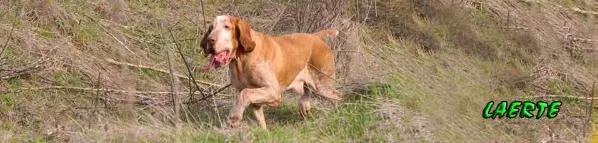
The Bracco Italiano is a gentle, affectionate Italian pointing dog that pairs a sweet family temperament with a strong, methodical hunting style.
How the Bracco Italiano coat is built, and what that means when you groom it.
A few of the Bracco Italiano profiles members have added to United Pet Club.
The Bracco Italiano is a large Italian pointing breed that combines a gentle, affectionate family temperament with a methodical hunting style. It typically lives 12 to 14 years.
The Bracco Italiano is one of the oldest pointing breeds in Europe. It was developed in Italy to find and point game birds, then hold steady while the hunter approached. The breed works at a measured trotting pace rather than a fast gallop, which suits hunters who follow on foot.
At home the Bracco is gentle and people-oriented. The breed forms close bonds with its family and tends to stay near its people rather than range off on its own. The long ears, loose skin, and soft expression give the dog a calm, serious look that matches its even disposition.
This is a substantial dog with real working drive. A Bracco that gets enough physical activity and human contact is usually quiet and easy in the house. Without those outlets, the same dog can become restless and difficult to settle.
| Attribute | Detail |
|---|---|
| Origin | Italy |
| Size | Large |
| Lifespan | 12 to 14 years |
| Group / role | Pointing gundog |
| Good with | Families, children, and other dogs when socialized |
The Bracco Italiano suits active households that can offer daily exercise and steady companionship. The breed fits hunters who want a pointing dog that works close and at a moderate pace, and it also fits family owners who can meet its activity needs without a hunting background. It is a poor match for people who are away from home for long stretches, because the breed dislikes being left alone for extended periods.
The Bracco Italiano is an ancient Italian pointing breed whose ancestors date back centuries. Two regional types were later merged into the single standard recognized today.
The Bracco Italiano traces its roots to the Italian peninsula and is counted among the oldest pointing breeds. Dogs of a similar stamp appear in Italian art and writing from the Renaissance period, used to find game for hunters working with nets and, later, with firearms.
For much of its history the breed existed in two regional forms. A heavier, often white-and-orange type was associated with the Piedmont region in the northwest, while a leaner, frequently roan-brown type was linked to Lombardy in the north. The two shared a common purpose but differed in build and color.
The breed declined sharply during the upheavals of the early twentieth century, and numbers fell low enough to threaten its survival. Italian breeders worked to recover the population and to consolidate the regional types into one recognized standard, which describes a single Bracco Italiano with two accepted color patterns.
The breed gained wider recognition outside Italy in the later twentieth and early twenty-first centuries, as gundog enthusiasts in other countries imported dogs and established breeding lines abroad. It remains valued both as a working pointer and as a family companion.
The Bracco Italiano is a large, powerfully built pointing dog with a distinctive long head, drooping ears, and a short, dense coat in white-and-orange or roan-brown patterns.
The Bracco Italiano is a large, athletic dog of solid bone and squarish-to-rectangular outline. The head is the breed's most recognizable feature: long and lean with a pronounced occiput, a slight downward slope to the muzzle, and long, low-set ears that frame the face. Loose skin and a soft, almost solemn expression complete the look. The body is deep through the chest and built for steady, ground-covering movement at a trot.
| Trait | Standard |
|---|---|
| Height | Roughly 55 to 67 cm (about 22 to 26 in) at the withers |
| Weight | About 25 to 40 kg (55 to 88 lb) |
| Coat | Short, dense, and glossy |
| Colors | White, white and orange, white and chestnut, or roan in those shades |
| Eyes | Fairly large, soft expression, amber to ochre depending on coat |
The coat is short, fine, and shiny, lying close to the body and needing little grooming. Two color families are recognized. The first is white, often with orange or amber markings, sometimes broken with roan. The second is white with chestnut markings, again sometimes appearing as a darker roan. A symmetrical mask on the head is common and acceptable. Nose pigment ranges from fleshy to brown in the chestnut dogs.
The Bracco Italiano is affectionate, gentle, and intelligent. It bonds closely with its family, is generally good with children and other dogs, and dislikes being left alone.
The Bracco Italiano is known for a sweet, steady character. The breed is affectionate with its family and tends to seek out human company, often following its people from room to room. With children it is usually patient and gentle, though its size means supervision is sensible around very young kids.
With strangers the Bracco is typically friendly or politely reserved rather than sharp or suspicious. It is not a guarding breed by nature, although its size and deep voice can deter visitors. With other dogs it is generally sociable, especially when raised with them, and many tolerate cats they have grown up alongside.
The flip side of this devotion is sensitivity. The breed responds poorly to harsh handling and can become anxious or destructive if isolated for long periods. A bored or under-exercised Bracco may dig, chew, or vocalize. Mental work and daily contact keep the temperament at its best.
| Trait | Rating |
|---|---|
| Affection | 5 |
| Energy | 4 |
| Trainability | 4 |
| Vocalness | 3 |
| Shedding | 3 |
The Bracco Italiano needs daily exercise and steady companionship. Its short coat is low-maintenance, but the long ears and loose facial skin need routine attention.
The Bracco Italiano does best in a home with secure outdoor space and a family that is around for much of the day. It can live in a variety of settings provided its exercise needs are met, but it is not suited to long hours alone or to owners who cannot commit to daily activity. A securely fenced yard is helpful, as a bird-finding instinct can pull the dog toward interesting scents.
The Bracco Italiano needs a balanced diet suited to a large, active dog, with portions adjusted for life stage and workload to prevent weight gain.
Feed a complete diet formulated for large active breeds, with protein and fat levels that match the dog's workload. Working and field dogs burn more energy than companion dogs and may need more food during the hunting season. Because the breed has a deep chest, splitting the daily ration into two meals and avoiding heavy exercise right after eating are sensible precautions. Keep the dog at a lean, well-muscled weight rather than allowing it to carry extra body fat.
| Life stage | Amount per day | Meals |
|---|---|---|
| Puppy (2 to 6 months) | Per puppy-food label, divided | 3 to 4 |
| Junior (6 to 12 months) | Per label for projected adult weight | 2 to 3 |
| Adult (active) | Roughly 350 to 500 g of quality dry food | 2 |
| Senior / less active | Reduced portion, lower calorie | 2 |
Keep treats to about ten percent of daily calories and use them for training rewards. Most dogs on a complete diet need no supplements, but a vet may suggest joint support for a large working breed or a fish-oil source for coat and skin. Always confirm supplement use with a veterinarian before starting.
The Bracco Italiano is generally a sound breed with a 12 to 14 year lifespan, though it is prone to a few large-breed orthopedic problems and ear issues tied to its drooping ears.
The Bracco Italiano is generally healthy and typically lives 12 to 14 years. As a large, deep-chested breed it shares some of the orthopedic and gastric risks common to dogs of its build, and its long ears make ear care an ongoing concern. Buying from breeders who screen their stock reduces the chance of inherited problems.
| Condition | Signs | Note |
|---|---|---|
| Hip and elbow dysplasia | Stiffness, limping, reluctance to rise | Screened in breeding stock; manage weight and joint load |
| Bloat (gastric torsion) | Swollen belly, retching, restlessness | Emergency; split meals and rest after eating help reduce risk |
| Ear infections | Head shaking, odor, scratching at ears | Linked to long pendulous ears; clean and check regularly |
| Eye conditions (e.g. entropion) | Squinting, discharge, rubbing the eye | Caused by eyelid or lid-margin faults; may need vet treatment |
The Bracco Italiano is intelligent and eager to please, which makes it trainable, but it is sensitive and responds best to patient, reward-based methods.
The Bracco Italiano is intelligent and naturally cooperative, and it usually wants to work with its handler. That makes the breed responsive to training, especially for field tasks like pointing and retrieving. The main thing to manage is sensitivity. Harsh corrections tend to shut the breed down or make it anxious, so calm, consistent handling works far better. Early socialization with people, dogs, and everyday situations helps produce a confident adult.
The Bracco Italiano is a large breed that reaches breeding maturity slowly, carries average litters, and benefits from health-screened parents and careful early socialization of puppies.
As a large breed, the Bracco Italiano matures slowly and should not be bred until it is physically and mentally mature, generally well into the second year. Responsible breeding starts with screening both parents for hip and elbow dysplasia and for known eye conditions, and selecting for sound temperament as well as conformation.
Gestation in dogs runs about nine weeks. Litters are typically moderate in size for a large breed. The dam needs increased nutrition through late pregnancy and lactation, and a quiet, clean whelping area.
Early handling shapes much of the adult dog. Puppies benefit from gentle daily handling, exposure to household sounds and surfaces, and contact with people before they leave for new homes. Because the breed is sensitive and people-focused, this early socialization has a lasting effect on confidence and trainability. Puppies should stay with the dam and littermates until they are old enough to be weaned and settled, usually around eight weeks.
| Metric | Value |
|---|---|
| Breeding maturity | Best after about 18 to 24 months |
| Gestation | About 63 days (roughly 9 weeks) |
| Typical litter size | Around 6 to 10 puppies |
| Weaning age | Roughly 6 to 8 weeks |
| Recommended health screens | Hips, elbows, and eyes of both parents |
Nemokamas profilis visam gyvenimui jūsų Bracco Italiano veislės šuniui United Pet Club, su užregistruota mikroschema ir be pratęsimo mokesčių.
Skaitytuvas prieglaudoje vertas tiek, kiek vertas registras, į kurį veda numeris. Duokite Bracco Italiano veislės šuniui registrą, kuris atsako visada: nemokama kortelė su nuotrauka, duomenimis ir jūsų telefonu, pasiekiama visą parą, namie ir užsienyje. Registracija atliekama kartą ir lieka visam laikui.
Mikroschemą implantuoja veterinaras ir įrašo į valstybinį registrą; kad numeris atsakytų ir už Lietuvos ribų, jau jūsų rūpestis. Užregistruokite mikroschemą nemokamai visam gyvenimui galiojančiame plane: tinka bet kurios markės mikroschema, atnaujinimai po persikraustymo nieko nekainuoja, o įrašas atsako į paieškas bet kada ir iš bet kur. Susikurkite nemokamą paskyrą ir užbaikite abu darbus šiandien.
Susikurkite nemokamą paskyrą United Pet Club, užpildykite Bracco Italiano veislės šuns duomenis su nuotrauka ir išsaugokite profilį. Jis nemokamas visą šuns gyvenimą, o privaloma registracija Gyvūnų augintinių registre vyksta atskirai.
Įveskite 15 skaitmenų mikroschemos numerį nemokamoje paskyroje kartu su adresu ir telefonu. Visą gyvenimą galiojantis planas priima bet kurios markės mikroschemą ir niekada neima mokesčio už atnaujinimus.
Taip, nuo 2016 metų šunys privalo būti paženklinti ir įregistruoti Gyvūnų augintinių registre. United Pet Club įrašas papildo valstybinį: atsako į paieškas ir už Lietuvos ribų, nemokamai.
Nieko. Nemokamas visą gyvenimą galiojantis planas apima profilį, mikroschemos registraciją ir visus būsimus atnaujinimus, be metinių mokesčių.
Common questions about the Bracco Italiano cover its size, temperament, care needs, lifespan, suitability for families, and availability.
It is a large breed. Adults generally stand about 55 to 67 cm (22 to 26 in) at the shoulder and weigh roughly 25 to 40 kg (55 to 88 lb), with males larger than females.
Yes. The breed is affectionate and gentle and usually does well with children. Because of its size, supervise interactions with very young kids.
Grooming is easy thanks to the short coat, but the breed needs one to two hours of daily exercise, regular ear care, and steady companionship. It is a moderate to demanding breed in terms of time, not coat care.
Most live 12 to 14 years with good care, regular veterinary attention, and a healthy weight.
It can adapt to different homes if its exercise needs are fully met, but it suits a household with space and people around for much of the day better than long hours alone in a small space.
Yes. As a working pointing breed it needs daily physical activity plus mental stimulation. Without enough exercise it can become restless and destructive.
They are less common than mainstream gundog breeds, so finding a puppy may involve a wait or travel to a reputable breeder who health-tests their dogs.