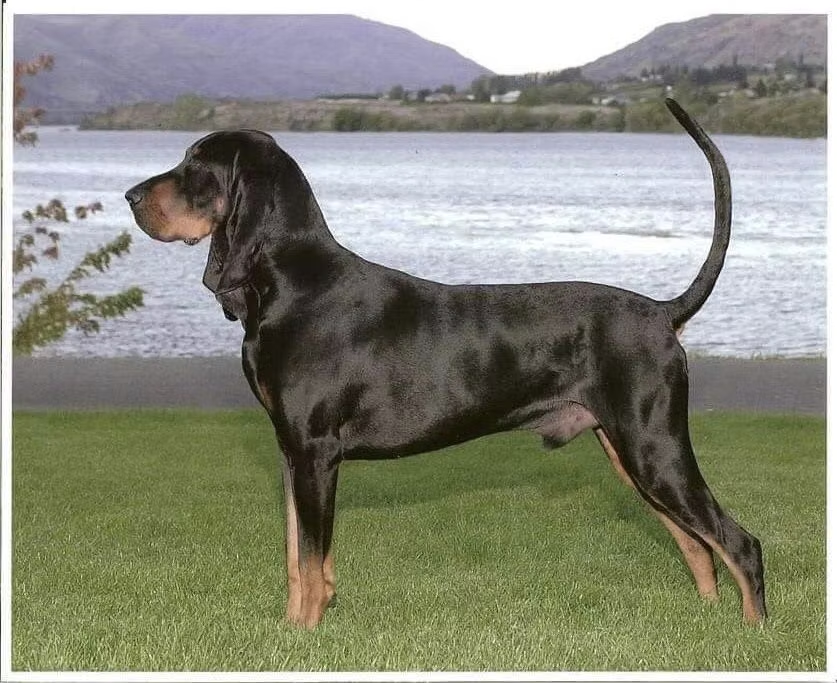
The Black and Tan Coonhound is an even-tempered, hardworking trail hound known for its keen nose and rich bell-like voice.
How the Black and Tan Coonhound coat is built, and what that means when you groom it.
A few of the Black and Tan Coonhound profiles members have added to United Pet Club.
The Black and Tan Coonhound is a large American scenthound bred to trail raccoon and larger game by nose, known for its even temper and deep, bell-like bay.
The Black and Tan Coonhound is a large working scenthound developed in the United States to track raccoon and larger quarry across rough country. It hunts by scent alone, following a trail with its nose to the ground for hours, then signals a treed animal with a deep, carrying voice. The breed takes its name from its coat: a solid black body marked with tan points above the eyes, on the muzzle, chest, legs, and under the tail.
Standing up to 27 inches at the shoulder, this is a substantial dog built for stamina rather than speed. The long ears, loose skin, and powerful frame all support its job, funneling scent toward the nose and protecting the dog as it moves through brush. Off the trail, most Black and Tans are relaxed and friendly, content to rest until the next outing.
The breed suits an active household that can give it daily exercise and a job to do. Its strong nose and tracking drive mean a securely fenced yard and on-leash walks are important, since a fresh scent can pull it away from a recall.
| Attribute | Detail |
|---|---|
| Origin | United States |
| Size | Large |
| Lifespan | 10 to 12 years |
| Group / role | Hound, scent-tracking hunter |
| Good with | Families and other dogs; supervise around small pets |
This breed fits owners who enjoy the outdoors and can commit to consistent daily activity. It does best with people who appreciate a vocal dog and have neighbors who will tolerate occasional baying. Households with secure fencing, time for training, and patience for a nose that often overrules commands will get the most out of the breed. It is less suited to apartment living or homes that need a quiet, low-energy companion.
The Black and Tan Coonhound was developed in the United States from English and American hound stock to trail raccoon by scent, and was recognized by the American Kennel Club in 1945.
The Black and Tan Coonhound descends from hounds brought to North America by early settlers, chiefly the Talbot hound of medieval England and, later, the Bloodhound and the Foxhound. Colonists needed a dog that could work the heavily wooded terrain of the American frontier and trail game in the dark, and they bred toward those demands rather than toward the open-country chase favored in England.
Much of the breed's refinement took place in the southern and Appalachian regions of the United States, where raccoon hunting at night was both a practical food source and a sport. Breeders selected for a cold nose able to work an old trail, the stamina to follow it for hours, and a distinct voice that told the hunter when an animal had been treed.
The Black and Tan is one of several coonhound types that emerged from this shared stock, separated from its relatives by its coloring and its careful selection for trailing ability. It was the first of the coonhounds to gain formal recognition.
The American Kennel Club recognized the Black and Tan Coonhound in 1945. The breed remains a working hunter in many parts of the country, while also kept as a companion and shown in conformation and tracking events.
A large, powerful scenthound with a coal-black coat marked by tan points, long low-set ears, and a deep muzzle built for following scent.
The Black and Tan Coonhound is built for endurance and reach. The body is slightly longer than it is tall, with a deep chest, strong back, and well-muscled legs that allow it to cover ground at a steady working pace. The head is clean and not heavily wrinkled, though the skin is loose enough to gather scent. The ears are long, low-set, and hang in folds, reaching well past the tip of the nose when drawn forward. Dark brown to hazel eyes give the face a soft, alert expression.
| Trait | Standard |
|---|---|
| Height | Males 25 to 27 in; females 23 to 25 in at the shoulder |
| Weight | Roughly 65 to 110 lb depending on size and sex |
| Coat | Short, dense, and smooth |
| Colors | Coal black with tan markings (eyes, muzzle, chest, legs, under tail) |
| Eyes | Hazel to dark brown, almost round |
The defining coat is solid coal black with sharply defined tan markings. Tan points appear above each eye, on the sides of the muzzle, across the chest and legs, and beneath the tail. The short, dense coat lies close to the body and gives some protection in field conditions without heavy maintenance. The pattern should be clean and clearly divided between the black ground color and the tan points, with no large patches of other colors.
Friendly and even-tempered at home, the Black and Tan Coonhound is focused and driven on a scent trail and is naturally vocal.
The Black and Tan Coonhound is generally friendly and even-tempered, an easygoing companion that settles well indoors after it has had enough exercise. With its own family it tends to be affectionate and patient, and it usually gets along with children who treat it gently. The breed is rarely aggressive toward people and often greets strangers with mild interest rather than suspicion, which makes it a poor guard dog despite its size and voice.
Around other dogs the breed is typically sociable, a legacy of its history working in packs. Smaller pets are a different matter: a strong prey and trailing instinct means cats and other small animals can trigger the urge to chase, so introductions should be careful and supervised.
The most distinctive trait is the voice. The breed bays and bawls on a trail and will sound off at scents, sometimes loudly and at length. On a trail it becomes intensely focused, and that focus can override a recall, so a fresh scent often matters more to the dog than a command. Owners who understand and plan for these instincts find the breed an agreeable, good-natured housemate.
| Trait | Rating |
|---|---|
| Affection | 4 |
| Energy | 4 |
| Trainability | 3 |
| Vocalness | 5 |
| Shedding | 3 |
The Black and Tan Coonhound needs daily exercise, routine ear care, and a secure environment, with only modest coat grooming.
Day-to-day care centers on exercise, ear maintenance, and a secure space, since the coat itself asks little.
The breed prefers a home with a securely fenced yard and room to move. It can live indoors comfortably and is calm in the house once exercised, but it is a poor fit for apartments because of the voice and the need for space. Fencing should be solid and tall, as a determined hound on a scent will test boundaries.
Feed a complete large-breed diet matched to the dog's age and activity, divided into two meals to support its working frame and reduce bloat risk.
The Black and Tan Coonhound is a large, active dog that needs a complete and balanced diet suited to its size and workload. A working dog in the field burns far more energy than a companion that walks daily, so portions should track activity rather than a fixed number. Choose a food formulated for large breeds, which helps manage growth in puppies and joint load in adults. Fresh water should always be available, especially after exercise.
| Life stage | Amount per day | Meals |
|---|---|---|
| Puppy (2 to 6 months) | Per large-breed puppy food label, by weight | 3 to 4 |
| Adolescent (6 to 12 months) | Per label, tapering toward adult portions | 2 to 3 |
| Adult (1 to 7 years) | Roughly 3 to 5 cups of dry food | 2 |
| Senior (7+ years) | Reduced to match lower activity | 2 |
Keep treats to about 10 percent of daily calories to avoid weight gain, which strains the joints of a large dog. Most coonhounds on a complete commercial diet need no supplements, though a vet may suggest joint support for older or hard-working dogs. Because the breed has a deep chest, divide food into two meals and avoid heavy exercise right before or after eating to lower the risk of bloat.
The Black and Tan Coonhound is generally healthy with a lifespan of 10 to 12 years, with ear infections and large-breed joint and bloat concerns to watch.
The Black and Tan Coonhound is a generally healthy, hardy breed with a typical lifespan of 10 to 12 years. Most health issues fall into two areas: the ears, because of their long folded shape, and the joints and digestion, which are common concerns in large dogs. Routine veterinary care and attention to weight keep most of these problems manageable.
| Condition | Signs | Note |
|---|---|---|
| Ear infections | Head shaking, odor, scratching, discharge | Common due to long folded ears; weekly checks help |
| Hip dysplasia | Stiffness, limping, trouble rising | Large-breed joint issue; screening of breeding stock helps |
| Gastric dilatation-volvulus (bloat) | Distended belly, retching, restlessness | Medical emergency; feed two meals, avoid exercise around meals |
| Obesity | Weight gain, low stamina | Adds strain to joints; control portions and treats |
Intelligent but independent and scent-driven, the breed trains best with early, consistent, reward-based methods and reliable leash and fence management.
The Black and Tan Coonhound is intelligent and capable, but it was bred to work a trail on its own initiative, so it can be independent and easily distracted by scent. Training is most successful when it starts early, stays consistent, and uses rewards the dog values. Patience matters: a nose to the ground will often win out over a command, which is why secure leashes and fencing are part of any training plan rather than an afterthought. Short, varied sessions hold attention better than long drills, and recall should be practiced in low-distraction settings before being trusted outdoors.
Black and Tan Coonhounds reach breeding maturity around 18 to 24 months, carry litters of about six to eight puppies after a roughly 63-day pregnancy, and benefit from early socialization.
Responsible breeding of the Black and Tan Coonhound waits until both dogs are physically and behaviorally mature, generally around 18 to 24 months, even though dogs can become fertile earlier. Breeding stock should be health-screened, particularly for hip dysplasia and other inherited large-breed conditions, and should show the sound, even temperament the breed is known for.
The female's pregnancy lasts about 63 days. Litters are commonly six to eight puppies, though they can be larger. A whelping area should be warm, clean, and quiet, with room for a large mother to move and nurse comfortably.
Puppies grow quickly and need a large-breed puppy diet to support steady, controlled growth. The early weeks are important for socialization: gentle handling, gradual exposure to household sounds, and meeting a variety of people and dogs build the friendly, even temperament the breed should have. Most puppies are ready to go to new homes at about eight weeks, by which point trailing instincts and the breed's voice are already beginning to show.
| Metric | Value |
|---|---|
| Breeding maturity | About 18 to 24 months |
| Gestation | Roughly 63 days |
| Average litter size | 6 to 8 puppies |
| Weaning | About 6 to 8 weeks |
| Ready for new homes | Around 8 weeks |
Nemokamas profilis visam gyvenimui jūsų Black and Tan Coonhound veislės šuniui United Pet Club, su užregistruota mikroschema ir be pratęsimo mokesčių.
Skaitytuvas prieglaudoje vertas tiek, kiek vertas registras, į kurį veda numeris. Duokite Black and Tan Coonhound veislės šuniui registrą, kuris atsako visada: nemokama kortelė su nuotrauka, duomenimis ir jūsų telefonu, pasiekiama visą parą, namie ir užsienyje. Registracija atliekama kartą ir lieka visam laikui.
Penkiolika skaitmenų po Black and Tan Coonhound veislės šuns oda parodys į jus tik tada, kai tai pasakys registras. Tegul pasako nemokamai: įrašas United Pet Club niekada nesibaigia, priima bet kurios markės mikroschemą, o kiekvienas duomenų pakeitimas nemokamas. Mikroschemos registracija pirmiausia, paskyra iškart po jos.
Susikurkite nemokamą paskyrą United Pet Club, užpildykite Black and Tan Coonhound veislės šuns duomenis su nuotrauka ir išsaugokite profilį. Jis nemokamas visą šuns gyvenimą, o privaloma registracija Gyvūnų augintinių registre vyksta atskirai.
Įveskite 15 skaitmenų mikroschemos numerį nemokamoje paskyroje kartu su adresu ir telefonu. Visą gyvenimą galiojantis planas priima bet kurios markės mikroschemą ir niekada neima mokesčio už atnaujinimus.
Taip, nuo 2016 metų šunys privalo būti paženklinti ir įregistruoti Gyvūnų augintinių registre. United Pet Club įrašas papildo valstybinį: atsako į paieškas ir už Lietuvos ribų, nemokamai.
Nieko. Nemokamas visą gyvenimą galiojantis planas apima profilį, mikroschemos registraciją ir visus būsimus atnaujinimus, be metinių mokesčių.
Common questions about the Black and Tan Coonhound's size, temperament, care needs, lifespan, and suitability as a pet.
It is a large breed. Males stand 25 to 27 inches at the shoulder and females 23 to 25 inches, with weight ranging roughly from 65 to 110 pounds depending on size and sex.
Yes. They are usually friendly and even-tempered, patient with children, and sociable with other dogs. Their strong trailing instinct means small pets should be introduced carefully and supervised.
The coat is low maintenance, but the breed needs daily exercise, weekly ear cleaning, and secure fencing. The main challenges are the loud voice and an independent, scent-driven nature, not heavy grooming.
Most live 10 to 12 years. Regular veterinary care, weight control, and routine ear checks support a healthy life.
Yes. The breed is naturally vocal, with a deep, carrying bay it uses on a trail and when it catches a scent. This makes it a poor choice for apartments or homes with close neighbors who need quiet.
It is not ideal. The breed does best with a securely fenced yard and room to move, and its voice and exercise needs make small spaces difficult.
They are intelligent but independent and easily distracted by scent. Early, consistent, reward-based training works well, though recall can be unreliable when the dog catches an interesting trail.