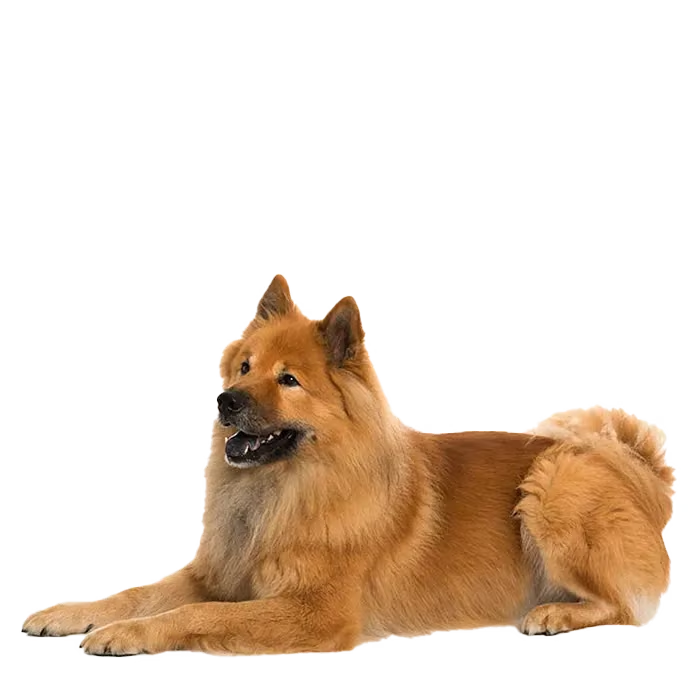
ה-Eurasier הוא גזע בן לוויה רגוע ומכובד המסור למשפחתו אך נותר מאופק ומבחין כלפי זרים.
איך בנויה הפרווה של אווראזיר ומה זה אומר בטיפוח.
קריטי: אין לגזור את הפרווה של אווראזיר.
התת־פרווה חוסמת את החום בדיוק כפי שהיא חוסמת את הקור, והשיער החיצוני מגן על העור מפני שמש ועקיצות חרקים. גזירת כל הפרווה מסירה את שניהם. לרוב היא צומחת בחזרה בטלאים, רכה או בגוון אחר, ואצל חלק מהחיות שיער השמירה כבר אינו חוזר כראוי. הבריש את התת־פרווה במקום לגזור אותה.
לידיעה: אווראזיר משחרר את התת־פרווה בגלים חזקים.
התת־פרווה יוצאת בגלים חזקים במשך כמה שבועות. מגרפת תת־פרווה, או רחצה ולאחריה ייבוש אוויר כהלכה, מסלקות אותה מהר בהרבה מהברשה יומית. גזירת הפרווה אינה קיצור דרך כאן.
The Eurasier is a medium-sized German Spitz-type companion dog, calm and deeply devoted to its family while staying reserved with strangers. It typically lives 11 to 13 years.
The Eurasier is a medium-sized companion dog from Germany, built along Spitz lines with a wedge-shaped head, pricked ears, and a thick double coat. It was created in the 1960s as a family dog, and that purpose still defines the breed. Eurasiers form a close bond with the people they live with and tend to follow their owners quietly from room to room.
The temperament is the breed's defining feature. A well-bred Eurasier is even-tempered and self-assured rather than excitable. It is affectionate with its own household but naturally aloof toward people it does not know, observing a visitor before deciding whether to approach. This reserve is normal for the breed and should not be confused with shyness or aggression.
Eurasiers are quiet dogs by Spitz standards. They bark with purpose rather than constantly, and they adapt to the daily rhythm of the home. They are sensitive to tone and household mood, which makes early socialization and gentle, consistent handling important from puppyhood.
| Attribute | Detail |
|---|---|
| Origin | Germany |
| Size | Medium |
| Lifespan | 11 to 13 years |
| Group / role | Spitz-type companion dog |
| Good with | Family members, including children, when socialized early |
The Eurasier suits a household that wants a calm, devoted companion and can include the dog in daily life. It does best with owners who are home often, because the breed dislikes being left alone for long stretches. Its reserve with strangers means it is not an outgoing dog at the park, so people who want a sociable, everyone's-friend pet should consider this carefully. Patient, gentle owners who avoid harsh correction get the most from the breed.
The Eurasier was developed in Germany in the 1960s by Julius Wipfel, who crossed the Keeshond (Wolfspitz) with the Chow Chow and later the Samoyed to create a calm family companion.
The Eurasier is a recent breed with a documented origin. It was developed in Germany during the 1960s by Julius Wipfel, working with a small group of breeders and with input from the ethologist Konrad Lorenz, whose writing on dogs influenced the breeding goal. The aim was a balanced family dog that combined the appearance of the Spitz with a steady, people-oriented temperament.
The foundation cross paired the Keeshond, also called the Wolfspitz, with the Chow Chow. The resulting dogs were first known as Wolf-Chow. Breeders later introduced the Samoyed to broaden the genetic base and refine temperament and coat.
In 1973 the breed was recognized and given the name Eurasier, reflecting the European and Asian breeds in its background. It was accepted by the Fédération Cynologique Internationale that same decade and is placed in the Spitz and primitive types group.
The breed has remained relatively uncommon and is still bred mainly as a companion rather than for work or sport. Many breed clubs continue to emphasize health testing and temperament selection, keeping the dog close to Wipfel's original intent.
The Eurasier is a medium-sized, well-balanced Spitz with a wedge-shaped head, erect ears, a thick double coat, and a curled tail carried over the back. Coats come in a wide range of colors.
The Eurasier is a medium-sized dog of harmonious, slightly rectangular build. The head is wedge-shaped with a moderate stop, the ears are erect and set well apart, and the dark eyes give an alert, calm expression. The tail is set high and carried curled or curved over the back. Overall the dog should look strong but not heavy, with no exaggeration in any feature.
| Trait | Standard |
|---|---|
| Height | Males 52 to 60 cm; females 48 to 56 cm at the withers |
| Weight | Males 23 to 32 kg; females 18 to 26 kg |
| Coat | Medium-long double coat: dense undercoat with longer guard hair; shorter on muzzle, face, and front of legs |
| Colors | Wide range accepted, including fawn, red, wolf-grey, black, and black-and-tan; liver and pure white are faults |
| Eyes | Dark, medium-sized, not protruding |
The Eurasier carries a thick double coat that suits cold weather. The undercoat is soft and dense, while the outer guard hairs are longer and looser, with feathering on the tail, the backs of the legs, and around the neck. The coat lies fairly loose rather than standing straight off the body.
The breed standard allows almost every natural color except liver and pure white, and a tongue that is fully or partly blue-black is common because of the Chow Chow ancestry. White patches on the body are not desired in the show ring, though they do not affect the dog as a companion.
The Eurasier is calm, devoted, and even-tempered with its family, and reserved or aloof with strangers. It is quiet, sensitive, and bonds closely with its household.
The Eurasier is a quiet, dignified dog whose whole character centers on its family. With the people it lives with it is affectionate and constant, often staying nearby and resting in the same room. It is not clingy in a demanding way, but it wants to be included rather than shut out.
With strangers the breed is naturally reserved. A Eurasier will usually watch a new person calmly and keep its distance until it decides the visitor is acceptable. It is not a guard dog and rarely shows aggression, but it does not give its trust quickly. Forcing greetings tends to make the reserve stronger, so visitors should let the dog approach in its own time.
With children in its own family the Eurasier is generally gentle and patient, especially when raised with them. It usually tolerates other dogs and household pets well when socialized early. The breed is sensitive to harsh tones and tension in the home, and a stressed or unsettled household will affect the dog's mood.
| Trait | Rating |
|---|---|
| Affection (with family) | 5 |
| Energy | 3 |
| Trainability | 3 |
| Vocalness | 2 |
| Shedding | 4 |
The Eurasier needs regular brushing of its double coat, moderate daily exercise, and close contact with its family. It is not suited to being left alone for long periods.
The Eurasier is a moderate-maintenance breed. Its main care needs are coat upkeep, steady daily exercise, and inclusion in family life. The double coat handles cold well but means the dog can feel heat, so activity should be timed for cooler parts of the day in warm weather.
The Eurasier fits well into a house with access to a secure garden, but it can live in smaller homes if exercised properly. The key requirement is human company. This breed bonds tightly and does not cope well with long hours alone, so it suits a household where someone is usually home or the dog can come along.
The Eurasier does well on a complete, balanced diet suited to its life stage and activity level. Portions should be measured to keep this moderately active breed at a healthy weight.
A Eurasier needs a complete, balanced diet appropriate to its age, weight, and activity. Most owners feed a good-quality commercial dog food, though home-prepared or raw diets can work when formulated with veterinary guidance. Because the breed is moderately active and prone to gaining weight if overfed, portions should be measured rather than left out freely.
| Life stage | Amount per day | Meals |
|---|---|---|
| Puppy (2 to 6 months) | Per puppy-food label for projected adult weight | 3 to 4 |
| Junior (6 to 12 months) | Per label, tapering toward adult portion | 2 to 3 |
| Adult (1 to 7 years) | Roughly 200 to 350 g of quality dry food, by size and activity | 2 |
| Senior (7+ years) | Slightly reduced calories; monitor weight | 2 |
Keep treats to about 10 percent of daily calories and account for them in the overall ration so the dog does not gain weight. A balanced complete diet usually supplies all needed nutrients, so supplements are not required for most healthy dogs. Joint supplements or omega-3 fatty acids may be suggested by a veterinarian for older dogs or those with joint concerns. Fresh water should always be available.
The Eurasier is generally healthy with a lifespan of 11 to 13 years. Responsible breeders screen for hip and elbow dysplasia, eye conditions, and patellar luxation.
The Eurasier is generally a healthy, sound breed, helped by breed clubs that emphasize health testing. Typical lifespan is 11 to 13 years. As with all dogs, certain conditions appear more often than in the general population, and choosing a breeder who screens breeding stock lowers the risk of inherited problems.
| Condition | Signs | Note |
|---|---|---|
| Hip dysplasia | Stiffness, reduced activity, difficulty rising | Breeding dogs should have hips scored |
| Elbow dysplasia | Front-leg lameness, especially after exercise | Screened by formal grading schemes |
| Patellar luxation | Skipping or hopping on a hind leg | More common in smaller individuals |
| Hereditary eye conditions | Cloudiness, vision changes | Eye testing recommended for breeding stock |
| Hypothyroidism | Weight gain, lethargy, coat changes | Diagnosed by blood test, managed with medication |
The Eurasier is intelligent and willing but sensitive and independent-minded. It responds best to calm, consistent, reward-based training and needs early socialization.
The Eurasier is intelligent and capable of learning well, but it is sensitive and somewhat independent, so it does not respond to drilling or force. It thinks before it acts and will switch off if training is repetitive or harsh. Calm, patient handling that keeps sessions short and positive gets the best results. The breed's natural reserve makes early, varied socialization important, so puppies should meet many people, places, and situations in a low-pressure way during their first months.
Eurasiers reach breeding maturity at around two years. Litters average four to six puppies after a roughly nine-week gestation, and responsible breeding depends on health testing and temperament selection.
Eurasiers reach physical and mental maturity later than many breeds, and responsible breeders usually wait until a dog is around two years old before breeding so that health screening can be completed. Mating, pregnancy, and whelping follow the normal pattern for a medium-sized dog. Gestation lasts about 63 days, and litters commonly number four to six puppies, though this varies.
Raising the young is where the breed's character is shaped. The dam normally raises the litter with close human contact, and early handling builds the confident, even temperament the breed is known for. Puppies are typically weaned by around seven to eight weeks and usually go to new homes from about eight weeks. Because the Eurasier was created as a stable family companion, reputable breeders place strong weight on temperament and on hip, elbow, and eye health in the parents, and many breed clubs maintain registers to support careful, planned breeding rather than high-volume production.
| Metric | Value |
|---|---|
| Breeding maturity | Around 2 years |
| Gestation | About 63 days (roughly 9 weeks) |
| Average litter size | 4 to 6 puppies |
| Weaning | About 7 to 8 weeks |
| Typical age to new home | From about 8 weeks |
פרופיל חינמי לכל החיים לכלב מגזע אווראזיר ב-United Pet Club, עם שבב רשום בלי תשלום ובלי חידושים.
מלאו את שם הכלב מגזע אווראזיר, תאריך לידה ותמונה חדה, הוסיפו את הטלפון שלכם ושמרו. זה הכול, וזה לא עולה שקל, לא היום ולא בעתיד. רישום הכלב עובד עם שבב ובלעדיו.
חמש עשרה ספרות מתחת לעור של כלב מגזע אווראזיר מצביעות עליכם רק כשמאגר אומר את זה. תנו ל-United Pet Club להגיד את זה בחינם: הרשומה לא פגה, מקבלת כל יצרן שבב, וכל שינוי פרטים חינם. רישום השבב קודם, החשבון מיד אחריו.
פותחים חשבון חינם ב-United Pet Club, ממלאים את פרטי הכלב מגזע אווראזיר עם תמונה ושומרים את הפרופיל. הוא חינמי לכל חיי הכלב, ורישיון הכלב מהרשות המקומית נשאר חובה נפרדת.
מקלידים את המספר בן 15 הספרות בחשבון החינמי יחד עם כתובת וטלפון. המסלול לכל החיים מקבל כל יצרן שבב ולא גובה על עדכונים לעולם.
כן. החוק מחייב שבב אלקטרוני ורישיון מהרשות המקומית לכל כלב, והנתונים נרשמים במאגר הארצי. הרשומה ב-United Pet Club מתווספת בחינם כדי שהמספר יענה גם מחוץ לישראל.
כלום. המסלול החינמי לכל החיים כולל את הפרופיל, את רישום השבב וכל עדכון עתידי, בלי דמי חידוש.
Common questions about the Eurasier cover its size, temperament, grooming needs, lifespan, suitability as a family dog, and how easy it is to find.
It is a medium-sized dog. Males stand about 52 to 60 cm at the withers and weigh roughly 23 to 32 kg, while females are about 48 to 56 cm and 18 to 26 kg.
Calm, devoted, and even-tempered with its family, and reserved or aloof with strangers. It is quiet, sensitive, and bonds closely with the people it lives with rather than being outgoing with everyone.
Care is moderate. The double coat needs brushing once or twice a week and daily during the two seasonal molts. The dog needs about an hour of activity a day and, above all, regular human company.
Typically 11 to 13 years. Choosing a breeder who health-tests the parents and keeping the dog at a healthy weight support a long, comfortable life.
Yes. It was created as a family companion and is generally gentle and patient with children in its own household when socialized early. It suits homes where someone is usually around, because it dislikes being left alone for long.
No. It is quiet by Spitz standards and tends to bark with purpose rather than constantly, which makes it well suited to most home settings.
The breed is relatively uncommon. Puppies are usually available only through dedicated breeders and breed clubs, and waiting lists are normal because litters are planned carefully around health and temperament.
