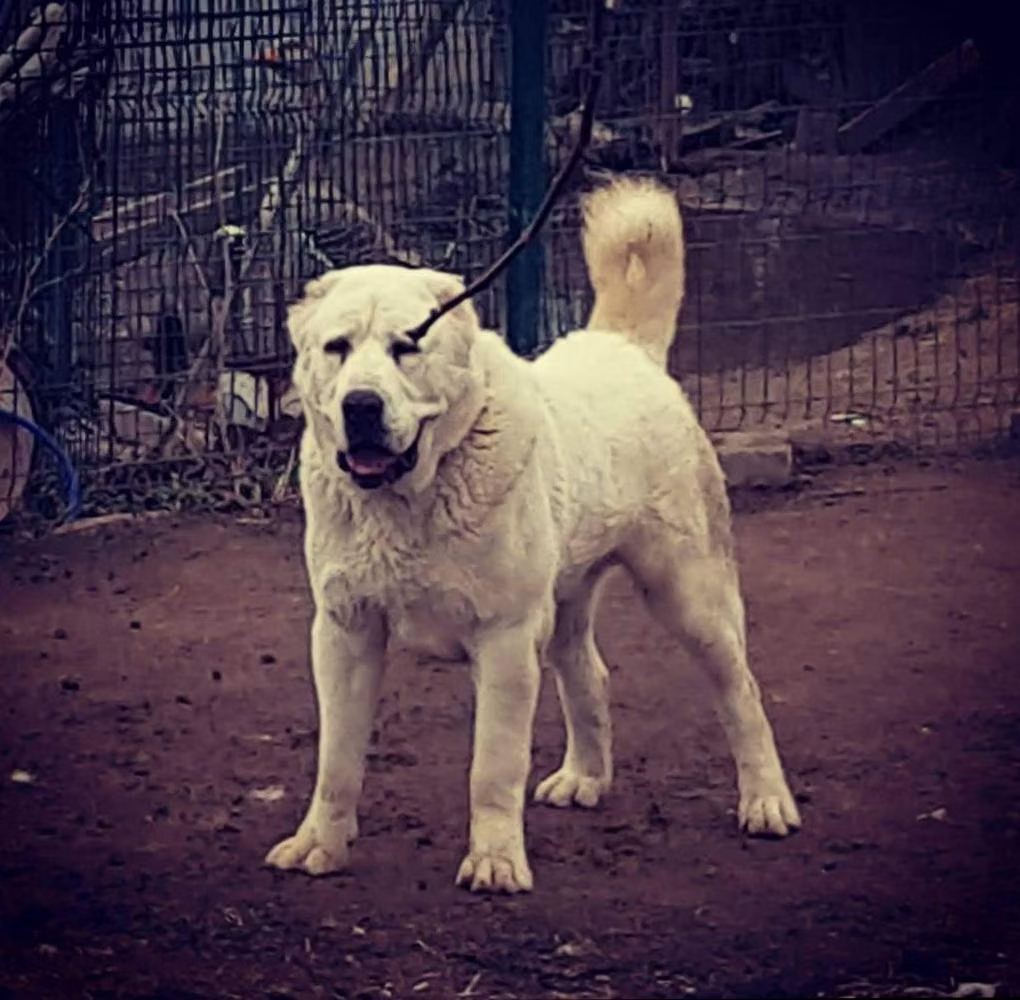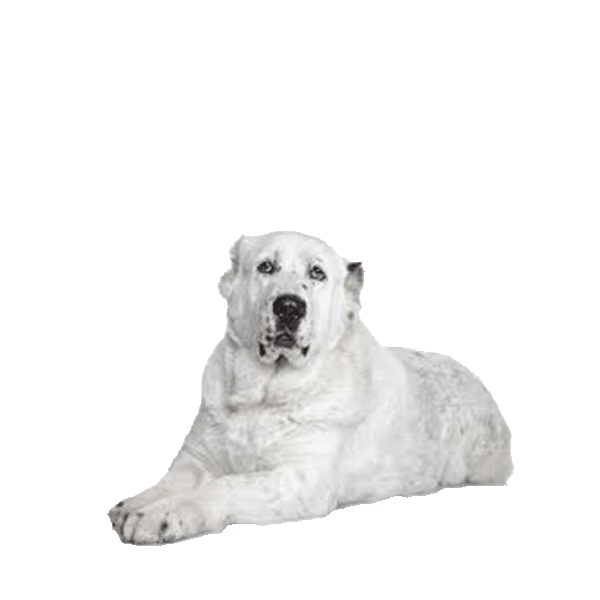
ה-Central Asian Shepherd Dog הוא גזע שומר קדום ועצמאי הנודע בביטחונו הרגוע ובחושי ההגנה הבלתי מתפשרים שלו.
איך בנויה הפרווה של רועה מרכז אסיה ומה זה אומר בטיפוח.
קריטי: אין לגזור את הפרווה של רועה מרכז אסיה.
התת־פרווה חוסמת את החום בדיוק כפי שהיא חוסמת את הקור, והשיער החיצוני מגן על העור מפני שמש ועקיצות חרקים. גזירת כל הפרווה מסירה את שניהם. לרוב היא צומחת בחזרה בטלאים, רכה או בגוון אחר, ואצל חלק מהחיות שיער השמירה כבר אינו חוזר כראוי. הבריש את התת־פרווה במקום לגזור אותה.
לידיעה: רועה מרכז אסיה משחרר את התת־פרווה בגלים חזקים.
התת־פרווה יוצאת בגלים חזקים במשך כמה שבועות. מגרפת תת־פרווה, או רחצה ולאחריה ייבוש אוויר כהלכה, מסלקות אותה מהר בהרבה מהברשה יומית. גזירת הפרווה אינה קיצור דרך כאן.
A few of the רועה מרכז אסיה profiles members have added to United Pet Club.
The Central Asian Shepherd Dog is an ancient giant guardian breed from Central Asia, valued for calm confidence and strong protective instincts. It suits experienced owners with secure space, not first-time dog handlers.
The Central Asian Shepherd Dog is a giant livestock-guardian breed developed across the steppes, deserts, and mountains of Central Asia. For centuries it lived alongside nomadic herders, protecting flocks and camps from predators and intruders. That working past shaped a dog that thinks for itself and acts on its own judgment rather than waiting for direction.
In temperament the breed is independent, protective, courageous, territorial, and confident. A well-raised adult is usually calm and steady at home, conserving energy until it perceives a threat. It tends to be reserved with strangers and deeply attached to its family and its territory. Males in particular can carry strong guarding drive toward unfamiliar dogs and people.
This is a large, powerful animal that lives 12 to 15 years and reaches the giant size class. It is best matched with owners who understand guardian breeds, can provide firm and fair leadership, and have secure, fenced space. It is not a casual companion or a good first dog.
| Attribute | Detail |
|---|---|
| Origin | Central Asia |
| Size | Giant |
| Lifespan | 12 to 15 years |
| Group/role | Livestock guardian / property protection |
| Good with | Family it knows; supervision needed with strangers and unfamiliar animals |
The breed fits people who want a serious property and livestock guardian and who can commit to early socialization and consistent handling. A securely fenced rural or semi-rural home suits it best. It is poorly matched to apartment living, to households with frequent unknown visitors, and to owners who want an easygoing, biddable pet.
The Central Asian Shepherd Dog descends from ancient guardian dogs of the Central Asian steppes and mountains, shaped over centuries by working use rather than formal breeding.
The Central Asian Shepherd Dog is one of the oldest known guardian types, with roots that trace back thousands of years across the region that now includes Kazakhstan, Turkmenistan, Uzbekistan, Tajikistan, and Kyrgyzstan. It belongs to the broad family of mountain and steppe livestock-guardian dogs found from the Mediterranean to the Himalayas.
The breed was not created by planned pedigree work. Instead it developed through function. Nomadic and pastoral peoples kept the dogs to guard sheep and goats against wolves and to defend camps. Natural conditions and hard working demands did most of the selection, favoring dogs that were hardy, weatherproof, independent, and able to face large predators.
Because the population spread over a vast area with little central control, regional variation is wide. Dogs from different areas differ in size, coat, and color, and local names have long been used across the region.
In the twentieth century the breed drew formal attention, and standards were written to describe the working type. It is now recognized internationally and kept both as a working guardian and as a property-protection dog, while many individuals in its homeland still perform the original task of guarding stock.
The Central Asian Shepherd Dog is a giant, powerfully built guardian with a broad head, deep chest, and a coat that ranges from short to longer, appearing in many colors.
The Central Asian Shepherd Dog is a large, strongly boned dog built for endurance and strength rather than speed. The overall impression is one of mass and quiet power. The head is broad with a deep muzzle, the neck is thick, and the chest is deep and well developed. The body is slightly longer than tall, and movement is unhurried and balanced. In its homeland the ears and sometimes the tail were traditionally cropped for working reasons, though many regions and registries now keep dogs in their natural form.
| Trait | Description |
|---|---|
| Height | Males from about 70 cm (27.5 in); females from about 65 cm (25.5 in) |
| Weight | Roughly 40 to 79 kg (88 to 174 lb), males heavier |
| Coat | Double coat; short variety and longer variety, both with dense undercoat |
| Colors | White, black, gray, fawn, brindle, and combinations with markings |
| Eyes | Dark, oval, set wide apart |
The breed carries a weather-resistant double coat with a dense undercoat that protects it in both heat and cold. Two coat lengths occur: a short, close variety and a longer variety with feathering on the ears, legs, and tail. A wide range of colors is accepted, including white, black, gray, fawn, and brindle, often with white markings. Seasonal shedding is heavy, especially when the undercoat is dropped.
The Central Asian Shepherd Dog is calm, confident, and independent at home but strongly protective and territorial, reserved toward strangers and watchful around unfamiliar animals.
At home with its family the Central Asian Shepherd Dog is usually steady and composed. It bonds closely with the people and animals it considers its own and is often gentle with children in its household, though its size means young children should always be supervised around it. The breed is not a fussy or excitable dog and tends to rest quietly until something draws its attention.
With strangers it is naturally reserved and watchful. The guarding instinct is strong, and an adult will assess unfamiliar people and dogs carefully before accepting them. Territorial behavior is a defining feature: the dog regards its property as its responsibility and will defend it. Toward unfamiliar dogs, especially same-sex pairs, it can be confrontational, so introductions and management matter.
The breed is independent and thinks for itself, a trait that made it effective at guarding stock without a handler nearby. This same independence means it does not follow commands out of eagerness to please. Early, broad socialization is essential so the dog learns to tell normal situations from genuine threats.
| Trait | Rating |
|---|---|
| Affection (with family) | 4 |
| Energy | 2 |
| Trainability | 2 |
| Vocalness | 3 |
| Shedding | 4 |
The Central Asian Shepherd Dog needs weekly brushing with heavy attention during seasonal shedding, moderate daily exercise, and secure outdoor space rather than confined indoor living.
Day-to-day care of this breed is straightforward, but its size and guarding nature add their own requirements. The coat is functional and does not need elaborate trimming, yet the dog needs space, security, and steady management.
The breed does best with room to patrol and a strong, high fence it cannot push through or climb. It tolerates a range of climates thanks to its dense coat but still needs shade, fresh water, and shelter. Apartment life and constant confinement do not suit it. Because it takes guarding seriously, secure boundaries protect both the dog and visitors.
The Central Asian Shepherd Dog needs a complete diet suited to a giant breed, with controlled portions to avoid rapid growth in puppies and excess weight in adults.
Feed a complete, balanced diet formulated for large or giant breeds. Because the dog is heavy yet relatively low in energy compared with working sporting breeds, portions need watching to prevent obesity, which stresses the joints. Puppies of giant breeds should grow slowly and steadily; overfeeding or feeding excess calcium during growth can contribute to bone and joint problems. Split daily food into two meals for adults to reduce the risk of bloat, and provide clean water at all times.
| Life stage | Amount per day | Meals |
|---|---|---|
| Puppy (2 to 6 months) | Per giant-breed puppy formula, divided | 3 to 4 |
| Junior (6 to 18 months) | Per giant-breed formula, controlled growth | 2 to 3 |
| Adult | Roughly 4 to 8 cups of quality food, by weight and activity | 2 |
| Senior | Slightly reduced calories, maintain lean weight | 2 |
Keep treats to a small share of daily calories so they do not unbalance the diet or add weight. Most dogs on a complete food need no supplements. Joint support may be discussed with a veterinarian for a giant breed, but add supplements only on professional advice rather than by default.
The Central Asian Shepherd Dog is generally hardy with a lifespan of 12 to 15 years, but as a giant breed it can face joint problems, bloat, and heart conditions.
The Central Asian Shepherd Dog is regarded as a robust, long-developed working breed, and many individuals stay sound well into old age. Its lifespan of 12 to 15 years is good for a dog of its size. Even so, giant breeds carry size-related health risks, and responsible breeding plus sensible management reduce them.
| Condition | Signs | Note |
|---|---|---|
| Hip and elbow dysplasia | Stiffness, limping, trouble rising | Screen breeding stock; control growth and weight |
| Gastric dilatation-volvulus (bloat) | Swollen abdomen, retching, distress | Emergency; feed smaller meals, avoid hard activity around feeding |
| Heart disease | Tiredness, cough, reduced stamina | Periodic veterinary checks help detect it early |
| Obesity | Excess weight, low activity | Strains joints; manage with diet and exercise |
The Central Asian Shepherd Dog is intelligent but independent, so training relies on early socialization, consistency, and respect rather than repetition or force.
Training this breed means working with an independent mind, not against it. The dog is intelligent and capable, but it was bred to make decisions on its own, so it does not drill happily for its own sake. It responds best to an owner it respects and trusts, and it tends to ignore handling that is harsh or inconsistent. Start socialization and basic training early, while the dog is still young and more open to new experiences, because an undersocialized adult of this size and drive is difficult to manage. Set clear, fair rules from the beginning and apply them every day.
The Central Asian Shepherd Dog matures slowly for a giant breed, with a roughly nine-week pregnancy and litters that are often large, requiring careful health screening of parents.
Breeding a giant guardian breed calls for planning and responsibility. These dogs mature slowly, and females in particular should be physically and mentally grown before any breeding is considered, often well beyond their first season. Both parents should be temperamentally sound and screened for hip, elbow, and heart health, since these traits pass to the next generation. Pregnancy lasts about 63 days, and litters can be large. The dam usually shows strong maternal and protective behavior, so the whelping area needs to be quiet, secure, and calm. Puppies of this breed need broad early socialization from the breeder, because the guardian temperament makes early handling and exposure especially important for how the adult dog turns out.
| Metric | Value |
|---|---|
| Sexual maturity | Females often around 18 to 24 months before breeding |
| Gestation | About 63 days (roughly 9 weeks) |
| Average litter size | Commonly large, often 6 to 10 puppies |
| Weaning | Around 6 to 8 weeks |
| Ready for new homes | Usually 8 to 10 weeks, after early socialization |
פרופיל חינמי לכל החיים לכלב מגזע רועה מרכז אסיה ב-United Pet Club, עם שבב רשום בלי תשלום ובלי חידושים.
החוק בישראל ברור: כל כלב חייב שבב אלקטרוני ורישיון מהרשות המקומית, והנתונים מגיעים למאגר הכלבים הארצי של משרד החקלאות. זה חל גם על כלב מגזע רועה מרכז אסיה. מה שהמאגר הארצי לא עושה הוא לענות לסריקה מעבר לגבול. הפרופיל החינמי של United Pet Club סוגר את הפער: הפרטים שלכם צמודים לכלב מכל מדינה. רשמו את הכלב בכמה דקות.
חמש עשרה ספרות מתחת לעור של כלב מגזע רועה מרכז אסיה מצביעות עליכם רק כשמאגר אומר את זה. תנו ל-United Pet Club להגיד את זה בחינם: הרשומה לא פגה, מקבלת כל יצרן שבב, וכל שינוי פרטים חינם. רישום השבב קודם, החשבון מיד אחריו.
פותחים חשבון חינם ב-United Pet Club, ממלאים את פרטי הכלב מגזע רועה מרכז אסיה עם תמונה ושומרים את הפרופיל. הוא חינמי לכל חיי הכלב, ורישיון הכלב מהרשות המקומית נשאר חובה נפרדת.
מקלידים את המספר בן 15 הספרות בחשבון החינמי יחד עם כתובת וטלפון. המסלול לכל החיים מקבל כל יצרן שבב ולא גובה על עדכונים לעולם.
כן. החוק מחייב שבב אלקטרוני ורישיון מהרשות המקומית לכל כלב, והנתונים נרשמים במאגר הארצי. הרשומה ב-United Pet Club מתווספת בחינם כדי שהמספר יענה גם מחוץ לישראל.
כלום. המסלול החינמי לכל החיים כולל את הפרופיל, את רישום השבב וכל עדכון עתידי, בלי דמי חידוש.
Common questions about the Central Asian Shepherd Dog cover its size, temperament, care needs, lifespan, suitability, and availability.
It is a giant breed. Males stand from about 70 cm (27.5 in) at the shoulder and can weigh well over 50 kg, while females are somewhat smaller. Adults are heavy, powerful dogs.
It is independent, protective, courageous, territorial, and confident. At home with its family it is usually calm and steady, but it is reserved with strangers and takes guarding its territory seriously.
Grooming is simple, with weekly brushing and heavier brushing during seasonal shedding. The harder part is management: the breed needs secure fencing, early socialization, and an experienced owner who can provide consistent leadership.
Typically 12 to 15 years, which is good for a dog of this size when kept at a healthy weight and given regular veterinary care.
Generally no. Its size, independence, and strong guarding instinct make it best suited to people who already understand guardian breeds and can commit to early training and secure containment.
It is often gentle with children in its own family, though supervision is essential because of its size. It can live with animals it is raised with but may be wary or confrontational toward unfamiliar dogs, so careful introductions matter.
Availability varies by region. The breed is more common in its Central Asian homeland and among guardian-breed enthusiasts elsewhere. Seek breeders who health-test parents and socialize their puppies.