Tosa on massiivinen, arvokas japanilainen rotu, joka tunnetaan rauhallisesta malttavuudestaan ja horjumattomasta uskollisuudestaan perheelleen.
Miten Tosa-rodun turkki rakentuu ja mitä se tarkoittaa turkinhoidossa.
A few of the Tosa profiles members have added to United Pet Club.
The Tosa is a giant Japanese breed bred for the fighting ring, now kept as a calm, dignified guardian that bonds closely with its family.
The Tosa is a giant working dog from Japan, often listed among the largest of the country's native breeds. Adults carry heavy bone, a broad head, and a deep chest, and many males exceed 60 kg. The breed was developed for organized dog fighting, a tradition still practiced in some parts of Japan under formal rules, and that history shaped a dog expected to stay silent and composed under pressure.
In the home the Tosa is usually quiet and reserved. It tends to attach itself to its household and watches strangers with reserve rather than excitement. The breed is slow to react but firm once it decides something matters, which is part of why it has a reputation as a steady guardian.
This is not a casual first dog. The Tosa's size, strength, and guarding instinct call for an owner who can provide consistent structure, early socialization, and secure containment. In several countries the breed is restricted or banned under dangerous-dog legislation, so prospective owners should check local law before acquiring one.
| Attribute | Detail |
|---|---|
| Origin | Japan |
| Size | Giant |
| Lifespan | 10 to 12 years |
| Group/role | Working, guardian (historically a fighting breed) |
| Good with | Experienced owners; family it knows; cautious around strangers and unfamiliar dogs |
The Tosa fits an experienced, confident owner with space, time, and a fenced property. It rewards people who value a calm, low-drama companion and who can commit to lifelong training and supervision. It is a poor match for novice owners, small homes without secure outdoor access, or households that cannot manage a powerful dog around visitors and other animals.
The Tosa was developed in the Tosa region of Japan during the 19th century by crossing native fighting dogs with imported Western breeds to produce a larger, stronger fighting dog.
The breed takes its name from the former Tosa Province, now Kochi Prefecture, on the island of Shikoku in Japan. Dog fighting had a long local tradition there, originally using the smaller native Shikoku-type dogs.
During the second half of the 19th century, as Japan opened to foreign trade, breeders began crossing those native dogs with larger Western imports to gain size, weight, and power. Breeds reported in the development include the Mastiff, the Bulldog, the Great Dane, the St. Bernard, and the German Pointer, among others. The aim was a heavier, more durable fighting dog while keeping the quiet temperament prized in the ring.
In Japanese fighting tradition the ideal dog fought in silence and without retreat, and handling rules and rituals borrowed elements from sumo, including ranking systems for top dogs. This cultural framing is why the breed is sometimes called the Tosa Inu or Tosa Ken.
The breed's numbers fell sharply during and after the Second World War, and dedicated breeders worked to rebuild the population afterward. Today the Tosa is kept both for traditional purposes in Japan and as a guardian and companion elsewhere, though legal restrictions in some countries limit its presence abroad.
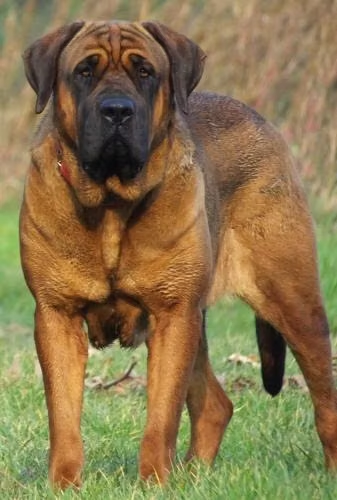
The Tosa is a giant, heavily built dog with a broad head, deep chest, and a short, dense coat most often seen in red or fawn.
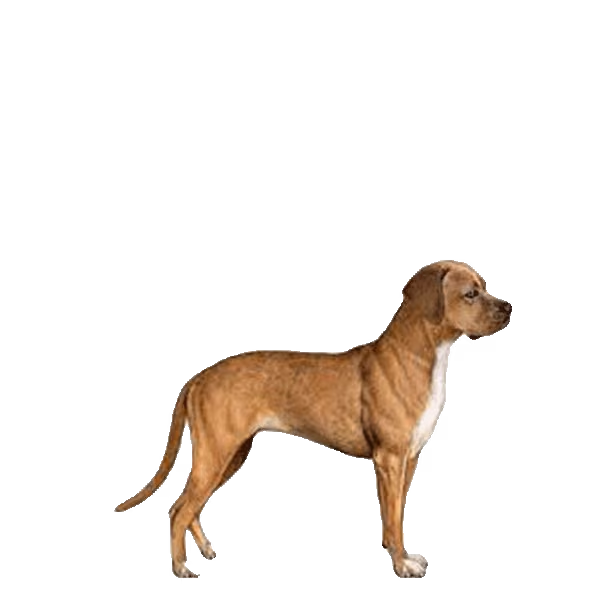
The Tosa presents as a large, muscular dog with substantial bone and a dignified, imposing outline. The head is broad with a defined stop, a strong muzzle, and pendant ears set high and hanging close to the cheeks. The neck is thick and carries loose skin and a slight dewlap. The body is deep through the chest with a level back, and the tail is thick at the base and tapers toward the tip. Size varies widely, and there is a marked difference between dogs raised under Japanese standards and larger Western-bred lines.
| Trait | Description |
|---|---|
| Height | Roughly 60 to 65 cm at the shoulder; Western lines are often taller |
| Weight | About 40 to 60 kg or more, with large males exceeding this |
| Coat | Short, dense, and smooth, lying close to the body |
| Colors | Red, fawn, apricot, black, and brindle; small white markings on chest and feet permitted |
| Eyes | Small, dark brown, set fairly deep, giving a steady expression |
The coat is short and hard to the touch, which makes grooming simple. Red and fawn are the most common colors, and a black mask is frequently seen on lighter dogs. Black, brindle, and apricot also occur. Limited white on the chest and feet is generally accepted. The dense single coat offers little protection against cold, so the breed is not suited to living outdoors in harsh climates.
The Tosa is calm, quiet, and deeply loyal to its family, while remaining reserved with strangers and often intolerant of unfamiliar dogs.
The Tosa is known for a composed, even temperament at home. It is typically quiet, patient, and undemonstrative, and it forms a strong attachment to its household. With people it knows well it is gentle and steady, and it generally tolerates children in the family when raised with them, though its size means interactions with young children must always be supervised.
With strangers the Tosa is reserved and watchful rather than friendly, which makes it a natural guardian. It tends to assess situations slowly and act decisively, so an owner must be able to read and control the dog in public. The breed's fighting heritage means many Tosas show low tolerance for unfamiliar dogs, particularly of the same sex, and same-household dog pairings require careful management.
Early and ongoing socialization is essential. A well-raised Tosa is confident and stable, not nervous or hair-trigger. Without that foundation the breed's strength and guarding drive can become difficult to manage.
| Trait | Rating |
|---|---|
| Affection | 4 |
| Energy | 2 |
| Trainability | 3 |
| Vocalness | 1 |
| Shedding | 2 |
The Tosa is low-maintenance to groom but needs moderate daily exercise, secure space, and a temperate indoor environment.
The Tosa lives best indoors with its family and access to a safe outdoor area. Its thin single coat handles heat poorly and cold poorly, so it should not be kept outside permanently. Fencing must be tall and solid, and the breed's strength means gates and latches need to be secure. A calm, predictable home suits the breed's temperament.
The Tosa needs a balanced large-breed diet fed in measured meals, with controlled puppy growth to protect developing joints.
The Tosa does well on a complete, balanced diet formulated for large or giant breeds. Because of the breed's deep chest and bulk, portions should be measured and fed in two meals a day rather than one large meal, which helps reduce the risk of bloat. Adjust amounts to the individual dog's weight, age, and activity, and keep the dog at a lean condition where the ribs can be felt but not seen. Large-breed puppies should grow slowly on a diet with controlled calcium and energy to protect joint development.
| Life stage | Amount per day | Meals |
|---|---|---|
| Puppy (2 to 6 months) | Per large-breed puppy food label, divided | 3 to 4 |
| Junior (6 to 18 months) | Roughly 4 to 6 cups of large-breed food | 2 to 3 |
| Adult | Roughly 4 to 8 cups depending on size and activity | 2 |
| Senior | Reduced calories to prevent weight gain | 2 |
Keep treats to about 10 percent of daily calories to avoid weight gain, which is hard on a giant frame. Joint supplements containing glucosamine and chondroitin are sometimes used for large breeds, and omega-3 fatty acids may support coat and joint health. Discuss any supplement with a veterinarian before starting it, and always provide constant access to fresh water.
The Tosa is generally hardy but, like many giant breeds, is prone to hip dysplasia, bloat, and heart conditions, with a typical lifespan of 10 to 12 years.
The Tosa is a reasonably robust breed, but its giant size brings the health concerns common to large dogs. The typical lifespan is 10 to 12 years. Responsible breeders screen for joint and heart problems, and buyers should ask to see health-test results for the parents. Keeping the dog lean, feeding measured meals, and avoiding hard exercise during growth all help protect long-term health.
| Condition | Signs | Note |
|---|---|---|
| Hip and elbow dysplasia | Stiffness, limping, reluctance to rise | Common in giant breeds; screen breeding stock |
| Gastric dilatation-volvulus (bloat) | Distended abdomen, retching, restlessness | Life-threatening emergency; feed split meals |
| Dilated cardiomyopathy | Tiredness, coughing, fainting | A heart-muscle disease seen in large breeds |
| Hypothyroidism | Weight gain, lethargy, coat changes | Manageable with daily medication |
The Tosa is intelligent and capable but independent and strong-willed, so it needs early, consistent, reward-based training from a confident handler.
The Tosa is an intelligent breed that learns well, but it is also independent and can be stubborn. It responds to a calm, consistent handler who sets clear, fair rules and applies them every day. Harsh or confrontational methods tend to backfire with this breed and can damage trust. Because of the dog's eventual size and strength, training is not optional: basic control must be reliable before the dog reaches its adult weight. Socialization with people, places, and sounds should begin in puppyhood and continue through the dog's life, with careful, controlled exposure to other dogs.
Tosa breeding requires health-tested parents and experienced management, producing litters that are typically large and need attentive early socialization.
Breeding a giant breed like the Tosa is a serious undertaking that should be left to knowledgeable breeders. Both parents should be health-tested for hip and elbow status and screened for heart disease before mating, and dogs should be physically mature, generally not bred before about two years of age. Females come into season roughly twice a year. Gestation lasts about 63 days. Litters are often large for a giant breed, and the dam needs increased nutrition during late pregnancy and lactation.
Giant-breed whelping can carry higher risk, and veterinary support should be arranged in advance in case a cesarean section is needed. Puppies grow quickly and require careful feeding to control their growth rate and protect developing joints. Early handling and socialization are especially important in this breed so that the temperament settles into the calm, stable type the Tosa is meant to have. Prospective breeders should also confirm that ownership of the breed is legal in the buyer's location.
| Metric | Value |
|---|---|
| Sexual maturity | Around 12 to 18 months; breed from about 2 years |
| Heat cycle | Roughly twice per year |
| Gestation | About 63 days |
| Average litter size | Commonly large; often 6 to 12 puppies |
| Weaning age | About 6 to 8 weeks |
Maksuton elinikäinen profiili Tosa-rotuiselle koirallesi United Pet Clubissa, mikrosirun rekisteröinti mukana ilman uusimismaksuja.
Löytöeläintalon skanneri on juuri niin hyödyllinen kuin rekisteri, johon numero johtaa. Anna Tosa-rotuiselle koirallesi merkintä, joka vastaa aina: maksuton profiili säilyttää puhelinnumerosi, koiran kuvan ja tiedot koko koiran eliniän, ilman senttiäkään maksuja. Rekisteröinti tehdään kerran, ja se jää voimaan.
Viisitoista numeroa Tosa-rotuisen koirasi niskassa osoittavat sinuun vasta, kun rekisteri niin sanoo. Anna United Pet Clubin sanoa se maksutta: rekisteröinti ei vanhene, kaikki sirumerkit kelpaavat ja jokainen muutos on ilmainen. Sirun rekisteröinti ensin, tili heti perään.
Luo maksuton tili United Pet Clubiin, täytä koiran tiedot kuvan kera ja tallenna profiili. Se on maksuton koko koiran eliniän, ja Ruokaviraston koirarekisteri-ilmoitus hoidetaan erikseen.
Syötä sirun 15-numeroinen koodi maksuttomalle tilillesi osoitteen ja puhelinnumeron kanssa. Elinikäinen suunnitelma hyväksyy kaikki sirumerkit eikä veloita päivityksistä koskaan.
On: vuodesta 2023 alkaen koirat on pitänyt tunnistusmerkitä ja ilmoittaa Ruokaviraston koirarekisteriin. United Pet Clubin merkintä täydentää sitä vastaamalla hakuihin myös Suomen ulkopuolella, maksutta.
Ei mitään. Maksuton elinikäinen suunnitelma kattaa profiilin, sirun rekisteröinnin ja kaikki tulevat päivitykset ilman uusimismaksuja.
Common questions about the Tosa cover its size, temperament, care needs, lifespan, suitability, and legal availability.
The Tosa is a giant breed. It typically stands around 60 to 65 cm at the shoulder and weighs roughly 40 to 60 kg, with large males, especially Western-bred lines, often exceeding that weight.
At home the Tosa is calm, quiet, and loyal to its family. It is reserved and watchful with strangers and is often intolerant of unfamiliar dogs, which reflects its history as a fighting breed.
Grooming is easy because of the short coat, but the breed is demanding in other ways. It needs experienced handling, early and ongoing socialization, secure fencing, and consistent training, so it is not a low-effort dog overall.
The typical lifespan is 10 to 12 years, which is in the usual range for a giant breed.
It can be a devoted family guardian for experienced owners and is usually gentle with family it knows. Its size and guarding instinct mean interactions with young children and visitors must be supervised, and it is not recommended for first-time dog owners.
It depends on where you live. The Tosa is restricted or banned under dangerous-dog legislation in several countries and regions, so check local and national law before acquiring one.
Its needs are moderate. One to two daily walks plus access to a secure yard usually suffice, and hard exercise should be avoided while the dog is still growing.