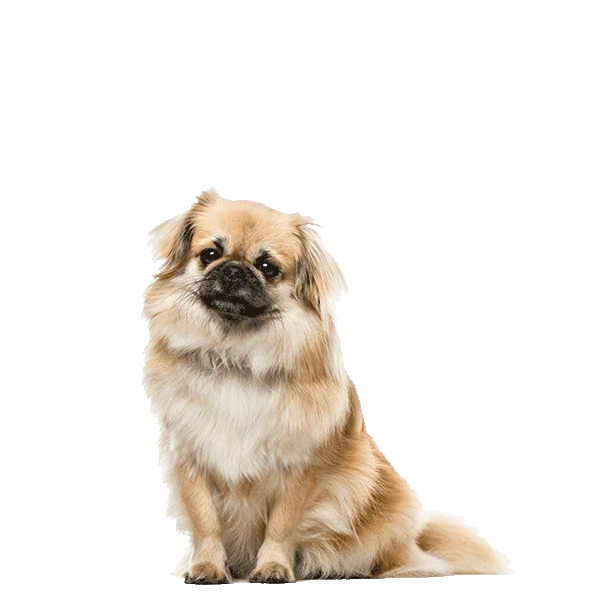
Tiibetinspanieli on kiintymyksellinen, valpas pieni seuralainen, joka on jalostettu vartioimaan tiibetiläisiä luostareita ja joka on täysin omistautunut ihmisilleen.
Miten Tiibetinspanieli-rodun turkki rakentuu ja mitä se tarkoittaa turkinhoidossa.
Kriittinen: Tiibetinspanieli-rodun turkkia ei saa ajaa.
Pohjavilla pitää kuumuuden ulkona yhtä hyvin kuin kylmyyden, ja peitinkarva suojaa ihoa auringolta ja hyönteisten puremilta. Koko turkin ajaminen vie molemmat. Se kasvaa usein takaisin laikukkaana, pehmeänä tai eri värisenä, ja joillakin eläimillä peitinkarva ei palaa koskaan kunnolla. Harjaa pohjavilla pois sen sijaan että leikkaisit sen.
Varoitus: Tiibetinspanieli-rodun turkki takkuuntuu helposti.
Hieno tai pitkä karva sotkeutuu turkin pohjalla näkymättömissä, missä takut kiristyvät ja vetävät ihoa. Harjauksen on ulotuttava juuriin asti osissa, ei vain pintaa pitkin.
Tiedoksi: Tiibetinspanieli pudottaa pohjavillansa voimakkaina jaksoina.
Pohjavilla irtoaa voimakkaina jaksoina muutaman viikon aikana. Pohjavillakampa tai kylvetys ja kunnollinen puhalluskuivaus poistaa sen paljon nopeammin kuin päivittäinen harjaus. Turkin lyhyeksi ajaminen ei ole tähän oikotie.
A few of the Tiibetinspanieli profiles members have added to United Pet Club.
The Tibetan Spaniel is a small, affectionate companion dog from Tibet, bred to sit watch over monasteries and devoted entirely to its family.
The Tibetan Spaniel is a small companion dog that originated in the mountain monasteries of Tibet. Despite the name, it is not a true spaniel and was never used for hunting or retrieving. Its job was to keep company with Buddhist monks and to sit on monastery walls, watching the surroundings and barking to alert the larger Tibetan Mastiffs to anything unusual.
The breed weighs roughly 9 to 15 pounds and stands about 10 inches at the shoulder. It has a slightly longer-than-tall body, a domed head, a short muzzle, and a plumed tail carried over the back. The double coat is silky and moderate in length, with feathering on the ears, legs, and tail.
Tibetan Spaniels are affectionate and devoted with their own people, alert and watchful, and naturally reserved with strangers. They form close bonds and prefer to stay near their family rather than be left alone for long stretches.
| Attribute | Detail |
|---|---|
| Origin | Tibet |
| Size | Small (about 9 to 15 lb, around 10 in tall) |
| Lifespan | 12 to 15 years |
| Group/role | Companion and watchdog |
| Good with | Families, older children, other dogs and cats it is raised with |
The Tibetan Spaniel suits people who want a small, devoted companion that stays close and is alert without being demanding of heavy exercise. It adapts well to apartments and houses alike. Because it bonds tightly and dislikes long periods of solitude, it fits households where someone is home for much of the day. Its watchful nature means it will announce visitors, so owners should be ready to manage barking.
The Tibetan Spaniel developed over centuries in the monasteries of Tibet as a companion and watch dog, reaching Britain in the late nineteenth and early twentieth centuries.
The Tibetan Spaniel comes from Tibet, where small companion dogs were kept in Buddhist monasteries for many centuries. Monks valued them as bed warmers, lap companions, and watchful sentinels that would sit on monastery walls and bark at approaching strangers or animals, alerting the larger guard dogs.
The breed is closely tied to the symbolism of the lion in Tibetan Buddhism, and small lion-like dogs were sometimes given as gifts between monasteries and to visiting dignitaries. This gift custom helped spread the type across the region and to neighboring areas.
Dogs of this kind reached Britain in the late nineteenth and early twentieth centuries, brought back by travelers and people who had worked in Asia. British breeding stock was built up over the following decades, with more dogs imported in the years before and after the Second World War to widen the gene pool.
The breed was recognized by The Kennel Club in Britain and later by major registries elsewhere. The American Kennel Club admitted the Tibetan Spaniel to its registry in 1984, placing it in the Non-Sporting Group. The breed remains a companion dog rather than a working or sporting one.
The Tibetan Spaniel is a small, slightly long-bodied dog with a domed head, short muzzle, silky double coat, and a plumed tail carried over the back.
The Tibetan Spaniel is small and well balanced, with a body slightly longer than it is tall. The head is small in proportion to the body and slightly domed, with a short, blunt muzzle and a black nose. The dark brown eyes are oval and set fairly well apart, giving an alert, intelligent expression. The ears are medium in size, pendant, and feathered. The tail is set high, plumed, and carried in a curl over the back when the dog is moving.
| Trait | Standard |
|---|---|
| Height | About 10 inches at the shoulder |
| Weight | Roughly 9 to 15 pounds |
| Coat | Silky double coat, moderate length, smoother on the face and front of the legs |
| Colors | All colors and mixtures permitted, including gold, cream, red, fawn, white, black, and black and tan |
| Eyes | Dark brown, oval, expressive |
The coat is a double coat with a flat, silky topcoat and a softer undercoat. Hair is shorter and smoother on the face and the front of the legs, with longer feathering on the ears, the backs of the legs, the tail, and around the neck, where males in particular can carry a mane. Every color and combination is allowed by the breed standard. Common colors include gold, cream, red, fawn, sable, white, black, and black and tan, often with white markings.
Tibetan Spaniels are affectionate and devoted with their families, alert and watchful, and naturally aloof and reserved toward strangers.
The Tibetan Spaniel is affectionate and strongly devoted to its own people. It tends to attach closely to its family and enjoys being near them, often following from room to room and settling on a lap or beside its owner. With those it knows, it is playful, gentle, and companionable.
With strangers the breed is aloof and reserved rather than aggressive. This caution is part of its history as a watchdog, and a Tibetan Spaniel will usually bark to announce visitors before deciding whether to warm up. It takes time to trust new people but is rarely shy or fearful when well socialized.
The breed generally gets along with children who are calm and respectful, and with other dogs and cats it is raised alongside. Its small size means play with very young children should be supervised. Tibetan Spaniels are intelligent and have an independent streak, so they can be a little stubborn while remaining responsive to people they trust.
| Trait | Rating |
|---|---|
| Affection | 5 |
| Energy | 3 |
| Trainability | 3 |
| Vocalness | 4 |
| Shedding | 3 |
The Tibetan Spaniel needs regular brushing of its double coat, modest daily exercise, and close company, and it adapts well to apartment or house living.
The Tibetan Spaniel adapts well to apartments, condos, and houses. It is an indoor dog that wants to be with its family and should not be left outside or alone for long periods. It enjoys a perch with a view, a habit left over from its monastery wall-watching past, so a windowsill or a spot on the back of a sofa is often a favorite.
Tibetan Spaniels do well on a complete small-breed diet fed in measured meals, with careful portion control to prevent the weight gain this small dog is prone to.
The Tibetan Spaniel does well on a complete, balanced dog food formulated for small breeds and matched to its life stage. Because the breed is small and can be inactive between play sessions, portions should be measured and treats counted toward the daily total. Extra weight puts strain on the joints and back of a small, slightly long-bodied dog, so keeping it lean matters.
| Life stage | Amount per day | Meals |
|---|---|---|
| Puppy (2 to 6 months) | About 1/2 to 1 cup, by growth and food | 3 to 4 |
| Puppy (6 to 12 months) | About 1/2 to 3/4 cup | 2 to 3 |
| Adult | About 1/2 to 3/4 cup | 2 |
| Senior | Adjusted down for lower activity | 2 |
Keep treats to no more than about ten percent of daily calories and use small, low-calorie pieces for training. Fresh water should always be available. A healthy dog on a complete commercial diet usually needs no supplements; give vitamins, joint products, or other additions only on a veterinarian's advice.
The Tibetan Spaniel is generally healthy with a lifespan of 12 to 15 years, with eye conditions and patellar luxation among the issues to watch.
The Tibetan Spaniel is generally a healthy, long-lived breed, with a typical lifespan of 12 to 15 years. As a small dog with a short muzzle, it has a few conditions worth monitoring, and responsible breeders screen breeding stock for known hereditary problems, especially of the eyes and knees.
| Condition | Signs | Note |
|---|---|---|
| Progressive retinal atrophy | Night blindness, declining vision over time | Inherited; DNA and eye testing of breeding dogs helps reduce it |
| Patellar luxation | Skipping steps, intermittent hind-leg lameness | Kneecap slips out of place; ranges from mild to surgical |
| Cherry eye | Red swelling at the inner corner of the eye | Prolapsed tear gland; usually corrected surgically |
| Portosystemic (liver) shunt | Poor growth, lethargy, disorientation after meals | Less common; needs veterinary diagnosis and treatment |
| Brachycephalic-related issues | Noisy breathing, low heat tolerance | Milder than in flatter-faced breeds but still present |
Tibetan Spaniels are intelligent but independent, responding best to patient, reward-based training and early socialization to temper their natural wariness of strangers.
The Tibetan Spaniel is intelligent and learns quickly, but it has an independent, somewhat self-directed streak from its history as a free-thinking monastery dog. It is not eager to please in the way some working breeds are, so training works best when it is short, positive, and made worthwhile with rewards. Harsh corrections tend to make the breed shut down or grow more stubborn. Early, ongoing socialization is important to soften the natural reserve toward strangers and to build confidence.
Tibetan Spaniels reach maturity around one to two years, carry small litters after a roughly nine-week pregnancy, and need health-tested parents for responsible breeding.
Tibetan Spaniels reach physical and social maturity at roughly one to two years of age, and responsible breeders wait until a dog is fully mature and health tested before breeding. Before mating, both parents should be screened for the breed's known issues, particularly hereditary eye conditions and patellar luxation, so these are not passed on.
Gestation lasts about 63 days from conception, similar to dogs generally. Litters are small, commonly two to four puppies. Because the breed has a domed head and a small frame, whelping should be monitored, and a veterinarian consulted at any sign of difficulty.
Puppies are born blind and deaf and depend fully on the mother in the early weeks. Eyes open at around two weeks, and weaning begins near three to four weeks. The window from about three to twelve weeks is key for socialization, and well-bred puppies are handled often and exposed gently to household life before going to new homes, usually no earlier than eight weeks of age.
| Metric | Value |
|---|---|
| Sexual maturity | Around 6 to 12 months (breed later) |
| Recommended breeding age | About 2 years, after health testing |
| Gestation | Approximately 63 days |
| Typical litter size | 2 to 4 puppies |
| Weaning | About 3 to 4 weeks, complete by 7 to 8 weeks |
| Earliest rehoming age | 8 weeks |
Maksuton elinikäinen profiili Tiibetinspanieli-rotuiselle koirallesi United Pet Clubissa, mikrosirun rekisteröinti mukana ilman uusimismaksuja.
Vuoden 2023 alusta jokainen Suomessa asuva koira on pitänyt tunnistusmerkitä mikrosirulla ja ilmoittaa Ruokaviraston koirarekisteriin, Tiibetinspanieli-rotuinen koirasi mukaan lukien. Lakisääteinen osuus palvelee kuitenkin vain kotimaassa. United Pet Clubin maksuton profiili täydentää sitä: yhteystietosi kulkevat koiran mukana ja löytyvät mistä maasta tahansa. Rekisteröi koirasi muutamassa minuutissa.
Eläinlääkäri asettaa sirun, mutta numeron rekisteröinti jää sinulle, eikä rekisteröimätön siru tunnista ketään. Rekisteröi mikrosiru maksutta elinikäisellä suunnitelmalla: kaikki Suomessa käytettävät sirumerkit kelpaavat, muuton jälkeiset päivitykset eivät maksa mitään ja merkintä on haettavissa vuorokauden ympäri, myös ulkomailta. Luo maksuton tili ja hoida molemmat vaiheet tänään.
Luo maksuton tili United Pet Clubiin, täytä koiran tiedot kuvan kera ja tallenna profiili. Se on maksuton koko koiran eliniän, ja Ruokaviraston koirarekisteri-ilmoitus hoidetaan erikseen.
Syötä sirun 15-numeroinen koodi maksuttomalle tilillesi osoitteen ja puhelinnumeron kanssa. Elinikäinen suunnitelma hyväksyy kaikki sirumerkit eikä veloita päivityksistä koskaan.
On: vuodesta 2023 alkaen koirat on pitänyt tunnistusmerkitä ja ilmoittaa Ruokaviraston koirarekisteriin. United Pet Clubin merkintä täydentää sitä vastaamalla hakuihin myös Suomen ulkopuolella, maksutta.
Ei mitään. Maksuton elinikäinen suunnitelma kattaa profiilin, sirun rekisteröinnin ja kaikki tulevat päivitykset ilman uusimismaksuja.
Common questions about the Tibetan Spaniel cover its size, temperament, care needs, lifespan, suitability, and availability.
It is a small breed, standing about 10 inches at the shoulder and weighing roughly 9 to 15 pounds when fully grown.
It is affectionate and devoted to its family, alert and watchful, and aloof with strangers. It bonds closely and tends to stay near its people.
Care is moderate. The double coat needs brushing once or twice a week, exercise needs are modest, and the main demands are companionship and managing its tendency to bark.
They are generally healthy and typically live 12 to 15 years with good care, a sound diet, and regular veterinary checkups.
Yes, for families with calm, respectful children and for people home much of the day. It dislikes long periods alone and may be too small for rough play with very young children.
They are an uncommon breed compared with popular small dogs, so finding a puppy from a reputable, health-testing breeder can take time and a waiting list.
They are naturally vocal and will announce visitors and unusual sounds, a trait from their watchdog past. Early training of a quiet cue helps keep barking manageable.



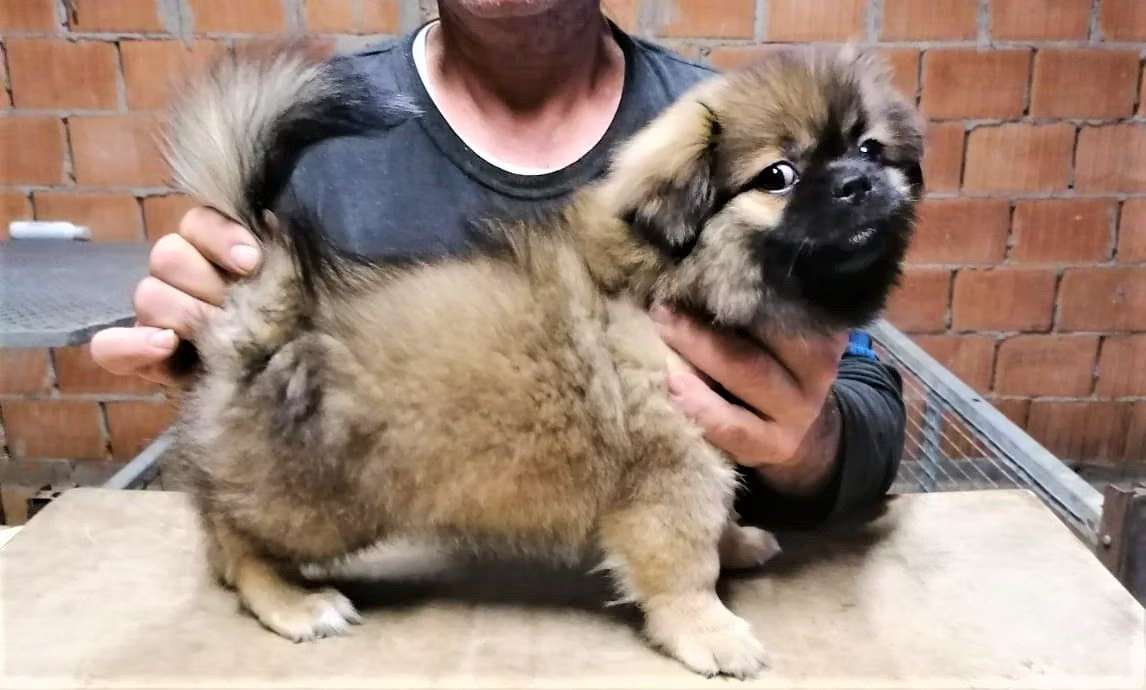


![Everest [Mrs. McLaren Morrison's], a Male Tiibetinspanieli registered with United Pet Club](https://media.unitedpetclub.com/m/mhkpobYpDy/everest-mrs-mclaren-morrison-s-tibetan-spaniel_orig.avif "Everest [Mrs. McLaren Morrison's] — Tiibetinspanieli")

